A 1970s wedding in the hinterlands. Power lines are non-existent. The Petromax-wallah arrives, a man whose entire identity is defined by his ability to keep 6 of these dragons alive. He carries them on a long pole, a cluster of roaring suns swinging in the dark. The light is so sharp it does not just show faces; it carves them out of the night. Every wrinkle, every glint of gold on a bride’s saree, every drop of sweat on a drummer’s forehead is hyper-real.
The Petromax was not a brand; it was an invention by Max Graetz, the president of the Ehrich & Graetz firm in Berlin, around 1910. The name itself is a portmanteau: Petro (Kerosene) + Max (Graetz). It arrived in India in the 1920s as a tool for the British Raj.
The Army needed light that could survive a sandstorm/a monsoon downpour. Unlike the flickering lanterns of the time, the Petromax was a High-Pressure System, it was rugged, heavy, & militarily efficient. By the 1950s, the German patents expired, & Indian entrepreneurs, most notably in Bombay & Calcutta began cloning the dragon.
Brands like Prabhat & Kohinoor emerged, turning the Petromax from a colonial luxury into a village essential. In the 1960s & 70s, the Petromax underwent a cultural mutation. It became the Social Heartbeat of India. This was a specific profession. In every town, there was a man who owned 10-20 lamps. You did not buy a Petromax; you rented 1. He would arrive at your wedding with a pole across his shoulders, balancing 6 roaring suns.
Indian engineers modified the Vaporizer (the J tube) to handle the Dirty Kerosene available in local ration shops. They developed a Hardened Brass tank that could withstand the brutal heat of an Indian summer w/o exploding. It was a masterpiece of Frugal Engineering (Jugaad).
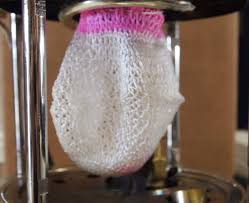
The Petromax had a hidden Achilles' heel: The Ash-Ghost. The mantel was a silk mesh soaked in Thorium Nitrate. Once burnt, it became a ceramic lattice. In the bumpy backroads of rural India, transported on cycles/bullock carts, the mantel would often shatter. This led to the invention of the Pre-tied Mantel, a specialized Indian market innovation where the ghost was reinforced with a specific weave to survive the vibrations of Indian life.
The Petromax did not vanish because it broke; it vanished because the Grid finally won. In the late 80s, the GoI pushed for massive rural electrification. The 1st tubelight in a village was a death knell for the Petromax. The tubelight was silent; it did not smell; it did not require pumping.
When power cuts became common, the Petromax had a brief revival. But then came the Lead-Acid Inverter & the Emergency LED. The Dragon was too much work for a modern family. To maintain a Petromax, you needed to understand Fluid Dynamics & Pressure. To use an LED, you just needed a finger. We traded mastery for convenience.
Imagine a Godown in a small town in 1998. The Petromax-Wallah is closing shop. He has 50 brass lamps. He looks at the Mantels, those white, fragile ghosts. He knows he will never light them again. He covers them with a jute sack.
Today, those lamps are sold to Antique Dealers for a pittance. They are polished until they shine like gold & turned into electric table lamps. The dragon has been castrated; the pressure valve is welded shut, & a cheap yellow wire runs through the belly where the kerosene once roared.
The Petromax was the last time humans had to fight the night on equal terms & win.
#IITHyderabad embarks on a project to develop 100 kg premium metal powder manufacturing facility for Additive Manufacturing & Aerospace.
This will be India's largest indigenous clean metal/alloy powder manufacturing unit through gas atomisation.
The institute collaborates with DMRL @DRDO_India and industry (Innomet Advanced Materials Ltd.) in this project for manufacturing powder.
This initiative is funded by DFTM @FutureTechDRDO.
Today, Kirloskar is a billion-dollar conglomerate, but every time we see a green field in Maharashtra, we are looking at the legacy of a failed drawing teacher who proved that the poison was actually the cure.
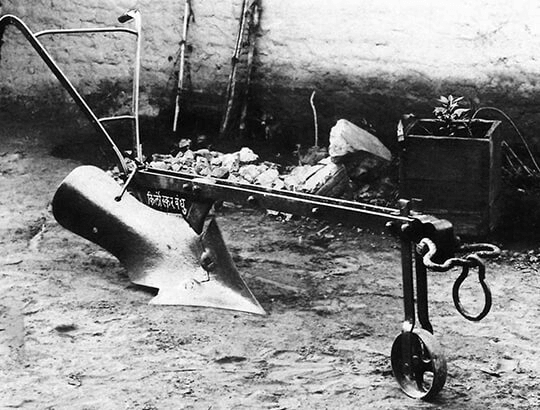
Earlier, the British did not just sell steel; they sold doubt. They had spent yrs convincing Indian farmers that native iron was impure. Local superstition at the time suggested that iron was heavy & would trap the breath of the Mother Earth, leading to stunted crops.
When Laxmanrao Kashinath Kirloskar introduced his plow, the British-aligned local landlords spread rumors that any crop grown with an iron plow would be toxic to the touch. Laxmanrao realized he was not fighting a better product; he was fighting a mythology.
Laxmanrao’s move to prove the plow worked was pure cinema. He picked a patch in the Kundal region that was notorious for being a den of dacoits (bandits) & completely infested with prickly pear cactus. No farmer would touch it.
He did not use laborers at 1st. He & his brothers worked the iron plow themselves on this cursed land. When the 1st harvest of groundnuts & sugarcane came out larger & healthier than anything the village had seen in a century, the farmers did not just buy the plow, they worshipped it. It is said that some farmers performed Aarti (prayer) to the iron plow before using it, effectively turning a British metal threat into a Swadeshi deity.
The story of Kirloskarvadi is a masterclass in Guerilla Infrastructure. In 1910, Laxmanrao moved his factory to a literal wasteland provided by the Raja of Aundh. There was no water, no electricity, & most importantly, no transport.
He needed the railway to stop at his factory to ship the plows. The British-run railway refused, saying a private factory did not justify a station. Laxmanrao built the station platform with his own money & proved that his factory was generating so much cargo traffic that the British were losing money by not stopping. They were forced to recognize the station. It became the 1st station in India named after an industrialist, a permanent scar on the British rail map.
Remember, Laxmanrao was a Drawing Teacher. He had no formal engineering degree. He learned the secret of the joints by repairing bicycles. He realized that the British plows failed because they were designed for the soft, wet soil of England. They would snap in the sun-baked, rock-hard soil of the Deccan Plateau.
He purposefully designed his plow to be modular. If a part broke, the farmer did not have to send it to London for repair; he could fix it with a simple blacksmith's hammer. He democratized repair, effectively ending the farmers' dependence on Imperial Engineers.
Laxmanrao Kirloskar built a Culture of Self-Reliance. He took the untouchable (the dacoit-infested land), the impossible (iron in the soil), & the unauthorized (the private railway station) & forged them into an empire.
Before the world knew the power of Big Pharma, a journalist in a tiny lab in Bombay created a substance so potent it triggered a trade war with London. It was a yellow grease that did not just soothe headaches but funded a movement, bypassed British blockades, & became 1 of the few Indian products to make the Empire's own medicine look like scented water.
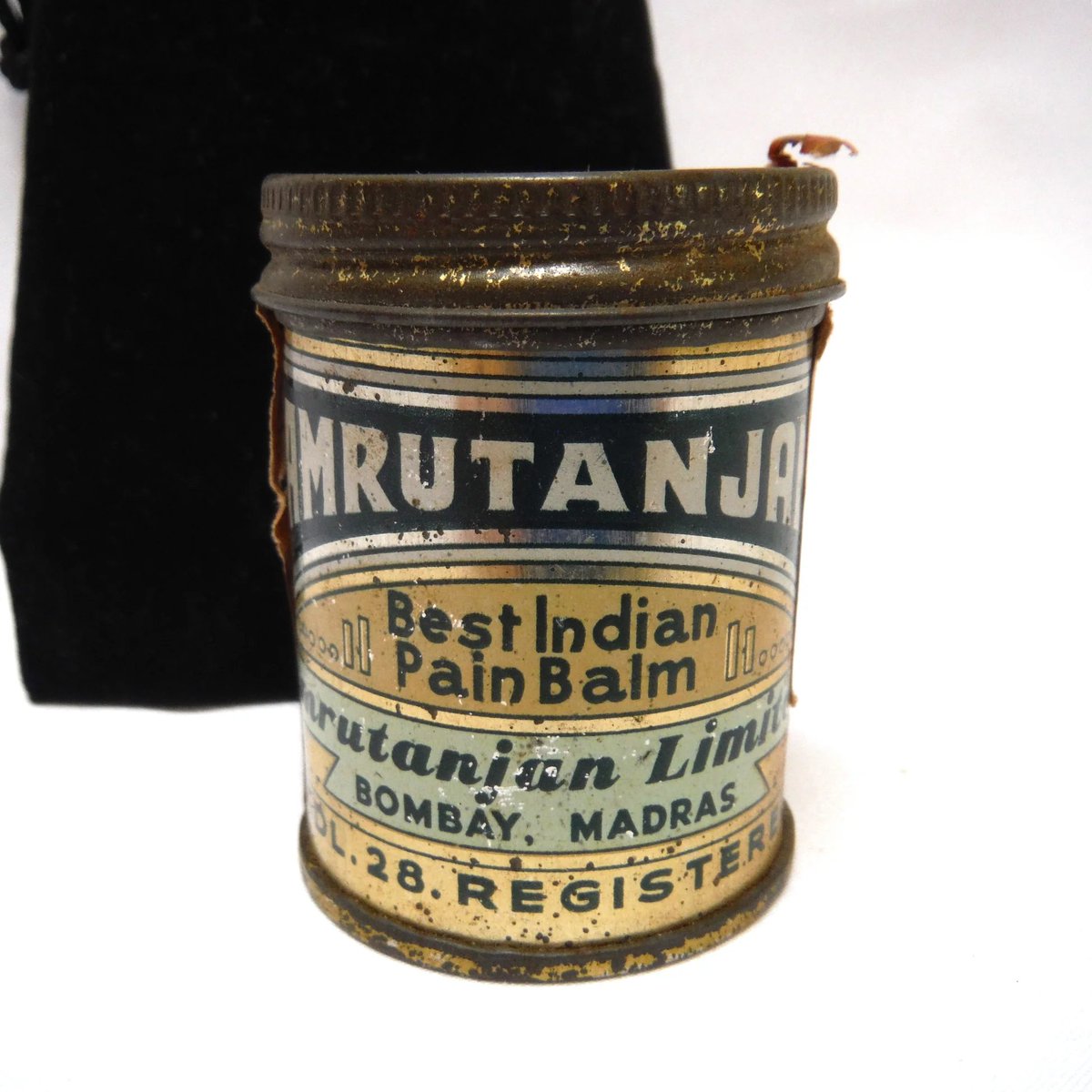
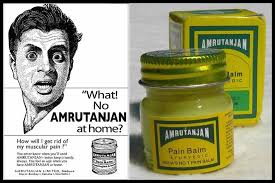
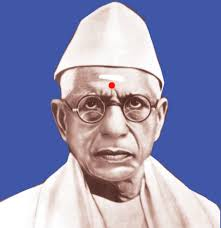
Unlike other brands started by chemists, Amrutanjan was founded by Kasinadhuni/Kasinathuni Nageswara Rao, a man who was primarily a journalist & a freedom fighter. In the late 1800s, the pain balm market in India was a British monopoly. If your head throbbed, you bought imported ointments. Rao saw this as a tax on pain. He retreated into a lab & perfected a formula that was significantly more potent than anything coming out of London.
The British tried to push their own balms like Vicks/early menthol rubs as sophisticated & odorless. They attempted to smear Amrutanjan as primitive because of its overpowering scent. Rao leaned into the scent. He realized that in a country where literacy was low, a brand could not just be a name, it had to be an experience.
He distributed free samples at music concerts (Sabhas) & religious festivals. By the time the British tried to patent the market for pain relief, the entire Indian public had already associated the smell of camphor & menthol with trust. The British balms felt alien & weak compared to the sensory explosion of the yellow tin.
The smell of Amrutanjan... that piercing, camphor-heavy aroma became the literal scent of the freedom struggle. If you walked into a room & it smelled of Amrutanjan, it was a silent signal: A patriot is present. It was a scent the British police could not arrest, yet it was everywhere.
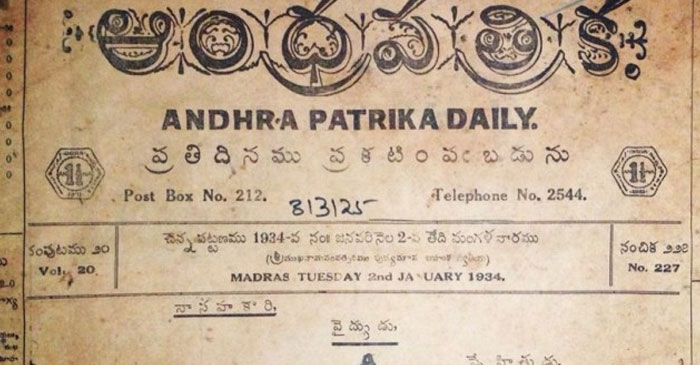
The British had a Patent Medicine Tax that made imported drugs expensive. However, by classifying Amrutanjan as an Ayurvedic Proprietary Medicine, Rao managed to navigate a complex legal gray area. He essentially used the British legal system against itself. By proving his ingredients were ancient yet his manufacturing was modern, he avoided the crippling taxes that applied to purely Western drugs, while maintaining a price point (initially 10 annas) that made British imports look like daylight robbery Rao fought back not just in the market, but in the press. He used the profits from the balm to fund Andhra Patrika, 1 of the most influential anti-British newspapers.
The British were literally paying for their own downfall. Every time a British officer’s wife bought a jar of Amrutanjan for a migraine (because it worked better than the London balms), she was inadvertently funding the printing of revolutionary literature that called for the end of the Raj.
By the 1930s, this Indian yellow grease was being exported to Indian diaspora & locals in South Africa & Ceylon. It became a global symbol of Eastern Wisdom defeating Western Chemistry. It was 1 of those few occasions, an Indian OTC (Over the Counter) product achieved cult status internationally w/o a single pound of British investment.
In fact, the yellow tin became so iconic that it did not need a label in the villages. The color & the smell were the brand. It was a biological Swadeshi. While others were fighting with words, Rao was fighting with molecular relief.