JP Invests

704 posts

JP Invests banner
JP Invests

JP Invests

@JP_Invests

Follow for setups, framework & honest lessons | Concentrated growth + options | Trade Ideas | 7-Figure Self-Made Investor | No hype. Just the work.

Markets · Macro · Money 参加日 Nisan 2026
110 フォロー中147 フォロワー
固定されたツイート
JP Invests
JP Invests@JP_Invests·
I've been investing for ~10 years. Five years of compounding through stocks and options, the portfolio crossed seven figures. How I got here: an actual framework — concentrated bets on high-conviction growth, options used to amplify and generate income, position sizing tuned for asymmetric upside. The framework wasn't free. The first 3 years cost me real money chasing the wrong setups, sizing positions wrong, and holding losers too long. The losses paid the tuition. What you'll get here: the work — what I'm researching and why, the framework — how the math actually works, the lessons — what the years that cost me taught me. If considered concentrated investing is your game, follow me.
English
0
0
1
895
TrendSpider
TrendSpider@TrendSpider·
$ADBE is growing like AI never happened, and trading like AI already won.
TrendSpider tweet media
English
42
63
689
72.7K
JP Invests
JP Invests@JP_Invests·
🟢 Live look at the Sunday open: S&P futures just punched through to a new ATH. 📊 ES futures: 7,544.25 (+0.71%) 📊 NQ futures: 29,891.20 (+1.12%) 📊 YM futures: 50,964 (+0.60%) 📊 Crude oil: $91.95 — DOWN 4.81% 📊 Brent: $98.60 — DOWN 4.77% 📊 VIX: 16.70 — flat 📅 US markets closed Monday for Memorial Day. Full cash reopen Tuesday. The story tonight is oil, not the index. Crude cracking 5% on a Sunday tape is the market sniffing real Iran de-escalation progress. That's why equity futures are ripping — every dollar off oil is a tax cut for the consumer and a release valve for stagflation pricing. 🐂 Bull read: if the oil break holds into Tuesday, the ~40% stagflation odds that have been weighing on growth multiples start coming down. That's the macro setup growth has been waiting for since February. 🐻 Bear read: Sunday-evening overreactions on geopolitical headlines are a known pattern. Half this move can quietly fade by Tuesday's cash open if the news walks back. ATH breakouts on a 4-day week with thin volume aren't the same animal as ATH breakouts on full participation. The asymmetric question: is this the start of the leg where macro stops being the binding constraint and individual setups run on their own fundamentals again? Or is it one weekend headline I'll regret chasing? Watching Tuesday's open. $SPY $QQQ
English
2
0
1
50
JP Invests
JP Invests@JP_Invests·
JP Invests@JP_Invests

$MSFT — researching after the Ackman rotation. Pershing Square cut its Alphabet position 95% in Q1 and used the cash to build a 5.65M-share Microsoft stake worth ~$2.3B. MSFT is now Ackman's 4th-largest holding. He bought at ~21x forward earnings — below MSFT's trading average of recent years. The setup: - Stock $420, down ~22% YTD, ~26% below the July 2025 ATH - Q2 (Jan): -10% on the print despite a beat — $190B capex shock - Q3 (Apr): Azure reaccelerated to 40% reported, EPS beat by ~6%, stock fell only ~3% AH on the capex guide - Largest insider buy since 2015: Director John Stanton bought $2M at $397 in February (last comparable buy: $40M by activist G. Mason Morfit a decade ago) - AI revenue at $37B run rate, up 123% YoY - Commercial RPO at $625B, +110% YoY (OpenAI = ~45% of backlog) The asymmetric thesis: The market has repriced Microsoft as a capex problem. Ackman is reading the same numbers as a multi-year compounding setup at a market-multiple price. The $190B capex isn't the bear case to him — it's the moat being funded in real time. With Azure already reaccelerating in Q3 and a $625B RPO backlog visible, the demand side of the ROI question has answers. The market is asking "can capex pay for itself?" The backlog and the reacceleration are starting to answer yes. What would change my mind: if Azure decelerates below 35% YoY in Q4 (guide is 39–40%) or operating margin compresses below 44% on the print, the capex-to-revenue conversion thesis breaks. The mega-cap trade where the multiple is doing the work. $MSFT

QME
0
0
0
23
Vebjørn | VJN
Vebjørn | VJN@VJNCapital·
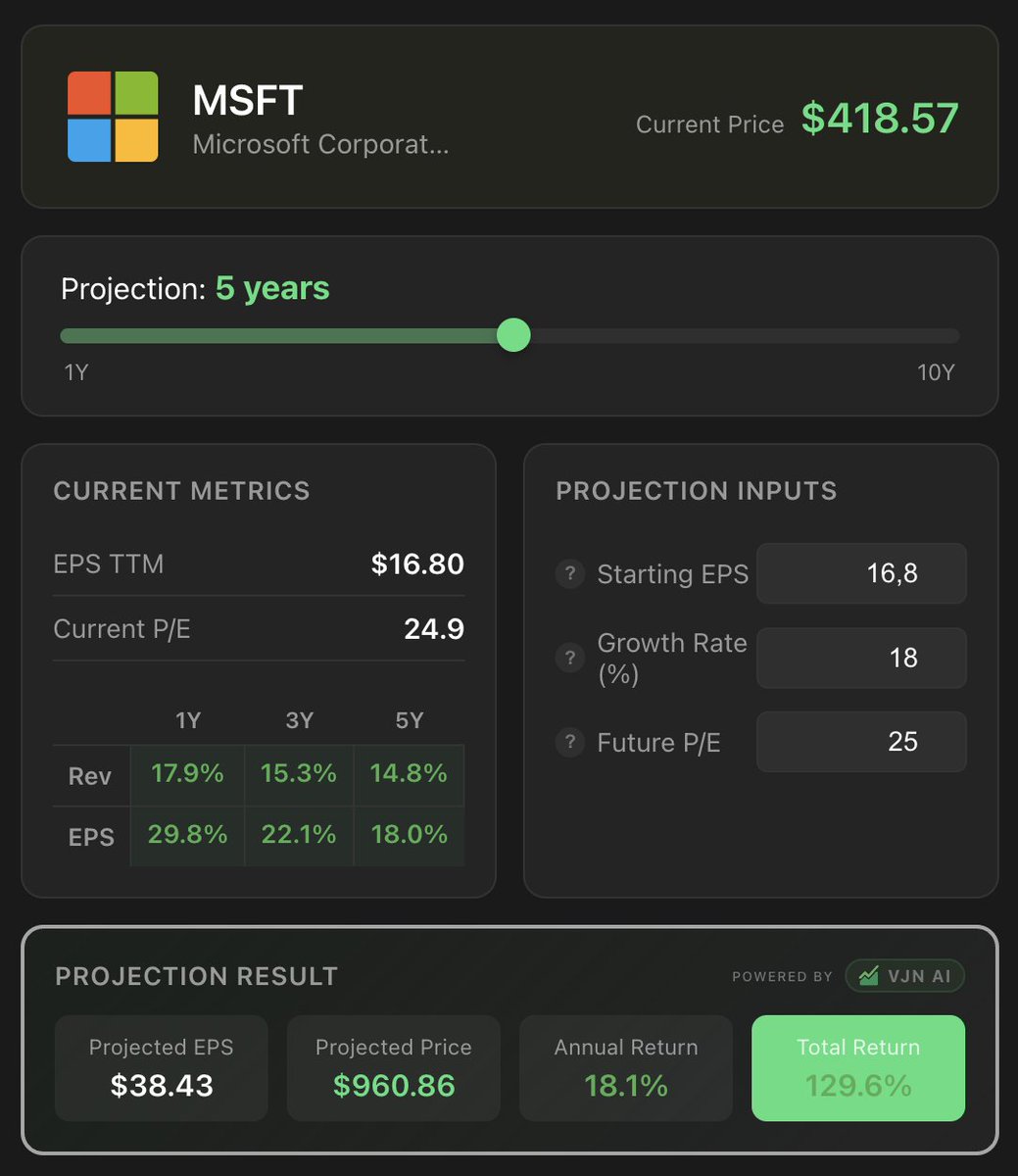
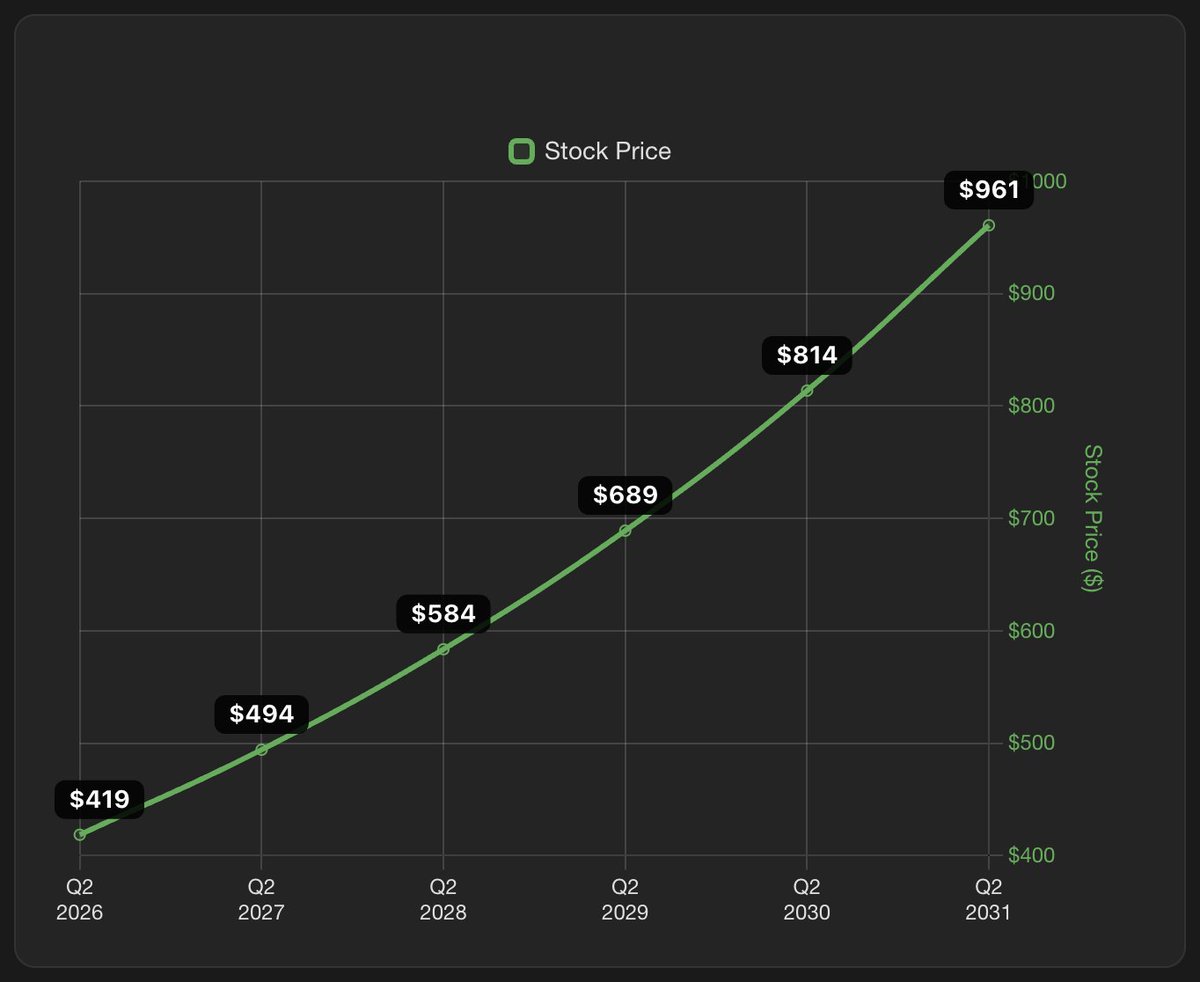
$MSFT is cheap even if growth slows down If we assume - 3% slower EPS growth - Same PE in 5 years We get market beating returns of 18% per year
Vebjørn | VJN tweet mediaVebjørn | VJN tweet media
English
12
18
330
21.3K
JP Invests
JP Invests@JP_Invests·
JP Invests@JP_Invests

$MSFT — researching after the Ackman rotation. Pershing Square cut its Alphabet position 95% in Q1 and used the cash to build a 5.65M-share Microsoft stake worth ~$2.3B. MSFT is now Ackman's 4th-largest holding. He bought at ~21x forward earnings — below MSFT's trading average of recent years. The setup: - Stock $420, down ~22% YTD, ~26% below the July 2025 ATH - Q2 (Jan): -10% on the print despite a beat — $190B capex shock - Q3 (Apr): Azure reaccelerated to 40% reported, EPS beat by ~6%, stock fell only ~3% AH on the capex guide - Largest insider buy since 2015: Director John Stanton bought $2M at $397 in February (last comparable buy: $40M by activist G. Mason Morfit a decade ago) - AI revenue at $37B run rate, up 123% YoY - Commercial RPO at $625B, +110% YoY (OpenAI = ~45% of backlog) The asymmetric thesis: The market has repriced Microsoft as a capex problem. Ackman is reading the same numbers as a multi-year compounding setup at a market-multiple price. The $190B capex isn't the bear case to him — it's the moat being funded in real time. With Azure already reaccelerating in Q3 and a $625B RPO backlog visible, the demand side of the ROI question has answers. The market is asking "can capex pay for itself?" The backlog and the reacceleration are starting to answer yes. What would change my mind: if Azure decelerates below 35% YoY in Q4 (guide is 39–40%) or operating margin compresses below 44% on the print, the capex-to-revenue conversion thesis breaks. The mega-cap trade where the multiple is doing the work. $MSFT

QME
1
0
0
256
Shay Boloor
Shay Boloor@StockSavvyShay·
$MSFT two years ago: • ~$420/share • Azure growing ~30% with $235B commercial RPO • AI revenue barely measurable $MSFT today: • ~$420/share • Azure re-accelerated to 40% growth with $627B Commercial RPO (+99% YoY) • $37B AI ARR (+123% YoY) with 20M+ Copilot seats (+250% YoY) • Maia 200 custom silicon in production Same stock price two years later but AI business behind it is unrecognizable.
Shay Boloor tweet media
English
131
191
1.6K
152.1K
JP Invests
JP Invests@JP_Invests·
JP Invests@JP_Invests

$MSFT — researching after the Ackman rotation. Pershing Square cut its Alphabet position 95% in Q1 and used the cash to build a 5.65M-share Microsoft stake worth ~$2.3B. MSFT is now Ackman's 4th-largest holding. He bought at ~21x forward earnings — below MSFT's trading average of recent years. The setup: - Stock $420, down ~22% YTD, ~26% below the July 2025 ATH - Q2 (Jan): -10% on the print despite a beat — $190B capex shock - Q3 (Apr): Azure reaccelerated to 40% reported, EPS beat by ~6%, stock fell only ~3% AH on the capex guide - Largest insider buy since 2015: Director John Stanton bought $2M at $397 in February (last comparable buy: $40M by activist G. Mason Morfit a decade ago) - AI revenue at $37B run rate, up 123% YoY - Commercial RPO at $625B, +110% YoY (OpenAI = ~45% of backlog) The asymmetric thesis: The market has repriced Microsoft as a capex problem. Ackman is reading the same numbers as a multi-year compounding setup at a market-multiple price. The $190B capex isn't the bear case to him — it's the moat being funded in real time. With Azure already reaccelerating in Q3 and a $625B RPO backlog visible, the demand side of the ROI question has answers. The market is asking "can capex pay for itself?" The backlog and the reacceleration are starting to answer yes. What would change my mind: if Azure decelerates below 35% YoY in Q4 (guide is 39–40%) or operating margin compresses below 44% on the print, the capex-to-revenue conversion thesis breaks. The mega-cap trade where the multiple is doing the work. $MSFT

QME
0
0
0
245
TrendSpider
TrendSpider@TrendSpider·
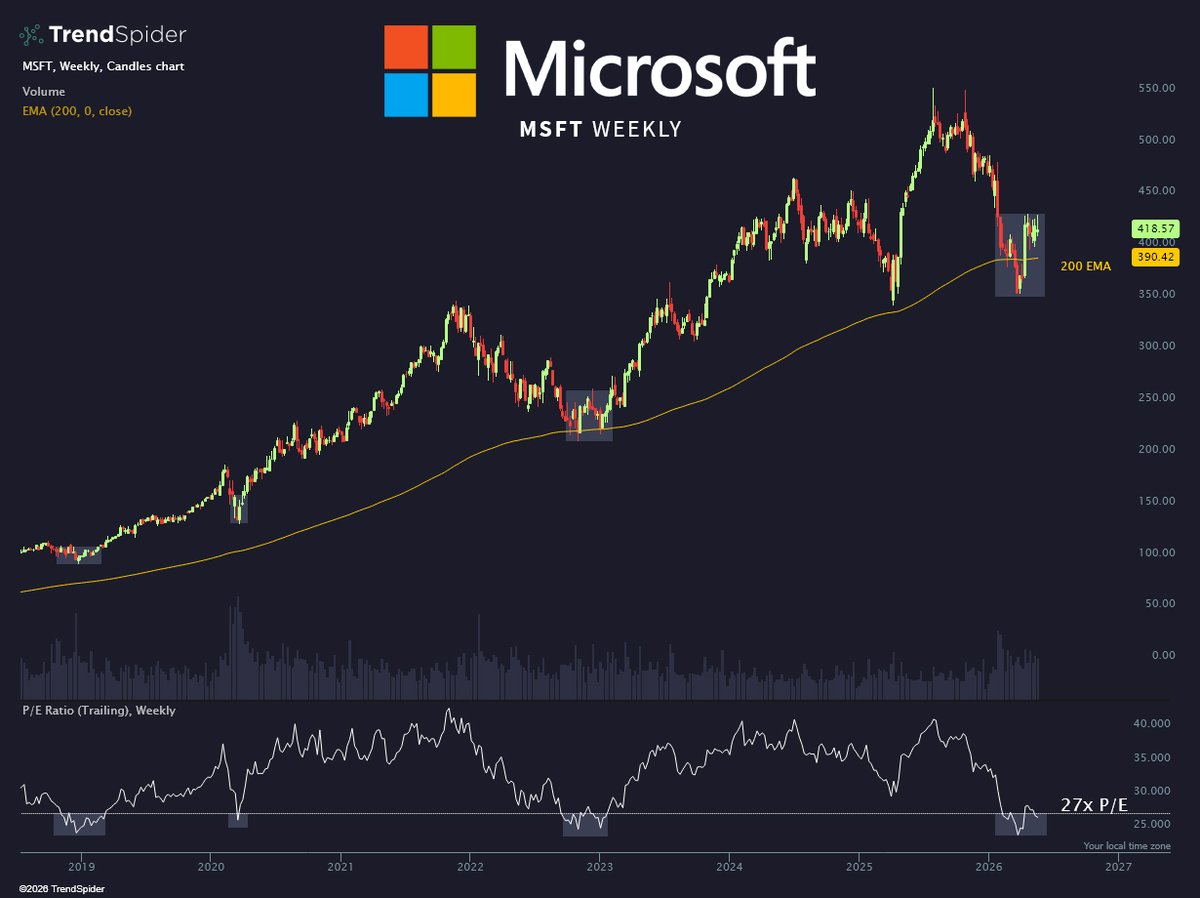
Investing Hack #1: Buy $MSFT under 27x P/E, hold forever 🔒
TrendSpider tweet media
English
61
100
1.3K
103.6K
JP Invests
JP Invests@JP_Invests·
The people who know the businesses are exiting. The people who don't are entering. Corporate insider sell/buy ratio has been at multi-year highs through 2025-2026. CFOs, CEOs, and board members are selling their own company stock at rates last seen in 2021 and 1999. Meanwhile: → Retail equity inflows have set records → Retirement-account stock allocation is at all-time highs → Margin debt is near record levels The classic late-cycle divergence: smart money distributing to retail. Important context: → Insider selling can happen for many reasons (diversification, taxes, comp structure) — not all of it is bearish → Insider BUYING is the more powerful signal (it only happens for one reason: they think the stock goes up) → Insider buying is currently at multi-year LOWS Combined signal: the people closest to the businesses are NEITHER buying nor staying. They're heading for the door. $SPY #AI #StockMarket #NYSE $VOO
English
1
0
1
51
Investing.com
Investing.com@Investingcom·
*WALL STREET POSTS EIGHT-WEEK WIN STREAK, LONGEST SUCH RUN SINCE DECEMBER 2023 $SPY $QQQ 🇺🇸🇺🇸
Investing.com tweet media
English
20
30
183
16.9K
Investing.com
Investing.com@Investingcom·
*S&P 500 ENDS THE WEEK AT A NEW RECORD HIGH $SPY
Investing.com tweet media
English
16
44
251
17.1K
Shay Boloor
Shay Boloor@StockSavvyShay·
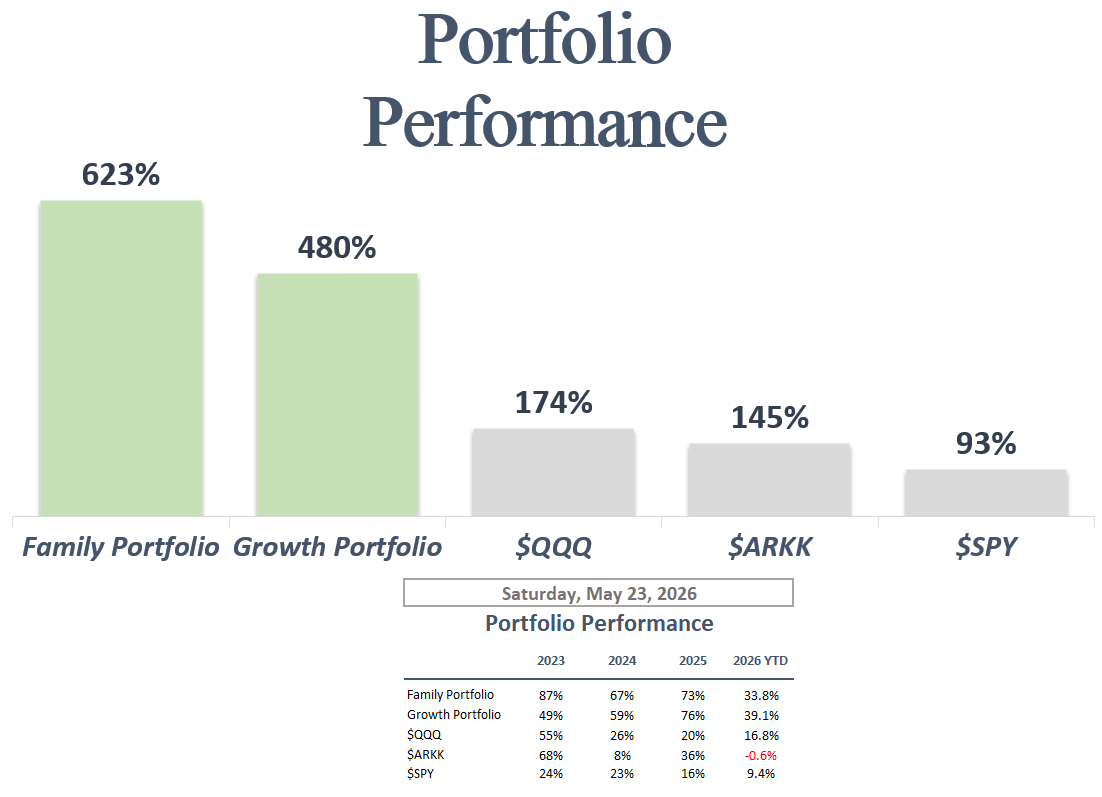
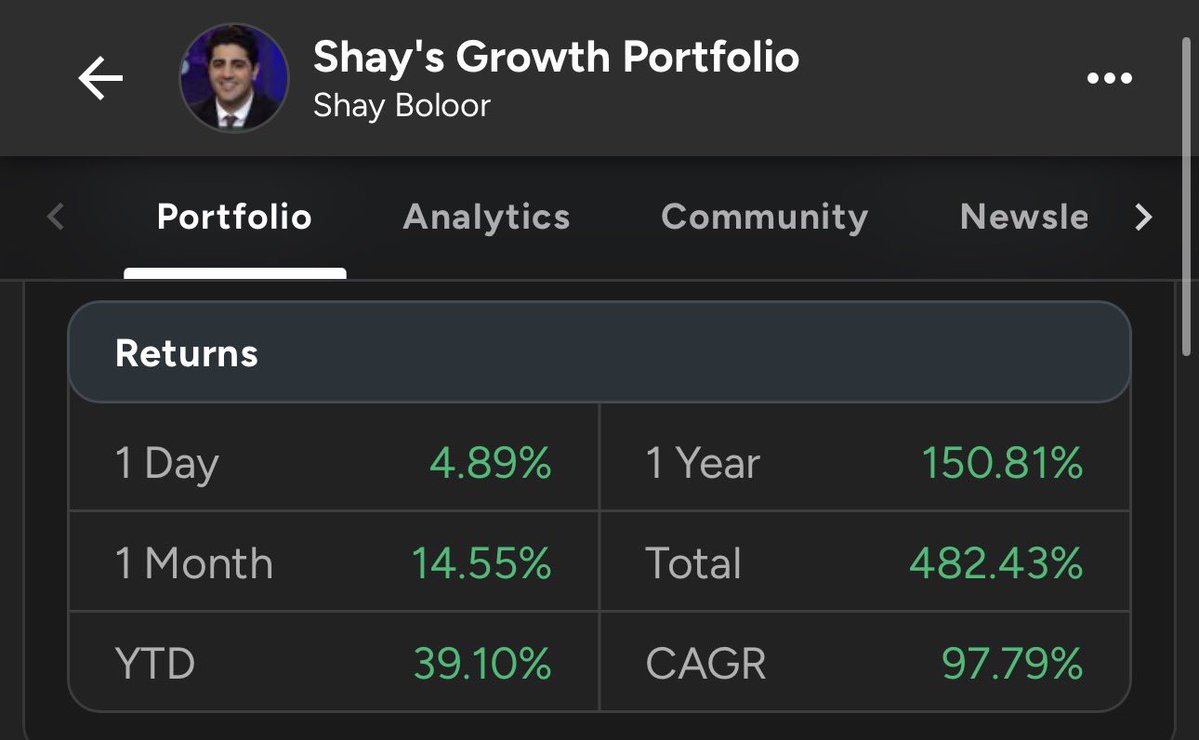
Here is how my Family and Growth portfolio has performance since I started sharing them publicly in 2023: • Family Portfolio: +623% (80% CAGR) • Growth Portfolio: +480% (98% CAGR) • $QQQ: +174% • $ARKK: +145% • $SPY: +93%
Shay Boloor tweet media
English
4
4
94
17.4K
Shay Boloor
Shay Boloor@StockSavvyShay·
TOP 10 GROWTH PORTFOLIO POSITIONS 1. $RKLB | Rocket Lab 2. $AEHR | Aehr Test Systems 3. $SOFI | SoFi 4. $IONQ | IonQ 5. $ASTS | AST SpaceMobile 6. $OSS | One Stop Systems 7. $NVTS | Navitas 8. $SITM | Sitime 9. $SYNA | Synaptics 10. $CRDO | Credo Technology
Shay Boloor tweet media
English
74
260
1.6K
241.8K
Jacob Osiason
Jacob Osiason@Jacob_Osiason·
5 charts that show how bad things are for US consumers at the moment, and how things could only get worse for global markets $SPY 1. Consumer sentiment: 𝐑𝐞𝐜𝐨𝐫𝐝 𝐋𝐨𝐰 2. Inflation expectations: 𝐇𝐢𝐠𝐡𝐞𝐬𝐭 𝐢𝐧 𝐦𝐨𝐧𝐭𝐡𝐬 3. Economic conditions index: 𝐑𝐞𝐜𝐨𝐫𝐝 𝐋𝐨𝐰 4. Financial situation index: 𝙉𝙚𝙖𝙧 𝐑𝐞𝐜𝐨𝐫𝐝 𝐋𝐨𝐰 5. Global Oil Inventories Collapsing 6. $USDC sliding -10%+ against major currency pairs since early 2026 - Manufactured demand in the markets for the $SPCX IPO via passive funds obligated to buy in to the #IPO because they bent the rules for its free float requirement and introduced a 3x multiple. - CFO of @SpaceX told underwriters they were dumping 30% of the supply on retail. #ExitLiquidity Funds could potentially cut overextended tech names for liquidity to buy into these IPO's, along with @OpenAI & @AnthropicAI
Jacob Osiason tweet media
English
7
12
71
54.1K
TrendSpider
TrendSpider@TrendSpider·
The S&P 500 logs its eighth green week in a row, it's best streak in over 2 years. $SPY
TrendSpider tweet media
English
42
35
351
30.7K
TrendSpider
TrendSpider@TrendSpider·
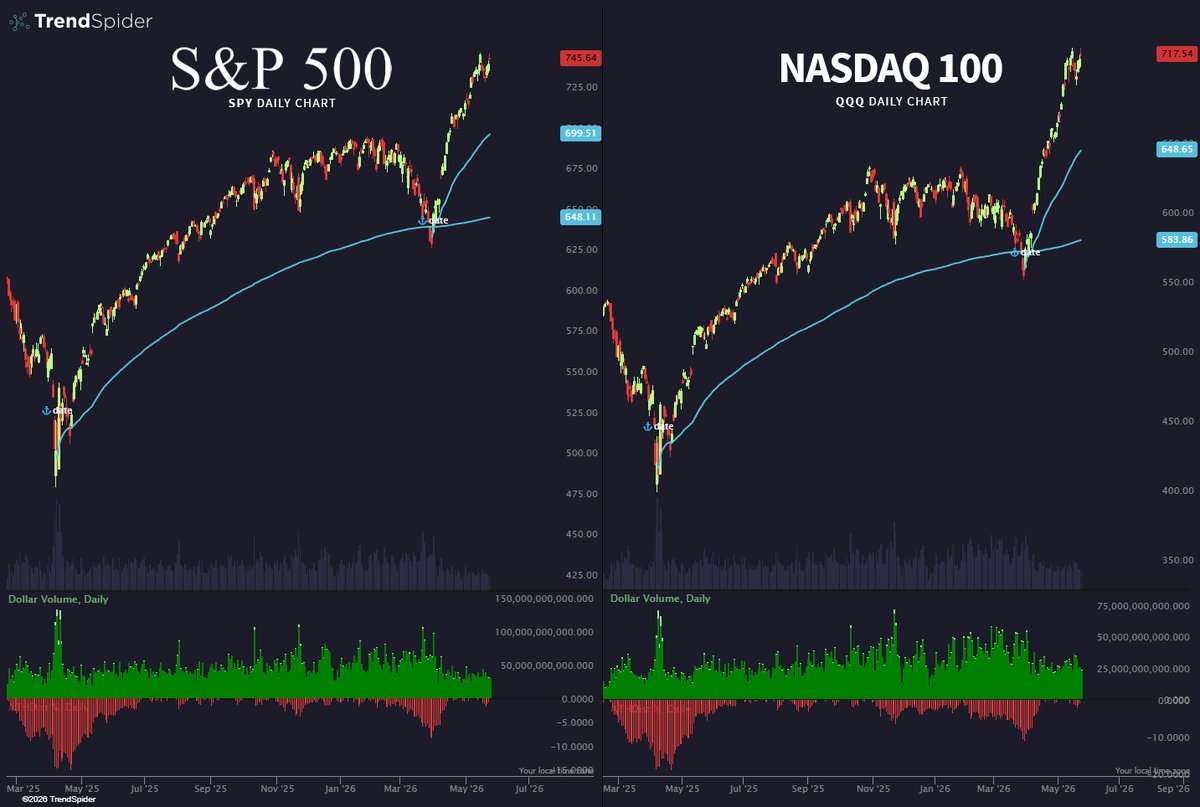
VWAPs held. Bears folded. $SPY $QQQ
TrendSpider tweet media
English
18
21
336
34.8K
JP Invests
JP Invests@JP_Invests·
The S&P 500 has been at record highs for most of 2025-2026. The "market" has not. Roughly 60-65% of all S&P 500 gains in 2023-2024 came from just 7 stocks: NVIDIA, Apple, Microsoft, Amazon, Alphabet, Meta, and Tesla. Strip them out and the remaining 493 stocks have produced muted returns. Equal-weight S&P (RSP) has dramatically lagged cap-weighted SPY since 2023. What this means: → The "broad market rally" is a marketing line. The actual rally is 7 names doing the heavy lifting. → NVIDIA alone contributed ~25% of S&P 500 gains in 2024. A single stock outweighed hundreds of other gainers combined. → This concentration is structural — passive flows automatically reinforce the leaders, mathematically. The reverse is the problem: when those 7 stop leading, the index doesn't drift sideways. Passive flows unwind the same way they wound up. The trade isn't just NVDA. The trade is everything else. $SPY $RSP
English
1
0
1
1.1K
JP Invests
JP Invests@JP_Invests·
JP Invests@JP_Invests

Weekly preview — holiday-shortened week, heavy catalyst load. US markets closed Monday for Memorial Day. Four trading days to clear the stack: Tuesday: open absorbs three days of weekend Iran headlines. Both sides hardened publicly — Rubio said this gets solved "one way or the other"; Iran's Foreign Ministry said a deal isn't close. Wednesday: AI-infra earnings cluster — Salesforce ($CRM), Marvell ($MRVL), HP($HPQ), Synopsys ($SNPS), all AMC. FOMC minutes from Powell's final meeting drop the same afternoon. Thursday 8:30am ET: April PCE + Q1 GDP second estimate. Then AMC: Dell ($DELL — ran 17% Friday alone), Costco ($COST ), Best Buy ($BBY), Okta ($OKTA). Two distinct reads — AI-infra continuation and consumer health into Memorial Day spending. Backdrop: Kevin Warsh begins his first full week as Fed Chair, sworn in Friday. The asymmetric setup: If Iran de-escalates, PCE prints soft, AI-infra beats, and the consumer holds → trend continues. But that scenario is mostly priced. Limited new upside. If any one breaks the wrong way → 30-year back through 5.15% is the first tell. Long-duration tech and the small-cap rally that just printed take the pain. Energy and defense get bid. Three macro events. Eight earnings prints. Four trading days. VIX at 16.7. Not adding fresh capital into this setup. Too much priced in. Too many ways to be wrong. Patience is an edge. $SPY $DELL $MRVL

QME
0
0
0
39
The Kobeissi Letter
The Kobeissi Letter@KobeissiLetter·
Absolutely incredible: Over the last 6 years, the S&P 500 has risen +130% while US Consumer Sentiment has collapsed by -55%, to its lowest since data began in 1952. We are witnessing the formation of the biggest wealth divide in modern history.
The Kobeissi Letter@KobeissiLetter

BREAKING: US Consumer Sentiment officially falls to its lowest level on record in data going back to 1952, down another -10% last month. Consumers now see inflation rising to 4.8% over the next 12 months. This puts the Consumer Sentiment index down -21% since February 2026, before the Iran War. Not even the 1980s saw Consumer Sentiment this low.

English
379
958
5.4K
998.2K
JP Invests
JP Invests@JP_Invests·
Weekly preview — holiday-shortened week, heavy catalyst load. US markets closed Monday for Memorial Day. Four trading days to clear the stack: Tuesday: open absorbs three days of weekend Iran headlines. Both sides hardened publicly — Rubio said this gets solved "one way or the other"; Iran's Foreign Ministry said a deal isn't close. Wednesday: AI-infra earnings cluster — Salesforce ($CRM), Marvell ($MRVL), HP($HPQ), Synopsys ($SNPS), all AMC. FOMC minutes from Powell's final meeting drop the same afternoon. Thursday 8:30am ET: April PCE + Q1 GDP second estimate. Then AMC: Dell ($DELL — ran 17% Friday alone), Costco ($COST ), Best Buy ($BBY), Okta ($OKTA). Two distinct reads — AI-infra continuation and consumer health into Memorial Day spending. Backdrop: Kevin Warsh begins his first full week as Fed Chair, sworn in Friday. The asymmetric setup: If Iran de-escalates, PCE prints soft, AI-infra beats, and the consumer holds → trend continues. But that scenario is mostly priced. Limited new upside. If any one breaks the wrong way → 30-year back through 5.15% is the first tell. Long-duration tech and the small-cap rally that just printed take the pain. Energy and defense get bid. Three macro events. Eight earnings prints. Four trading days. VIX at 16.7. Not adding fresh capital into this setup. Too much priced in. Too many ways to be wrong. Patience is an edge. $SPY $DELL $MRVL
English
0
0
0
98
JP Invests
JP Invests@JP_Invests·
JP Invests@JP_Invests

🟡 The SaaS cohort priced like AI agents already won. Software stocks down 30-55% in 2026, while the broader software ETF ( $IGV) is only down ~8% YTD. These names are taking 4-6x the sector's pain. That's not the whole sector struggling. That's the market specifically pricing AI to replace these companies. THE COHORT 🐻 The names Wall Street is calling AI losers: - Workday (WDAY): $127, down ~40% YTD. Runs HR software for big companies. AI is only 4% of their revenue. Jefferies downgraded to Hold. Price target cut from $280 to $200. - Docusign (DOCU): $49. E-signature business. Citi downgraded — analysts think AI eats this category cleanly. - Monday. com (MNDY): $76. Work management software. Same disruption story. - Freshworks (FRSH): Customer support software. Same camp. 🐂 The names Wall Street is calling AI architects: - ServiceNow (NOW): $101, down 50% from peak. They run the IT helpdesk platform for big companies. Q1 revenue beat ($3.77B vs $3.74B expected) — stock sold off anyway. Bank of America put a Buy back on with $130 target. At Knowledge 2026 (their conference), NOW + Accenture launched a program shipping 300+ AI agents into customer environments today, not someday. - Salesforce (CRM): $179, down 31% YTD. Their AI product (Agentforce) is doing $800M in annual revenue, up 169% from last year. Combined with Data Cloud, that's $2.9B in AI-related revenue. Real money, not promises. Q1 earnings Tuesday May 27. - Adobe (ADBE): $244, down 33% YTD. Stock trades at 10x forward earnings. Adobe's 5-year average was 41x. They have 850 million monthly users, AI revenue tripled in a year, and they're buying back $25B in stock. Mizuho downgraded citing Canva and Figma competition. 🐂 The infrastructure winner (different category): - Datadog (DDOG): $222. They monitor software performance. AI workloads need more monitoring at scale. The exception to the rout. THE BEAR CASE (why these are down) AI agents replace seats. Why pay ServiceNow per-employee when an AI agent runs IT for you? Why pay Salesforce per-sales-rep when AI handles outreach? Why pay Workday per-headcount when an HR agent runs the workflow? If this is right, the entire "charge by the seat" software model gets repriced toward zero. The 30-55% drops are early innings. THE BULL CASE (what the market is missing) The broader sector is fine. Only specific names are getting destroyed. That means the market isn't selling all SaaS — it's making targeted bets on which companies AI replaces. The architects look identical to the losers in this drawdown. Figuring out which is which is the trade. The architects are building the AI that disrupts them: - NOW has agent infrastructure shipping today with Accenture - CRM has $800M in real AI revenue growing 169% - ADBE's AI revenue tripled, and the $25B buyback supports the floor while the transition plays out The losers are hoping AI just makes their existing product better without changing how they charge. That's a different bet entirely. WHAT WOULD CHANGE MY MIND - Any AI revenue line slowing down next quarter - Customer commentary showing seat counts dropping faster than AI revenue is growing - CRM earnings Tuesday May 27 — the cleanest read on whether the architect thesis is actually working THE READ 🟡 Most binary (could go either way): WDAY — AI is only 4% of revenue, no clear catalyst, price target cut sharply 🔻 Deepest discount: NOW — down 50% from peak, agent platform shipping today 🟢 Highest conviction: ADBE — $244, trading at 10x vs historical 41x, $25B buyback, 850M users locked in The trade isn't owning the whole sector. It's owning the architects, avoiding the losers — same drawdown pattern, very different long-term value. $NOW $CRM $ADBE $WDAY $DOCU $MNDY $DDOG #AI

QME
0
0
0
20
Emma Stock Notes
Emma Stock Notes@EmmaStockNotes·
@HolySmokas The sold stock is $ADBE Strong business fundamentals are not really the debate here. It is more the opportunity cost of staying in Adobe while AI fears refuse to disappear. Still an interesting setup because on current fundamentals it continues to stand out.
Emma Stock Notes tweet media
English
3
0
27
5.4K
Jeremy Lefebvre
Jeremy Lefebvre@HolySmokas·
I Just SOLD all of this stock‼️ I'm getting out before it gets UGLY $EL $ADBE $ELF
English
70
23
449
94.7K
JP Invests
JP Invests@JP_Invests·
JP Invests@JP_Invests

🟡 The SaaS cohort priced like AI agents already won. Software stocks down 30-55% in 2026, while the broader software ETF ( $IGV) is only down ~8% YTD. These names are taking 4-6x the sector's pain. That's not the whole sector struggling. That's the market specifically pricing AI to replace these companies. THE COHORT 🐻 The names Wall Street is calling AI losers: - Workday (WDAY): $127, down ~40% YTD. Runs HR software for big companies. AI is only 4% of their revenue. Jefferies downgraded to Hold. Price target cut from $280 to $200. - Docusign (DOCU): $49. E-signature business. Citi downgraded — analysts think AI eats this category cleanly. - Monday. com (MNDY): $76. Work management software. Same disruption story. - Freshworks (FRSH): Customer support software. Same camp. 🐂 The names Wall Street is calling AI architects: - ServiceNow (NOW): $101, down 50% from peak. They run the IT helpdesk platform for big companies. Q1 revenue beat ($3.77B vs $3.74B expected) — stock sold off anyway. Bank of America put a Buy back on with $130 target. At Knowledge 2026 (their conference), NOW + Accenture launched a program shipping 300+ AI agents into customer environments today, not someday. - Salesforce (CRM): $179, down 31% YTD. Their AI product (Agentforce) is doing $800M in annual revenue, up 169% from last year. Combined with Data Cloud, that's $2.9B in AI-related revenue. Real money, not promises. Q1 earnings Tuesday May 27. - Adobe (ADBE): $244, down 33% YTD. Stock trades at 10x forward earnings. Adobe's 5-year average was 41x. They have 850 million monthly users, AI revenue tripled in a year, and they're buying back $25B in stock. Mizuho downgraded citing Canva and Figma competition. 🐂 The infrastructure winner (different category): - Datadog (DDOG): $222. They monitor software performance. AI workloads need more monitoring at scale. The exception to the rout. THE BEAR CASE (why these are down) AI agents replace seats. Why pay ServiceNow per-employee when an AI agent runs IT for you? Why pay Salesforce per-sales-rep when AI handles outreach? Why pay Workday per-headcount when an HR agent runs the workflow? If this is right, the entire "charge by the seat" software model gets repriced toward zero. The 30-55% drops are early innings. THE BULL CASE (what the market is missing) The broader sector is fine. Only specific names are getting destroyed. That means the market isn't selling all SaaS — it's making targeted bets on which companies AI replaces. The architects look identical to the losers in this drawdown. Figuring out which is which is the trade. The architects are building the AI that disrupts them: - NOW has agent infrastructure shipping today with Accenture - CRM has $800M in real AI revenue growing 169% - ADBE's AI revenue tripled, and the $25B buyback supports the floor while the transition plays out The losers are hoping AI just makes their existing product better without changing how they charge. That's a different bet entirely. WHAT WOULD CHANGE MY MIND - Any AI revenue line slowing down next quarter - Customer commentary showing seat counts dropping faster than AI revenue is growing - CRM earnings Tuesday May 27 — the cleanest read on whether the architect thesis is actually working THE READ 🟡 Most binary (could go either way): WDAY — AI is only 4% of revenue, no clear catalyst, price target cut sharply 🔻 Deepest discount: NOW — down 50% from peak, agent platform shipping today 🟢 Highest conviction: ADBE — $244, trading at 10x vs historical 41x, $25B buyback, 850M users locked in The trade isn't owning the whole sector. It's owning the architects, avoiding the losers — same drawdown pattern, very different long-term value. $NOW $CRM $ADBE $WDAY $DOCU $MNDY $DDOG #AI

QME
0
0
0
131
Deep Value Investing
Deep Value Investing@DeepIceValue·
$ADBE, $NOW or $CRM, which one is the best buy now? 🧐
English
23
1
6
9.4K
JP Invests
JP Invests@JP_Invests·
JP Invests@JP_Invests

🟡 The SaaS cohort priced like AI agents already won. Software stocks down 30-55% in 2026, while the broader software ETF ( $IGV) is only down ~8% YTD. These names are taking 4-6x the sector's pain. That's not the whole sector struggling. That's the market specifically pricing AI to replace these companies. THE COHORT 🐻 The names Wall Street is calling AI losers: - Workday (WDAY): $127, down ~40% YTD. Runs HR software for big companies. AI is only 4% of their revenue. Jefferies downgraded to Hold. Price target cut from $280 to $200. - Docusign (DOCU): $49. E-signature business. Citi downgraded — analysts think AI eats this category cleanly. - Monday. com (MNDY): $76. Work management software. Same disruption story. - Freshworks (FRSH): Customer support software. Same camp. 🐂 The names Wall Street is calling AI architects: - ServiceNow (NOW): $101, down 50% from peak. They run the IT helpdesk platform for big companies. Q1 revenue beat ($3.77B vs $3.74B expected) — stock sold off anyway. Bank of America put a Buy back on with $130 target. At Knowledge 2026 (their conference), NOW + Accenture launched a program shipping 300+ AI agents into customer environments today, not someday. - Salesforce (CRM): $179, down 31% YTD. Their AI product (Agentforce) is doing $800M in annual revenue, up 169% from last year. Combined with Data Cloud, that's $2.9B in AI-related revenue. Real money, not promises. Q1 earnings Tuesday May 27. - Adobe (ADBE): $244, down 33% YTD. Stock trades at 10x forward earnings. Adobe's 5-year average was 41x. They have 850 million monthly users, AI revenue tripled in a year, and they're buying back $25B in stock. Mizuho downgraded citing Canva and Figma competition. 🐂 The infrastructure winner (different category): - Datadog (DDOG): $222. They monitor software performance. AI workloads need more monitoring at scale. The exception to the rout. THE BEAR CASE (why these are down) AI agents replace seats. Why pay ServiceNow per-employee when an AI agent runs IT for you? Why pay Salesforce per-sales-rep when AI handles outreach? Why pay Workday per-headcount when an HR agent runs the workflow? If this is right, the entire "charge by the seat" software model gets repriced toward zero. The 30-55% drops are early innings. THE BULL CASE (what the market is missing) The broader sector is fine. Only specific names are getting destroyed. That means the market isn't selling all SaaS — it's making targeted bets on which companies AI replaces. The architects look identical to the losers in this drawdown. Figuring out which is which is the trade. The architects are building the AI that disrupts them: - NOW has agent infrastructure shipping today with Accenture - CRM has $800M in real AI revenue growing 169% - ADBE's AI revenue tripled, and the $25B buyback supports the floor while the transition plays out The losers are hoping AI just makes their existing product better without changing how they charge. That's a different bet entirely. WHAT WOULD CHANGE MY MIND - Any AI revenue line slowing down next quarter - Customer commentary showing seat counts dropping faster than AI revenue is growing - CRM earnings Tuesday May 27 — the cleanest read on whether the architect thesis is actually working THE READ 🟡 Most binary (could go either way): WDAY — AI is only 4% of revenue, no clear catalyst, price target cut sharply 🔻 Deepest discount: NOW — down 50% from peak, agent platform shipping today 🟢 Highest conviction: ADBE — $244, trading at 10x vs historical 41x, $25B buyback, 850M users locked in The trade isn't owning the whole sector. It's owning the architects, avoiding the losers — same drawdown pattern, very different long-term value. $NOW $CRM $ADBE $WDAY $DOCU $MNDY $DDOG #AI

QME
0
0
0
17
Rene Sellmann
Rene Sellmann@ReneSellmann·
And there goes $ADBE‘s stock…
Google@Google

Today we’re introducing a new product in @GoogleWorkspace to give you even more creative control. 🎨 Google Pics is an image creation and editing tool that can help you create just about anything — from party flyers to infographics. Pics automatically segments objects in your photos and understands how they work together, so you can make edits in just a few clicks. #GoogleIO

English
8
3
78
28.9K