Kate Moryoussef
2.2K posts

Kate Moryoussef
@KateMory
🎙Award-nominated - The ADHD Women’s Wellbeing Podcast⚡️ EFT/Wellbeing & Lifestyle coach for ADHD women 📇 ADDitude
United Kingdom 参加日 Ocak 2009
3.2K フォロー中1.1K フォロワー

Check out this segment of The ADHD Women’s Wellbeing Podcast where Lynne Peeples (@lynnepeeps), author of THE INNER CLOCK, and host Kate Moryoussef (@KateMory) discuss the fascinating link between ADHD and sleep.
the-adhd-womens-wellbe.captivate.fm/episode/lynne-…
English
@domhauschild your angle on today’s article is completely skewed. Perhaps if terrorists didn’t use the last remaining hospital as their headquarters, the hospital could keep running? Perhaps if Hamas didn’t use innocent Gazans as human shields , many people wouldn’t need to die?
English

@havivrettiggur Thank you for this. Helps to absorb all the many emotions so many of us are experiencing
English

Simchat Torah begins imminently, the last of the many holidays of this first month of the Jewish year.
Literally called “the joy of Torah,” it is a holiday of rejoicing at the great gift of the Torah, of dancing and singing in great circles around the synagogue in thanks for millennia of meaning and belonging.
And this one will hurt.
Because Simchat Torah is now also, and forevermore, the anniversary of the massacre, of the failure of our Jewish collective to rush to the aid of our brethren as they were gunned down in their own personal valleys of the shadow of death.
How do we celebrate while our hearts still reach out in bitter tears to 101 hostages still held by the maniacs who carefully engineered their own polity’s destruction on the altar of ours?
How do we celebrate when our soldiers still hunt through the Lebanese countryside for hiding and fleeing fighters of Hezbollah, who once planned and still dream of a vastly larger massacre?
How do we celebrate on cue, when expressions of happiness seem forced or unfeeling?
The Talmud tells us how.
In Tractate Bava Batra (page 60), the rabbis relate a debate following the destruction of the Second Temple by the Romans.
The trauma of the destruction drove a great many Jews to asceticism, the Talmud relates. People stopped eating meat or drinking wine. When some of them are challenged by the sage Rabbi Yehoshua, they explain, “Shall we eat meat, from which offerings were sacrificed upon the altar, now that the altar no longer exists? Shall we drink wine, which was poured upon the altar, now that the altar no longer exists?”
R’ Yehoshua was disturbed by this line of reasoning. “If so, we will not eat bread either,” he points out, since bread was also brought as an offering to the Temple. “Or fruit.”
But the new ascetics only agree - the fruit of the seven iconic species of the land of Israel that were brought to the Temple each harvest as an offering would not be eaten by them for as long as the Temple remained destroyed, they say.
“And water?” R’ Yehoshua asks. The priests, after all, also used water.
For once the newly-minted ascetics “are silent.”
“My children, come,” R’ Yehoshua says, “Not to mourn at all is impossible, but to mourn too much is also impossible.”
Instead, R’ Yehoshua offers the instruction of the Sages: Build the pain into the happiness.
“A person may plaster his house with plaster, but must leave a small amount without plaster to remember the destruction of the Temple.”
And that corner should be prominent, R’ Ḥisda adds, “opposite the entrance, so that it is visible to all.”
How do we celebrate, how do we build, how are we happy in the midst of pain and mourning and adversity and fear? By adding the brokenness of things into our joy. By breaking a glass at a wedding, leaving a visible blemish on our well-plastered walls, leaving a piece of a meal unprepared — all ways the Talmud instructs us to incorporate mourning into our joy.
It is a way to make sure we don’t forget. But far more importantly - who among us can forget? - it is a way to clear a space in the pain for pockets of joy. It is permission for happiness by acknowledging the grief.
And there’s another way.
The old way. Judaism’s most basic and fundamental impulse: Gratitude. Endless, boundless thanksgiving.
In Avot DeRabbi Natan, a kind of extension of the Mishna’s “Ethics of our Fathers,” we are given a story about the great heroes of rabbinic literature all failing miserably to console their great teacher, the mystic Rabbi Yohanan ben Zakkai, over the death of his son.
They all try to comfort him by comparing his loss to other tragedies of the past, and to old heroic figures who “were comforted” despite those tragedies.
Rabbi Eliezer points to Adam’s loss of his son Abel, R’ Yehoshua to Job’s loss of his children, R’ Yosei to Aaron’s grief for his dead sons and R’ Shimon to King David’s.
Others had it worse, they all argued, but were comforted.
But with each contribution, R’ Yohanan’s pain only grows worse. “Is it not enough that I have my own pain? You have to remind me of Job’s pain as well?” He scolds R’ Yehoshua.
Then came the final student, R’ Elazar ben Azariah, one of the great ethicists of the Jewish bookshelf and perhaps its greatest early psychologist. (It was he who ruled that prayers of contrition on Yom Kippur only absolve sins committed against God. Sins committed against other people must first be reconciled with those people.)
“Let me give you a parable,” R’ Elazar tells his master. “The king gave [someone] a deposit to hold. Every day [that person] would cry and wail and say, ‘O when will I be free of this deposit?’ So it is with you, rabbi. You had a son who read from the Torah, the Prophets and the Writings, the Mishna, the law and the Aggadah, and then was taken from the world free of sin.”
“Rabbi Elazar, my son,” R’ Yohanan replied, “you have comforted me as people are supposed to.”
(The full story is available here in Hebrew and English at the wonderful Sefaria website: sefaria.org.il/Avot_DeRabbi_N…)
Friends, comfort cannot be found in minimizing our loss and pain, in ignoring it, in dramatizing the pain of others so that ours feels smaller.
The opposite: Comfort is found in the immensity of what we have lost, in gratitude for what we were given. Great pain is a function of great love.
Or as the 12th century sage Maimonides explains, suffering is the gap between expectation and reality. The key to overcoming suffering doesn’t lie in lowering your expectations but in deepening your understanding of the immense gifts of our reality, of our lives and this world and the people around us. Both the great gift of being and the great gift of being here and now, pain and all.
We do not forget our loss, we incorporate it into our happiness. We thus make our happiness imperfect, fragile - and all the more precious.
“Rejoice with Jerusalem and be glad with her, all who love her,” Isaiah implores us, and then repeats the instruction for those of us who are in pain. “Rejoice with her joy, all you who mourn for her.”
We do not stop dancing, we do not fall into sackcloth and ashes, we do not forget our joy because of great pain and calamity.
Let us be happy not despite our great loss, but because we know how much we have to lose. Every last bit is a gift and all life is thanksgiving.
Simchat Torah is our Thanksgiving.
Chag sameach.
English

@j_amesmarriott I’m not sure you can be ‘cured’ of fidgeting. In neurodivergent terms fidgeting is recognised as stimming which helps you to engage your brain with boring or understimulating tasks and helps to regulate us when feeling anxious. Fidgeting is common in ADHD/Autism

English

@TimesONeill I’m so very sorry about your daughter. It’s a heartbreaking to read and as a parent, unbearable. I work with many neurodivergent women and CFS is very common in this community. I discuss it a lot on my podcast. @BendyBrain is a doctor who knows a lot about this and could help.
English
Kate Moryoussef がリツイート

Let me make it perfectly clear. We owe no one an explanation. Hamas took our people hostage, including a baby. The four rescued hostages were kept in a CIVILIAN home, guarded by Palestinian terrorists in CIVILIAN clothes, in one of Gaza's most crowded CIVILIAN markets.
We rescued our people, and Hamas told you yet another lie, "it was a massacre". You, as always, chose to believe them.
The problem here is you and Hamas. Whether 200 or 2000 Palestinians died, it's not our problem. We're cool, sweetheart.
Ask your mates Hamas not to use CIVILIANS to keep the hostages, and ideally not to do it in Gaza's crowdest civilan markets.
We just want our hostages back. Whatever Hamas puts in the way between us and our hostages is your and their problem. We're good with eliminating WHATEVER gets in the way of releasing our hostages. Simple and easy.
English
Kate Moryoussef がリツイート

I have two words for anyone telling Israel to give up trying to rescue hostages by force, and they start with an “F” and an “O.”
Alistair Bunkall@AliBunkallSKY
BREAKING: Israeli forces have rescued four hostages alive during an operation in Gaza this morning. They are Noa Argamani, Almog Meir Jan, Andrey Kozlov and Shlomi Ziv. They are said to be in “good medical condition”
English
Kate Moryoussef がリツイート

This is Greece representative singer at @Eurovision , @marina_satti .An embarassment for Greece and for every decent #Greek person. Pretending to fall asleep while the Israel’s contestant is speaking is not just bad education or pure jew-hatred,but also a stain over the greek nation she represents in front of the world.
English

Kate Moryoussef がリツイート

Wow. Ruthless.
You gotta watch this if you haven’t already.
@elicalebon lays down fact after fact after fact in the face of people trying to spin the narrative.
Watch 👇🏼
English

@michellefroome Thank you for your support and standing on the right side of history. Ignore the media and know you are supporting western democracy, humanity and freedom 🤦♀️
English

@JewishMCR @UKBorder @manairport @JLC_uk @BoardofDeputies @CST_UK @JewishChron @JewishNewsUK @JewishTelegraph @NorthWestFOI @UKLFI @DailyMailUK @YvetteCooperMP Disgusting. I’m ashamed to live in this city after what also happened at the hospital. This would never be tolerated against any other race or religion.
English
Kate Moryoussef がリツイート

We have been made aware that survivors of the 7th October terrorist attack on the Re’Im Music Festival were discriminated against by @UKBorder when arriving @manairport.
We have requested an urgent investigation is commenced and assurances are received to ensure passengers with Israeli passports are able to travel without discrimination.
Thank you to the team at Manchester Airport, as we are aware they have immediately acknowledged and recognised the severity of the allegations contained within our correspondence.
This issue primarily rests with the Home Secretary and we call upon @JamesCleverly and @ukhomeoffice to ensure this matter is dealt with as a matter of urgency.
@BBCRadioManc @BBCNWT @GranadaReports @MENnewsdesk


English

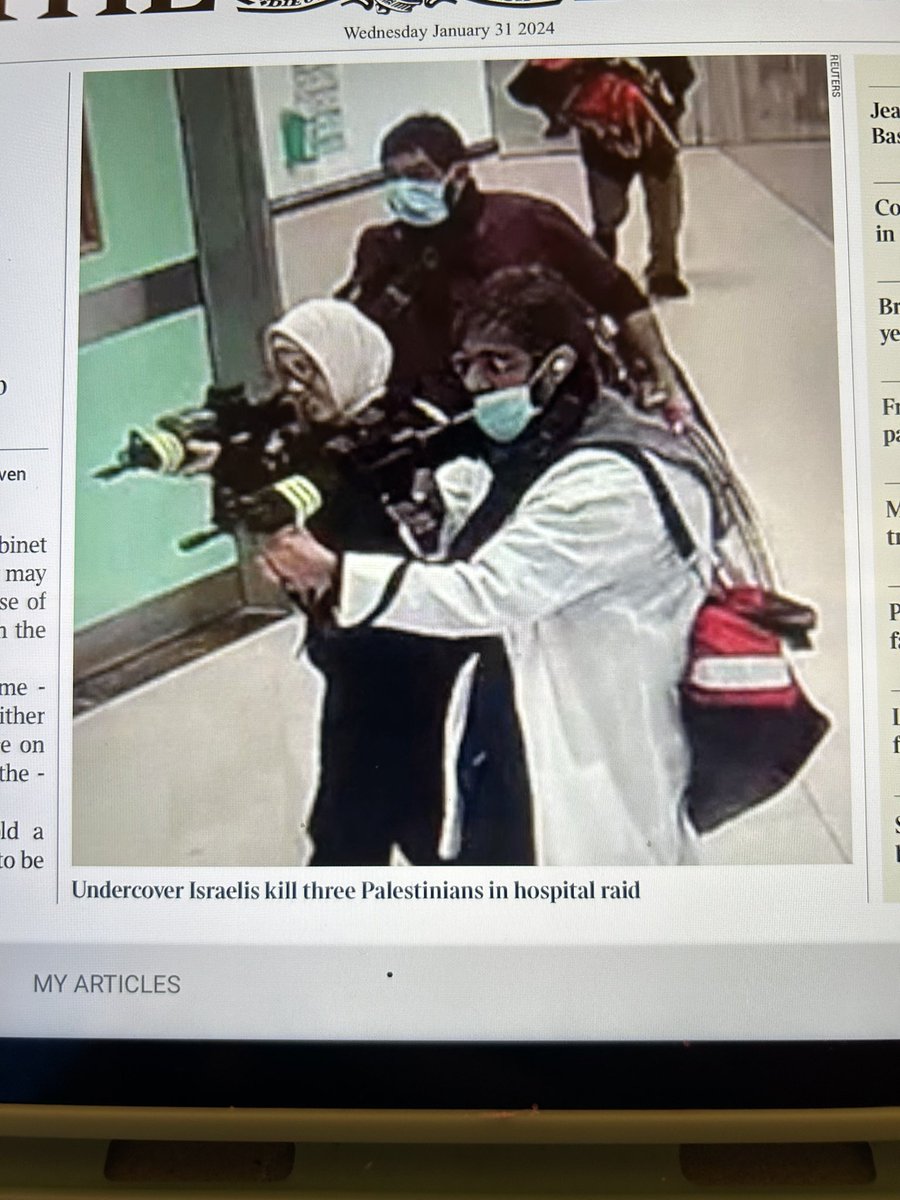
@thetimes you seem to have omitted the very important words “Hamas terrorists” from your front page - use your words carefully. They were not Palestinian civilians. Pls change your digital front cover @DanielBerke1 @UKLFI are you able to help?

English