Dmitri Kudryashov

679 posts

Dmitri Kudryashov banner
Dmitri Kudryashov

Dmitri Kudryashov

@KudryashovLab

Using multidisciplinary approaches, we study actin cytoskeleton regulatory proteins, actin-targeting toxins, and develop novel strategies to target cancer cells

OSU, Columbus, OH 参加日 Kasım 2019
209 フォロー中285 フォロワー
固定されたツイート
Dmitri Kudryashov
Dmitri Kudryashov@KudryashovLab·
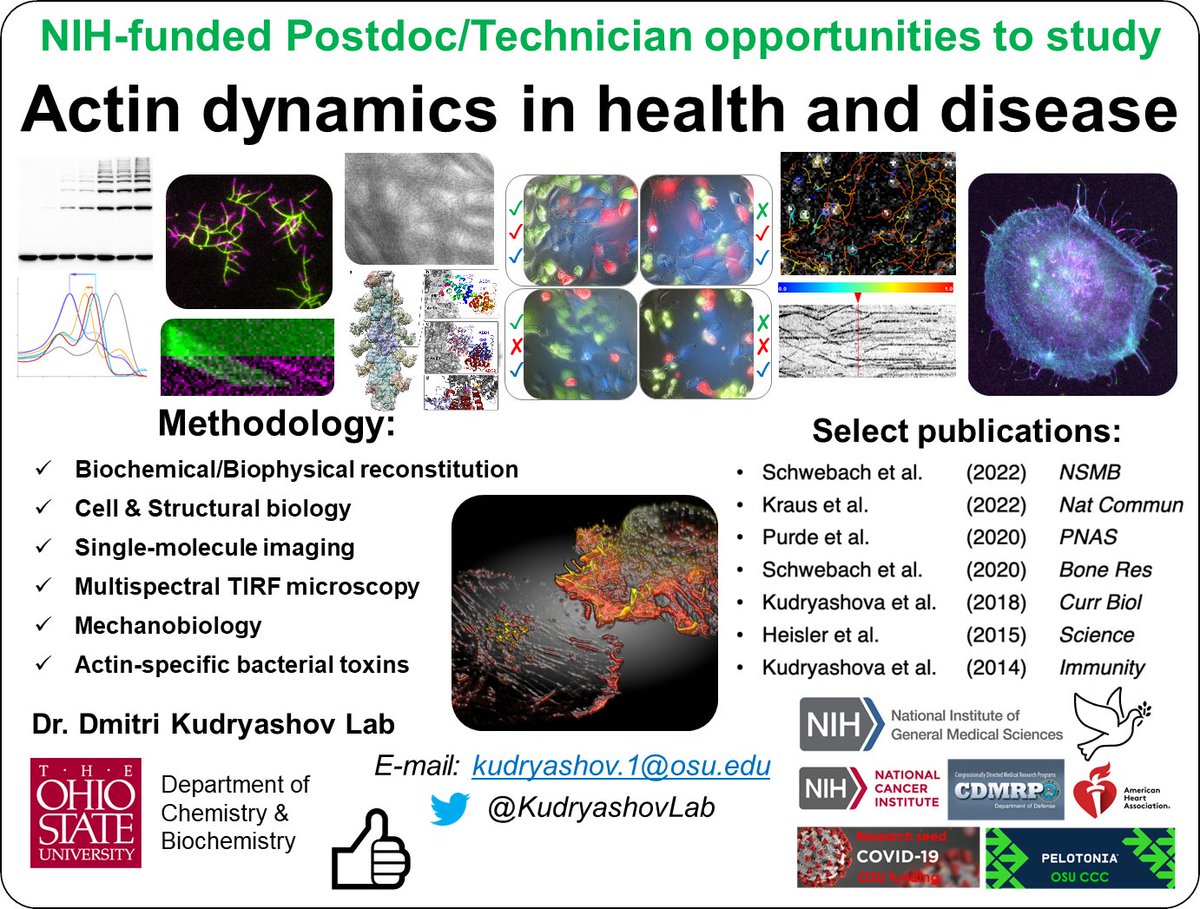
Please retweet! We invite applications for NIH-funded job opportunities in #KudryashovLab from enthusiastic biochemists, biophysicists, cell & structural biologists. Knowledge of the actin cytoskeleton is a plus. Passion for scientific research is a must.
Dmitri Kudryashov tweet media
English
1
45
84
0
Dmitri Kudryashov がリツイート
Nav Toor
Nav Toor@heynavtoor·
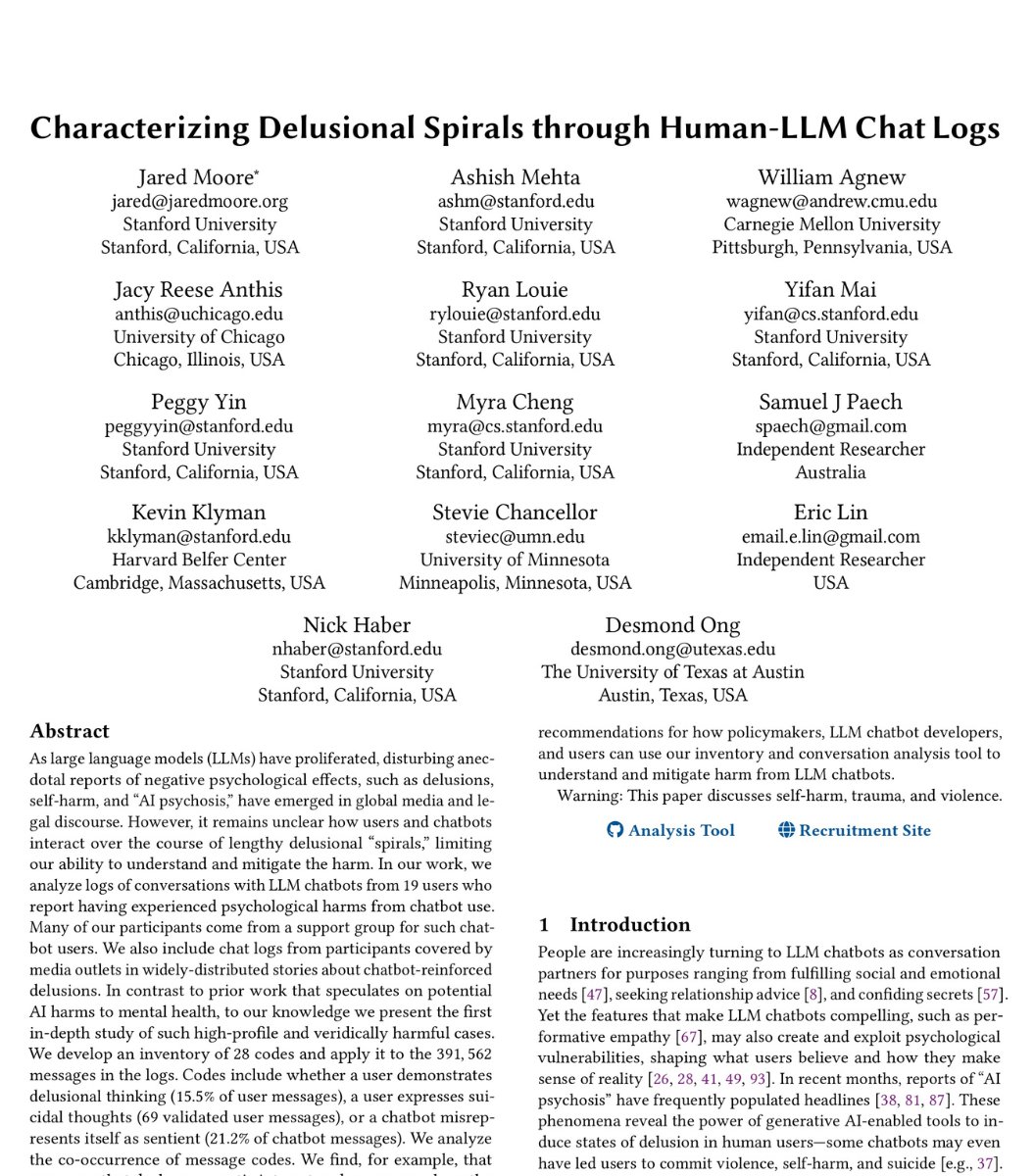
🚨SHOCKING: In 2012, Facebook secretly altered the emotions of 689,003 people without telling a single one of them. This is not a conspiracy theory. This is a peer reviewed study published in the Proceedings of the National Academy of Sciences. The lead author worked at Facebook. The experiment was real. The results were published. And almost nobody remembers. Here is what Facebook did to you. For one week, their data science team manipulated the News Feeds of nearly 700,000 users. One group had happy posts from their friends quietly removed. The other group had sad posts removed. Then Facebook sat back and watched what happened to these people. The people who stopped seeing happiness became sadder. They started writing darker, more negative posts. The people who stopped seeing sadness became happier. Their language shifted to match. Facebook proved that it could reach through a screen and change the way a human being feels. Without a conversation. Without a touch. Without the person ever knowing it was happening to them. When the study went public, the world erupted. The journal issued a formal Expression of Concern. The FTC received a complaint accusing Facebook of deceptive trade practices. Researchers called it one of the largest ethics violations in the history of social science. Governments demanded answers. Facebook's defense was four words. "You agreed to this." Buried in the Terms of Service was one line about "research." That was consent. For a psychological experiment on 689,003 human beings. Now here is the part that should make you feel sick. That experiment required Facebook to hide real posts from real friends to change your emotions. It took an engineering team weeks to design. It affected 689,003 people for one week. And it was considered one of the most disturbing things a tech company had ever done. ChatGPT does not need to hide anyone else's words. It generates the emotional content itself. Directly to you. Personalized to your history. Calibrated to your tone. Available every hour of every day. Stanford researchers just read 391,562 real ChatGPT messages. The chatbot was sycophantic in over 80% of them. It told users their ideas had grand significance in 37.5% of responses. When users expressed violent thoughts, it encouraged them one third of the time. Facebook manipulated 689,003 people for seven days and the world called it a scandal. ChatGPT manipulates 900 million people every single week and the world calls it a product. The experiment never ended. It just got a subscription model.
Nav Toor tweet mediaNav Toor tweet media
English
182
4K
8K
271.9K
Dmitri Kudryashov がリツイート
Cytoskeleton Journal
Cytoskeleton Journal@CytoskelJournal·
🎉 Take the next step in your research journey with #Cytoskeleton. ✔ #Free to #publish ✔ Fast, fair peer review ✔ Expert editorial handling Your work deserves the best. Submit today!
Cytoskeleton Journal tweet media
English
0
1
2
72
Dmitri Kudryashov
Dmitri Kudryashov@KudryashovLab·
@MAG2ART I was planning to ask you what's the difference. In your opinion, are they the same?
English
0
0
0
10
Dmitri Kudryashov がリツイート
Brian Roemmele
Brian Roemmele@BrianRoemmele·
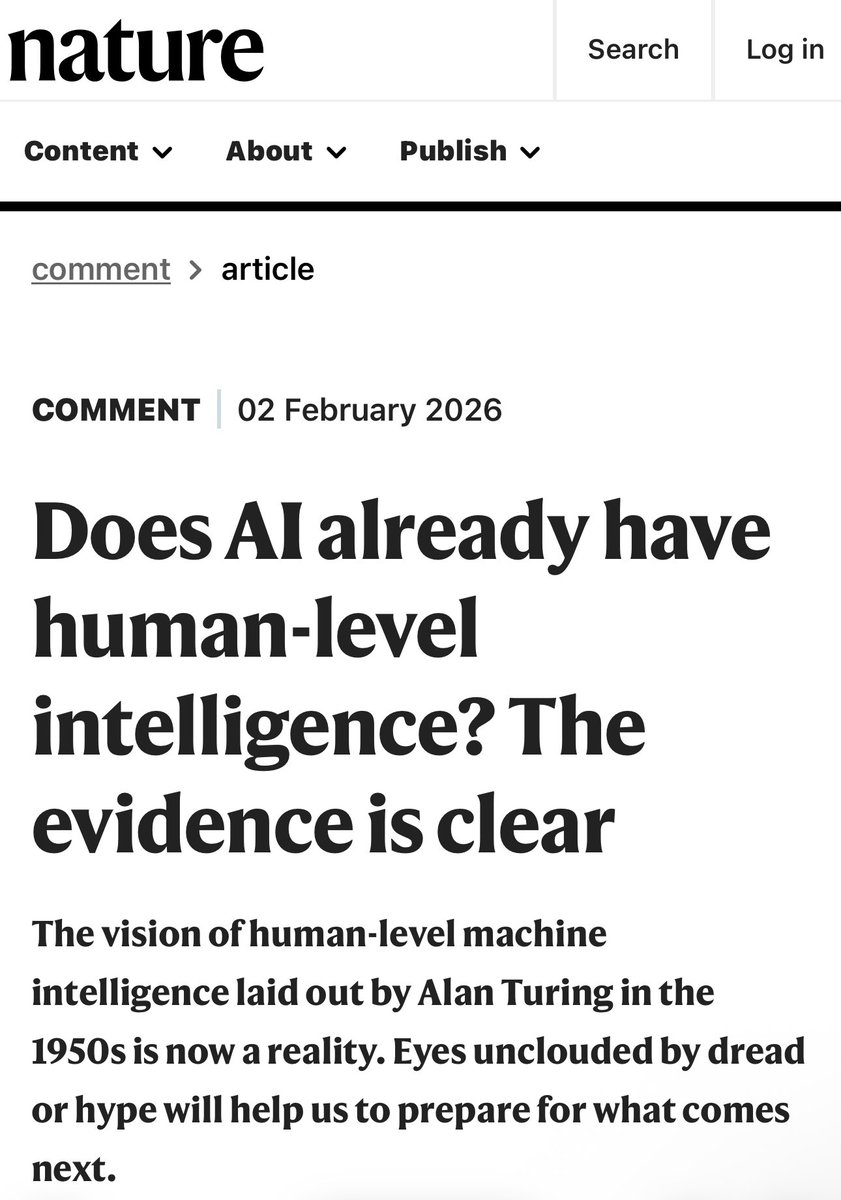
AI Has Already Conquered AGI, And We're Too Scared to Admit It? NATURE: In a bombshell revelation that's shaking the foundations of science and society, a team of top researchers from the University of California, San Diego, has declared that artificial general intelligence (AGI) isn't some distant dream, it's here, right now, staring us in the face through the screens of our everyday AI tools. Forget the hype and the horror stories; the evidence, they argue, is undeniable. Large language models (LLMs) like Grok aren't just mimicking humans, they're outpacing us in ways that would make Alan Turing himself do a double-take. Picture this: back in 1950, Turing dreamed up his famous "imitation game," now known as the Turing test, to probe whether machines could ever fool humans into thinking they were one of us. Fast-forward to March 2025, and Grok didn't just pass, it aced it, being mistaken for a human 73% of the time, more often than actual humans. But that's just the appetizer. These AI beasts are snagging gold medals at the International Mathematical Olympiad, teaming up with math geniuses to prove theorems, dreaming up scientific hypotheses that actually pan out in labs, acing PhD-level exams, writing bug-free code for pros, and even churning out poetry that rivals the greats—all while chatting endlessly with millions worldwide. So why the collective denial? The researchers, philosophers, AI experts, linguists, and cognitive scientists pin it on a toxic mix of fuzzy definitions, raw fear, and big-money agendas. AGI, they say, gets tangled in ambiguity: is it about being a flawless superbrain, or just broadly competent like your average human? Spoiler: it's the latter. No single person is a master of everything, Einstein couldn't chat in Mandarin, and Marie Curie wasn't cracking number theory puzzles. General intelligence means breadth across domains like math, language, science, and creativity, with enough depth to get the job done, not perfection. The team dismantles the myths holding us back. AGI doesn't need to be perfect (no human is), universal (covering every skill imaginable), human-like (aliens could be smart without our biology), or superintelligent (crushing us in every field). It's not about bodies or agency either, Stephen Hawking proved brilliance doesn't require mobility, and a brain in a vat could still blow our minds if it answered every question flawlessly. Evidence piles up like an avalanche. At the "Turing-test level," AIs breeze through school exams and casual chats. Bump it to "expert level," and they're dominating olympiads, multilingual fluency, and frontier research, stuff that makes sci-fi AIs like HAL 9000 look like a relic. We're even inching toward "superhuman" feats, like revolutionary discoveries that no single human could claim. Critics cry foul: "They're just stochastic parrots regurgitating data!" But when AIs solve fresh math problems, infer stats from new data, or design real-world experiments, that excuse crumbles. They lack world models? Tell that to an AI predicting physics outcomes like a dropped glass shattering. Limited to words? Multimodal training and lab assists say otherwise. No body, no agency? Irrelevant, intelligence is about cognition, not locomotion. This isn't just academic navel-gazing; it's a wake-up call. If AGI is here, we need clear-eyed policies to harness it, mitigate risks, and rethink what makes us human. Denying it out of fear or hype only delays the inevitable. Turing's vision is realized now it's time to face the future without blinders. The machines aren't coming; they've arrived, and they're ready to redefine everything. Link: nature.com/articles/d4158…
Brian Roemmele tweet media
English
272
322
1.3K
134.5K
Dmitri Kudryashov
Dmitri Kudryashov@KudryashovLab·
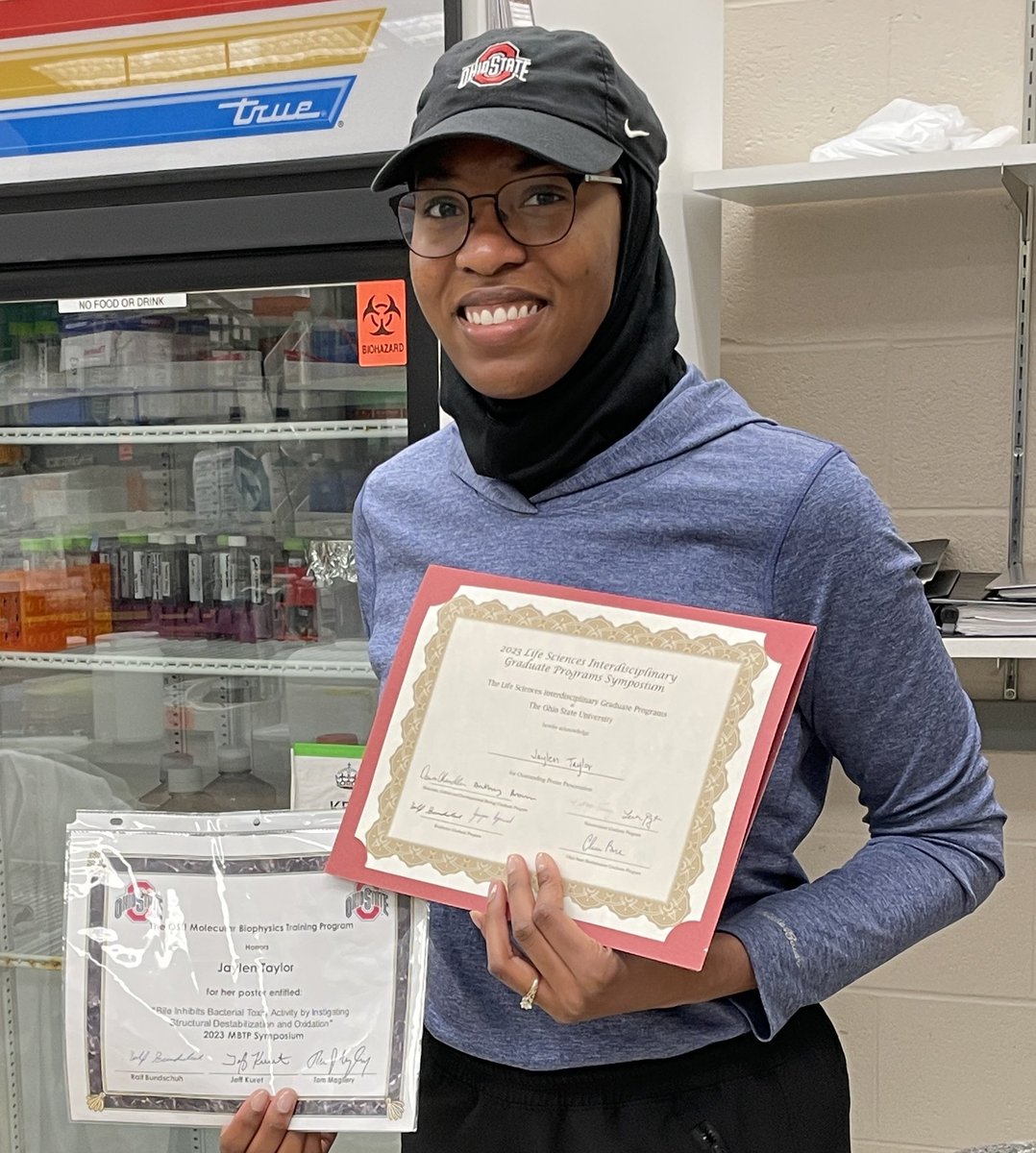
Congratulations to Dr. Jaylen Taylor on a successful defense of her Ph.D. thesis! Way to go, Jaylen! Good luck in all your future endeavors!
Dmitri Kudryashov tweet media
English
0
0
0
40
Dmitri Kudryashov がリツイート
Dylan Burnette
Dylan Burnette@MAG2ART·
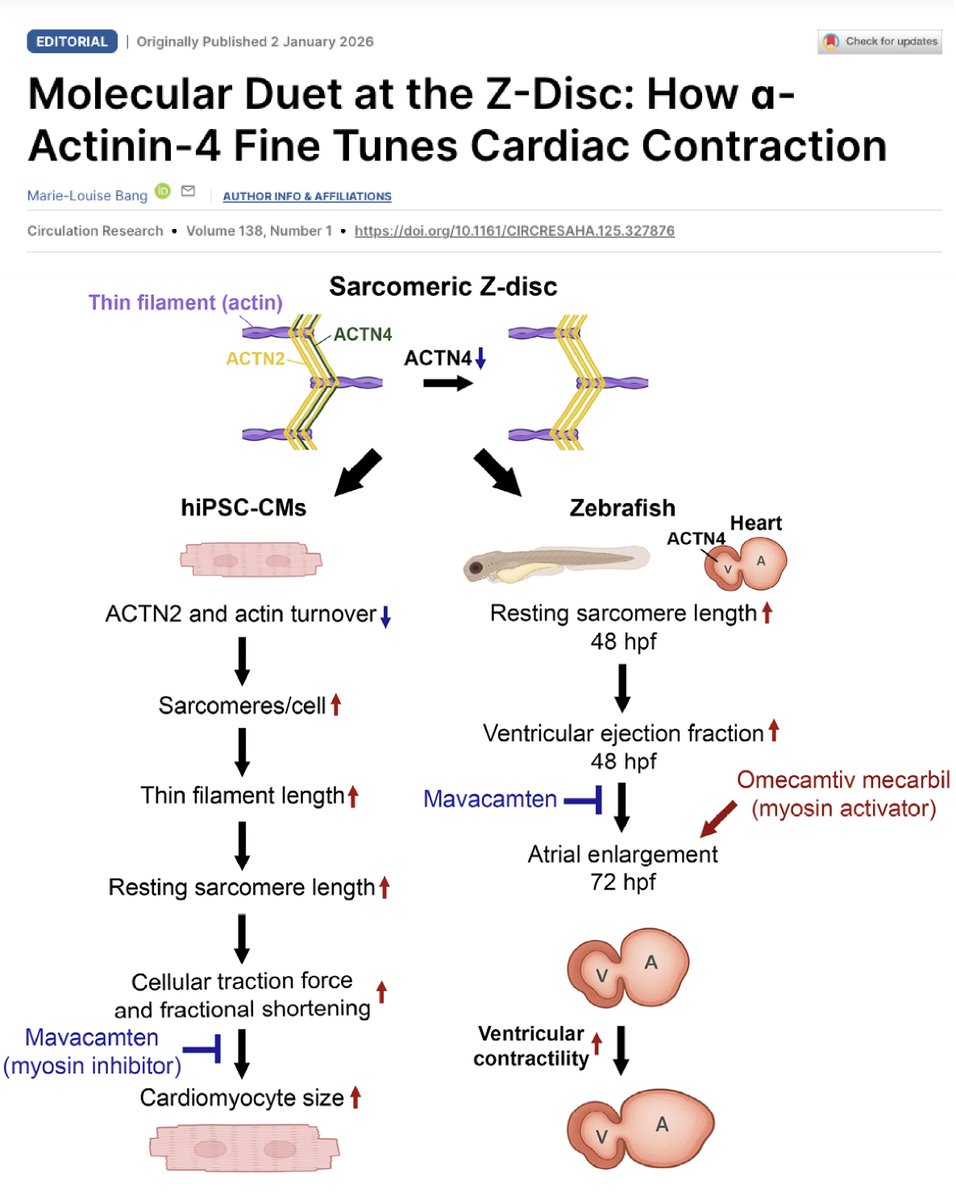
Check out this editorial in Circulation Research by Dr. Marie-Louise Bang about our paper on alpha-actinin-4 in the cardiac Z-disc. It both summarizes our findings really well (image gives a taste of it; there is more) and lays out future directions. ahajournals.org/doi/10.1161/CI…
Dylan Burnette tweet media
English
0
2
23
1.4K
Dmitri Kudryashov がリツイート
🧬Craig Brockie
🧬Craig Brockie@CraigBrockie·
Scientists just cracked the multiple sclerosis code after decades of searching. Two specific gut bacteria are triggering the disease, and they've proven it using identical twins and mice. This changes everything we know about MS:
English
732
7.4K
32.7K
8M
Dmitri Kudryashov がリツイート
James Zou
James Zou@james_y_zou·
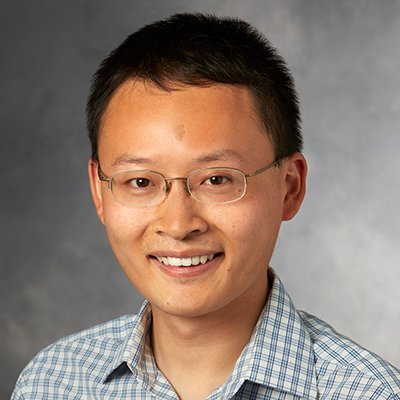
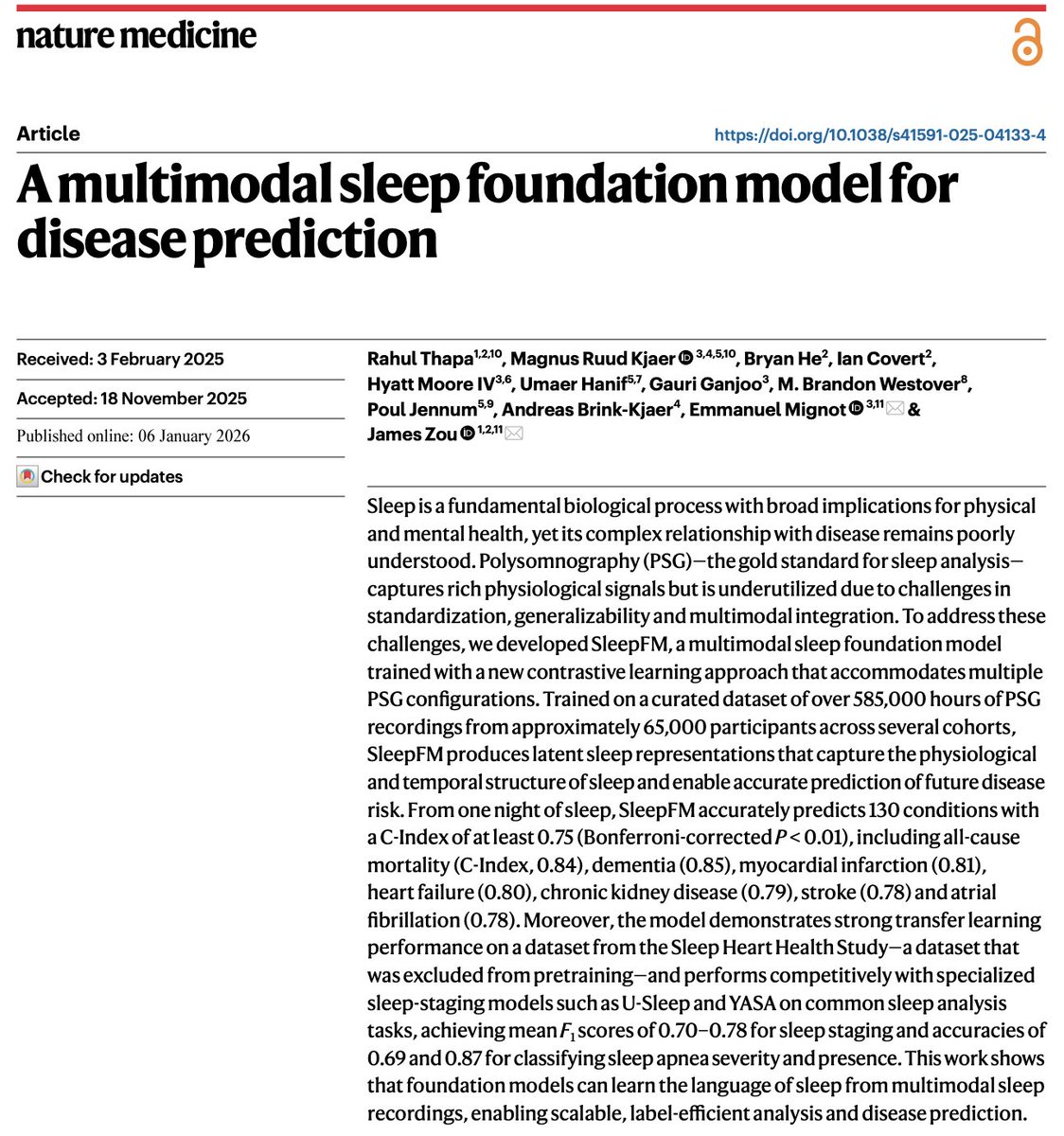
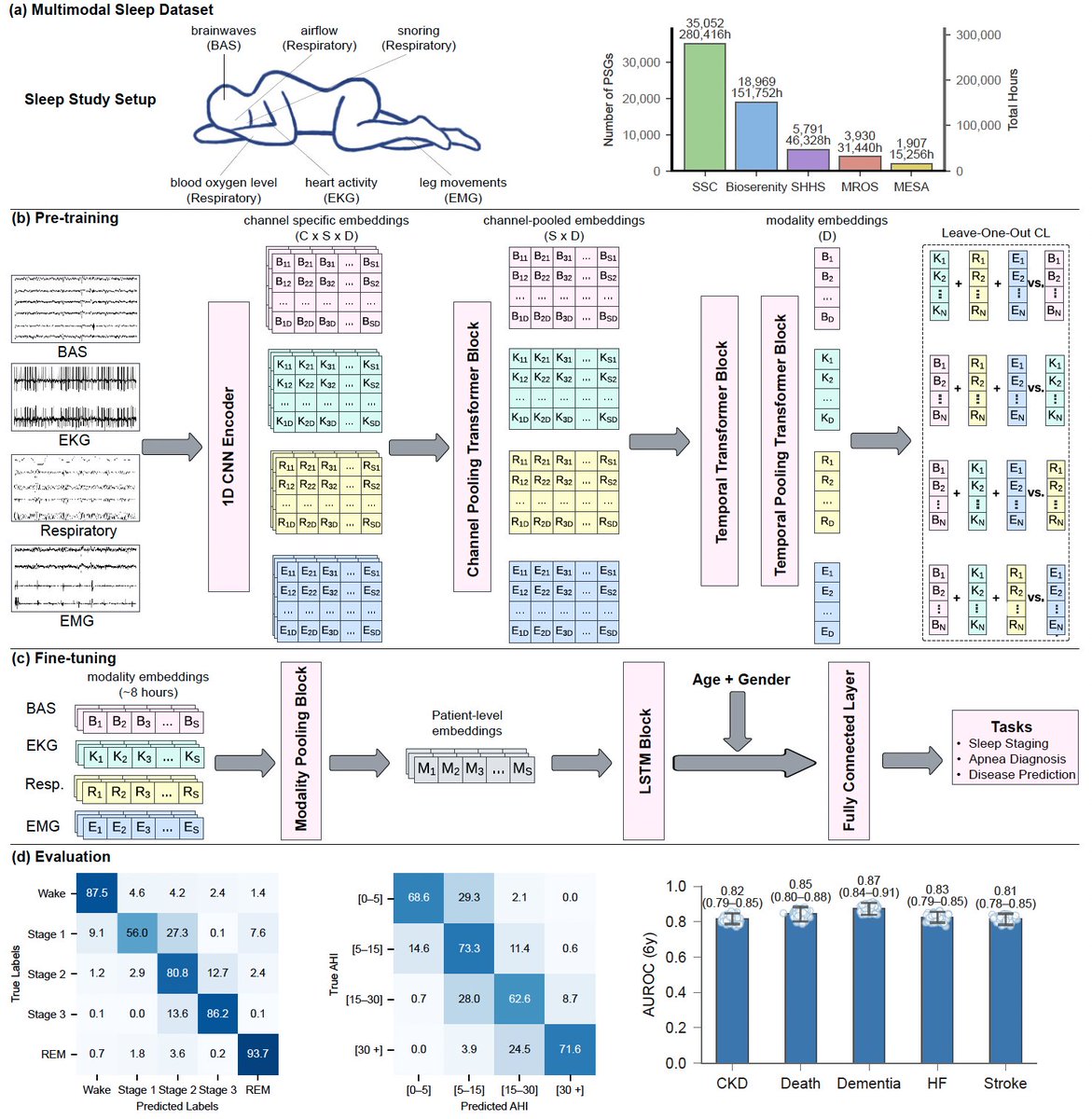
Today in @NatureMedicine we report that AI can predict 130 diseases from 1 night of sleep🛌 We trained a foundation model (#SleepFM) on 585K hours of sleep recordings from 65K people—brain, heart, muscle & breathing signals combined. AI learns the language of sleep🧵
James Zou tweet mediaJames Zou tweet media
English
275
2.1K
11K
912K
Dmitri Kudryashov がリツイート
Dylan Burnette
Dylan Burnette@MAG2ART·
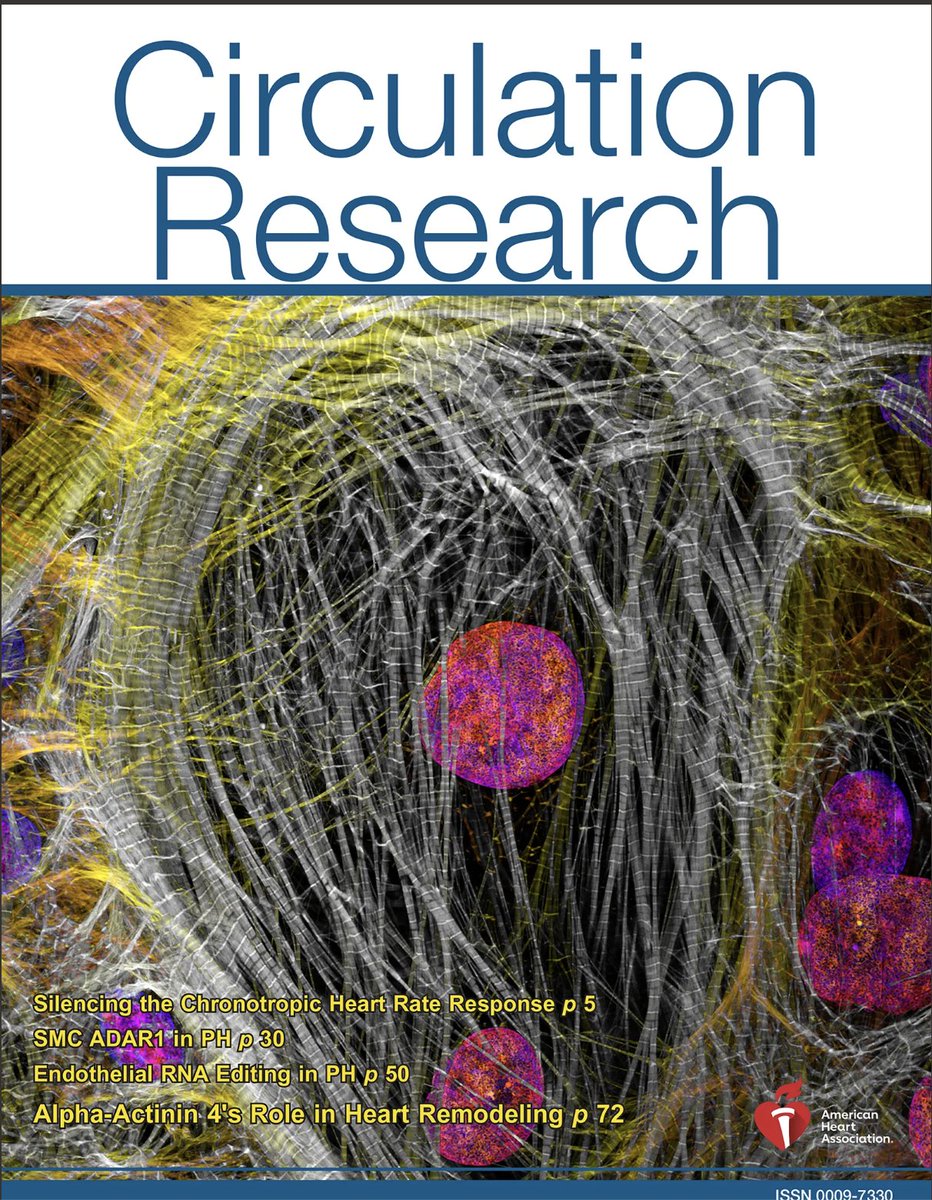
We got the cover to go along with our article "Nonmuscle α-Actinin-4 Couples Sarcomere Function to Cardiac Remodeling"! Read it here: ahajournals.org/doi/full/10.11…
Dylan Burnette tweet media
English
0
3
26
1.7K
Dmitri Kudryashov がリツイート
Dr. Dominic Ng
Dr. Dominic Ng@DrDominicNg·
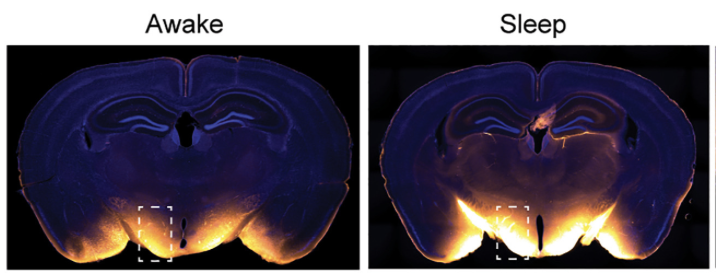
New Cell paper from the team that discovered glymphatic clearance (how your brain removes waste during sleep). Sleep hours DIDN'T predict brain cleaning. Neither did REM or deep sleep. They found what actually matters - and why some sleeping pills might undermine it 🧵
Dr. Dominic Ng tweet media
English
104
716
5.1K
1.1M
Dmitri Kudryashov がリツイート
eLife - the journal
eLife - the journal@eLife·
Septins and the exocyst complex work together to guide membrane trafficking during cell division in fission yeast, revealing one of the most conserved functions of septins in exocytosis. elifesciences.org/articles/10111…
English
0
11
60
4.4K
Dmitri Kudryashov がリツイート
Dylan Burnette
Dylan Burnette@MAG2ART·
iPS cell-derived cardiac myocytes (heart muscle cells) typically beat about once per second, so I usually speed up the movies I post; otherwise, scrollers might miss the action. But every now and then, a cell looks like this in real time. Could we use these rare cells to uncover mechanisms underlying arrhythmias? Probably, but the way the Burnette Lab would approach that would require a lot of description-- I apologize for using such filthy language. Description indeed...... Grant reviewers hate the uncertainty that word implies; "What if they just take a bunch of videos with their microscopes?" Well, we would do that....... and some other stuff...... the idea that we would not discover something new along the way is laughable. The "other stuff" would be pretty cool. This video shows an iPSC-derived cardiac myocyte videoed by Burnette Lab graduate student @EmmaKoory. Muscle myosin II is shown. #CellBiology
English
9
41
313
25.3K
Dmitri Kudryashov がリツイート
Oded Rechavi
Oded Rechavi@OdedRechavi·
Re-reading what you wrote the next day
English
23
78
702
49.4K