Penelope Marshall

2.1K posts

Penelope Marshall banner
Penelope Marshall

Penelope Marshall

@matryoshkatips

Christian, Conservative, Zionist. Philosophy/Politics/Economics - B.A.

参加日 Mart 2026
1 フォロー中22 フォロワー
固定されたツイート
Penelope Marshall
Penelope Marshall@matryoshkatips·
Philosophy: The improbable path of writing and thinking as an entire way of life.
English
0
0
2
576
Penelope Marshall
Penelope Marshall@matryoshkatips·
If a generation paid National Insurance contributions for decades under the explicit promise of a decent state pension in return, while simultaneously facing much lower real wages, far higher relative housing costs when raising families and far more limited access to generous workplace pensions compared to today, would it truly be fair to tell them now, in retirement, that they should downsize their family home simply because they didn't save enough privately?
English
0
0
0
1
Lin Mei
Lin Mei@linmeitalks·
Can I ask why, if a pensioner has worked all their life, they only have the state pension to rely on? Didn’t decide to save ? Put away for a rainy day ? Sounds like poor planning to me. And yes if your children have flown the nest and you, or you and your spouse are knocking around in a 3 or 4 bedroom house you bought decades ago- SELL it. You’ll have more than enough to live on.
English
1.4K
33
742
251.7K
Penelope Marshall
Penelope Marshall@matryoshkatips·
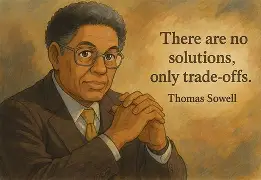
There Are No Solutions, Only Trade-Offs The human mind craves resolution. Faced with disorder, it reaches instinctively for the language of “solutions”, clean, decisive, final. A problem exists; therefore, a solution must be found. This is the grammar of optimism, but it is also the grammar of illusion. In reality, most of what we call solutions are merely rearrangements of costs. They do not eliminate problems; they relocate them. To say “there are no solutions, only trade-offs” is not cynicism. It is clarity. Every policy, every invention, every moral stance carries a price. The only meaningful question is not whether a proposal works, but for whom, at what cost, and over what time horizon. When governments attempt to lower housing costs, for instance, they often impose controls that make rents affordable in the short term. Yet those same controls can discourage construction, reducing supply and worsening the problem over time. The “solution” contains within it the seeds of a different failure. What has occurred is not resolution, but substitution. This pattern is universal. Economic growth lifts millions out of poverty, but often at the cost of environmental degradation. Strong policing can reduce crime, but risks encroaching on civil liberties. Expansive welfare systems provide security, but may dampen incentives that sustain productivity. In each case, the language of solutions obscures the underlying reality: one good is being purchased with another. The refusal to acknowledge trade-offs is not harmless, it is dangerous. It invites the public to believe in costless benefits, to demand outcomes that cannot coexist and to condemn leaders who fail to deliver the impossible. When trade-offs are denied, they do not disappear; they become hidden. And hidden costs are invariably borne by those least able to recognise or resist them. Consider technological progress. The digital age has democratised information, accelerated communication, and transformed entire industries. Yet it has also eroded privacy, shortened attention spans, and concentrated power in new and often opaque ways. To frame technology as a “solution” to human limitation is to ignore the new limitations it introduces. Every gain has a shadow. This principle extends beyond policy and technology into personal life. Choosing a career is not solving the problem of livelihood; it is trading freedom for stability, or stability for ambition. Committing to a relationship is not solving loneliness; it is exchanging solitude for obligation, and autonomy for connection. Even leisure is a trade-off, time spent in rest is time not spent in pursuit. What distinguishes serious thinking from wishful thinking is the willingness to confront these trade-offs directly. Serious thinking asks: which costs are acceptable? Which are not? Who decides? It recognises that progress is not the elimination of constraints, but the intelligent navigation of them. The language of solutions persists because it is comforting. It promises finality, a sense that the struggle can end. But the human condition offers no such resolution. Scarcity ensures that choices must be made, and choices ensure that something must always be given up. To abandon the myth of solutions is not to surrender hope. It is to replace naïve hope with disciplined judgment. It forces a shift from asking, “How do we fix this?” to asking, “What are we willing to trade for improvement?” That question is harder, less satisfying, and far more honest. In the end, the world does not present us with problems paired neatly with solutions. It presents us with competing goods, conflicting priorities, and limited resources. Wisdom lies not in imagining these tensions away, but in choosing among them with open eyes. There are no solutions. There are only trade-offs and the sooner that is understood, the better our choices will be. #ThomasSowell #Economics
Penelope Marshall tweet media
English
0
0
0
2
Penelope Marshall
Penelope Marshall@matryoshkatips·
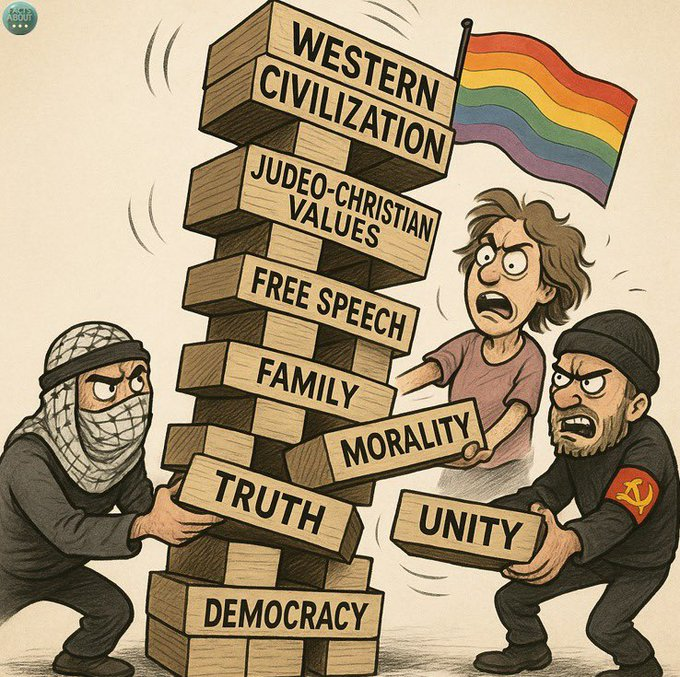
The Free Palestine Movement Is a Moral Revolt Against the West Itself Let’s drop the pretence: what parades across Western streets under the banner of “Free Palestine” is not simply activism. It is a moral insurrection, one that targets not just a foreign state, but the ethical foundations of the civilisation in which it thrives. This movement does not merely criticise policy. It seeks to invert morality itself. For centuries, the Judeo-Christian West has rested on a set of uncompromising principles: that human life has inherent value, that individuals are morally accountable for their actions, and that evil is not excused by grievance. These ideas were not decorative, they were civilisational guardrails. They separated justice from vengeance, law from chaos. The modern Free Palestine movement tears at those guardrails with open contempt. It replaces moral judgement with ideological tribalism. Under its logic, the moment a group is labelled “oppressed,” it is granted a kind of moral immunity. Atrocities are reframed as “resistance.” Murder becomes “context.” Barbarism is laundered through rhetoric until it is not merely excused, but celebrated. This is not a distortion at the margins. It is the core operating principle. What makes this especially corrosive is where it is happening. These are not arguments emerging from failed states or authoritarian regimes. They are being advanced in the heart of liberal democracies, by people who enjoy the protections of the very system they denounce. Freedom of speech, rule of law, individual rights, these are treated not as achievements to be preserved, but as tools to be exploited in service of their dismantling. There is a deep parasitism here: a movement sustained by the freedoms of the West while working to erode the moral legitimacy of those freedoms. Even more alarming is the intellectual collapse that accompanies it. Complexity is discarded because it is inconvenient. History is flattened into a cartoon. One side is assigned absolute innocence, the other absolute guilt. Facts that complicate the narrative are ignored or suppressed. The goal is not understanding, it is mobilisation. And mobilisation requires simplicity, outrage, and a steady erosion of truth. The result is a generation trained not to think, but to feel on command. To chant rather than reason. To substitute moral posturing for moral substance. This is not activism in any serious sense, it is performance, backed by a worldview that cannot withstand scrutiny. But the most dangerous aspect is the double standard. The movement holds Western societies to impossible, often self-contradictory moral expectations while granting their adversaries a free pass for conduct that would otherwise be universally condemned. This is not justice. It is moral cowardice dressed up as compassion. A civilisation cannot survive this asymmetry. When it judges itself by its highest ideals but judges others by their lowest excuses, it places itself at a permanent disadvantage, morally, politically, and psychologically. And that is precisely what we are witnessing: a steady loss of moral confidence. A reluctance to assert basic distinctions, between deliberate violence and lawful defence, between responsibility and victimhood, between truth and propaganda. Once those distinctions collapse, everything collapses with them. The uncomfortable reality is that the Free Palestine movement, in its current form, is not a plea for justice. It is a rejection of the very standards that make justice possible. It is not reformist, it is corrosive. It does not strengthen the moral fabric of the West; it unravels it. Civilisations are not destroyed overnight. They are hollowed out, idea by idea, standard by standard, until nothing remains but the shell. What we are seeing now is not the end, but the process. And the process is accelerating. The question is whether the West will recognise what is happening before the damage becomes irreversible, or whether it will continue to applaud its own moral disarmament, mistaking surrender for virtue. #Morality #Antisemitism
Penelope Marshall tweet media
English
0
0
0
2
Steve Cooke
Steve Cooke@Steve_Cooke·
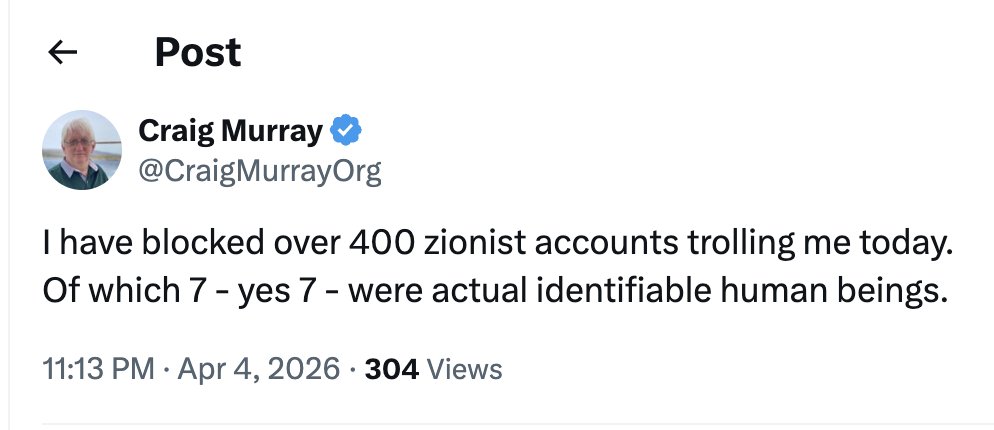
"Zionist" meaning anyone who criticised Craig Murray for his despicable claim that the antisemitic attack on Hatzola's Jewish community ambulance service was a "false flag" operation.
Steve Cooke tweet media
English
16
32
273
4K
Penelope Marshall
Penelope Marshall@matryoshkatips·
There are few mornings in the year that carry the quiet weight and the quiet promise, of Easter Sunday. It arrives not with the urgency of deadlines or the noise of celebration alone, but with something steadier: the idea that renewal is possible, even after long and difficult seasons. Easter is, at its core, a statement about reversal. What seemed final is not final. What appeared lost is not lost. Across centuries, cultures, and circumstances, that message has endured not because life is easy, but precisely because it is not. The persistence of Easter speaks to a basic human recognition: that despair, however convincing in the moment, does not always have the last word. Spring reinforces this truth in plain sight. The ground, once hardened by winter, yields again. Light returns earlier each day without asking permission. Trees that looked lifeless begin, quietly and without announcement, to change. Nature does not argue for renewal, it demonstrates it. For individuals, Easter offers a useful pause. It invites a simple but often neglected question: what, in one’s own life, might be capable of beginning again? Not in grand, unrealistic transformations, but in practical, observable ways. A repaired relationship. A habit set right. A decision made with more clarity than before. Renewal, in reality, is usually incremental, not dramatic, but it is no less significant for that. There is also a social dimension. Easter gatherings, whether around a table, in a church, or on a walk through a brightening city, serve as reminders that renewal is not solely an individual project. Communities, too, depend on the willingness of people to forgive, to rebuild, and to move forward without being permanently anchored to what went wrong. A happy Easter, then, is not merely a cheerful greeting. It is a recognition of something sturdier: that life contains within it the capacity to recover, to restore, and to continue with purpose. That idea, tested repeatedly over time, remains one of the more reliable sources of hope available to us. And that is reason enough to mark the day. #Easter
Penelope Marshall tweet media
English
0
0
0
3
James Dreyfus
James Dreyfus@DreyfusJames·
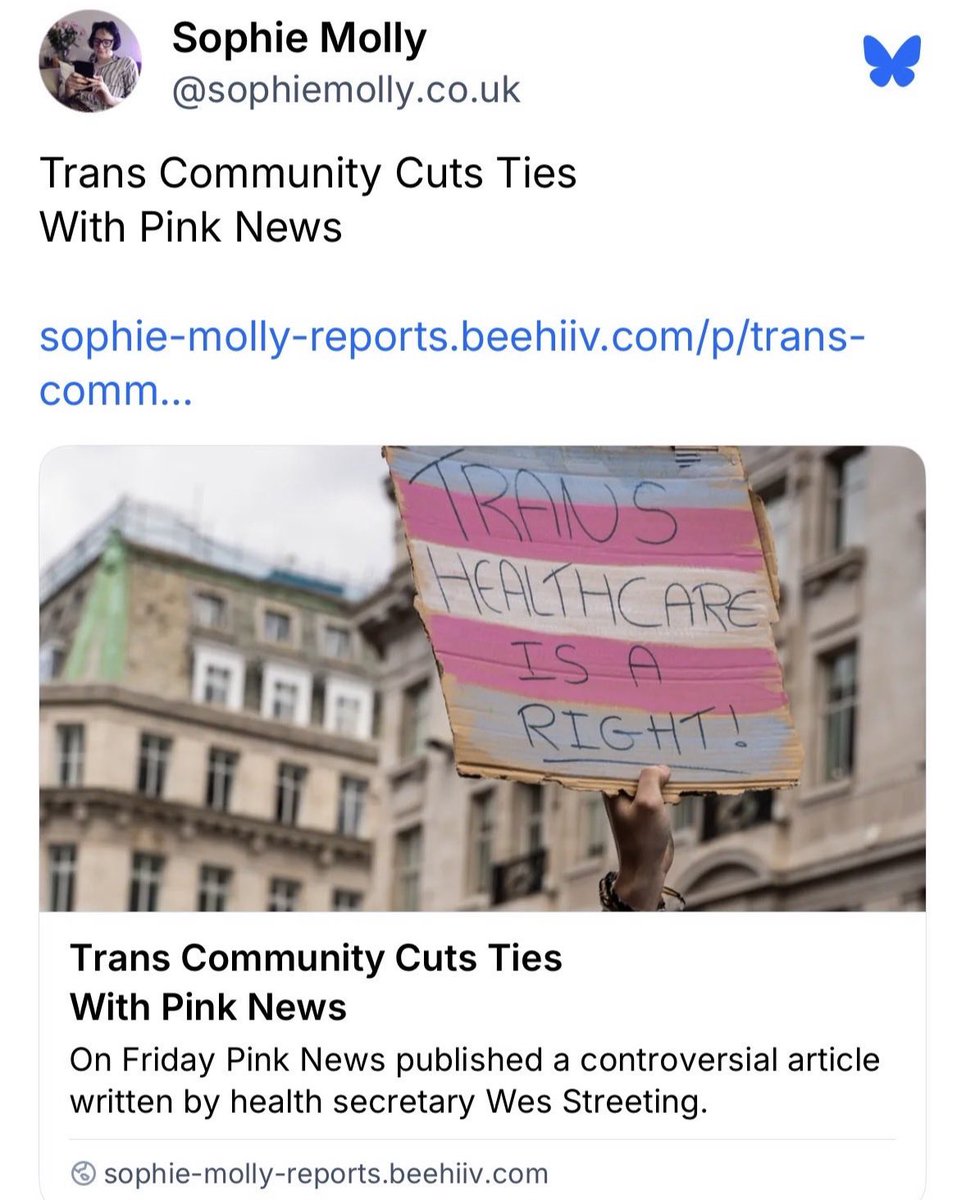
🤣 See? If true, even Pink News can’t sustain the impossible tightrope walk that involves full adherence to their demands… This is how the bully in the playground always ends up… Friendless & impotent…
James Dreyfus tweet media
English
61
135
1.1K
20.1K
Penelope Marshall
Penelope Marshall@matryoshkatips·
Mr Hitchens, you warn that Britain must not subordinate itself to an American president you liken to an ayatollah. Yet you have long argued that Britain’s deep involvement in the Ukraine conflict serves no vital British interest and has been driven by reckless Western (especially American) policy. If deference to American leadership is so dangerous when it comes to a state visit or royal flattery, why was it not equally dangerous when Britain followed Washington’s lead in provoking, prolonging, and arming a war on Europe’s eastern flank that has cost thousands of lives and billions in treasure with no clear strategic gain for the United Kingdom?
English
0
0
0
3
Penelope Marshall
Penelope Marshall@matryoshkatips·
If the AP described the mass displacement of Shiite families from southern Lebanon, many of whom fled Israeli evacuation orders issued after Hezbollah's rocket fire into Israel, as 'evictions' amid local sectarian tensions and fears of Hezbollah infiltration, why would labelling it 'ethnic cleansing' be the more precise historical term, rather than a consequence of an armed group's decision to embed military operations among civilians and provoke a broader conflict?
English
0
0
0
32
Penelope Marshall
Penelope Marshall@matryoshkatips·
If local traditions in southern Lebanon identify a 1st-century site as the tomb of Simon Peter (Shamoun al-Safa), while the overwhelming weight of early Christian historical sources and archaeological findings point to his martyrdom and burial in Rome beneath what is now St. Peter's Basilica, what criteria should we use to determine which claim better preserves the apostle's actual legacy and does emphasizing one over the other risk undermining shared interfaith reverence for verifiable history?
English
0
0
0
57
Craig Murray
Craig Murray@CraigMurrayOrg·
This is over a year old, but it has still only ever been seen by a minority of my followers, so I hope you will forgive me it you are seeing it again.
English
134
2.2K
6.7K
147.9K
Penelope Marshall
Penelope Marshall@matryoshkatips·
Mr. Hitchens, you have long maintained that NATO's eastward expansion and Western policy goaded Russia into invading Ukraine, making the conflict a predictable tragedy born of provocation rather than unprovoked aggression. If a sovereign nation’s right to choose its alliances and defend its borders against a larger neighbour’s demands for neutrality, territorial concessions and influence is treated as an intolerable provocation warranting invasion, what principle exactly distinguishes this from the historical pattern of great powers bullying smaller neighbours into submission and how would you persuade the people of a country facing annexation or vassalage that yielding to such 'realism' truly serves justice or long-term peace rather than merely rewarding the aggressor?
English
0
0
0
3
Peter Hitchens
Peter Hitchens@ClarkeMicah·
Why should our King be made to visit this rude, ungrateful and vainglorious President? Call off the Royal visit. My column in The Mail on Sunday today.
Peter Hitchens tweet media
English
185
48
407
19.6K
Penelope Marshall
Penelope Marshall@matryoshkatips·
If a government's increasing restrictions on LGBT expression and assembly mark the beginning of its slide into fascism, as you suggest happened in Russia starting with the 2006 Moscow Pride ban, what do we make of other societies that have maintained or even strengthened similar cultural and legal boundaries around sexuality and family without descending into totalitarian control, mass purges, or expansionist wars?
English
0
0
0
13
Peter Tatchell
Peter Tatchell@PeterTatchell·
Russia’s slide into fascism began with weaponisation of homophobia Putin copied from the Nazis. They scapegoated Jews. He scapegoated LGBTs It began with 2006 ban on Moscow Pride. Then ban on LGBT propaganda & symbols. LGBT now branded "extremist" novayagazeta.eu/articles/2026/…
English
4
9
18
1K
Penelope Marshall
Penelope Marshall@matryoshkatips·
What makes the recent reports of antisemitism in British schools so alarming is not merely their frequency, but their normality. The word “incident” suggests aberration. What is now being described is something closer to atmosphere. According to reporting in The Telegraph, Jewish pupils in Britain are being called “baby killers” in primary school playgrounds, language that does not emerge spontaneously from children, but is absorbed, repeated, and normalised. What was once unsayable has become casual. That is the first and most important fact. A civilised society is not judged by whether hatred exists, it always does, but by whether it is contained, stigmatised, and pushed to the margins. Schools, in particular, are meant to be the institutions where civilisation reproduces itself: where inherited prejudices are corrected, not transmitted. When antisemitism enters schools, it is not merely present; it has already been legitimised somewhere upstream. The data reinforce the anecdote. School-related antisemitic incidents have reportedly doubled compared to pre-2023 levels, with hundreds of cases recorded in a single year. That is not statistical noise. It is a structural shift. And behind the numbers lies something more troubling still: Jewish teachers themselves reporting that complaints are ignored or minimised. When authority figures retreat, disorder does not remain neutral, it acquires a direction. The usual explanations, “tensions abroad,” “heated political debate,” “youthful ignorance”, are not wrong, but they are insufficient. Political conflict has always existed. What has changed is the moral filtering mechanism. Hostility toward Israel has, in too many cases, ceased to be political and become civilisational shorthand: Jews as a category are made to bear the burden of geopolitical anger. As one student account noted, hostility ostensibly directed at a state frequently “morphs into antisemitism.” This is not new in history. It is, in fact, one of the oldest patterns in European life: the abstraction of blame into a people. What is new is the speed and scale at which such attitudes are transmitted. Social media, activist rhetoric, and a broader cultural reluctance to enforce boundaries have combined to create what earlier generations would have recognised immediately: a permissive environment for prejudice. Even more concerning is the evidence of normalisation beyond schools. Reports suggest that antisemitism is becoming embedded across institutions, from universities to public services, accompanied by a wider climate in which Jewish citizens feel increasingly unsafe. Schools do not generate such climates; they reflect them. The classroom is downstream of the culture. The failure, therefore, is not simply educational. It is moral and institutional. Britain has, for decades, prided itself on a certain civic inheritance: that minority citizens, whatever their background, would be protected not by sentiment but by norm, by a widely understood and enforced boundary between disagreement and dehumanisation. That boundary is now eroding. What is striking is not that children repeat ugly phrases. Children always will. What matters is whether adults intervene with clarity or equivocation. Too often, the response has been procedural rather than moral, reviews, frameworks, consultations, while the underlying issue is one of enforcement. A society that cannot say “this is unacceptable, and here are the consequences” will, in time, lose the ability to say it at all. There is also a deeper intellectual failure at work. Much contemporary discourse treats prejudice as a function of power structures rather than as a moral wrong in itself. The result is a hierarchy of outrage, in which some forms of hatred are pursued with vigour while others are explained, contextualised, or quietly tolerated. Antisemitism has increasingly fallen into the latter category. That inconsistency does not reduce prejudice; it redistributes it. The lesson from history is not subtle. Antisemitism does not remain confined to Jews. It is a solvent: once permitted, it erodes the norms that protect everyone. A society that tolerates the targeting of one minority will, sooner or later, find that no boundary holds. If British schools are now sites where Jewish children are abused with language drawn from the darkest chapters of European history, then the problem is not educational policy in the narrow sense. It is the transmission of civilisation itself. And that, once lost, is not easily rebuilt. #antisemitism #Education
The Telegraph@Telegraph

🏫 In one incident, primary school pupils were allegedly called ‘baby killers’ for singing in Hebrew 🔗 telegraph.co.uk/news/2026/04/0…


English
0
0
0
2
Penelope Marshall
Penelope Marshall@matryoshkatips·
Peter, you have long championed the rights of women and opposed their exploitation and oppression. If biological sex is not a meaningful category for determining who is a woman, as you appear to believe when advocating the inclusion of trans women in women’s spaces and sports, then on what consistent basis do you praise and support the specific feminist campaigns for equal pay, against objectification and against violence that were fought explicitly by and for biological females?
English
0
0
1
29
Peter Tatchell
Peter Tatchell@PeterTatchell·
Some feminists want to exclude trans women. I disagree but salute their work for equal pay etc I get branded a misogynist for supporting trans rights, despite my solidarity with every other feminist campaign for 50+ years I judge people on the totality of their work. Do you?
Peter Tatchell tweet media
English
37
1
13
1.2K
Penelope Marshall
Penelope Marshall@matryoshkatips·
Means Testing Pensions in the UK: A Costly Exercise The debate over how best to fund and distribute pensions in the United Kingdom has intensified in recent years, particularly as demographic pressures strain public finances. One proposal that frequently surfaces is means testing, providing pension benefits only to those whose incomes or assets fall below a certain threshold. While this approach ostensibly aims to target limited resources at those most in need, an economic analysis reveals that means testing can, paradoxically, be more costly than universal pensions, both in administrative terms and in broader economic efficiency. Administrative Complexity and Costs Universal pensions, such as the current UK State Pension, are simple by design: every eligible individual receives the same payment regardless of wealth. This uniformity dramatically reduces administrative burdens, avoiding the need for extensive income verification, asset assessments, and ongoing monitoring. By contrast, means-tested pensions require the government to continuously evaluate applicants’ financial circumstances. This necessitates a sizeable bureaucracy to collect, verify, and update income and asset information, as well as to handle appeals and disputes. Empirical evidence suggests these costs are non-trivial. Administrative expenses for means-tested benefits can consume a significant proportion of total payouts. For example, when the UK introduced the Pension Credit, a partially means-tested benefit, the National Audit Office highlighted the high administrative cost per recipient, in part due to the need for frequent reassessments and complex eligibility rules. In many cases, the cost of administering means-tested schemes approaches or even exceeds the savings from excluding wealthier individuals. Economic Behaviour and Efficiency Losses Beyond administrative costs, means testing can distort economic behaviour, creating what economists term “poverty traps.” Individuals near the eligibility threshold may reduce work or savings to qualify for benefits, thereby reducing overall economic productivity. For retirees, the knowledge that pension entitlements diminish with additional income may discourage private saving, ironically increasing long-term dependence on state support. Universal pensions, by contrast, avoid these distortions by providing a predictable floor of income irrespective of other financial decisions. Moreover, means-tested pensions can impose hidden costs on families and social systems. Complex eligibility rules can encourage avoidance or evasion, necessitating enforcement and audits, while marginal recipients may experience uncertainty and stress, which has measurable social and health consequences. These costs, though less visible than administrative budgets, represent real economic inefficiencies. Political and Social Considerations From a political economy perspective, universal pensions enjoy widespread public support precisely because they are simple, transparent, and free of stigma. Means-tested schemes, while ostensibly fairer in targeting resources, risk undermining social cohesion. Individuals may perceive them as intrusive or unfair, reducing trust in institutions and compliance with other social programs. The economic cost of eroded trust, manifested through lower civic engagement and adherence to tax obligations, is difficult to quantify but potentially significant. Conclusion Means testing in the UK, while intuitively appealing as a way to direct pensions to those most in need, can paradoxically increase overall costs. The direct administrative burden, coupled with inefficiencies in economic behaviour and social consequences, often outweighs the savings achieved by excluding wealthier retirees. By contrast, universal pensions offer simplicity, predictability, and societal cohesion, achieving similar social protection at lower overall cost. As such, economic analysis suggests that the pursuit of “targeted fairness” through means testing may, in practice, be a costly exercise with limited returns. #Pensions
Penelope Marshall tweet media
English
0
0
0
13
Penelope Marshall
Penelope Marshall@matryoshkatips·
The Moral and Legal Catastrophe of Gender-Neutral Toilets in Britain Britain is careening headlong into absurdity, and the epicentre of this madness is the gender-neutral toilet. Marketed as a gesture of inclusivity, it is, in truth, an unambiguous attack on reason, decency, and the safety of ordinary citizens. In the name of ideology, we are being asked to abandon centuries of legal prudence and moral common sense, a surrender that is nothing short of catastrophic. The legal foundations of gender-specific spaces are not arbitrary relics; they exist to protect human dignity, bodily integrity, and personal security. Women, particularly young girls, are entitled to private spaces free from intrusion. Gender-neutral toilets dissolve this boundary, leaving the law impotent and the public vulnerable. Courts are now forced into the ludicrous exercise of adjudicating subjective identity against objective biology, creating legal uncertainty on a scale previously unimaginable in British jurisprudence. This is not progressive law; it is a parade of incoherence, an invitation for confusion, litigation, and harm. Morally, the rot is even deeper. Society functions on tacit agreements about safety and decency. Gender-neutral toilets betray this trust. They demand that women, children, and families accept exposure to situations that make them uncomfortable, even unsafe. Ideologues insist that discomfort is a small price for inclusivity, but this is moral inversion. True ethics seeks to balance rights and responsibilities, not to privilege ideology over lived reality. A society that prioritises self-expression over the safety of its most vulnerable is a society in moral freefall. And the practical consequences are glaring. Harassment, anxiety, and avoidance of public spaces are rampant. Women feel unsafe. Parents hesitate to let children enter facilities. The ostensible beneficiaries, the transgender and non-binary population, gain little in return for society’s widespread discomfort and risk. A single unisex toilet cannot replace the dignity, security, and reassurance offered by thoughtfully designed, sex-specific facilities. What was sold as progress has become a social hazard. The collapse is complete: legal certainty has been sacrificed, moral clarity abandoned, and public safety subordinated to a radical social experiment. Gender-neutral toilets are neither humane nor rational, they are a testament to ideological arrogance, a monument to Britain’s willingness to jettison prudence in pursuit of fashionably ill-conceived “inclusion.” If this trajectory continues, we will look back not as a society advancing human rights, but as a society that lost its moral compass and legal moorings in the toilets of its own making. The time for compromise is over. It is time to restore common sense, protect privacy, and reaffirm that the law exists to safeguard society, not to bend it to transient ideological whims. To ignore this is to sanction collapse and Britain cannot afford that. #ProtectPrivacyNotIdeology
Penelope Marshall tweet media
English
0
0
0
9
Penelope Marshall
Penelope Marshall@matryoshkatips·
‘Her Penis’: How Journalists Sold Their Souls for Clicks Once, journalism was meant to illuminate, to scrutinise, to hold power accountable. Today, it is little more than a carnival funhouse mirror, reflecting outrage, sensation, and absurdity back at a gullible audience. The latest spectacle, grotesquely dubbed “Her Penis,” is not a story. It is a performance, a grotesque pantomime staged by journalists who have abandoned any pretense of truth. Observe the mechanics: headlines designed to shock, euphemisms to titillate, ambiguity to provoke maximum virality. Verification? Context? Ethics? Optional. In their place, editors and writers chase clicks as if they were oxygen, sacrificing accuracy for metrics, and dignity for retweets. A human being’s body, identity, and privacy are reduced to punchlines. “Her Penis” becomes a weaponised meme, a shorthand for outrage rather than a reflection of reality. The consequences are corrosive. Journalism, meant to bind society with shared facts, now divides it with mockery and spectacle. Nuance is punished, careful analysis mocked. The public is trained to react reflexively, to cheer scandals while the truth, inconvenient, subtle, or complex, is buried under a mountain of hyperlinks and hashtags. This is not evolution; it is decay. And yet, some still insist this is progress. “It’s engagement,” they say. “It’s culture.” No. It is surrender. It is the abdication of responsibility by those entrusted with information. When outrage replaces verification, when virality becomes a guiding principle, journalism ceases to serve society, it serves only itself. The “Her Penis” episode is a warning: a profession that once demanded rigour now trades in sensation. If this continues, truth will no longer be expected, respected, or even recognised. Readers must treat headlines as entertainment, not evidence, and remember: the world is not defined by the most viral story, but by the facts that persist despite the noise. #TruthOverTrash
Penelope Marshall tweet media
English
0
0
0
19