Physical Review Fluids

1.5K posts

Physical Review Fluids banner
Physical Review Fluids

Physical Review Fluids

@PhysRevFluids

@APSPhysics journal publishing innovative research that will advance the fundamental understanding of fluids.

College Park, MD (HQ) 参加日 Aralık 2015
94 フォロー中10.5K フォロワー
固定されたツイート
Physical Review Fluids
Physical Review Fluids@PhysRevFluids·
Take a look at selected highlights from Physical Review Fluids in 2025, including research, awards, and community events. Thank you to all who contribute to advancing fluid dynamics! (Music from #Uppbeat: go.aps.org/3MV5DRz, license code: DAWZT3G3VWBT1SN6)
English
0
8
30
2.4K
Physical Review Fluids がリツイート
WebsEdge - Science
WebsEdge - Science@WebsEdgeScience·
Join APS TV Host Clara Nellist as she sits down with the editors of PRX Intelligence, a new @APSPhysics journal. Watch them introduce their vision for a publication dedicated to research at the intersection of physics, AI & machine learning. #APSSummit26 youtu.be/3UpwDhHLGRE
YouTube video
YouTube
WebsEdge - Science tweet media
English
0
20
2
2.6K
Physical Review Fluids
Physical Review Fluids@PhysRevFluids·
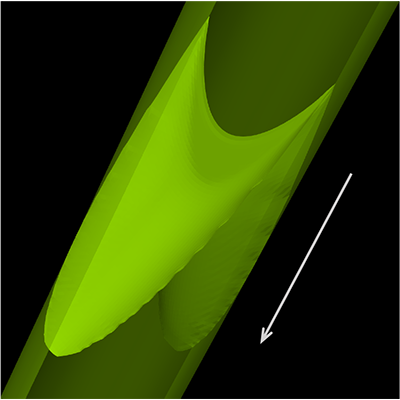
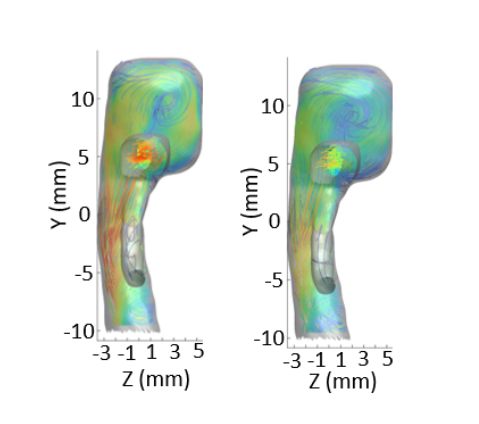
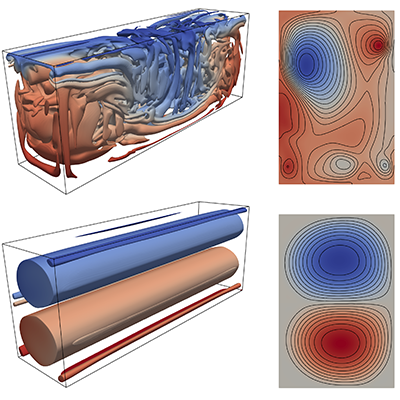
Bicuspid valves in veins have crescent-shaped leaflets that ensure unidirectional flow to the heart. Varying leaflet length under backward flow reveals a transition from reflux to full blockage, highlighting the role of geometry in passive valve function. go.aps.org/47W4Qae
Physical Review Fluids tweet media
English
0
2
14
542
Physical Review Fluids
Physical Review Fluids@PhysRevFluids·
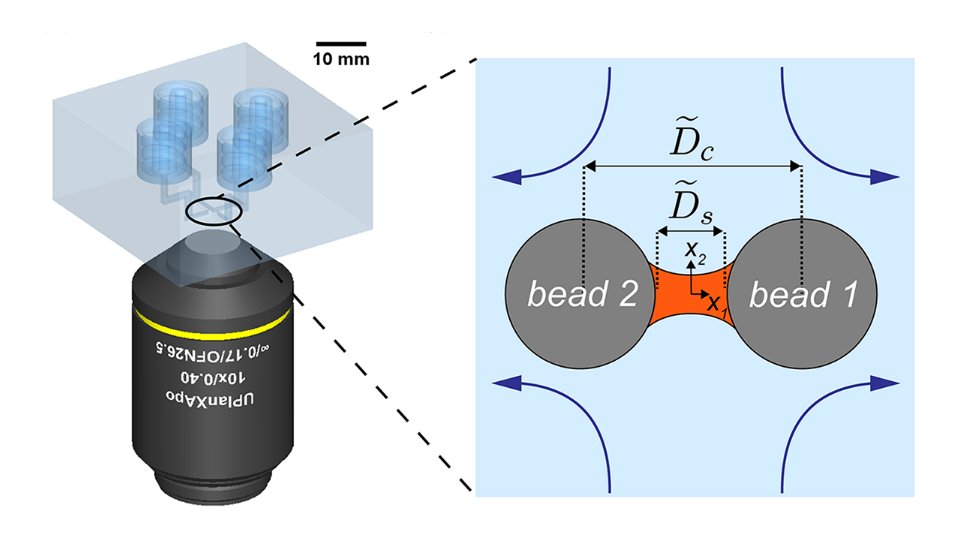
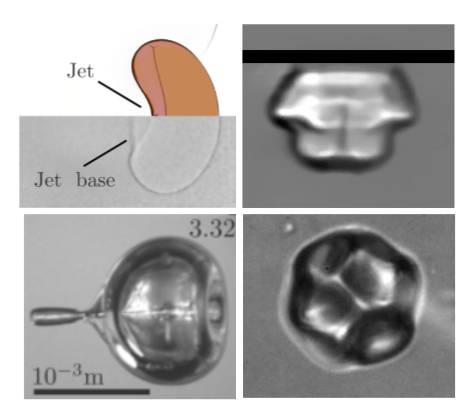
A critical capillary number controls the stability of particle clusters bound by capillary bridges in extensional flow. Below the threshold, stability depends on initial separation, while above clusters are unconditionally unstable. Editors' suggestion: go.aps.org/4bieFlc
Physical Review Fluids tweet media
English
0
8
41
1.6K
Physical Review Fluids
Physical Review Fluids@PhysRevFluids·
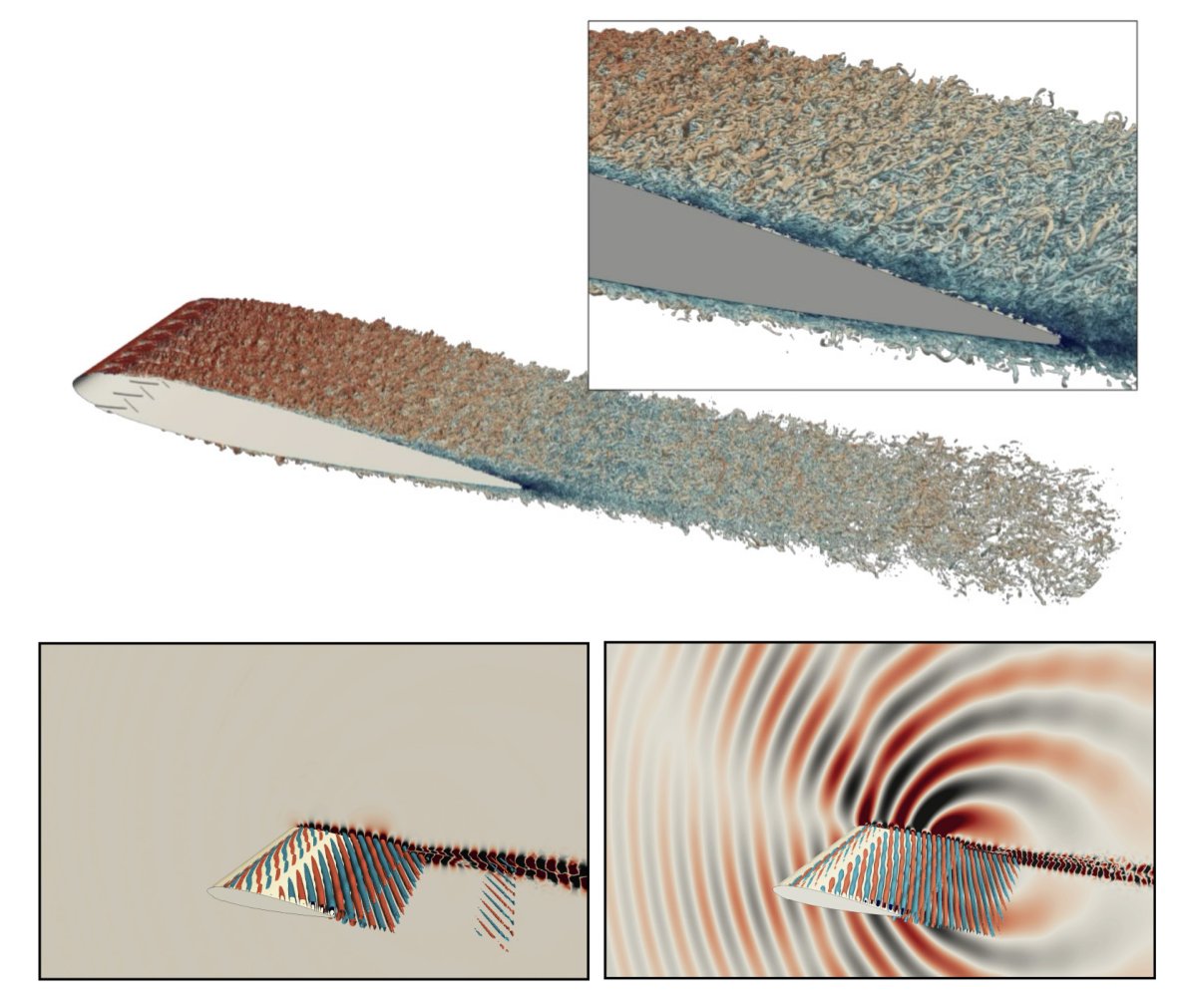
Broadband trailing-edge noise in finite-span airfoils is driven by 3D flow structures, with spanwise effects dominating above a threshold. A reduced-order model based on spectral proper orthogonal decomposition captures far-field noise Editors' suggestion go.aps.org/4cLYC01
Physical Review Fluids tweet media
English
0
11
59
2.1K
Physical Review Fluids
Physical Review Fluids@PhysRevFluids·
Asymmetric ice blocks floating in water can self-propel as they melt, due to a buoyancy-driven gravity current producing steady translation. A momentum-balance model predicts this mechanism, which persists even in warm saltwater. Editors' suggestion: go.aps.org/3Png1SW
English
12
82
719
54.4K
Physical Review Fluids
Physical Review Fluids@PhysRevFluids·
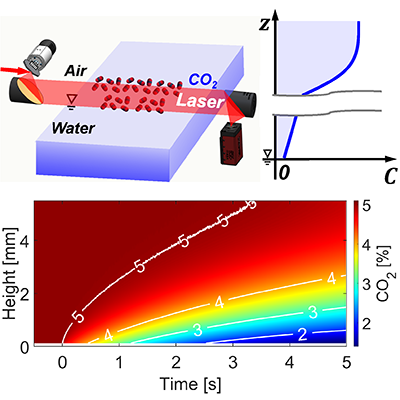
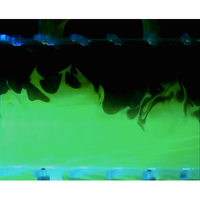
Precision laser spectroscopy enables high-resolution, spatiotemporally resolved measurements of CO2 transport across the air-water interface, overcoming conventional probe-based sampling techniques with nonintrusive diagnostics. Editors' Suggestion go.aps.org/4sAqOro
Physical Review Fluids tweet media
English
1
3
23
985
Physical Review Fluids
Physical Review Fluids@PhysRevFluids·
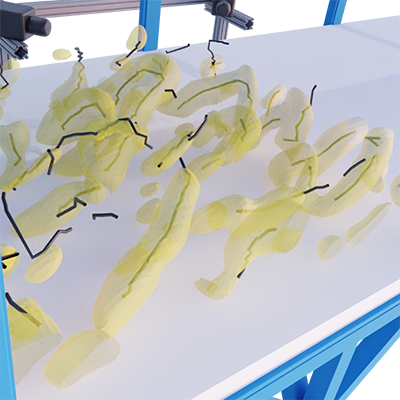
In homogeneous isotropic turbulence, the rotation rate of long, flexible fibers increases with flexibility. Experiments reconstructing the 3D conformation of fibers show this is directly related to the amplitude of deformation. Read more at go.aps.org/46YeFEd
Physical Review Fluids tweet media
English
1
3
22
1.1K
Physical Review Fluids
Physical Review Fluids@PhysRevFluids·
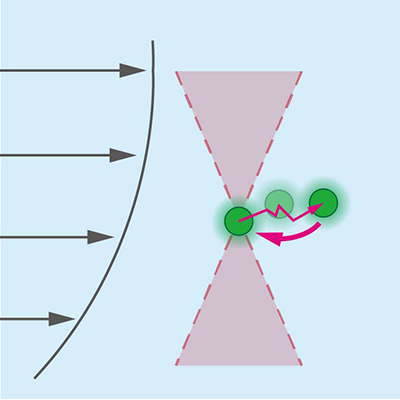
Trapping a tracer with light, briefly releasing it to move with the flow, then pulling it back to the same position enables flow measurements when tracers are scarce. The method is validated by measuring a slow microflow in a square microchannel. go.aps.org/4usmuw8
Physical Review Fluids tweet media
English
1
10
33
1.3K
Physical Review Fluids
Physical Review Fluids@PhysRevFluids·
🚨 Next PRFluids Journal Club: author Christian Reartes discusses the paper "Extreme vertical drafts as drivers of Lagrangian dispersion in stably stratified turbulent flows" 🕒 March 24, 12 p.m. ET. Read ahead: go.aps.org/4poLQHm Registration: go.aps.org/46QNX0g
Physical Review Fluids tweet media
English
0
2
8
634
Physical Review Fluids
Physical Review Fluids@PhysRevFluids·
To celebrate 10 years of PRFluids, we're revisiting exceptional papers from the journal. In the first #PRF10 Author Reflections video, Prof. Steve Brunton discusses the motivation, key findings, and impact of one of their Phys. Rev. Fluids papers. youtube.com/watch?v=loebSU…
YouTube video
YouTube
English
1
6
16
1.4K
Physical Review Fluids
Physical Review Fluids@PhysRevFluids·
An interferometry method for confined 2D binary droplets in a humidity-controlled environment enables high-res measurement of drying kinetics and internal concentration fields to characterize drying and transport in complex fluids. Editors' suggestion: go.aps.org/4unsCpq
English
0
10
33
1.5K
Physical Review Fluids
Physical Review Fluids@PhysRevFluids·
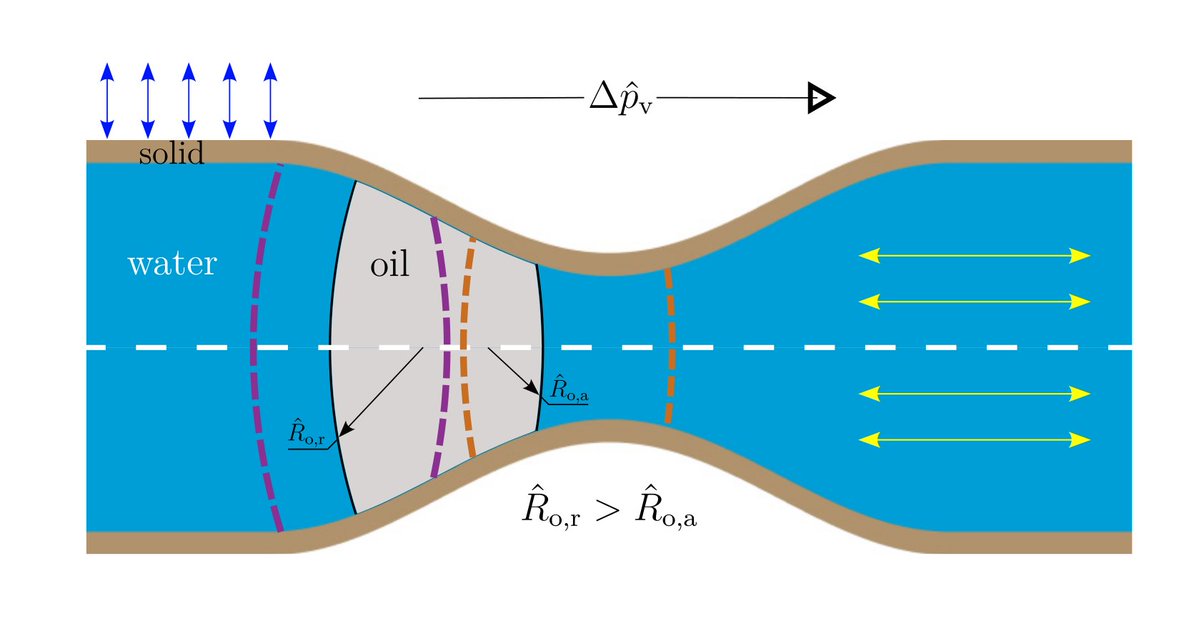
Droplet motion in constricted deformable tubes can be controlled by actuation. Oscillatory wall traction minimizes mobilization time when the traction frequency matches the tube's natural frequency, but oscillatory fluid forcing shows no resonance. go.aps.org/4d0TR2C
Physical Review Fluids tweet media
English
1
10
44
1.4K
Physical Review Fluids
Physical Review Fluids@PhysRevFluids·
A simple method objectively identifies coherent vortices in turbulent flows using only the velocity-gradient tensor. Readily applicable to experimental data, it shows that boundary-layer-scale vortices in a wind tunnel form hairpin structures. go.aps.org/4r7nVwY
Physical Review Fluids tweet media
English
0
9
40
2K
Physical Review Fluids
Physical Review Fluids@PhysRevFluids·
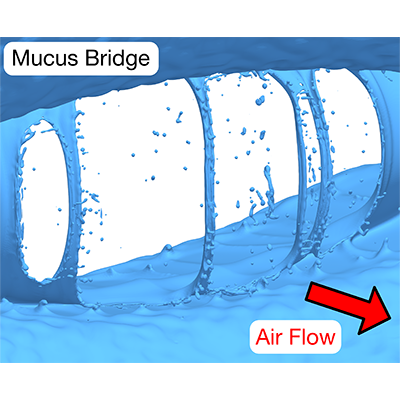
A Volume-of-Fluid CFD model of multiphase dynamics in the vocal cords studies stretching & rupture of mucus during phonation. Initial small-scale perturbations on the mucus surface are key for triggering realistic, multimodal breakup. Editors' Suggestion go.aps.org/4l6lxVW
Physical Review Fluids tweet media
English
1
5
25
1.2K
Physical Review Fluids
Physical Review Fluids@PhysRevFluids·
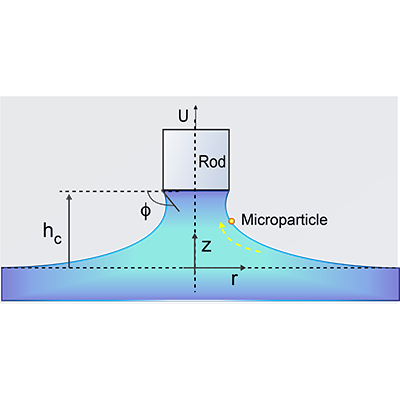
A geometry-controlled capillary well formed by a vertically actuated rod enables reversible trapping and guided migration of microparticles at fluid interfaces. Theory, experiments, and simulations reveal an optimal aspect ratio for trapping efficiency. go.aps.org/3MpgxyY
Physical Review Fluids tweet media
English
1
9
42
1.4K
Physical Review Fluids
Physical Review Fluids@PhysRevFluids·
How do compressibility and geometry affect shearless turbulent-nonturbulent mixing? Compared to decaying homogeneous isotropic turbulence, the decay rate of turbulent kinetic energy is enhanced by dilatation and diverging geometries. Editors' Suggestion: go.aps.org/4rtpDtx
Physical Review Fluids tweet media
English
0
4
31
1K