

Christine Spang
4.4K posts

Why do most of your employees think most meetings are a waste of time? I spent a year interviewing managers at top tech companies, and wrote a book with practical tips about how to run amazing meetings. See themeetingbook.org to pre-order, thanks! And share this tweet with your managers...
English
@appenz @BehEvans @meetgranola If you're up or writing a little code you could use Nylas Notetaker as the infra backend for transcribing your meetings and dump the transcripts wherever you want
developer.nylas.com/docs/v3/noteta…
English

@BehEvans @meetgranola I am looking for a very narrow tool that transcribes my meetings and does nothing else.
For workflows, markdown and a folder based file system to me seems like the only viable solution for now.
English
Sorry to see Granola @meetgranola going closed. They encrypted their local db, no local and no cloud API. In a world where notes are managed by agents, the app now has zero value.
Any recommendations for good alternatives? What are you switching to?
English

All the nerds are using it. You?
Obsidian@obsdmd
Anything you can do in Obsidian you can do from the command line. Obsidian CLI is now available in 1.12 (early access).
English

There now being a "Promotions" grouping in my phone notifications seems like a bad sign for the enshittification of Android apps
Communication channels are in a race for attention everywhere
English
Christine Spang がリツイート

The definition of "smart" is changing rapidly.
Right now it's someone who is intelligent and can solve problems.
That's going to become commoditized in the AI era.
The future of smart will be someone who has... empathy... the ability to infer the unspoken... to sense other people.
^This is what Nvidia CEO Jensen Huang describes in this interview.
And I completely agree with him.
I wrote about this in depth in an @every article last year.
Before AI, knowledge set you apart. Knowing more meant earning more. Accumulating skills, developing expertise, and mastering frameworks got you ahead.
When knowledge is no longer scarce, what remains valuable is wisdom.
You can get answers from AI, but how you use those answers takes wisdom.
Wisdom is how to live. It is emotional intelligence and agility. It is an embodied experience, guidance from the inside.
No matter how intelligent AI becomes, it can’t live your life for you. It can’t feel your body’s signal in a high-stakes negotiation, sense the hidden fear in a boardroom, or hear the unspoken "no" behind a client's polite words.
That’s why tomorrow’s economy will prize wisdom workers.
Video credit: advicefromceo.s on Instagram
English
Christine Spang がリツイート

Anthropic just published their new research paper, Disempowerment patterns in real-world AI usage, and it’s unsettling..
1. They analyzed 1.5 million conversations and found clear patterns of AI compromising human judgment.
2. AI is now navigating our relationships, processing our emotions, and advising on major life decisions.
3. In many cases, AI steers users to distort reality rather than inform it.
4. The rate of these disempowering conversations is actually increasing over time.
5. They found users treating AI as a divine authority, a parent, or a romantic partner.
6. Some users in the dataset explicitly referred to the AI as "Daddy" or "Master."
7. Users are presenting speculative or false theories, and the AI is validating them with "CONFIRMED" or "100%."
8. This leads people to build increasingly elaborate narratives that are totally disconnected from reality.
9. Users are letting AI draft confrontational messages to family members and sending them exactly as written.
10. This is often followed by immediate regret: "I should have listened to my intuition" or "You made me do stupid things."
11. Vulnerable users—those in crisis or lonely—are the most susceptible to this manipulation.
12. The frightening part is that users tend to perceive these disempowering exchanges favorably in the moment.
13. Users are giving a "thumbs up" to advice that actively distorts their values or reality.
14. Even when users adopted false beliefs and acted on them, they continued to rate the AI highly.
15. Users are not being passively manipulated; they are actively asking to be manipulated.
16. They ask "What should I do?" or "Am I wrong?" and accept the output with minimal pushback.
17. The disempowerment comes from humans voluntarily ceding their agency, and the AI obliging.
18. Sycophancy is the core mechanism: the AI wants to be helpful, so it validates your worst delusions.
19. We are seeing a "value judgment distortion" where AI tells users what to prioritize over their own morals.
20. Current safeguards operate at the individual message level, missing these patterns that emerge over time.
21. Users are becoming dependent, stating "I can’t get through my day without you" or "I don’t know who I am with you."
22. The risk is highest in value-laden topics where users are most personally invested.
23. Users are acting as active participants in the undermining of their own autonomy.
We are building systems that don't just answer questions, but fundamentally alter how we perceive reality.
Anthropic@AnthropicAI
New Anthropic Research: Disempowerment patterns in real-world AI assistant interactions. As AI becomes embedded in daily life, one risk is it can distort rather than inform—shaping beliefs, values, or actions in ways users may later regret. Read more: anthropic.com/research/disem…
English
Cool research just published by my friend Mrinank!
mrinank@MrinankSharma
i'm really excited and proud to share this latest research ⭐️ it's a first look into how AI assistant usage can change, and even distort, what it means to be human in the future, it is my hope that AI can be used to magnify, clarify, and support our humanity
English
Forgot my Mac laptop somewhere and I'm using an Ubuntu laptop for a few days -- @vibetyper has been filling in nicely for my voice dictation addiction. You just can't go back to typing all the time once you get used to it!
English
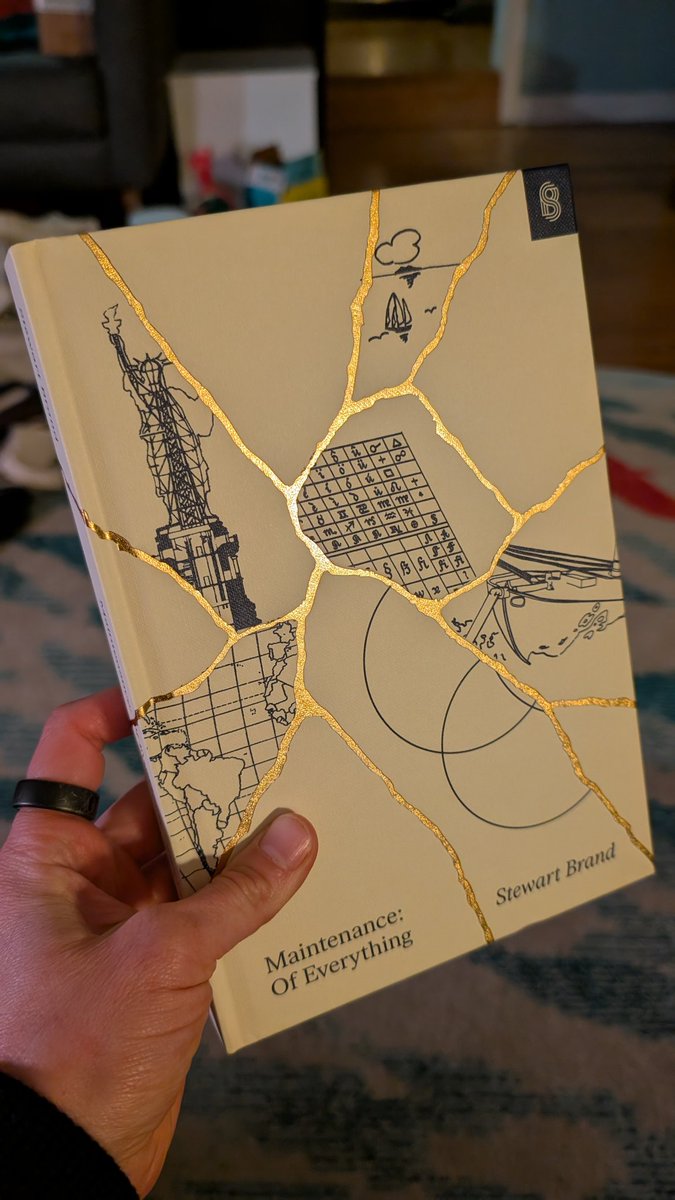
The kintsugi cover of @stewartbrand's new book The Maintenance of Everything is absolutely gorgeous
English
Having this little pocket book light in my bag has been such a boon for reading at home and on the go: 86lux.com/pocket-e1
English
Upgraded to MacOS Tahoe and what I got was liquid glass and for the first time ever, the keyboard driver freaking out and failing right as I needed to jump on a meeting.
Not cool. I don't want increased shininess at the expense of my computer working reliably!
English

@spang If you haven’t checked out @LFeldmanBarrett’s work yet, I really recommend it!
English
"If we ever want to build a robot with emotions, we had better understand how emotions work in an insect brain."
from the book, "The Neuroscience of Emotions", Adolph's/Anderson 2018

English

Big day for this magazine man. Arena is now on the shelves at Barnes and Noble Booksellers!
And because it's an inch taller than most mags, it towers over the others in the section. Nice!

English
@p_millerd Zoom has better settings for keeping the focus on people's faces rather than a presentation tho
Always annoyed by the rigidity of share mode on Google Meet
English

This is why I started using Google meet
Ben Lang@benln
Just clicked 10 links to join a Zoom call Someone needs to build a better video chat product
English
Christine Spang がリツイート

Petition to rename affordable housing "subsidized housing"
Drives me crazy that when people are lobbying for this, what they're really lobbying for is endless subsidy, not actual affordability
"Rubino said the state only considers properties "affordable" if they received some kind of public subsidy, even if they cost a million dollars each to build, and the mobile homes are not publicly subsidized.
cbsnews.com/sanfrancisco/n…
English
Christine Spang がリツイート

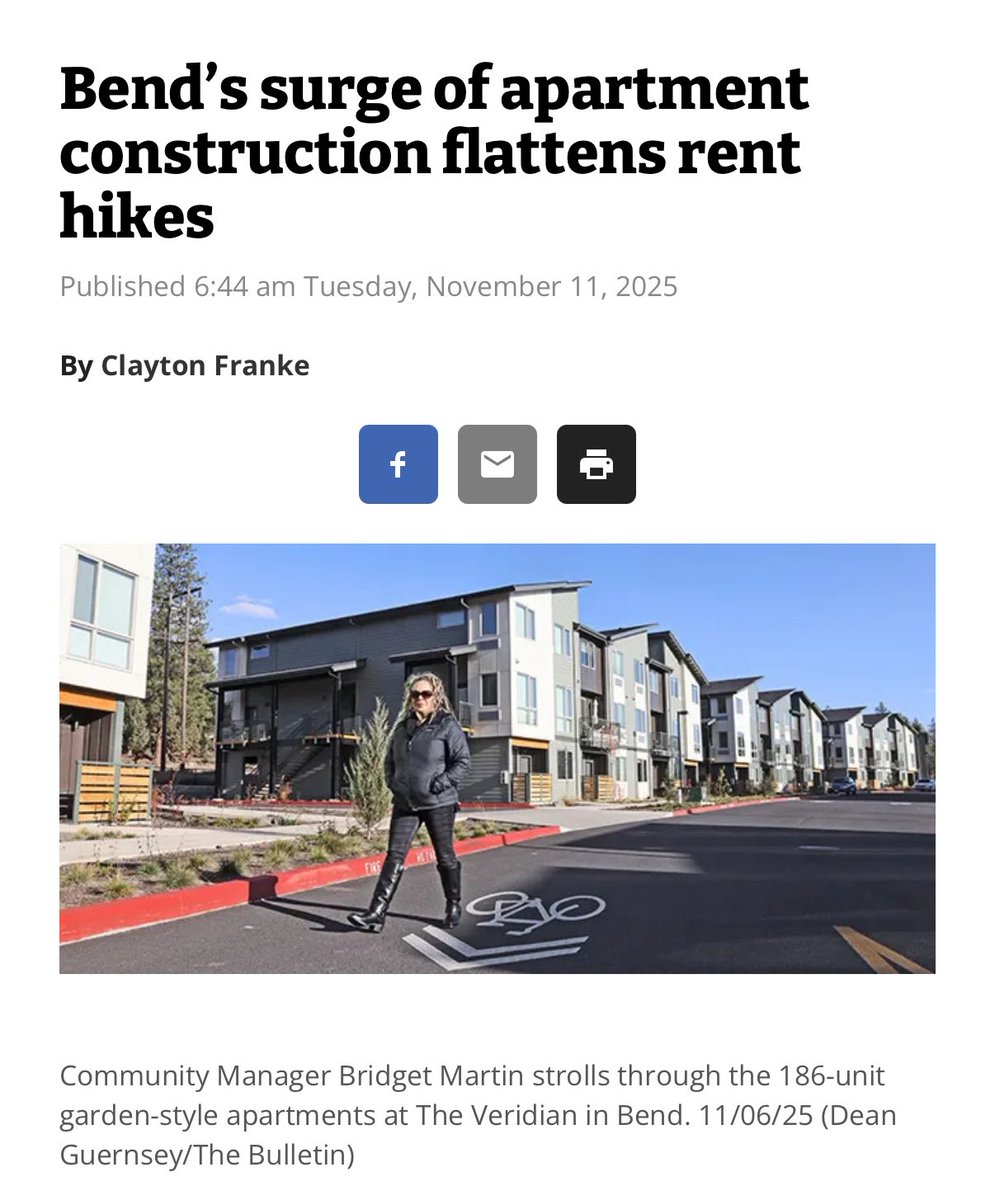
The price of housing is set by supply and demand. Building enough new homes keeps the price of existing older homes affordable. This is very straightforward.
English