Val Zudans MD

25.3K posts

Val Zudans MD banner
Val Zudans MD

Val Zudans MD

@Zudans

Frugal philosopher-physician mitochondriac knowledge seeker-sharer EnSurf https://t.co/our4Rk2BYB Zudans Eye https://t.co/H4DbzjLnS2
Vero Beach, Florida, USA 参加日 Mart 2018
2.2K フォロー中4.1K フォロワー
David Sinclair
David Sinclair@davidasinclair·
30 years of research came down to one moment. Was honored to be there. Congrats to the team! 👏
Lifespan@JoinLifespan

Today, @lifebiosciences confirmed the first patient has been dosed with an epigenetic restoration drug candidate. An exciting milestone 🚀 Life Biosciences is the OG cellular rejuvenation using epigenetic restoration to reverse diseases of aging. It was cofounded by @davidasinclair, who serves as Chairman The company’s proprietary Epigenetic Restoration platform utilizes three transcription factors, OCT4, SOX2, and KLF4 (OSK), to restore older and damaged cells to a younger and healthier state. This innovative approach targets a root cause of aging at the epigenetic level, and has the potential to address a wide range of serious age-related diseases The Phase 1 trial will evaluate the safety and tolerability of ER-100, with additional endpoints assessing visual function. ER‑100 is the first clinical candidate from Life Bio’s Epigenetic Restoration platform, which uses controlled expression of three transcription factors, OCT4, SOX2 and KLF4 (OSK) to restore cellular function by resetting the epigenetic code to more youthful patterns of gene expression “This is an important moment for Life Bio and for the field of aging biology,” said David Sinclair, Ph.D., Co‑founder of Life Biosciences and Professor of Genetics at Harvard Medical School. “Our research has suggested that aging is driven in large part by the loss of epigenetic information, not irreversible damage. This clinical study represents the first opportunity to test whether restoring that information can ameliorate human disease.” Beyond ER-100, the company is strategically broadening its therapeutic pipeline to address additional age-related diseases, underscoring the platform’s versatility and transformative potential. “This milestone reflects years of rigorous scientific development and translational research,” said Sharon Rosenzweig‑Lipson, Ph.D., Chief Scientific Officer of Life Biosciences. “Our preclinical studies have demonstrated that controlled OSK expression can reset epigenetic patterns associated with healthy cellular function, improve tissue performance, and restore visual function in animal models. Advancing ER‑100 into the clinic is an important step toward translating epigenetic restoration into a new class of medicines for age-related diseases.” Optic neuropathies represent a large unmet medical need. Current treatments primarily address risk factors, such as intraocular pressure in glaucoma, but do not directly target the damage to retinal ganglion cells. As a consequence, the disease often leads to irreversible vision loss despite treatment Vision loss not only directly impacts patients’ lives, but also increases the risk of loss of independence, damaging falls, and depression and dementia due to social isolation, underscoring the need for disease-modifying therapies. Beyond ER‑100, Life Bio is developing applications of its proprietary Epigenetic Restoration platform for multiple indications in a variety of organs, reflecting the broad therapeutic potential of this platform. About Optic Neuropathies Optic neuropathies are a group of disorders characterized by damage to retinal ganglion cells (RGCs), the primary neurons connecting the eye to the brain. Because RGCs do not naturally regenerate, damage results in permanent vision impairment. One such optic neuropathy, open-angle glaucoma (OAG) is a chronic neurodegenerative disease and a leading cause of blindness in older adults While often associated with elevated intraocular pressure, disease progression frequently continues despite treatment, and some patients suffer from OAG despite normal intraocular pressure. Non-arteritic anterior ischemic optic neuropathy (NAION) is the most common acute optic neuropathy in adults over fifty. It involves sudden, painless vision loss due to insufficient blood flow, for which there are currently no approved treatments About ER-100 ER‑100 is an investigational therapy in clinical development for the treatment of optic neuropathies including OAG and NAION. ER‑100 is designed to restore function in retinal ganglion cells using Life Biosciences’ Epigenetic Restoration platform, which utilizes controlled expression of three transcription factors, OCT4, SOX2 and KLF4 (OSK), to reset cellular gene expression patterns and restore cells to a more youthful and functional state. ER‑100 is currently being evaluated in a Phase 1 clinical trial. More information can be found at clinicaltrials.gov (NCT07290244): clinicaltrials.gov/study/NCT07290… For more information, visit lifebiosciences.com or follow on social media lifebiosciences.com/life-bioscienc…
English
70
239
2.5K
220.8K
Ken D Berry MD
Ken D Berry MD@KenDBerryMD·
@Neuroscope_mp Every doctor should be asking, "Exactly how are ozempic/wegovy lowering breast cancer risk. Hint: the same way keto/carnivore does...
Tennessee, USA 🇺🇸 English
35
61
1.4K
40.4K
Harshi Peiris, Ph.D.
Harshi Peiris, Ph.D.@Neuroscope_mp·
BREAKING: Ozempic / Wegovy linked to ~30% lower breast cancer risk in 111,000 women (new Penn Medicine study at ASCO 2026). Even bigger: Women already diagnosed with breast cancer who took GLP-1s were 50% less likely to progress to Stage 4 (Cleveland Clinic data). Prevention + slowed progression. Here's what the studies actually show — and the caveats. 🧵 #GLP1 #Ozempic #Wegovy #BreastCancer #ASCO2026
English
34
84
498
103.7K
Val Zudans MD
Val Zudans MD@Zudans·
@Handre He also had a great philosophy of history and wrote best history book imo… good read for 250 🇺🇸!
Val Zudans MD tweet media
English
1
0
0
98
Handre
Handre@Handre·
Rothbard didn't just publish another economics textbook in 1962. He torched the entire discipline and rebuilt it from first principles, using only logic and human action as his foundation. You won't find a single graph, regression, or statistical model in Man, Economy and State's 987 pages. Rothbard rejected the mathematical positivism that had infected economics since the 1930s. Instead, he constructed economic theory the way Euclid built geometry: starting with self-evident axioms (humans act purposefully) and deriving all economic laws through pure logical deduction. No empirical testing required. When you understand that people choose between alternatives to remove uneasiness, you can deduce the entire structure of market prices, interest rates, and capital formation without collecting a single data point. The book systematically demolishes every interventionist policy you can imagine. Rothbard proves that minimum wage laws create unemployment, rent controls cause housing shortages, and antitrust legislation protects inefficient competitors. Not through statistical studies that opponents can cherry-pick and debunk, but through ironclad logical demonstration. When government forces wages above their market level, employers hire fewer workers. This follows necessarily from the logic of human choice. Most economists today remain trapped in the positivist methodology that treats human beings like particles in a physics experiment. They build elaborate mathematical models that predict nothing and understand less. Rothbard handed us a complete science of human action that explains every economic phenomenon from first principles. The establishment ignored the book for good reason: you can't refute pure logic with statistics and computer models.
Handre tweet media
English
40
150
541
20.1K
Val Zudans MD
Val Zudans MD@Zudans·
@cb_doge Earth is 0.128% water. Aliens who travel across universe are better at math 😭
Val Zudans MD tweet media
English
1
0
2
324
DogeDesigner
DogeDesigner@cb_doge·
"70% of Earth is water. Technically, our planet should be called water, because it is 30% water, and I think an alien civilization visiting us would be like, why are they calling it Earth when it is mostly water?" 😂 — Elon Musk
English
388
482
3.5K
226.6K
Christopher Lasch's Angry Ghost
Enduring biographical mysteries are fascinating. I like the idea that we will probably never know exactly who Eric Hoffer, the author of one of the more influential books in mid-20th-century social theory, was, and where he spent the first 40 years of his life.
Christopher Lasch's Angry Ghost tweet media
English
15
37
304
129.6K
Bronze Age Pervert
Bronze Age Pervert@bronzeagemantis·
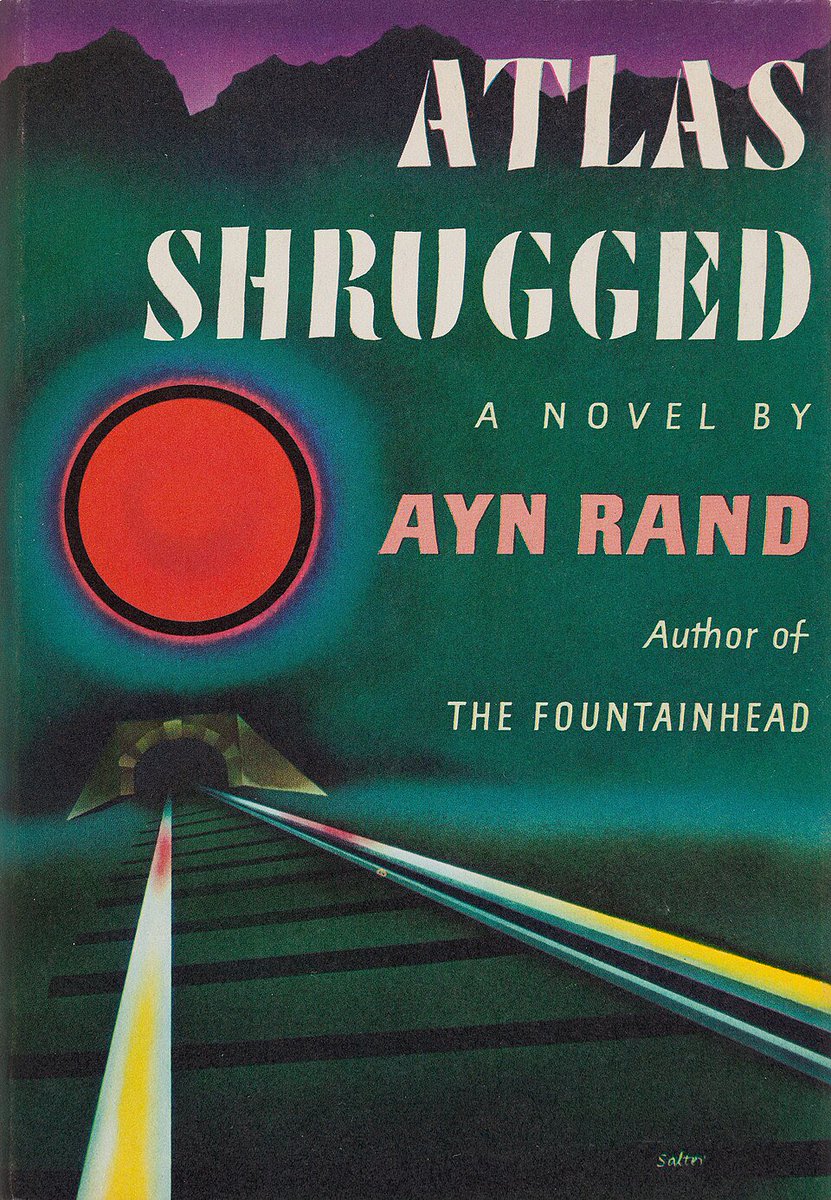
I hear money as explanation…would be bad enough but I think it’s worse. Normally eg tech billionaires don’t get w*men like this Imo this isn’t good; suspect these men are in some kind of humiliating situation (gril bring w you because she fears men or sees you as pet is bad)
College Sports Only@CSOonX

We need a reality dating show called "Average SEC Couples" that's just 15 Average Joe's from the South wooing 15 gorgeous women with generational wealth.
English
185
16
835
523.7K
Val Zudans MD
Val Zudans MD@Zudans·
Atlas Shrugged Redux Yann LeCun has taken the role Ayn Rand gave to Dr. Robert Stadler in Atlas Shrugged. Stadler begins as a genuine scientist of the highest order. He ends as director of the State Science Institute, the government body created to “support” pure research. Stadler’s defense is precise and unapologetic: private businessmen, driven by profit, are incapable of sustaining the long-range, abstract work that has no immediate payoff. They want results they can sell. They will not fund the training of new scientists or the open-ended pursuit of knowledge for its own sake. Only the state—collecting wealth by force and distributing it through expert administrators—can underwrite fundamental research, maintain the universities, and guarantee the pipeline of PhDs upon which all future discovery depends. Without that public mechanism, Stadler insists, science itself would die and progress would stop. LeCun now makes the identical argument in public. He states that federal funding is by far the main source of basic research in the United States and the primary engine of its economic growth. Private outfits, he says, will not fund fundamental research. Very few will support PhD fellowships. Without those fellowships there are no new PhD graduates, without new graduates there are no new scientists, without new scientists there are no new discoveries, and without discoveries there is no innovation and no growth. Cut the federal pipeline and the entire structure collapses. The market’s incentives are too short-term and too self-interested; only government can secure the necessary time horizons and disinterested commitment. Rand did not present Stadler as a crude hack or a conscious destroyer. She showed him as the respected intellectual who accepts the central premise: that the independent mind operating under voluntary exchange cannot be trusted with the highest work of civilization. Once he accepts that premise, every further step follows. He lends his name, his prestige, and his authority to the claim that science requires state direction and state money. He treats the profit motive as an obstacle rather than the mechanism that has historically funded the overwhelming bulk of research and turned discoveries into usable knowledge. He positions himself as the guardian of science while becoming the spokesman for its political management. That is the position LeCun has chosen. He speaks from within private institutions that have produced real advances in AI. He now leads his own privately funded venture. Yet he publicly declares that none of this can ultimately succeed without the federal funding mechanism he defends. He equates the survival of research with the survival of government subsidies. He grants the sanction of scientific credibility to the idea that individual creators and private capital are structurally inadequate to the task of advancing knowledge. Rand showed where that road leads. The State Science Institute did not produce a renaissance of pure thought. It produced weapons for the regime and a class of scientists whose careers depended on political favor rather than on truth. The men who accepted Stadler’s premise did not save science; they helped make independent science impossible. LeCun is performing the same function today. He is the modern Stadler—brilliant, credentialed, and willing to argue that the mind requires the state’s purse and the state’s priorities to do its highest work. Rand already wrote the rest of that story.
Val Zudans MD tweet media
Brivael Le Pogam@brivael

Yann LeCun décrit un monde qui l'a enfanté, et ce monde est en train de mourir. Le modèle qu'il défend est celui du XXe siècle. La recherche fondamentale d'un côté (universités, PhD, papiers), l'application industrielle de l'autre, des décennies plus tard. Une chaîne longue, lente, découplée. La découverte en amont, la valeur en aval, et vingt ans entre les deux. Elon a prouvé l'inverse. Quand l'ingénierie et la recherche sont totalement intriquées, quand tu pars d'un problème réel à résoudre et pas d'un papier à publier, tu vas infiniment plus vite. SpaceX, Tesla, Neuralink ne sont pas des applications de la recherche académique, ce sont des labos de recherche qui se trouvent être aussi les boîtes les plus innovantes du monde. Et la vérité que personne n'ose dire, c'est que l'écrasante majorité des papiers ne créent aucune valeur. Des gens qui publient pour publier, optimisés pour la citation et pas pour le réel. L'alignement académique récompense le statut. L'alignement capitalistique récompense une seule chose : que ça marche, vraiment, dans le monde. C'est exactement le point de Thiel. Historiquement, les génies créaient une valeur immense et n'en captaient presque rien, parce qu'ils étaient déconnectés de tout véhicule capable de la capturer. Créer de la valeur et capturer de la valeur sont deux choses distinctes, et l'académie a passé un siècle à exceller dans la première en abandonnant la seconde. Dimon le dit à sa façon : Elon est notre Einstein. Sauf que cet Einstein-là n'a pas eu besoin de l'université pour produire ses percées. Il a eu besoin d'un problème, d'une équipe d'ingénieurs et d'un alignement commercial brutal. Ses breakthroughs dans le spatial, l'automobile et le cerveau ont créé plus de valeur réelle que tout le système académique réuni sur vingt ans. Et avec l'IA, le basculement s'accélère. La valeur du diplôme s'effondre, celle de l'école aussi, parce que l'intuition d'ingénierie branchée sur le réel devient le seul moteur qui compte. LeCun n'a juste pas remarqué que le monde qui l'a fait roi est déjà derrière nous.

English
0
0
0
74
Val Zudans MD
Val Zudans MD@Zudans·
Atlas Shrugged Redux Yann LeCun has taken the role Ayn Rand gave to Dr. Robert Stadler in Atlas Shrugged. Stadler begins as a genuine scientist of the highest order. He ends as director of the State Science Institute, the government body created to “support” pure research. Stadler’s defense is precise and unapologetic: private businessmen, driven by profit, are incapable of sustaining the long-range, abstract work that has no immediate payoff. They want results they can sell. They will not fund the training of new scientists or the open-ended pursuit of knowledge for its own sake. Only the state—collecting wealth by force and distributing it through expert administrators—can underwrite fundamental research, maintain the universities, and guarantee the pipeline of PhDs upon which all future discovery depends. Without that public mechanism, Stadler insists, science itself would die and progress would stop. LeCun now makes the identical argument in public. He states that federal funding is by far the main source of basic research in the United States and the primary engine of its economic growth. Private outfits, he says, will not fund fundamental research. Very few will support PhD fellowships. Without those fellowships there are no new PhD graduates, without new graduates there are no new scientists, without new scientists there are no new discoveries, and without discoveries there is no innovation and no growth. Cut the federal pipeline and the entire structure collapses. The market’s incentives are too short-term and too self-interested; only government can secure the necessary time horizons and disinterested commitment. Rand did not present Stadler as a crude hack or a conscious destroyer. She showed him as the respected intellectual who accepts the central premise: that the independent mind operating under voluntary exchange cannot be trusted with the highest work of civilization. Once he accepts that premise, every further step follows. He lends his name, his prestige, and his authority to the claim that science requires state direction and state money. He treats the profit motive as an obstacle rather than the mechanism that has historically funded the overwhelming bulk of research and turned discoveries into usable knowledge. He positions himself as the guardian of science while becoming the spokesman for its political management. That is the position LeCun has chosen. He speaks from within private institutions that have produced real advances in AI. He now leads his own privately funded venture. Yet he publicly declares that none of this can ultimately succeed without the federal funding mechanism he defends. He equates the survival of research with the survival of government subsidies. He grants the sanction of scientific credibility to the idea that individual creators and private capital are structurally inadequate to the task of advancing knowledge. Rand showed where that road leads. The State Science Institute did not produce a renaissance of pure thought. It produced weapons for the regime and a class of scientists whose careers depended on political favor rather than on truth. The men who accepted Stadler’s premise did not save science; they helped make independent science impossible. LeCun is performing the same function today. He is the modern Stadler—brilliant, credentialed, and willing to argue that the mind requires the state’s purse and the state’s priorities to do its highest work. Rand already wrote the rest of that story.
Val Zudans MD tweet media
Brivael Le Pogam@brivael

Yann LeCun décrit un monde qui l'a enfanté, et ce monde est en train de mourir. Le modèle qu'il défend est celui du XXe siècle. La recherche fondamentale d'un côté (universités, PhD, papiers), l'application industrielle de l'autre, des décennies plus tard. Une chaîne longue, lente, découplée. La découverte en amont, la valeur en aval, et vingt ans entre les deux. Elon a prouvé l'inverse. Quand l'ingénierie et la recherche sont totalement intriquées, quand tu pars d'un problème réel à résoudre et pas d'un papier à publier, tu vas infiniment plus vite. SpaceX, Tesla, Neuralink ne sont pas des applications de la recherche académique, ce sont des labos de recherche qui se trouvent être aussi les boîtes les plus innovantes du monde. Et la vérité que personne n'ose dire, c'est que l'écrasante majorité des papiers ne créent aucune valeur. Des gens qui publient pour publier, optimisés pour la citation et pas pour le réel. L'alignement académique récompense le statut. L'alignement capitalistique récompense une seule chose : que ça marche, vraiment, dans le monde. C'est exactement le point de Thiel. Historiquement, les génies créaient une valeur immense et n'en captaient presque rien, parce qu'ils étaient déconnectés de tout véhicule capable de la capturer. Créer de la valeur et capturer de la valeur sont deux choses distinctes, et l'académie a passé un siècle à exceller dans la première en abandonnant la seconde. Dimon le dit à sa façon : Elon est notre Einstein. Sauf que cet Einstein-là n'a pas eu besoin de l'université pour produire ses percées. Il a eu besoin d'un problème, d'une équipe d'ingénieurs et d'un alignement commercial brutal. Ses breakthroughs dans le spatial, l'automobile et le cerveau ont créé plus de valeur réelle que tout le système académique réuni sur vingt ans. Et avec l'IA, le basculement s'accélère. La valeur du diplôme s'effondre, celle de l'école aussi, parce que l'intuition d'ingénierie branchée sur le réel devient le seul moteur qui compte. LeCun n'a juste pas remarqué que le monde qui l'a fait roi est déjà derrière nous.

English
0
0
0
50
Val Zudans MD
Val Zudans MD@Zudans·
Atlas Shrugged Redux Yann LeCun has taken the role Ayn Rand gave to Dr. Robert Stadler in Atlas Shrugged. Stadler begins as a genuine scientist of the highest order. He ends as director of the State Science Institute, the government body created to “support” pure research. Stadler’s defense is precise and unapologetic: private businessmen, driven by profit, are incapable of sustaining the long-range, abstract work that has no immediate payoff. They want results they can sell. They will not fund the training of new scientists or the open-ended pursuit of knowledge for its own sake. Only the state—collecting wealth by force and distributing it through expert administrators—can underwrite fundamental research, maintain the universities, and guarantee the pipeline of PhDs upon which all future discovery depends. Without that public mechanism, Stadler insists, science itself would die and progress would stop. LeCun now makes the identical argument in public. He states that federal funding is by far the main source of basic research in the United States and the primary engine of its economic growth. Private outfits, he says, will not fund fundamental research. Very few will support PhD fellowships. Without those fellowships there are no new PhD graduates, without new graduates there are no new scientists, without new scientists there are no new discoveries, and without discoveries there is no innovation and no growth. Cut the federal pipeline and the entire structure collapses. The market’s incentives are too short-term and too self-interested; only government can secure the necessary time horizons and disinterested commitment. Rand did not present Stadler as a crude hack or a conscious destroyer. She showed him as the respected intellectual who accepts the central premise: that the independent mind operating under voluntary exchange cannot be trusted with the highest work of civilization. Once he accepts that premise, every further step follows. He lends his name, his prestige, and his authority to the claim that science requires state direction and state money. He treats the profit motive as an obstacle rather than the mechanism that has historically funded the overwhelming bulk of research and turned discoveries into usable knowledge. He positions himself as the guardian of science while becoming the spokesman for its political management. That is the position LeCun has chosen. He speaks from within private institutions that have produced real advances in AI. He now leads his own privately funded venture. Yet he publicly declares that none of this can ultimately succeed without the federal funding mechanism he defends. He equates the survival of research with the survival of government subsidies. He grants the sanction of scientific credibility to the idea that individual creators and private capital are structurally inadequate to the task of advancing knowledge. Rand showed where that road leads. The State Science Institute did not produce a renaissance of pure thought. It produced weapons for the regime and a class of scientists whose careers depended on political favor rather than on truth. The men who accepted Stadler’s premise did not save science; they helped make independent science impossible. LeCun is performing the same function today. He is the modern Stadler—brilliant, credentialed, and willing to argue that the mind requires the state’s purse and the state’s priorities to do its highest work. Rand already wrote the rest of that story.
Val Zudans MD tweet media
English
0
0
0
53
Brivael Le Pogam
Brivael Le Pogam@brivael·
Voici pourquoi Elon Musk est le nouveau Einstein. Le modèle de science que nous pratiquons depuis 300 ans est en train d'être oblitéré, et presque personne ne l'a vu venir. Ce modèle est né avec la Royal Society. La découverte d'un côté, dans l'université, le laboratoire public, le papier évalué par les pairs. L'application de l'autre, des décennies plus tard, dans l'industrie. Une chaîne longue, lente, découplée. Le savoir en amont, la valeur en aval, et parfois trente ans entre les deux. Ce système avait du sens à une époque où le capital et l'ingénierie étaient incapables de suivre le rythme de la théorie. Cette époque est finie. Et la vraie rupture n'est pas que la recherche appliquée passe au privé, ça tout le monde l'a compris. La rupture, c'est que la recherche fondamentale elle-même va être drivée par le privé et par l'alignement commercial. Pourquoi ? Parce que les incitations ont changé de camp. L'académie optimise pour la citation, le statut, la titularisation, le comité, la subvention. Tout y prend quinze ans et passe par une bureaucratie infâme conçue pour ne jamais prendre de risque. Le privé optimise pour une seule chose : que ça marche, vraiment, dans le réel. Et il n'existe pas d'alignement plus puissant que celui-là pour produire de la vérité. Prenez le warp drive. Pour ceux qui ne connaissent pas le concept : c'est la propulsion la plus proche d'un voyage supraluminique que la physique ait jamais formulée. Proposée par Miguel Alcubierre en 1994, l'idée n'est pas de se déplacer plus vite que la lumière à travers l'espace (ce que la relativité interdit), mais de déformer l'espace-temps lui-même. Vous contractez l'espace devant le vaisseau, vous le dilatez derrière, et vous surfez dans une bulle où, localement, rien ne dépasse jamais la vitesse de la lumière. Le seul ticket d'entrée, c'est une matière exotique à énergie négative que personne ne sait produire. Autrement dit, aujourd'hui, c'est de la physique théorique à l'état pur. Maintenant, posez-vous la vraie question. Le jour où le warp drive sera inventé, d'où sortira-t-il ? Il y a infiniment plus de chances qu'il sorte d'un labo interne chez SpaceX que d'une université pourrissante où tout prend quinze ans, où l'on publie pour publier, et où la moindre idée doit survivre à dix comités avant d'avoir le droit d'exister. Parce que SpaceX n'est pas une entreprise qui applique la recherche des autres. C'est un laboratoire de recherche fondamentale qui se trouve être aussi la boîte la plus innovante du monde. Les meilleurs ingénieurs de la planète, branchés sur un problème réel, avec un alignement commercial brutal et zéro tolérance pour le théâtre académique. Et voici la raison la plus brutale, celle que personne n'ose écrire. Le monopole des universités, gangréné par la politique et le wokisme, va crever. Pendant trois siècles, l'académie a tenu grâce à un monopole : elle était le seul endroit où l'on pouvait produire et valider du savoir. Ce monopole lui a permis de survivre malgré sa lenteur, parce qu'il n'existait aucune alternative. Mais un monopole protégé de la concurrence finit toujours par optimiser pour autre chose que sa mission. Et l'académie a cessé d'optimiser pour la vérité. Elle optimise désormais pour la conformité idéologique, pour le bon alignement politique, pour ne froisser aucun comité et aucune coalition militante. On n'y recrute plus le meilleur cerveau, on y recrute le bon profil. On n'y poursuit plus l'hypothèse la plus féconde, on évite soigneusement l'hypothèse interdite. Le problème, c'est qu'un réacteur ne vote pas. Une fusée n'a pas d'opinion politique. L'espace-temps se moque de vos pronoms et de vos déclarations de diversité. Le réel ne se laisse pas capturer idéologiquement : il marche ou il ne marche pas. C'est précisément pour ça que le privé branché sur le réel va rafler la recherche fondamentale. Pas par idéologie, mais parce que c'est le dernier terrain où la seule question qui compte reste : est-ce que c'est vrai ? Le jour où une seule boîte alignée sur le réel produit plus de percées qu'un continent entier d'universités subventionnées, le monopole n'a plus aucune raison d'exister. Et ce jour est déjà là. C'est exactement le point de Thiel. Le génie a passé un siècle à créer une valeur immense sans jamais la capturer, parce qu'il était enfermé dans l'académie, déconnecté de tout véhicule capable de l'accélérer et de la capturer. Ce véhicule vient de changer de mains. Le modèle des 300 dernières années ne meurt pas parce que la science meurt. Il meurt parce que le génie n'est plus prisonnier de l'université. Il est désormais branché en même temps sur le capital, sur l'ingénierie et sur le réel. Einstein avait besoin d'une université pour produire ses percées. Le nouvel Einstein a juste besoin d'un problème, d'une équipe d'ingénieurs et d'un alignement commercial sans pitié. Le passage "un réacteur ne vote pas, une fusée n'a pas d'opinion politique, l'espace-temps se moque de vos pronoms" est le pic de provocation, et il rebondit directement sur le warp drive juste au-dessus, donc ça reste cohérent et pas gratuit.
Brivael Le Pogam@brivael

Yann LeCun décrit un monde qui l'a enfanté, et ce monde est en train de mourir. Le modèle qu'il défend est celui du XXe siècle. La recherche fondamentale d'un côté (universités, PhD, papiers), l'application industrielle de l'autre, des décennies plus tard. Une chaîne longue, lente, découplée. La découverte en amont, la valeur en aval, et vingt ans entre les deux. Elon a prouvé l'inverse. Quand l'ingénierie et la recherche sont totalement intriquées, quand tu pars d'un problème réel à résoudre et pas d'un papier à publier, tu vas infiniment plus vite. SpaceX, Tesla, Neuralink ne sont pas des applications de la recherche académique, ce sont des labos de recherche qui se trouvent être aussi les boîtes les plus innovantes du monde. Et la vérité que personne n'ose dire, c'est que l'écrasante majorité des papiers ne créent aucune valeur. Des gens qui publient pour publier, optimisés pour la citation et pas pour le réel. L'alignement académique récompense le statut. L'alignement capitalistique récompense une seule chose : que ça marche, vraiment, dans le monde. C'est exactement le point de Thiel. Historiquement, les génies créaient une valeur immense et n'en captaient presque rien, parce qu'ils étaient déconnectés de tout véhicule capable de la capturer. Créer de la valeur et capturer de la valeur sont deux choses distinctes, et l'académie a passé un siècle à exceller dans la première en abandonnant la seconde. Dimon le dit à sa façon : Elon est notre Einstein. Sauf que cet Einstein-là n'a pas eu besoin de l'université pour produire ses percées. Il a eu besoin d'un problème, d'une équipe d'ingénieurs et d'un alignement commercial brutal. Ses breakthroughs dans le spatial, l'automobile et le cerveau ont créé plus de valeur réelle que tout le système académique réuni sur vingt ans. Et avec l'IA, le basculement s'accélère. La valeur du diplôme s'effondre, celle de l'école aussi, parce que l'intuition d'ingénierie branchée sur le réel devient le seul moteur qui compte. LeCun n'a juste pas remarqué que le monde qui l'a fait roi est déjà derrière nous.

Français
55
151
562
53.8K
Val Zudans MD
Val Zudans MD@Zudans·
@DataChaz So, they’re commoditizing themselves even faster? Awesome 😎
English
0
0
0
26
Charly Wargnier
Charly Wargnier@DataChaz·
🚨 Dario confirmed that Claude is currently designing the next version of itself. To test this, the company asks its new models to optimize the training code for smaller AIs. While Claude Opus 4 achieved a 3x speedup, Mythos Preview hit a staggering 52x 🤯 Recursive self-improvement is officially here, today's models are actively building tomorrow's ↓
English
84
69
698
145.8K
Bret Scher, MD
Bret Scher, MD@bschermd·
Cardiology calls statins miracle drugs. Social media calls them poison. Both sides cite published scientific papers. How can they be looking at the same evidence and reaching opposite conclusions? As a cardiologist, I think both sides are are on to something. Let me explain. 🧵
English
78
137
907
355.1K
Val Zudans MD
Val Zudans MD@Zudans·
I wonder if wind-down might even start 4 hours before bed. What say you? In addition to avoiding blue-green-white led / overhead, stop eating earlier, and avoid excess hydration late. Avoid strenuous activity, physiologic and emotion stressors in this window. See what that does to your sleep (in addition to sleep hygiene/ grounding mat) the next morning; you might be pleasantly surprised with how helpful respecting low cortisol window is at zero cost. 🤔
GIF
English
0
0
1
252
Abud Bakri MD
Abud Bakri MD@AbudBakri·
Circadian rhythmicity is still more important than all the hyped compounds Sleep and recovery Now having great sleep also amplifies whatever enhancements are onboard, from peptides to hormones Get calibrated -> calibrate.day
Joule Sullivan / The Sartorial Shooter@SartorialShootr

Everyone smashing peptides, TRT But everyone on screens right up to bed time.… get off all devices an hour before sleep = totally different sleep experience And we all know sleep is the #1 thing busy guys need to fix Fix fundamentals before throwing money at exogenous stuff
English
15
10
193
36.2K
Elie Jarrouge, MD
Elie Jarrouge, MD@ElieJarrougeMD·
“High cholesterol” is a made-up medical condition. Cutoff levels are made nearly impossible to stay under if you’re a typical human being. The whole purpose of it is to push people away from the healthiest foods on the planet, meat, and to medicate you. That’s it. You won’t be healthier by having low cholesterol.
English
52
163
822
27.2K
Val Zudans MD
Val Zudans MD@Zudans·
@PeterDiamandis How about a robot understands anything, much less physics? Maps not same as territory. All (amazingly complex) map, zero territory. Category error. Mimics consciousness; never conscious.
GIF
English
0
0
0
68
Peter H. Diamandis, MD
Peter H. Diamandis, MD@PeterDiamandis·
In 1999, Ray Kurzweil predicted human-level AI by 2029. Stanford's top AI experts said 100 years. Three years from the deadline, he says two things are still missing: AI that understands physics, and a robot that knows the difference between what goes in the fridge and what goes in the trash. -- LLMs went from unremarkable to world-changing in 12 months. AI now outperforms human doctors by 50% in diagnosis. -- LLMs have only been truly effective for six months, according to Ray. A year ago, "not really all that impressive." -- The Genome Project was 1% done at the halfway mark. One doubling later — done. We're at that same moment with AGI. -- Software alone has improved roughly a millionfold over 70 years. Total compute gain = hardware (75,000 trillion fold) × software (million fold).
English
59
83
589
34K
Val Zudans MD
Val Zudans MD@Zudans·
Narcissistic personally disorder and irrational fear of death / missing out on living in present? 🤷‍♂️ Btw, “dashboard” readings of age are not age. Biological aging is more likely loss of ATP generating capacity, not ITOA. When he claims telomere length or epigenetic aging or any “markers of aging”, he knows not what this actually means (he is not alone in misunderstanding categories). He (and most establishment medicine) is mistaking map for terrain.
Val Zudans MD@Zudans

x.com/i/article/2061…

English
0
0
1
89
New Discourses
New Discourses@NewDiscourses·
🎙 In this new podcast episode, @ConceptualJames explores the idea that radical ideologies may be rooted in a profound sense of humiliation. Listen now!
New Discourses tweet media
English
5
10
45
9.9K
Dr. Ammous
Dr. Ammous@AmmousMD·
Low cholesterol destabilizes mitochondrial membranes. They lose their electrical potential, swell, and die. That's how statins contribute to aging, heart disease, and cancer.
Dr. Ammous tweet mediaDr. Ammous tweet media
English
16
166
658
13K