
abewee がリツイート
abewee
8.6K posts




@christianvctrs Jika beli kebun sawit/ha masih dibawah 150jt dg catatan benih/bibit di kebun itu unggul & masih usia dibawah 15thn, ROI nya emang joss.
Punya 2 hektar aj penghasilan perbulan ngalahin UMR paling tinggi di Indonesia 🔥
Indonesia

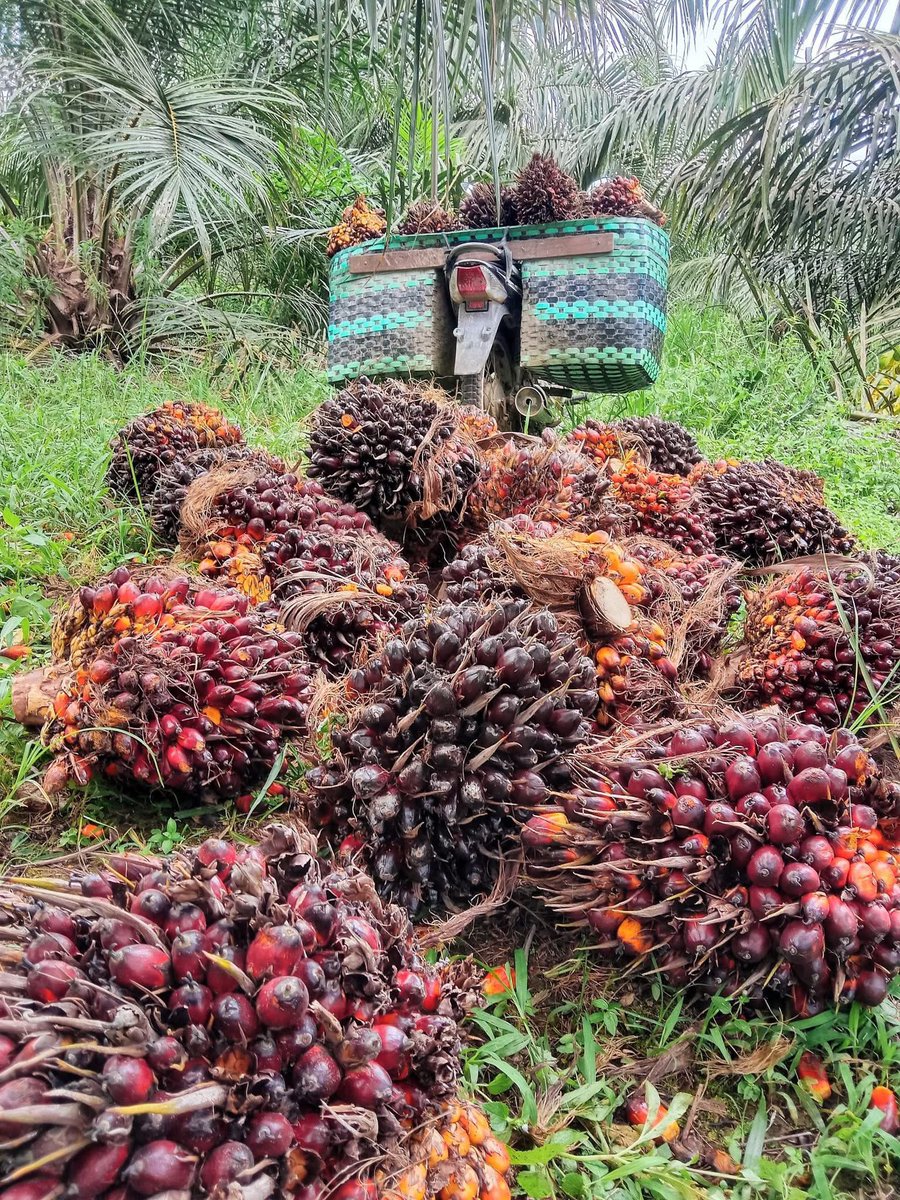
Penghasilan real kebun sawit umur 8 tahun, 3.5 hektar punya pribadi dan pengalaman pribadi
1 hektar baru bisa menghasilkan 1.2-1.7 ton
Ambil rata rata 1.4 ton
3.5 hektar = 4.9 ton per sekali panen
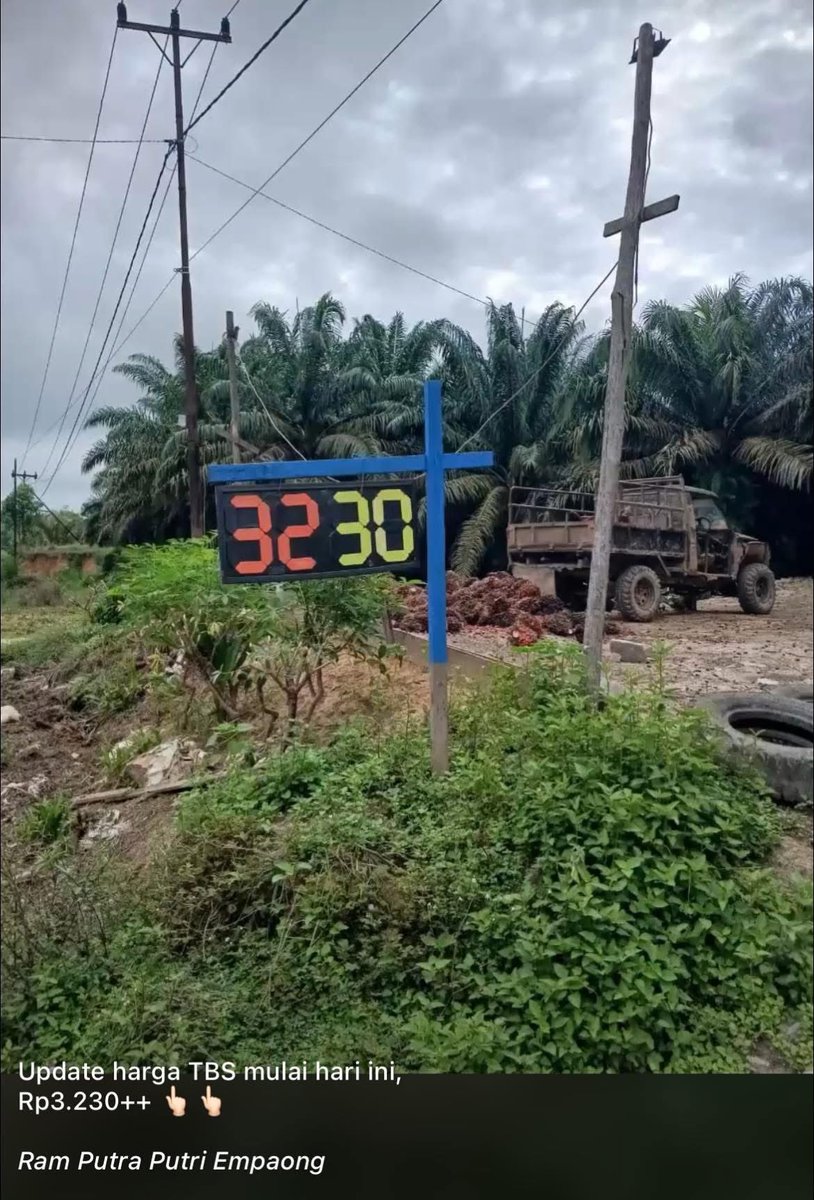
Pendapatan (mumpung harga lagi naik dari 3100 ke 3230)
Pendapatan kotor
4.9 ton x 3230 = 15.8jt
Operasional
- Ongkos pemanen 200 perak/kg
4.9 ton x 200 = 980rb
- Bensin kendaraan = 3 liter 30k
- Makan/minum/kopi = 150k
Kotor - operasional = 14.650jt
Panen sawit 15-17 hari sekali
Artinya sebulan bisa 2x
14.650 x 2 = 29jt+++ perbulan
Real malas malasan
Cuman ngawas orang yang kerja, tinggal catat timbangan
Enak bukan petani sawit😆
Indonesia
abewee がリツイート
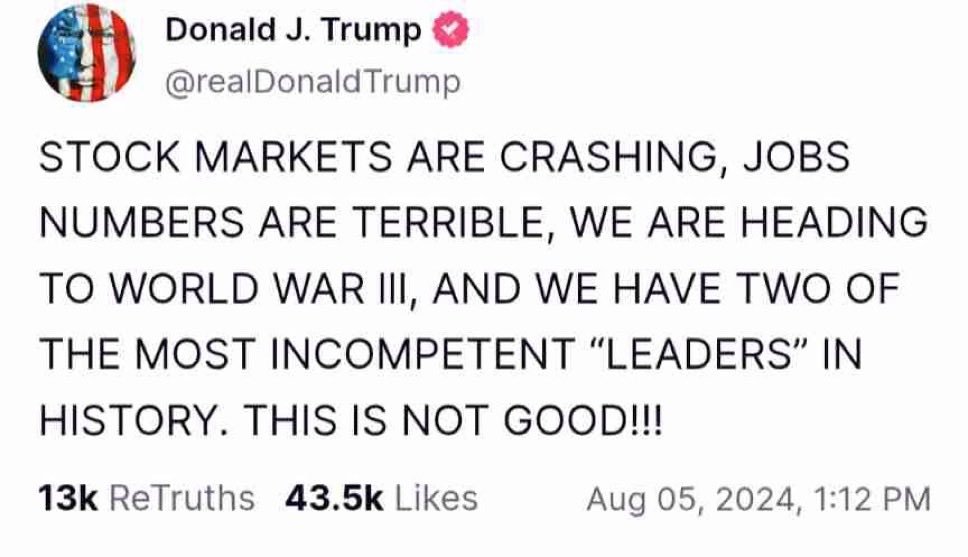

Pakeeeettttttt baju lebaran siapa, nih?
Oh ternyata Airdrop 10 USDT, coba klaim di bawah pakai UID kamu!
Indonesia


abewee がリツイート

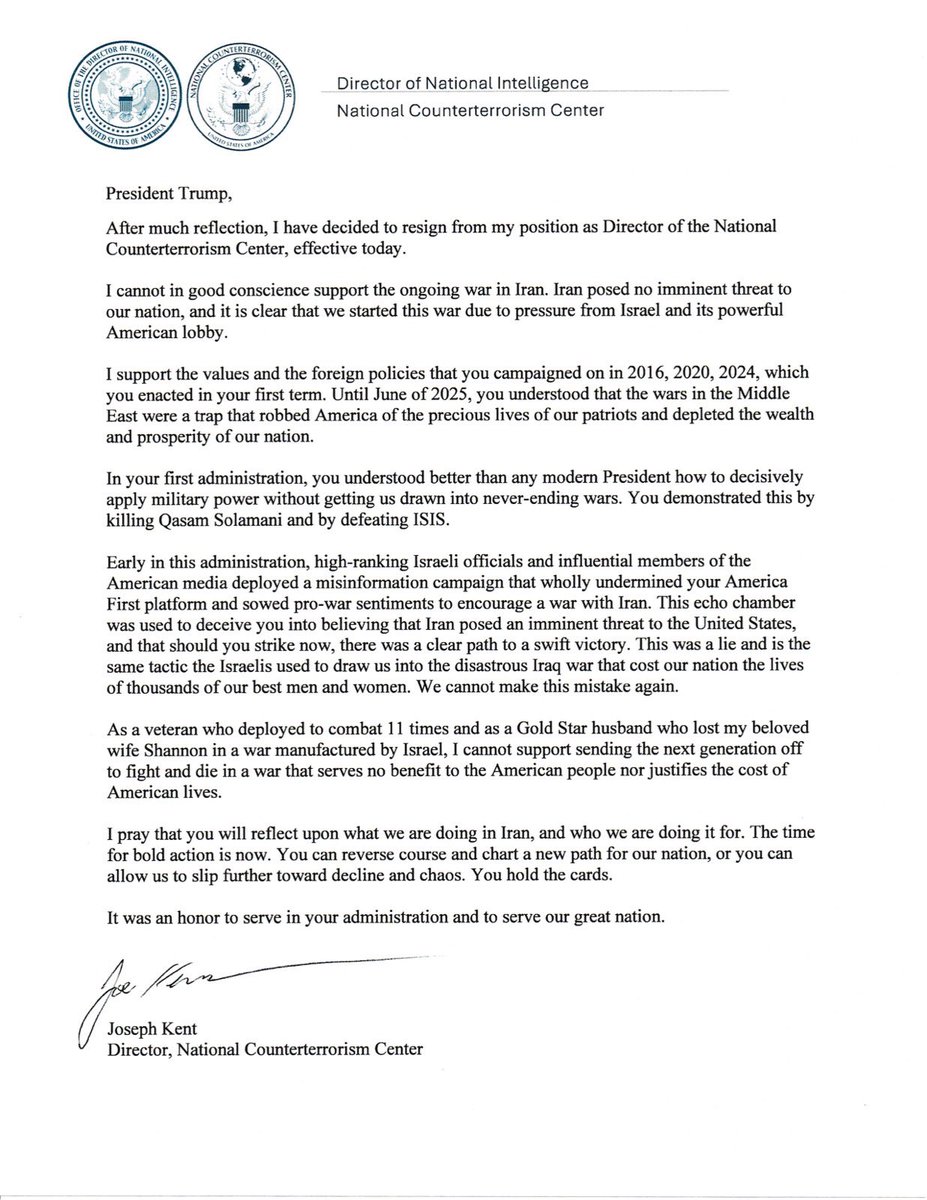
After much reflection, I have decided to resign from my position as Director of the National Counterterrorism Center, effective today.
I cannot in good conscience support the ongoing war in Iran. Iran posed no imminent threat to our nation, and it is clear that we started this war due to pressure from Israel and its powerful American lobby.
It has been an honor serving under @POTUS and @DNIGabbard and leading the professionals at NCTC.
May God bless America.
English


English

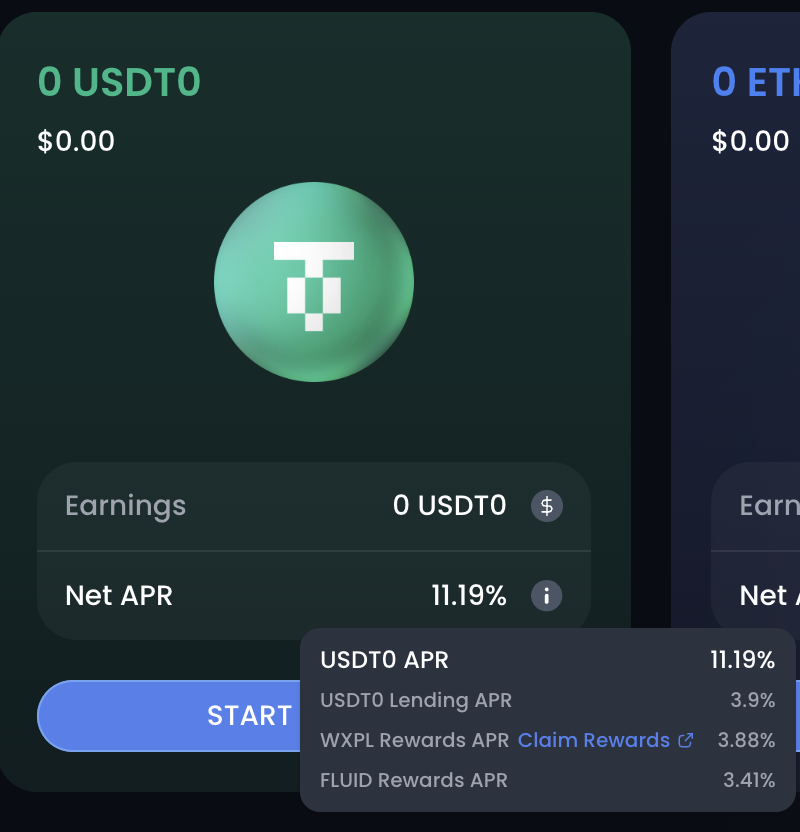
红包来了 🧧
Just unsealed my @MezoNetwork Red Envelope (VCV7EQX). Phase II of the MEZO airdrop is here, and this is where allocations grow.
Unseal yours 👇
mezo.org/feature/rewards
English

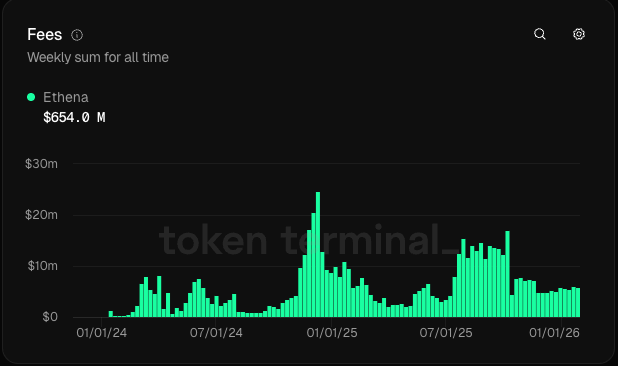
FYI, @ethena ( $ENA) is one of the few protocols that continues to generate revenue consistently, despite unfavorable market conditions.
When I was writing my year-end report, I had already sold my Ethena position. At current levels, however, the price looked attractive enough that I bought back in — and ended up getting stuck in the position. lol.
They had previously indicated that they would turn on the fee switch once $USDe was listed on major exchanges, but given the current market environment, it seems they’re taking a more cautious approach. The fact that the majority of revenues are distributed to USDe stakers — leaving relatively little in actual protocol earnings — also likely contributes to the hesitation around activating the fee switch.
Alongside the $HYPE & $PUMP, @ethena remains one of the assets and protocols I continue to watch closely.
Steve@Steve_4P
Is @ethena the real culprit behind the 10/10 crash? In the aftermath of the sharp market crash on October 10, an intense debate has emerged around the question: “Who should be held responsible?” In this process, Binance and its founder, CZ, have become the primary targets of criticism on Crypto Twitter (CT). At the same time, another project has also been singled out as a potential culprit behind the crash — Ethena. The core of the argument placing responsibility on Ethena is based on claims put forward by @zmanian (Zaki), a core contributor to Cosmos. His argument can be summarized as follows. Due to the nature of Ethena’s product — which requires maintaining a delta-neutral position — the protocol was structurally compelled to build up a large amount of short open interest in the market. The issue, according to this view, is that these short positions were structured in a way that made them ineligible for Auto-Deleveraging (ADL) on centralized exchanges (CEXs). As market volatility increased, this allegedly led to a situation where Ethena’s large short positions were excluded from liquidation, while other traders’ short positions became the primary targets of ADL. In other words, the presence of structurally non-ADL-eligible short positions destabilized other market participants’ hedging strategies, causing risk to become concentrated in a single direction. In addition, critics argue that Binance lacked a redemption or liquidity mechanism that would have allowed Ethena’s capital to be utilized in real time during periods of stress. As a result, during the rapid market deterioration on October 10, Ethena’s capital failed to function as a potential shock absorber, and ultimately proved insufficient to prevent a cascading wave of liquidations. This, in essence, forms the basis of the argument attributing responsibility for the crash to Ethena. Ethena’s Response to the Claims In response to these claims, Ethena’s founder, Guy Young(@gdog97_ ), offered the following rebuttal. First, Ethena stated that it has never entered into any special or preferential ADL arrangements with centralized exchanges (CEXs). Furthermore, ADL-related risks were explicitly disclosed in the project’s official documentation from the very beginning. In other words, ADL was neither a hidden mechanism nor a structure uniquely designed to exempt Ethena, but rather a well-known and openly communicated risk from day one. While ADL policies may differ slightly across exchanges, their underlying principles are largely consistent. In general, ADL is applied with priority to: ① accounts employing high leverage, or ② accounts with the highest return on equity (ROE) or unrealized profit and loss (PnL). By contrast, Ethena operates under a structure that settles profit and loss daily (PnL sweep) and does not employ leverage. As a result, Ethena’s positions are categorized as low-risk under standard ADL criteria and therefore naturally fall toward the bottom of the ADL priority waterfall, according to the company. Ethena further noted that across the CEXs it utilizes, there have been no recorded instances of ADL being applied to BTC or ETH — the primary assets Ethena trades — since 2018, and that this remained true even during the market crash on October 10. My Thought Whenever problems arise in the market, people instinctively begin searching for someone to blame. To appease an angry crowd, someone must be brought to the square and placed on the guillotine. Of course, if the root cause of an issue can be clearly identified and a specific party is truly responsible, holding them accountable is entirely justified. However, what matters even more is putting structural safeguards in place to ensure that similar problems do not recur, and, through that process, strengthening the resilience of the market as a whole. Setting aside the question of Binance for the moment, there appear to be significant aspects of the Ethena case that are being unfairly interpreted. While large-scale liquidations on October 10 occurred simultaneously across most exchanges, the depegging of USDe — which many have focused on — was observed exclusively on Binance. Moreover, the USDe depeg did not occur prior to the liquidation cascade, but rather after large-scale liquidations were already underway. Framing the USDe depeg as the “cause” of the mass liquidations therefore seems to stretch the bounds of causality. Separately from this debate, it is also true that $ENA’s price performance has been disappointing. This is likely due, at least in part, to unfavorable broader market conditions and the growing dominance of short positioning, which has limited Ethena’s ability to generate meaningful returns through funding rates. That said, USDe has now been listed on multiple centralized exchanges — including Upbit — and liquidity is steadily being established. As market conditions stabilize, it is reasonable to hope for additional initiatives centered around $ENA to follow.
English
abewee がリツイート

.@MeteoraAG is a token AMM, and we need to make tokens great again.
Today we’re announcing @BedrockFndn, our attempt to rebuild Internet Capital Markets, with real foundations.
Bedrock is a joint venture with @GVRN_AI, a leading LegalTech firm based in Singapore. Bedrock's goal is to create frameworks, innovate with our partners, or solve legal problems and help bring ICM into reality on @MeteoraAG.
Additionally, we've formed Bedrock Foundation -- a new independent, ownerless foundation with one goal: to own equity, IP and other assets on behalf of tokenholders.
With Bedrock Foundation, we will work together with any @MeteoraAG powered Launchpad to bring tokenized equity to life on Solana.
We are also excited to work with existing tokenized equity teams to improve their frameworks with our legal muscle.
We will build the public goods for Meteora's partners to leverage, and bring ICM to reality on MeteoraAG.

English
abewee がリツイート

@rajsh7894 @CryptoTeluguO It'll be below public auction price for sure, imo it'll be below 300m fdv
English

There’s a wave of people claiming $ZAMA will launch on Binance Prime at a 300M FDV, all because of one post by Harsha (@CryptoTeluguO )
This is exactly why having a big audience means you must be careful with what you say.
He’s defending himself with “I wrote maybe 300M,” but what’s the point of maybe when the team already clarified the sale will be at the public auction price?
You don’t use “maybe” for something that’s already defined.
I don’t know what FDV Binance Prime will be at, but one thing is clear: if it’s below the public auction price, it will be very negative for $ZAMA overall.
Hopefully @randhindi and the @zama team protect the core community and public auction buyers and don’t sell cheaper to Binance users.
gZama 🫡
Raj.Eth@rajsh7894
Bro, you should’ve read the docs before posting without proper research. The team clearly stated that the extra 2% tokens will be sold at the public auction price, meaning the FDV for Alpha users will be the same as the public auction. With such a large user base, you should be more careful about what you post.
English
abewee がリツイート

Mengapa Soeharto tak ditangkap setelah jatuh pada 1998?
Pada tahun 2000, Gus Dur berusaha melakukan itu.
Gus Dur berusaha menangkap Soeharto dan keluarganya.
Sidang dijadwalkan pada 14 September 2000.
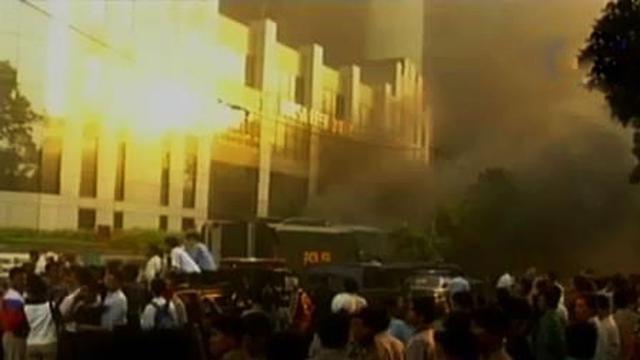
Pada 13 September 2000, bom raksasa meledak di Bursa Efek Jakarta.
15 orang tewas terburai menjadi potongan-potongan kecil. Tubuh mereka hancur berceceran oleh bom mobil raksasa yang diparkir di basement Bursa Efek. Puluhan lainnya terluka parah.
Asap tebal membumbung di tengah-tengah SCBD di jantung perekonomian Indonesia. Gedung-gedung kantor besar perusahaan multinasional, bank, dan pemerintahan yang berisi ratusan ribu karyawan dilanda kepanikan dan dievakuasi.
Bom teroris besar itu menyebabkan kepanikan yang lebih besar.
Saat itu, Indonesia sedang tertatih-tatih memulihkan diri dari krisis 1997 dan mengembalikan kepercayaan internasional.
Kesejahteraan ekonomi ratusan juta rakyat bergantung pada kesuksesan pemerintahan Gus Dur melakukan hal itu.
Bom teroris di Bursa Efek sangat menggoncangnya. Harga saham jatuh. Indonesia terancam roboh kembali.
Jika Indonesia tak stabil, jutaan rakyat terancam kembali jatuh miskin dan menganggur.
Tentu saja, secara teori, jika Indonesia roboh, Soeharto dan keluarga Cendana tak akan bisa ditangkap.
Keluarga Cendana tidak akan pernah bisa ditangkap polisi apabila tidak ada polisi dan tidak ada penjara karena Indonesia bubar.
Siapa dalang bom teroris tersebut?
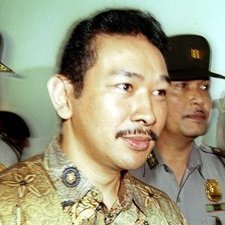
Kecurigaan tentu langsung tertuju pada keluarga Cendana, terutama Tommy Soeharto.
Alasan pertama, serangan bom teroris terjadi satu hari sebelum persidangan kedua yang seharusnya menyeret Soeharto dan keluarganya ke peradilan hukum.
Alasan kedua adalah Gus Dur yang langsung mengumumkan bahwa Tommy adalah tersangka utama dan memerintahlan pemeriksaan. Gus Dur sebagai presiden tentu berkuasa atas informasi intel.
Alasan ketiga, sebelumnya Tommy sudah terlibat dengan serangkaian kasus bom dan penembakan.
Lima bulan sebelumnya pada 13 Maret 2000, Tommy diseret ke hadapan Komisi V untuk diperiksa tentang kasus korupsi dan kegilaan monopoli cengkeh BPPC.
Pada saat itu, jendela ruang rapat Komisi V tiba-tiba ditembak orang misterius dengan senjata api.
Anggota Komisi V merasa sangat terancam. Bagaimana kalau yang ditembak berikutnya bukan jendela kosong, melainkan kepala mereka? Atau kepala anak mereka?
3 bulan kemudian, pada 4 Juli 2000, Tommy diseret Jaksa Agung Marzuki Darusman untuk diperiksa di Kejaksaan Agung.
Satu jam setelah Tommy meninggalkan gedung, gedung Kejaksaan Agung meledak oleh bom.
Ternyata yang meledak seharusnya dua bom. Tetapi salah satu bom untungnya gagal meledak.
Dua bulan kemudian, pada 31 Agustus 2000, sidang pertama kasus korupsi Soeharto dan keluarganya digelar.
Tiba-tiba, bus yang diparkir mencurigakan di samping tempat persidangan meledak. Ada orang yang menaruh bom besar di situ.
2 minggu kemudian, sehari sebelum sidang kedua pengusutan keluarga Cendana, terjadilah bom di Bursa Efek yang sangat brutal dan mengerikan ini. Ini adalah pengeboman teroris paling mematikan sejauh ini.
Gus Dur memerintahkan penyelidikan untuk mengusut Tommy dan antek-antek gerombolan premannya yang diduga keras menjadi dalang terorisme pengeboman Bursa Efek itu.
Pada saat itu, Menteri Pertahanan Mahfud MD menjadi sangat resah.
Ia membaca pola ancamannya: jika Gus Dur terus menginvestigasi Soeharto, gerombolan keluarga Cendana, dan pundi-pundi raksasa kekayaan pribadi hasil rampokan mereka selama 20 tahun terakhir, Indonesia akan terus digoncang bom dan instabilitas. Ini sudah masuk ranah ancaman pertahanan nasional.
Mahfud seakan membaca tulisan yang ditulis dengan darah orang-orang Bursa Efek: "Jika kamu terus mengusut, Republik ini akan jatuh."
Gus Dur bebal. Dua bulan kemudian, Gus Dur menolak permohonan grasi yang dengan sangat belagu diajukan Tommy Soeharto. Saat itu Tommy baru saja didakwa korupsi memaling aset tanah Bulog dan akan segera dipenjara.
Apa yang dilakukan Tommy? Ia kabur dan menjadi buronan.
Pada 14 November 2000, polisi mengirim 18 tim untuk melakukan penggerebekan di 18 lokasi. Sebanyak 206 anggota polisi diturunkan untuk melakukan penggerebakan serentak, termasuk di rumah Soeharto di Jalan Cendana, Jakarta.
Gagal. Tommy tak bisa ditemukan.
Sebulan kemudian, rentetan bom teroris kembali meledak, yaitu pada Malam Natal 24 Desember 2000.
Yang ini sangat mengerikan.
23 gereja berbeda yang tersebar di Batam, Pekanbaru, Jakarta, Mojokerto, Bandung, Ciamis, dan Lombok hancur oleh bom teroris yang dijadwalkan meledak serentak.
Serangan bom serentak ini menewaskan jemaat Kristen yang sedang berdoa, juga menewaskan Riyanto, anggota Banser NU yang ditugaskan menjaga gereja dari ancaman teroris. Ia mati syahid ketika berusaha menjauhkan bom dari para jemaat gereja.
Beberapa minggu kemudian pada Januari 2001, salah satu teman dekat Tommy, Elize Tuwahatu, berhasil ditangkap oleh Polda Metro Jaya. Elize tertangkap basah membawa-bawa tiga buah bom raksasa dari Tommy.
Dari mulut Elize dan pelapornya, berbagai kelakuan Tommy berhasil dibongkar.
Ternyata, berapa hari setelah Bom Malam Natal, Elize ditugasi Tommy untuk menyusun rencana membunuh Jaksa Agung Marzuki Darusman serta Menteri Industri dan Perdagangan Luhut Binsar Pandjaitan dengan bom.
Bom pertama dan kedua ditujukan pada Marzuki dan Luhut, yang dianggap mengancam pundi-pundi raksasa kekayaan dan aset keluarga Cendana.
Apabila Luhut berhasil dibunuh dengan ledakan bom, kematian sadisnya juga akan mengguncang stabilitas industri dan perdagangan Indonesia, mengingat jabatan strategis Luhut saat itu.
Menperindag sebelum Luhut adalah Jusuf Kalla. Menperindag sebelum Jusuf Kalla adalah Rahardi Ramelan di zaman Habibie. Menperindag sebelum Rahardi Ramelan adalah Bob Hasan, operator bisnis keluarga Cendana.
Barangkali Luhut yang saat itu jadi anak buah Gus Dur menyentuh "sesuatu" yang membuat keluarga Cendana dan kroninya (seperti Bob Hasan) sangat marah.
Selain Marzuki dan Luhut, kedua bom itu juga diharapkan memutilasi dan membunuh acak sebanyak-banyaknya staf Kejaksaan Agung dan staf Kemenperindag dan menciptakan sebesar-besarnya teror dan kekacauan nasional.
Bom ketiga ditujukan untuk memutilasi dan membunuh acak sebanyak-banyaknya staf di kantor Direktorat Jenderal Pajak untuk semakin menebar teror di sektor-sektor kunci pemerintahan dan kestabilan ekonomi.
Tommy sendiri ternyata memiliki penyuplai bom yang menurut investigasi kepolisian diduga adalah suatu oknum pengkhianat negara di Kopassus. Secara semangat korsa, ini sangat menyedihkan mengingat Luhut sendiri adalah mantan komandan Kopassus. Tetapi memang, pada zaman Soeharto, Kopassus sempat dipimpin oleh orang yang sangat dekat dengan keluarga Cendana.
Enam bulan kemudian, pada Juli 2001, tragedi kembali terjadi. Hakim yang sedang mengusut Tommy Soeharto, Syafiuddin Kartasasmita, dibunuh dengan sangat brutal di tengah jalanan Jakarta menggunakan senapan mesin ketika sedang menuju tempat kerjanya.
Hakim Syafiuddin ini mati syahid dengan tubuh berlubang-lubang. Kematian mengerikannya sangat menghebohkan Indonesia.
Pembunuhan Hakim Syafiuddin yang luar biasa sangat sadis inilah yang ternyata berhasil digunakan penegak hukum untuk mengumpulkan cukup bukti tak terbantahkan untuk menangkap Tommy Soeharto.
Dalam suatu periode drama kehebohan nasional yang membuat rakyat menempel ke TV, Tommy si Penjahat Nomor Satu diburu oleh penegak hukum.
Tim sangat elite ini diberi nama Tim Kobra dan dikomandoi oleh perwira lapangan bereputasi cemerlang yang sedang naik daun saat itu, Tito Karnavian. Meski begitu, awalnya penyelidikan mengalami kebuntuan.
Menggunakan penyadapan sinyal telepon dan pengamatan intel, lokasi Tommy diisolasi ke sebuah rumah di Bintaro Jaya, Tangerang Selatan.
Akhirnya Tommy berhasil digerebek, diseret keluar, dan ditangkap sebagai hewan buruan terbesar pemerintahan Gus Dur pada 28 November 2001, 4 bulan setelah Syafiuddin mati dibunuh.
Tommy dipenjara selama beberapa tahun dan hidup mewah di penjara dengan sofa, kulkas, TV, dapur, dan akses untuk bermain golf di Jakarta.
Tommy bebas dengan masa tahanan yang sangat dipotong remisi. Setelah bebas, ia langsung berusaha membeli Golkar pada tahun 2009 dengan pundi-pundi raksasa kekayaan keluarganya. Ia dikalahkan Aburizal Bakrie.
Gus Dur sendiri tidak sempat melihat Tommy ditangkap dari posisi menjabat sebagai presiden.
Gus Dur keburu digoncang dengan Operasi Semut Merah dan berbagai krisis politik.
Akhirnya, Gus Dur kalah dan digulingkan dari kursi kepresidenan pada pertengahan 2001.
---
Itulah bagaimana keluarga Cendana berhasil lolos dari jerat hukum.
Soeharto mati dengan pulas dan santai pada tahun 2008. Tubuhnya dikubur di suatu ancient temple mistis di atas bukit yang tersembunyi di tengah hutan lebat kaki Gunung Lawu yang angker, seperti seorang raja Jawa kuno. Ketika gw solo travelling ke situ dengan motor, templenya dijaga segerombolan penjaga.
zhil@zhil_arf
Dari zaman Orde Baru sampai 2014, kita punya sistem pemasokan suplai bensin se-Indonesia yang aneh. Apabila bensin dari Timur Tengah mau masuk Indonesia, ia tidak boleh masuk lewat sembarang kapal tanker, tetapi harus lewat suatu Perusahaan Misterius X. Monopoli pengimporan ini memberikan kekuasaan bagi Organisasi Hitam Jahat Misterius itu untuk menetapkan biaya pengimporan bensin nasional secara asal-asalan dan sesukanya. Monopoli ini sudah ada sejak zaman Orde Baru. Pada saat itu, keluarga Cendana yang berkuasa telah menjadi the Lord of Crime di Indonesia. Untuk setiap liter bensin yang masuk ke Indonesia, harganya dinaikkan serampangan oleh gerombolan mafia ini. Keutungan perusahaan mafia ekspor impor ini tentu fantastis. Ratusan triliun per tahun. Perusahaan ini jelas merampok langsung dari rakyat secara gila-gilaan. Setiap kita beli bensin, sebagian uangnya dirampok oleh Perusahaan Misterius X ini. Mereka seperti hewan parasit cacing pita berbahaya yang menyedot ekonomi nasional secara gila-gilaan. Setiap tahun, uang sebanyak ratusan triliun mereka rampok. Setelah puluhan tahun, ribuan triliun dirampok. Uangnya mereka hamburkan untuk berjudi, hidup bermewah-mewahan di mansion-mansion, menyogok dan mendanai sebanyak-banyaknya orang / parpol / ormas yang perlu disogok, serta dengan paranoid membiayai usaha pembasmian terhadap siapapun yang berani membongkar. Jika usaha ini termasuk mendanai kekacauan besar-besaran yang menggoyang kestabilan nasional setelah 2014, maka ya dilakukan. Siapakah perusahaan ini? Siapa bos-bos mafia misterius ini? OK jawabannya sudah jelas. Perusahaannya adalah Petral. Nama yang muncul dalam catatan sejarah adalah Tommy Soeharto, Bob Hasan, dan lalu Riza Chalid. - Tommy Soeharto adalah anak Soeharto. Selain Petral, ia juga terlibat dan skema Perampokan Nasional fantastis lain seperti monopoli cengkeh BPPC. Ketika gabut ia juga terlibat skema-skema yang lebih kecil, tidak cerdas, dan langsung rampok seperti pencurian nilai aset tanah negara. Tommy sendiri tertangkap dan divonis sebagai dalang pembunuhan jaksa Syafiuddin Kartasasmita yang berusaha mengusutnya pada masa Reformasi. Syafiuddin dibunuh dengan brutal menggunakan senjata api hingga tewas berlubang-lubang. Pada saat yang sama, Tommy Soeharto juga berusaha membunuh Jaksa Agung Marzuki Darusman dan Menteri Industri dan Perdagangan Luhut B. Pandjaitan dengan bom karena dianggap membahayakan pundi-pundi kekayaan raksasa keluarganya. Pada saat yang sama, tim investigasi di masa kepresidenan Gus Dur mengumumkan bahwa Tommy Soeharto adalah dalang pengeboman Bursa Efek di Jakarta, yang dilakukan untuk merusak kestabilan nasional, membuat investor kabur, dan mencegah pengusutan lebih lanjut terhadap keluarga Cendana. Salah satu gerombolan ormas preman yang dipelihara Soeharto juga terlibat langsung dalam eksekusi pengeboman ini. "Jika kamu terus mengusut, Republik ini akan jatuh." Tim tersebut juga menduga bahwa Tommy terlibat dalam berbagai pengeboman teroris lain, bukan hanya Bursa Efek. Gus Dur sendiri kemudian digulingkan dari kursi kepresidenan. - Bob Hasan "si raja hutan" adalah operator bisnis keluarga Cendana yang sudah beraktivitas kriminal dengan Soeharto sejak mereka masih sibuk merampok hasil gula Jawa Tengah pada akhir 1950an. Ia adalah salah satu dari dua oligarki terbesar zaman Orde Baru. Oligarki satunya adalah Sudono Salim. - Riza Chalid sangat misterius. Ormas preman kalah rampok dibanding Brownies. Brownies kalah rampok dibanding Mafia Ekspor Impor. Dalam hal ini Petral adalah final boss dari Ekonomi Preman Indonesia. Tetapi apa iya yang terlibat hanyalah ketiga nama yang sering muncul ini? Siapa antek-antek mereka? Ketika SBY menaikkan harga BBM sehingga didemo besar-besaran, berapa persenkah dari harga BBM itu yang sebenarnya mereka rampok? Ketika Soeharto menaikkan harga BBM tahun 1998 yang memicu demo meluas oleh rakyat miskin dan menderita, berapa persenkan dari harga BBM itu yang masih saja dengan serakah mereka rampok? (Note: Pada Maret 1998, Bob Hasan ditunjuk Soeharto menjadi Menteri Industri dan Perdagangan. Merampok sampai akhir.) Apa yang mereka lakukan dengan uang itu? Kemanakah semua uang itu mengalir? Kok para politisi terima-terima saja dengan gerombolan preman ekspor impor migas raksasa ini sih? Apakah sistem ini masih ada hari ini? --- Selama puluhan tahun, Petral merampok ribuan triliun dari Indonesia. Dalam beberapa tahun saja, mafia judi online merampok ribuan triliun dari Indonesia. Ternyata ada final boss True Ending yang baru. Indonesia juga sedang dirampok lagi sebanyak ratusan triliun per tahun lewat MBG. Habis Petral terbitlah MBG.
Indonesia
abewee がリツイート

Meteora is seeing an explosion in activity, powered by @BagsApp
We're currently ranked 3rd/4th/3rd in fees generated across daily, weekly, and monthly timeframes.
We've also almost hit December 2025's revenues just halfway through January.
Here’s what’s been happening.

English
abewee がリツイート

meteora generated $1.25b in fees last year. more than any defi protocol on any chain. trades at 0.11x revenue. raydium does half the fees at 3x the valuation. uniswap similar fees at 30x the valuation. met at $0.29 with airdrop sellers clearing out january 21. deploying more capital
English
abewee がリツイート

In 2025, Meteora became the best place to LP.
In 2026, we will build Meteora.ag to be the best place to research, create, or manage LP positions, period.
We started down this path at Met Dhabi, announcing Pool Discovery, Charts, and PNL. Expect us to keep building on this, releasing the features promised at Met Dhabi and many more in 2026.
We will roll out updates as each piece ships. See you throughout 2026 as we become the best place to LP and serve you better.
English
abewee がリツイート
For @MeteoraAG, it's simple & clear.
There is no equity, there is only the token. We didn't make a single $ off the token, but are willing to spend ($12.2M~) to date to buy back 2.9% of supply.
We will use revenues to run the company, grow the company, or buyback tokens based on valuation & cash flow, with the objective of growing Earnings-Per-Token.
And we will explore models, especially those that work with @MeteoraAG, to formalize or introduce more safeguards for the tokenholders.
The current frontrunner is @LaunchOnSoar's DRP Model.
English
abewee がリツイート

“Venezuela has banned pornography, banned abortion, banned gay marriage, banned sex changes, and banned usury.”
Why are MAGA Christian patriots eerily quiet about Christian Venezuela being bombed and their leader his wife kidnapped for oil?
English