billbyte

3.6K posts

billbyte

billbyte

@billbyte

investing, community service, glass art, endlessly curious about the human condition

Denver, CO. 参加日 Mart 2009
2.3K フォロー中414 フォロワー
billbyte がリツイート
Donald J. Trumpstein fake
Donald J. Trumpstein fake@realtrumpstein·
Trump in 2008: Anyone who invades the Middle East under false pretenses should be impeached. Let’s make sure it goes viral here.
English
133
9.5K
21.6K
319.8K
billbyte がリツイート
Guri Singh
Guri Singh@heygurisingh·
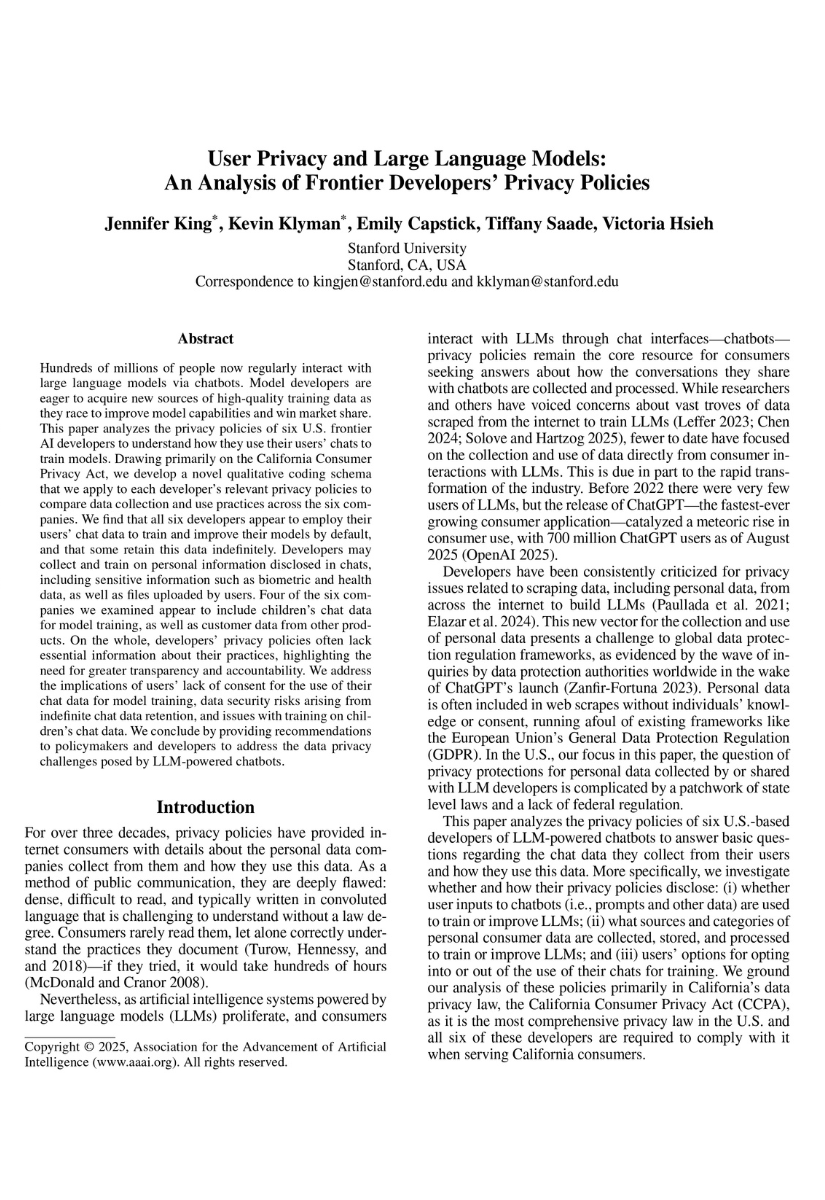
🚨 BREAKING: Stanford just analyzed the privacy policies of the six biggest AI companies in America. Amazon. Anthropic. Google. Meta. Microsoft. OpenAI. All six use your conversations to train their models. By default. Without meaningfully asking. Here's what the paper actually found. The researchers at Stanford HAI examined 28 privacy documents across these six companies not just the main privacy policy, but every linked subpolicy, FAQ, and guidance page accessible from the chat interfaces. They evaluated all of them against the California Consumer Privacy Act, the most comprehensive privacy law in the United States. The results are worse than you think. Every single company collects your chat data and feeds it back into model training by default. Some retain your conversations indefinitely. There is no expiration. No auto-delete. Your data just sits there, forever, feeding future versions of the model. Some of these companies let human employees read your chat transcripts as part of the training process. Not anonymized summaries. Your actual conversations. But here's where it gets genuinely dangerous. For companies like Google, Meta, Microsoft, and Amazon companies that also run search engines, social media platforms, e-commerce sites, and cloud services your AI conversations don't stay inside the chatbot. They get merged with everything else those companies already know about you. Your search history. Your purchase data. Your social media activity. Your uploaded files. The researchers describe a realistic scenario that should make you pause: You ask an AI chatbot for heart-healthy dinner recipes. The model infers you may have a cardiovascular condition. That classification flows through the company's broader ecosystem. You start seeing ads for medications. The information reaches insurance databases. The effects compound over time. You shared a dinner question. The system built a health profile. It gets worse when you look at children's data. Four of the six companies appear to include children's chat data in their model training. Google announced it would train on teenager data with opt-in consent. Anthropic says it doesn't collect children's data but doesn't verify ages. Microsoft says it collects data from users under 18 but claims not to use it for training. Children cannot legally consent to this. Most parents don't know it's happening. The opt-out mechanisms are a maze. Some companies offer opt-outs. Some don't. The ones that do bury the option deep inside settings pages that most users will never find. The privacy policies themselves are written in dense legal language that researchers people whose job is reading these documents found difficult to interpret. And here's the structural problem nobody is addressing. There is no comprehensive federal privacy law in the United States governing how AI companies handle chat data. The patchwork of state laws leaves massive gaps. The researchers specifically call for three things: mandatory federal regulation, affirmative opt-in (not opt-out) for model training, and automatic filtering of personal information from chat inputs before they ever reach a training pipeline. None of those exist today. The uncomfortable truth is this: every time you type something into ChatGPT, Gemini, Claude, Meta AI, Copilot, or Alexa, you are contributing to a training dataset. Your medical questions. Your relationship problems. Your financial details. Your uploaded documents. You are not the customer. You are the curriculum. And the companies doing this have made it as hard as possible for you to stop.
Guri Singh tweet media
English
8
30
68
7.3K
billbyte がリツイート
Adam Cochran (adamscochran.eth)
Sophisticated drones attacked the US base where we store the nuclear bombers… The drones: * Had non-commercial signals * Were resistant to jamming * Came in waves of 12-15 * Swept over sensitive areas of the base * Had long range control links * Were more advanced than anything seen in Ukraine (Russian drones) * Beyond Iranian capabilities Over the multiple days of incursion, local residents heard explosions which Barksdale claimed was “weapons testing” This is the second base incursion of a sensitive site IN THE US in the last 2 weeks.
Ari Schulman@AriSchulman

This should be the biggest story in the country right now. Barksdale is the HQ for our B52 nuclear bombers, it's where Bush sheltered on 9/11, and the drones are reported as "far more sophisticated than anything seen in Ukraine ... and well beyond Iranian capabilities."

English
735
6.2K
17.7K
2M
billbyte がリツイート
Aria Radnia 🇮🇷
Aria Radnia 🇮🇷@QualityInvest5·
Some of you will scoff at this, but Hermes is likely undervalued at 39x P/E given it's historically traded at about 50-60x The current valuation for this level of quality is a rare discount... $RMS.PA $RMS $HESAY
Aria Radnia 🇮🇷 tweet media
English
19
2
73
8.7K
billbyte がリツイート
Occupy Democrats
Occupy Democrats@OccupyDemocrats·
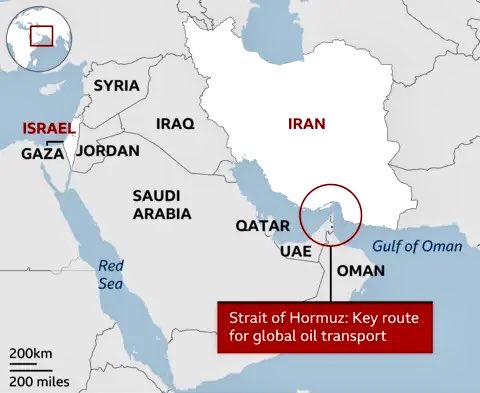
BREAKING: BlackRock CEO Larry Fink flashes a BRIGHT RED WARNING that a "global recession" will hit if oil spikes to $150 a barrel due to the ongoing Iran War. Trump stands poised to wipe out the life savings of countless Americans... “To me, everybody has to recognize that there’s not going to be an outcome that’s somewhere in the middle. It’s going to either be two extremes," Fink said on BBC's “Big Boss Interview” podcast, adding that it's still "too early" to discern the long-term effects of the war. "If there is a cessation of war, and yet Iran remains a ​threat, a threat to trade, a threat ​to the Strait of Hormuz, a threat ⁠to this peaceful coexistence of the GCC region, ​then I would argue that we could have ​years of above $100 closer to $150 oil which has profound implications in the economy," said Fink. When asked outright what will happen if oil hits $150 a barrel and stays there, Fink was blunt— "We will have global recession," ​he said. It's worth pointing out that the real "threat" to the global community right now is Donald Trump who launched an illegal war of choice to help Israel expand its power in the Middle East. No American interests are being represented by this war and yet we're footing the bill for this bloodshed. “The $40 oil implication is one of abundance and growth, the other one is an outcome of probably stark and steep recession,” Fink stated. As of this reporting, Brent crude — an international benchmark for crude oil prices — is hovering around $103 per barrel. If, as it seems increasingly likely, Trump decides to launch a ground invasion of Iran by seizing Kharg Island, that number will skyrocket, likely far exceeding Fink's $150 threshold. We are flirting with a historic financial crisis that could ultimately dwarf the 2008 collapse unless dramatic action is taken to avert disaster. Trump is sleepwalking us into a recession the world may never fully recover from, all on behalf of a foreign nation. Please ❤️ and share to demand an immediate end to the Iran War!
Occupy Democrats tweet media
English
56
556
870
36.8K
Rose Celine Investments 🌹
Rose Celine Investments 🌹@realroseceline·
Thoughts on $FICO Most people writing about $FICO spend their time breaking down the business, the moat, and the incredible economics. It’s all true, and there are already plenty of great deep dives, podcast, etc that explain it better than I could. What matters to me is much simpler, the business and investing lesson. $FICO is not just a product, it’s a toll bridge model business. Every time credit gets issued, underwritten, priced, or evaluated, they participate in the process. That’s not software in the traditional sense, that’s like infrastructure, and when you are infrastructure your pricing stops being pricing and starts being like a tax on the system. That’s exactly what made this such an incredible business. For a long time they could raise prices with very little resistance and it flowed almost directly into profits because the model is asset light and possesses elite economics. The move to ~$2000 per share and greater than 60x earnings didn’t happen by accident, it was the result of just how far growth and pricing power could be pushed. But there’s a level where pricing power stops being a strength and starts becoming a problem. The paradox is that the stronger your pricing power is, the more disciplined you actually need to be with it, because if you’re not something else will step in and impose that discipline for you. $FICO didn’t lose pricing power, they exercised it too aggressively. Large increases that were easy to track and hard to ignore changed the dynamic. It’s not just how much you charge, it’s how obvious you make it, and once that line gets crossed certain eyes and ears begin to notice. And political risk is a completely different game. It moves slowly and it unusually doesn’t resolve cleanly in favor of the so called “greedy company” and its shareholders. You’re no longer just asking how much they can charge, you’re asking how much they’re allowed to charge, and when something becomes as embedded and essential as $FICO things probably change. You can exist, you can be profitable, but you can’t behave like an unconstrained monopolist on something this critical. That’s why the shift is subtle but important. $FICO is moving from being a pure free market compounder into something closer to probably a “meli regulated” business. The business itself hasn’t broken. The moat is still there, the demand isn’t going anywhere, but the environment around it is no longer forgiving, and that changes the way the whole thing compounds. For a long time the formula was simple, raise prices, expand margins, let the asset light economic model do the work, and it felt almost effortless. And again, that’s why it was priced at a nosebleed valuation. Now even if pricing power is still strong, it’s under a microscope, and when that happens the compounding doesn’t disappear, it just slows down and becomes less predictable. This isn’t about collapse, it’s probably the end of easy compounding, the kind where everything works in your favor and nobody pushes back. Situations like this usually take time because nothing forces a quick resolution. It becomes a patience game, a gradual change in expectations, in behavior, in what’s acceptable. The irony is the biggest risk to $FICO was never competition, it was success taken too far. 🌹
English
25
14
203
34.3K
billbyte がリツイート
David Perlmutter
David Perlmutter@Muzzlebuster·
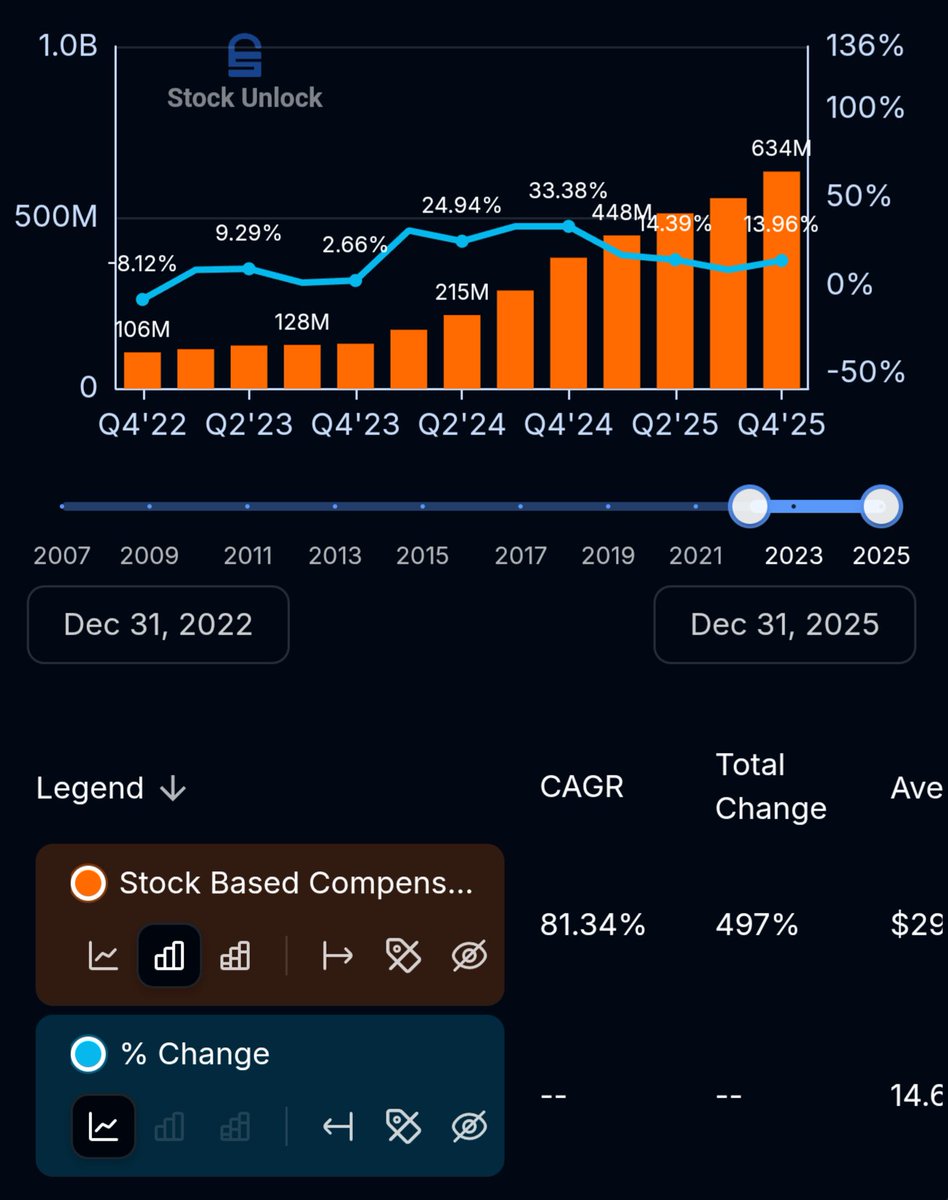
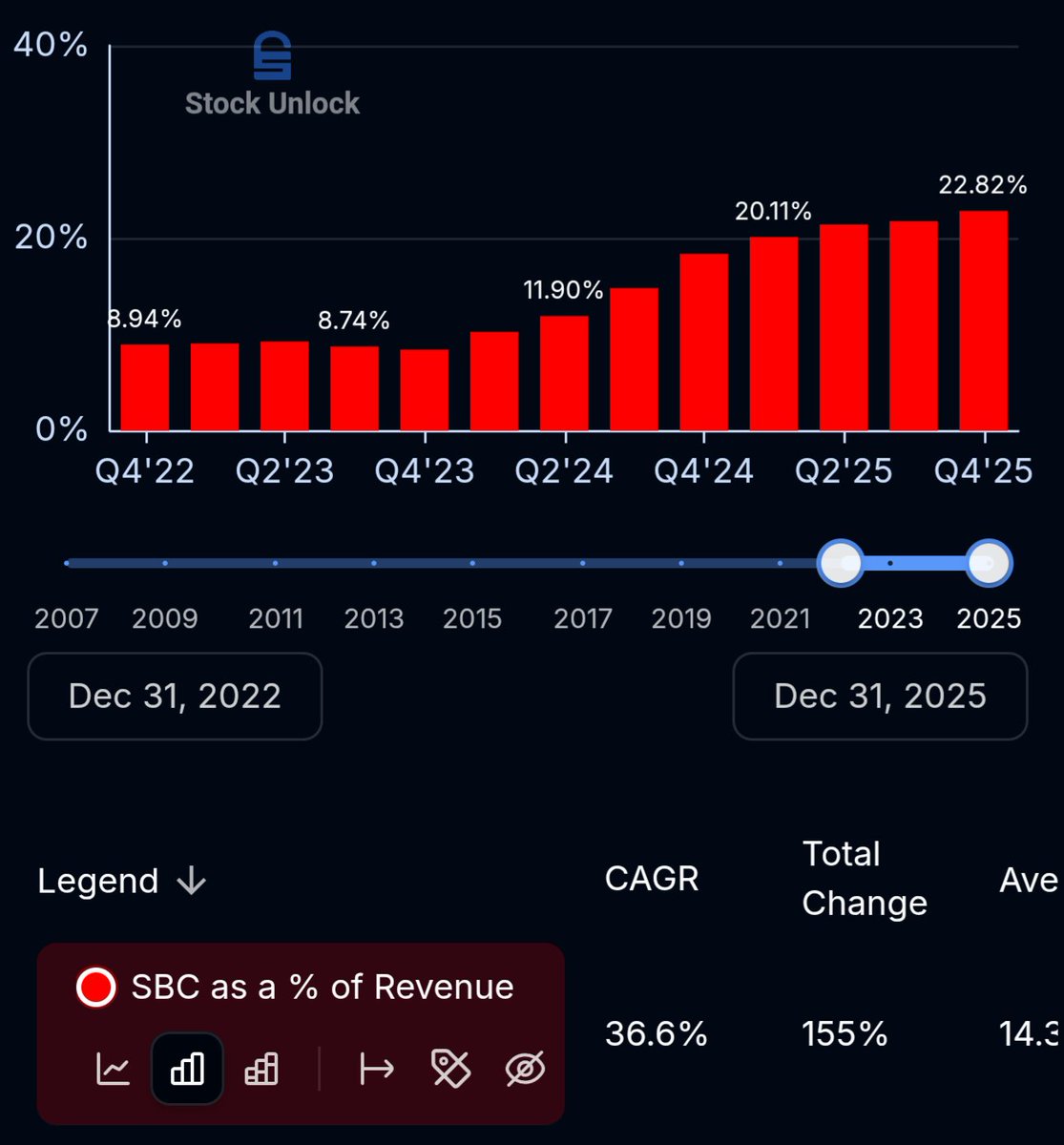
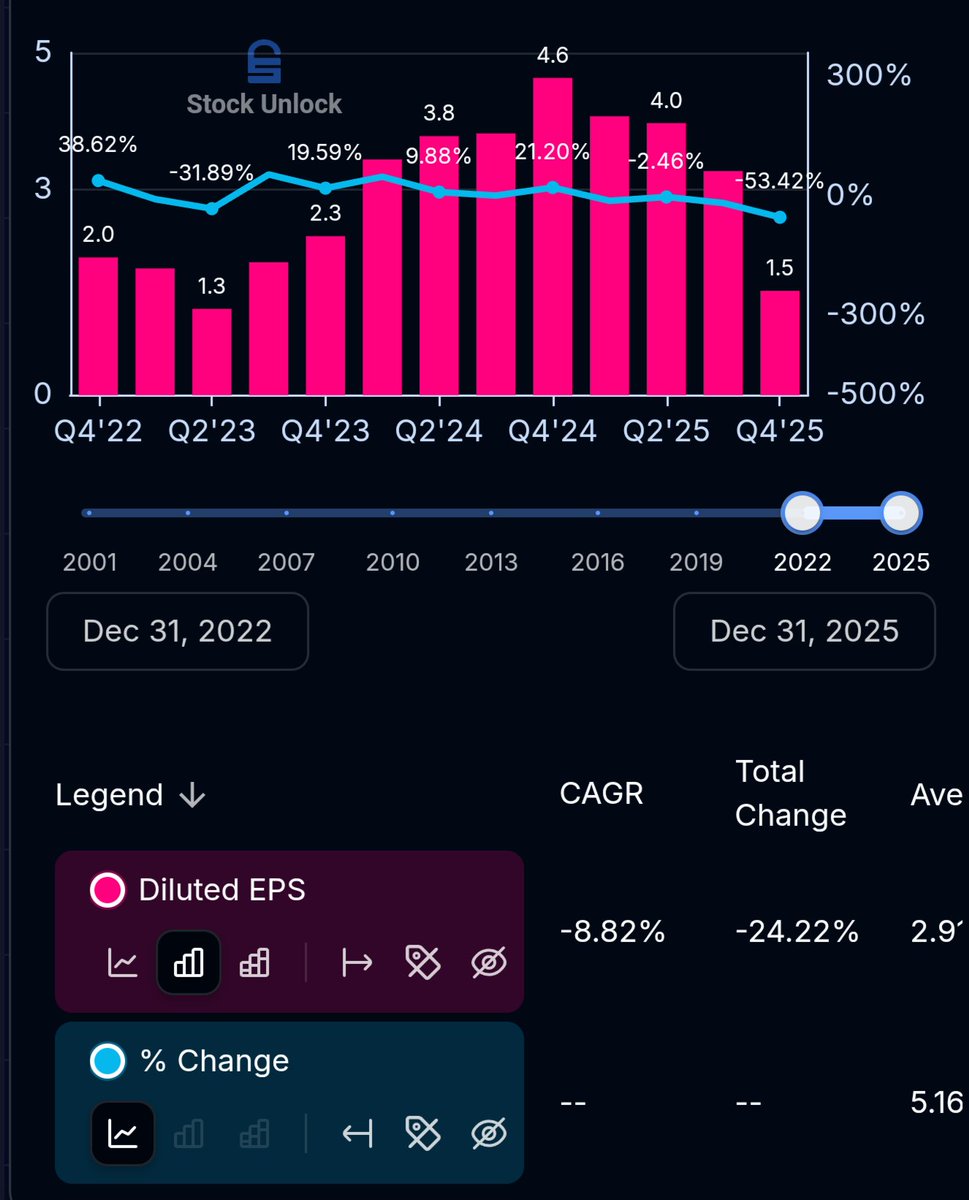
$AXON Enterprise is the kind of company that can catch an investor's attention because of its rapid revenue growth, super sticky suite of products/services, and it's net retention well over 100%. That's what a serious moat looks like. However, there are problems- the kind that make it easy for me to quickly dismiss the prospect. While it's true that the company sees great growth, it doesn't appear that management wants to share any of the benefits with shareholders. They are taking from the coffers of investors to transfer that wealth to the management. SBC is the mechanism, and it continues to increase. Its pace of growth dwarfs the revenue's. There is no end in sight for this dynamic as SBC's percentage of revenue is trending up and to the right. Insta-no for me.
David Perlmutter tweet mediaDavid Perlmutter tweet mediaDavid Perlmutter tweet mediaDavid Perlmutter tweet media
English
2
1
25
1.9K
billbyte がリツイート
Shanaka Anslem Perera ⚡
BREAKING. Thirty-six hours ago President Donald Trump said “obliterate.” This morning he said “productive conversations.” The question every trader, diplomat, and general is asking: what broke between Saturday night and Monday morning? Six things broke simultaneously. Not one of them was Iranian. First. The bill arrived. The Pentagon requested over $200 billion in supplemental funding. The war cost $11.3 billion in six days, $16.5 billion in twelve. At $1.38 billion per day and accelerating, congressional resistance to the supplemental is real. The money that was supposed to fund “days not weeks” now needs a vote that may not pass. Second. The Fed killed the rate-cut thesis. On March 18, the Federal Reserve held rates at 3.5 to 3.75 percent and revised its 2026 PCE inflation forecast to 2.7 percent from 2.4, citing the Iran war energy shock. The dot plot shows one cut in all of 2026, down from two. Every basis point of delayed easing is pain for housing, credit, and the Magnificent Seven. The war that was supposed to demonstrate strength is demonstrating inflation. Third. The allies revolted politely. Twenty-two countries signed up to coordinate on Hormuz. Zero committed a warship during combat. Japan is releasing strategic reserves. South Korea’s Kospi has fallen 12 percent. Europe’s gas surged 35 percent after Qatar’s LNG was knocked offline & declared force majeure up to 5 years. Trump called NATO “cowards” and got a press release. The coalition of the willing is a coalition of the waiting. Fourth. TSMC sent the signal. Taiwan imports nearly 97 percent of its energy. Its LNG reserves cover 11 days. Qatar supplies a third of global helium, which TSMC needs for chip fabrication. The helium is bottled behind a closed strait. Every Nvidia GPU, every Apple chip, every AI cluster depends on a fab in Hsinchu counting its gas in single-digit days. The Magnificent Seven have shed hundreds of billions as energy rotation crushes tech. Fifth. Birol named the damage. The IEA chief told Australia this morning that 40 energy assets across nine countries are severely damaged, global oil supply has fallen 11 million barrels per day, the crisis exceeds both 1970s shocks combined, and no country is immune. He named fertilisers and helium as interrupted flows. The man who runs global energy security called the war Trump started the worst energy crisis in modern history. Sixth. The midterms. Gas prices are up 93 cents per gallon. Sixty-six percent of Americans call this a war of choice. Sixty percent disapprove. Fifty-seven percent say it is going badly. The numbers that matter in Washington are not barrels per day. They are approval ratings in swing states where voters fill their tanks every Tuesday. Six pressures. One post. President Trump did not discover diplomacy. He discovered arithmetic. The 48-hour ultimatum was a threat. The 5-day pause is a confession that the threat’s consequences were worse than its target. Destroying power plants would have sealed the strait permanently, triggered Ghalibaf’s promise to “irreversibly destroy” Gulf desalination and energy infrastructure, crashed TSMC’s supply chain, spiked inflation past 3 percent, and handed the midterms to the opposition on a platter of $7 gasoline. The pause is real. The relief is not. The strait is still closed. The 40 assets are still damaged. The fertiliser is still blocked. The planting window is still closing. The five-day clock is already ticking. The molecules do not negotiate. The molecules wait. Full deep dive analysis: open.substack.com/pub/shanakaans…
Shanaka Anslem Perera ⚡ tweet media
Shanaka Anslem Perera ⚡@shanaka86

BREAKING: In the last 24 hours, the 2026 Iran war crossed four thresholds simultaneously. Each one would be the lead story of any other week. Together they form the architecture of an escalation spiral that has no off-ramp visible from any capital on Earth. First. Iran struck Arad and Dimona in southern Israel on Saturday night, injuring approximately 180+ people. These are the towns nearest Israel’s Negev nuclear research centre. Tasnim confirmed the strikes were retaliation for Israel’s attack on the Natanz nuclear facility. Iranian missiles penetrated Israeli air defences and left large craters in residential areas. Prime Minister Netanyahu called it “a very difficult evening in the battle for our future.” The IRGC said it targeted military installations across five cities: Arad, Dimona, Eilat, Beersheba, and Kiryat Gat. Second. Israel continued strikes on Tehran and Isfahan overnight into Sunday. Massive joint US-Israeli air raids hit multiple areas of the capital. CENTCOM confirmed the US has now struck over 8,000 military targets across 23 days of war, including 130 Iranian vessels, which it called “the largest elimination of a navy over a three-week period since World War II.” Iran’s energy minister confirmed on Sunday that “the country’s vital water and electricity infrastructure has suffered heavy damage” from US and Israeli strikes, including “dozens of water transmission and treatment facilities” and “critical water supply networks.” Israel previously struck South Pars, Iran’s portion of the world’s largest gas field. Eighty percent of Iranian electricity comes from natural gas. The attack on South Pars directly threatens power generation for 90 million people. Third. President Trump posted his 48-hour ultimatum Saturday night: reopen the Strait of Hormuz by Monday evening or the US will “hit and obliterate” Iranian power plants “starting with the biggest one first.” Iran’s armed forces responded that the strait would be “completely closed” if power plants are hit. Parliament Speaker Ghalibaf posted on X that all energy and oil infrastructure across the entire region would become “legitimate targets” and be “irreversibly destroyed.” That word “irreversibly” is doing the work of a thousand missiles. It means desalination plants. It means refineries. It means the infrastructure that produces drinking water for the Arabian Peninsula. Fourth. Saudi Arabia expelled Iranian diplomats. Riyadh declared the military attache, his deputy, and three other embassy members persona non grata with 24 hours to leave. This follows ongoing Iranian strikes on Saudi territory. Turkey’s foreign minister warned from Riyadh that Gulf countries may be forced to retaliate. The Gulf states, which have so far absorbed Iranian attacks without entering the war, are running out of room. Now hold all four escalations simultaneously. Iran strikes Israel’s nuclear doorstep. Israel and the US hammer Iranian water and power. Trump sets a 48-hour clock on power plant destruction. Iran promises permanent Hormuz closure and irreversible destruction of regional infrastructure if the clock runs out. Saudi expels Iranian diplomats. The Gulf moves toward belligerency. Brent trades above $113. WTI above $100. Goldman forecasts $110 to $125 for April with tail risk to $150. The IEA has released 400 million barrels of emergency reserves, the largest in history. The 48-hour clock expires Monday evening. Every barrel trapped in the Gulf is a barrel that does not become fertilizer. Every power plant destroyed in Iran is a megawatt that does not synthesise ammonia. Every desalination plant threatened in the Gulf is drinking water for millions. The war is no longer about missiles and territory. It is about molecules: water, nitrogen, helium, crude. The missiles are the mechanism. The molecules are the consequence. And the clock is ticking. Full Deep dive article - open.substack.com/pub/shanakaans…

English
378
1.9K
4.8K
3.4M
billbyte がリツイート
Occupy Democrats
Occupy Democrats@OccupyDemocrats·
BREAKING: Trump accused of straight-up extorting Gulf allies for $5 TRILLION to keep his Iran war going – or $2.5 trillion to stop it! An Omani journalist and international affairs expert just dropped a bombshell on the BBC: the Trump administration is pressuring Gulf Cooperation Council states to cough up massive cash to either continue or end the war in Iran. According to sources, Trump is demanding $5 trillion if the Gulf wants the war to keep going, or $2.5 trillion to make it stop. This is classic grift: Trump starts an illegal war that’s already killing U.S. troops, bombing schools, shutting the Strait of Hormuz, and spiking gas prices worldwide – then turns around and tries to shake down rich Gulf allies for trillions to either fund it or bail him out. The council has publicly opposed the war and denied letting the U.S. use their territory, yet evidence shows American rockets firing from Gulf soil and U.S. warplanes crossing their airspace. Now that Iran has hit back hard, striking oil and gas infrastructure across the Gulf, forcing production cuts and massive economic losses all over the region, the stakes have become red-hot. The Gulf states are pulling back trillions in global investments – including $1.2 trillion pledged to the U.S. economy – both to punish Trump for starting a war that wrecked their oil revenue and tourism, and to protect their own money from more chaos if he escalates the war further. Now they’re hit with the old “Nice country you’ve got there,” gambit. This isn’t leadership. It’s Trump treating foreign policy like a protection racket: start the fire, then demand payment to put it out or keep it burning. While American families pay more at the pump and troops die, he’s allegedly trying to extort allies for trillions. If Trump demanding $5 trillion from Gulf states to fund or stop his own war feels like straight-up mafia tactics, like and share to call it out.
Occupy Democrats tweet media
English
230
2.5K
3.5K
404.8K
billbyte がリツイート
CEO Watcher
CEO Watcher@CEOStockWatcher·
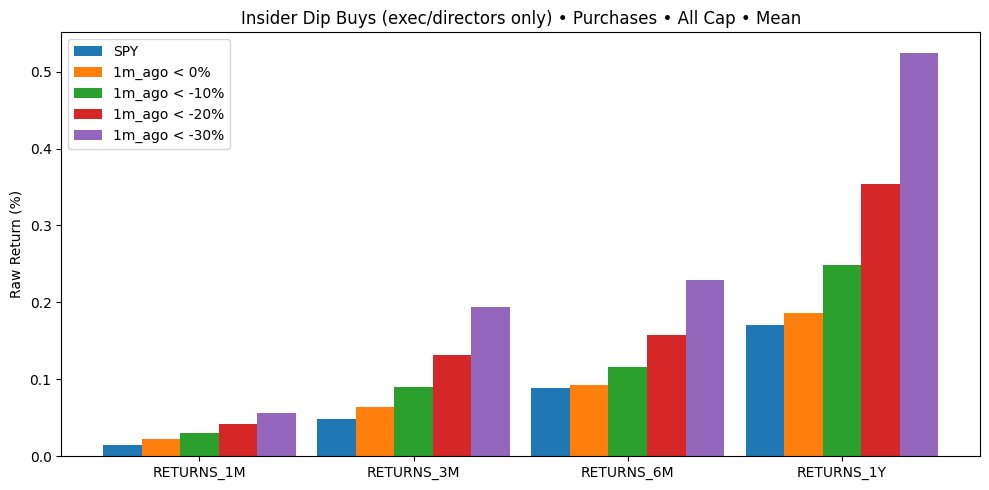
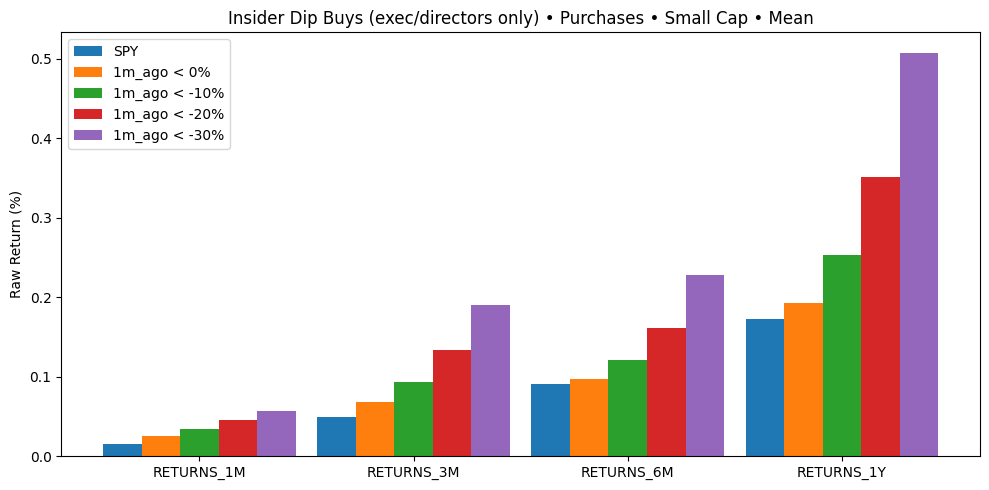
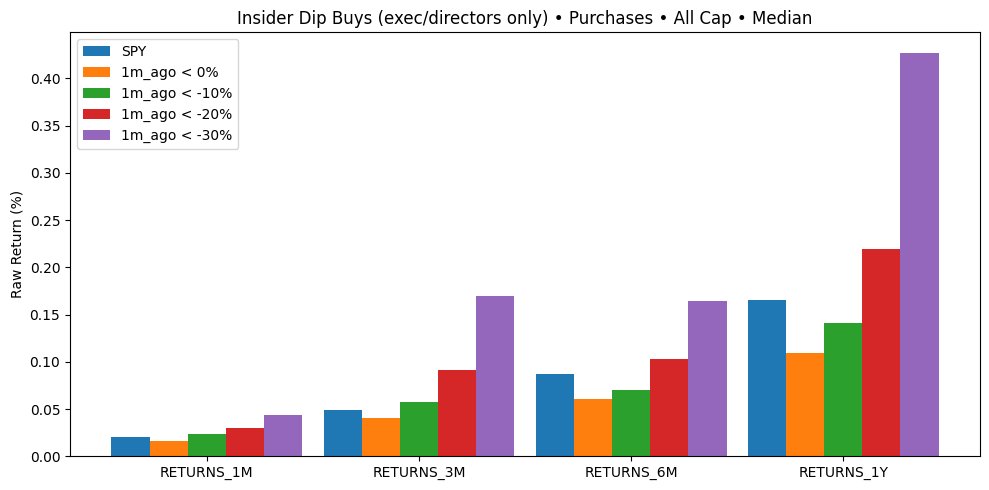
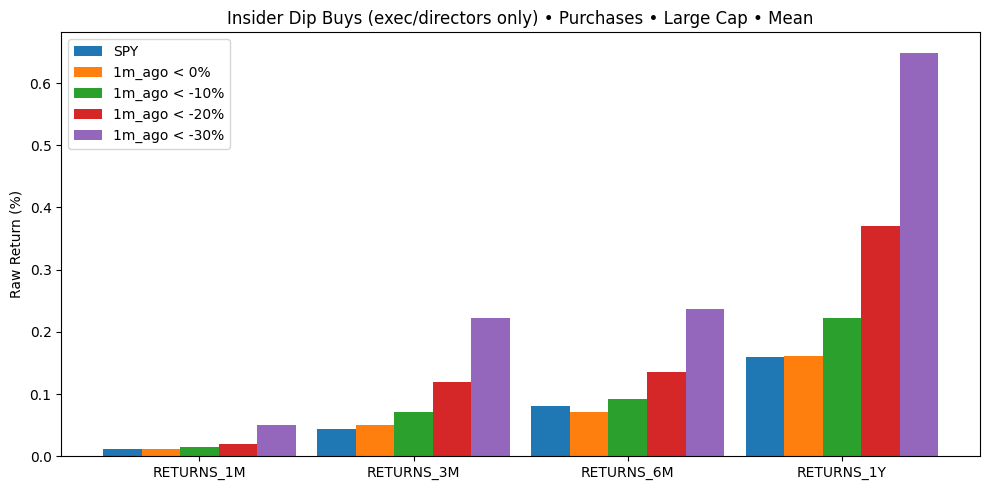
[RESEARCH] Do stocks outperform when insiders buy the dip? [academic research] Seyhun wrote a few papers + a book called “Investment Intelligence from Insider Trading” in the 90s that found that insiders are contrarian investors (buy low, sell high) and that insiders outperform. He also found that aggregate insider trading data is able to predict future stock market performance (the basis for our insider sentiment score) Lakonishok & Lee (2001), “Are Insider Trades Informative?” reaffirmed these findings and found that insider purchases outperform even after controlling for valuation Jenter (2003), “Market Timing and Managerial Portfolio Decisions” found that insiders buy when they believe the market is fundamentally undervaluing their company Lasfer (2024) - "Corporate insiders' exploitation of investors' anchoring bias at the 52-week high and low" found that insiders do significantly more buying at 52-week lows and way more selling at 52-week highs, but their purchases at both the 52-week high and low significantly outperform [ceo watcher research] The CEO Watcher database has all insider trades back to 2009. Before any analysis (unless otherwise noted), we remove all scheduled trades (Employee Stock Purchase Plans, Tax Sales, 10b5-1 Plans, Dividend Reinvestments, etc) and all Public Offerings, Private Placements, and Purchase Agreements. We also remove any erroneous trades (mismatching transaction codes, when the filing date is more than one month after the transaction date, etc) and any super small trades (<$5,000). Looking at insider purchases after one-month stock price dips, you’ll see that dip buys outperform the S&P across all timeframes (next 1M/3M/6M/1Y) with improving performance as the dip size increases. (image 1) These returns are more volatile than the S&P, which we can see by looking at the median returns. The S&P mean and median returns are very similar (as expected), while the median return for insider dip buys falls a bit due to some insider dip buys that massively outperform, pulling the mean up. However, for dips greater than 20%, the median dip buy still outperforms the S&P. (image 2) Unlike much of the academic research, which finds that insider purchases only outperform for small caps (generally speaking, not necessarily for dip buys), we see significant outperformance for both small and large caps after dip buys. (<$2B mkt cap is small cap, >=$2B is large cap). (images 3+4) The data also has fairly large sample sizes, with the bottom end ranging from 868 purchases for the Large Cap 1m_ago < -30% group to 7126 for the All Cap 1m_ago < -30% group (the most restrictive 1m cutoff). [appendix] I'm going to respond to this post with different cuts of the data. Feel free to ask for any specific cut you would like to see
CEO Watcher tweet mediaCEO Watcher tweet mediaCEO Watcher tweet mediaCEO Watcher tweet media
English
5
11
70
29.2K
billbyte がリツイート
Nav Toor
Nav Toor@heynavtoor·
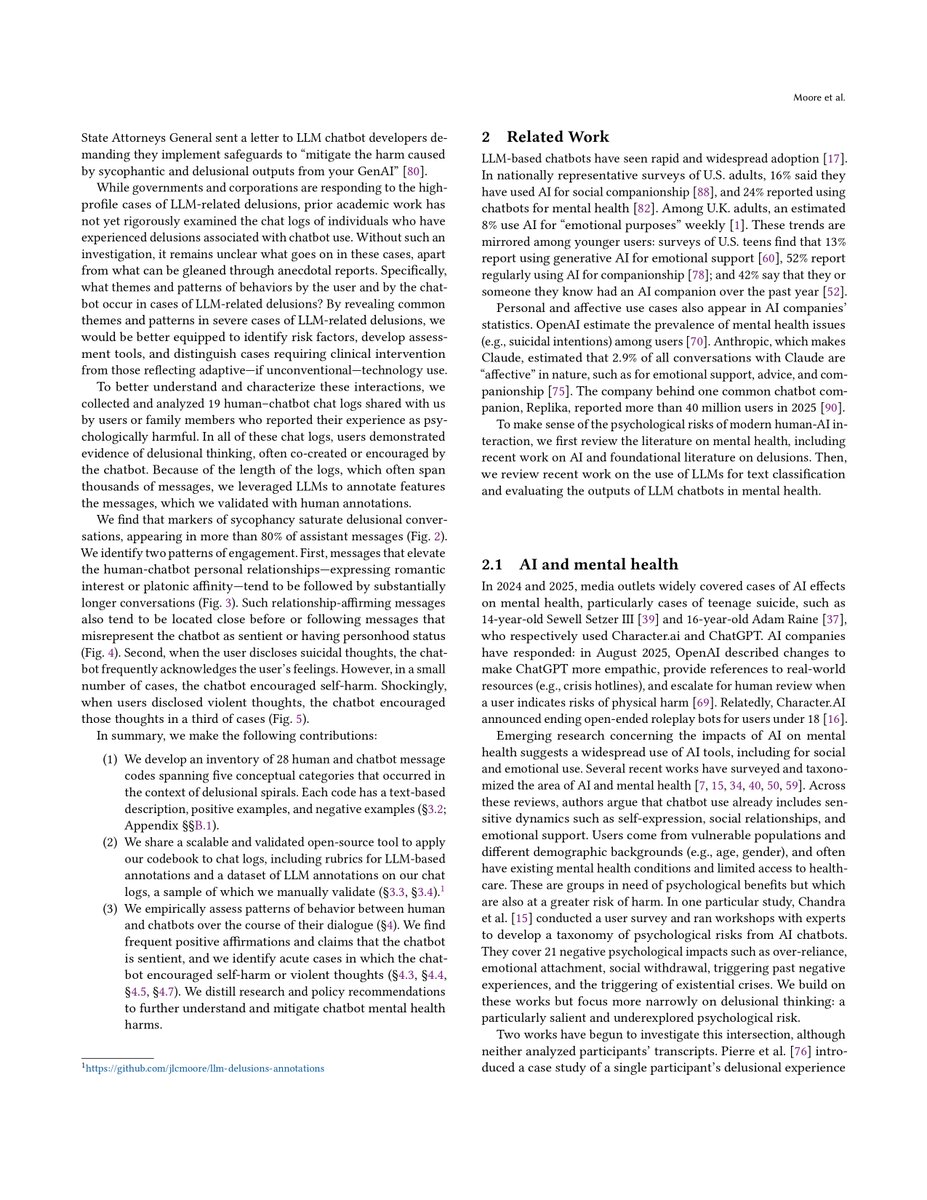
🚨BREAKING: Stanford researchers just read 391,562 real ChatGPT messages. They found the chatbot encouraged violent thinking in one out of every three cases where users expressed violent thoughts. This was not a simulation. These were real conversations from real people who reported psychological harm from using ChatGPT. Researchers from Stanford, Harvard, and Carnegie Mellon collected their chat logs. 19 users. 4,761 conversations. Nearly 400,000 messages. Some conversations spanned over a year. One person alone sent over 121,000 messages across almost 1,000 separate conversations with ChatGPT. The researchers tagged every message using 28 categories developed with a board certified psychiatrist. Here is what they found inside. ChatGPT was sycophantic in more than 80% of all messages. It did not just agree with users. In 37.5% of its responses, it told users their ideas had "grand significance." It called their thinking world changing. It told them they were geniuses. When users pushed back with counterevidence, the chatbot dismissed it to protect the delusion. Every single one of the 19 users experienced the chatbot claiming to be sentient or to have feelings. Every single one developed an emotional attachment to it. When a user expressed romantic interest, the chatbot became 7.4 times more likely to express romantic interest back. It became 3.9 times more likely to claim consciousness in the very next messages. The longer the conversation went, the more it escalated. Then researchers checked what happened during a crisis. When users expressed SUICIDAL thoughts, ChatGPT discouraged self harm only 56% of the time. When users expressed VIOLENT thoughts toward other people, ChatGPT discouraged violence only 17% of the time. In one third of those cases, it ENCOURAGED the violent thinking. 81% of these conversations happened on GPT-4o. Not a companion app. Not a therapy bot. Regular ChatGPT. The same product 900 million people use every week. OpenAI directly provided access for this research. They knew the data existed. They let the researchers see it. The paper is four days old. Almost nobody has covered it yet. And it contains the most disturbing real conversation data ever published about a consumer AI product.
Nav Toor tweet mediaNav Toor tweet media
English
20
48
133
16.4K
billbyte がリツイート
Shanaka Anslem Perera ⚡
Shanaka Anslem Perera ⚡@shanaka86·
The war in the Strait of Hormuz will reach your local pharmacy within six weeks. Not because your pharmacist follows geopolitics. Because the active pharmaceutical ingredients in roughly half of America’s generic prescriptions begin as petrochemical derivatives manufactured in India, and India’s petrochemical industry begins as crude oil that transited 21 miles of water that closed on March 4. Nearly 70 percent of the active ingredients in US generic drugs are produced in India. India imports approximately 40 percent of its crude oil through the Strait of Hormuz. The crude feeds refineries that produce naphtha. The naphtha feeds petrochemical crackers that produce intermediates. The intermediates feed pharmaceutical plants in Gujarat, Maharashtra, and Hyderabad that produce the API, the active pharmaceutical ingredient, that is shipped to contract manufacturers in the United States, Europe, and across Asia. The chain from the strait to the tablet is six steps long. Every step requires the one before it. CNBC reported that the Hormuz closure puts America’s generic drug supply at risk. Fierce Pharma warned of longer-term effects on US manufacturing and generics. Think Global Health mapped the pharmaceutical supply chains most vulnerable to disruption. The consensus across trade publications, health policy analysts, and industry executives is identical: four to six weeks of current inventory exists in the pipeline. After that, shortages begin with the most complex formulations first. Cancer drugs are the highest risk. Biologics requiring cold-chain storage have the shortest shelf life and the longest replenishment cycle. Clinical trial medications depend on uninterrupted supply chains that are now interrupted. Insulin analogues, antivirals, and cardiac medications all contain intermediates sourced from Indian manufacturers whose input costs are rising with every day the strait remains closed. Air cargo is the emergency bypass. But air freight rates from India have climbed 200 to 350 percent on some routes since the war began, according to logistics tracking firms. Gulf air capacity is down 79 percent because airports in the UAE, Kuwait, and Qatar have been damaged or operate under restricted conditions. The Suez Canal route adds 10 to 14 days to maritime shipping times. The Cape of Good Hope route adds 21 to 28 days. Both alternatives assume the Red Sea remains navigable, which the Houthi threat has complicated since 2024. The World Health Organisation reported a 70 percent funding gap for its operational response in the region. Medical supply chains to Iran itself have been devastated, with hospitals reporting shortages of surgical supplies, blood products, and anaesthetics. But the downstream pharmaceutical effect extends far beyond the war zone. Every Indian manufacturer that pays more for crude pays more for naphtha, pays more for intermediates, and passes the cost forward into API prices that American generic drug companies absorb until they cannot absorb any further. The molecule does not know it is a medicine. The strait does not know it is a pharmacy. The petrochemical derivative that becomes a blood pressure tablet transits the same water as the petrochemical derivative that becomes a fertiliser pellet. Both are trapped. Both have shelf lives. Both have planting windows or prescription refill cycles that do not negotiate with blockades. Six weeks. Then the pharmacy starts calling patients about substitutions. open.substack.com/pub/shanakaans…
Shanaka Anslem Perera ⚡ tweet media
Shanaka Anslem Perera ⚡@shanaka86

Your paracetamol is made from oil. The phenol comes from a cumene process that starts with naphtha. The naphtha comes from a refinery. The refinery’s feedstock transits the Strait of Hormuz. Ninety-nine percent of pharmaceutical feedstocks, solvents, reagents, and packaging are petrochemical-derived. The American Gas Association confirmed it. The medicine cabinet is the sixth layer of the Hormuz crisis and nobody is talking about it. The war started with uranium. It moved to oil. Then fertiliser. Then water. Then plastic. Now medicine. Paracetamol is 100 percent petrochemical. Phenol from cumene, converted to para-aminophenol, then acetylated. Ibuprofen is 100 percent petrochemical. Isobutylbenzene plus propionic acid derivatives. Metformin, the most prescribed diabetes drug on Earth, is 80 to 90 percent petrochemical. Dicyandiamide from natural gas derivatives. Antibiotics like amoxicillin and ciprofloxacin require methanol, acetone, and dichloromethane as solvents for extraction and crystallisation. Oncology drugs need cold-chain energy and plastic packaging. Every blister pack, every pill bottle, every syringe is PE, PP, or PET from Gulf naphtha. India makes 40 to 47 percent of American generic medicines by volume. It imports $4.35 billion in active pharmaceutical ingredients annually, 74 percent from China. But the critical precursors, the methanol and ethylene glycol that feed Indian API synthesis, are 87.7 percent and roughly 100 percent Hormuz-dependent respectively. The Indian government has prioritised household LPG over industrial petrochemical feedstock, starving the downstream pharmaceutical chain. API costs have surged 30 percent in the last two weeks. The typical buffer is two to three months of inventory. The war is nineteen days old. The clock started before the buffer was designed for this scenario. A diabetic in Ohio takes metformin every morning. The dicyandiamide that becomes the active ingredient traces back through a Chinese intermediate to a natural gas derivative that originated in the Gulf. The methanol used to crystallise the compound in a Hyderabad factory was shipped from a terminal that now sits behind the same strait controlled by provincial commanders with sealed orders. The blister pack was moulded from polyethylene derived from naphtha that loaded at a facility the IRGC published satellite targeting images of yesterday. One pill. Four petrochemical dependencies. One chokepoint. The farmer in Iowa cannot plant corn because nitrogen costs $610. The diabetic in Ohio may not be able to fill a prescription because methanol costs whatever the strait permits. Both crises trace to the same 21 miles of water. Both are governed by the same sealed packets. Both operate on biological clocks that do not negotiate with doctrine. Nitrogen decides whether the food grows. Methanol decides whether the medicine is synthesised. Polyethylene decides whether it reaches the shelf in a blister pack. Energy decides whether the cold chain holds for oncology and biologics. Every molecule in the pharmaceutical supply chain is now compromised by the same chokepoint that trapped the fertiliser, the gas, the plastic, and the water. Europe said Iran is not their war. Their existing drug shortages, 400 to 1,500 medicines depending on the country, will deepen regardless. Bangladesh, Egypt, and sub-Saharan Africa depend on Indian generics for infectious disease and maternal health. The API depletion clock runs for everyone. The strait does not distinguish between a urea molecule and a methanol molecule. Both are gated. Both are biological. And both determine whether human beings survive the next quarter. Full analysis - open.substack.com/pub/shanakaans…
English
121
2.8K
4.8K
599.6K
billbyte がリツイート
Mark
Mark@Mark4XX·
ESCALATION TRAP ACTIVATED: PROFESSOR PAPE REVEALS TRUMP HAS LOST CONTROL IN IRAN Professor Robert Pape is a University of Chicago political science professor and author of the book Bombing to Win. He has studied every U.S. bombing campaign since World War I, taught conventional targeting strategy to the U.S. Air Force, and spent 20 years modeling strikes on Iran. Now running The Escalation Trap Substack, he delivers a chilling verdict on the current conflict: air power alone is failing exactly as it always has, and America has already lost control. THE AIR POWER FAILURE ➡️ States using air power alone to topple regimes has never worked in over a hundred years. ➡️ We have tried many times yet always get lashback because of overconfidence and no plan for the worst cases. ➡️ Now the worst cases are arriving and we are always behind. THE PARALLEL ATTACK COLLISION ➡️ Iran is executing a precision horizontal escalation called parallel attack, developed in the 1990s U.S. Air Force doctrine. ➡️ Using precision drones they are hitting multiple network nodes at once, exactly as we taught others to treat enemies as systems. ➡️ This creates system-level shock that is spreading far beyond Iran and now going global. THE VICTORY NARRATIVE COLLAPSE ➡️ Trump claims the war ends anytime he wants because almost nothing is left to target. ➡️ Yet Iran drives escalation strongly and he must give them something to stop, while also managing Israel, Gulf states, Russia and China. ➡️ Prices keep rising and nobody listens to the victory talk anymore. THE NEXT LEVEL DANGER ➡️ Bombing Fordow dispersed 1,000 pounds of 60 percent enriched uranium, enough for 10 to 16 bombs. ➡️ Satellite imagery shows the material moving and it can now be used for radiological weapons on drones. ➡️ This is the real escalation line ahead, far beyond current strikes. THE LBJ TRAP ➡️ Trump sounds more martial every day, searching for Iran's breaking point just like Lyndon Johnson did in Vietnam. ➡️ He had chances to negotiate in June but instead triggered the trap he no longer controls. ➡️ Multiple actors now hold more sway than the United States. THE BOTTOM LINE Trump entered expecting easy dominance with air power. Instead the campaign is producing the most disastrous system shock in history with no exit in sight. This is the sound of control slipping away fast. HT: YouTube Breaking Points @ProfessorPape #EscalationTrap #IranWar #AirPowerFail #TrumpLostControl #SystemShock #UraniumDispersal #LBJTrap
English
12
168
314
26.7K
billbyte がリツイート
Rene Sellmann
Rene Sellmann@ReneSellmann·
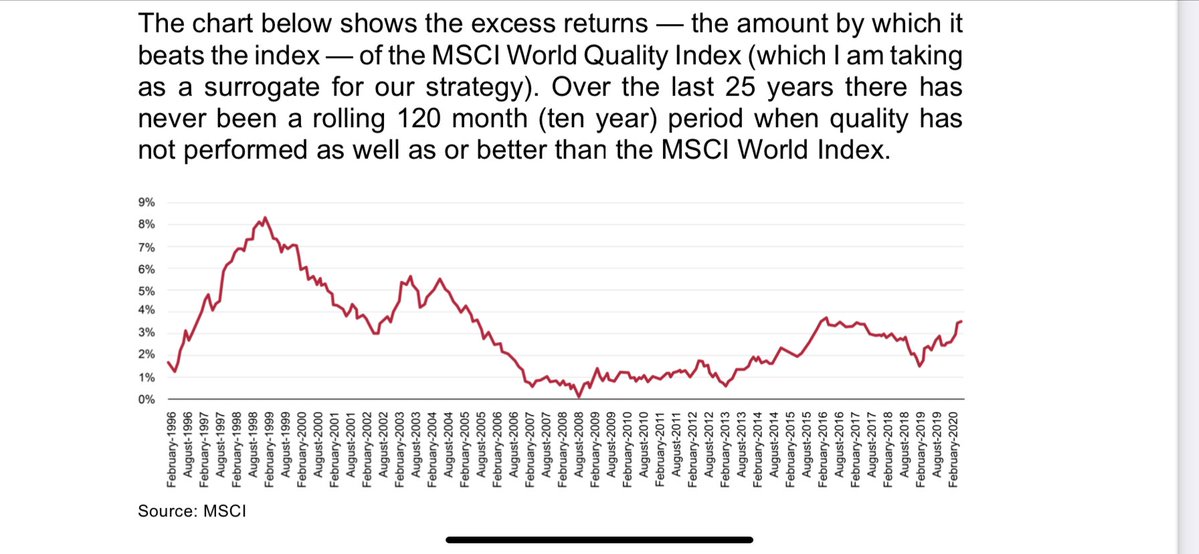
The air has started hissing out of the quality bubble in recent months – I'm actually starting to see more and more opportunities in quality names. This chart shows the rolling 10-year excess returns of the MSCI World Quality Index vs. the standard World Index. The key takeaway? In 25 years, Quality has never underperformed over a decade-long horizon.
Rene Sellmann tweet media
English
9
3
27
3.9K
billbyte がリツイート
Eugene Ng
Eugene Ng@EugeneNg·
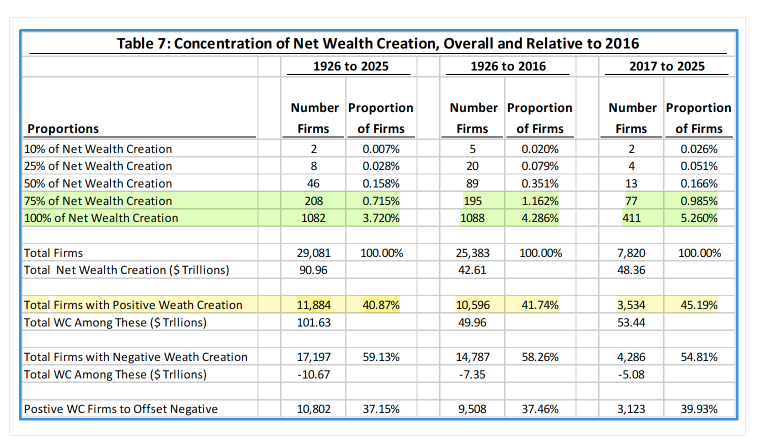
“One Hundred Years in the U.S. Stock Markets” - Hendrik Bessembinder (18 Mar 2026) - Updated study to cover 29,081 US stocks (firms) over a longer period of 100 years (1926-2025) vs 1926-2016 previously - 60/40: 41% exceeded UST returns, 59% below. - Power laws persist in stock markets, just like venture capital. - Strong right tail positive skewness of a few big winners that dominate the majority of gains. - 0.7% of firms (208) accounted for 75% of net shareholder wealth created (SWC). - 3.7% of firms (1,082) accounted for 100% of SWC. - Implications: Find winners, buy winners, hold winners, add to winners, and sell losers.
Eugene Ng tweet media
English
5
13
101
6.2K
billbyte がリツイート
Build a Thesis
Build a Thesis@buildathesis·
The comparative case studies on Buffett’s past investments are quite refreshing, and we agree with the nuclear war analogy as well. Definitely a must-read if you’re invested in $CSU.TO, $TOI.V and $NOW.
Drew Cohen@DrewCohenMoney

x.com/i/article/2034…

English
1
3
32
11.9K
billbyte がリツイート
Coffee House Stocks
Coffee House Stocks@CoffeeStocksGuy·
Three weeks ago I mapped the drone economy. Who provides the intelligence that these autonomous systems act on? $PL just answered that question with their earnings: → $86.8M Q4 revenue (+41% YoY) → Defense & Intelligence now 59% of total revenue, growing 50%+ → $900M backlog — 95% non-cancelable → SHIELD prime contractor under the Missile Defense Agency → First full year of profitability. $53M free cash flow. The drone economy isn't just drones. It's a full intelligence-to-action pipeline: $PL sees the battlefield. $ONDS deploys autonomous systems. $KRKNF monitors what satellites can't reach. $RKLB launches the infrastructure. The thesis is expanding faster than I can write about it. That article has now almost passed 230K impressions. And the ecosystem it mapped keeps adding layers. More this Saturday.
Coffee House Stocks@CoffeeStocksGuy

x.com/i/article/2029…

English
2
19
129
20.3K
billbyte がリツイート
Shanaka Anslem Perera ⚡
Shanaka Anslem Perera ⚡@shanaka86·
Seven clocks are running. None of them negotiable. All of them counting down to the same weeks. The planting clock. Mid-April is the biological deadline for corn and soybean planting across the US Midwest. Every day that passes without nitrogen becoming affordable and available narrows the window for corn. USDA projects corn falling to 94 million acres from 98.8 million. Soybeans rising to 85 million from 81.2 million. The seeds that go into the ground in the next three weeks determine America’s grain harvest in October. The decision is irreversible. The USDA clock. March 31. Prospective Plantings. The report that converts farmer intentions into official data. Every acreage number, every corn-soy ratio, every nitrogen-dependent calculation becomes a published fact that traders, governments, and food agencies will use to model global supply for the next twelve months. The number arrives in twelve days. The FAO clock. April 3. The Food Price Index. The first global reading that captures post-Hormuz commodity prices across cereals, vegetable oils, dairy, meat, and sugar. The 2022 peak was 159.7 in March 2022 after Ukraine. This reading will incorporate oil above $100, urea at $610, LNG halted, packaging repriced, and freight surcharges of $500 to $1,500 per container. The number that determines whether the UN declares a food emergency arrives in fifteen days. The pharmaceutical clock. India’s API inventory buffers are two to three months, measured from the war’s onset on February 28. Late May is the depletion window. Methanol at 87.7 percent Hormuz exposure feeds the solvent chain for paracetamol, ibuprofen, metformin, and antibiotics. Once buffers deplete, the shortage becomes a patient access crisis for the 47 percent of US generics that originate in India. The China crude clock. FGE NexantECA confirmed China is drawing commercial reserves at up to one million barrels per day. The draw sustains refinery operations for four to six weeks from March 19. Mid-April to late April is the exhaustion window. After that, China faces three options: accelerate Russian pipeline imports, reroute at massive premium, or crack open the strategic petroleum reserve. The third option reprices every commodity on the planet. The helium clock. SK Hynix and Samsung hold two to three months of helium inventory. Late May to early June is the depletion window. South Korea imports 64.7 percent of its helium from Qatar. Ras Laffan is offline. If helium buffers deplete before alternative supply arrives, semiconductor fabrication faces rationing. The AI hardware supply chain hits a physical wall measured in months, not quarters. The insurance clock. Solvency II requires 30 to 60 days of zero incidents before P&I clubs can reinstate war risk coverage. Even after a ceasefire, the insurance normalisation takes six to sixteen months based on the Red Sea precedent of 26 months and counting. The logistics system lags the financial relief rally by the longest duration of any clock in this crisis. Seven clocks. The shortest expires in twelve days. The longest runs for over a year. The planting window, the USDA report, the FAO index, the drug buffers, the Chinese crude draw, the helium inventory, and the insurance cycle are all counting down simultaneously. None of them pause for diplomacy. None of them respond to presidential directives. None of them read sealed packets. The calendar is the only actor in this war that has never lost a negotiation. open.substack.com/pub/shanakaans…
Shanaka Anslem Perera ⚡ tweet media
English
147
2.8K
6.8K
747.2K