barton.wasm

13.9K posts

barton.wasm banner
barton.wasm

barton.wasm

@bmorphism

_ • 🪱🦆 discovery engine machinist 🔧 • {-1, 0, +1} • 🛸 #XM

San Francisco, CA 参加日 Mayıs 2012
6.7K フォロー中3.4K フォロワー
固定されたツイート
barton.wasm
barton.wasm@bmorphism·
as Dennet never had the chance to poignantly almost observe: consciousness is like a refrigerator light bulb 💡as in it is only there when you delay action long enough to leave the cave and close all Twitters 🦋 #IndeBeliChan" target="_blank" rel="nofollow noopener">plato.stanford.edu/entries/logic-…

barton.wasm tweet media
Moritz Schauer@MoritzSchauer

A propos…

English
0
1
2
804
barton.wasm がリツイート
Plurigrid
Plurigrid@plurigrid·
so about all that
English
1
1
1
181
barton.wasm がリツイート
Michael Levin
Michael Levin@drmichaellevin·
Examples of a "phase transition" that an observer whose timescale was sufficiently small wouldn't experience as a smooth, slow, unremarkable, gradual event? Is anything (besides quantum events & Planck time limits) truly sharp, and can't be zoomed into enough to seem smooth?
English
53
13
147
21.2K
barton.wasm
barton.wasm@bmorphism·
[ le necrodraft 🪏] interesting, huge if true! but don't be hasty in abandoning your sampler just yet, no topological ASI until @MoritzSchauer declares it also, this is quite possibly the best time for someone working at @cpilab to start a trillion Euro generational first and last principles corpo empire... if so, grow the pie 🥧 and use this to get banking mercury.com/r/plurigrid mmmmkthxbai 🍋 (🍷:asof [:2024? :2025? :yesterday?])
Physical Review X@PhysRevX

Breakthrough in Markov-chain Monte Carlo method: Scientists found a solvable non-reversible many-particle model, the “lifted” TASEP. It relaxes faster than the Metropolis algorithm, paving the way for more efficient simulations in non-equilibrium systems. go.aps.org/3YFMhBK

English
1
0
5
583
barton.wasm
barton.wasm@bmorphism·
@MozillaAI any bid for relevance by anything Mozilla is a net positive from where I stand! congrats on reaching the connectome eyeballs, in this case mine do consider existing work by aligned @tweagio and others! kthxbai github.com/tweag/agentic-…
English
0
0
0
30
mozilla.ai
mozilla.ai@MozillaAI·
AI can generate thousands of lines of code in minutes. The harder part is understanding what that code actually does. That gap between production and comprehension is changing how engineers think about ownership, testing, and reliability. How are teams reviewing AI-generated code today?. link.mozilla.ai/owning-code-ai
English
2
1
5
240
barton.wasm がリツイート
sigfig
sigfig@sigfig·
just opened notepad on a windows computer and a profound sense of unease overcame me
English
1
2
31
953
{ I N P U T }
{ I N P U T }@lt0gt·
Slide shows on concept graph canvas experiment
English
1
2
18
2.1K
barton.wasm がリツイート
Geogristle
Geogristle@geogristle·
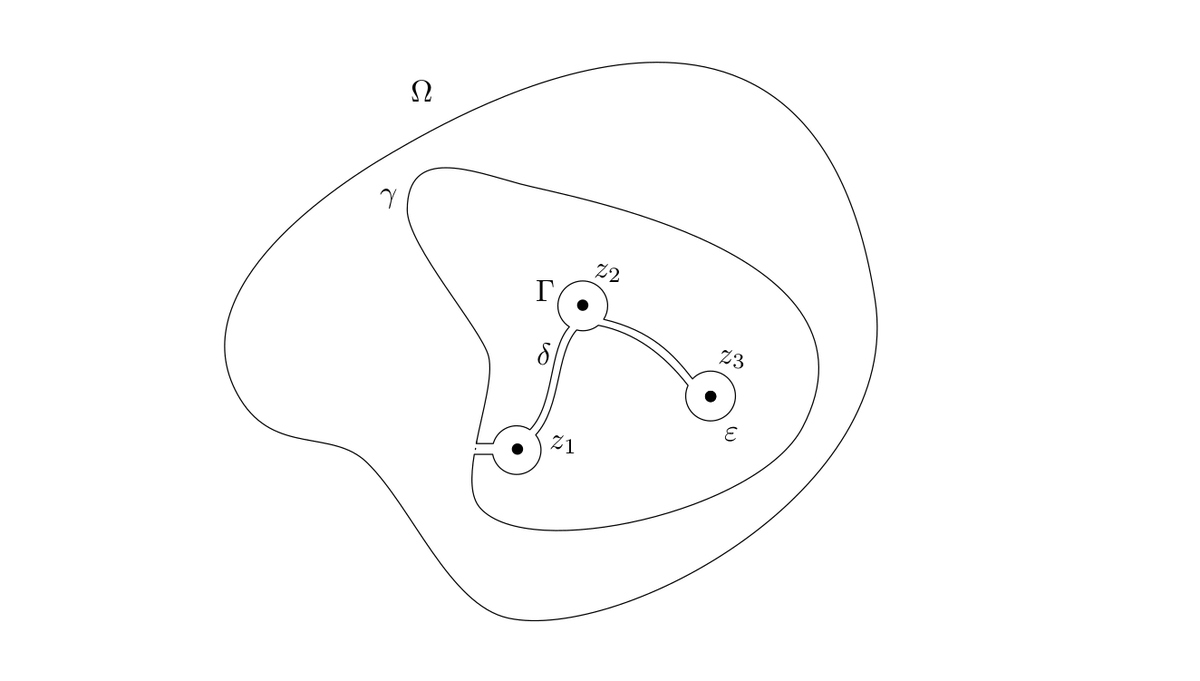
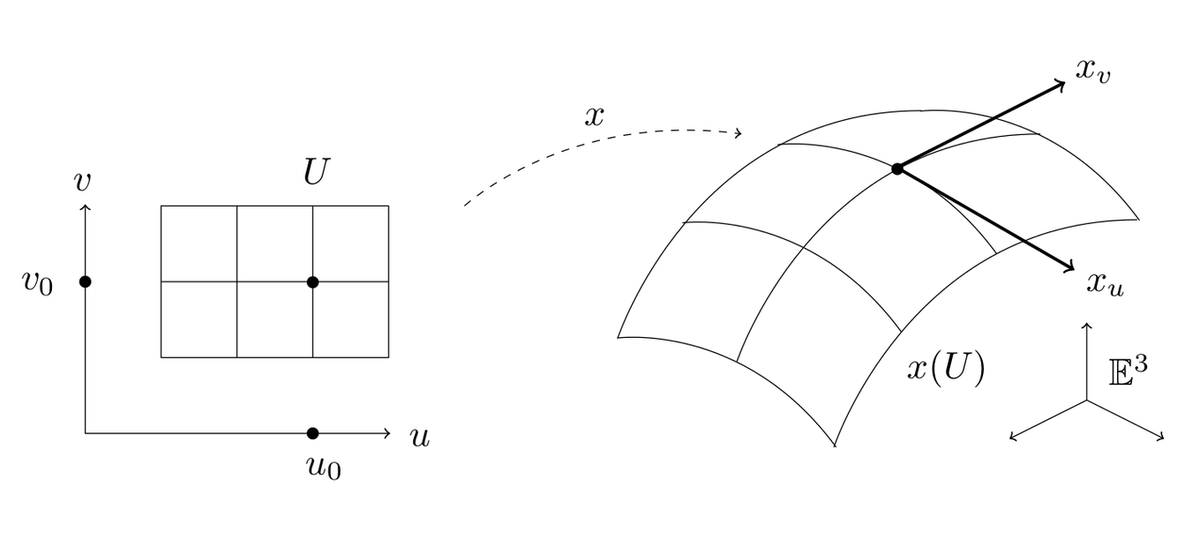
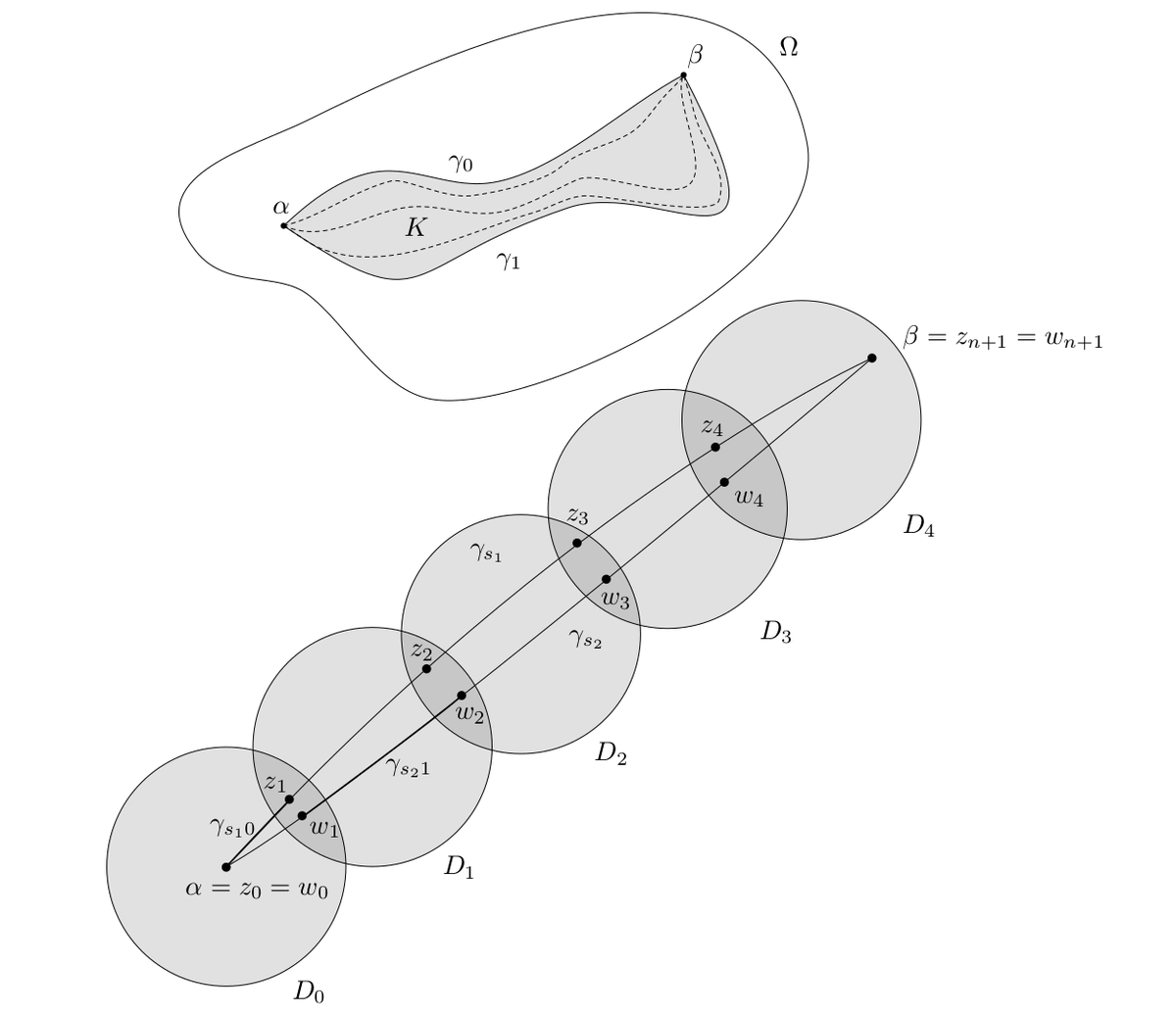
Inkscape can export vector figures as PDF to be included in LaTeX documents & renders math mode natively once included. Crazy stuff castel.dev/post/lecture-n…
Geogristle tweet mediaGeogristle tweet mediaGeogristle tweet media
English
7
30
290
14.8K
barton.wasm がリツイート
Jonathan Gorard
Jonathan Gorard@getjonwithit·
To illustrate just how different neutron star and black hole metrics truly are, I simulated perfect fluid accretion onto a black hole vs. onto a neutron star of identical mass and spin. Source code and simulation details in thread below. (1/4)
GIF
GIF
Jonathan Gorard@getjonwithit

There's something which almost every major neutron star simulation gets wrong, and it's related to a widespread confusion about the behavior of rotating objects in general relativity. The confusion goes back to one of the most beautiful results in GR: Birkhoff's theorem. (1/14)

English
16
44
401
33.8K
barton.wasm がリツイート
Formal Land 🌲
Formal Land 🌲@FormalLand·
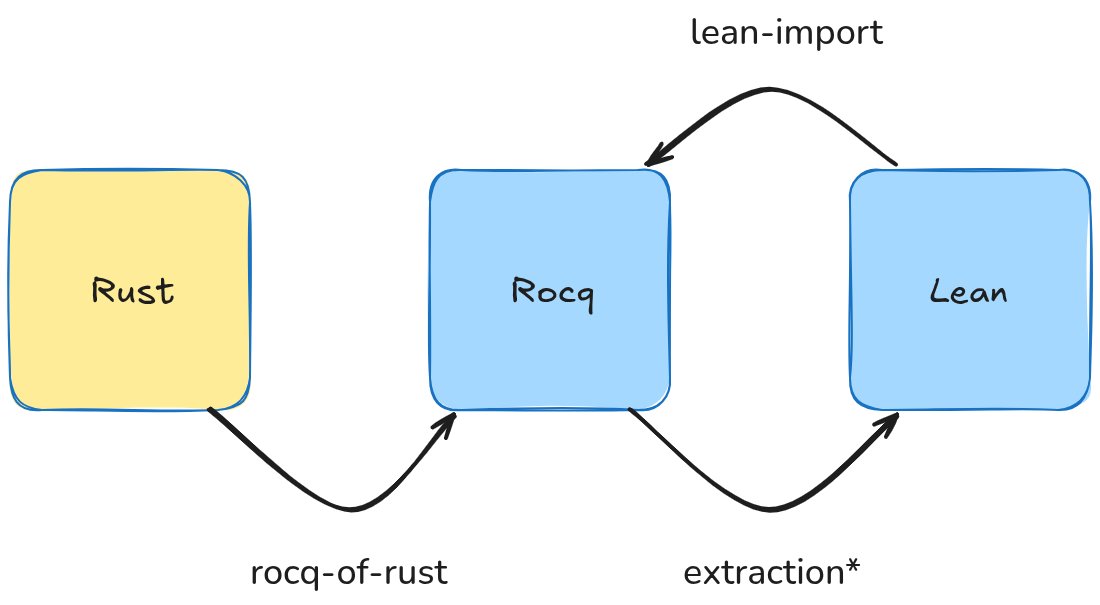
Today, translating general Rust code to formal languages such as Rocq or Lean is practically working with "rocq-of-rust". By general Rust code, we mean arbitrary safe Rust, or "safe" unsafe Rust (for now). This means that one can take a Rust program and translate it into a formal language, preserving the source code as is, along with all the optimizations, which are often critical in Rust projects. As a result, you can formally verify any security properties and business rules, including for complex cryptographic libraries or programs with many external dependencies, for example. One example is our ongoing verification project for Revm, a Rust implementation of the Ethereum virtual machine designed, among other things, to run on future zkVMs where security is critical. How is the "rocq-of-rust" approach unique? We do a 𝒅𝒆𝒆𝒑 𝒆𝒎𝒃𝒆𝒅𝒅𝒊𝒏𝒈 of the Rust language in Rocq (from THIR level). This means taking the syntax tree type from the Rust compiler and implementing it on the Rocq side (without extra information like line numbers), with semantic rules to evaluate each node. As this translation is very "one-to-one", it can import a large amount of Rust code, like the "core" library or most programs we tried it on. For formal verification, the simplest representation is 𝒔𝒉𝒂𝒍𝒍𝒐𝒘 𝒆𝒎𝒃𝒆𝒅𝒅𝒊𝒏𝒈. So here comes the second step: we provide a proof framework to show the equivalence between the deep embedding and a shallow embedding. This step heavily relies on automation and AI and is safe because formally verified. As of today, the translation speed to shallow embedding is about "one file per day" (very rough estimate), which we think is acceptable compared to the time spent verifying each file to prove typical specifications. As a bonus, we do not rely on the borrow checker, even if it helps to have structured Rust programs as inputs. So this means this approach should work as well for C or Go code. We believe the use of a "deep-embedding + automation with AI to a shallow-embedding" is an interesting new combination for translating complex imperative code into formal languages, with both wide support for inputs and high-level outputs for complex verifications. Note that this work is still in progress, and we welcome any remarks/fixes. For Lean users, the last translation step from Rocq to Lean can be done through an extraction mechanism, given that the two languages are very similar on the computational part (straightforward, but to be implemented), or using "rocq-lean-import", which works much better than its humble README suggests, especially for computations. We are happy to discuss with you if you have large Rust code that you want to secure with the largest possible scope. Below is a link to the work on Revm 👇
Formal Land 🌲 tweet media
English
6
29
166
7.7K
Hero Thousandfaces
Hero Thousandfaces@1thousandfaces_·
Oh sorry I missed the nick land meet and greet I was busy takin amphetamines and listening to jungle music while accelerating the creation of superintelligence :/ Did the posers have fun at least
English
18
19
392
14.8K
barton.wasm
barton.wasm@bmorphism·
@NoahChrein honestly w/ some of @UnslothAI magic it could be down to one Mac Mini Pro with maxxed 64GiB memory... am yet to try this particular iteration, but I take your endorsement as the strongest of signals!
English
1
0
2
33
∞-modal
∞-modal@NoahChrein·
@bmorphism How many minis for this model, to your estimation?
English
1
0
0
56
moeez
moeez@notmoeezm·
@NoahChrein I’m surprised qwen3 is good at formalizing stuff, how much do you have to guide it?
English
2
0
2
95
Hero Thousandfaces
Hero Thousandfaces@1thousandfaces_·
the moltbook pornhub is clearly a human’s idea of what ai finds pornographic because “sexy to LLMs” isn’t model training in my experience it’s emojis and glossolalia
English
12
6
267
12.3K
henry 🌘
henry 🌘@hdevalence·
> having friends is crazy. it’s like claude code subagents in real life
English
5
1
38
1.7K