Engine-for-Change

2.5K posts

Engine-for-Change banner
Engine-for-Change

Engine-for-Change

@engineforchange

The Bureaucracy Hacking Company. Defeating mediocrity by rewiring bureaucracy to unleash genius. https://t.co/9DAKdfgB1M

Ellensburg, WA 参加日 Ocak 2010
325 フォロー中501 フォロワー
Engine-for-Change がリツイート
Bureaucracy Hacks
Bureaucracy Hacks@bureaucracyhack·
If your project is stuck in neutral, 99% chance: you’re simply not the priority. Fix it fast by: 1. Help the current #1 win → you become useful to it or 2. Forcefully restack the priority list so the real #1 gets oxygen. Momentum follows priority. Always. #BureaucracyHacks
English
0
2
2
20
Engine-for-Change がリツイート
Helen Bevan
Helen Bevan@HelenBevan·
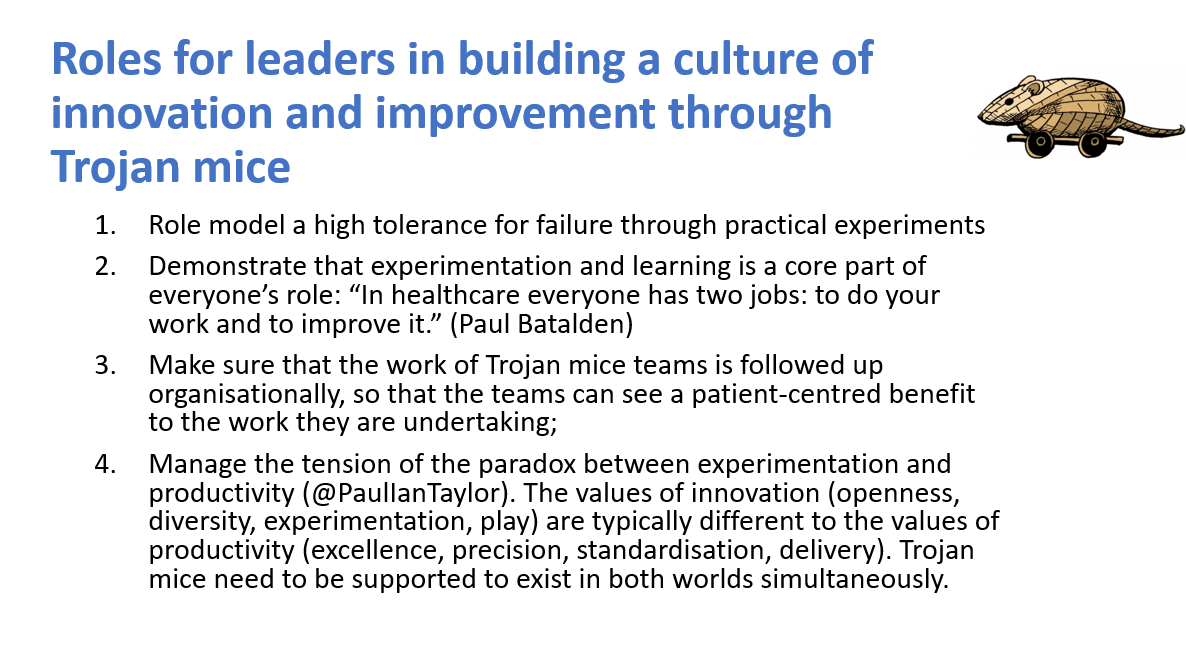
Today I spoke at the Drucker Global Forum about “Trojan mice” vs. “Trojan horses.” Organisational change programmes often struggle to get results despite investment, careful planning & leadership commitment. Traditional "Trojan horse" initiatives (large scale pilot projects designed for eventual system-wide rollout) struggle against the complexity inherent in large systems. The alternative, "Trojan mice," offers a fundamentally different pathway: having many people across the system with the skills & agency to test out small, well-focused changes to address complex problems. The choice between Trojan horses & Trojan mice isn't about abandoning ambition or settling for incremental tinkering. It's about recognising that in big systems, distributed action by skilled people with agency nearly always achieves more than centrally controlled, large-scale programmes. By cultivating many changemakers across the system & creating conditions where small, focused experiments can flourish, we can unlock the collective intelligence & energy needed for systemic change. Three facts about Trojan mice: 1) They fail often, fail early, & learn greatly. The cost of failure occurs early in project timelines, rather than at launch when it's too late. This is in line with what @AmyCEdmondson calls "intelligent failure"—thoughtful experiments that result in useful learning & allow teams to move forward. 2) They capture what works in complex systems - local ownership, fast feedback, & momentum that scales organically. Because changes are small & focused, they can be genuinely owned by those implementing them, creating commitment rather than compliance. 3) Most organisations are built for consistency, not novelty. Trojan mice strategies bypass this structural resistance by building agency & capability throughout the system rather than concentrating change authority in a central team. I learnt about Trojan mice from Chris Bolton @whatsthepont: whatsthepont.blog/2020/02/09/tro… #DruckerForum
Helen Bevan tweet mediaHelen Bevan tweet mediaHelen Bevan tweet mediaHelen Bevan tweet media
English
3
22
82
6.2K
Engine-for-Change がリツイート
Sahil Bloom
Sahil Bloom@SahilBloom·
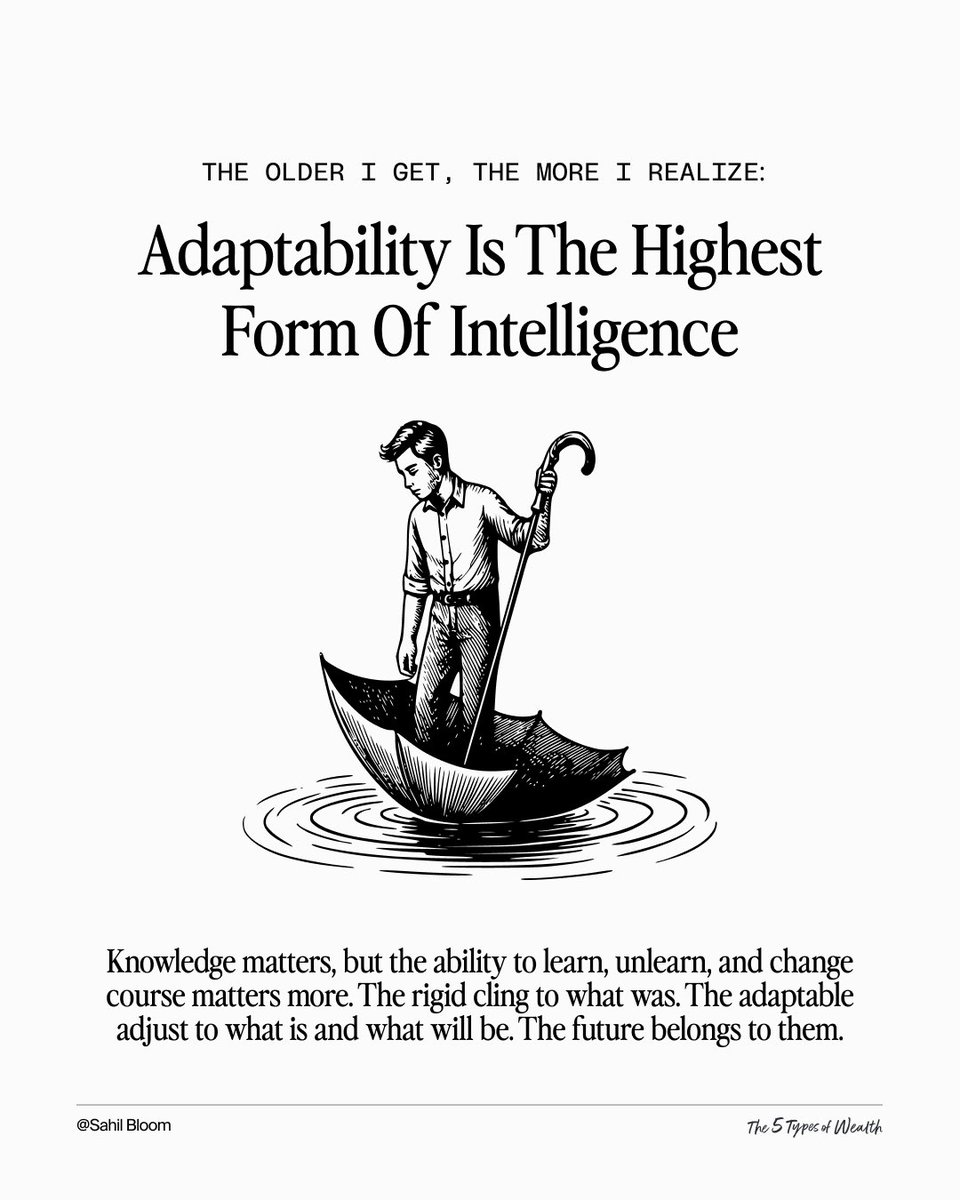
Everyone needs to hear this…
Sahil Bloom tweet media
English
72
412
3K
130.2K
Engine-for-Change がリツイート
April K. Mills
April K. Mills@aprilkmills·
No one is withholding better results. We are often refusing them by the things we insist on doing or by what we refuse to do.
English
0
1
2
37
Engine-for-Change がリツイート
Bureaucracy Hacks
Bureaucracy Hacks@bureaucracyhack·
Bureaucracy Hacks tweet media
ZXX
0
2
1
18
Helen Bevan
Helen Bevan@HelenBevan·
I do not like the term “empowerment”. “Empowerment” is everywhere in the world of change leadership. It’s in the top three of the most commonly used leadership terms globally according to @DigitalDefynd. Personally, I never use “empowerment” unless I’m working with someone who is doing so already. When organisations or leaders seek to "empower" people, it's often them choosing what's best or how much control others can have. This puts the person or group doing the empowering above everyone else & doesn't really give true freedom to those on the receiving end. Empowerment suggests that power is something that “we” give to “them,” reinforcing the status of the “giver” & (often unintentionally) making others feel weak or dependent, which is the opposite of what empowerment is supposed to do. “Agency” is a better principle than “empowerment”. It means recognising people's innate ability to contribute & lead rather than relying on managers to bestow permission. People with agency decide what to do, take action & shape what happens. It’s their own drive & ability, not because someone else says they can. Agency makes people active collaborators in change & leads to better, more sustainable change outcomes. As leaders, we can give people empowerment, by granting permission or sharing authority. We cannot give people agency: people have to build it for themselves through practice, experience & reflection. But leaders can create a climate for agency to thrive through encouragement, resources & space. Being “agentic” means acting with or displaying agency. This term has become popular recently because of the development of “agentic AI” – AI systems that can act autonomously & make decisions, rather than just react to commands, prompts or rules. We don’t just need agentic AI; we need agentic people too. “Agentic” is beyond “empowered”; it means shifting from a top-down model of control to one that trusts & supports people to make their own choices, solve problems & shape their own work. This shift requires us to let go of rigid structures, foster open dialogue & design systems that enable autonomy & collective discovery. When teams operate with agency, they become active collaborators, driving innovation & resilience in the face of uncertainty. The future belongs to leaders who encourage agency - rather than empowerment - where people don’t wait for permission, but act with purpose & ownership. “Designing for agency: how leaders move past empowerment”: agileleadershipjourney.com/blog/designing…. By Daniel Gagnon & Pete Behrens. Graphic adapted from “Agency is the highest level of personal competence”: psychologytoday.com/us/blog/gettin…. By @ThomasSBateman.
Helen Bevan tweet media
English
23
69
218
18.2K
Engine-for-Change がリツイート
Joel C. Sercel, PhD
Joel C. Sercel, PhD@JoelSercel·
It was an honor to be your 900th guest Newt. I think the conversation will open some eyes to how really exciting space is becoming. It’s not all about starships and Mars. There are other things that will be much more significant to the United States economy and national defense.
Newt Gingrich@newtgingrich

When I started Newt's World podcast, my goal was simple: to explore the ideas, people, and breakthroughs shaping our future. Now, at Episode 900, I can’t think of a more fitting topic than the next great frontier - space. In this milestone episode, I talk with @TransAstra_Corp Founder and CEO Dr. @JoelSercel . His company is pioneering asteroid mining and the future of the space economy. This conversation captures what Newt’s World is all about: curiosity, innovation, and the bold spirit that has always defined America.

English
1
3
7
641
Engine-for-Change がリツイート
sandra djajic
sandra djajic@TakoTreba·
Just read that Starbucks lost $30B after hiring a McKinsey consultant as CEO. Guy spent his career advising founders how to build companies, but never built one himself. 17 months later, he’s gone. They bring in the Taco Bell CEO… and the market cap jumps $20B overnight. Turns out running a company is harder than advising one.
English
1.6K
5.6K
64.5K
32.2M
Engine-for-Change がリツイート
Bureaucracy Hacks
Bureaucracy Hacks@bureaucracyhack·
Elephant in the room = too much bureaucracy. You can escape it. Try this bureaucracy hack: When you start a new meeting series, set it to end after 4 meetings. Ask, "Is this helping?" before booking the 5th meeting. #bureaucracyhacks #accelerateresults #yourewelcome
Bureaucracy Hacks tweet media
English
0
2
0
21