Mohit Pratap Singh 🇮🇳

1.3K posts

Mohit Pratap Singh 🇮🇳 banner
Mohit Pratap Singh 🇮🇳

Mohit Pratap Singh 🇮🇳

@itsmohitps

Nothing specific to say here...

Delhi 参加日 Şubat 2025
97 フォロー中45 フォロワー
固定されたツイート
Mohit Pratap Singh 🇮🇳
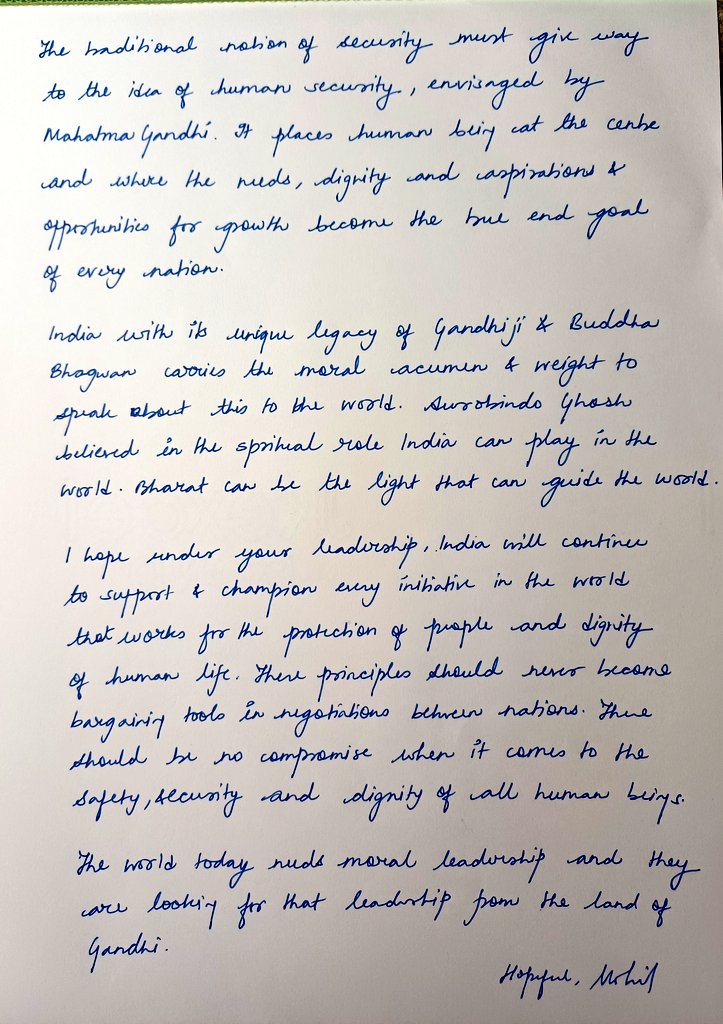
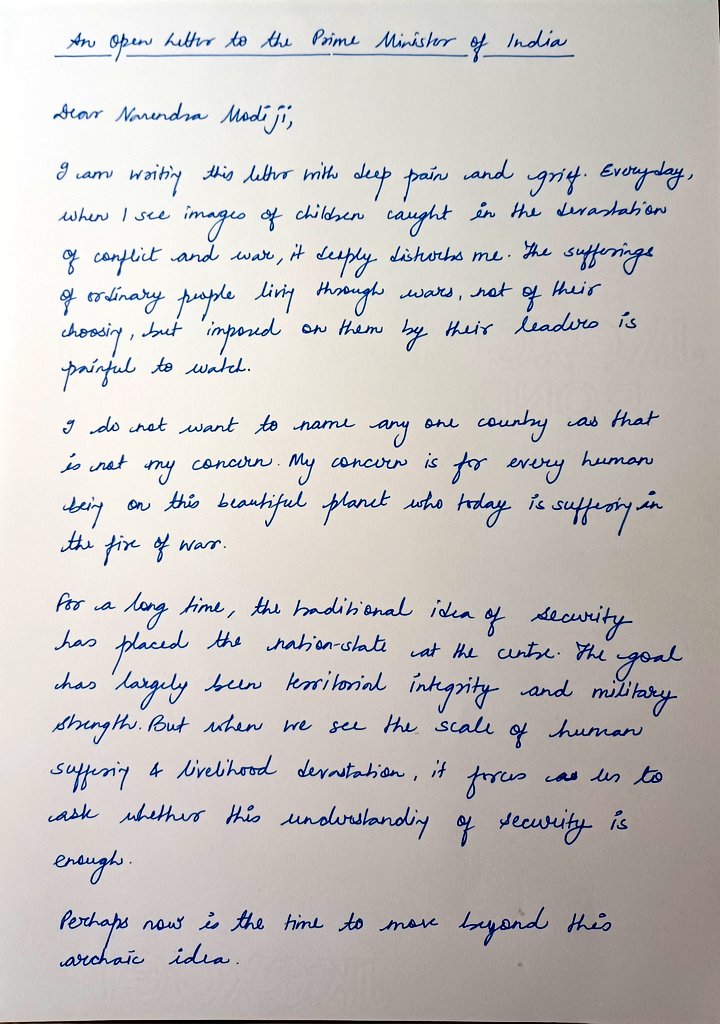
Open letter to Hon'ble PM @narendramodi ji. The world at this juncture of war, devastation and human suffering feels abandoned and looking for moral leadership. With India's rich civilisational legacy and Gandhian political tradition, India can play its rightful role. Hopeful.
Mohit Pratap Singh 🇮🇳 tweet mediaMohit Pratap Singh 🇮🇳 tweet media
English
0
1
2
340
Grant Stern 
Grant Stern @grantstern·
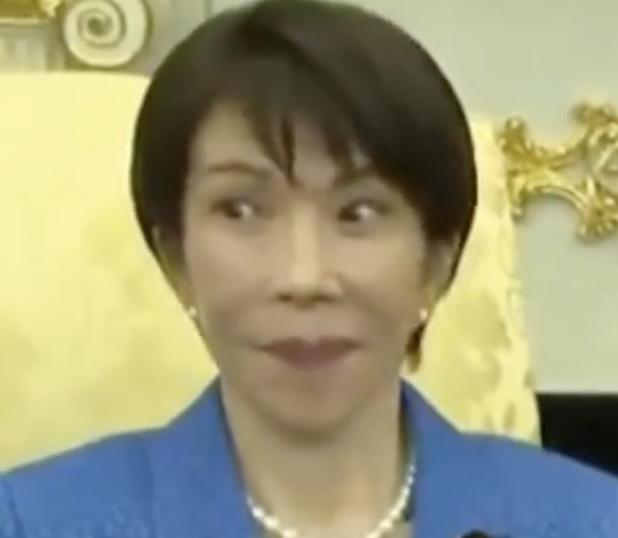
The Japanese Prime Minister is all of us.
Grant Stern  tweet media
English
125
648
6.6K
88.9K
Mohit Pratap Singh 🇮🇳
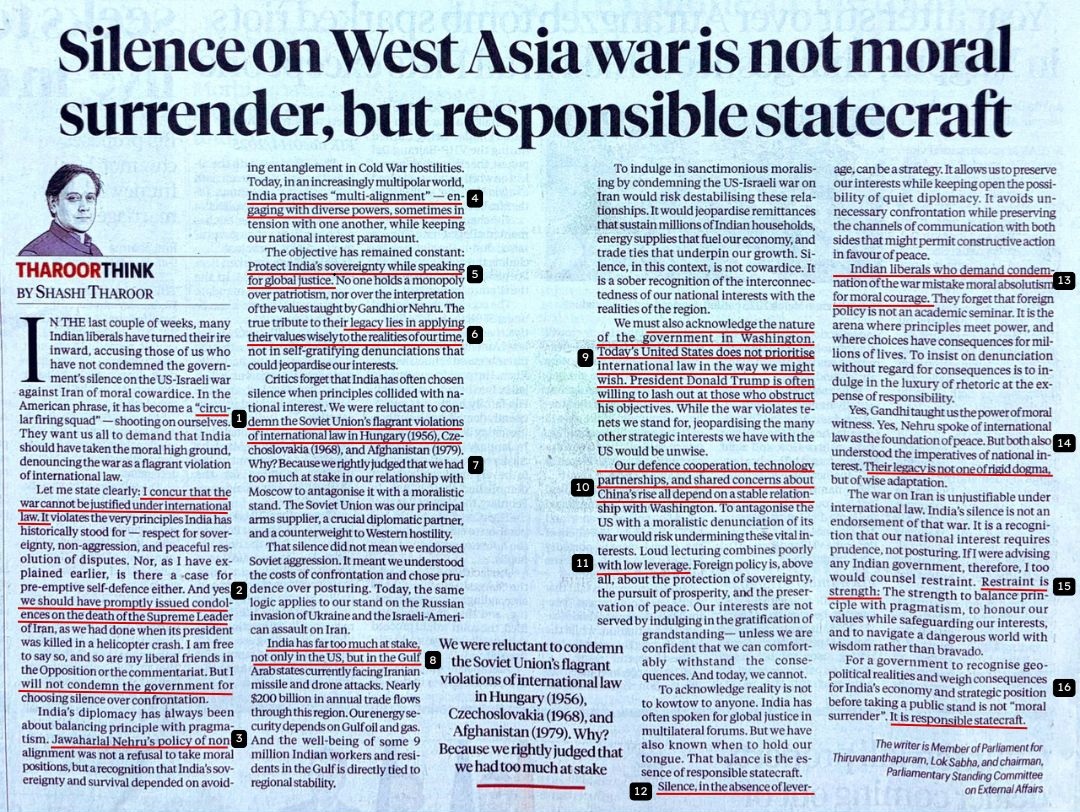
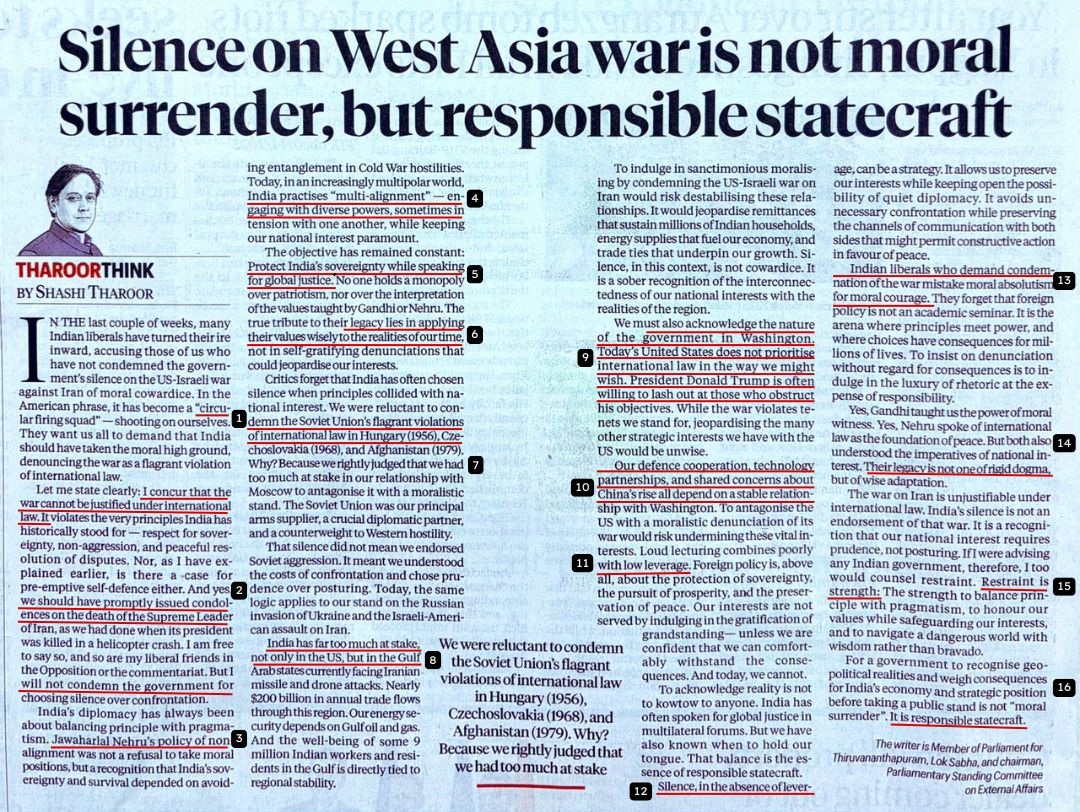
My 16 counter arguments to Dr. Shashi Tharoor's column. 1. When Dr. Tharoor calls Indian liberals a “firing squad” for questioning the government, he does two things at once. He delegitimizes dissent and shields the government. Asking questions is the bare minimum function of a democracy. 2. Dr. Tharoor is giving a sort of disclaimer to people who like him so that he can influence them. He is trying to establish moral authority first, which he then dilutes in the name of pragmatism. It’s a way of saying: I know this is right, but I will stray away from it. 3. Yes, Jawaharlal Nehru balanced pragmatism with principle, but he never used pragmatism as an excuse to mute principle altogether. That’s the distinction he blurs. India spoke loudly on colonialism, apartheid, and other global injustices. Nehru protected India’s interests without surrendering its voice. We are missing that voice today. 4. When Dr. Tharoor talks about “multi-alignment with diverse powers,” he excludes the one power central to the crisis at hand that is Iram and its leverage over the Strait of Hormuz. If Iran can choke global energy supply, it is already shaping India’s national interest. People are suffering because of the LPG crisis, businesses have shut down, and there have been deaths due to people waiting in queues. The solution to this crisis is not there. 5. Dr. Tharoor claims that the objective remains safeguarding Indian sovereignty, but when officials in Washington publicly signal what "good actor" is “allowed” to do on oil imports, whose sovereignty is actually being compromised? 6. You say the values of Mahatma Gandhi should be applied wisely, but this seems selective. He did not argue for convenient morality. He insisted that means must be as pure as the ends. 7. Yes, India did exercise restraint during the events you described during the cold war era, but to present that as a template today will not be good and to justify silence using that template is clear regression. You yourself said this is an age of multi-alignment, which means we have room for maneuvers with multiple actors. That was a bipolar time with heavy dependence and we did not have such flexibility then. Today, we have more economic weight, greater diplomatic reach, and far more strategic flexibility. 8. You acknowledge the U.S. and Gulf stakes, but how do you ignore Iran? It controls the Strait of Hormuz, as it has demonstrated, choking global oil supplies. That alone should raise India’s stakes in this conflict. You can’t claim multi-alignment while ignoring a regional power like Iran, especially with its close association with Russia and China. 9. Invoking Donald Trump to justify silence is flawed. India’s foreign policy positions cannot depend on the kind of government sitting in Washington. That is itself an admission of diluted sovereignty. There should be no fear of Donald Trump lashing out. 10. You argues that our defence, tech partnerships, and China concerns hinge on Washington. But recent signals from U.S. officials that they won’t “repeat the mistake of letting another power rise” should raise a red flag. We are on our own. Washington wants India against China in the Indo-Pacific, while India wants support in the Indian Ocean. India is not invested in the Pacific in the same way. Interests overlap, but they do not align. India’s conflict with China is a land boundary issue, and the U.S. will not fight a Himalayan war. Pakistan used Chinese military support during Operation Sindoor, yet faced no lasting isolation from Washington. In fact, it has drawn closer. 11. If you admit we have low leverage then that should raise a question why we were kept under delusion for all these years that we have "arrived" ? If that is the case we cannot truly claim multi-alignment without a significant leverage. That is precisely why we are effectively in the U.S.-Israel bloc today. 12. Silence without leverage cannot be a strategy. It is simple submission. When a boat cannot steer its own course, it gets towed away. We are waiting for the conflict to resolve itself, even as our people suffer. Will "national interest" wait for the cessation of war? 13. Foreign policy is where moral weight must counter raw might. Gandhi's moral weight could instill fear in the all powerful Brits. No one is asking for reckless grandstanding. But reducing every moral position to “pragmatism” is simply a convenient and cowardly alibi for silence. 14. You invoke Mahatma Gandhi and Jawaharlal Nehru precisely because of their moral weight and you gather legitimacy. But you cannot borrow their legacy to legitimatize this eerie silence. To cite them while arguing for restraint in the face of injustice is not what they stood for. If their names still carry power, it is because they spoke when it mattered, not because they stayed silent when it was convenient. They are relevant for a reason. 15. Calling restraint “strength” may sound persuasive, but why is this restraint selective, and why does it appear to appease the aggressor? Araghchi said the same thing to Macron, why are you not calling out US and Israel for starting this war. 16. This is not responsible statecraft. This is opportunistic hedging, based on the assumption that Iran’s leadership might fall. It does not consider the possibility that it will endure. This is not strategy, this is hedging.
Mohit Pratap Singh 🇮🇳 tweet media
Shashi Tharoor@ShashiTharoor

My latest #TharoorThink column in the @IndianExpress explains why I have not joined the widespread liberal critique of the Indian government’s “moral failure” to condemn the US-Israeli attack on Iran. India has too much at stake to indulge in the morally gratifying grandstanding that could have placed vital national interests at risk. As the late Kofi Annan advised me, citing a Ghanaian proverb: “never hit a man on the head when you have your fingers between his teeth!”

English
0
1
0
82
Aditya Raj Kaul
Aditya Raj Kaul@AdityaRajKaul·
Waiting for AI Experts in Rawalpindi backed by jobless IT Cell to declare Israeli PM Netanyahu press conference to be an AI video. 😂😂😂
English
94
173
1.9K
43.9K
Mohit Pratap Singh 🇮🇳
My 16 counter arguments to Dr. Tharoor's column. 1. When Dr. Shashi Tharoor calls Indian liberals a “firing squad” for questioning the government, he does two things at once. He delegitimizes dissent and shields the government. Asking questions is the bare minimum function of a democracy. 2. Dr. Tharoor is giving a sort of disclaimer to people who like him so that he can influence them. He is trying to establish moral authority first, which he then dilutes in the name of pragmatism. It’s a way of saying: I know this is right, but I will stray away from it. 3. Yes, Jawaharlal Nehru balanced pragmatism with principle, but he never used pragmatism as an excuse to mute principle altogether. That’s the distinction he blurs. India spoke loudly on colonialism, apartheid, and other global injustices. Nehru protected India’s interests without surrendering its voice. We are missing that voice today. 4. When Dr. Tharoor talks about “multi-alignment with diverse powers,” he excludes the one power central to the crisis at hand that is Iram and its leverage over the Strait of Hormuz. If Iran can choke global energy supply, it is already shaping India’s national interest. People are suffering because of the LPG crisis, businesses have shut down, and there have been deaths due to people waiting in queues. The solution to this crisis is not there. 5. Dr. Tharoor claims that the objective remains safeguarding Indian sovereignty, but when officials in Washington publicly signal what "good actor" is “allowed” to do on oil imports, whose sovereignty is actually being compromised? 6. You say the values of Mahatma Gandhi should be applied wisely, but this seems selective. He did not argue for convenient morality. He insisted that means must be as pure as the ends. 7. Yes, India did exercise restraint during the events you described during the cold war era, but to present that as a template today will not be good and to justify silence using that template is clear regression. You yourself said this is an age of multi-alignment, which means we have room for maneuvers with multiple actors. That was a bipolar time with heavy dependence and we did not have such flexibility then. Today, we have more economic weight, greater diplomatic reach, and far more strategic flexibility. 8. You acknowledge the U.S. and Gulf stakes, but how do you ignore Iran? It controls the Strait of Hormuz, as it has demonstrated, choking global oil supplies. That alone should raise India’s stakes in this conflict. You can’t claim multi-alignment while ignoring a regional power like Iran, especially with its close association with Russia and China. 9. Invoking Donald Trump to justify silence is flawed. India’s foreign policy positions cannot depend on the kind of government sitting in Washington. That is itself an admission of diluted sovereignty. There should be no fear of Donald Trump lashing out. 10. You argues that our defence, tech partnerships, and China concerns hinge on Washington. But recent signals from U.S. officials that they won’t “repeat the mistake of letting another power rise” should raise a red flag. We are on our own. Washington wants India against China in the Indo-Pacific, while India wants support in the Indian Ocean. India is not invested in the Pacific in the same way. Interests overlap, but they do not align. India’s conflict with China is a land boundary issue, and the U.S. will not fight a Himalayan war. Pakistan used Chinese military support during Operation Sindoor, yet faced no lasting isolation from Washington. In fact, it has drawn closer. 11. If you admit we have low leverage then that should raise a question why we were kept under delusion for all these years that we have "arrived" ? If that is the case we cannot truly claim multi-alignment without a significant leverage. That is precisely why we are effectively in the U.S.-Israel bloc today. 12. Silence without leverage cannot be a strategy. It is simple submission. When a boat cannot steer its own course, it gets towed away. We are waiting for the conflict to resolve itself, even as our people suffer. Will "national interest" wait for the cessation of war? 13. Foreign policy is where moral weight must counter raw might. Gandhi's moral weight could instill fear in the all powerful Brits. No one is asking for reckless grandstanding. But reducing every moral position to “pragmatism” is simply a convenient and cowardly alibi for silence. 14. You invoke Mahatma Gandhi and Jawaharlal Nehru precisely because of their moral weight and you gather legitimacy. But you cannot borrow their legacy to legitimatize this eerie silence. To cite them while arguing for restraint in the face of injustice is not what they stood for. If their names still carry power, it is because they spoke when it mattered, not because they stayed silent when it was convenient. They are relevant for a reason. 15. Calling restraint “strength” may sound persuasive, but why is this restraint selective, and why does it appear to appease the aggressor? Araghchi said the same thing to Macron, why are you not calling out US and Israel for starting this war. 16. This is not responsible statecraft. This is opportunistic hedging, based on the assumption that Iran’s leadership might fall. It does not consider the possibility that it will endure. This is not strategy, this is hedging.
Mohit Pratap Singh 🇮🇳 tweet media
English
4
4
13
573
Shashi Tharoor
Shashi Tharoor@ShashiTharoor·
My latest #TharoorThink column in the @IndianExpress explains why I have not joined the widespread liberal critique of the Indian government’s “moral failure” to condemn the US-Israeli attack on Iran. India has too much at stake to indulge in the morally gratifying grandstanding that could have placed vital national interests at risk. As the late Kofi Annan advised me, citing a Ghanaian proverb: “never hit a man on the head when you have your fingers between his teeth!”
Shashi Tharoor tweet media
English
476
1.1K
4.7K
155K
Daractenus
Daractenus@Daractenus·
Japanese Report: "Why didn't you tell US allies about the war before attacking Iran?" Donald Trump: "Who knows better about surprises then Japan. Why didn't you tell me about Pearl Harbor?" This man belong in a psychiatric ward.
English
1.3K
10.8K
64.4K
2.8M
Broufus
Broufus@Broufus·
The world situation is deteriorating very fast. It will take all of Modi's experience to protect India from the fall out. Do you think he can do it?
English
137
15
110
6.9K
Mohit Pratap Singh 🇮🇳
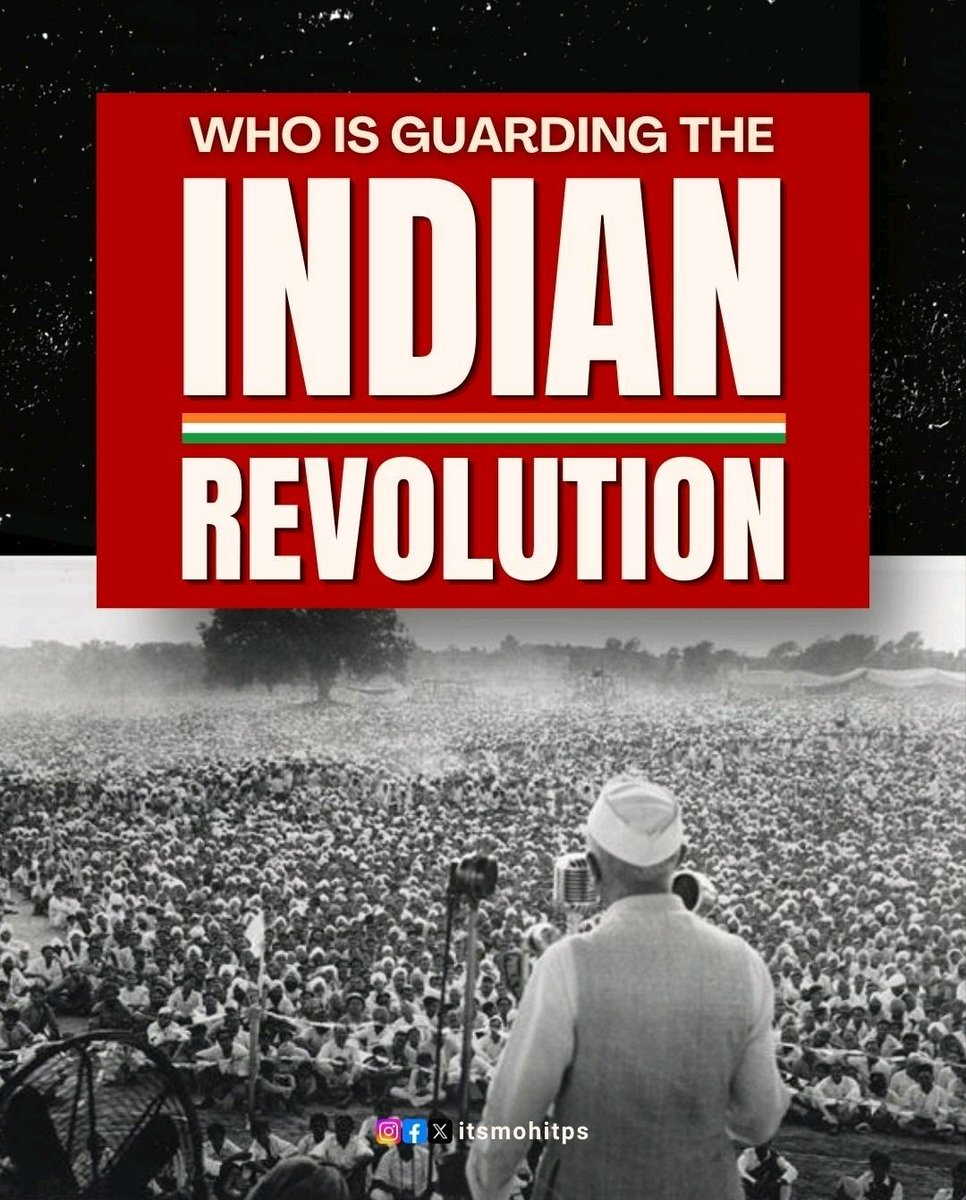
The classical revolutionary tradition in communist thought imagines revolution through armed struggle and violent overthrow. But India attempted something far more "audacious." It was a constitutional revolution for a poor, largely illiterate and newly independent population. It was achieved through the ballot, political leadership, public institutions, and fundamental rights designed to limit state power. Article 326 of the Constitution of India enshrines this spirit of universal franchise. Jawaharlal Nehru described this democratic experiment as “dynamic, moving, changing and revolutionary.” Many in the West believed this experiment was bound to fail. And yet, against all odds, we have endured. But this raises a deeply troubling question today: Who is guarding this constitutional revolution? The freedom fighters are gone and the moral authority of constitutional assembly is history. What remains are the state institutions, political parties, and the people. First, institutions. They are only as strong as the people who inhabit them. There is no automatic enforcement of constitutional adherence. Only through oaths, traditions, individual morality and limited mechanisms like impeachment we can be sure they will function well. But when these mechanisms weaken, they don't resist to power, they bend. Second, political parties. They swear allegiance to the Constitution upon assuming power. But ideological tensions arise when their political agendas clash with the core constitutional principles of sovereignty, secularism, equality, liberty, fraternity, federalism, etc. There is no automatic disqualification for constitutional incoherence, here. Third, the people. The ultimate sovereign often appears powerless before concentrated state power, especially when institutions falter, opposition is weakened and sections of the media abandon their role as checks. So the question arises: If institutions bow before a regime that fails to uphold constitutional morality, and the people themselves feel powerless, then who, indeed, will defend India's revolution? This points to a deeper need of not just procedural safeguards but an ideologically committed supra-authority that can correct any violation of the Constitution’s spirit. And yet, that check cannot come from any authority placed above democracy. Because the moment we create something above the people, we abandon the revolution it created. So where does the answer lie? Perhaps the answer lies where it always did, in the opening words of the Preamble: “We, the People of India having solemnly resolved to......... ” The resolve that gave us the Constitution must now be the resolve that defends it. In the end, the Constitutional revolution survives not because of any party, leader, or institution, but because of the civic consciousness of vigilant citizens who actively uphold its revolutionary spirit.
Mohit Pratap Singh 🇮🇳 tweet media
English
0
0
0
36
Maj Gen (Dr)GD Bakshi SM,VSM(retd)
The 101st Birthday of Lt Madhvan Pillai of INA . He laid a Wreath at the Statue of Netaji On kartya path New delhi. Grateful to Shubham sharma for organising it with ADGPI. Jai bharat- Jai hind
Maj Gen (Dr)GD Bakshi SM,VSM(retd) tweet media
English
31
265
1.4K
12.1K
Himanta Biswa Sarma
Himanta Biswa Sarma@himantabiswa·
Work. Work Hard. Keep working till your goals are achieved.
Himanta Biswa Sarma tweet media
English
154
1.9K
13.3K
100.3K
Aakar Patel
Aakar Patel@Aakar__Patel·
wonder where medal is kept
English
13
10
153
3.3K
PunsterX
PunsterX@PunsterX·
This is how thoughtful the PWD department of Mirzapur, UP is. Summer has begun and they've installed a hand-pump in the middle of the road. So, there is no chance that thirsty travellers will miss it. But haters will say, this is a mistake.
English
125
886
4.4K
88.6K
Mohit Pratap Singh 🇮🇳
@RockyEatsX This disjoint between the gyan and the ground reality is what's making india lose its credibility abroad. They be like, atleast practice before preaching.
English
0
0
3
91
Rocky Singh 🇮🇳
Rocky Singh 🇮🇳@RockyEatsX·
This gentleman seems to be from the Indian Government, he speaks of tolerance, respect, acceptance and secularism. He speaks according to the Indian ethos and the governments sincere and genuine attempts to create a tolerant and fair society. I support him 100 % — LEARN U HATERS
English
13
24
99
9.4K
Mohit Pratap Singh 🇮🇳 がリツイート
Press Trust of India
VIDEO | New York: Harish (@AmbHarishP) Permanent Representative of India to the United Nations, delivered India's statement at the International Day to Combat Islamophobia in the UN General Assembly. He said, "I stress that it is important for the UN to take note of the rising trend and dangers of weaponising religious identity and instrumentalising it to serve narrow political ends - by state and non-state actors alike. India's western neighbor is an excellent example of fabricating imaginative tales of Islamophobia in their neighbourhood. One wonders what would brutal repression of Ahmadiyyas in this country be termed, or the large scale refoulement of the helpless Afghans or air-bombing campaigns in this Holy Month of Ramadan? India is home to more than 200 million Muslims, one of the largest Muslim populations in the world. The Organisation of Islamic Cooperation, which our western neighbour has systematically attempted to weaponise against India, has, repeatedly made false and baseless allegations against my country. Muslims in India, including those in Jammu and Kashmir, elect their own representatives to speak for them. The only “phobia” evident here appears to be directed against the multicultural and peaceful coexistence that all communities in India enjoy, including Muslim communities. Such narratives run counter to India’s fundamental ethos and reflect instead the sectarianism and terrorist mentality that this country has perpetuated since its inception. That is the real issue at hand." (Source: Third Party) (Full video available on PTI Videos - ptivideos.com)
English
7
13
32
8.2K