Jonathan Yantis

1.5K posts

Jonathan Yantis banner
Jonathan Yantis

Jonathan Yantis

@mantis1

Co-Founder and Owner at QuicksortRx

Florida, USA 参加日 Mart 2011
414 フォロー中180 フォロワー
固定されたツイート
Jonathan Yantis
Jonathan Yantis@mantis1·
No one wants to be pitched to. No one. Everyone can see you scheming even if you’re a 4D chess master. Care only about creating value, and help me fend off the hoards.
English
0
0
9
1.4K
Luther R. Abel
Luther R. Abel@lutherabel1·
No movie has done more to give journalists an entirely unearned sense of moral superiority.
The Sting@TheStingisBack

All the President’s Men turns 50 today. This famous “six‑minute shot” is a masterclass in phone acting and pure technical nerve. Director Alan J. Pakula and cinematographer Gordon Willis pull off a single, unbroken slow zoom: from a wide, humming newsroom to a tight close-up on Redford. No cuts. No safety net. Tension builds in real time. Redford carries it with typical quiet confidence. Six minutes of note-taking and talking into a phone, no flashy “Oscar clip.” He even flubs a name (“McGregor” for “Dahlberg”), corrects himself naturally, and Pakula keeps it because it feels authentic. The background is part of the story. As Woodward hones in on his phone call, everyone behind him huddles around a TV watching Senator Tom Eagleton resign. The contrast is deliberate: they chase the “obvious” headline, while the camera drifts past them to Woodward, and the real story. To hold Redford and the busy background in focus early on, they used a split‑diopter lens, then had to ease it out as the camera moves in. A technical tightrope. The timing of both actor and cinematographer is spot on. As Woodward closes in on the truth, the world literally falls away: the newsroom blurs, the noise fades, and we lock into his obsession. It’s one of cinema’s great moments: Redford doing almost nothing—and somehow everything at the same time. What makes this shot brilliant is the contrast it carves between Redford and the newsroom around him. The visual language does the talking: he’s locked in, disciplined, driven, all focus and fire. He stands apart because the work matters more than anything else.

English
199
451
5.1K
138.3K
Gottfrid𝕏
Gottfrid𝕏@Gottfrid_X·
Sweden in three months 🇸🇪
English
21
101
919
29.7K
O.W. Root
O.W. Root@owroot·
Since getting this bad boy in my office I try to use it rather than my iPhone whenever I need to make a call and it actually feels so much better. It’s not aesthetic in a great retro way, but it feels better than the glass iPhone face on my cheek. And it’s kind of, oddly, more fun.
O.W. Root tweet media
English
11
2
97
8.1K
Jonathan Yantis がリツイート
Sama Hoole
Sama Hoole@SamaHoole·
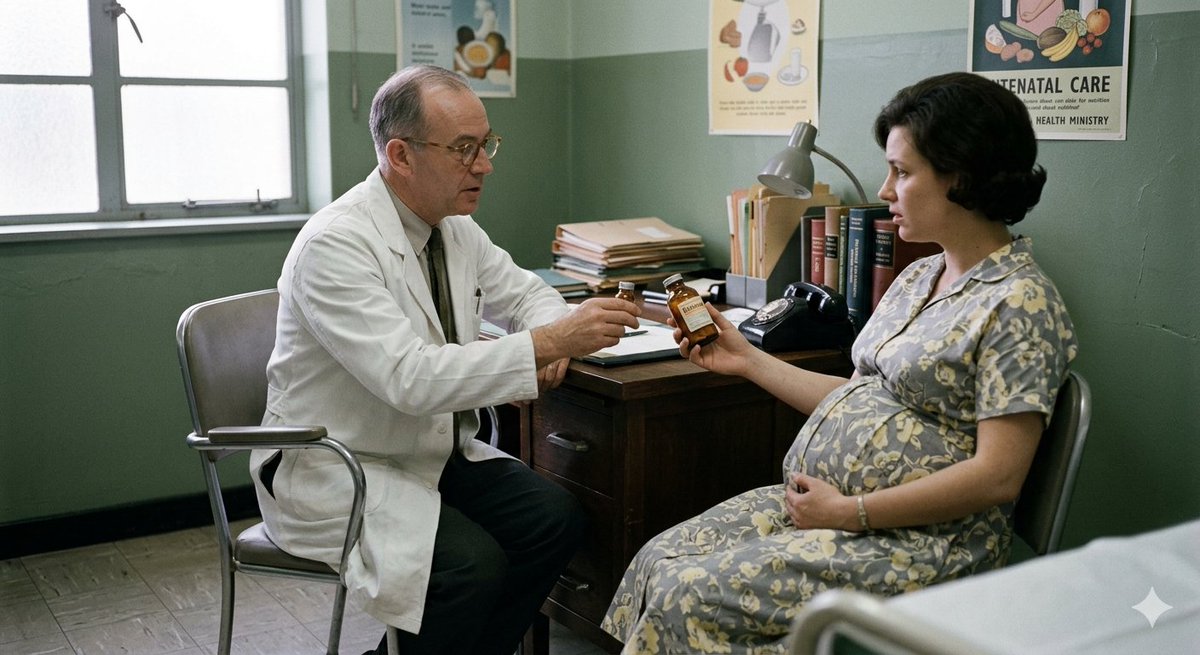
Bloodletting for fever. Confident. Standard practice. Mercury tablets for syphilis. Confident. Widely prescribed. Radium water for low energy. Confident. Sold in pharmacies. Lobotomies for anxiety. Confident. Won a Nobel Prize. Thalidomide for morning sickness. Confident. Distributed to millions. Cigarettes for throat irritation. Confident. Doctor-endorsed advertising. Heroin for coughs. Confident. Marketed by Bayer. DDT sprayed in children's schools. Confident. Government-approved. Margarine instead of butter. Confident. Heart-healthy alternative. Dietary fat causes heart disease. Confident. Fifty years of guidelines. Statins for everyone over fifty. Confident. Best-selling drug in history. Seed oils are safe. Confident. Endorsed by every major health body. Meat is carcinogenic. Confident. WHO classification still stands. Every generation of doctors was confident. Every generation was wrong about something they were certain of. The question isn't whether to trust doctors. The question is which part of the current list turns out to be the thalidomide.
Sama Hoole tweet media
English
327
4.1K
12.1K
151.1K
The Timeless Traveler
The Timeless Traveler@TimelessTrvlr·
If you could spend this summer anywhere in the world…..where are you going? Reply with a place and I’ll post a photo or video of it.
English
93
11
78
19.3K
Marc Andreessen 🇺🇸
We live in an era of admiration of hysteria, neuroticism, and narcissism. Endless waves of panic, perpetual emotional incontinence. You know the answer…
English
410
297
5.1K
473.6K
The Timeless Traveler
The Timeless Traveler@TimelessTrvlr·
Charleston moves slowly. And that’s exactly the point.
English
21
41
851
31.9K
Jonathan Yantis
Jonathan Yantis@mantis1·
@Abdazizghadeer When you’re at the Villa, relaxing is all you want to do. The Italians will scold you for doing anything else.
English
0
0
0
11
عبدالعزيز الغدير
في إيطاليا فكرة جميلة اسمها “متعة ألا تفعل شيئًا”. أن تجلس بهدوء، تشرب قهوتك، وتعيش اللحظة بدون استعجال. تذكير بسيط: أحيانًا الراحة بحد ذاتها هي السعادة.
العربية
617
2.5K
18.5K
2.4M
Jonathan Yantis
Jonathan Yantis@mantis1·
@signulll It seems to be a symptom of concerns with what other people are thinking. Too costly to be all that useful. Easier to say something funny and see if anyone laughs. Get them with the charms and forget about “modeling” everyone in the room.
English
0
0
1
48
signüll
signüll@signulll·
the reason why emotional intelligence is extremely rare is simply cuz it is expensive. actually modeling another person’s internal state in real time is computationally brutal.. it requires suppressing your own frame, running a parallel simulation, & updating continuously. the “inference costs” of eq in humans are likely much higher than the most expensive ai model in existence today.
English
274
537
5.4K
350.8K
Jonathan Yantis がリツイート
David Senra
David Senra@FoundersPodcast·
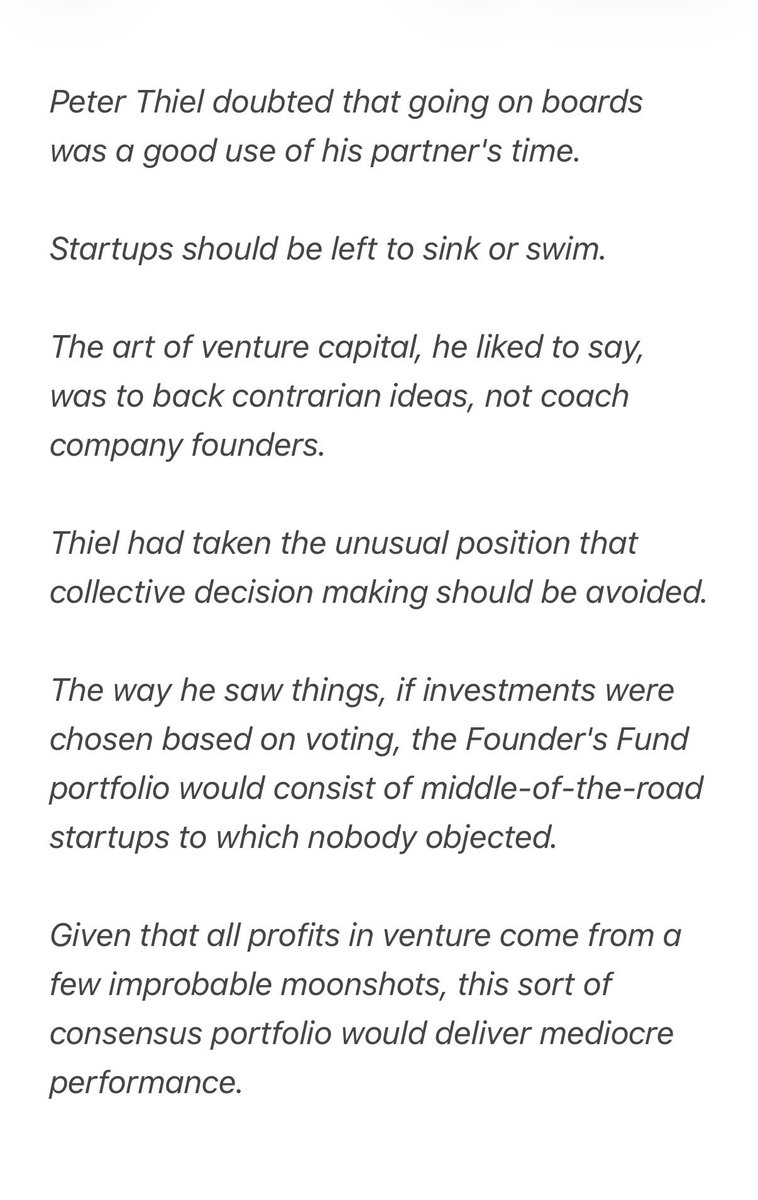
Peter Thiel on the art of venture capital:
David Senra tweet media
English
8
43
458
53.6K
Max
Max@minordissent·
this is true. to expand on it: “empathy” vs “theory of mind” are two perpendicular axes that together make up EQ. Empathy cares about how others feel while theory of mind actually models it. Without theory of mind, “empaths” just golden rule maxx. Trouble is that what you want and what i want are frequently different and without an ability to truly grok this, empaths frequently harm themselves or others in an attempt to help. In contrast without empathy, “theory of mind”ers become psychopathic. They know exactly what others want but without a care for their well being, they just use this to exploit them. It is only high theory of mind combined with high empathy that leads to low time preference pro-sociality.
signüll@signulll

the reason why emotional intelligence is extremely rare is simply cuz it is expensive. actually modeling another person’s internal state in real time is computationally brutal.. it requires suppressing your own frame, running a parallel simulation, & updating continuously. the “inference costs” of eq in humans are likely much higher than the most expensive ai model in existence today.

English
14
31
344
16.4K
Jonathan Yantis
Jonathan Yantis@mantis1·
@GenAI_is_real I played around well into my 30s, wanting to know everything. Once I finally started designing major systems I could scale nearly anything. My last system was scaling at 2B+ / month, never had an issue. Too easy.
English
0
0
1
568
Chayenne Zhao
Chayenne Zhao@GenAI_is_real·
engineering is one of the few fields where being a late bloomer is actually an advantage. the best systems architects i know didnt ship anything impressive until their 30s because they spent their 20s operating, debugging, and understanding why other peoples designs failed. you cant skip that phase. theory teaches you what should work. experience teaches you what actually works at 3am when the cluster is on fire and the oncall page wont stop @DeepPsycho_HQ
Deep Psychology@DeepPsycho_HQ

A HARVARD psychologist says: “if you’ve achieved nothing by 25, you’ve avoided the most destructive illusion of youth” > In 2021, a Harvard psychologist surprised a lecture hall with an unexpected statement: “If you haven’t accomplished much by 25, you may have escaped one of youth’s biggest illusions.” At first, the room laughed. She wasn’t kidding. > The illusion of early success. In your early 20s, the brain seeks quick proof of worth ~status, attention, rapid achievements. But psychologists warn that chasing recognition too soon can lock people into roles or paths they never consciously chose. They decide too early… and spend years trying to undo it. > The exploration phase. Research on career development suggests that people who explore more before 30 often build stronger long-term directions. Testing ideas. Making mistakes in public. Changing course. At 25 it looks like confusion ….but by 35 it often turns into clarity. People who feel “behind” in their mid-20s frequently gain something others miss: Perspective. Patience. And a clearer sense of what truly matters to them. That foundation often leads to better decisions later on. At the end of the lecture, the psychologist left the students with one final thought: “You’re not meant to have life fully figured out at 25.” “You’re meant to discover who you’re not.”

English
15
154
1.6K
110.4K