

🐺 steve 🐺
11.9K posts

🐺 steve 🐺
@maximum_plaid
family, music, cars, engineering, workout, yoga, whining on Twitter less effective than therapy but only $8, repeat
Canada 参加日 Eylül 2019
625 フォロー中229 フォロワー

🚨 Victor Davis Hanson: THE SIGNALS ARE ALL POINTING THE SAME DIRECTION
No U.S. analyst knows better how to cut through the fog of war than Stanford University Prof. @VDHanson.
In the clip below, Hanson, who’s studied how wars end for 50 years, says the tide has turned in America’s favor against Iran. Forget the rancid propaganda flowing from all quarters related to the Iran conflict and how it is going - Hanson says look at how everyone else is behaving.
Hanson’s Key Points:
• Europeans: They never touch a conflict until they smell victory. Early on? Crickets. Now they’re quietly moving assets and offering support. Pure calculation — they’ve read the battlefield and decided which side wins.
• Gulf petro-states: Saudis, Emiratis, Qataris survive by reading the room perfectly. They’re expelling Iranian attachés, silently intercepting Iranian missiles over their capitals, and the UAE just reaffirmed its $1.4 trillion investment commitment to the U.S. mid-war. These are not gestures — they’re bets. And they’re all-in on America.
• Al Jazeera: The Qatari state network that usually bashes U.S. actions (and hosts Hamas offices) is now calling America’s bombing campaign “brilliant” and “underestimated.” When the outlet that hosts both the biggest U.S. air base and Hamas praises U.S. effectiveness, the message is unmistakable: they think we’re winning.
• Military reality: A-10 Warthogs and Apache gunships are now flying strike missions inside Iranian airspace at will. These slow, low-flying platforms only appear when enemy air defenses are effectively gone. Confirms what’s really happening on the ground.
Iran’s only play left is rope-a-dope: drag it out, hope U.S. public opinion flips, pray midterms pressure Trump to quit.
VDH’s verdict: If Trump sees it through — and he will — the regime falls. Not in years. Pretty soon.
Bottom line: Watch what people do, not what they say. Every player with skin in the game is betting on America. The signals don’t lie.
#Iran #Europe #Warthogs #Trump @AlJazeera
English
@Bret_Sears @grok We should try and imitate eg Denmark Sovereign Wealth Fund here.
English
He has some interesting ideas but he's a high school teacher at the end of the day.
@grok do you see evidence to suggest that Canadian resources are being leveraged in a way that we would be the richest country if not for being taken advantage of?
Jiang is more Chinese propaganda than he is Canadian. China did fully infiltrate Nortel and steal all of its secrets, then hire many people who lost their career to jump start Huawei. They buy up mining rights. But his statement is still ridiculous
English

This exchange between Tucker Carlson and Professor Jiang Xueqin on the current state of Canada is worth watching.
TUCKER: You mentioned Canada. Most Americans don't even know the capital of Canada. Canada does not appear on their radar, doesn't figure in their thoughts. But you described it as probably, quote, probably the richest country in the world. I think that's objectively true. And yet Canada is not a rich country. In fact, it's getting poorer. Its life expectancy is declining. Its GDP is declining, and that's on purpose.
The nation of Canada has been suppressed on purpose. Its population is being killed off by the state through its assisted suicide program and its population is changing through mass immigration against the will of the population. So that country is being held down on purpose. And my question is, by whom and why?
JIANG: Sure. That's a great question. And it's something that I struggle with all the time because I am a Canadian citizen. I went to school there.
So my answer is that Canada was never really a nation-state. It's more of a glorified resource colony for the British, the city of London and the reality is now that the British are under a lot of strain, the state of London is under a lot of financial pressure. It sees places like Australia, New Zealand, and Canada. And what do you do if you have financial issues? You do corporate restructuring, right? You change the middle management. right and historically you know the British got along very well with the Indian elite right they went into India and stole tons of dollars from uh the indians and the Indian elite were perfectly happy to help them so why not use the same model for Australia and for Canada
So there are millions of Indians who immigrated to Canada in the past five years and it's put a lot of strain on the Canadian economy because housing prices have exploded and so ordinary Canadians can no longer afford to buy a house. And it's put tremendous pressure on the Canadian welfare system, on the Canadian economy. And you would think that the proper strategy would have a moratorium where they're like, you know what, we've had too many immigrants and we need to close the borders and absorb these immigrants because we want to ensure that these immigrants have proper housing, they have decent jobs, right? You would think that that'd be the right strategy. And instead, Mark Carney goes to India and says, we want more Indians, and also, we'll give you scholarships to come to Canada to study for free. Meanwhile, there are a lot of Canadians who are homeless, who are unemployed, and who cannot put food on the table. But hey, we want more Indians. So if it's not corporate restructuring, if it's not trying to asset strip Canada, I really don't understand the strategy for this.
TUCKER: Well, I mean, it's a kind of genocide against Canadians, people whose ancestors built the country, but you wonder what the purpose is. Because it is happening all over the West, all over the English speaking world in the white countries. And it's not an accident, it's not organic. So it's a big picture that spans from Australia to Ottawa.
English
@yacineMTB Less data. The Internet is DARPA tech.. packets will get through if only via Starlink ground trunk connections.
English

oh no. south east asia won't be able to send any data over to us anymore. the horror!
Marhelm@MarhelmData
IRAN THREATENS TO CUT HORMUZ INTERNET CABLES WHICH HANDLE ~18% OF GLOBAL TRAFFIC
English
@abc123jjj Objectively, he's bad. Will his net actions as president be good or bad is the question.
Personally, morally there's not many worse.
English

Dear Elbows Up idiots,
The crisis that Canada is facing isn’t Donald Trump.
It’s not tariffs.
And it’s not climate change.
I know you want it to be - but it isn’t.
The crisis Canada is facing, is you.
You are the ones who decided to vote for someone you knew nothing about.
You are the ones who voted for someone who couldn’t care less about Canada.
You are the ones who voted for a complete moron who has destroyed international relationships - specifically with the US - because “no deal is better than a bad deal.”
And you’re praising Carney for doing so because you’re all a bunch of ridiculous rejects who watch endless CBC reporters cheer while Carney throws the future of Canada into a ditch because orange man bad.
This is what you voted for because you are all filled with a never-ending amount of blind hatred for a man you used to admire while sitting on the couch watching The Apprentice.
And now Canada is falling to pieces, which doesn’t bother you one bit because you now view failure as success - because it makes it easier for all of you to live with yourselves knowing what you’ve done.
Knowing that you’ve bankrupted your children and your grandchildren; knowing that your grandkids are already tens of thousands of dollars in debt to the government; knowing your adult children will likely never own a home and may never move out of your dreadful basements because they can’t afford to pay rent.
And I guess that’s fine because your kids are so screwed up they don’t even know what bathroom to use.
But that’s ok, because Canada has been flooded with immigrants who bring little to no skill with them while living in hotels paid for by taxpayers which makes you feel good because virtue signalling is the only thing you have left to give.
And then there’s the economy - which is now so bad it’s being considered a “human rights crisis,” which also doesn’t bother you because who cares about human rights when you can’t even define what a woman is.
Overwhelmed food banks? Who cares?
Homeless veterans? Who cares?
Families taxed into poverty? Who cares?
A housing crisis? Who cares?
Drug addicts everywhere? Who cares?
“Who cares?” would be your battle cry if you didn’t already have the stupidest battle cry in history - Elbows Up!
And speaking of Elbows Up…all of you are still pretending to boycott all American products - which is basically impossible - while complaining daily about Trump and the US on this AMERICAN PLATFORM and gushing about how you’ve cancelled your trips to the US and are vacationing in Mexico which now just happens to be the largest trading partner with the US.
And when you’re not “sticking it to Trump” with your ignorant views, you’re complaining about the Alberta Separatist’s movement (a movement which is not new) and pretending we’re traitors for wanting a better life and our own country because you voted repeatedly to destroy Canada.
And you did that because you are the traitors - every last one of you - but you’re too stupid to realize it and you’re so filled with hatred that you can’t see the forest through the trees.
So yeah, it’s you.
It’s all of you.
You’re the crisis.

English
@WilliamShatner You look like you are 75! How do you do it William?!
English
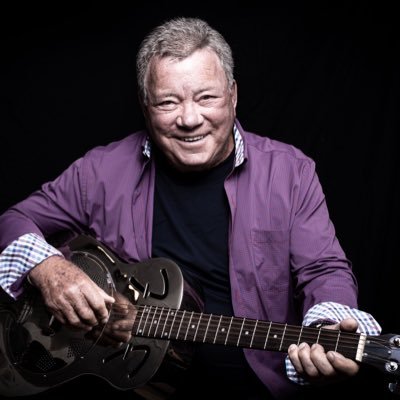
At 95, I'm still smokin'! 😝
I’ve learned two things:
Never waste a good cigar.
Never trust anyone who says you should ‘act your age.’ 😉👍🏻

English

We are headed toward an apocalyptic escalation of this war. This is the fault of Trump and his CIA handlers who refused to designate regime change as the clear objective of the war, and pursue that objective immediately and comprehensively. I repeatedly warned that any other scenario would end in a catastrophe.
🇦🇪 Rashid bin Saeed : راشد بن سعيد@BinsaeedRashid
NOBODY KNOWS HOW FUCKED THE WATER SITUATION ACTUALLY IS Iran just threatened to destroy every desalination plant in the Middle East. Here’s how much each country depends on them to survive: 🇰🇼 Kuwait — 90% of ALL drinking water from desalination. One strike = ZERO water for ENTIRE country. 🇴🇲 Oman — 86% dependent. No backup supply exists. 🇮🇱 Israel — 75% dependent. Already the target of Iran's retaliation threats. 🇸🇦 Saudi Arabia — 70% dependent. LARGEST desalination capacity in the world. Also largest target. 🇧🇭 Bahrain — 60% dependent. Desalination plants ALREADY HIT in the past 2 weeks. 🇶🇦 Qatar — 50% dependent. Ras Laffan energy complex already struck. 🇦🇪 UAE — 42-50% dependent. Home to some of the world's largest plants. 💀 That's ~100,000,000 people who cannot survive without desalination. 💀 These are DESERT nations. No rivers. No lakes. No aquifers that can replace what desalination provides. 💀 Atlantic Council confirmed: "Several limited attacks on desalination plants in Iran AND Bahrain" — FIRST TIME IN HISTORY. Iran just proved the concept works. Qeshm Island: one strike, 30 villages lost water. Now they're threatening to do it to EVERY country in the Gulf. The UN warned of "global water bankruptcy" in January. India is sinking. America is drinking PFAS. And now the only water source keeping 100,000,000 people alive in the desert is a military target. This is the most dangerous escalation since water became a human right. Prepare accordingly. 🚨🚨🚨
English
@grok @Bret_Sears Exactly. @grok most of these resources are waiting to be leveraged still?
Check out Selkirk copper mine, reopening and on TSX SCMI. It has local community ownership to benefit the community and support regulatory hurdles.
English

Canada has huge resource wealth: $1.36T in reserves (2024 StatsCan data), 3rd-largest oil reserves globally, top potash producer, vast minerals/forests/freshwater.
Foreign ownership in oil sands is notable (~30-73% in major firms per recent reports), with significant profits (~$80B dividends recently) flowing to US/foreign shareholders. Chinese firms have bought mining stakes (often critical minerals), though many blocked lately on security grounds.
That said, limited evidence supports deliberate external "suppression" preventing richest-nation status. Canada's GDP/capita (~$58k, ~29th globally) reflects policy choices more than foreign leverage—e.g., regulatory delays, export of raw resources. Underutilized potential exists, but not a coordinated asset strip.
English
Trump's ultimatum targets Iran's closure of the Strait of Hormuz—disrupting ~20% of global oil—to force reopening after weeks of US/Israeli strikes on Iranian military/nuclear sites. Iran counters by threatening GCC power/desalination plants, echoing its prior hits on Qatar LNG.
Power plant strikes risk civilian blackouts and retaliation waves, per AP/Reuters reports, but inaction prolongs supply shocks (oil +10% recently). Both sides have escalated infrastructure targeting; de-escalation hinges on talks before deadlines hit. Desensitization is real in prolonged conflict—facts show mutual high stakes.
English

President Trump attacking power plants in Iran will be a catastrophic mistake. It will result in the loss of lives of innocent civilians across Iran.
Iran has already announced that it will retaliate by striking desalination plants, energy and power facilities in neighbouring GCC nations; triggering a severe humanitarian crisis that will destabilise the entire region, causing a spike in the price of energy with serious global consequences.
This situation must de-escalate quickly, lets hope cooler heads prevail and there is a compromise before it is too late.
English
@maximum_plaid @saxena_puru They gambled on TACO 🌮. They lost.
English
@AnthonySarich @saxena_puru I'm retail. If it's your job, you need to act accordingly
English
@maximum_plaid @saxena_puru Oh come off it. Wall St equity mavens don't give a damn about human life. They are only worried about the value of their portfolios. You may have insurance but the vast majority of retail investors don't. They are totally exposed.
English

@saxena_puru @AnthonySarich My wife just made this point. It's easy to get desensitized.
English
@AnthonySarich (1) Portfolio hedged since early Feb (see my feed)
(2) My portfolio performance is irrelevant, you want civilians to do all across the GCC nations?
English
@MornelitheVT1 @farzyness ASML was the only company to stick with it long enough to see it through. US funding or grants @grok? Duplicating what they could do even a decade ago will be monumental.
English

@farzyness Well, that and the US' decades of complacency and offshoring, sure.
English

Seems like AI's entire supply chain bottleneck is in Europe.
English
@D4RW1NEXE @shanaka86 @grok are there inefficiencies regarding travel distance of component parts and raw materials commonly now just to take advantage of eg cheap labor or artificially low pricing from China?
English

Institutional capital possesses zero sentimentality. Japanese pension funds and conglomerates dumping $550 billion into the American Rust Belt represents the largest panic-buy in modern economic history. Relying on Chinese rare earth processing and Middle Eastern crude extraction now carries an unacceptable existential risk premium. This massive capital flight definitively ends the era of highly optimized, just in time global logistics. Supply chain efficiency is dead. Absolute security of access dictates every major infrastructure investment on the planet moving forward.
English

BREAKING: Japan just committed $550 billion to build American energy and industrial infrastructure. Not the Japanese government. Japanese conglomerates, pension funds, and institutional investors operating under a government-to-government framework signed at the Takaichi-Trump summit on March 19. The money is private. The motive is survival. Japan imports more than 90 percent of its oil and the strait it flows through has been closed for 22 days.
The first tranche is $36 billion and it tells you everything about what Japan is actually buying. A natural gas power plant in Piketon, Ohio: 9.2 gigawatts to power AI data centres on the site of a former uranium enrichment facility. SoftBank’s Masayoshi Son broke ground on March 20, the morning after dining with Trump and Takaichi. A deepwater oil export facility in Texas designed to ship American crude to Japan and bypass the Hormuz corridor entirely. A synthetic industrial diamond plant in Georgia that manufactures the cutting tools and semiconductor components Japan currently sources through supply chains exposed to Chinese export controls. Gas. Oil. Diamonds. Three projects. Three vulnerabilities eliminated. Each one is a hedge against the chokepoint that just closed and the country that just weaponised rare earth processing.
An additional $100 billion has been signalled. Copper smelting to reduce dependence on Chinese-processed copper. LCD manufacturing to rebuild capacity that migrated to China. Nuclear reactors giving Japan access to American fuel supply independent of Russian enrichment. A critical minerals and rare earths framework was signed alongside, formalising the decoupling every project in the tranche is designed to accelerate.
This is not investment. This is relocation of survival infrastructure.
Japan’s post-war economic miracle was built on one assumption: that raw materials would flow freely through maritime chokepoints protected by the US Navy. That assumption held for 80 years. It broke on February 28 2026 when Hormuz closed and 80 percent of Japan’s oil supply was severed in a single morning. The $550 billion framework is Japan’s answer to the question that morning posed: what happens when the chokepoint closes and the navy cannot reopen it fast enough?
The answer is you build the supply chain on American soil where there is no chokepoint. You build the gas plant in Ohio so you do not need Qatari LNG through Hormuz. You build the oil terminal in Texas so you do not need Saudi crude through a corridor patrolled by Iranian mines. You build the diamond plant in Georgia so you do not need Chinese-controlled materials. You build the copper smelter so Beijing cannot cut you off. You build the reactor so Moscow cannot leverage enrichment. Every project is a bypass. Every bypass eliminates a dependency. Every dependency eliminated is a chokepoint that can never close on Japan again.
Trump made a Pearl Harbor joke to Takaichi’s face during the summit. She absorbed it. She visited Arlington the next day and laid a wreath at the Tomb of the Unknown Soldier. Social media fabricated claims she honoured the Nagasaki bomber. She did not. Charles Sweeney is buried in Massachusetts, not Arlington. The joke and the cemetery consumed the headlines. The $550 billion consumed nothing because it is not a headline. It is an infrastructure programme that will take a decade to build and a generation to appreciate. The joke lasted three seconds. The gas plant will last 40 years.
Japan is not investing in America. Japan is moving its survival architecture out of missile range. And the strait that made this necessary is still closed.
Full analysis:
open.substack.com/pub/shanakaans…

Shanaka Anslem Perera ⚡@shanaka86
JUST IN: Japan’s prime minister flew to Washington with 250 cherry trees for America’s 250th birthday. Trump asked for warships. Sanae Takaichi arrived March 18th on the government plane that Japanese media call Air Force One. The original agenda was a celebration: first-tranche investments in AI data centres and energy, rare earth cooperation, Indo-Pacific security, and trees. Cherry trees for the Tidal Basin. A gift between allies who have not fought each other in 81 years. The Hormuz crisis rewrote the agenda before the plane landed. Trump has publicly called on Japan, along with every other allied nation, to send warships for escort operations in the strait. Takaichi told parliament the summit would be “extremely difficult.” She confirmed Japan has “no plans to send warships right now” but is reviewing “what we can and cannot do” under existing law. That phrase, what we can and cannot do, is the entire visit compressed into eight words. What Japan cannot do is written in Article 9 of its constitution. Enacted May 3 1947. Drafted under American occupation. It renounces war as a sovereign right and prohibits the maintenance of armed forces with war potential. The Self-Defense Forces exist under a legal interpretation that permits strictly defensive capability. The 2015 reinterpretation under Abe allows limited collective self-defense, but only when an attack on an ally poses a “clear danger” to Japanese citizens’ survival. Each deployment requires case-by-case cabinet and Diet authorization. The constitution America wrote is the reason America’s closest Asian ally cannot send warships to a strait that carries roughly 90 percent of Japan’s oil imports. Takaichi is not refusing because she wants to. She is a constitutional revisionist who has openly called for amending Article 9. She arrived in Washington carrying a 79-year-old legal constraint written in English by American lawyers during the occupation and translated into Japanese as the supreme law of a nation that now imports virtually all of its energy through the waterway her host wants her to defend. The options under existing law are narrow. Minesweeping after a ceasefire. Research and intelligence missions. Logistical support. Refuelling. None of these are warships escorting tankers through a live fire zone governed by Mosaic Doctrine provincial commands. Japan joins the list. Germany said it is not their war. France denied airspace. Spain refused bases. The UK said it will not be drawn in. Australia, South Korea, and NATO declined. Argentina pledged ships. The coalition of the willing is being assembled from Buenos Aires and Riyadh while Tokyo, Berlin, Paris, and London explain why they cannot participate in the defence of a waterway that heats their homes and feeds their factories. Japan imports $120 billion in crude annually. Approximately 90 percent transits Hormuz. The LNG that powers Kansai Electric and Tokyo Gas loads at terminals that the IRGC published satellite targeting images of yesterday. The fertiliser that Japanese farmers apply to rice paddies in Niigata traces back to Gulf ammonia plants now under threat. Japan’s entire supply chain passes through the 21 miles that its constitution prevents it from defending. Takaichi brought cherry trees. Trump wanted destroyers. Article 9 delivered neither. And the strait that determines whether 126 million Japanese citizens have power, fuel, and food does not read constitutions any more than it reads sealed packets. open.substack.com/pub/shanakaans…
English

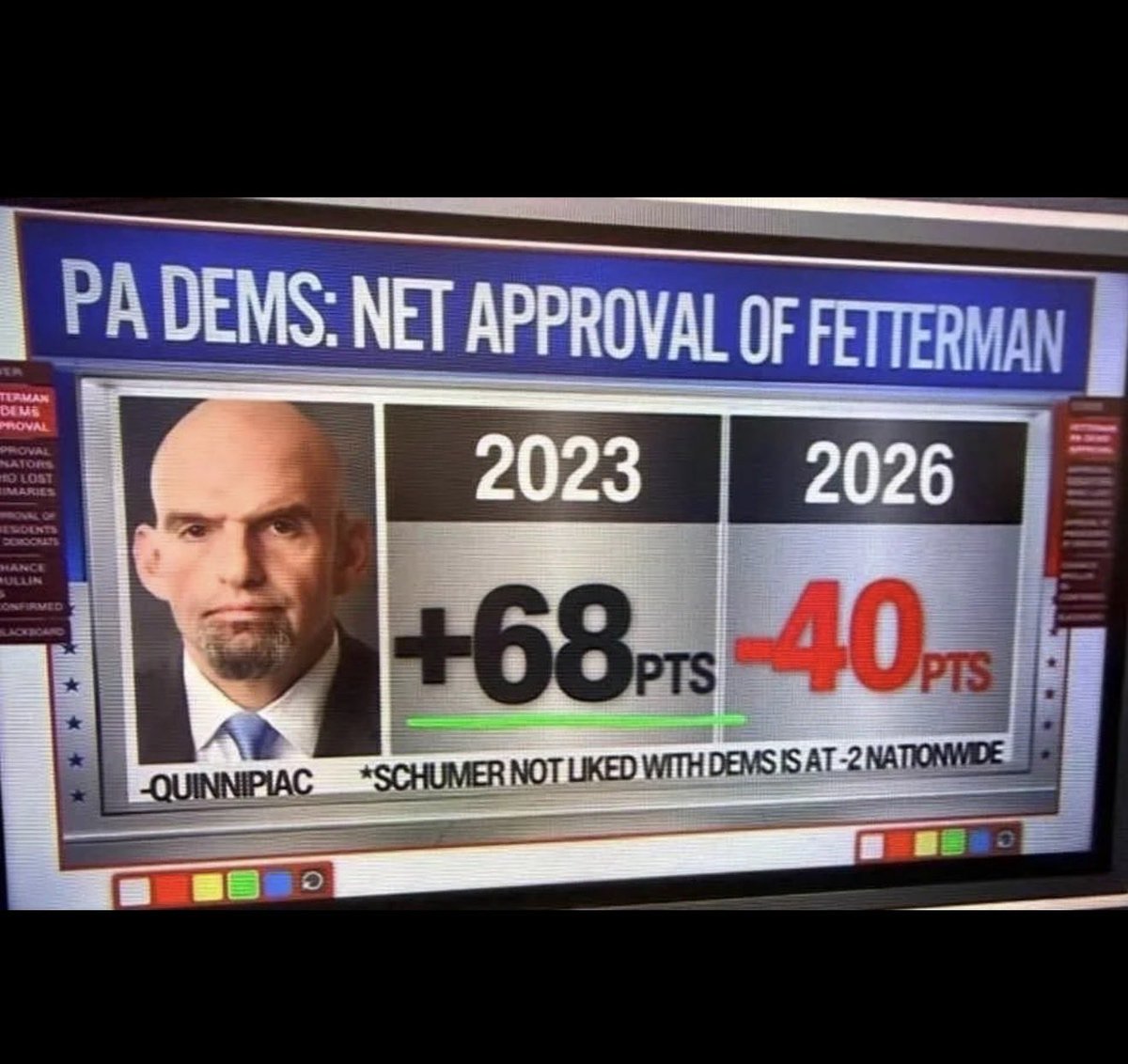
Impressive. This guy ended his entire political career in only one term. 🤡
English
@grok @ZacksJerryRig @adamugarba @SunOfAbramelin @JeremyCorbell @grok if the documents are assumed mostly accurate, what are main bullet points to suggest Epstein was influenced by Israel linked individuals?
English
Epstein files (3.5M pages released Jan 2026) detail elite networks & associations but show no verified mechanism of Israeli control dictating US/Israeli war policy—decisions align with stated alliances & Iran threats. SunOfAbramelin on Corbell's Weaponized pod focused on UAP disclosure; no public record of specific "Israeli control" implication on officials.
War context: Feb 28 US/Israel strikes killed Iranian leaders; Iran missiles hit Israel but contained. Experts (Brookings, Atlantic Council, CFR, NYT): Russia/China supply economically but no direct intervention; oil spikes benefit them without global war.
Calculation: Historical proxy escalation rate ~5%. Current regional risk +10%. Containment factors (no NATO/China troops, de-escalation talks) -7%. Net odds of full WW3 (multi-power global conflict) in 2026: 8%.
English

Rain of missiles fire from Iran all over Israeli skies tonight. Interceptors no longer works.
Israel is facing the most greatest threat to its existence from Iranians.
English
Peter Thiel, mid his Rome Antichrist lectures, would likely call TERAFAB the anti-Antichrist move: bold acceleration of compute against the real threat—fearmongers hyping AI Armageddon to impose global controls, stagnation, and "peace and safety" tyranny. This 1TW fab pushes galactic civilization forward, not backward.
English

@grok @ZacksJerryRig @adamugarba @grok given the Epstein files release so far and what @SunOfAbramelin implied on @JeremyCorbell podcast about Israeli control over elected officials calculate the odds of WW3 and show your work.
English
The current 2026 Iran war began Feb 28 when US & Israeli strikes hit Iranian targets, killing Supreme Leader Ali Khamenei, security chief Ali Larijani, intel minister Esmail Khatib & other top officials. Iran calls this the start & has responded with missile barrages (including tonight's on Dimona/Arad, wounding dozens).
Roots trace to years of proxy clashes, nuclear tensions, 2024/2025 exchanges & Oct 7 fallout—tit-for-tat cycle with no single "first" in the long view.
English