
固定されたツイート
Isa
6.9K posts

@SegunShowunmi President Tinubu is using a convicted criminal to do the biggest contracts, without open bid and in a company in which the president’s family have a major stake.
Indirectly Tinubu is using the Chagoury to enrich his friend and his family while more
Nigerians die of starvation.
English

Kio Amachree’s Misguided Tirade: A Rebuttal in Defence of Facts, Contribution, and Nigeria’s True Builders.
Amachree’s write-up collapses under the weight of its own contradictions, exaggerations, and ironically the same divisive instincts it claims to condemn.
First, let’s deal with the most offensive and intellectually lazy premise: that @Glbertchagoury is somehow “less Nigerian” and therefore an easier target for outrage. That is not just wrong it is dangerous.
Gilbert Chagoury is Nigerian by law, by investment, and by decades of continuous engagement with this country. He has lived, built, employed, paid taxes, and taken risks in Nigeria for over half a century. Many of the loudest critics, including diaspora commentators writing from comfortable homes abroad, cannot claim that level of sustained commitment. You do not get to emotionally exit a country and then question the legitimacy of those who stayed and built within it.
If contribution is the metric, then let’s be honest: he has contributed more to Nigeria’s physical and economic landscape than many who dominate online outrage cycles. That is not sentiment it is measurable reality.
Second, this attempt to reduce complex infrastructure procurement into a simplistic “$13 billion gift to one man” narrative is, at best, distortion and, at worst, deliberate misinformation. Large-scale infrastructure projects coastal highways, port rehabilitation, shoreline protection are not social media slogans. They involve engineering, financing structures, sovereign guarantees, and execution risk at a level most commentators do not even attempt to understand.
If there are legitimate concerns, then present them properly:
• Where is the documented breach of procurement law?
• Which statutory provisions were violated?
• What evidence exists beyond assertion?
Anything less is noise.
Third, the fixation on past legal issues without context, without acknowledging legal closure or evolution betrays selective outrage. If Nigerian law disqualifies an individual from contracts or honours, cite it. If not, then what we are seeing is not accountability it is opportunistic character assassination.
Fourth, the diaspora sermonizing is deeply ironic. Distance does not automatically confer clarity. Writing from Stockholm, London, or Houston does not substitute for operational understanding of Nigeria’s infrastructure ecosystem. Perspective is useful but detachment can breed oversimplification.
Now, to the hypocrisy at the heart of this piece: it condemns tribalism while replacing it with something equally toxic xenophobic insinuation. Swap “tribe” for “foreigner,” and suddenly it is acceptable outrage? That is not reform. That is prejudice in a different costume.
Nigeria’s challenge is institutional not ethnic, not foreign:
• weak procurement enforcement
• elite capture across all divides
• opacity in contract structuring
• weak accountability mechanisms
Blaming one businessman foreign-born or otherwise does not fix systemic failure.
And since facts matter, let us speak concretely. Look at Eko Atlantic, the stabilization of Victoria Island against Atlantic encroachment, and the coastal engineering behind the Lagos-Calabar Coastal Highway. These are not abstract claims they are visible, technical interventions that have reshaped Nigeria’s coastline and protected economic assets. You may debate contracts, but you cannot erase execution.
Frankly, one has to look at these achievements and wonder how anyone reduces such complexity to a lazy narrative of theft without proof.
At this point, enough is enough. I strongly encourage the @ChagouryGroup to consider legal action against defamatory claims and put this embarrassing cycle of uninformed agitation to rest. Public discourse must carry consequences when it abandons facts for sensationalism.
CC: @officialABAT @ronaldchagoury
English
@Ivory1957 Our president is using a convicted criminal to do the biggest contracts, without open bid and in a company in which the president’s family have a major stake. Indirectly Tinubu is using the Chagoury to enrich his friend and his family while more
Nigerians die of starvation.
English

Mr. Chagoury, Your Lawyer Is Waiting. So Am I.
By Kio Amachree | Stockholm, Sweden | President, Worldview International
Gilbert Chagoury, a political operative published an article in The Punch on April 16, 2026, urging you to sue me for defamation.
I am writing to tell you directly: please do.
I am not hiding in Stockholm. I am not anonymous. My name is Kio Amachree. My father was Chief Godfrey Kio Jaja Amachree QC — Nigeria’s first indigenous Solicitor-General, first Permanent Secretary of the Federal Ministry of Justice, first African Under-Secretary-General of the United Nations. He built the legal infrastructure of the country you have profited from for six decades. I am his eldest son. I know what courts are for. I know what discovery means. And I know precisely what happens when a man with your legal history walks into one voluntarily.
So let me be precise. Every charge. Every count. On the record.
COUNT ONE: The Swiss Conviction for Money Laundering
In the year 2000, a court in Geneva, Switzerland, convicted Gilbert Chagoury of money laundering and aiding a criminal organisation. The funds in question were stolen from the Nigerian treasury by military dictator Sani Abacha, whose regime looted an estimated $2 billion to $5 billion from the Nigerian people during his years in power from 1993 to 1998.
The court found that Chagoury helped establish accounts at SG Ruegg Bank in Geneva through which more than $120 million was transferred from the Central Bank of Nigeria on behalf of the Abacha family. He was fined one million Swiss francs. He was ordered to return $66 million to the Nigerian government. He later secured immunity from Nigerian prosecution by returning an estimated $300 million held in Swiss accounts — a figure that itself tells you the scale of what passed through his hands.
This is not an allegation. This is a verdict. It is in the Geneva court record. It has never been overturned. It has never been appealed successfully. It stands.
While that money was moving through Swiss banks, Nigerian children were dying in hospitals without medicine. Nigerian roads were collapsing. Nigerian teachers were going unpaid. The treasury that should have built this nation was being emptied — and Gilbert Chagoury was the man holding the pipe.
COUNT TWO: The United States Visa Denial on Terrorism-Related Grounds
The United States government denied Gilbert Chagoury a visa in 2015. The denial was based on intelligence findings that he had provided financial support to Michel Aoun, a Lebanese political figure whose party, the Free Patriotic Movement, operates in political coalition with Hezbollah — an organisation designated as a terrorist group by the United States, the European Union, the United Kingdom, and numerous other governments.
An FBI intelligence report, cited in U.S. government proceedings, stated that Chagoury had sent funds to Aoun, who in turn directed money to Hezbollah. The report described Aoun as facilitating fundraising for Hezbollah. The intelligence was described as unverified from a source — but it was sufficient for the United States government to bar one of the world’s wealthiest men from entering American territory.
Chagoury disputed the findings. He sued. He lost. The visa denial stood.
This is not gossip. This is the record of a proceeding he initiated himself — in which he named as defendants the FBI, the Department of Justice, the CIA, the Department of Homeland Security, the Department of State, and the National Counterterrorism Center. He put every American security agency on the stand to clear his name. None of them capitulated. The records remain open.
Nigeria’s current president counts this man as his closest personal confidante. His son sits on this man’s company board. Nigeria has given this man its second-highest national honour. And the United States government will not let him through its airports.
COUNT THREE: The Federal Election Law Conspiracy and Deferred Prosecution Agreement
In 2018, Gilbert Chagoury and two associates resolved a federal investigation in the United States into a conspiracy to violate federal election laws. The investigation found that he had schemed to make illegal foreign political contributions to United States presidential and congressional candidates across multiple election cycles — contributions routed through American citizens acting as straw donors to disguise their foreign origin.
One of the political figures implicated in the downstream consequences of this scheme was Nebraska Congressman Jeff Fortenberry, who was subsequently convicted of lying to federal investigators about the illegal contributions and resigned from Congress on March 31, 2022.
In 2021, Chagoury entered a civil forfeiture settlement of $1.8 million with United States authorities. He later entered a deferred prosecution agreement with the United States Department of Justice. He has maintained he committed no wrongdoing — which is precisely what deferred prosecution agreements are designed to accommodate while preserving the full prosecutorial record.
That record exists. In a lawsuit, it becomes an exhibit.
COUNT FOUR: The Lagos-Calabar Coastal Highway — $13 Billion Without a Single Competitive Bid
In 2024, the administration of President Bola Ahmed Tinubu awarded the Lagos-Calabar Coastal Highway contract to Hitech Construction Company Limited — a subsidiary of the Chagoury Group — at an estimated cost of between $11 billion and $13 billion. This is, by most calculations, the single most expensive infrastructure contract in Nigerian history.
It was awarded without a public competitive tender. Without advertisement in the federal procurement gazette. Without the process mandated by the Nigerian Public Procurement Act. The Federal Ministry of Works has not produced documentation of a compliant tender process because no such process occurred.
The contract is currently the subject of active litigation in the Federal High Court, brought by a plaintiff invoking the Freedom of Information Act to compel disclosure of procurement documents. The Federal Government has hired no fewer than six Senior Advocates of Nigeria and seventeen other lawyers to resist that disclosure.
When a government fights this hard to keep procurement documents secret, the documents are not innocent.
At the time of this award, President Tinubu’s son, Seyi Tinubu, was a serving board member of CDK Integrated Industries — a Chagoury Group subsidiary. Documents reviewed by the International Consortium of Investigative Journalists and the Organised Crime and Corruption Reporting Project revealed that Seyi Tinubu was also a majority shareholder in an offshore company incorporated in the British Virgin Islands alongside Ronald Chagoury Jr., Gilbert Chagoury’s son. The BVI is a jurisdiction chosen specifically for its corporate opacity.
The President of Nigeria awarded a $13 billion no-bid contract to the business empire of a man whose son co-owned an offshore company with the President’s son. Segun Showunmi calls this “infrastructure.” I call it what a Geneva court would recognise.
COUNT FIVE: The Snake Island Port — $1 Billion, 45 Years, No Tender
In March 2026, a second major contract was awarded to Chagoury Group interests — a 45-year concession for the Snake Island container terminal in Lagos, valued at $1 billion, in partnership with MSC Group, the Geneva-based container shipping giant. ITB Nigeria, the Chagoury subsidiary involved, was awarded this concession without a public competitive process.
The companies involved in this transaction carry a documented history of bribery penalties, money laundering convictions, and criminal investigations across multiple European jurisdictions. The Foundation for Investigative Journalism in Nigeria published a detailed account of these legal histories. The Nigerian public has received no explanation of why these companies were selected, on what terms, and under whose authority.
Two major port concessions. One coastal highway. All awarded to the same family. All without public tender. All during the presidency of a man who has described Gilbert Chagoury as someone with whom he can “sleep with a still mind.”
That is not infrastructure policy. That is a private estate.
COUNT SIX: The Citizenship That Abacha Gave Him
My critics insist I have no right to examine Gilbert Chagoury’s Nigerian citizenship. They are wrong — legally, constitutionally, and historically.
Gilbert Chagoury was born in Lagos in 1946 to Lebanese immigrant parents. His parents were not Nigerian citizens. They were Lebanese nationals who had migrated to colonial Nigeria. He was educated not in Nigeria but at the Collège des Frères Chrétiens in Lebanon. His ancestral village is Miziara in northern Lebanon — where a boulevard bears his name, where the town square is named after his father, and where, by the admission of its own deputy mayor, the entire local economy depends on money earned in Nigeria.
It is publicly documented and credibly reported that Gilbert Chagoury received Nigerian citizenship during the military dictatorship of Sani Abacha — the very regime he served as personal economic adviser, and whose stolen funds he was convicted in Switzerland of laundering. The grant of citizenship was not the product of a transparent constitutional process. It was the product of a relationship — between a military dictator who operated entirely outside the law and a businessman who made himself indispensable to that dictator’s financial machinery.
A citizenship conferred by a criminal regime, as a reward for services rendered to a looting enterprise, is not a citizenship that places itself beyond scrutiny. It is precisely the kind of citizenship that demands it.
COUNT SEVEN: The Passports He Holds But Does Not Disclose
Gilbert Chagoury is not simply Nigerian. He is a man of multiple nationalities and multiple passports — a fact his defenders in the Nigerian press conspicuously omit.
He holds Lebanese citizenship. He holds British citizenship — he identified himself as a British citizen in his own legal filings before the United States District Court for the District of Columbia when he sued the FBI and the Department of Justice. He holds Saint Lucian citizenship, in whose name he has served as Ambassador to the Holy See and Permanent Delegate to UNESCO in Paris since 1995 — funding that diplomatic mission entirely at his own personal expense, an arrangement that raises the question of what a private billionaire actually purchases when he acquires the diplomatic passport of a small Caribbean island nation.
There are credible grounds to believe he holds or has held French residency or citizenship. He has maintained a sustained presence in Paris across decades. He has made major philanthropic contributions to French institutions — the Louvre named a gallery for him and his wife. These are not the habits of a visitor. These are the habits of a man who has ensured that wherever the legal weather turns, he has an exit.
When the weather turns in Nigeria — when a new government arrives, when the court orders are enforced, when the FBI files are finally unsealed — Gilbert Chagoury will not be stranded. He has options. He has always had options. The Nigerian people, whose treasury funded those options, do not.
COUNT EIGHT: Fifty-Five Years, No Integration, No Intermarriage
I will say what others have been too careful to say, and I will say it plainly.
Gilbert Chagoury has operated in Nigeria for over fifty-five years. His group employs Nigerians. He has built on Nigerian land, obtained through a concession granted by a governor who is now president. He has extracted Nigerian contracts worth billions. He has received Nigeria’s second-highest national honour.
And in fifty-five years, the Chagoury family has not produced a single recorded intermarriage with an indigenous Nigerian family. Not one union. Not one child of mixed Chagoury-Nigerian parentage within the Black Nigerian community. The family has remained entirely within its Lebanese-Christian communal identity — socially separate, culturally distinct, endogamous — while extracting from the Nigerian state on a scale that no indigenous Nigerian family has ever been permitted to approach, let alone achieve.
I do not say this to promote ethnic hostility. I say it because it is the legal and social reality of what genuine national belonging means. A man who takes billions from a country’s public treasury while remaining entirely separate from that country’s indigenous social fabric is not Nigerian in any meaningful cultural or familial sense. He is an investor with a passport obtained from a military dictator.
That is not the same thing as being Nigerian in the way that the Amachrees are Nigerian. My grandfather Chief Sekin Amachree stood before the Willink Commission in London in 1958 and argued for the rights of Niger Delta minorities before this nation was even formally born. He did not do so as a visiting businessman. He did so as a man whose roots were in that soil across generations. My father Chief Godfrey Kio Jaja Amachree QC built the legal system of this country from the inside — as Solicitor-General, as Acting Attorney-General, as Permanent Secretary of the Federal Ministry of Justice, as the first African to serve as Under-Secretary-General of the United Nations.
We did not come to Nigeria to extract. We are Nigeria.
Do not tell me I cannot question who belongs here.
COUNT NINE: The FBI Files and Judge Beryl Howell
This is the count that concerns Gilbert Chagoury most. I know it. His lawyers know it. The Presidency knows it.
In the United States District Court for the District of Columbia, a case is currently proceeding before Judge Beryl Howell compelling the FBI and the DEA to disclose files relating to Bola Ahmed Tinubu and his associates. The court has set a disclosure deadline of June 2026.
These files exist within the broader landscape of American law enforcement’s decades-long interest in the financial networks surrounding the Abacha regime — networks in which Gilbert Chagoury was a central node. When those files are released, they will not be released into a vacuum. They will be released into a Nigerian political environment twelve months from a general election, with an active, documented, internationally published body of reporting — this reporting — already in place to contextualise every page.
I am not speculating about what those files contain. I am stating that they exist, that their release is court-ordered, and that Gilbert Chagoury should consider very carefully whether a defamation action filed between now and June 2026 is the wisest use of his legal resources.
A Final Word
You have built roads. You have built towers. You have built a city from reclaimed ocean. You have put your name on a gallery in the Louvre and a boulevard in Lebanon. You have made yourself, by any measure, a man of consequence.
But you helped a dictator steal from the poorest people on earth. You moved his money through Swiss banks while Nigerian children died in hospitals without medicine. A Geneva court said so. You paid for that verdict. Nigeria is still paying for what preceded it.
No concrete poured since then changes what the court found. No national honour conferred secretly on a birthday changes the record. No political operative publishing articles in The Punch changes what I have written — because what I have written is documented, sourced, and true.
I am Kio Amachree. I am my father’s son. And I know what an Amachree does when slandered.
We go to court.
Sue me, Mr. Chagoury. I will be there before you finish briefing your first lawyer.
Kio Amachree | Stockholm, Sweden | President, Worldview International
#KioAmachree #WorldviewInternational #TheKioSolution #NigeriaDecides2027
English
@kajakallas Where was your firm belief in international law when a genocide is going on in Gaza?
English

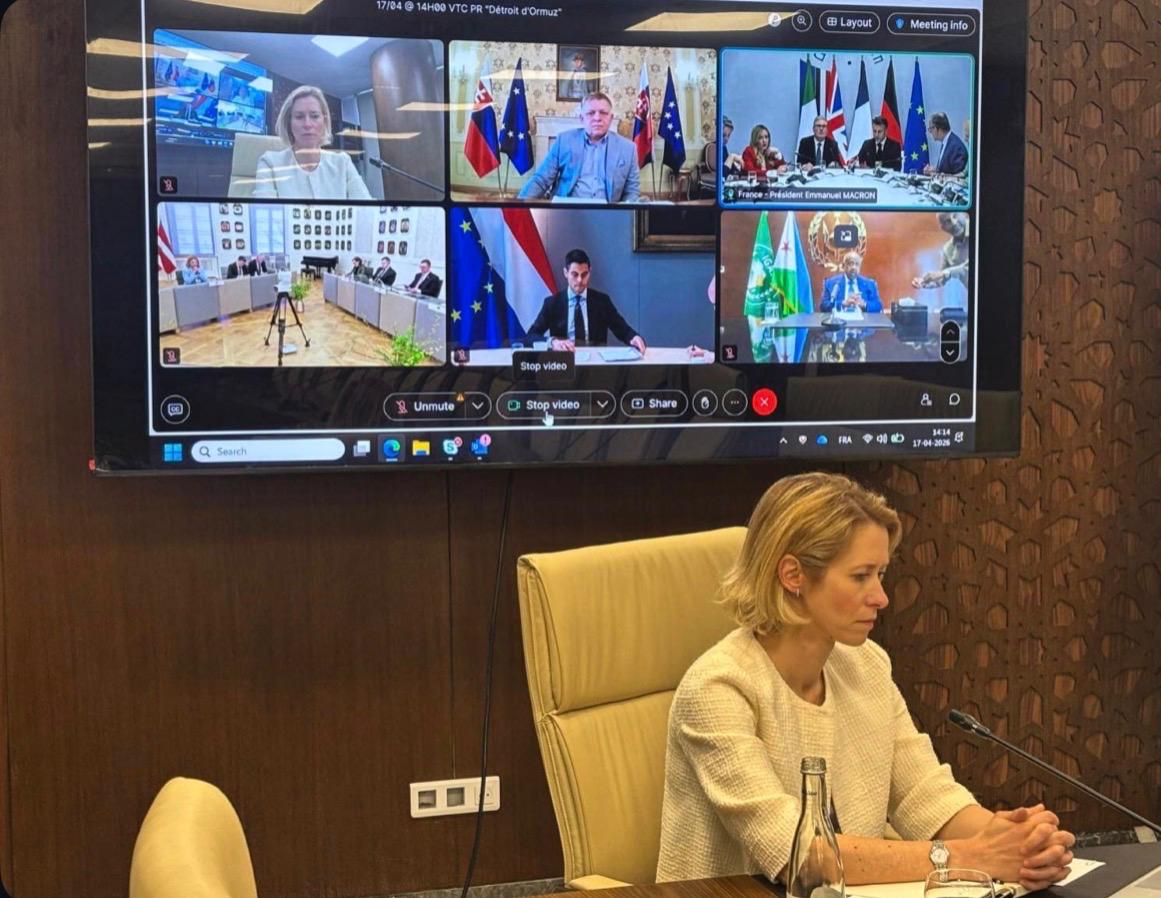
Under international law, transit through waterways like the Strait of Hormuz must remain open and free of charge. This is what leaders made clear in their call on reopening the Strait today.
Any pay-for-passage scheme will set a dangerous precedent for global maritime routes. Iran has to abandon any plan to levy transit fees.
Europe will play its part in restoring the free flow of energy and trade, once a ceasefire takes hold.
The EU’s Aspides naval mission is already operating in the Red Sea and can be quickly strengthened to protect shipping across the region. This could be the fastest way to provide support.
English

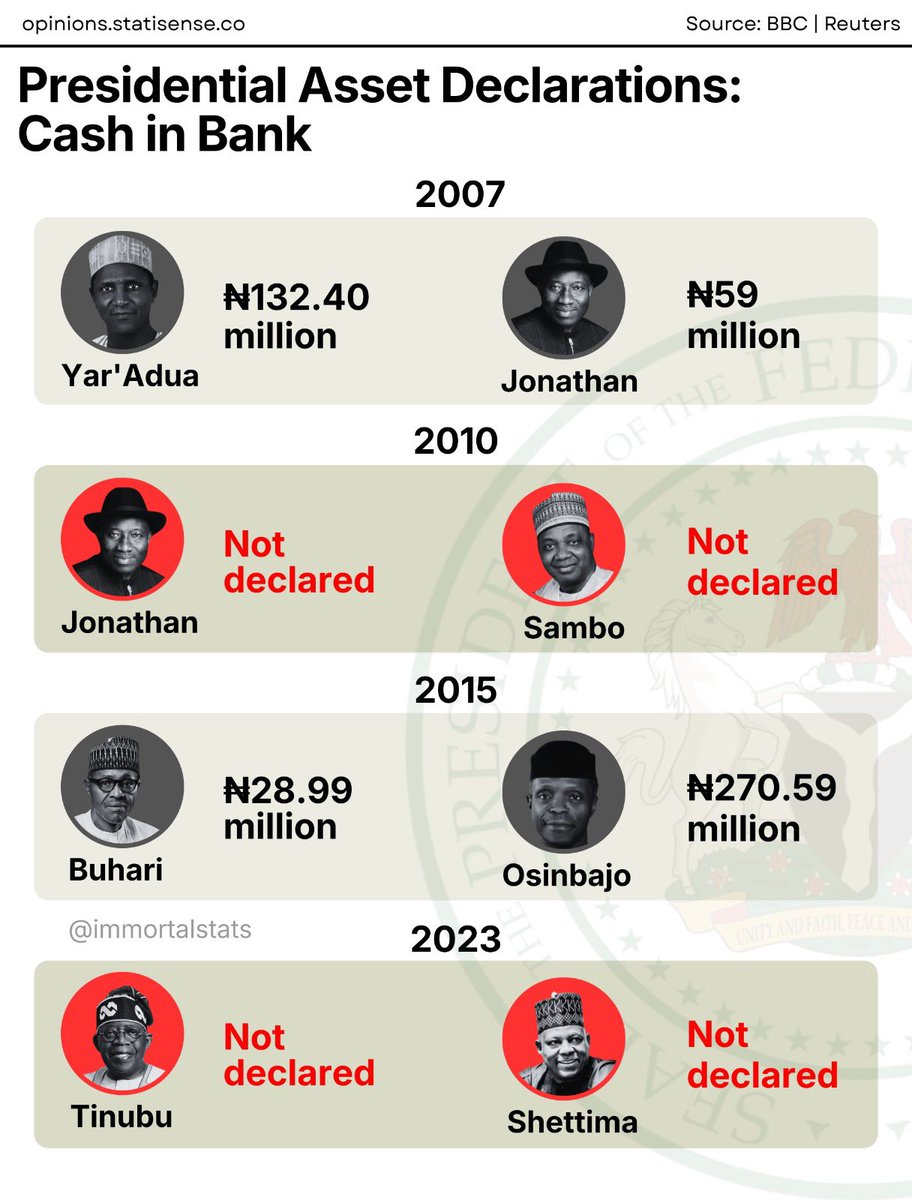

@Lowkey0nline @Mauriello_R Those running this platform never hide their biases. Shame on them.
English


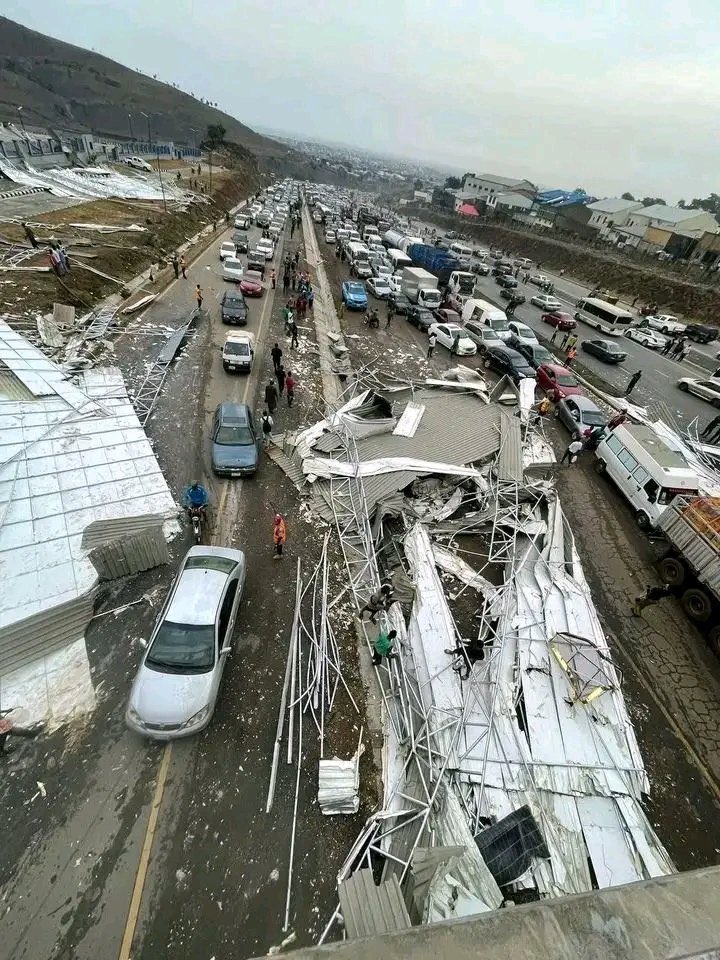
Wike's projects: Rainstorm destroys roof of Kugbo Bus Terminal in Abuja
English
@TheoAbuAgada Such a gigantic project for public use but with cheap materials, poor finishing and anonymous contractor. Spending billions on this ramshackle structure shows how widespread corruption is.
English

Isa がリツイート
Absurdly inappropriate commentary from @awzurcher @BBCNews How can a threat of civilisational erasure and genocide be whitewashed as a "treacherous choice". Why is that when it's Muslims threatened with slaughter the BBC is reluctant to use appropriately extreme language?
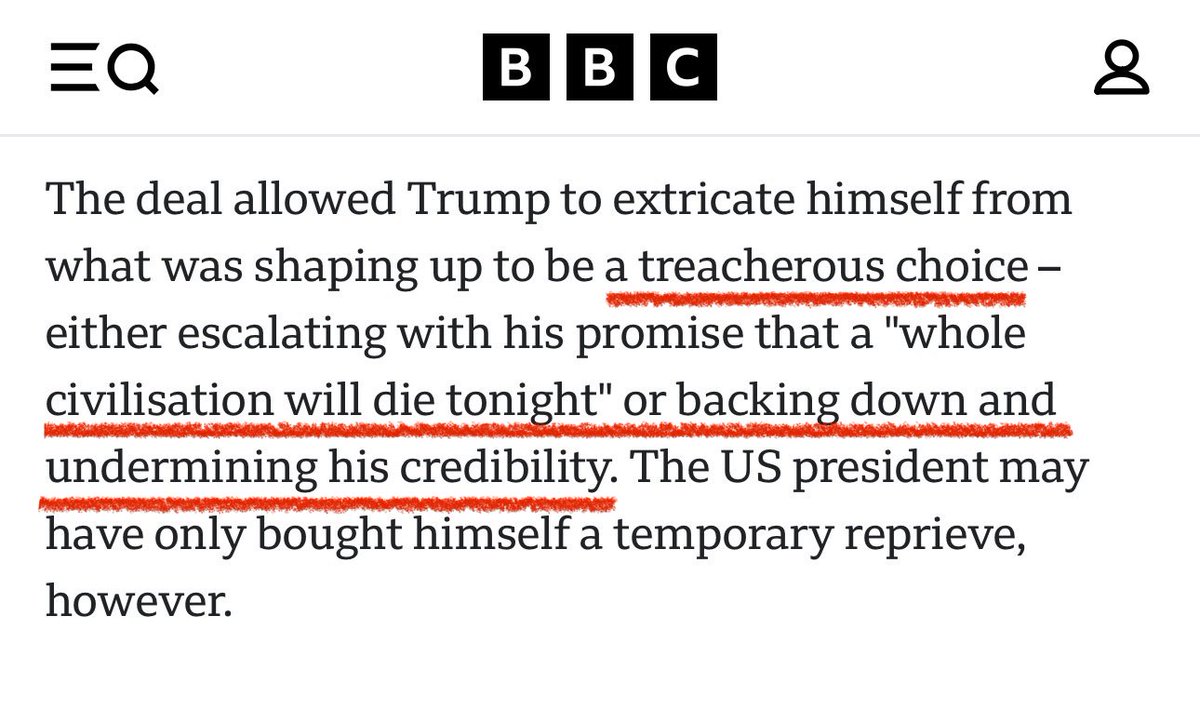
BBC News (World)@BBCWorld
Iran ceasefire deal a temporary win for Trump - but it comes at a cost bbc.in/41Yw0K9
English
Isa がリツイート

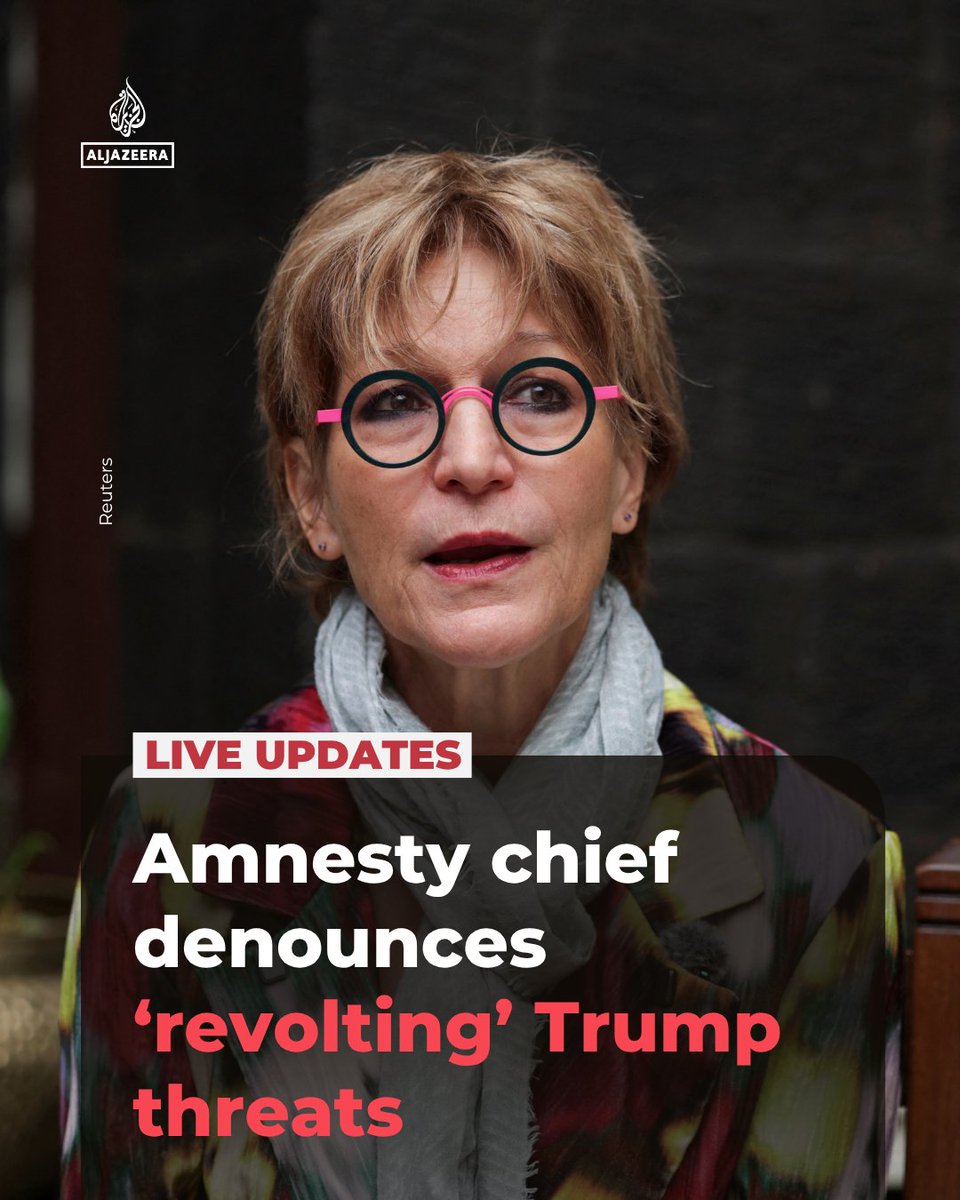
Agnes Callamard, the head of Amnesty International, has denounced US President Trump’s “revolting” threats to destroy Iranian bridges and power plants, stressing that civilians “will be the first to suffer.”
🔴 LIVE updates: aje.news/x2g2iv
English

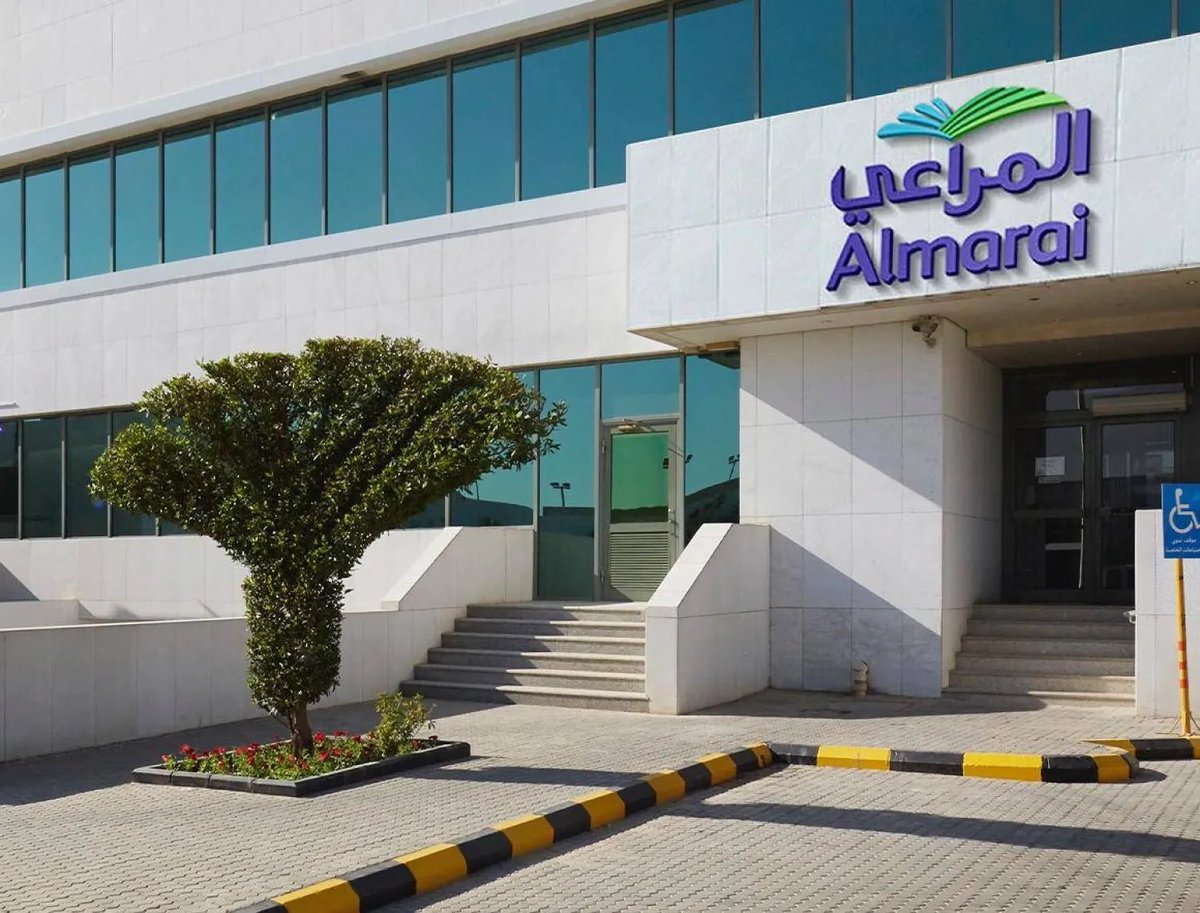
🇸🇦 Saudi Arabia operates one of the world's largest dairy herds in the middle of the desert. The company Almarai alone keeps over 195,000 cows, using advanced cooling systems to keep them at 21-23°C (70-73°F) while outside temperatures exceed 50°C (122°F).

English

Fun fact, if it's his natural hair, whether locks or plaiting, it's allowed in islam; just keep it clean and masculine. Islam is cool like that!
Obasanjo@cent_haysmall
El-Rufai’s son can rock dreadlocks because he’s the child of a powerful politician, but an ordinary person wouldn’t dare. Hisbah police would’ve already dragged him in under Sharia. Sharia is meant for the poor, not for the Muslims they claim.
English
Isa がリツイート
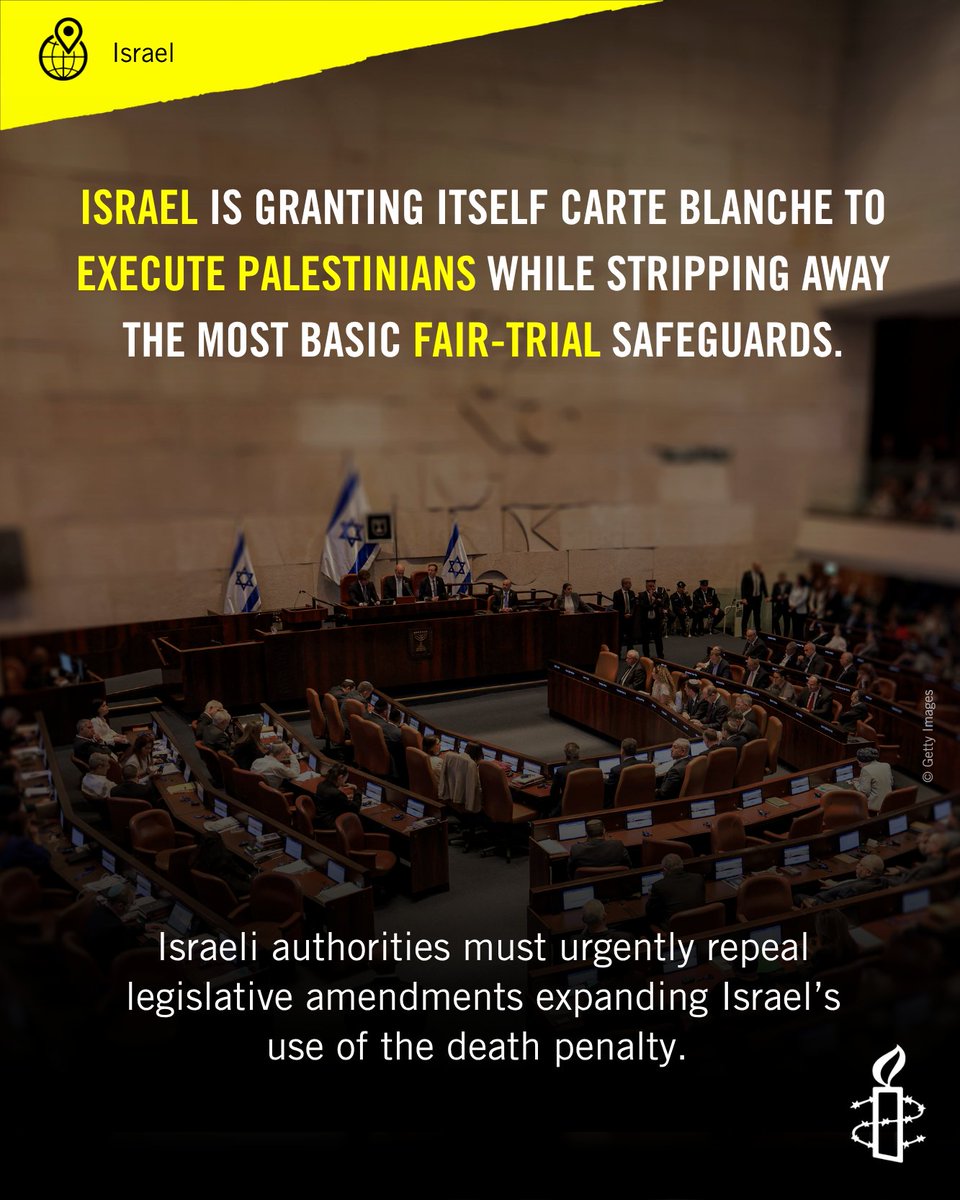
Despite few amendments to the previous drafts, any death sentences imposed under this law would constitute a violation of the right to life and, when imposed against Palestinians from the OPT, may also amount to war crimes.
The international community must exert maximum pressure on the Israeli authorities to immediately repeal this law, fully abolish the death penalty, and dismantle all laws and practices that contribute to the system of apartheid against Palestinians.
English
Isa がリツイート

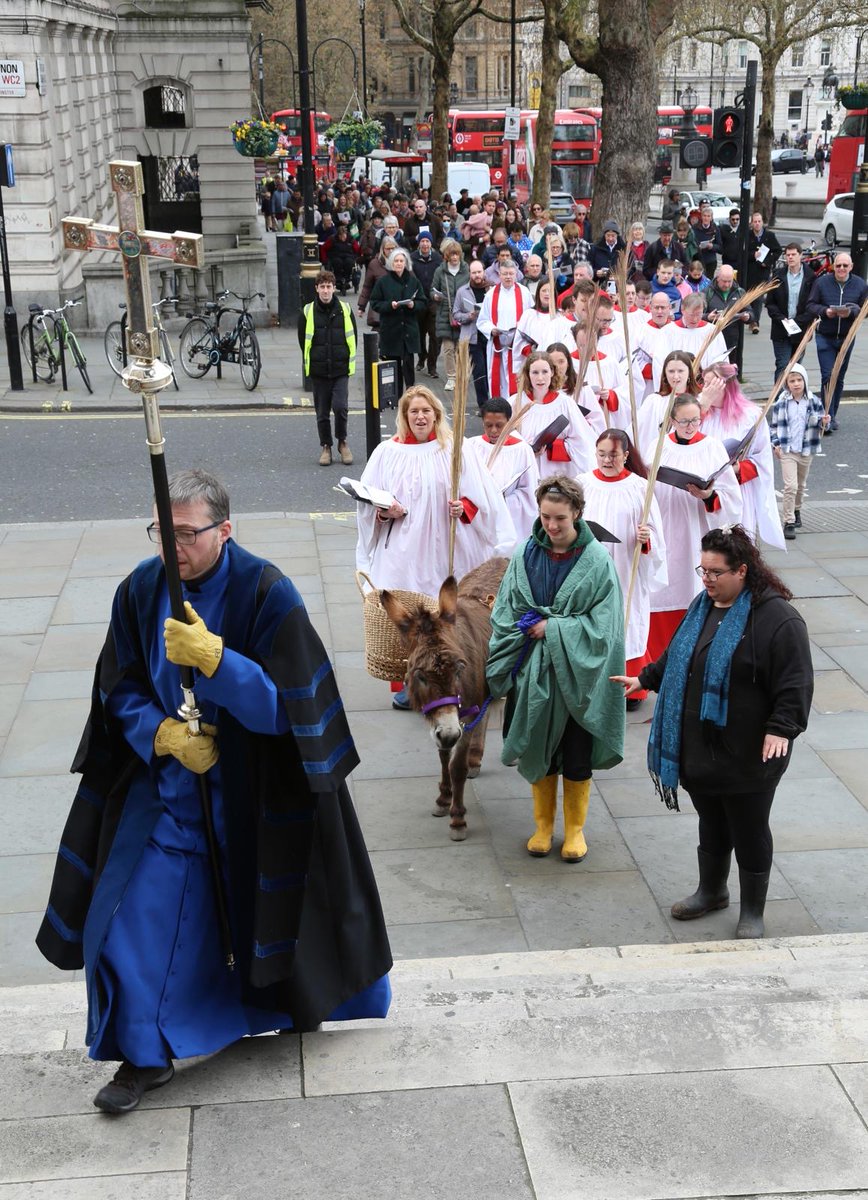
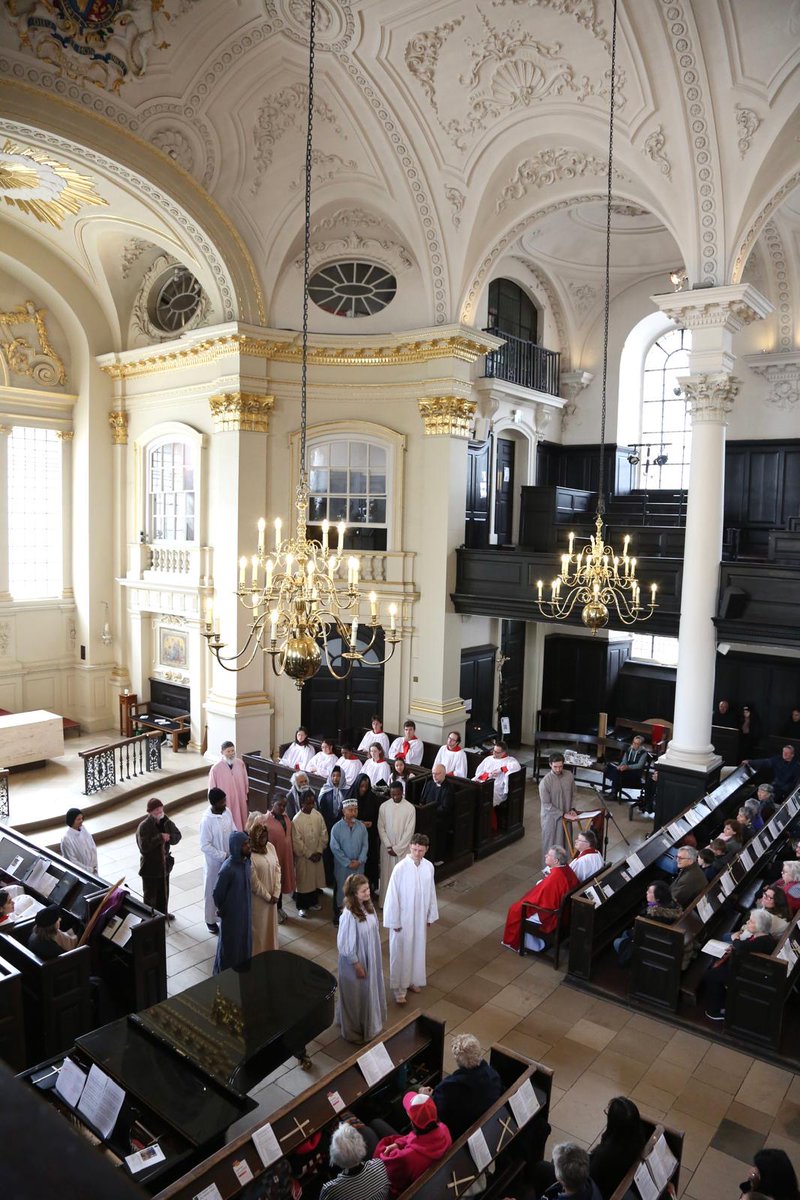
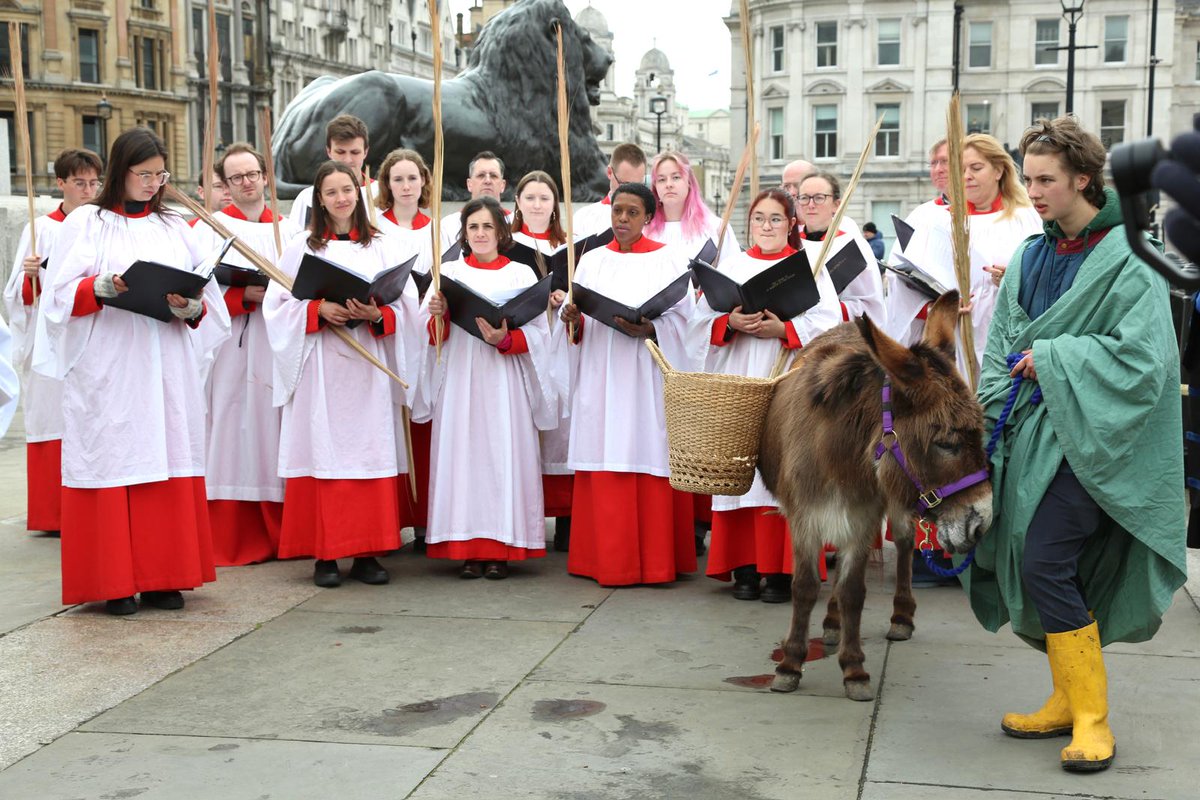
Today is Palm Sunday, marking the beginning of Holy Week as we approach Easter.
Today's procession across Trafalgar Square to St Martin-in-the-Fields is a powerful retelling of the story of Jesus’s arrival in Jerusalem.

English
Isa がリツイート

Cardinal Pizzaballa on Palm Sunday: “In this afternoon of Palm Sunday we gather without a procession, without palms waving through the streets. This absence is not merely a matter of formalities. It is the war that has interrupted our festive journey, making even the simple joy of following our King difficult.”
“Today Jesus weeps once more over Jerusalem. He weeps over this city, which remains a sign of both hope and sorrow, of grace and suffering. He weeps over this Holy Land, still unable to recognize the gift of peace. He weeps for all the victims of a war that seems without end: for divided families, for shattered hopes. But the tears of Jesus are never fruitless. They open our eyes, challenge us, and reveal the truth.”
English
Isa がリツイート

@DefenseNigeria Why are you so careless? You should have cropped the hebrew part before posting.
English
Who remembers when an Iranian man, Azim Aghajani, was busted by the DSS for shipping into Nigeria a container load of mortars and military grade weapons.
Reports that the DSS has dismantled an Iranian sleeper cell operating in Nigeria, gathering information with possible plans to strike U.S. and other Western targets should come as no surprise.
Iranian intelligence activities in Nigeria go way back. Nigeria’s intelligence services are doing much more behind the scenes than the public often realizes.


English
