Kio Amachree

9.9K posts

Kio Amachree

Kio Amachree

@Ivory1957

Political Scientist

Stockholm, Sweden Katılım Ekim 2021
835 Takip Edilen9.5K Takipçiler
Sabitlenmiş Tweet
Kio Amachree
Kio Amachree@Ivory1957·
WE SAY NO to Kings written by Kio Amachree SKJ Records 2025 (Verse 1) We say no to Kings, we say no to would-be Caesars We say no to Kings, we say no to third-rate convicted grifters How can a man with a permanent suntan think he should be sitting on a throne? Stick a fish bone down his throat, do him a favor, put him out of his misery (Chorus) We say no to Kings, we say no to would-be Caesars We say no to Kings, we say no to third-rate convicted grifters Democracy is sacred, as is the constitution Democracy is our birthright — we say no to Kings (Verse 2) A third-class fat slob, incompetent, wants to wear the crown of America He was too scared to fight for his country, but when it comes to corruption and money He enriches himself and his crime family — we see him for what he is (Chorus) We say no to Kings, we say no to would-be Caesars We say no to Kings, we say no to third-rate convicted grifters Democracy is sacred, as is the constitution Democracy is our birthright — we say no to Kings (Bridge) No six-time bankrupt, Hitler-loving slob will sit upon that throne He’s out of his mind and so are his enablers We say hell no to Kings, we say hell no to would-be Caesars We say freedom for our children’s children — the rule of law forever (Chorus — full) We say no to Kings, we say no to would-be Caesars We say no to Kings, we say no to third-rate convicted grifters Democracy is sacred, as is the constitution Democracy is our birthright — we say no to Kings (Outro) We say hell no to Kings — freedom and law forever. #Hashtags #Democracy #RuleOfLaw #NoToKings #Freedom #SayNo
English
6
22
83
14.3K
Kio Amachree
Kio Amachree@Ivory1957·
THE WEST’S MOST COMFORTABLE LIE An Open Letter to the Kingdom That Educated Me and the King Who Dined With My Country’s Disgrace By Kio Amachree President, Worldview International The West loves to lecture Africa. It lectures us about corruption, about governance, about the rule of law, about transparency. Its think tanks publish reports. Its journalists file dispatches from Lagos and Abuja about the hopelessness of Nigeria, about the venality of its leaders, about the suffering of its people. And all of it — every last word — is delivered with the serene confidence of a prosecutor who has never looked in a mirror. I have looked in that mirror for the better part of my adult life. I know what I see. On the 18th of March 2026, King Charles III hosted President Bola Ahmed Tinubu of Nigeria at a State Banquet in St George’s Hall, Windsor Castle  — 42 gun salutes, flags lining the streets, full military honours, the Prince and Princess of Wales themselves at the gates to receive him. It was the first state visit by a Nigerian President to the United Kingdom in 37 years.  The pageantry was magnificent. The symbolism was catastrophic. Because seated at that banquet table — hosted, honoured, welcomed into the most ceremonially prestigious event the British Crown can bestow — was Gilbert Chagoury, a controversial Nigerian billionaire of Lebanese descent who was convicted of money laundering in Switzerland in the year 2000.  A man with a U.S. DOJ deferred prosecution agreement on his record. A man named in FBI counterterrorism files in connection with Hezbollah financing. A man the United States placed on a terrorism screening database and denied a visa. A man awarded 13 billion dollars in no-bid Nigerian infrastructure contracts by this same administration. Gilbert Chagoury. At Windsor Castle. At the King’s table. In the year of our Lord 2026. I need someone to explain to me what British values mean after that. I am not speaking as an outsider. I am speaking as perhaps the oldest surviving African graduate of Eton College, where I was educated between 1970 and 1975 at the expense of the Nigerian state and the sacrifice of my father. My father, Chief Godfrey Kio Jaja Amachree QC, was Senior Crown Counsel to Her Majesty the Queen in colonial Nigeria. He was Nigeria’s first Solicitor-General, her first African Under-Secretary-General of the United Nations — a man who managed the Congo Crisis on behalf of the international community, who represented everything that the post-war liberal order claimed to stand for. He was a King’s Counsel in the truest sense of those words: a man of law, of principle, of service to institutions larger than himself. That tradition of the Crown meant something to my family. It meant something to me when I sat in School Hall at Eton and learned English constitutional history. It meant something when I understood that the rule of law was not merely a phrase but a covenant — a promise that civilisation makes to itself that power will be constrained by principle. Keir Starmer is a King’s Counsel. My father was a Queen’s Counsel. I hold both men to that standard. And I am telling you, as plainly as I know how, that my father — a man who stood for everything those letters after a name are supposed to represent — would not have been found dead at the same table as Gilbert Chagoury. Not for trade. Not for diplomacy. Not for £8 billion in bilateral commerce. Not for anything. And what of Tinubu himself? This is a man whose 1993 DEA asset forfeiture in Chicago — where he surrendered $460,000 in drug proceeds — is a matter of public American court record. A man whose FBI and DEA files, ordered released by United States Federal Judge Beryl Howell following litigation by researcher Aaron Greenspan, remain a subject of ongoing legal proceedings. A man who, when asked about his academic credentials, was unable to produce a degree from the University of Chicago that he himself claimed. King Charles described Nigeria as an “economic powerhouse” that “has not merely changed, it has arrived.”  Perhaps. But which Nigeria arrived at Windsor? The Nigeria of its 220 million people, 133 million of whom live in multidimensional poverty? Or the Nigeria of the men who made those people poor? The West will tell you it must engage. That diplomacy requires pragmatism. That trade demands relationships regardless of who holds power. I understand realpolitik. I spent years on Wall Street. I know the language of managed engagement and strategic interest. But there is a line — there has always been a line — between engagement and endorsement. King Charles called this a “partnership of equals.”  You cannot be the equal partner of a man with DEA files, a Swiss-convicted money launderer at his elbow, and Hezbollah establishing operational infrastructure in Northern Nigeria to strike Israeli and American targets, without becoming complicit in every consequence that follows. Meanwhile, the UK makes entry into Britain nearly impossible for the ordinary, law-abiding Nigerian. The visa queues in Lagos are legendary in their cruelty. Young Nigerian doctors, engineers, academics — men and women who represent exactly what post-colonial Africa could become — are turned away, humiliated, or kept waiting for months. But a man whose business partner was convicted of money laundering in Switzerland, who carries passports from Lebanon, Britain, St Lucia, and wherever else convenience dictated, who received his Nigerian passport from a military dictatorship — that man gets a 42-gun salute and the Prince of Wales at his door. I spent ten years in England. I learned your laws, your history, your literature, your constitutional traditions. I believed in them. Not naively — I was never naive — but genuinely, the way a man believes in something when he has seen, in his own father’s life, what those ideals can produce when honoured. What I am watching now is not diplomacy. It is the normalisation of criminal governance dressed in ceremonial robes, and the British establishment — which knows better, which has always known better — is choosing to look away because it calculates that corrupt men are easier to manage than principled ones. They are wrong about that. They have always been wrong about that. Corrupt men are not stable partners — they are unpredictable liabilities who will, in time, embarrass every institution that embraced them. The United Kingdom will one day have to account for this banquet. It will have to explain, in whatever future tribunal of history convenes on the wreckage of Nigerian democracy, why it handed Gilbert Chagoury a seat at the King’s table when it had full knowledge of who he was and what he represented. I say to the British establishment, as the son of a man who served the Crown with honour: make up your minds. Either you stand for the rule of law — which is what Eton, and the Inns of Court, and the entire apparatus of British civilisation has always claimed — or you stand for the deal. You cannot do both. Because every time you wine and dine a convicted money launderer at Windsor Castle while turning away an honest Nigerian at Heathrow, you are telling Africa exactly what you think of it. And Africa, I promise you, is listening. My father’s legacy deserves better than this. Nigeria’s people deserve better than this. And frankly, Britain deserves better than this. Kio Amachree President, Worldview International Stockholm, Sweden Eton College, 1970–1975
Kio Amachree tweet media
English
0
13
14
195
Kio Amachree
Kio Amachree@Ivory1957·
OPEN LETTER TO THE RIGHT HONOURABLE SIR KEIR STARMER KCB KC MP Prime Minister of the United Kingdom 10 Downing Street, London SW1A 2AA From: Kio Amachree, President, Worldview International Stockholm, Sweden 26 May 2026 RE: YOUR GOVERNMENT’S FACILITATION OF A £746 MILLION CONTRACT AWARDED TO A CONVICTED MONEY LAUNDERER — AND YOUR CONTINUED SILENCE IN RESPONSE Prime Minister, I wrote to you. I have not heard back. I am writing again — publicly — because the British public, the Nigerian people, and the international community deserve answers that your office has thus far refused to provide. The question is simple, and I will ask it plainly: Why did you host Gilbert Chagoury at 10 Downing Street? The £746 million UK Export Finance deal — structured as a Buyer Credit Facility arranged through Citibank N.A., London Branch — was sealed during a meeting between yourself and President Bola Tinubu at Downing Street.  Gilbert Chagoury was part of the Nigerian delegation to London where that financing agreement was signed.  The contract, flowing directly from that visit, went to his companies. Checks confirmed that both Hitech Construction and ITB Nigeria — the firms awarded the renovation of Apapa and Tin Can Island ports — are owned by the Chagoury Group.  This is not a business story. This is a governance scandal with your government’s fingerprints on it. Who is Gilbert Chagoury? Let me remind you of what your own agencies and allied governments have already documented, since Downing Street apparently did not consult the file before rolling out the red carpet. Gilbert Chagoury is a man convicted in Switzerland of money laundering. He entered a deferred prosecution agreement with the United States Department of Justice in connection with illegal foreign campaign contributions to American elections — a federal crime. He appears in FBI intelligence reports for alleged financing ties to Hezbollah — a designated terrorist organisation under British law, Prime Minister, not merely under American law. He was denied a visa to enter the United States. He was placed on the U.S. terrorism screening database. He holds four passports. And under the Abacha kleptocracy — one of the most brazen looting operations in African history — he was a central beneficiary of stolen Nigerian state funds, and was subsequently required to return tens of millions of dollars. This is the man your government welcomed into the most famous address in British politics. This is the man whose companies were handed a contract backed by British taxpayers through UK Export Finance immediately after that meeting. Since President Tinubu took office, Chagoury has quietly collected more than $12.7 billion in federal contracts.  The port deal is only the latest in a pattern of staggering, no-bid enrichment. The President’s own son, Seyi Tinubu, sits on the board of CDK Integrated Industries — another subsidiary of the Chagoury Group — while his father’s government awards contract after contract to the same man.  This is not ambiguous. This is not circumstantial. This is documented. What message does this send, Prime Minister? What does it say to every Nigerian living under fuel poverty, collapsing infrastructure, and a currency in freefall — that the British government lent its prestige and its export finance machinery to bless a deal benefiting this man? What does it say to British taxpayers, whose credit guarantees are now underwriting a contract awarded to a convicted money launderer? What does it say to the serious fraud investigators, the anti-corruption prosecutors, and the civil society organisations that your government claims to support across the developing world — when you sign a £746 million deal in the same room as someone who belongs on a sanctions list, not a state visit delegation? I have formally submitted evidence to the UK Serious Fraud Office. I continue to monitor whether Her Majesty’s Government will conduct any due diligence whatsoever on the beneficiaries of UKEF-backed contracts. The silence from your office is not neutral. Silence, in this context, is complicity. You campaigned on restoring trust in public life. You took office promising a government of integrity. I am holding you to that promise — as a British-aligned citizen, as a voice of the African diaspora, and as a man whose family has spent generations building legitimate institutions across Nigeria and the world while men like Gilbert Chagoury tore them down from behind the protection of powerful friends. I await your response. Kio Amachree President, Worldview International Stockholm, Sweden
Kio Amachree tweet media
English
0
6
7
129
Kio Amachree
Kio Amachree@Ivory1957·
The Honorable Marco Rubio Secretary of State United States Department of State Washington, D.C. 26 May 2026 Dear Secretary Rubio, I write to you from Stockholm not as an ideologue, but as a Swedish-Nigerian citizen raised in the world of diplomacy, international law, and transatlantic relations. I believe the United States is making a profound strategic mistake in continuing to shield and legitimise a Nigerian leadership crisis that is damaging both Nigeria and American credibility across Africa. President Bola Ahmed Tinubu governs Africa’s largest economy under a cloud of unresolved controversy surrounding identity, educational records, financial history, and past narcotics-related allegations that remain widely discussed internationally. Whether Washington wishes to admit it publicly or not, these issues have become central to how millions of Africans now perceive American policy and American double standards. Nigeria is not a minor state. It is the demographic and economic anchor of Africa. If Nigeria collapses into deeper instability, the consequences will extend far beyond West Africa. Europe will feel it. The United States will feel it. The Atlantic alliance will feel it. The 2023 Nigerian election produced a president elected with roughly 35 percent of the vote in a deeply disputed process that large sections of the Nigerian population still regard as lacking legitimacy. Since then, insecurity has worsened dramatically. Terrorist violence, kidnappings, economic desperation, and institutional distrust are now at levels many Nigerians consider catastrophic. At the same time, Washington continues to publicly embrace a government many Nigerians believe represents entrenched corruption and elite impunity. This sends an extraordinarily damaging signal at a moment when the United States is attempting to position itself as a defender of democratic legitimacy and rules-based governance. The contradiction becomes even harder to explain when viewed against America’s global anti-narcotics posture. The United States sanctions regimes around the world, pressures Latin American governments, isolates Cuba and Venezuela, and projects itself as uncompromising on drug-linked criminality and illicit finance. Yet many Nigerians look at the Tinubu matter and ask a simple question: why do different standards appear to apply when geopolitical convenience is involved? Nigeria’s oil and gas resources remain strategically critical in an era shaped by war, energy instability, and global supply disruptions. But corruption, elite capture, and weak governance are preventing Nigeria from fulfilling its true economic potential. A stable, accountable Nigeria aligned with Western democratic institutions would be one of America’s greatest strategic partners in Africa. A weakened, compromised, and distrusted Nigeria risks becoming another major zone of instability. I am also deeply concerned by reports and allegations regarding foreign influence networks, illicit financial relationships, and the growing entrenchment of actors hostile to Western interests across parts of Nigeria and the wider Sahel region. The United States cannot afford complacency in West Africa. I write this letter personally as someone who understands America well. I spent part of my childhood in New Rochelle, New York. I graduated from the University of Pennsylvania, like President Trump and members of his family. My late father, Chief Godfrey Kio Jaja Amachree, served as the first African Under-Secretary-General of the United Nations during the Kennedy and Johnson years. My godmother was Marietta Tree, the distinguished American diplomat appointed by President Kennedy to the United Nations. My stepmother, Wylda, was American, and members of my family today are American citizens. This is not abstract to me. I have personally faced threats connected to my public advocacy. A member of my family was killed in Nigeria and justice was never meaningfully pursued. I know what state failure looks like up close. I know what impunity does to nations. I therefore urge the United States government to reassess its posture toward the current Nigerian administration with greater seriousness and honesty. America’s long-term interests are not served by attaching itself to leaders whose credibility deficits are becoming impossible to ignore among their own people. Nigeria must not be allowed to drift toward the fate of states such as Sudan. The stakes are too high for Africa, for Europe, and for the United States itself. Respectfully, Kio Amachree President, Worldview International Stockholm, Sweden See less
Kio Amachree tweet media
English
1
4
15
274
Kio Amachree
Kio Amachree@Ivory1957·
THE WOMAN RUNNING NIGERIA She Calls Herself a Pastor. Nigerians Have Other Names for Her. By Kio Amachree | Worldview International She does not sit at the head of the table. She does not need to. She is the one who decides who gets a seat. Her name is Oluremi Tinubu — senator, First Lady, self-styled pastor and shepherd of the Renewed Hope Initiative, dispenser of billions in naira donations whose source no accountant has ever been able to satisfactorily explain. She is the real executive at Aso Rock, the iron will inside the velvet gown, the woman who has spent thirty years ensuring that the Tinubu family enterprise never closes for business, whatever the cost to the 220 million people outside its gates. Nigeria has had powerful First Ladies before. Maryam Babangida built an empire of patronage. Aisha Buhari fought openly with her husband's cabal. But Remi Tinubu is something more sophisticated and more dangerous than either. She is not a consort. She is a co-conspirator who has waited decades for the throne she now occupies, and she has no intention of vacating it. Let us begin with what the court documents say. On October 4, 1993, a federal judge in the Northern District of Illinois signed off on a civil forfeiture order requiring Bola Tinubu to surrender $460,000 linked to a Chicago white heroin trafficking network. U.S. federal agent Kevin Moss, in his sworn affidavit, stated that Oluremi Tinubu had opened a joint bank account with Audrey Akande — wife of heroin kingpin Adegboyega Mueez Akande — and that she was a co-applicant on financial instruments directly tied to accounts under DEA investigation. The court's October 4, 1993 order referenced the drug deal, involving Tinubu, his wife Oluremi, and three family members, with accounts at First Heritage Bank and Citibank International among those seized. She was not a bystander. She was named. She was documented. She had accounts with the drug lord's wife. The Nigerian media, when it mentions this at all, mentions it in a whisper. The praise-singing press calls her a philanthropist. The Abuja dinner-party circuit calls her formidable. The international community, for the most part, has looked away. But those court documents exist. They do not dissolve because she now wears designer lace to State House banquets and distributes sewing machines to market women on camera. She has been building this structure for decades, long before the cameras turned on. When the question arose of who would succeed Akinwunmi Ambode as Lagos governor, it was Remi Tinubu's intervention that secured the position for Babajide Sanwo-Olu — her trusted ally, described as always at her service — over the sitting governor her husband had decided to discard. This was not a First Lady doing charity work. This was a political operative making executive decisions about who governs Africa's largest city. Lagos was always their personal fiefdom, their ATM, their laboratory of control — and she has been its co-owner from the start. Now imagine that operation scaled to 923,768 square kilometres. Those paying attention have noticed the quiet, steady, intentional nature of her recalibration of power — hosting the Senate President, the Speaker, and senior leadership of the National Assembly for private dinners at the Presidential Villa. Not her husband's dinners. Hers. She is not mediating. She is managing. There is a difference. Meanwhile, the president she props up has become a source of genuine alarm even within his own government. In August 2025, reports emerged from Aso Rock insiders that Tinubu had been bedridden for several days, with several scheduled activities cancelled and the Vice President dispatched to represent the Presidency at key state functions — while the spokesman insisted, unconvincingly, that the president could simply choose to work from home. Even a former senior adviser to the Vice President stated publicly that Tinubu "has not shown the drive required to fix the country" and should not seek re-election in 2027. This is not opposition talk. This is insider testimony. A man in this condition does not run Nigeria. Someone does it for him. And then there is the son. Since his father's inauguration, Nigerians coined the phrases "Office of the Son of President" and "Acting Vice President" to describe Seyi Tinubu's extraordinary reach — attending Federal Executive Council meetings reserved for cabinet ministers, travelling with military security escorts described by Nobel laureate Wole Soyinka as sufficient to take over a small nation. His influence is said to be so extensive that ministers defer to him on key decisions, and a majority of the young appointees in the administration reportedly came through him directly. Mother. Son. Aging figurehead. This is a family government. A dynasty laundering itself through democratic theatre. Seyi co-owns an offshore company with Ronald Chagoury Jr., son of the convicted money launderer Gilbert Chagoury, and has served on corporate boards tied to Chagoury Group subsidiaries that hold billions in no-bid government infrastructure contracts. The mother handles the political architecture. The son handles the commercial pipeline. The father cuts the ribbon. And through it all, Remi Tinubu wraps herself in the language of God. She is a pastor, she says. She speaks of compassion. She references Scripture. The Renewed Hope Initiative distributes exercise books and agricultural grants and scholarships in her name. Since her husband became president, she has been involved in monetary donations exceeding ₦12 billion, despite not being publicly associated with any company or disclosed income stream that would explain such sums. She says, with a straight face, that the money is not government funds. Then whose funds are they? Which God, one is compelled to ask, blesses a woman who shared bank accounts with a heroin trafficker's wife and calls it providence? Which congregation does she pastor — the Nigerian people, who have seen their purchasing power destroyed, their fuel subsidies removed, their children driven to emigrate by the millions? What gospel is this that preaches hope while the Tinubu family consolidates every lever of power, every patronage network, every government contract, in its own hands? When the First Lady publicly rebuked Governor Ademola Adeleke of Osun State at a public ceremony — ordering him to stop singing before he could speak — the governor, in her telling phrase, offered "unquestioning surrender." Nobody in that room pushed back. Nobody dared. That is not the comportment of a First Lady. That is the behaviour of someone who knows exactly who is really in charge. She has been called Nigeria's incoming iron lady since before her husband was sworn in. The description was meant as admiration. It is more accurate as warning. Nigeria is not being run by the man they elected. It is being run by a woman who appears in court documents as a participant in heroin money flows, who has spent three decades engineering political outcomes from behind her husband's title, who is now deploying billions of unexplained naira in choreographed philanthropy while her son builds a shadow empire and her husband stumbles on foreign stages. The elections of 2027 are approaching. Remi Tinubu is not thinking about losing. She is thinking about installing Seyi in Lagos, extending the dynasty, consolidating the hold. The husband was always the instrument. The family was always the project. Nigeria deserves to know who is actually governing it. And it deserves, finally, to ask: when the cameras go off and the prayer meetings end and the press releases are filed, what exactly does this woman believe in — besides power? Kio Amachree is President of Worldview International and a commentator on Nigerian governance and accountability.
Kio Amachree tweet media
English
6
32
30
618
Kio Amachree
Kio Amachree@Ivory1957·
I Have Written to INTERPOL About Seyi Tinubu. This Is Not a Threat. This Is a Process. Let me be very clear about what is happening right now. I am Kio Amachree, President of Worldview International. I have spent months filing formal complaints with the FBI, the DEA, the UK Serious Fraud Office, MI5, Sweden’s SAPO, and the United Nations regarding the conduct of the Tinubu administration and its principal beneficiaries. I have written open letters to President Trump, King Charles, Prime Minister Starmer, and the UN Secretary-General. I have submitted formal petitions to INTERPOL member country National Central Bureaus. Today I escalated. I have formally written to the Secretary General of INTERPOL in Lyon, France — Secretary General Valdecy Urquiza — with copies simultaneously served on the Director General of the UK National Crime Agency, the Director of the UK Serious Fraud Office, the Head of Sanctions at the UK Foreign Commonwealth and Development Office, and Sweden’s SAPO. The subject: Seyi Tinubu. Money laundering. A fraud-tainted £9 million London mansion purchased through a British Virgin Islands shell company called Aranda Overseas Corporation, at the precise moment that property was under active Nigerian government confiscation proceedings as the proceeds of a $1.6 billion fraud. Documented by Bloomberg News. Confirmed by the Organised Crime and Corruption Reporting Project. On the public record since May 2023. For those who do not know what an Unexplained Wealth Order is, let me explain. Under UK law, the National Crime Agency can walk into the High Court and obtain an order requiring Seyi Tinubu to explain, in legal proceedings, exactly where the money came from to buy that mansion. If he cannot explain it — and he has never even tried, publicly — the property is presumed to be recoverable criminal proceeds and can be seized. No criminal conviction required. The burden of proof shifts to him. That is the same mechanism used to seize £24 million worth of properties from the wife of a corrupt Azerbaijani banker. It is the same legal architecture that froze over $730 million of Isabel dos Santos’s assets in London’s High Court. It is active, it is proven, and it applies directly to Seyi Tinubu’s London property portfolio. And INTERPOL? Let me tell you what a Red Notice means in practice. It means that if Seyi Tinubu lands at any airport in Europe — Paris, Frankfurt, Amsterdam, Zurich, Stockholm — he can be detained on the spot by local law enforcement pending extradition proceedings. That is what happened to the targets of Angola’s pursuit of Isabel dos Santos. It is what the UK government, the NCA, and Sweden’s SAPO now have the formal documentation in their hands to initiate. I am not writing articles anymore. I am filing. There is a difference. The UK government has already called Isabel dos Santos a notorious kleptocrat and frozen her assets. The Swiss government convicted Gilbert Chagoury of money laundering in 1994. The United States forfeited assets from Bola Tinubu himself in 1993 in connection with narcotics trafficking proceeds. The international accountability infrastructure is not theoretical. It has been used against this family and their circle before. It will be used again. To every Nigerian reading this — in Lagos, in Abuja, in Port Harcourt, in London, in Houston, in Stockholm — I want you to understand something. While you are paying ₦1,500 for a litre of fuel. While your hospitals have no drugs. While your currency has lost half its value. Seyi Tinubu’s shell company was buying a three-floor mansion in St. John’s Wood with an eight-car driveway, electric gates, two gardens, and a gym, using money connected to a £9 million property that the Nigerian government itself had identified as the proceeds of a $1.6 billion fraud. That ends. Not with noise. Not with protests that get ignored. With Unexplained Wealth Orders. With INTERPOL Red Notices. With asset freezes. With the full weight of British, Swedish, and international law enforcement brought to bear through every formal channel available to a Swedish citizen and a Nigerian of public standing who knows exactly how these institutions work and is not afraid to use them. Seyi Tinubu is not untouchable. Isabel dos Santos thought she was untouchable. She was wrong. I am Kio Amachree. And I am just getting started. Kio Amachree President, Worldview International Stockholm, Sweden 26 May 2026
Kio Amachree tweet media
English
6
57
78
1.1K
Kio Amachree
Kio Amachree@Ivory1957·
OPEN LETTER TO THE NATIONAL CRIME AGENCY, SERIOUS FRAUD OFFICE, FCDO SANCTIONS UNIT, AND INTERPOL RE: Seyi Tinubu — Money Laundering, Fraud-Tainted UK Assets, and the Case for an Unexplained Wealth Order, Asset Freeze, and INTERPOL Red Notice To the Director General of the National Crime Agency, the Director of the Serious Fraud Office, the Head of Sanctions at the Foreign Commonwealth & Development Office, and the Secretary General of INTERPOL, I write as President of Worldview International, a diaspora accountability platform based in Stockholm, Sweden, and as a Nigerian citizen who has submitted formal complaints regarding the Tinubu administration to the FBI, the DEA, the UK Serious Fraud Office, INTERPOL, Sweden’s SAPO, MI5, and the United Nations. I write openly, on the public record, because the matter I am placing before you is not obscure, not contested in its basic facts, and not one that can be allowed to proceed without formal institutional response. This letter concerns Seyi Tinubu — son of Nigeria’s President Bola Ahmed Tinubu — and his documented control of significant assets in the United Kingdom acquired through offshore shell companies, one of which purchased a property previously under active Nigerian government confiscation proceedings as the proceeds of a $1.6 billion fraud. THE DOCUMENTED FACTS In May 2023, Bloomberg News established through corporate documents that Seyi Tinubu is the principal beneficial owner of Aranda Overseas Corporation, a British Virgin Islands-registered shell company, which in 2017 purchased the property at 32 Grove End Road, St. John’s Wood, London NW8 — a three-floor mansion with an eight-car driveway, electric gates, two gardens, and a gym — for £9 million, a transaction facilitated through Deutsche Bank. This property had previously been owned by Kolawole Aluko, a Nigerian businessman formally declared wanted by Nigeria’s Economic and Financial Crimes Commission and US law enforcement for a $1.6 billion fraud perpetrated through corrupt oil contracts with former Petroleum Minister Dieziani Alison-Madueke. The Nigerian government was actively attempting to seize this property as fraud proceeds at the time Aranda Overseas Corporation — beneficially controlled by Seyi Tinubu — acquired it. The Organised Crime and Corruption Reporting Project subsequently established that President Bola Tinubu, his son, and their associates control at least twenty properties in the United Kingdom, the majority acquired during the period when Bola Tinubu served as Governor of Lagos State — on a salary that could not remotely account for a property portfolio of this scale. WHY THIS DEMANDS YOUR ACTION Seyi Tinubu is, without any ambiguity, a Politically Exposed Person under UK law and international FATF standards. He is the son of a sitting head of state. Under the UK Criminal Finances Act 2017 and the Economic Crime (Transparency and Enforcement) Act 2022, this status alone makes him an appropriate and legitimate target for an Unexplained Wealth Order in respect of any UK-connected asset where his lawfully obtained income is insufficient to account for acquisition costs. The specific transaction at 32 Grove End Road carries additional and compounding red flags that go beyond PEP status alone: the purchase through a deliberately obscured BVI offshore vehicle; the acquisition of an asset that was at that moment the subject of Nigerian government confiscation proceedings as the proceeds of acknowledged fraud; the facilitation by a major financial institution with its own documented history of AML compliance failures; and the subsequent use of the property to host official state visits by a sitting Nigerian president, suggesting it functions as a political asset as much as a private residence. Seyi Tinubu has never provided a credible public account of the source of funds used to acquire this property. He has not been required to do so. That must change. THE ISABEL DOS SANTOS PRECEDENT I ask you to consider the Isabel dos Santos case as the directly applicable precedent. Dos Santos was Africa’s wealthiest woman, with formidable legal resources across multiple continents. The United Kingdom froze her assets and imposed a travel ban under the Global Anti-Corruption Sanctions Regime. London’s High Court upheld a global asset freeze exceeding $730 million. INTERPOL issued a Red Notice at Angola’s formal request. The UK government designated her a notorious kleptocrat and acted accordingly. Every element of that legal and institutional architecture applies with equal or greater force to Seyi Tinubu. The facts are materially identical: a politically connected individual, assets in London acquired through offshore shell companies, a documented connection to state-extracted and fraud-tainted funds, and a consistent refusal to provide any credible account of the source of wealth. If the United Kingdom’s commitment to expelling dirty money from London is genuine — a commitment made repeatedly and publicly by both the Conservative and Labour governments — then the Tinubu property portfolio is a direct test of that commitment. The evidence has been on the public record since May 2023. Bloomberg published it. OCCRP confirmed and extended it. Premium Times, Channels Television, and every major Nigerian news organisation have reported it in detail. There is no evidentiary gap. There is no legal obstacle. There is only the question of institutional will. WHAT I AM FORMALLY REQUESTING I call upon the National Crime Agency to apply to the High Court for an Unexplained Wealth Order and interim freezing order in respect of 32 Grove End Road and all other UK properties connected to Aranda Overseas Corporation, Abeeb Holdings Limited, and any offshore vehicle in which Seyi Tinubu or Bola Tinubu holds a beneficial interest. I call upon the Serious Fraud Office to open a formal investigation into the acquisition of 32 Grove End Road as a suspected money laundering transaction under the Proceeds of Crime Act 2002, and to examine the compliance obligations of Deutsche Bank in facilitating the purchase of an asset that was at that moment under confiscation proceedings. I call upon the FCDO Sanctions Unit to assess Seyi Tinubu for formal designation under the UK Global Anti-Corruption Sanctions Regime, with an asset freeze and travel ban commensurate with those applied to Isabel dos Santos, Zamira Hajiyeva, and Dmytro Firtash. I call upon INTERPOL, through the National Central Bureau in London and in coordination with any willing member state, to receive and process a formal Red Notice request in connection with money laundering and the acquisition of proceeds of crime. A FINAL WORD I am a Swedish citizen. I am a Nigerian of public standing whose family has served this country across generations, from the pre-independence Constitutional Conference of 1958 to the first Secretary-General of the United Nations from the African continent. I have no personal animus against Seyi Tinubu as a private individual. What I have is an unshakeable conviction that the laundering of stolen Nigerian public wealth through London’s property market — while ordinary Nigerians cannot afford fuel, cannot access hospitals, and watch their currency collapse — is a moral obscenity that the law exists precisely to address. The law is on your side. The evidence is on the public record. The precedent has been set. Act on it. Kio Amachree President, Worldview International Stockholm, Sweden 26 May 2026
Kio Amachree tweet mediaKio Amachree tweet media
English
17
272
284
8.3K
Kio Amachree
Kio Amachree@Ivory1957·
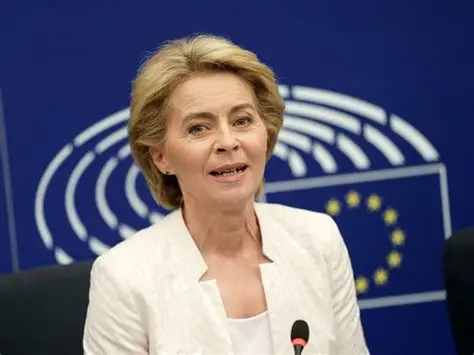
OPEN LETTER TO THE EUROPEAN COMMISSION Subject: The Time Has Come — Europe Must Break With the Tinubu Regime Kio Amachree President, Worldview International Stockholm, Sweden 26 May 2026 To: The President of the European Commission Ursula von der Leyen Rue de la Loi / Wetstraat 200 1049 Brussels, Belgium Copy: High Representative for Foreign Affairs and Security Policy Members of the European Parliament, Committee on Foreign Affairs EU Ambassador to Nigeria Madam President, I write to you today not as a petitioner seeking favour, but as an African citizen of Europe — a Swedish national, a son of Nigeria, and a man who has spent his life watching the slow, deliberate destruction of one of the most gifted nations on earth. I write because the European Commission can no longer afford the luxury of diplomatic silence. The Tinubu regime in Abuja is not merely a government with which one may have policy disagreements. It is something categorically different, and the evidence demands that Europe say so — plainly, publicly, and with consequence. A Government Built on Criminal Foundations In 1993, the United States Drug Enforcement Administration documented Bola Ahmed Tinubu’s connection to a narcotics trafficking network operating out of Chicago. He did not contest the forfeiture. He surrendered $460,000 in drug proceeds without trial, without explanation, and without accountability. That forfeiture judgment sits in the public record of the United States federal courts to this day. Thirty years later, the man who signed that consent agreement sits in Aso Rock as Nigeria’s Head of State. Federal Judge Beryl Howell of the United States District Court for the District of Columbia has ordered the release of DEA and FBI investigative files related to Tinubu. Those files are due. If they are not produced on schedule — if the machinery of obstruction delays, redacts, or buries what those files contain — let no one in Abuja interpret that procedural delay as exoneration. The dos Santos family of Angola believed themselves untouchable. Isabel dos Santos watched her European assets freeze and her empire dissolve in real time. The precedent has been set. It travels. Europe should be watching. Europe should be preparing. The Lebanese Connection: A Pattern Across Black Africa At the centre of Nigeria’s infrastructure scandal stands a man whose biography should disqualify him from contact with any legitimate government anywhere in the world: Gilbert Chagoury. Chagoury is not a controversial businessman. He is a documented criminal. In 1999, he was convicted in Geneva of money laundering and fined. In 2010, the United States Department of Justice entered into a Deferred Prosecution Agreement with his organisation after federal investigators linked him to transactions designed to conceal proceeds of crime. FBI documentation places Chagoury in the terrorism screening database in connection with financing networks associated with Hezbollah. The United States government denied him a visa. He was placed on the terrorism watchlist. These are not allegations made by opponents — they are findings made by American federal law enforcement. Despite all of this, the Tinubu government has awarded Chagoury Group subsidiaries over $13 billion in no-bid Nigerian infrastructure contracts — the Lagos-Calabar Coastal Highway, the Apapa and Tin Can Island port concessions, the Snake Island industrial development. No competitive tender. No parliamentary scrutiny. No transparency whatsoever. And Gilbert Chagoury is not new to Africa. His network has operated across Chad. It has penetrated Benin. It has reached into the Caribbean — Saint Lucia among them — through a web of offshore vehicles, shell structures, and political relationships built on money and impunity. This is not a businessman seeking opportunity in emerging markets. This is a Lebanese financier with a documented record of predatory engagement with Black African states, treating the continent not as a partner but as a theatre of extraction. Europe arms itself with sanctions regimes, asset-freezing powers, and anti-money-laundering directives. This is precisely the moment to use them. Seyi Tinubu: The Unelected Son No one voted for Seyi Tinubu. No one appointed him to any office. He holds no constitutional mandate, no portfolio confirmed by any legislature, and no credentials relevant to the governance of Africa’s largest nation. And yet he operates — openly, brazenly — as a shadow power broker at the highest levels of the Nigerian state. He sits on the board of CDK Integrated Industries, a company that has benefited from the same ecosystem of no-bid contracts and presidential adjacency that characterises every major transaction of this administration. He shares corporate structures in the British Virgin Islands with Ronald Chagoury Jr. — the son of the same convicted money launderer receiving billions in Nigerian public contracts. The European Commission maintains standards for corporate governance, beneficial ownership transparency, and anti-corruption compliance that apply to entities operating within and transacting with the European financial system. The question of whether Seyi Tinubu and his associates have exposure to European financial institutions, real estate, or corporate registries deserves immediate examination. He is young. He is violent in his methods of political enforcement. And he operates in a country where those who challenge his family’s grip on power have been subjected to state-directed harassment, unlawful detention, and — in documented cases — death. I have watched Nigerian politics for over four decades. I have never seen anything like this. Repression as State Policy The weaponisation of Nigeria’s Department of State Services against civil society is no longer deniable. NANS President Atiku Abubakar Isah — a student leader — was seized, detained, and subjected to treatment that constitutes unlawful imprisonment under any reading of Nigerian constitutional law or international human rights standards. Nurse-activist Olamide Thomas, whose crime was holding the government accountable on healthcare, was detained without due process. These are not isolated incidents. They are a system. I speak also from personal proximity. My cousin, Ibisiki Amachree, was an INEC election worker — a servant of Nigerian democracy — killed by Nigerian Army personnel in 2019. Not by armed militants. By soldiers of the Nigerian state. I have petitioned heads of government. I have written to international bodies. I have received no justice. What I have received, instead, are death threats — threats I have formally reported to Swedish authorities and international law enforcement — for the act of speaking the truth about the people who ordered, enabled, or covered up his killing. This is the government with which the European Commission maintains normal diplomatic relations. The Lesson of dos Santos The European Union helped dismantle the financial empire of Isabel dos Santos. She was the daughter of an African strongman. She had European assets, European advisors, European banks. And when the political will crystallised, European institutions acted — freezing assets, revoking licences, exposing the architecture of theft built across a continent’s resources. Nigeria is not Angola. It is twenty times more complex, twenty times more consequential, and twenty times more dangerous to abandon. It is the most populous Black nation on earth. It is too large, too diverse, too historically significant to be left under the rule of a drug baron and his unelected son and their Lebanese patron. The African people of Nigeria are not the problem. They are the victims. And they are watching to see whether the international community will treat their suffering as it treats the suffering of others — or whether African lives, African democratic aspirations, and African stolen billions will once again be handled with the benign neglect that has always been the continent’s portion from the West. What Europe Must Do — Now The time for diplomatic courtesy has passed. I call on the European Commission to take the following steps: First: Initiate an immediate review of all development partnership agreements, trade frameworks, and bilateral instruments with the Federal Republic of Nigeria pending a full assessment of the Tinubu administration’s compliance with EU human rights conditionalities. Second: Activate the European Union’s Global Human Rights Sanctions Regime to identify, list, and freeze the assets of individuals in or connected to the Tinubu administration responsible for documented abuses — including the families and associates of those individuals operating within European jurisdictions. Third: Issue a formal referral to the European Anti-Money Laundering Authority and member state financial intelligence units for examination of transactions connected to Gilbert Chagoury, Seyi Tinubu, and associated corporate structures with European exposure. Fourth: Suspend visa facilitation arrangements for senior members of the Tinubu administration and their immediate families pending the outcome of these reviews. Fifth: Publicly demand the immediate, unredacted release of DEA and FBI investigative files pertaining to the Nigerian President, and signal that any obstruction of that judicial order will be treated as a matter of concern to European democratic partners of the United States. In Conclusion I am not a radical. I am not an enemy of Nigeria. I am a man who loves his country precisely enough to tell the truth about what is being done to it — and to call on the world’s most powerful democratic institution to stop pretending it does not see. Nigeria does not need Europe’s pity. It needs Europe’s spine. The criminals running Nigeria are not invisible. Their money moves through systems Europe controls. Their children study in European universities. Their assets sit in European jurisdictions. Their lawyers practise in European capitals. The tools to act exist. What remains is the will. History will record who spoke when it mattered and who looked away. Enough is enough. Kio Amachree President, Worldview International Stockholm, Sweden #EnoughIsEnough | #FreezeTheirAssets | #TinubuMustGo | #EuropeActNow | #JusticeForNigeria | #ChagouryExposed | #AccountabilityNow Kio Amachree is President of Worldview International, a diaspora advocacy and accountability platform. A Swedish citizen of Ijaw royal heritage, he is a former member of the Nigerian National Assembly and a long-standing voice for governance reform and democratic accountability across Africa.
Kio Amachree tweet media
English
3
45
46
664
Kio Amachree
Kio Amachree@Ivory1957·
#PressUnderSiege #JournalismIsNotACrime #EndPressKilling #NigeriaMedia #TinubuDictatorship #FreeNigerianJournalists #ChainedForTheTruth #DefendPressFreedom THE PRICE OF TRUTH IN TINUBU’S NIGERIA When They Come for Journalists, They Come Before Dawn By Worldview International The men arrived before dawn. More than a dozen of them, armed, dressed in the dark cloth of Nigeria’s military. They did not knock. They identified themselves as army officers and told Segun Olatunji, the editor of the online news site First News, that he was to come with them. He had no time to ask why, no time to make a phone call. He had been with his seven-year-old son when the soldiers broke into his home.  The Defence Intelligence Agency had been tracking him for three weeks before they struck. They knew his village. They knew his Lagos address. They knew his movements.  This is what passes for journalism in Bola Tinubu’s Nigeria: you file your story, you go to bed, and you pray the men who read it are not the men with the guns. They drove Olatunji toward the Air Force Base in Lagos. Near it, one of them pulled off his glasses, placed a blindfold over his face, and dragged him onto a military aircraft. When he landed in Abuja, he was still blindfolded and handcuffed. Inside the Defence Intelligence Agency’s underground facility, they added leg chains.  That same day, one of the officers came and tightened the cuffs on his right hand and leg. The iron was cutting into his skin.  For fourteen days, the military denied holding him at all, while his family and colleagues searched desperately for any trace of where he had gone.  His wife visited police station after police station. Nobody knew anything. Nobody admitted to anything. Nigeria’s military apparatus had swallowed a man whole, and all that remained was silence. When they finally released Olatunji, they did not take him home. They left him under a bridge in Abuja — more than 400 miles from his home in Lagos — without charges, without explanation, without apology.  He later resigned from his job. He said his life was no longer safe. This is one story. There are hundreds more. THE ARCHITECTURE OF FEAR Nigeria under President Bola Ahmed Tinubu has constructed what human rights observers are calling a systematic infrastructure of repression aimed squarely at the press. The tools are multiple and interlocking: the military, the police, the Department of State Services (DSS), the courts, and a piece of legislation — the Cybercrimes Act — that has been converted from a law designed to combat online fraud into a weapon trained on anyone who dares write the truth. In response to mounting criticism over economic reforms that drove inflation to 34.19 percent and food inflation beyond 40 percent, authorities resorted to systematic repression — arresting and prosecuting journalists, social media commentators, and protesters in numbers that shocked even veteran observers of Nigerian governance.  Between May 2023, when Tinubu assumed office, and May 2024 — just the first year — the Centre for Journalism Innovation and Development’s Press Attack Tracker recorded 37 documented incidents of press freedom violations. The majority were perpetrated not by thugs or unknown actors, but by state agents: officers of the Nigerian Army, the Nigerian Police Force, and the DSS.  Security personnel carried out 26 of those attacks directly. The state itself was the perpetrator. By the close of 2024, the numbers had worsened dramatically. According to the Centre for Journalism Innovation and Development, there were 110 verified attacks on journalists in 2024 alone — more than the entire previous year had recorded by the third quarter.  In that same year, 56 journalists were assaulted or arrested during protests.  Reporters Without Borders, in its 2025 World Press Freedom Index, dropped Nigeria 10 places to 122nd in the global ranking.  By the following year’s index, Nigeria had recovered marginally to 112th — but the country remained firmly characterized as operating under a “difficult” environment, its position as West Africa’s press crisis epicenter now beyond serious dispute, with 1,877 documented attacks across the period, and early 2026 incidents offering no indication of respite.  The president, for his part, has said all the right things. In December 2023, he met with members of the Newspaper Proprietors’ Association of Nigeria at State House in Abuja and told them: “You have held our feet to the fire, and we will continue to respect your opinions, whether we agree or not.”  What happened next bore no resemblance to that promise. THE CYBERCRIME ACT: A LAW WEARING A MASK The weapon of choice has been a statute: Nigeria’s Cybercrimes Act, originally enacted in 2015. Under Tinubu, it has been applied with industrial efficiency against journalists, bloggers, activists, and ordinary citizens who post criticism of the government online. At least 29 journalists faced prosecution under the cybercrimes law between 2015 and the passage of amendments in 2024.  Tinubu signed reforms to the Act in February 2024, narrowing the scope of Section 24. But the amendments changed almost nothing in practice. Despite those reforms, journalists continued to be targeted for publishing news in the public interest, with four reporters charged under the law within the very month the reforms were meant to signal a new era.  Investigative journalist Fejiro Oliver was jailed in mid-September 2024 over cyberbullying and defamation allegations involving Delta State politicians. Bail was set at 15 million naira — an amount Oliver could not afford. He remained incarcerated.  In February 2024, even before the ink on the “reformed” law was dry, four journalists from the online news site Informant247 — Adisa-Jaji Azeez, Salihu Ayatullahi, Salihu Shola Taofeek, and Abdulrahman Taye Damilola — were arrested, detained, and charged with conspiracy, cyberstalking, and defamation.  In May of the same year, police detained Daniel Ojukwu, a journalist with the Foundation for Investigative Journalism, over an article exposing procurement fraud involving a government official. He was held for ten days without charges.  That same month, officers arrested staff at the International Centre for Investigative Reporting for alleged cybercrime.  On 28 May 2024, officers from the National Cybercrime Centre of the Police questioned ICIR Executive Director Dayo Aiyetan and journalist Nurudeen Akewushola for nine hours over a report alleging that two former police inspectors-general had been involved in illegal land sales. The complaint had been filed by a land developer mentioned in the story — a private party using state machinery as a personal enforcement tool.  By September 2024, police in Lagos arrested journalist Olurotimi Olawale, editor of the National Monitor, and Precious Eze Chukwunonso, publisher of the News Platform. Five days later, journalist Rowland Olonishuwa of the Herald newspaper was arrested in Kwara State, while police in Ogun State arrested Seun Odunlami of Newsjaunts.  Four journalists. Four separate states. One coordinated message: report on power at your peril. An opposition lawmaker told journalists that security agencies were “relying on the Cybercrime Act of 2015 without knowing the amendment made in 2024” — a convenient excuse that critics rejected outright. As one civil society observer asked pointedly: who determines what content threatens “a breakdown of law and order,” if not those already in power?  The answer, of course, is obvious. It has always been obvious. BLOOD ON THE STREETS The deadliest chapter in this story was written in August 2024, when Nigerians took to the streets under the banner of #EndBadGovernance to protest the catastrophic cost-of-living crisis that Tinubu’s removal of fuel subsidies and devaluation of the naira had unleashed. The government’s response was to shoot them. Security forces fired live ammunition into crowds of peaceful protesters across multiple states. Amnesty International documented at least 24 deaths, though it believed the true toll was higher due to the authorities’ efforts to suppress evidence of the killings.  Among the dead were 20 young people — three women and 17 men — one older person, and two children.  One of the victims was 30-year-old Nana-Firdausi Haruna, a single mother of two. She had stepped briefly out of her family home to buy charcoal after her cooking fire went out. A policeman shot her dead in the head in the alley of her neighbourhood. She was killed less than a month before her planned remarriage.  Journalists who attempted to cover these events were themselves targeted. In Abuja, despite a court order confining protests to the MKO Abiola Stadium, security forces fired gunshots at six journalists who were simply doing their jobs — covering the demonstrations.  In the aftermath, protesters who had peacefully marched were charged with treason — a crime punishable by death. Some were held for 59 days. Their bank accounts were frozen. Their laptops were confiscated. Some are still in court today.  In November 2025, security services arrested Innocent Onukwume in Port Harcourt for tweets calling for military oversight, filing six charges against him. Media Rights Agenda has now documented 141 attacks on journalists and citizens for online speech since the start of the Tinubu administration.  The geography of fear has swallowed the entire country. THE DIGITAL ERASURE When the regime cannot jail a voice, it erases it. In August 2025, Nigerian authorities orchestrated the removal of 59 million pieces of content and the shutdown of 13.5 million accounts across TikTok, Facebook, Instagram, X, Google, and Microsoft. The government’s information regulator cited a 2024 compliance order requiring the removal of “harmful” content within 48 hours.  A DSS official named B. Bamigboye formally demanded that Twitter remove tweets by activist Omoyele Sowore for “disparaging” the president, warning of “sweeping measures” if the platform failed to comply.  Freedom House, in its 2024 Freedom on the Net report, documented ongoing and escalating platform pressures in Nigeria.  The persistent arrest of journalists for online content has produced exactly what authoritarian systems are designed to produce: self-censorship. Multiple journalists removed published stories in response to legal threats. Others never wrote the stories at all. The surveillance apparatus has expanded, with security services’ interception powers now widely understood to be extensive.  When a journalist starts writing with one eye on the door, the article is already half-dead before it is published. That is the point. That has always been the point. THE LONG RECKONING In February 2024, Nigeria’s Federal High Court ruled against the federal government, finding that its failure to investigate, prosecute, and punish perpetrators of attacks against journalists constituted a breach of statutory duty. The court ordered the government to act.  The government has not acted. The Committee to Protect Journalists had already written to President Tinubu in August 2023, urging swift action to improve conditions for the press, and highlighting the killing of at least 22 journalists in Nigeria since 1992, with at least 12 deaths directly confirmed as linked to their work.  More recent tallies have revised that figure upward to 28 journalists killed since 1986. The killers, in nearly every case, remain free. Nigeria’s long record of impunity for violence against journalists echoes its 2018 placement among the worst countries in the world for unresolved journalist murders.  Impunity is not a failure of the system. It is the system. The men who blindfolded Segun Olatunji, who chained him in an underground cell, who cut iron into the skin of his wrists — they have never been charged. They have never been named in a courtroom. A federal court ordered accountability. The president’s government declined to provide it. This is what journalism means in Tinubu’s Nigeria. You investigate the powerful. You expose the fraudulent contracts, the stolen billions, the generals who take land, the governors who take cash. You do it knowing that more than a dozen armed men may be outside your door before dawn — that they have already been watching you for weeks, that they know your village and your Lagos address and the name of your seven-year-old child. You do it anyway. Some of you. And some of you do not. Those silences — the stories that are never written, the sources who are never called, the editors who quietly spike an investigation over dinner — those silences are also part of Tinubu’s record. They simply don’t make the tracker. They don’t get a case number. They just disappear, the way truth disappears when a country teaches its journalists that the cost of speaking it may be iron cutting into their wrists in a dark room under the earth. A free press does not die all at once. It dies in fourteen-day increments, in underground cells, under bridges on the far edge of a city that was never your own. And it dies in silence, which is the only thing in Nigeria right now that is truly free. Worldview International publishes accountability journalism on Nigerian governance and the rights of the diaspora. This article draws on documented reports by the Committee to Protect Journalists, Amnesty International, Reporters Without Borders, Freedom House, Media Rights Agenda, SERAP, Human Rights Watch, and the Centre for Journalism Innovation and Development.
Kio Amachree tweet mediaKio Amachree tweet media
English
0
27
21
625
Kio Amachree
Kio Amachree@Ivory1957·
THE INHERITANCE OF IMPUNITY How Two Families — the Chagourys and the Tinubus — Are Stripping Nigeria Bare, One Uncontested Contract at a Time By Kio Amachree | Worldview International #ChagoursAndTinubus #NigeriaLooted #NoBidContracts #MoneyLaundering #EndImpunity #TinubuMustGo There is a particular kind of theft that does not look like theft. It wears a suit. It rides in a motorcade. It gives speeches about national development. It builds highways and ports and gleaming towers on reclaimed ocean — and names them after the future of Africa, even as it hollows out the present of 220 million Nigerians who cannot afford to eat. This is the story of the Chagoury family and the Tinubu family. It is the story of a criminal dynasty maintained across generations, sustained by state patronage, and dressed in the language of investment and philanthropy. It is the story of Nigeria’s wealth — your wealth — consumed by those who were never elected to anything, but who have engineered proximity to power with the precision of a Swiss bank account. Which is fitting. Because Swiss banks are where much of this began. The Patriarch’s Conviction — And His Reward Gilbert Chagoury, born January 8, 1946, in Lagos, to Lebanese immigrant parents, built his empire on the intimacy he cultivated with Nigeria’s most reviled military dictator. As a top adviser to Sani Abacha — described by Nigeria’s own anti-corruption prosecutor as a “kingpin in the corruption that defined Abacha’s regime” — Chagoury became a central conduit for funds diverted from Nigeria’s Central Bank into overseas accounts.  In 2014, the U.S. Justice Department seized more than $480 million in corruption proceeds hidden in bank accounts around the world by Abacha and his co-conspirators — the largest forfeiture the department had ever obtained through a kleptocracy action.  Gilbert Chagoury’s name ran through the centre of that network. Swiss authorities convicted him of money laundering and aiding a criminal organisation in connection with accounts at a Geneva bank, through which transfers exceeding $120 million flowed to entities linked to the Abacha family.  In 2000, Chagoury also pleaded guilty in a U.S. federal court to conspiracy to launder money linked to funds stolen by the Abacha regime, agreeing to forfeit approximately $66 million, which was later repatriated to Nigeria.  That was his punishment. His reward came later — and it has been extraordinary. In January 2026, President Tinubu conferred on Gilbert Chagoury the Grand Commander of the Order of the Niger — Nigeria’s second-highest national honour.  A convicted money launderer, draped in the state’s highest garland, applauded by a president who owes him his political life. The ordinary Nigerian watching from a kerosene-lit room was not invited. The Infrastructure Racket: Contracts Without Competition Since Tinubu assumed the presidency in May 2023, the Chagoury Group has received a volume of uncontested state contracts that staggers the imagination. In 2024, a $13 billion contract to build a 700-kilometre Lagos-Calabar coastal highway was awarded to Hitech Construction Company Ltd., a subsidiary of the Chagoury Group — without a public bidding process.  No competitive tender. No public justification. No environmental review. A project of, allegedly, national significance, handed to a family that had already been convicted of looting the nation, by a president who stood at the flagging-off ceremony and publicly applauded the Chagoury brothers as “worthy stakeholders” who believed in the future of Nigeria.  He was not wrong about the future they believe in. It is a future in which they own it. In 2025, ITB Nigeria, another Chagoury Group subsidiary, was awarded a $700 million contract to renovate the Tin Can Island and Apapa ports — again without a competitive bidding process, a direct violation of Nigeria’s Public Procurement Law 2007, which mandates open competitive bidding for large-scale government contracts, especially those involving international financing or exceeding ₦100 million.  Analysts noted that ITB Nigeria had no significant experience in port reconstruction; the President, according to Africa Intelligence, had the final say, and once again chose to place his trust in his confidant.  Then, in March 2026, Gilbert Chagoury’s ITB Construction was contracted to build the Snake Island Port container terminal in Lagos — a 45-year concession worth $1 billion.  Three mega-contracts. Three sole-source awards. One family. Zero competitive bids. The Bureau of Public Procurement has not published any waiver or justification for the single-source selection of ITB Nigeria. The Ministry of Marine and Blue Economy has remained silent on the criteria for the award.  Nigeria’s Public Procurement Act, the Money Laundering (Prevention and Prohibition) Act, the Corrupt Practices and Other Related Offences Act, and the Nigerian Criminal Code all exist precisely to prevent this. They are, under this administration, decorative. Ronald Chagoury Jr. and Seyi Tinubu: The Sons Seal the Deal If the fathers built the architecture of impunity, the sons are its new tenants — and they have moved in with remarkable comfort. OCCRP investigations, drawing on documents leaked to the International Consortium of Investigative Journalists, revealed that Oluwaseyi Tinubu, the president’s son, was a majority shareholder in an offshore company alongside Ronald Chagoury Jr. The firm was incorporated in the British Virgin Islands — a jurisdiction chosen precisely for its corporate anonymity.  Neither man responded to requests for comment. Neither man has been held accountable. Seyi Tinubu is also a director on the board of CDK Integrated Industries, another subsidiary of the Chagoury Group.  A sitting president’s son, drawing a directorship inside the conglomerate to which his father is simultaneously awarding billions in untendered state contracts. President Tinubu has, since taking office in 2023, awarded numerous contracts to the Chagoury family, who backed him during his election campaign and are expected to play a major role in his bid for re-election in 2027.  This is not business. It is a structured pipeline: state funds flow out, contracts flow in, the president’s son sits on the board, and the money — somewhere between the BVI shell company and the Geneva correspondent account — disappears into the architecture of inherited wealth. Under Nigerian law, this conduct engages multiple offences: Section 15 of the Money Laundering (Prevention and Prohibition) Act 2022 — dealing with proceeds of crime knowing their illicit origin; Section 19 of the Corrupt Practices Act — using public office to confer private advantage; and the conflict-of-interest provisions of the Code of Conduct for Public Officers under the Fifth Schedule of the Nigerian Constitution. Under international law, the UN Convention Against Corruption, to which Nigeria is a signatory, obligates state parties to criminalise exactly this species of corrupt enrichment of family members of public officials. None of these instruments have been invoked. The EFCC is otherwise occupied. Nigeria ranked 145 out of 180 countries on Transparency International’s annual Corruption Perceptions Index — a position that reflects what risk analysts at SBM Intelligence describe as “systemic corruption and pervasive lack of accountability within the country’s governance.”  The Tinubu-Chagoury nexus is not an anomaly in that ranking. It is the explanation. Seyi Tinubu’s Personal Ledger of Luxury Ronald Chagoury Jr.‘s offshore company is only one chapter in Seyi Tinubu’s financial biography. His advertising company, Loatsad Promomedia, has become a dominant player in Nigeria’s outdoor advertising industry, with allegations that its rise was facilitated by his father’s political clout.  A former Lagos political ally confirmed it plainly: “His son controls the whole of billboards in Lagos, signage. You cannot put up any billboard anywhere in Lagos except you go through his son’s company.”  Social media accounts showed that the young Tinubu owns not fewer than three Richard Mille wristwatches — a single model, the RM 055, valued at $550,000.  That is, in a country where the National Bureau of Statistics reports that over 130 million Nigerians live in multi-dimensional poverty, the president’s son wears on his wrist a sum exceeding the lifetime earnings of most of his countrymen. Then there is the London property. In 2017, Seyi Tinubu purchased a £10.8 million mansion in the upscale St. John’s Wood neighbourhood of North London, through an offshore shell company, Aranda Overseas Corporation, facilitated through Deutsche Bank.  That property had been subject to a 2016 EFCC seizure order tied to Kola Aluko — a businessman under investigation for bribing former Petroleum Minister Diezani Alison-Madueke with the proceeds of crude oil theft worth over $1.5 billion. That forfeiture order was still in force when Tinubu’s son bought the property out of receivership sixteen months later.  He was 30 years old. No one has explained the source of those funds in any credible public forum. It was separately reported that his father, President Bola Tinubu, resided at the same London property during a medical visit in 2021.  In October 2023, Seyi Tinubu was criticised for using a presidential jet to attend a polo match in Kano, while millions of Nigerians struggled to eat.  The following month, the President himself was forced to publicly ban his son from the Federal Executive Council chambers, declaring: “Last week I noticed the undue access of people sneaking in and out of this council, including my son, Seyi, sitting behind the cubicle there. That is not acceptable.”  He said it. Then he awarded another contract to the Chagoury Group. The Full Chagoury Dynasty: A Family Business Built on Nigerian Blood Through their ownership of the Chagoury Group, the family has an estimated combined net worth of $4.2 billion.  Gilbert’s wife is Rose-Marie Chamchoum. Their four children — Ramez, Gilbert-Antoine, Christopher, and Anne-Marie — all studied at the American University in Paris; both Gilbert-Antoine and Christopher subsequently graduated from universities in New York.  Ronald Chagoury Sr., co-founder of the Group, is married to Berthe Chagoury. Their son is Ronald Chagoury Jr. — now a BVI business partner of the sitting president’s son, and Vice Chairman of South Energyx Nigeria Limited, the Chagoury Group subsidiary developing Eko Atlantic City on 10 million square metres of Lagos shoreline granted to the family during Tinubu’s governorship in 2007.  That land — public land, Lagos waterfront — was granted without competitive process by a man who is now the President of Nigeria. The family that received it is now partnered, in a BVI shell company, with that president’s son. The circle is not just closed. It has been welded shut. Nuhu Ribadu, Nigeria’s former anti-corruption chief, put it in plain language that still echoes: “You cannot investigate corruption without looking at Chagoury.”  He said that years ago. The investigation has never come. What Law Says — And What Power Ignores The legal framework to prosecute everything described in this article exists and is unambiguous. Nigeria’s Public Procurement Act 2007 mandates competitive tendering. The Money Laundering (Prevention and Prohibition) Act 2022 criminalises the concealment and use of proceeds of unlawful activity. The Corrupt Practices and Other Related Offences Act prohibits officials from using their office for private gain. The Fifth Schedule of the Constitution bars public officers from directing public contracts to themselves or their families. Every single one of these statutes has been violated — or at minimum, deliberately evaded — through the mechanisms described above: the BVI shell company, the sole-source contract awards, the presidential son’s board position, the EFCC’s selective blindness, the GCON medal for a convicted money launderer. Internationally, the UK’s National Crime Agency has jurisdiction over proceeds of crime passing through London properties. The U.S. Department of Justice has previously exercised extraterritorial jurisdiction over Nigerian corruption involving dollar-denominated transactions. INTERPOL’s TRACK (Stolen Asset Recovery) programme exists for exactly this. The FATF, the global money laundering watchdog, placed Nigeria on its grey list in 2023 — a direct consequence of the kind of impunity this article documents. None of these bodies has been petitioned as urgently as this situation demands. That must change. The Ordinary Nigerian Who Pays There is a woman in Aba who sells boiled groundnuts. There is a teacher in Maiduguri who has not been paid in four months. There is a nurse in Enugu who works three jobs to send her daughter to a polytechnic. There is a young man in Mushin who queues at 4 a.m. to buy petrol at a price that doubled overnight because a subsidy was removed — not to balance a budget, but to free up cash for a state apparatus that awards billion-dollar contracts without tender to the business partners of the president’s son. These people are the counterweight to every Richard Mille watch on Seyi Tinubu’s wrist. They are the silent creditors of every contract Chagoury’s group has absorbed from the public purse. They are the Nigerians in whose name this government was formed — and in whose name it is being systematically plundered. The Chagoury family did not build Nigeria. Nigeria built the Chagourys. And Bola Tinubu is now building them further — with your money, your ports, your highways, your coastline, and the quiet complicity of institutions that know exactly what is happening and choose, repeatedly, to look away. The time for looking away is over. Kio Amachree is President of Worldview International and a public accountability advocate. He writes on Nigerian governance, diaspora affairs, and international law.
English
0
18
19
263
Kio Amachree
Kio Amachree@Ivory1957·
BLOOD ON THE BALLOT: How Bola Tinubu Has Weaponised the Nigerian State Against Its Own Citizens A sitting president. A silenced press. A body count that grows with every dissenting voice. #TinubuMustGo #EndBadGovernance #NigeriaAccountability #JusticeForProtesters #PressedToSilence When historians chronicle the slow asphyxiation of Nigerian democracy, they will begin in August 2024. Ten days. Peaceful protesters — young Nigerians who dared ask their government why they were hungry — took to the streets from Lagos to Kano. The government’s answer came in the form of live ammunition. Amnesty International documented at least 24 people killed by Nigerian police during the #EndBadGovernance protests between August 1 and 10, 2024, across Borno, Kaduna, Kano, Katsina, Jigawa, and Niger states. Those killed included 20 young people, an older person, and two children. In all cases, the victims were shot by police firing live ammunition at close range — often at the head or torso — in what investigators concluded was a deliberate intent to kill.  That is not a protest crackdown. That is a massacre. In Kano alone, 12 people were killed at Rijiyar Lemo and Kofar Nasarawa. In Jigawa, three more were killed at Hadejia. In Kaduna, a minor was shot dead by a soldier in Zaria. In Maiduguri, three were killed at a petrol station junction. In Niger State, at least three more were gunned down along the Abuja-Kaduna Expressway.  The Nigerian Police Force denied all of it and refused to cooperate with investigators. A year on, not a single member of the security forces has been prosecuted. Meanwhile, the protesters themselves continue to face what Amnesty International has described as sham trials in federal courts across the country.  The Architecture of Fear The killings were only one instrument. What Tinubu has constructed is something more comprehensive: a state apparatus designed to punish dissent before it can breathe. In May 2024, police detained journalist Daniel Ojukwu of the Foundation for Investigative Journalism for ten days without charges, after he published an article exposing procurement fraud involving a government official. That same month, authorities arrested staff at the International Centre for Investigative Reporting on fabricated cybercrime charges, while TikTok creator Olumide Ogunsanwo — known as Seaking — was arrested within hours of posting a video criticising Tinubu and Lagos Governor Babajide Sanwo-Olu. Activist Olamide Abiodun Thomas was detained days later over a Facebook post.  In September 2025, the Department of State Services charged activist Omoyele Sowore under the 2024 Cybercrimes Act for anti-Tinubu posts. He spent a month in prison. Since 2017, Sowore has been arrested at least eight times by Nigerian police or the DSS.  The law itself has been weaponised. Tinubu signed amendments to the Cybercrime Act in February 2024, and it has since become the instrument of choice for the arbitrary detention, persecution and harassment of journalists — particularly those reporting on corruption and the misuse of public funds.  The Treason Gambit After the August protests, the government escalated from bullets to courtrooms. Nigerian authorities charged protesters who participated in the #EndBadGovernance demonstrations with treason — a crime punishable by death.  DSS and NIA operatives arrested Youth Rights Campaign National Coordinator Adaramoye Michael Lenin and others in the dead of night on August 5, 2024, blindfolded them, drove them around the city before dumping them in a detention facility, and held them incommunicado without revealing their whereabouts to family or lawyers.  While in detention, some protesters were tortured and subjected to deliberate starvation, which led to the collapse of minors appearing before the Federal High Court in Abuja in November 2024.  Children. Starved. In federal detention. For protesting hunger. The Numbers the Government Doesn’t Want You to Count Media Rights Agenda documented 141 attacks on journalists and citizens for online speech in Tinubu’s first two years in office.  In 2024, Nigeria topped Africa’s list for attacks on journalists, with 76 recorded incidents in a single year. According to Human Rights Watch, the Nigerian military has committed grave human rights violations, including extrajudicial executions, enforced disappearances, arbitrary arrests, and incommunicado detentions.  Opposition leaders have formally accused the Tinubu administration of weaponising anti-corruption agencies — the EFCC, the Nigeria Police, and the ICPC — to persecute political opponents under the guise of fighting corruption.  The African Democratic Congress has placed the total death toll under Tinubu’s watch at nearly 15,000 Nigerians killed since he assumed office in 2023 — a figure that encompasses terrorist violence, farmer-herder massacres, and security force brutality, all occurring under a president who promised to “mobilise the totality of our national security assets to protect all Nigerians.”  Digital Erasure When the bullets and handcuffs proved insufficient, the Tinubu government turned to Silicon Valley. In August 2025, Nigerian authorities orchestrated the removal of 59 million pieces of content and the shutdown of 13.5 million accounts across TikTok, Facebook, Instagram, X, Google, and Microsoft. The following month, a DSS official formally demanded that Twitter remove a tweet by Sowore that was described as “disparaging” Tinubu, warning of “sweeping measures” if the platform refused.  A Pattern, Not an Aberration None of this is accidental. It is the governing philosophy of a man who forged his political identity through the control of Lagos — its courts, its markets, its police, its streets. What Lagos witnessed for two decades, Nigeria now inherits. The question is not whether Bola Tinubu has weaponised the Nigerian state against its own people. The record answers that definitively. The question is whether the international community — the FBI, the UK Serious Fraud Office, the UN Human Rights Council, the ICC — will continue to look away while a government uses live ammunition to answer hunger, and treason charges to answer peaceful protest. History, and the families of 24 buried Nigerians, are watching. The author is President of Worldview International and writes on Nigerian governance and accountability.
Kio Amachree tweet media
English
0
1
2
91
Kio Amachree
Kio Amachree@Ivory1957·
THE PRESIDENT’S SON: HOW SEYI TINUBU TURNED NIGERIA’S STATE HOUSE INTO A PERSONAL EXTRACTION MACHINE A documented account of offshore shell companies, a $13 billion no-bid contract, an $11 million laundering-linked London mansion, alleged abductions, bribery, and a bloodline built on concealment #SeyiTinubu #NigeriaCorruption #TinubuMustGo #Chagoury #LagosCalabарHighway #MoneyLaundering #NigeriaAccountability #WorldviewInternational He was born Oluwaseyi Tinubu on October 13, 1985 — though even that foundational fact carries its own shadow. His mother is not Senator Oluremi Tinubu, the polished First Lady who has fronted the role for decades. Seyi is the product of a liaison between Bola Tinubu and Bunmi Oshonaike, a glamorous Nigeria Airways air hostess. According to published accounts, they met on a transatlantic flight, she became pregnant, and Tinubu — already legally married to Oluremi and with political ambitions beginning to crystallise — arranged for his wife to adopt the child, while Oshonaike disappeared into deliberate anonymity.  Seyi was conceived while Tinubu and Oluremi were already legally married.  The concealment was not accidental. It was, from the very beginning, the family business model: hide the truth, protect the brand, and let power do the rest. That model has now scaled to national dimensions. THE $13 BILLION QUESTION In May 2024, the Nigerian federal government announced that construction had begun on the Lagos-Calabar Coastal Highway — a 700-kilometer megaproject to be built by Hitech Construction Company Ltd., a subsidiary of the Chagoury Group. The contract, valued at an estimated $13 billion, was awarded without a public bidding process, raising immediate allegations of favoritism and corruption.  The reason for the rush became apparent almost immediately. Leaked corporate documents revealed that Seyi Tinubu co-owned an offshore company in the British Virgin Islands alongside Ronald Chagoury Jr., the son of tycoon Ronald Chagoury.  The BVI — long the preferred jurisdiction of those seeking corporate anonymity — concealed the arrangement until documents leaked to the International Consortium of Investigative Journalists brought it to light. Africa Intelligence, a Paris-based investigative outlet, further reported that Nigerian Corporate Affairs Commission filings confirmed Seyi as an officially registered business associate of the Chagoury family.  It did not end there. Former Vice-President Atiku Abubakar publicly stated that Seyi serves as a director on the board of CDK Integrated Industries, a Chagoury Group subsidiary, and that the Lagos-Calabar contract was hurriedly awarded precisely because of this entangled personal business relationship — constituting a direct breach of Nigeria’s procurement laws.  The Presidency’s response was brazen in its audacity. Presidential spokesman Bayo Onanuga argued that Seyi joined the CDK board in 2018 and had every right to pursue legitimate business interests — as though the timing of board membership, and not the award of a $13 billion no-bid contract to his business partners, was the operative question.  It was not. The operative question is this: who benefits when a sitting president hands $13 billion — without tender, without competition, without transparency — to the business empire of his son’s offshore co-shareholder? The answer is not Nigeria. THE LONDON MANSION: A CORRUPTION TROPHY Before his father ever took the presidential oath, Seyi had already demonstrated the family’s relationship with due diligence. A firm belonging to Seyi Tinubu purchased an $11 million London mansion that the preceding Buhari government had been seeking to confiscate as part of a probe into one of the biggest corruption scandals in Nigeria’s history.  The property was acquired in 2017. President Buhari subsequently visited his successor’s son there in August 2021. The legal term for acquiring assets linked to an active corruption probe — at a price that requires explaining — is money laundering. No Nigerian authority has investigated it. No British authority has publicly acted. The mansion stands. THE BRIBE, THE ABDUCTION, AND THE NAKED STUDENT LEADER In April 2025, Seyi Tinubu’s alleged methods of political control moved from financial architecture into something more visceral. Comrade Atiku Abubakar Isah, the duly elected President of the National Association of Nigerian Students, stated publicly that Seyi Tinubu and the Minister of Youth Development invited him to Lagos and offered him ₦100 million — approximately $65,000 — to publicly support the Tinubu administration and withdraw student opposition. Isah refused.  What happened next was not subtle. Isah alleged that on April 15, 2025, gun-wielding thugs acting on the instructions of Seyi Tinubu abducted him in Abuja. He was beaten, subjected to what he described as the most cruel and dehumanising treatments, his clothes torn to shreds, and he was stripped naked. He was then taken to the NTA television studio and forced to record an involuntary statement under duress.  Days later, when Isah attempted to hold his official inauguration at The Wells Carlton Hotel in Asokoro, Abuja, thugs linked to Seyi Tinubu stormed the venue armed with cutlasses and guns. The attack also reportedly targeted former Governor of Kano State Senator Ibrahim Shekarau and former Kogi Governor Captain Idris Wada, who were present at the event. Attendees were robbed of phones and personal belongings.  Isah subsequently issued a retraction — then retracted the retraction. The pattern itself — allegation, recantation under apparent pressure, re-allegation — is, in Nigeria, a familiar signature of intimidation from a position of power that cannot be openly challenged. THE BLOODLINE OF IMPUNITY Analysts and commentators have noted that Seyi Tinubu surpasses even his predecessors in the long Nigerian tradition of presidential sons operating as shadow governors. Where others hid behind their fathers’ influence, Seyi operates in broad daylight — attending official state visits, directing student politics, sitting on boards of companies receiving state contracts — daring Nigerians to name what they are seeing.  His estimated net worth is placed between $50 million and $100 million.  He has never held elected office. He has never won a public tender. He has never published an audited account of how that wealth was accumulated during his father’s tenure. He did, however, find time in March 2025 to declare — in public, to a crowd of applauding youth — that his father is “the only president that is not trying to enrich his own pocket.”  The $13 billion no-bid contract to his business partners. The $11 million corruption-linked London mansion. The BVI offshore shell company. The alleged ₦100 million bribe. The abducted, naked, beaten student president. The concealed mother. The adopted identity. This is not a family that enriches its pocket. This is a family that enriches its architecture — and leaves Nigerians to live inside the rubble. Worldview International | Kio Amachree | Stockholm Submitted for republication to Vanguard, Sahara Reporters, and Starconnect Media
Kio Amachree tweet media
English
0
39
32
436
Kio Amachree
Kio Amachree@Ivory1957·
WHO THE CAP FITS: BOLA TINUBU, THE MAFIA PLAYBOOK, AND WHY NIGERIA IS NOT LAGOS A man who reaches for the crown must first survive the mirror. Tinubu cannot. #TinubuMustGo #WhoTheCapFits #NigeriaIsNotLagos #KioSolution #WorldviewInternational #AccountabilityNow #TinubuExpose #BobMarley #NigeriaGovernance #DiasporaVoices There is a Bob Marley song that every Nigerian should be playing on repeat right now. It is not a love song. It is not a party song. It is a reckoning — a slow, reggae-paced prophecy about what happens when a man builds his entire existence on deception and then dares to put on a crown. Bob Marley understood something about power that Bola Ahmed Tinubu, surrounded by his army of very expensive public relations consultants, has apparently forgotten: the cap always finds its owner. Always. Tinubu has governed Nigeria — or more precisely, looted Nigeria — the way the mafia governs a neighbourhood it has decided to own. The tactics are identical and they are not subtle. First, you install your people everywhere: customs, NNPC, the courts, the legislature, the security services. Then you reward loyalty with contracts and punish dissent with the DSS, with thugs, with trumped-up charges, with disappearances. You make yourself appear so large, so omnipresent, so inevitable, that resistance feels futile. You project power so aggressively that people begin to mistake the projection for the real thing. But here is what the mafia boss always forgets, and what Tinubu is now learning to his cost: Nigeria is not Lagos. Lagos he could manage. Lagos he could buy, intimidate, redraw, and rebrand. Lagos he ran for decades like a personal estate, taxing its commerce, controlling its land, placing his surrogates in every institution. He perfected the art of organised political criminality in one city and then, emboldened by impunity, decided the entire Federal Republic was simply Lagos with a larger postcode. It is not. Nigeria is 200 million people. It is Kano and Enugu and Calabar and Maiduguri and Port Harcourt. It is Ijaw fishermen who have watched their creeks poisoned and their sons disappear. It is northern youth who were promised security and received inflation. It is southern professionals who were promised competence and received Seyi Tinubu on a board he has no business sitting on. It is the nurse in Ibadan, Olamide Thomas, dragged away by the DSS for posting the truth on social media. Nigeria is a country, not a franchise. And franchises can be revoked. THE RECORD SPEAKS. LET IT SPEAK LOUDLY. The public relations industry is a remarkable thing. For the right fee, it can put a halo on a gargoyle. Tinubu’s handlers have spent an extraordinary amount of Nigerian public money attempting to construct an alternative biography — the visionary, the democrat, the Jagaban, the statesman. But the documents exist. The court records exist. The 1993 DEA asset forfeiture — $460,000 seized in Chicago in connection with a heroin trafficking network — exists. Judge Beryl Howell’s order for the release of FBI and DEA FOIA files exists. The Chicago court admission, entered into the American federal record, exists. His forfeited Chicago properties, his forfeited bank accounts, his documented proximity to narcotics proceeds — these are not opposition fabrications. They are American federal court documents. They have his name on them. The certificate of the University of Chicago he claimed — the institution denied it. The age he has presented officially has shifted with political convenience. The academic credentials assembled for public consumption do not survive basic scrutiny. These are not rumours spread by enemies. These are verifiable, documented, searchable facts that any journalist with a laptop and three hours can confirm. Nigerians have confirmed them. The world has confirmed them. The cap fits. ON DEATH THREATS: A PERSONAL WORD I will say this plainly, because plainness is what the moment demands. I have received death threats in connection with my accountability work — work that names names, cites documents, and submits formal evidence to the FBI, the DEA, the UK Serious Fraud Office, INTERPOL, MI5, SAPO, and Israeli authorities. These threats have been formally reported to Swedish and international law enforcement. They are on record. To whoever authorised or transmitted those threats, I want you to understand something about the nature of your error. I am not a frightened blogger. I am not a young man with no roof over his head and no connections to speak of. I am a man whose grandfather sat at the 1958 Constitutional Conference that helped birth the Nigerian state. I am a man whose father was the first African Under-Secretary-General of the United Nations, who managed the Congo Crisis when the world was on fire. I carry that blood. I carry those connections. I carry fifty years of relationships built at Eton, at Wharton, on Wall Street, in the corridors of institutions you have never been invited into and never will be. Issuing death threats to someone like me does not make Doomsday more distant. It makes it closer. I do not tolerate such behaviour. Neither do my connections. Bob Marley understood this too. A man who lives by the darkness of his own deceptions should think very carefully before he reaches into someone else’s light. FOUR YEARS. ENOUGH. Nigeria’s economy has been gutted. The naira destroyed. Fuel subsidies removed in a single reckless announcement with no cushion for the poor. The Lagos-Calabar Coastal Highway — a no-bid monument to Chagoury Group patronage worth billions of public dollars — bulldozing communities for a road that serves one man’s business interests. The ports. The island. The offshore companies. The son on the boards. Four years of this is not a policy failure. It is a deliberate, systematic extraction of national wealth by a man who has spent his entire adult life perfecting exactly this craft, first in Lagos, now in Abuja. The honourable exit — and there is still one available, barely — is to find a reason, find a pretext, find a doctor’s note if necessary, and go. Leave. Take the entourage. Take the spin doctors. Take the sick son who has no business being anywhere near Nigerian public life. Board a plane and go somewhere that will have you, because the list of places that will have you is shrinking by the day as the international files thicken. Nigeria survived colonialism. It survived civil war. It survived Abacha. It will survive Bola Tinubu — and it will do so with or without his cooperation. The cap fits, Mr. President. It has always fit. And in the end, the truth — like reggae — finds its rhythm and plays on, long after the pretenders have left the stage. Kio Amachree is President of Worldview International and a Nigerian diaspora advocate based in Stockholm.
Kio Amachree tweet media
English
1
9
13
236
Kio Amachree
Kio Amachree@Ivory1957·
When the President’s Son Becomes the Most Feared Man in Nigeria: The VDM Affair and the Anatomy of Unelected Power Nigeria has a new strongman. He holds no cabinet portfolio. He won no election. He answers to no electorate. He is Seyi Tinubu — son of President Bola Tinubu — and according to one of the most influential activist voices in the country, he has the power to order your death. VeryDarkMan, the widely followed digital activist whose real name is Martins Otse, published a video on Instagram on February 27, 2026, telling Nigerians in unambiguous terms: “If anything should happen to me and my close ones, hold Seyi Tinubu and King Mitchy responsible. THIS IS NOT A JOKE. I DON’T FEEL SAFE.”  This was not a theatrical flourish. This was a man who knows his country, who understands what the machinery of state security can do in the hands of those with presidential proximity — telling the world to hold a specific name accountable if he disappears. VDM stated plainly: “Seyi Tinubu is so influential and powerful that he can command the IGP and DSS boss. Anything Seyi likes, he can do.” He added: “I want Nigerians to know that it is because I am speaking about the evil of this government that Seyi Tinubu is coming for me.”  VDM is not a marginal figure crying wolf. He is one of the most followed and most credible activist voices in Nigeria today. When a man of his reach and courage says openly that he fears for his life, and names names, the country should stop and pay attention. I have written about Seyi Tinubu before, and I have warned him. He is not the first son of a powerful African leader to mistake proximity to the throne for immunity from consequence. We have seen this film before — and it ends badly. The late Mobutu’s sons. Abacha’s children. The husband of Isabel dos Santos, daughter of Angola’s long-serving president, who died in mysterious circumstances in a Dubai hotel after years of living as though the rules of ordinary men did not apply. These are cautionary tales written in the blood of those who believed that power was permanent and accountability was for other people. The NANS President, Atiku Abubakar Isah, previously alleged that Seyi Tinubu could “order my killing and thereafter instruct the Inspector General of Police, Mr Kayode Egbetokun, to bury the matter.”  That is a devastating allegation. And it did not appear in isolation. Isah subsequently filed a suit — marked FHC/ABJ/CS/966/2025 — listing Seyi Tinubu as a respondent alongside the Director-General of the DSS, seeking a declaration that his alleged abduction, unlawful detention for over fifteen days, and incarceration without charge constituted a gross violation of his constitutional rights.  Sahara Reporters, citing sources familiar with the matter, reported that covert meetings were held between Seyi Tinubu and NANS leaders to coordinate an attack on human rights activist Omoyele Sowore, with DSS operatives allegedly involved in the plan.  In the meantime, an activist was detained over a Facebook post protesting tear gas at the fourth #EndSARS anniversary gathering — and was accused of insulting the president’s son. Security allocations under this administration have climbed from ₦2.7 trillion in 2022 to a proposed ₦5.41 trillion for 2026 — the highest ever — underwriting digital surveillance tools, DSS monitoring operations, and cybercrime task forces targeting online activists.  I advised Seyi Tinubu to watch the videos of how Sergeant Doe and Colonel Gaddafi met their ends. I say it again. Power without accountability is a trap. The more you tighten it, the faster it springs back. I myself receive death threats from people connected to the Tinubu orbit. I know how this works. I know what it means when they come for you with instruments of the state. The difference between a democracy and a mafia is precisely this: in a democracy, the security services protect all citizens equally. When they become the personal enforcement arm of one family — elected or not — the country has crossed a threshold it will struggle to walk back from. Nigeria cannot afford this. Not now. Not when the economy is broken, when ordinary people are crushed by the cost of living, when the streets are empty of hope. A president who cannot control his own son — or worse, who enables him — is a president who has already lost the moral authority to govern. Those around Seyi Tinubu who genuinely care for him need to rein him in. Trouble only brings double trouble. President Tinubu has already buried one son. The road Seyi is on does not end at a state funeral with flags and tributes. It ends somewhere no parent should ever have to go. Something is profoundly wrong here — and Nigeria is watching. — Kio Amachree President, Worldview International #NigeriaNews #SeyiTinubu #VeryDarkMan #VDM #BolaTinubu #NigeriaGovernance #HumanRights #FreedomOfSpeech #DSS #NigeriaAccountability #WorldviewInternational #TheKioSolution #NigerianDiaspora #PressedNotSilenced #AfricaRising
English
0
21
18
344
Kio Amachree
Kio Amachree@Ivory1957·
AN OPEN LETTER TO THE EDITORS OF THE GUARDIAN, THE TIMES, THE FINANCIAL TIMES, THE INDEPENDENT, AND THE BBC FROM KIO AMACHREE PRESIDENT, WORLDVIEW INTERNATIONAL STOCKHOLM, SWEDEN 25 MAY 2026 YOUR KING DINED HIM. YOUR PRIME MINISTER SIGNED FOR HIM. NOW NOBODY WANTS TO ANSWER FOR IT. Ladies and Gentlemen of the British Press, On the evening of 18 March 2026, King Charles III hosted a state banquet at Windsor Castle for President Bola Tinubu of Nigeria — the first Nigerian state visit to the United Kingdom in 37 years. Among the guests seated in St George’s Hall that night, lifted to the highest table of British royal hospitality, was a man named Gilbert Chagoury. The following day, Prime Minister Keir Starmer signed off on a £746 million UK Export Finance facility — British taxpayer-backed money — to fund the rehabilitation of the Apapa and Tin Can Island ports in Lagos. Ports that are, through the most extraordinary of coincidences, tied to Chagoury Group infrastructure interests. I wrote to Parliament about this. I documented the record. I asked the questions that any functioning democracy would require be asked. I have received nothing in return. Not a response, not a denial, not so much as an acknowledgement that the letter arrived. So I am writing to you. Because the British press cannot pretend the post never came. Let me tell you who Gilbert Chagoury is, since the Palace and Downing Street have apparently decided that the assembled grandeur of a royal state banquet is the appropriate setting in which to find out. In the year 2000, Swiss authorities convicted Gilbert Chagoury of money laundering and aiding a criminal organisation. Investigators found that he had established accounts at a Geneva bank to move more than $120 million from Nigeria’s Central Bank to entities controlled by the family of General Sani Abacha — the most destructive kleptocrat in Nigerian history. Swiss authorities described Chagoury at the time as a key handler of illicit state funds. He paid a fine and returned $66 million to the Nigerian government. He avoided prison. He did not, apparently, avoid Windsor Castle. That was not the end of it. In 2019, Chagoury entered into a Deferred Prosecution Agreement with the United States Department of Justice — admitting responsibility for a scheme to make illegal campaign contributions to American presidential and congressional candidates across three election cycles. As a foreign national he was barred by federal law from any participation in American elections whatsoever. He paid $1.8 million. The DOJ was explicit in its statement: he admitted he intended the funds to be used for illegal political contributions and caused them to be made in the name of others. Furthermore, the FBI has documented his placement on the United States terrorism screening database in connection with reported financing links to Hezbollah. He has been denied an American visa. This is the man King Charles welcomed to his table. This is the man in whose interests — directly and structurally — Prime Minister Starmer signed a £746 million instrument of British public financing the very next morning at Downing Street. I want to be precise about what that means, so that no one can subsequently claim the point was not made clearly enough. UK Export Finance is a public body. It is backed by the British taxpayer. It is accountable, in theory, to Parliament and to the public. Before it commits hundreds of millions of pounds to infrastructure projects in a country where Gilbert Chagoury’s construction and port interests are dominant, it is required — legally, morally, and institutionally — to conduct enhanced due diligence on the associated parties. That due diligence process should have revealed, at minimum: a criminal conviction in Switzerland, a Deferred Prosecution Agreement with the United States Department of Justice, and a documented placement on the FBI terrorism screening database. I want to know, and the British public deserves to know, whether it did. I want to know whether the officials who approved this facility knew about these facts. I want to know whether the advisers who prepared the Prime Minister’s papers for his meeting with Tinubu included any reference to the criminal record of the man who would be seated at the King’s state banquet the night before. I want to know whether anyone in the Foreign Office, in UKEF, in Downing Street, or in the Palace raised a single formal objection to the presence of a convicted money launderer at a royal state banquet hosted in the name of the British people. These are not hostile questions. They are the minimum questions that any serious democracy must be able to answer about how it spends public money and deploys the soft power of the Crown. The silence I have received suggests that nobody in British public life is interested in answering them. I am not without context in this matter. I was educated at Eton. I studied at the University of Pennsylvania. I served in Nigeria’s National Assembly during the Shagari government. I have spent decades watching the architecture of West African corruption — how it is built, who builds it, and critically, who in the West holds the door open and pretends not to notice what is being carried through. I know what institutional silence looks like. I have seen it operate in Lagos and Abuja and now I am watching it operate in London. Britain has a Philip Rycroft review currently underway into foreign financial influence and interference in UK politics. I submit that what happened at Windsor Castle on 18 March 2026 and at Downing Street on 19 March 2026 is precisely the kind of matter that review was established to examine. A man with a Swiss criminal conviction and an American federal admission of guilt was elevated to royal hospitality at the highest level of British diplomatic ceremony. The following day, British public money was committed to projects in which his business network has a structural interest. Nobody in Parliament has responded to the letter documenting this. Nobody in the press has yet asked Buckingham Palace or Number 10 how this man’s name ended up on the Windsor Castle guest list. I am asking now. Who invited Gilbert Chagoury to the state banquet? Who approved his name on that list? Which official, minister, or royal aide decided that a man the United States government has formally placed on a terrorism screening database was a suitable guest for the King of England? And having sat him at that table, having signed that financing deal the next day, having taken the meeting and shared the room and shaken the hands — what exactly does the British government consider to be the purpose of its own anti-money-laundering frameworks? What is the Serious Fraud Office for, if not for questions like this? What is UK Export Finance’s due diligence process worth, if a convicted money launderer can have £746 million of taxpayer exposure committed in the same 48-hour window in which he dines with the King? I have submitted formal complaints to the UK Serious Fraud Office. I have written to the Foreign Office. I have written to Parliament. The response has been the sound of a very well-appointed room in which everyone has agreed, without saying so, that these questions will not be answered. I have received death threats for pursuing this accountability campaign. Those threats have been formally reported to Swedish and international authorities. They tell me, more vividly than any reply could, how seriously certain people take the questions I am raising. They tell me what is at stake. They should tell you the same. I have spent my life watching Nigeria be robbed. I have watched the robbers invest their proceeds in Swiss banks, in American elections, in London property, in the warm embrace of institutions that know exactly what they are doing and choose, for reasons of commercial and diplomatic convenience, to do it anyway. Gilbert Chagoury did not wander into Windsor Castle by accident. Someone put him there. Someone decided that a man the FBI has flagged, that Swiss courts convicted, that the DOJ extracted an admission from, was the appropriate face of Nigerian business to seat beside the British monarch at a moment of bilateral diplomatic significance. That decision was either a catastrophic failure of due diligence or a deliberate choice. Either answer is a scandal. Ask the question. Print the silence if that is what you receive. But do not pretend this did not happen. Yours in total seriousness, KIO AMACHREE President, Worldview International Stockholm, Sweden
Kio Amachree tweet media
English
5
30
33
566
Kio Amachree
Kio Amachree@Ivory1957·
PERSONAL STATEMENT TO THE NIGERIAN PEOPLE By Kio Amachree, President, Worldview International I write this as a Nigerian patriot. Nothing more. Nothing less. No party card. No presidential ambition. No contract to protect. No tribe to defend. Just a man who has watched this country he loves sleepwalk toward a cliff edge — and who refuses to stay silent. Nigeria is in danger. Real, structural, existential danger. And the people who are supposed to be protecting you are busy counting votes for 2027. Let me be direct, because I have earned the right to be direct. I have given this advice freely — published it, posted it, submitted it formally to institutions on multiple continents — because I believed someone in Abuja might be listening. I am no longer certain anyone is. Here is what I know: The Tinubu Presidency is out of its depth on security. Not because the men around it lack intelligence briefings. But because the men around it are too consumed by palace intrigue, political horse-trading, and the architecture of an electoral machine for 2027, to give the internal security crisis the focused, undivided attention it demands. You cannot fight an insurgency with one eye on a ballot box. History does not forgive that kind of distraction. Nigeria is approaching the threshold of losing control of a major city. I do not write that to cause panic. I write it because it is the assessment that responsible security analysts — not politicians — are quietly making. The combination of emboldened non-state actors, degraded military morale in affected theatres, compromised local intelligence networks, porous borders, and a federal government visibly more preoccupied with Abuja chess games than field operations, creates conditions that are not merely worrying. They are pre-catastrophic. We have already seen what the loss of territorial control looks like in parts of the Northeast and the Northwest. The question that is not being asked loudly enough in the corridors of power is: what happens when that dynamic reaches a city of consequence? What happens when the cameras arrive not at a rural village but at a place the world recognises? Nigeria will not recover from that image. Not economically. Not diplomatically. Not in a generation. The beheading of teachers was not an aberration. It was a signal. When men can walk into a school, execute educators in front of children, and melt back into the landscape — that is not a law enforcement problem. That is a sovereignty problem. That is the state telling its citizens, by its inaction, that it cannot protect them in the most fundamental places: the classroom, the market, the road home. I gave this analysis freely. I will give it again freely. But free advice ignored is not just wasted — it becomes complicity by silence. To the Nigerian people directly: You must demand more than you are being offered. More than palliatives. More than renamed initiatives with familiar failure at their core. More than a government that treats your security as a campaign backdrop. You must demand a National Security Emergency Council with genuine operational authority — not another committee. You must demand that the Chief of Defence Staff and the Inspector General answer publicly, on a defined schedule, for measurable outcomes — not press releases. You must demand that the billions allocated to security actually reach the field, the intelligence services, the border commands — and that someone goes to prison when they do not. And you must demand that the 2027 election machine be subordinated — completely — to the immediate security of the living. Because a country that cannot protect its people has already lost the most important election of all. I have no personal stake in who sits in Aso Rock. I have every stake in whether Nigeria survives intact and sovereign into the next decade. I am Ijaw. I am Nigerian. I am a son of this soil and a grandson of men who built its institutions from nothing, who sat at constitutional conferences, who managed crises at the United Nations when the world was watching Africa burn. I know what it looks like when a country pulls back from the edge. I also know what it looks like when it doesn’t. Pull back. Now. Before the edge finds you. Kio Amachree President, Worldview International Stockholm, Sweden #NigeriaInDanger #SecurityCrisis #TinubuMustFocus #ProtectNigeria #PatriotNotPolitician #NigeriaFirst #KioSolution #WorldviewInternational #NigerianLives #BeforeItIsTooLate
Kio Amachree tweet media
English
3
28
38
753
Kio Amachree
Kio Amachree@Ivory1957·
OPERATION SOUTHERN SHIELD: A COUNTERTERRORISM STRATEGIC FRAMEWORK FOR THE DEFENCE OF SOUTHERN NIGERIA By Kio Amachree | Worldview International THREAT ASSESSMENT: THE ENEMY IS ALREADY MOVING The fiction that southern Nigeria is insulated from jihadist insurgency must be buried today. The intelligence record is now unambiguous and the timeline is accelerating. ISWAP has escalated its insurgency since January 2025, launching at least twelve coordinated attacks on military bases and infrastructure across Borno State, exposing systemic flaws in Nigeria’s counterterrorism approach — including the collapse of the military’s “supercamp” strategy — while demonstrating growing tactical sophistication, kinetic drone capability, and an influx of foreign fighters suggesting increased logistical support from Islamic State core.  Simultaneously, a second and arguably more dangerous front is opening from the northwest. Lakurawa, an armed group in northwest Nigeria with reported ties to Islamic State in the Greater Sahara, has intensified its violence since January 2025, causing mass deaths and displacement in Sokoto and Kebbi states. With at least 1,000 fighters and expanding territorial presence, Lakurawa poses a strategic threat as a potential bridge between Sahelian extremist groups and those in Nigeria — a connection that could facilitate sharing of resources, combatants, and finances between ISGS and ISWAP.  The strategic implication is this: Nigeria now faces a potential pincer — ISWAP driving from the northeast, Lakurawa bridging from the northwest toward the coastal south. Terrorism analysts note that northwest Nigeria is forming a strategic corridor from Niger to the Lake Chad Basin, with Lakurawa serving as an operational conduit for Islamic State Sahel Province.  To the south and west, the flank is already being probed. JNIM claimed an attack on a Beninois security outpost just kilometres from the Nigerian border on June 12, 2025, in a region where jihadist-linked fighters have also been documented transiting.  Nigeria’s armed forces are already deployed in two-thirds of the country’s states and are overstretched as Boko Haram, ISWAP, and bandit groups continue to expand their areas of operation.  The south is not next. It is now. THE THREE STRUCTURAL FAILURES ENABLING THE ADVANCE Failure One: A Compromised Intelligence Architecture The DSS — which should be the nerve centre of internal threat assessment — has been systematically weaponised as a political instrument against civil society, journalists, student leaders, and activist nurses. An agency that operates as the Presidency’s enforcement arm cannot simultaneously penetrate jihadist logistics networks with any credibility. These are mutually exclusive functions. Abuja has chosen the wrong one. Failure Two: Reactive Military Doctrine The collapse of the military’s “supercamp” strategy has exposed the fundamental flaw in Nigeria’s counterterrorism doctrine  — it chases insurgents after communities have been destroyed rather than denying terrain before consolidation occurs. This is crisis management masquerading as security strategy. It has never worked and it will not work as the threat moves south. Failure Three: Fractured Command and Regional Disintegration The Multinational Joint Task Force has broken down as a regional coordination mechanism , leaving Nigeria increasingly isolated in managing threats that are by definition transnational. Domestically, inter-agency coordination between the military, NIA, DSS, and police remains structurally dysfunctional. Intelligence does not flow. Political interference corrupts the chain of command at the highest levels. OPERATION SOUTHERN SHIELD: THE STRATEGIC RESPONSE FRAMEWORK Pillar One — Forward Containment: The Middle Belt Firewall Plateau, Benue, and Kwara states are already experiencing a sharp rise in inter-communal violence and have emerged as new venues for extremist-linked conflict.  These states are the gateway to the south. A dedicated Forward Containment Zone must be established across this corridor — Benue, Kogi, Kwara, and Nasarawa — with pre-positioned rapid response brigades operating under autonomous command authority, insulated from the ministerial interference that has chronically delayed military response. These brigades must have pre-delegated rules of engagement. The time for waiting for Abuja approval before acting is over. Pillar Two — Southern Theatre Command A unified Southern Theatre Command must be established immediately with consolidated authority over ground, riverine, and air assets across the South-South, South-East, and South-West. The Niger Delta waterways — historically Nigeria’s greatest tactical vulnerability — cannot become insurgent supply and logistics corridors. Riverine patrol capacity must be tripled. Every creek mouth is a potential entry point. Pillar Three — Intelligence Reform and Firewall A reformed counterterrorism intelligence unit — operationally independent of the Presidency — must be constituted with a singular mandate: infiltrate, map, and disrupt terror financing, arms trafficking, and logistics networks before they consolidate south of the Middle Belt. Degrading these groups requires sustained action combining strikes with ground force operations capable of holding territory  — and that requires clean, actionable, uncompromised intelligence. Staffing must be on merit and cleared against political patronage networks. Pillar Four — Disrupting Terror Financing Lakurawa sustains itself through cattle rustling, extortion disguised as Islamic almsgiving, kidnapping for ransom, and fuel theft from cross-border pipelines.  These revenue streams must be systematically severed. Financial intelligence — tracking the money, not just the fighters — must become a primary operational tool. The Central Bank and NFIU must be formally integrated into the counterterrorism architecture. Pillar Five — Community Intelligence Networks No military campaign in complex terrain succeeds without community cooperation. Verified, encrypted community early warning networks across Plateau, Benue, Kwara, Ondo, Edo, and Cross River must be funded, protected, and given direct reporting lines to theatre commands. Local knowledge is the most precise and cost-effective intelligence asset available. It must be institutionalised, not improvised. Pillar Six — Regional Diplomacy and Border Security Between December 2024 and January 2025, Lakurawa crossed borders with documented attacks in Malanville in Benin, and Gaya and Tafouka in Niger.  The threat is regional. Nigeria must rebuild functional bilateral security cooperation with Benin, Chad, and Niger — regardless of the political complications posed by the Nigerien junta — and press for the reconstitution of an effective Multinational Joint Task Force. Borders that leak fighters and weapons in both directions cannot be managed unilaterally. THE POLITICAL DIMENSION: ACCOUNTABILITY AS SECURITY POLICY No military framework holds if the political leadership treats security as patronage. But there is a deeper issue that this administration has never honestly confronted. The killing of unarmed civilians by Nigerian security forces — including my cousin Ibisiki Amachree, an INEC election worker murdered by Nigerian Army personnel in 2019 with zero accountability to this day — systematically destroys the community trust that effective counterterrorism requires. Impunity within the security forces is not a peripheral concern. It is a direct force multiplier for insurgency. Every extrajudicial killing by uniformed personnel is a recruitment advertisement for every armed group operating in Nigeria. Without accountability, there is no legitimacy. Without legitimacy, there is no intelligence cooperation from communities. Without community intelligence, there is no effective counterterrorism. The chain is unbroken and the logic is absolute. The Tinubu administration must immediately cease the deployment of security assets as instruments of political coercion — as witnessed in Rivers State — and redirect that institutional capacity toward the existential threat now advancing on Nigeria’s southern flank. CONCLUSION: THE WINDOW IS CLOSING In July and August 2025 alone, Boko Haram was responsible for 101 attacks out of 144 recorded incidents  across the region. ISWAP is simultaneously escalating. Lakurawa is expanding. JNIM is at Nigeria’s western border. The convergence is not theoretical. It is documented, timestamped, and accelerating. Southern Nigeria is not yet lost. But the pre-emptive window — the period in which intelligent, doctrine-driven strategy can prevent consolidation rather than simply respond to catastrophe — is closing rapidly. Operation Southern Shield is not a military fantasy. It is the minimum rational response to a documented, multi-vector jihadist advance toward the most economically critical geography in West Africa. Nigeria has the military assets, the constitutional mandate, and the human capital to execute this defence. What it lacks, under this administration, is the strategic seriousness and the political courage to deploy them honestly. That must change. Now. Kio Amachree is President of Worldview International and a commentator on Nigerian governance, security, and accountability.
English
0
1
1
81
Kio Amachree
Kio Amachree@Ivory1957·
OPERATION SOUTHERN SHIELD: A STRATEGIC MILITARY APPRECIATION FOR THE DEFEAT OF TERRORIST AND INSURGENT FORCES ACROSS THE FEDERAL REPUBLIC OF NIGERIA Classification: Strategic Open Assessment | Prepared for National Security Discussion Worldview International | Strategic Defence Commentary Series PART I — STRATEGIC SITUATION ASSESSMENT (SITREP) Nigeria is no longer fighting a single insurgency. It is fighting a convergent multi-front war — and it is currently losing the initiative. ISWAP launched a renewed offensive in Borno State in March 2025, carrying out sophisticated assaults on military installations, towns, and roadways, seizing control of strategic sites. Nigeria’s armed forces are now deployed across two-thirds of the country’s states and are critically overstretched.  Boko Haram has also changed its operational doctrine, integrating drone surveillance and drone-assisted attacks, while ISWAP has adopted aerial technology suggesting increased funding from ISIS central command.  The southward creep of terror — the strategic fact that Nigeria’s political class refuses to name — is now documented and undeniable. ISWAP has long sought to expand beyond Lake Chad, has targeted southern states including Oyo to access coastal West Africa, and sent five commanders with 25 fighters each into Central Nigeria, maintaining a presence in Kogi’s Okene axis.  The DSS has raised the alarm of a plot by ISWAP to attack communities in Ondo and Kogi States. The group has reportedly commenced surveillance on soft targets, and terrorists have infiltrated many communities in both states with cells being fortified for repeat attacks. Bandits have been terrorising local governments in Kogi West — the senatorial district that shares a direct boundary with Ondo State.  From Ondo and Kogi, the vector runs straight into Ogun State — the southwestern gateway to Lagos. Once terrorists cross that threshold, they reach the economic capital of Africa’s largest economy. That must not be permitted. A new Sahel-based terror group, JNIM, claimed its first attack in Nigeria in 2025 and has threatened to push south toward the Gulf of Guinea. The most recent group to emerge, Lakurawa, is reportedly a partnership between terrorists and bandits who fund their operations through kidnapping for ransom.  Violent incidents involving Islamist groups in the tri-border area of Niger, Benin, and Nigeria rose 90% between 2024 and 2025, with deaths more than doubling to over 1,000. Fighters aligned with al-Qaeda and Islamic State have deepened their presence in Nigeria’s Sokoto, Kebbi, Niger, and Kwara states, with operations reflecting continued spread, growing lethality, and rising risks to civilians.  Between January 1 and February 10, 2026, alone, 1,258 people were killed by violence across Nigeria.  PART II — COMMAND INTEGRITY: PURGE BEFORE YOU FIGHT No military campaign can succeed if the enemy is reading your orders before they are issued. This is not a hypothetical concern — it is the documented operational reality. In the June 2025 massacre of over 200 civilians in Yelewata and Daudu, Benue State, General Christopher Musa, Chief of Defence Staff, confirmed that troops had been deliberately misled by false intelligence — diverted by a fictitious report of an impending attack on a nearby village. The real target was left exposed.  Leaked UK diplomatic cables revealed that of the 20,000 troops Nigeria claims to deploy in the northeast, the real number is significantly lower — with thousands of ghost soldiers generating salaries collected by officers. The parallel to Iraq before the fall of Mosul in 2014 is exact: when 1,500 ISIS fighters routed 60,000 Iraqi soldiers, the collapse came not from lack of firepower but from corruption.  According to CISLAC/TI-Nigeria, the ongoing war has failed largely because corruption has infiltrated every level of national security management — from procurement to deployment, intelligence gathering, promotions, and even posthumous entitlements. Security contracts remain the biggest cash-out channel for political and military elites who profit from opaque procurement and ghost operations.  Before one round is fired in Operation Southern Shield, the following command elements must be removed: Category A — IMMEDIATE RELIEF FROM COMMAND (Security Grounds): Any officer who has served consecutively in a theatre for more than 36 months without verifiable operational results. Prolonged static posting is the primary vector for insurgent penetration of command structures. Rotate immediately. Any officer whose logistics and procurement record cannot be verified by an independent biometric audit. Nigeria’s ghost-soldier problem requires fingerprint-based troop verification — the reform Iraq implemented after Mosul — applied immediately across all active theatres.  Any Theatre Commander or Brigade Commander in whose area of responsibility a major massacre occurred following a documented intelligence warning that was denied, ignored, or suppressed. Category B — SECURITY VETTING AND SUSPENSION PENDING INVESTIGATION: All officers with undisclosed property, vehicles, or accounts disproportionate to rank and salary — standard practice in any functioning military. Any intelligence officer (DHQ Intelligence, DIA, NSA liaison) who handled the Yelewata, Kebbi school withdrawal, or Kwara attack intelligence chains without a satisfactory audit trail. Senior procurement officers across all three services where the 2025 GDI has identified the most critical vulnerabilities. Military operations in Sub-Saharan Africa scored an average of just 12/100 in the 2025 Government Defence Integrity Index — Band F, the lowest possible category. Nigeria’s procurement and operational risk management remain critically weak.  Category C — RESTRUCTURE IMMEDIATELY: The Theatre Command architecture must be broken from political loyalty appointments. No governor, no senator, no minister should be able to pick a Theatre Commander. Appointments must flow through a merit board with DSS and external vetting, insulated from Aso Rock. PART III — OPERATION SOUTHERN SHIELD: THE CAMPAIGN PLAN Mission: To defeat, disrupt, and deny all terrorist, jihadist, and bandit forces the ability to operate, recruit, finance, or expand within the Federal Republic of Nigeria, with particular priority on halting southward advance into Kwara, Kogi, Ondo, and Ogun States. Commander’s Intent: Seize the initiative from a multi-vector enemy through simultaneous operations across six axes, deny all safe haven, cut all financing chains, and restore civilian trust as the decisive condition of victory. PHASE 1 — SHAPING OPERATIONS (Weeks 1–8) “Fix, Identify, Isolate” Before combat power is applied, the operational environment must be shaped. — Fix the intelligence picture. Stand up a Joint Intelligence Fusion Cell (JIFC) in each of the six geopolitical zones, staffed exclusively by personnel who have passed the biometric audit. Each JIFC reports to the NSA, not to Theatre Command — breaking the leak chain. — Aerial surveillance surge. Deploy all available ISR assets — UAVs, the Nigerian Air Force’s remaining Alpha Jets, and any assets made available under the U.S.-Nigeria security framework — to map militant movement corridors from Borno through Niger State, Kogi, and Ondo to the Ogun border. This is the intelligence baseline without which no ground offensive is valid. — Close the southwestern border forest belt. The Omi Forest, Oluwa Forest Reserve, and Idanre Hills are the terrain features through which southward infiltration occurs. Establish a Forward Operating Base (FOB) at each of three key nodes: Ifon (Ondo), Kabba (Kogi), and Ijebu-Ode (Ogun). These become the defensive tripwires for any further southward movement. — Community intelligence mobilisation. No external army defeats an internal insurgency without the population. Reconstitute and adequately fund the civilian JTF model with strict vetting, clear rules of engagement, and regular pay. An unpaid vigilante is a future bandit. PHASE 2 — DECISIVE OPERATIONS (Months 2–9) “Strike, Clear, Hold” Six simultaneous axes of advance, denying enemy freedom of movement and mutual reinforcement: Axis NORTH-EAST (Operation Lake Chad Closure): Combined ground-air campaign in Borno, Yobe, and Adamawa — focused specifically on the drone logistics network that ISWAP and Boko Haram have developed. Both groups have now adopted aerial technology suggesting increased external funding — these supply chains must be targeted first.  Priority: destroy resupply routes, not just fighters. Clear and hold Maiduguri’s satellite towns. Axis NORTH-WEST (Operation Savannah Sweep): Concentrated ground force operations in Zamfara, Sokoto, Kebbi, and Niger State, targeting Lakurawa and bandit formations. The U.S. Tomahawk strikes of December 2025 on Bauni Forest demonstrated that precision strike assets are available under the bilateral framework  — this must be coordinated with a ground cordon to prevent fighter dispersal. Axis NORTH-CENTRAL (Operation Middle Belt Shield): Plateau, Benue, and Nasarawa — the highest civilian casualty zone. Establish inter-communal buffer zones enforced by Nigerian Army companies, not police. Remove farmer-herder violence from the hands of state governors who have political incentives to allow it to fester. Axis SHIRORO-KOGI (Operation Niger Corridor): The JAS Shiroro cell in Niger State is the lynchpin connecting the northwest insurgency to the southward push. ISS research confirms ISWAP maintaining a presence in Kogi’s Okene axis as a staging point for coastal access.  Two battalions of Nigerian Army Special Forces, supported by air, are tasked to clear this corridor and sever it permanently. Axis KOGI-ONDO-OGUN (Operation Southern Wall): This is the decisive axis. A hardened defensive line is established along the Kogi-Ondo boundary. No terrain between Okene and the Ogun State border is to be conceded. Three infantry battalions forward-deployed, with FOBs in Kabba, Akure, and Ore. DSS/NIA cells embedded in each LGA along the corridor actively running HUMINT networks. Axis MARITIME-DELTA (Operation Creeks Denied): The creeks of Rivers, Bayelsa, and Delta States must not become a second front insurgents exploit for financing through oil bunkering. The Navy’s Eastern Naval Command must interdict all illegal waterway movement and deny any coastal access from Gulf of Guinea-facing terrain. PHASE 3 — CONSOLIDATION (Months 10–18) “Hold, Build, Reconcile” Military victory without political consolidation is not victory — it is a ceasefire. Sandhurst calls this “Phase 4 Operations.” West Point calls it “Stability Operations.” Both doctrines agree: you must build what replaces the vacuum. — Reconstruction and governance must enter cleared areas within 30 days of military clearance. Not 90 days. Thirty. — De-radicalisation and community reintegration must be funded, not performative. The current model has failed. Unmet government promises, community rejection, limited political will, and a weak framework have caused many ex-combatants to return to the trenches.  — Soldier welfare must be addressed as a strategic variable, not a line item. More than 1,000 soldiers resigned from the Nigerian Army between 2020 and 2024.  A military that cannot retain its own men cannot hold ground it has cleared. PART IV — STRATEGIC ENABLERS Intelligence: The Joint Intelligence Fusion Cell architecture described above, reporting to the NSA, with U.S. AFRICOM liaison embedded. Air Power: Prioritise the acquisition and deployment of ISR drones. The Alpha Jet fleet is ageing. Additional Super Tucano light attack aircraft — Togo has just contracted four Embraer A-29 Super Tucano aircraft , a model proven in this theatre — should be acquired without delay. U.S. Partnership: The deployment of U.S. forces and the Tomahawk strikes stemmed from high-level talks under the Aqaba Process — a Jordanian initiative promoting military cooperation against IS affiliates.  This framework must be deepened, including AFRICOM intelligence sharing and Special Operations advisory support. Regional Coalition: Reconstitute the Multinational Joint Task Force with Cameroon, Niger, and Chad under a new operating agreement — specifically targeted at closing cross-border infiltration routes. Nigeria established this force in 1994 and has allowed it to decay. Revive it or the borders remain open corridors. PART V — COMMANDER’S SUMMARY Nigeria is not losing this war for lack of soldiers. It is losing it because the enemy reads its orders, its officers steal its soldiers’ salaries, its intelligence is compromised, and its political class profits from the perpetuation of insecurity. The military solution exists. The tactical doctrine is sound. The terrain is known. The enemy is not invincible. What is required is the political will to do what every serious military culture — from Sandhurst to West Point to the Israeli Staff College at Glilot — teaches as the first principle of command: you cannot lead what you have not first cleaned. Purge the compromised. Secure the chain. Then fight. Nigeria’s south is not yet lost. But the window is closing. Kio Amachree | President, Worldview International | Strategic Defence Commentary #NigeriaDefence #OperationSouthernShield #ISWAP #BokoHaram #NigerianArmy #CounterTerrorism #Lakurawa #JNIM #NigeriaInsecurity #OgunState #SouthwardThrust #MilitaryStrategy #Sandhurst #WestPoint #CommandIntegrity #GhostSoldiers #CorruptionKillsSoldiers #NigeriaSecurityCrisis #TheKioSolution #WorldviewInternational #DefenceReform #AfricaSecurity #LakeChad #ISWAPSouth #NigeriaAtWar #StrategicAppraisal #AfricomNigeria #NigerianMilitary #IntelligenceFailure #SouthernWall
Kio Amachree tweet media
English
1
8
14
207
Kio Amachree
Kio Amachree@Ivory1957·
OPERATION SOUTHERN SHIELD: A STRATEGIC MILITARY APPRECIATION FOR THE DEFEAT OF TERRORIST AND INSURGENT FORCES ACROSS THE FEDERAL REPUBLIC OF NIGERIA Classification: Strategic Open Assessment | Prepared for National Security Discussion Worldview International | Strategic Defence Commentary Series PART I — STRATEGIC SITUATION ASSESSMENT (SITREP) Nigeria is no longer fighting a single insurgency. It is fighting a convergent multi-front war — and it is currently losing the initiative. ISWAP launched a renewed offensive in Borno State in March 2025, carrying out sophisticated assaults on military installations, towns, and roadways, seizing control of strategic sites. Nigeria’s armed forces are now deployed across two-thirds of the country’s states and are critically overstretched.  Boko Haram has also changed its operational doctrine, integrating drone surveillance and drone-assisted attacks, while ISWAP has adopted aerial technology suggesting increased funding from ISIS central command.  The southward creep of terror — the strategic fact that Nigeria’s political class refuses to name — is now documented and undeniable. ISWAP has long sought to expand beyond Lake Chad, has targeted southern states including Oyo to access coastal West Africa, and sent five commanders with 25 fighters each into Central Nigeria, maintaining a presence in Kogi’s Okene axis.  The DSS has raised the alarm of a plot by ISWAP to attack communities in Ondo and Kogi States. The group has reportedly commenced surveillance on soft targets, and terrorists have infiltrated many communities in both states with cells being fortified for repeat attacks. Bandits have been terrorising local governments in Kogi West — the senatorial district that shares a direct boundary with Ondo State.  From Ondo and Kogi, the vector runs straight into Ogun State — the southwestern gateway to Lagos. Once terrorists cross that threshold, they reach the economic capital of Africa’s largest economy. That must not be permitted. A new Sahel-based terror group, JNIM, claimed its first attack in Nigeria in 2025 and has threatened to push south toward the Gulf of Guinea. The most recent group to emerge, Lakurawa, is reportedly a partnership between terrorists and bandits who fund their operations through kidnapping for ransom.  Violent incidents involving Islamist groups in the tri-border area of Niger, Benin, and Nigeria rose 90% between 2024 and 2025, with deaths more than doubling to over 1,000. Fighters aligned with al-Qaeda and Islamic State have deepened their presence in Nigeria’s Sokoto, Kebbi, Niger, and Kwara states, with operations reflecting continued spread, growing lethality, and rising risks to civilians.  Between January 1 and February 10, 2026, alone, 1,258 people were killed by violence across Nigeria.  PART II — COMMAND INTEGRITY: PURGE BEFORE YOU FIGHT No military campaign can succeed if the enemy is reading your orders before they are issued. This is not a hypothetical concern — it is the documented operational reality. In the June 2025 massacre of over 200 civilians in Yelewata and Daudu, Benue State, General Christopher Musa, Chief of Defence Staff, confirmed that troops had been deliberately misled by false intelligence — diverted by a fictitious report of an impending attack on a nearby village. The real target was left exposed.  Leaked UK diplomatic cables revealed that of the 20,000 troops Nigeria claims to deploy in the northeast, the real number is significantly lower — with thousands of ghost soldiers generating salaries collected by officers. The parallel to Iraq before the fall of Mosul in 2014 is exact: when 1,500 ISIS fighters routed 60,000 Iraqi soldiers, the collapse came not from lack of firepower but from corruption.  According to CISLAC/TI-Nigeria, the ongoing war has failed largely because corruption has infiltrated every level of national security management — from procurement to deployment, intelligence gathering, promotions, and even posthumous entitlements. Security contracts remain the biggest cash-out channel for political and military elites who profit from opaque procurement and ghost operations.  Before one round is fired in Operation Southern Shield, the following command elements must be removed: Category A — IMMEDIATE RELIEF FROM COMMAND (Security Grounds): Any officer who has served consecutively in a theatre for more than 36 months without verifiable operational results. Prolonged static posting is the primary vector for insurgent penetration of command structures. Rotate immediately. Any officer whose logistics and procurement record cannot be verified by an independent biometric audit. Nigeria’s ghost-soldier problem requires fingerprint-based troop verification — the reform Iraq implemented after Mosul — applied immediately across all active theatres.  Any Theatre Commander or Brigade Commander in whose area of responsibility a major massacre occurred following a documented intelligence warning that was denied, ignored, or suppressed. Category B — SECURITY VETTING AND SUSPENSION PENDING INVESTIGATION: All officers with undisclosed property, vehicles, or accounts disproportionate to rank and salary — standard practice in any functioning military. Any intelligence officer (DHQ Intelligence, DIA, NSA liaison) who handled the Yelewata, Kebbi school withdrawal, or Kwara attack intelligence chains without a satisfactory audit trail. Senior procurement officers across all three services where the 2025 GDI has identified the most critical vulnerabilities. Military operations in Sub-Saharan Africa scored an average of just 12/100 in the 2025 Government Defence Integrity Index — Band F, the lowest possible category. Nigeria’s procurement and operational risk management remain critically weak.  Category C — RESTRUCTURE IMMEDIATELY: The Theatre Command architecture must be broken from political loyalty appointments. No governor, no senator, no minister should be able to pick a Theatre Commander. Appointments must flow through a merit board with DSS and external vetting, insulated from Aso Rock. PART III — OPERATION SOUTHERN SHIELD: THE CAMPAIGN PLAN Mission: To defeat, disrupt, and deny all terrorist, jihadist, and bandit forces the ability to operate, recruit, finance, or expand within the Federal Republic of Nigeria, with particular priority on halting southward advance into Kwara, Kogi, Ondo, and Ogun States. Commander’s Intent: Seize the initiative from a multi-vector enemy through simultaneous operations across six axes, deny all safe haven, cut all financing chains, and restore civilian trust as the decisive condition of victory. PHASE 1 — SHAPING OPERATIONS (Weeks 1–8) “Fix, Identify, Isolate” Before combat power is applied, the operational environment must be shaped. — Fix the intelligence picture. Stand up a Joint Intelligence Fusion Cell (JIFC) in each of the six geopolitical zones, staffed exclusively by personnel who have passed the biometric audit. Each JIFC reports to the NSA, not to Theatre Command — breaking the leak chain. — Aerial surveillance surge. Deploy all available ISR assets — UAVs, the Nigerian Air Force’s remaining Alpha Jets, and any assets made available under the U.S.-Nigeria security framework — to map militant movement corridors from Borno through Niger State, Kogi, and Ondo to the Ogun border. This is the intelligence baseline without which no ground offensive is valid. — Close the southwestern border forest belt. The Omi Forest, Oluwa Forest Reserve, and Idanre Hills are the terrain features through which southward infiltration occurs. Establish a Forward Operating Base (FOB) at each of three key nodes: Ifon (Ondo), Kabba (Kogi), and Ijebu-Ode (Ogun). These become the defensive tripwires for any further southward movement. — Community intelligence mobilisation. No external army defeats an internal insurgency without the population. Reconstitute and adequately fund the civilian JTF model with strict vetting, clear rules of engagement, and regular pay. An unpaid vigilante is a future bandit. PHASE 2 — DECISIVE OPERATIONS (Months 2–9) “Strike, Clear, Hold” Six simultaneous axes of advance, denying enemy freedom of movement and mutual reinforcement: Axis NORTH-EAST (Operation Lake Chad Closure): Combined ground-air campaign in Borno, Yobe, and Adamawa — focused specifically on the drone logistics network that ISWAP and Boko Haram have developed. Both groups have now adopted aerial technology suggesting increased external funding — these supply chains must be targeted first.  Priority: destroy resupply routes, not just fighters. Clear and hold Maiduguri’s satellite towns. Axis NORTH-WEST (Operation Savannah Sweep): Concentrated ground force operations in Zamfara, Sokoto, Kebbi, and Niger State, targeting Lakurawa and bandit formations. The U.S. Tomahawk strikes of December 2025 on Bauni Forest demonstrated that precision strike assets are available under the bilateral framework  — this must be coordinated with a ground cordon to prevent fighter dispersal. Axis NORTH-CENTRAL (Operation Middle Belt Shield): Plateau, Benue, and Nasarawa — the highest civilian casualty zone. Establish inter-communal buffer zones enforced by Nigerian Army companies, not police. Remove farmer-herder violence from the hands of state governors who have political incentives to allow it to fester. Axis SHIRORO-KOGI (Operation Niger Corridor): The JAS Shiroro cell in Niger State is the lynchpin connecting the northwest insurgency to the southward push. ISS research confirms ISWAP maintaining a presence in Kogi’s Okene axis as a staging point for coastal access.  Two battalions of Nigerian Army Special Forces, supported by air, are tasked to clear this corridor and sever it permanently. Axis KOGI-ONDO-OGUN (Operation Southern Wall): This is the decisive axis. A hardened defensive line is established along the Kogi-Ondo boundary. No terrain between Okene and the Ogun State border is to be conceded. Three infantry battalions forward-deployed, with FOBs in Kabba, Akure, and Ore. DSS/NIA cells embedded in each LGA along the corridor actively running HUMINT networks. Axis MARITIME-DELTA (Operation Creeks Denied): The creeks of Rivers, Bayelsa, and Delta States must not become a second front insurgents exploit for financing through oil bunkering. The Navy’s Eastern Naval Command must interdict all illegal waterway movement and deny any coastal access from Gulf of Guinea-facing terrain. PHASE 3 — CONSOLIDATION (Months 10–18) “Hold, Build, Reconcile” Military victory without political consolidation is not victory — it is a ceasefire. Sandhurst calls this “Phase 4 Operations.” West Point calls it “Stability Operations.” Both doctrines agree: you must build what replaces the vacuum. — Reconstruction and governance must enter cleared areas within 30 days of military clearance. Not 90 days. Thirty. — De-radicalisation and community reintegration must be funded, not performative. The current model has failed. Unmet government promises, community rejection, limited political will, and a weak framework have caused many ex-combatants to return to the trenches.  — Soldier welfare must be addressed as a strategic variable, not a line item. More than 1,000 soldiers resigned from the Nigerian Army between 2020 and 2024.  A military that cannot retain its own men cannot hold ground it has cleared. PART IV — STRATEGIC ENABLERS Intelligence: The Joint Intelligence Fusion Cell architecture described above, reporting to the NSA, with U.S. AFRICOM liaison embedded. Air Power: Prioritise the acquisition and deployment of ISR drones. The Alpha Jet fleet is ageing. Additional Super Tucano light attack aircraft — Togo has just contracted four Embraer A-29 Super Tucano aircraft , a model proven in this theatre — should be acquired without delay. U.S. Partnership: The deployment of U.S. forces and the Tomahawk strikes stemmed from high-level talks under the Aqaba Process — a Jordanian initiative promoting military cooperation against IS affiliates.  This framework must be deepened, including AFRICOM intelligence sharing and Special Operations advisory support. Regional Coalition: Reconstitute the Multinational Joint Task Force with Cameroon, Niger, and Chad under a new operating agreement — specifically targeted at closing cross-border infiltration routes. Nigeria established this force in 1994 and has allowed it to decay. Revive it or the borders remain open corridors. PART V — COMMANDER’S SUMMARY Nigeria is not losing this war for lack of soldiers. It is losing it because the enemy reads its orders, its officers steal its soldiers’ salaries, its intelligence is compromised, and its political class profits from the perpetuation of insecurity. The military solution exists. The tactical doctrine is sound. The terrain is known. The enemy is not invincible. What is required is the political will to do what every serious military culture — from Sandhurst to West Point to the Israeli Staff College at Glilot — teaches as the first principle of command: you cannot lead what you have not first cleaned. Purge the compromised. Secure the chain. Then fight. Nigeria’s south is not yet lost. But the window is closing. Kio Amachree | President, Worldview International | Strategic Defence Commentary #NigeriaDefence #OperationSouthernShield #ISWAP #BokoHaram #NigerianArmy #CounterTerrorism #Lakurawa #JNIM #NigeriaInsecurity #OgunState #SouthwardThrust #MilitaryStrategy #Sandhurst #WestPoint #CommandIntegrity #GhostSoldiers #CorruptionKillsSoldiers #NigeriaSecurityCrisis #TheKioSolution #WorldviewInternational #DefenceReform #AfricaSecurity #LakeChad #ISWAPSouth #NigeriaAtWar #StrategicAppraisal #AfricomNigeria #NigerianMilitary #IntelligenceFailure #SouthernWall
Kio Amachree tweet media
English
1
12
14
447
Kio Amachree
Kio Amachree@Ivory1957·
OPERATION CLEAN SLATE: THE NEW NIGERIAN ARMY — A BLUEPRINT FROM KIO AMACHREE In the first half of 2025 alone, 2,266 Nigerians were killed by insurgents and bandits. That number exceeded the entire body count for all of 2024. ACLED ranked Nigeria the fifth most dangerous country on earth. In May 2025 alone — one month — 365 violent incidents. The highest of any country in Africa that month. ISWAP is not retreating. They overran 15 Nigerian Army Forward Operating Bases in 2025. On 11 May they hit the 50 Task Force Battalion at New Marte, Borno — seized 45 military vehicles, looted the ammunition point, abducted soldiers, destroyed communications. Two days later they launched near-simultaneous assaults on FOBs at Dikwa, New Marte, and Rann and cut the Damboa-Maiduguri supply corridor. On 24 December 2024 they flew four armed drones carrying locally modified grenades into FOB Wajiroko — the first weaponised drone attack by a terrorist group in the Lake Chad Basin. By January 2026 they had acquired 35 more drones through Lake Chad smuggling routes. Already test-flown. Already operational. The Nigerian Army has no dedicated counter-drone jamming capability deployed at its forward positions. On 15 November 2025, Brigadier General Musa Uba, Commander 25 Task Force Brigade, was ambushed and killed in Borno. ISWAP had tracked his convoy. They had informants inside the information chain. They booby-trapped the route. No reinforcement reached him in time because no rapid reaction force was postured to move. Aso Rock’s response to all of this? In October 2025 they reshuffled 60 Major Generals and 11 Brigadier Generals in a single administrative memo. In November they promoted 28 more Brigadier Generals to Major General. The Nigerian Army currently fields between 50 and 70 Brigadier Generals and 20 to 30 Major Generals. Most have never led men under fire. The army is wider at the top than at the bottom and soldiers are dying for it. That stops now. THE OFFICER CORPS — IMMEDIATE RESTRUCTURING Every officer above Colonel is placed on immediate review. Those who cannot demonstrate 12 consecutive months of direct operational command — not staff appointments, not Abuja postings, not Annual Conference attendance with catered lunches — are retired. No exceptions. No waivers. No connections. The resulting structure: one four-star Chief of Defence Staff. One three-star Chief of Army Staff. Four two-star Theatre Commanders for Northeast, Northwest, North-Central, and South. Brigade commanders at Brigadier General. Battalion commanders at Colonel and Lieutenant Colonel. That is the entire general officer corps. Promotion from Colonel to Brigadier General requires 12 months of active operational command verified by a Promotion Board drawn 50% from serving combatant officers and 50% from retired officers of proven distinction. No tribal consideration. No patron system. No presidential favourite. You lead men in the field or you do not lead. NARDF — NIGERIAN ARMY RAPID DEPLOYMENT FORCE Four battalions of 800 combat-effective soldiers each, permanently forward-staged: 1 NARDF — Maiduguri. Northeast theatre. ISWAP heartland. Sambisa axis. Lake Chad border zone. 2 NARDF — Katsina. Northwest theatre. Zamfara bandit country. Lakurawa network territory. The second insurgency theatre forming. 3 NARDF — Lokoja. North-Central. The Benue-Plateau violence corridor. The cork in the bottle as violence pushes south. 4 NARDF — Benin City. Southern theatre. Niger Delta. Southeast approaches. Coastal security. Each battalion maintains an Immediate Reaction Company of 120 soldiers at 30-minute notice to move, 24 hours a day, 365 days a year. Full combat load. Vehicles fuelled. Engines cycled every 6 hours. No more 72-hour mobilisation delays while villages burn. Each battalion carries: embedded ISTAR cell with Bayraktar TB2 ground control station and trained imagery analysts processing drone feeds in real time. Counter-drone electronic warfare section with RF jamming systems disrupting the 2.4GHz and 5.8GHz control frequencies ISWAP is using on its modified commercial drones. Battalion fire support with 81mm and 120mm mortars and JTAC-qualified operators able to call fast air onto a target within 4 minutes. Organic medical troop capable of Damage Control Resuscitation. Linguist teams in Kanuri, Hausa, and Fulfulde. Deployment authority: the NARDF Rapid Deployment Order is pre-authorised. The brigade commander releases the IRC on his own authority. You do not phone a major general who phones a lieutenant general who phones Abuja. You move. You call en route. NIGANSOF — THE ELITE THOUSAND One thousand operators. Not ten thousand. One thousand — because quality built on a 10% selection pass rate is worth more than quantity built on lowered standards. Candidates must complete 18 months of operational service with a NARDF battalion before they are eligible to volunteer. Pre-selection follows the UKSF Briefing Course format. The four-week Selection Course runs loaded marches of 20 to 40 kilometres with a 25kg bergen plus rifle across the Jos Plateau highlands — no group pace, assessed for time — followed by two weeks of Sambisa Forest navigation under operational conditions. Four specialised Sabre Squadrons: Air Troop — HALO and HAHO freefall insertion. HALO exits at 35,000 feet, freefalling to 800 feet before deployment — invisible from the ground, near-silent on opening. HAHO deploys at 25,000 feet and glides 50 kilometres under steerable canopy — the aircraft never enters defended airspace. Oxygen equipment mandatory above 15,000 feet. Mobility Troop — Long-range vehicle operations. Light strike vehicles, MRZR desert patrol platforms, motorcycle reconnaissance. Deep interdiction 200 kilometres beyond the last infantry battalion. Pre-positioned fuel caches. Vehicle recovery under fire. Boat Troop — Riverine and amphibious operations. RIBs and Zodiac assault craft. Swimmer-Canoeist qualified operators for underwater reconnaissance. Night navigation in tidal and fastwater conditions. The Niger Delta and Lake Chad do not have roads. Boat Troop does not need them. Mountain Troop — Mandara highlands and cross-border interdiction. ISWAP uses the Cameroon border mountain corridor. Mountain Troop closes it. Plus: a permanent 60-man Counter-Terrorism standby element in Abuja for hostage rescue and HVI neutralisation. A 40-operator Sniper Platoon qualified to 1,800 metre precision engagement. A Signals Squadron operating encrypted SATCOM, short-burst digital transmission, and SIGINT geo-location of insurgent transmitters to within 200 metres at 50 kilometre range. Every year 200 NIGANSOF operators rotate through: 22 SAS and SBS at Hereford and Poole. French 1er RPIMa at Bayonne — two decades of Sahel COIN doctrine. Kenyan GSU Recce Company — East Africa’s most battle-tested SF unit. US 3rd Special Forces Group — the Africa theatre portfolio, JTAC qualification, advanced HUMINT. Every NIGANSOF operator signs the Covenant on badging. Loyalty to the Constitution of the Federal Republic of Nigeria. Not to any President, general, political party, or ethnic group. An order to participate in unconstitutional action is an illegal order and must be refused. Participation in a coup attempt: tribunal within 30 days. Sentence: death. No exceptions. No presidential pardon. TECHNOLOGY — MATCHING THE ENEMY’S EVOLUTION Nigeria has 43 Bayraktar TB2s confirmed delivered as of November 2024. The TB2 armed with the MAM-L laser-guided micro-munition — 22 kilogram warhead, CEP under 2 metres — is a precision strike platform that can destroy a Lakurawa logistics node without levelling a village. Expand the fleet. Train more operators. Integrate feeds directly into NARDF ISTAR Cells. Deploy Rafael DRONE DOME C-UAS systems at every NARDF forward hub — 360-degree detection, soft-kill jamming, hard-kill intercept against drone swarm attacks. Fit every IRC company vehicle with vehicle-mounted RF jammers. The counter-drone gap that left FOB Wajiroko defenceless on 24 December 2024 is a purchasing decision, not a technical impossibility. NIGANSOF Signals Squadron fields vehicle-mounted direction-finding equipment geo-locating insurgent transmitters within 200 metres at 50 kilometres range. Every NARDF command vehicle carries mobile phone suppressors blocking WhatsApp and Telegram data transmission within 100 metres — because that is how ISWAP tracked Brigadier General Uba’s convoy, and that is how it ends. ACCOUNTABILITY — ZERO TOLERANCE, ZERO EXCEPTIONS One naira stolen from the defence budget: firing squad. Public. Filmed. Broadcast on NTA, Channels, and Arise TV simultaneously. One clean example changes the culture of an institution for a generation. Ghost soldiers — commanding officer prosecuted alongside the paymaster. Ignorance is not a defence. You command, you are responsible. Equipment loss without a verified battle damage assessment filed within 24 hours — immediate suspension and criminal investigation. The 45 vehicles looted at New Marte do not happen when a commanding officer knows his personal liberty depends on equipment accountability. Intelligence informants identified within the military chain: Military Police arrest within 12 hours. General Court Martial within 30 days. Sentence for passing targeting data that resulted in military deaths: death. No civilian court transfer. No political bail. No interference. A PERSONAL WORD My friends from Eton served in Northern Ireland, Bosnia, and Iraq. They were not desktop officers. They led from the front because that is what their institution demanded and that culture was built into them from Day One at Sandhurst. My grandfather Chief Sekin Amachree sat at the 1958 Constitutional Conference in London. My father Chief Godfrey Kio Jaja Amachree served as Nigeria’s first Solicitor-General, first Acting Attorney-General, first Permanent Secretary of Justice, and first African Under-Secretary-General of the United Nations — managing the Congo Crisis when the world was watching. He built institutions. He believed Nigeria deserved institutions that outlasted any single man. My cousin Ibisiki Amachree was an INEC election worker. He was killed by Nigerian Army personnel in 2019. I am still fighting for justice for him. I have skin in this game that is not metaphorical. Nigeria’s soldiers are brave. The institution has failed them. Operation Clean Slate builds the institution they deserve. The alternative is watching the violence map move south — district by district — while Aso Rock reshuffles another batch of generals. That is not a country. That is a slow collapse. — Kio Amachree | President, Worldview International | Stockholm #OperationCleanSlate #NARDF #NIGANSOF #NigeriaArmy #EndISWAP #EndBanditry #NigerianSecurity #TheKioSolution #AccountabilityNow #NigeriaRising #MilitaryReform #NoMoreDesktopOfficers #NigeriaDeservesBetter #WorldviewInternational #DiasporaAccountability #ISWAPMustFall #ProtectNigerians #KioAmachree
Kio Amachree tweet media
English
4
17
21
389