The Subsequent Fall

2.5K posts

The Subsequent Fall banner
The Subsequent Fall

The Subsequent Fall

@subsequentfall

History tells you the story. I’ll tell you how this chapter ends.

参加日 Ağustos 2025
299 フォロー中262 フォロワー
固定されたツイート
The Subsequent Fall
The Subsequent Fall@subsequentfall·
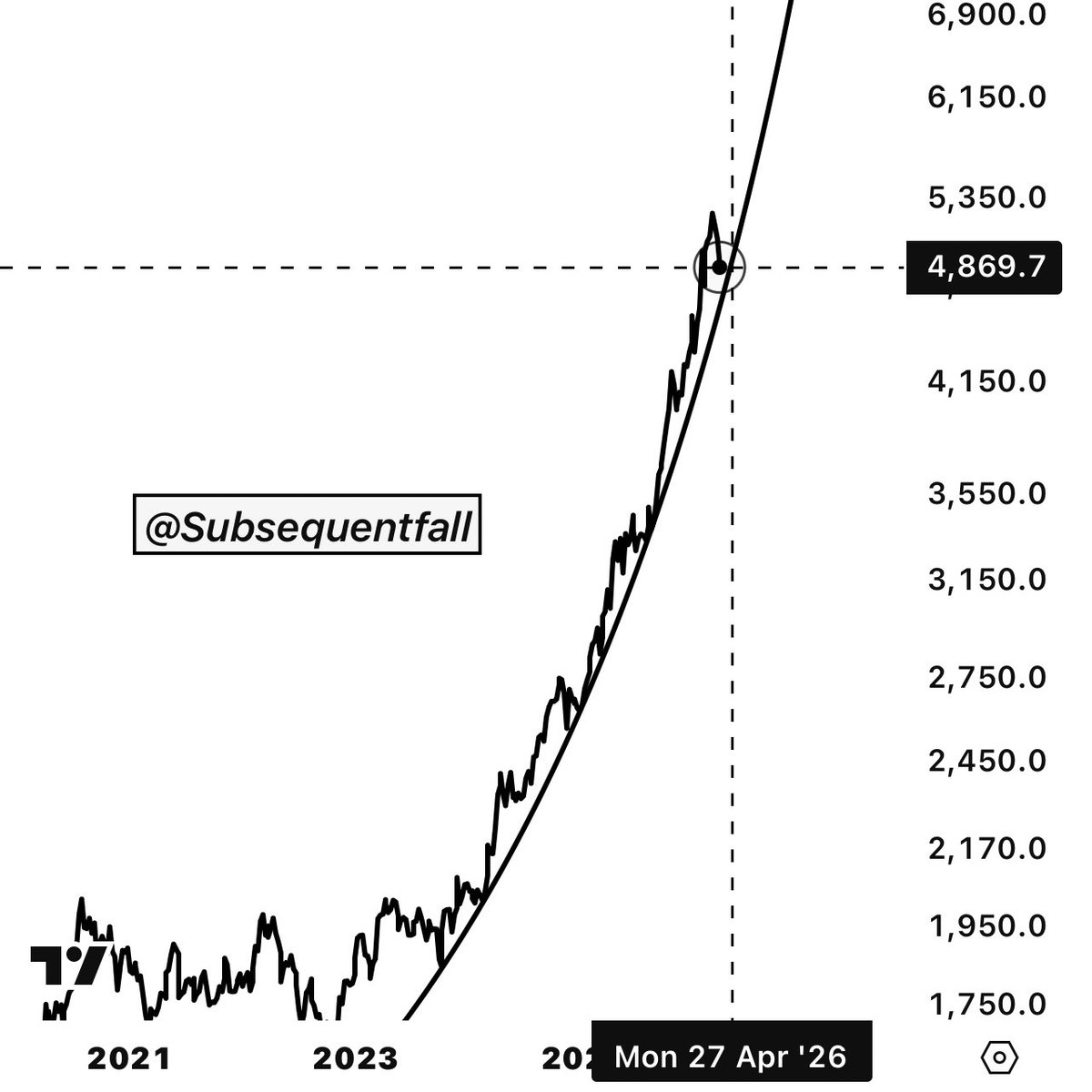
🚨GOLD UPDATE 🚨 Back to the trend line we go. Next leg up by end of April. I hope you take this time to take advantage of discounted prices before the inevitable explosion upwards. Prepare accordingly.
The Subsequent Fall tweet media
English
0
0
20
489
The Subsequent Fall がリツイート
Bitcoin Well
Bitcoin Well@bitcoinwell·
1/ The fall of the Roman Empire didn't start with a barbarian invasion. It started with a central planner clipping a coin.
Bitcoin Well tweet media
English
2
32
208
7.1K
The Subsequent Fall がリツイート
Barchart
Barchart@Barchart·
Stock Market closing in on its highest Shiller PE Ratio in history, now only slightly less than during the Dot Com Bubble 🚨🚨🚨
Barchart tweet media
English
59
211
1.1K
132.5K
The Subsequent Fall がリツイート
The Great Martis
The Great Martis@great_martis·
Translation; OIL is heading to 200.
English
9
50
582
38.1K
The Subsequent Fall
The Subsequent Fall@subsequentfall·
Buy gold now, or be left a fool.
Wimar.X@DefiWimar

🚨 WARNING: SOMETHING EXTREMELY UNUSUAL IS HAPPENING!! Insiders are buying COMEX Gold options at $15,000 - $20,000 for December 2026. Gold is around $4,500 right now. This means THEY EXPECT THE GOLD PRICE TO TRIPLE. And if you think that's just gambling YOU'RE COMPLETELY WRONG. Let me explain this in simple words. This position did NOT show up before the top. It started building after gold printed above $5,600, then got hit by its biggest one-day dump in decades. That's the part most people miss. Retail sold the panic. This buyer kept adding. Even after gold dropped back toward $4,500. Now the structure is around 11,000 contracts. About 1.1 MILLION ounces. About $4.95 BILLION of gold at today's price. About $16.5 BILLION of gold at the $15,000 strike. That is NOT a normal trade. It's someone positioning for a full repricing. Now connect the dots. Normal bank targets for 2026 are around $6,100-$6,300. This trade starts paying in the $15,000 area. That tells you everything. This is NOT someone positioning for a normal bull case. It's someone positioning for a monetary event, a crisis event, or a market break big enough to make $15,000 gold look realistic. And that's why the timing matters. This buying did NOT start during euphoria. It started after the flush, when gold had already broken hard and most people were busy calling the top. That one fact explains a lot. Because real size usually does NOT chase headlines. It waits for stress, it waits for disbelief, and then it builds. So if you're asking what this means, the answer is simple. Somebody with serious money is still paying for extreme upside in gold, even after the biggest correction in decades. That's preparation. I've studied macro for 10 years and I called almost every major market top, including the October BTC ATH. Follow and turn notifications on. I'll post the warning BEFORE it hits the headlines.

English
0
0
1
30
The Subsequent Fall がリツイート
QE Infinity
QE Infinity@StealthQE4·
Boom 💥 Tucker nails it. The younger generations have every right to feel angry. Boomers have ruined this country.
English
106
259
1.7K
50.2K
The Subsequent Fall がリツイート
EndGame Macro
EndGame Macro@onechancefreedm·
The Oil Shock That All But Guarantees Recession Oil does not cause every recession by itself. But when real oil prices surge far enough above trend, the economy absorbs it like a sudden tax on households, trucking, airlines, agriculture, manufacturing, shipping, and small business margins. Oil sits inside nearly every price chain. When it spikes, the damage moves into diesel, jet fuel, fertilizer, food, insurance, trade finance, and consumer psychology. It warns that the economy has moved from price pressure into demand destruction. The Historical Pattern In 1973 and 1974, the Arab oil embargo hit an economy already dealing with inflation and policy stress. Oil nearly quadrupled and the U.S. fell into recession. In 1979 and 1980, the Iranian Revolution triggered another shock while inflation was entrenched. Oil squeezed the consumer first. Volcker’s tightening finished the job. In 1990 and 1991, Iraq invaded Kuwait. Oil jumped while the U.S. was already vulnerable from credit stress. In 2007 and 2008, oil surged toward $147 while housing and credit were already breaking. It became a final tax on an overleveraged consumer. Oil shocks usually hit systems already under stress. They compress real incomes before data catches up. The recession label usually comes late. The Backdating Problem Recessions are usually recognized after they have already started. The official process waits for evidence across income, employment, spending, production, and sales. That matters now because the economy was deteriorating before this oil shock hit. The saving rate has fallen to 3.6%. Debt is at record highs. Credit card balances are elevated. Delinquencies are worsening. Bankruptcies are rising. Consumers are still spending by drawing down cushion, not from true strength. That is not a clean expansion. That is a balance sheet economy losing oxygen. Why This Shock Is Different This shock is not just about Brent being high. Hormuz is not only an oil chokepoint. It is crude, LNG, tanker insurance, shipping routes, fertilizer inputs, dollar funding, and geopolitical escalation compressed into one fragile corridor. This is a physical supply shock hitting a world that already had weak buffers. Energy squeezes the consumer. Diesel squeezes logistics. Fertilizer squeezes food. Shipping squeezes trade. Credit squeezes small business. Fed gets trapped too. Cutting into an energy shock risks inflation expectations. Holding too tight worsens the downturn. My Take We are likely already in a recession, even though the official label may come later. The market wants to treat this as temporary. I think that is too narrow. This is an oil shock hitting a consumer already running out of savings, small businesses under pressure, a tightening credit cycle, and a global economy dependent on chokepoints. The economy usually breaks before institutions certify that it broke. Looks like history repeating with worse plumbing.
GIF
Lukas Ekwueme@ekwufinance

Every time oil prices surged 50% above trend, it triggered a recession. This indicator predicted 6 out of 6 recessions… a 100% success rate. We just triggered that threshold again.... But I guess this time it's different

English
8
35
130
15.9K
Watcher.Guru
Watcher.Guru@WatcherGuru·
JUST IN: Michael Saylor's Strategy proposes selling some Bitcoin to pay dividends. "You buy Bitcoin with credit, you let it appreciate, and then you sell Bitcoin to pay the dividend."
Watcher.Guru tweet mediaWatcher.Guru tweet media
English
1.4K
1K
8.9K
2.5M
Crowded Market Report
Crowded Market Report@Crowded_Mkt_Rpt·
you cannot have a bubble when everyone is calling it a bubble. that is not how it works. in fact its by definition the opposite of how it worlks. bubbles are born of participation, not price.
English
139
40
621
133.7K
The Subsequent Fall
The Subsequent Fall@subsequentfall·
@silvertrade Everything in your life relies on oil. It helped increase global population by 6 BILLION IN JUST THE LAST 100 YEARS!!! A global depression in today’s world will result in billions dead. Hundreds of millions left to starve. The worst crisis to ever happen.
English
0
1
5
293
SilverTrade
SilverTrade@silvertrade·
🚨JP MORGAN WARNS OIL COULD HIT $500/BARREL⚠️ 🎲THE DIE HAS BEEN CAST: OIL INVENTORIES CRASHING TOWARD OPERATIONAL FLOOR BY JUNE‼️ GLOBAL DEPRESSION WARNING FOR SEPTEMBER⁉️ x.com/Mark4XX/status…
English
88
434
1.4K
139.9K
The Subsequent Fall
The Subsequent Fall@subsequentfall·
You either prepare now or watch others who have prepared laugh in your face while you die of starvation. Oil is everything that society functions on. Without, everything collapses. Prepare accordingly.
EndGame Macro@onechancefreedm

No One Is Prepared For The Food Crisis Now Moving Through Energy, Fertilizer, And Shipping The food risk is not just fertilizer prices. The deeper problem is that the world hollowed out chemical and fertilizer capacity, then walked into an energy and shipping crisis right when farmers need diesel, ammonia, urea, phosphate, sulfur, credit, and delivery. The Industrial Base Was Already Cracking European chemical closures data shows 160 closure announcements from 2022 through late 2025, with 126 tied to known capacity. That equals roughly 37 million metric tons of annual capacity announced for closure, or about 9% of European chemical production capacity. Confirmed investment was only about 7 million metric tons, leaving a net announced loss of roughly 30.2 million metric tons. The most exposed areas were the exact upstream sectors food systems depend on. • Petrochemicals made up roughly 48% of announced closure capacity • Basic inorganics made up roughly 32% • Energy cost competitiveness was cited as the main closure reason in about 49% of cases • Nine European steam crackers were tied to major announced capacity reductions • Around 20,000 direct jobs and 89,000 indirect jobs were cited as affected That is not normal cyclicality. That is industrial contraction. Fertilizer does not begin at the farm. It begins in energy, chemicals, gas, shipping, and industrial capacity. Once those links weaken, the food system can look normal for a while, but its buffers are gone. Fertilizer Is Energy Disguised As Food People look at Hormuz and think oil. But it is also LNG, ammonia, sulfur, urea, tanker insurance, shipping queues, and dollar funding. Natural gas is the feedstock for ammonia. Ammonia becomes nitrogen fertilizer. Nitrogen drives yield and protein content in wheat, corn, rice, and other staples. When energy routes break, the damage moves into the field. Agriculture runs on seasons. If fertilizer is unavailable, too expensive, or late during the application window, lost yield cannot be recovered later. The Shock Hits In Waves The first wave is already here. Farmers who waited are exposed to price spikes, delays, tighter credit, and rationing by availability. The second wave likely hits through summer and fall, when lower fertilizer use, higher diesel costs, drought stress, and shipping disruption show up in crop conditions, yields, rice availability, and feed costs. The dangerous macro phase likely arrives in late 2026 into early 2027, when today’s input problems become food inflation, export controls, subsidy pressure, unrest, and weaker consumption. Food shocks are delayed through planting decisions, weather windows, harvests, storage, exports, and consumer prices. By the time the average person notices, the damage has already moved through the production chain. Who Gets Hit Hardest The U.S. is better insulated but not immune. Europe is more fragile because it has already lost ammonia linked and chemical capacity. Asia is deeply exposed because rice, LNG, fertilizer, and Gulf energy flows are all connected. The most combustible countries are those with high food import dependence, weak currencies, low fiscal space, and limited fertilizer access. My Highest Conviction Window The real danger window is Q4 2026 through Q2 2027. That is when inventories are thinner, farm decisions are already made, weather damage is clearer, autumn planting is financed under stress, and governments react with subsidies, export bans, and emergency controls. This is not just an oil shock. It is a fertilizer shock, shipping shock, diesel shock, LNG shock, credit shock, and weather shock hitting a global food system that was already more fragile than people wanted to admit.

English
0
0
3
22
The Subsequent Fall がリツイート
Luke Gromen
Luke Gromen@LukeGromen·
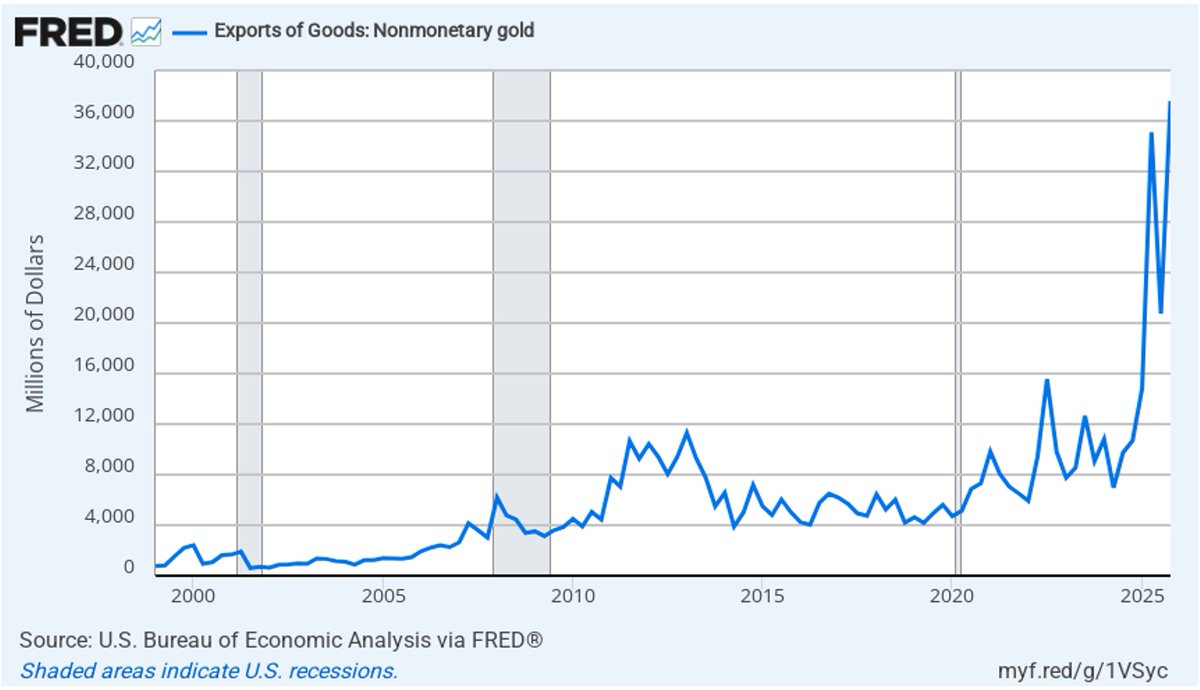
For the 5th month in the last 6, "Nonmonetary Gold" was again the single biggest export of the US in March. US gold exports were 1.7x > oil; 2x > than Rx preparations, 2.5x > aircraft engines. Biggest destination for US gold exports: China or Switzerland (& then on to China).
Luke Gromen tweet media
English
91
253
1.3K
184.5K
The Subsequent Fall がリツイート
MacroEdge
MacroEdge@MacroEdgeRes·
Trump: US to pause Project Freedom shipping movement through Strait of Hormuz while blockade stays in full effect #MacroEdge
English
17
16
154
24.2K
The Subsequent Fall がリツイート
unusual_whales
unusual_whales@unusual_whales·
81% of young Americans say economic conditions are bad or terrible, per the Hill
English
256
1.1K
15.2K
1.1M
The Subsequent Fall がリツイート
Nostra, House of Gold
Nostra, House of Gold@Nostre_damus·
Iran blasted another ship in the strait
English
49
117
1.7K
33.1K
Darth Powell
Darth Powell@VladTheInflator·
Home sellers are literally retarded
Darth Powell tweet media
English
140
86
3.8K
446.1K