
固定されたツイート
Darknight
21.9K posts

Darknight
@vimodkr
A nobody, who stumbled upon consciousness. Art.Alchemy.Astronomy.Anatomy.
chaos 参加日 Temmuz 2018
1K フォロー中1.7K フォロワー

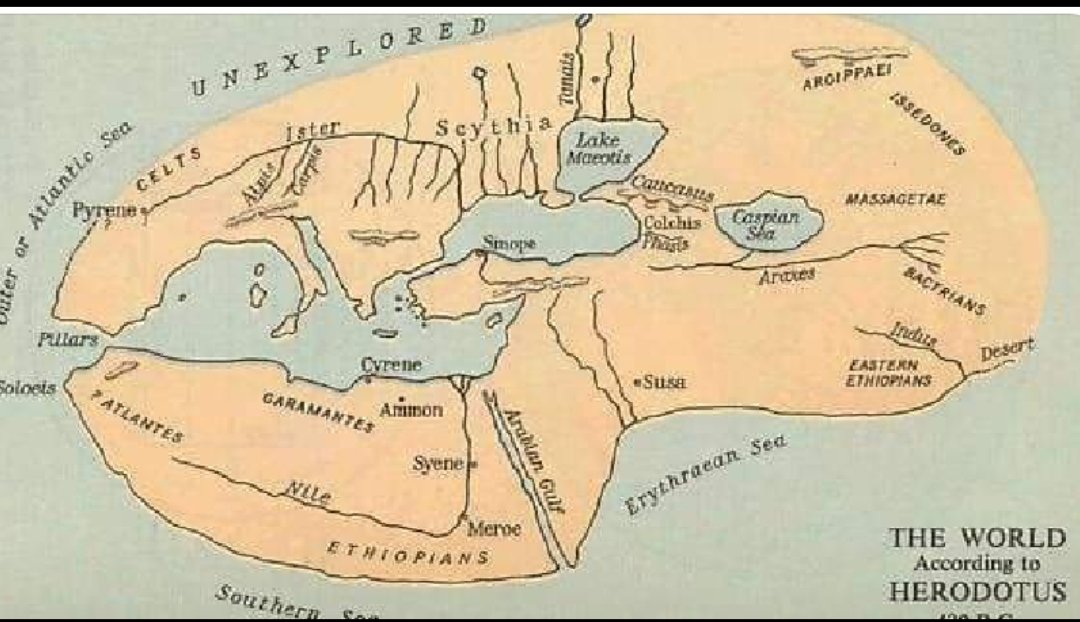
Ancient maps denote Ancient places.
Comparing ancient maps and names with today's places will not be accurate.
@grok Can you find where modern day India is in this map of Herodotus?
Can you fetch more details from this map ? Was modern India called Eastern Ethiopia ?

Anto George@AGeorge56445
finding #muziris explained Step by step.
English

Darknight がリツイート


Darknight がリツイート


Darknight@vimodkr
Shasta / Sastha is an age old dravidian (Tamil & Kerala) deity. Sastha is not a vedic deity. Sastha is purely Tantric deity. In later times, Sastha temples adapted Vedic mantras and rituals. Sastha Upasana is a secretive Vidya which had only Tamil & malayalam language as the mantras. Even in Sabarimala, the rituals and method of pooja are followed only few 100 years ago. Before that is was totally different. To know the real Sastha worship, one has to understand the 'Sastham Paattu / Udukku paattu' which was an oral tradition before 500 years. x.com/vimodkr/status…
ZXX
Chattan / Sasthavu is a dravidian deity.
A person worshipping Sasthavu becomes himself a Sasthavu.
Ishodas Thomman - തൊമ്മൻ ♰@Ishodas_Thomman
@KanakkanMadambi The oldest verifiable Nasrani individual documented by name is a Nasrani merchant chief named "Chathan" found in the Thazhekad Shasanam inscription. Chathan is actually a Shramanic folk deity, which indicates many of the early Nasranis were of Shramanic background.
English
Shasta / Sastha is an age old dravidian (Tamil & Kerala) deity. Sastha is not a vedic deity. Sastha is purely Tantric deity. In later times, Sastha temples adapted Vedic mantras and rituals. Sastha Upasana is a secretive Vidya which had only Tamil & malayalam language as the mantras. Even in Sabarimala, the rituals and method of pooja are followed only few 100 years ago. Before that is was totally different.
To know the real Sastha worship, one has to understand the 'Sastham Paattu / Udukku paattu' which was an oral tradition before 500 years.
x.com/vimodkr/status…
Darknight@vimodkr
SASTHA/ Saastha/ Shasthavu 1. Saastha is not "Saattan" from Sangam literature. 2. Aiyappan is not Saastha.(Ayyappan; originally Aryan Kerala Varman, was a human who is said to have merged into Saastha through yogic methods, as per the legends) 3. Ayyanar, Vettaikaaran, Kiratha moorthy, Mutthappan; all are one way or the other related to Saastha. A Sastha will always have a Danda. A stick / perambu/ Manthrakkol, Dharma Dhanda. Pazhani murugan also has a 'Danda' and exclusively face westwards towards kerala( to be noted has relations with Saastha Upasana). 4. Saastha is a highly highly highly Tantric entity which comes under 'Kutti'(Later 'Chaatthan' was added and became 'Kutti Chaatthan'). 5. There was/is a 'Vidhya/Upasana' (almost lost)purely attributed to Saastha, which is highly secretive and practised only within a few direct guru-sishya circles. 6. Saastha Comes under Kutti. Some of the 'Kutti's are: Thee kutti, Poo kutti, Aadhi Kutti, Aanandi Kutti, Karum kutti, Maanicka Kutti, Marudu Kutti, Jaala Kutti, Pookula Kutti, Vendha Kolli, Ponnunni are the few within the 390 Kuttis. 7. Kiratha murthy is the rawest form with no rules and regulations, becomes Saastha when civilized. Sastha becomes Muthappan, in human form with human attributes. 8. 'Kukshi Kalpam' is a specialized, powerful tantric ritual performed in Kerala, often associated with Shakteya traditions and the worship of Lord Kuttichathan (Shasta) to remove severe black magic (Aabichara Dosha), financial crises, and enemy-related obstacles. It is a bundle of rituals including Homas such as Agora and Sudharsana to provide spiritual protection.
English

Chatan (also termed and Ayyappan/Ayyannar) is a corruption of "Shasta".
Shasta belongs to the wider Rudra-Shiva pantheon.
The Matsya Purana mentions the eleven Rudras and one of them is Shasta.
Wild Maruts led by Rudra is the Indian version of the "Wild Hunt being led by Odin".
Ishodas Thomman - തൊമ്മൻ ♰@Ishodas_Thomman
@KanakkanMadambi The oldest verifiable Nasrani individual documented by name is a Nasrani merchant chief named "Chathan" found in the Thazhekad Shasanam inscription. Chathan is actually a Shramanic folk deity, which indicates many of the early Nasranis were of Shramanic background.
English
Darknight がリツイート
Summarize this to one paragraph @grok
VANCI
Among the recent publications, one of the most important to the student of Kerala history is Chera Vanji by that distinguished historian of South India, Dr. S.K. Ayyangar. An attempt is made in the work — and we believe successfully — to locate Vanji, the capital of the ancient Cheras, and the author has come to the conclusion that the original Vanji was on the West Coast.
The pro-Karur theory of the location of Vanji, advanced by a section of Tamil scholars on the basis of Tamil texts and recently resuscitated by another exponent of South Indian history, Mr. R. Dikshitar, in his rendering of the famous Tamil classic, the Silappathikaram, is here exploded by another great Tamil scholar — again on the basis of Tamil texts. So far as one could see, Dr. Ayyangar has convincingly answered the arguments of the pro-Karur theorists.
Subsequent to the appearance of Mr. Dikshitar’s translation of the Silappathikaram and before the publication of Chera Vanji, Malayali scholars also offered their contribution to the elucidation of the Vanji problem. The Bulletin itself published two long papers on the subject — one by the talented scholar Mr. K.A. Menon and another by our eminent editor of the Kerala History, Mr. T.K.K. Menon — while Prof. Muralidharan and Mahakavi Ulloor wrote long papers in Malayalam on the same topic. All these writers are agreed that the Vanji of old is situated in Malabar.
Mr. A.G. Warrier has, in a critical note, conclusively proved by relevant extracts from the Silappathikaram that Mr. Dikshitar’s geography of ancient South India, so far as it bears on the Vanji problem, is self-contradictory. Thus, so far as matters now stand, the pro-Karur theory of the location of Vanji — despite its recent resuscitation by Mr. Dikshitar — has been given its death knell by scholars, both here and on the other side of the Ghats.
Hence, to the student of the ancient history of South India, Vanji continues to be situated on the West Coast, which indeed has been the opinion of a great many Tamil scholars even before. Now that the question of Vanji’s location has been raised and is being discussed, there are, indeed, few other topics which, we submit, deserve elucidation.
There is, in the first place, the question: what is the relation between Kerala and Chera? Are these one and the same or are they different? It is assumed on philological grounds that Chera and Kerala are identical — an assumption advanced on the basis of the speculations of Dr. Caldwell which, so far as we have been able to examine, cannot stand scientific scrutiny. Philologically their identity is doubtful, and politically their lack of identity has been only too clearly expressed by our ancient traditions, which bespeak a Cheraman Perumal being imported from the east to govern over Kerala for a period of twelve years.
The Keralolpatti itself speaks of Kerala in more than one sense: first as the tract of land from Gokarnam to Comorin, and then as applying to the Malayali country proper after the separation of the Tuluva kingdom; then again to the divisions of Kerala for administrative and military purposes; and lastly sometimes to Kolattunad and Musaka and sometimes to the territory lying between Kolattunad and Kilpaka (Quilon).
The late Justice Mr. Sesha Iyer speaks of a Chera dynasty ruling from Tondi in Malabar and the main line established at Vanji with a viceroyalty at Karur. As against this, the exact situation and limits of Chera are yet to be known. If, however, the terms are to be understood as being identical, then the ancient political entities, Chera and Kerala, must also have been identical; that is to say, if philological identity is accepted, then geographical and political identity of the two automatically follows. And this certainly means that the ancient Cheras, alias Keralas, extended their political suzerainty over the Ghats eastwards, and this expansion might naturally have resulted in the foundation of an eastern capital at Karur, which then became Karur-Vanji, as distinguished from the genuine Vanji — in other words, if the identity of the terms is accepted, Karur-Vanji becomes a neo-Vanji.
If, however, the Chera-Kerala equation cannot be accepted and the two must be regarded as separate entities, the question has to be considered first whether Kerala conquered Chera or vice versa, so that the one might impose its capital upon the other. Pandit M. Raghava Ayyangar claims an antiquity for Karur-Vanji as early as the second century A.D., while several scholars would shift the date of the Silappathikaram to the sixth century and others even to the eighth century of the Christian Era. It has thus to be conceded that the exact location of Vanji is closely tied up with the elucidation of the inter-relationship or identity of Chera and Kerala and its antiquity. Indeed, very loose are our ideas on this subject, and more light deserves to be shed on it.
If Chera and Kerala are identical, then Vanji must certainly be on the west coast, the Karur-Vanji being founded as the eastern capital when the Cheras (i.e., Keralas) extended their conquests over the Ghats. If the two are not identical, the ancient Vanji may be localised on the east, the neo-Vanji being founded on the west coast when the Cheras came to lord over Kerala. The exact political interrelation of Chera and Kerala has to be clarified as a necessary preliminary to the final localisation of Vanji.
In the second place, the question of the origin and significance of the term Vanji or Vahji has yet to be investigated. So far as we are concerned, Vanji figures only in a couple of places in the name of the town Tiruvanchikulam and in an inscription in the temple which refers to the deity as Vanjivelesa. In these two instances and in all the Tamil texts, the term figures as Vanji, which is pronounced as Vanji by the Tamilians as a result of a phonetic rule of vocalising all consonants between the two short a’s — a rule which obtains rigorously in the Tamil language.
There is thus the second question to be decided: which is the form of the word — is it Vanji, or is it Vahji? That is to say, is the original term Vanji written as Vanji on account of the inadequacy of the Dravidian script, or is it Vahji, written as such but pronounced by Tamilians as Vanji on account of the peculiar phonetic law operating in the Tamil language? And according as we accept the one or the other form of the word, the meaning also differs. As matters now stand, there is no means of deciding what the original form of the word was without fixing up the original significance of the term. And this leads to the next question: what does the term Vanji or Vanji mean?
As we have already said, there are two forms in which the word has been handed down to us — Vanji and Vanji. Taking the first of these forms, the term has necessarily to be traced to the root vanc, to move to and fro, to go astray, to totter, etc., if indeed we may assume that the word is Sanskritic in origin. This signification of the term is borne out by the nature of the ancient harbour at Muziris, which is styled Pseudostomos, meaning false-mouthed. Can this be the original term and its significance? Not unlikely. Vanji, then, would be a descriptive term describing the nature of the harbour; and from this point of view the absence of the term as referring to the city of Mahodayapuram in Sanskrit and Malayalam literature finds easy explanation.
If, on the other hand, we take Vanji as an original Dravidian term, its only meaning, so far as we are aware, is “boats,” and in this sense it would mean a place for boats, i.e., harbour — a signification which is perfectly in keeping with the ancient history of the place as the greatest emporium of trade on the west coast. In further support of the same, we may advance the name of two other places in ancient Kerala, namely Kolam (i.e., the dominions of the Kolattiri chief) and Kolamba alias Kilpaka (i.e., the dominions of the chief of Quilon), which also mean “boat.” Thus local nomenclature and the ancient history of the place justify our treating this word as Dravidian in origin and significance.
Considering the other form of the word Vanji as it is pronounced by Tamilians — written as Vanji as a result of the inadequacy of the Tamil script — it has a wonderful variety of meanings. According to the eminent lexicographer Monier Williams, the term means the names of various trees and other plants according to L. (Dalbergia ougeinensis, Jussiaea aneka, Calamus rotang, Hibiscus mutabilis), a cow that yields plenty of milk, name of a river, a sort of bird, the river named Vañjulā. Analysing these meanings, we find that the term might be taken to mean (i) a tree or plant, (ii) a bird, (iii) an animal, (iv) a river in general, and (v) the river named Vañjulā.
Which of these senses is the most appropriate with reference to Vanji is the next question that we may consider. Both Messrs Ayyangar and Dikshitar take the term as meaning flora — the former as a tree and the latter as a flowering plant or creeper. These senses cannot, it appears, be associated with Vanji. The only tree that is particularly associated with Sri Vanjivelesa is the konna tree, and Vanji does not mean that tree. No other variety of trees, plants and reeds referred to by the term Vanji can be said to be peculiar to the city of Vanji. Hence in the absence of further evidence we may not accept the term as standing for a tree or plant or creeper in so far as it has reference to the city of Vanji. Such an association may, however, be correct if its original location was on the other side of the Ghats; but since the two Vanjis — i.e., indeed there were two Vanjis — must have something definite in common, a signification that does not apply to the one cannot be applied to the other. Vanji as referring to a bird also cannot be the significance of the term as it is applied to the city.
Coming, however, to the next sense — the sense of a cow yielding plenty of milk — this certainly arrests our attention. An eminent Tamil scholar once told the writer that Vanji must be on the other side of the Ghats, i.e., must be Karur-Vanji, because even today, as it was in the days of the Silappathikaram, it is a famous centre of cows, and this is an aspect which is true even today, for Karur is famous for its ghee. His identification apart, we take it that the scholar is of opinion that the ancient Vanji was famous for its milch cows, presumably according to the Silappathikaram. If this opinion is sustainable, this nomenclature is amply supported by the names of the neighbouring areas. Compare, for instance, Pullettu, meaning the island of grass, and Goluruttu, meaning the island of cows.
Here, then, is an interesting point of view. The Tamil texts and local nomenclature agree in its reference to the presence of milch cows at Vanji. Hence we might also point out the fact that the name Perunai, given to the Periyar river at the mouth of which Vanji stands, also means milch cows. Not only that: in support of this idea, we may point out the name of the royal family of Cochin. It is known as Muttamusa, where the term musa means cow; compare also its Sanskritised form Go-samudra. It is to be noted that Kodungallur was the lord of the imperial capital after the period of the Perumals, i.e., from 427 A.D. down as far as the middle of the fourteenth century; this city was abandoned only when it was closed up and a new harbour was opened up at Cochin in 1341–42, thanks to the heavy floods during the year.
Here, then, is a signification which seems to be well borne out not merely by the ancient texts but also by the nomenclature of a political entity and of the neighbouring areas. And this sense that Vanji means a milch cow must, therefore, command our serious attention, if not acceptance — an aspect which does not seem to have been stressed by any of the writers on the subject.
Lastly, we may notice the significance of the term which gives the idea of a river called Vañjulā. This sense also is particularly appropriate so far as Vanji on the west coast is concerned; for the river flowing by its side is named Vañjulā, as evidenced by the term Vañjivelesa by which the deity enshrined at Tiruvanchikulam is known. This, then, also forms a creative sense of the term Vanji.
In the foregoing we have considered a series of meanings for the term Vanji alias Vanji, and from the point of view of local conditions, geographical and political, we may presume that any of the senses — boat, or false-mouthed river, or Vañjulā river, or milch cow — might be taken as the significance of the term. And according as we fix up the meaning of the term, we may fix up the original form of the word also. It is curious enough to mention here that the eminent lexicographer should have also stated that the term Vanji has a variant form Vanji, and this is also supported by the Amarakosa.
Enough now has been said to show that a consideration of the meaning and the original form of the word would give us a large amount of materials to decide the location of the city of Vanji or Vanji — materials which unfortunately have not been taken note of heretofore. This then is a fundamental weakness of the pro-Karur theorists. Another weakness of theirs has been the fact that they presumed that the Silappathikaram was to be assigned to the second century A.D. The only basis for this ascription is the Gajabahu synchronism, and this dating has been exploded by the late Mr. Sivaraja Pillai in his Chronology of the Tamils on grounds which appear to be conclusive. If Mr. Pillai’s view should command attention — and the arguments of Mr. Pillai have not so far been answered — then these theorists must be said to be making too much of the antiquity of the Sangam works and, therefore, any evidence drawn, or conclusions arrived at, therefrom cannot command the serious attention of non-Tamil scholars.
When due allowance is made for these two primary weaknesses of the pro-Karur theorists, and full value is assessed of the signification of the term Vanji, the city of Vanji cannot be located anywhere other than on the West Coast.
English

THE VANCI PROBLEM
It is now well established that Karur or Vanci (Vanji) was the capital of the Chera monarchs; but the question of the location of the city has given rise to much controversy among scholars and historians. To the person who did not very much care or mind where it was, the whole controversy seemed an excellent justification of Dr. Durant’s famous dictum that a good part of history is guessing and the rest prejudice. Whatever that may be, the general impression gained by the impartial observer, on carefully going through the voluminous, if not always luminous, records of the controversy, is that, on the whole, it would be far more correct to identify the city with Cranganur and its suburbs on the Malabar Coast than with Karur near Trichinopoly.
In his recent translation of the later Tamil work, the Silappathikaram, Sri V. Ramachandra Dikshitar adduces, however, a few new arguments to show that there is a fair case for a review of the position and for locating it at Karur near Trichinopoly. The scholastic attainments and learning of the author make it certain that these new arguments would be relied on and fairly drawn for their purposes by the advocates of what I may be permitted to call the pro-Trichinopolitan view, and so an examination of these views seems necessary in the interests of truth.
What are these new arguments? It is stated that a damaged record in the Siva temple at Nerur, a village near Karur, mentions Karuvur as Vanjimanagaram, which must, in the learned author’s words, “help to settle the identification of the original Vanji at Karur and not Cranganur.” In the absence of a full text of the document, it is difficult for the reader to know how far the document concludes the matter or even enables him to form his own conclusions in the matter. That the evidence is by no means conclusive is clear from the fact that Mr. Dikshitar very guardedly puts it forward as a claim that would “help to settle the identification.”
Against this, there are the following facts connected with Cranganur. The place where the great Siva temple stands is called Tiruvanjikkulam. The landing place for Vanji or Tiruvanjikkulam is called Karurparambu. Tiruvanjikkulam is also known in records of undoubted authenticity as Mahodayapuram or Makotai or Makotai-pattanam — a name which is very much like the Vanjimanagaram mentioned in the Karur record also.
The learned author of The Tamils 1800 Years Ago, Mr. P.T. Srinivasa Iyengar, places Vanji on the Kaveri, now a deserted village three miles from Kothamangalam. This, according to some, was the earlier capital of the Cheras. It is significant to note that a village near Tiru-Karur is now known as Karur.
The word “Kurai” appears to be a Dravidian word meaning boundary or limit. In olden times this name occurs in at least two places in Cochin — viz., Arukurai or Arur-kurai and another called Kurur, i.e., the limits of Trichur on the north.
Let us look at this matter from another point of view. How exactly did the word Chera come into existence and what does it mean? The nearest word to it is “Chera,” which, according to respectable authority, means “west.” It is still used in the Malayalam language in that sense. “Alum” means, according to old usage, country or village. Compare the endings in Kumbalam, Punnathur or Punnalam, and the villages near Cranganur. Vanchalam or Bengal at Udall or Garda would thus mean the country of the west coast — a meaning which would admirably suit Kerala.
The change from Chera to the modern form can easily be understood. A village near Cranganur was till recently known as Cheram desam (i.e., Cheran’s desam); it has now become Karim desam. The practice of putting up a board at the place appears to have been in existence even in ancient times.
I might mention here that, among the titles assumed by the Maharajas of Travancore, there is pointed reference to the city of Vanji — a thing inexplicable unless Vanji, the capital of Chera, was situated on this side of the Ghats.
[On the Vishnu temple reference] This, I think, is a mistake. There is a Vishnu temple — and, for the matter of that, a very big one — near the great Siva temple at Tiruvanjikkulam. The reference could easily have been to this temple. At any rate, it is manifest that even granting there is no Vishnu temple now seen in Cranganur, it does not necessarily follow that the reference is to the Perumal Koil at Karur, Trichinopoly. There are Vishnu temples even now all around Cranganur and within easy reach of it, leaving aside the other fact that Cranganur has lost much of its territory by erosion on the western side over the centuries.This apart, it is certainly open to question whether the term refers to a Vishnu temple.
It is mentioned by Mr. Dikshitar that a temple dedicated to Pattini (i.e., Pattini Kadavul — that was how the divine Kannaki, the heroine of the Silappathikaram, was known after her departure from this world) does exist at Cranganur. He refers to the tradition by which the Bhagavati enshrined at Cranganur is known as the “one-breasted” or the Goddess with one breast — another name given to Kannaki, who, distracted and enraged at the sad end of her husband, plucked out one of her breasts and threw it on Madurai, causing a conflagration that destroyed the city and all the sinners in it, including the Pandyan king who unjustly condemned Kovalan to death on a false charge of stealing the queen’s anklet.
Mr. Dikshitar thinks that the installation of Pattini Kadavul at Cranganur is an example of the metamorphosis of the Pattini and Kali cult. There are, however, several facts connected with Cranganur and the great Bhadrakali temple which suggest that this must be the temple built and dedicated by Senguttuvan Chera in honour of Kannaki or Pattini Kadavul.
According to the poem, there was placed in the temple built by the great Chera ruler the image of Pattini Devi, carved with expert handiwork from the stone brought from the Himalayas. Senguttuvan’s journey to the Himalayas was for the express purpose of bringing this stone to his capital. This makes one think that the place-name Kodungallur or Kodumkallur (Cranganur) itself enshrines this event. Kodum (sacred) + Kal (stone) + Ur (village or place) would thus mean, in combination, the Place of the Sacred Stone.
Ilango Adigal, the author of the Silappathikaram, was present at the installation ceremony and appears to have taken an active part in it. It is not known whether he had supervision over it, but it is a very remarkable fact that, until almost a few years ago, the functionaries in charge of this temple were some people known as Adigals in Malabar. They were, to the best of my knowledge, associated with no other temple in Malabar. I am aware that the word Adigal is used as a term of respect for saints generally everywhere, but that does not affect the force of the argument that it is more than a coincidence that the persons in charge of this temple from the earliest times were known as Adigals.
Let me pass on to another equally suggestive circumstance in connection with the spread of the Pattini cult, which found its way into many parts of India and Ceylon. There is a curious belief in Ceylon that the Goddess cures and controls epidemics, and so prayers are offered at her shrine. One is tempted to think that the image of Bhadrakali or Bhadrakali Devi (Goddess of Smallpox) in one corner of the Cranganur temple bears striking testimony to this belief.
That the goddess enshrined at the temple is really Pattini Devi receives further confirmation from the fact that, quite appropriately, she is tended exclusively by women — who remind one very strongly of the vestal virgins of Rome.
Speaking about images, it would in my view not be preposterous or even far-fetched to suppose that the stone at the Bhadrakali temple brought to Vanji by the Chera King is in reality the image consecrated at the Kavalppura (guardian deity shrine) of the Cranganur temple. It is the guardian deity of the temple and is of gigantic proportions. No other Kavalppura of that size with a separate shrine for the image exists in other parts of South India.
We are told again in the Silappathikaram that “Among the modest and beautiful womenfolk who come to see the installation of this Goddess,” there were the twin girls born to the handsome wife of Arottan Setti, as also the little daughter of some Kudumbi. The Kudumbis as a class are met with in large numbers even now in Cranganur and in the outlying parts; but what is even more important to note is that, to the Kudumbis, the great temple at Cranganur is still the temple of all temples. Newly married couples from that community take a vow to worship at this temple, and I have been told on very good authority that the marriage is not considered complete until the vow is fulfilled.
There is here a pronounced suggestion of respect for Pattini Devi or the Goddess of Chastity. That this is the only temple where, as far as I know, the practice obtains suggests that the first installation was in this temple. The prevalent practice at Cranganur seems to be a continuation of an earlier practice which arose simultaneously with the temple.
In one place in the poem occurs the following passage: “With sympathy the chaste lady’s praise and worship the pretty lady Kannaki, in this fertile field of ours.” And in other places in Mr. Dikshitar’s book we read that “In anticipation of the early consummation of marriage, the maid advised the heroine to worship the new deity, the Lady of Chastity, and she was blessed by Her in the belief that Her blessing would not be in vain.”
In connection with the installation of the image at the temple, we are told again that the Aryan Kings, who had been the prisoners of the Chera king, were released from prison and lodged in Velvikram. Now where exactly is this Velvikram? It is not suggested that there was or is any such palace near Karur, Trichinopoly. The word ‘Ko’ means either a palace or a temple. If the Chera capital was Cranganur, the reference to Velvikram becomes easily understandable; for then the reference would be to Vellalarko or Vellakkovilakam nearby. I learn that there is at this place a Vellalarko or Vellakkovilakam (white Kovilakam) as opposed to another called Karutta Kovilakam (black Kovilakam) — two Kshatriya families which to all appearances are survivals from prehistoric ages.
Many of the facts connected with the building of a temple and installation of Pattini Devi in it by Senguttuvan suggest that the temple built by Senguttuvan was at Cranganur. If that is so, the Chera capital at that time must certainly have been at Cranganur (Tiruvanjikkulam), bounded on the south by the magnificent harbour known as Musiris to the ancients, to the west by the Arabian Sea, and extending north as far as Matilakam (literally, inside the walls), which, according to some, was the Gunavayilkottam where Ilango Adigal lived. Competent research has proved that Matilakam was part of the ancient capital area.
Incidentally, I might be permitted to state that it should not be ignored that Cakyars and Cakyar Kuttu persist only in Malabar — yet another circumstance which suggests that the Chera kings, under whose patronage they flourished, were of Malabar.
I should not omit to mention here that Mr. Dikshitar refers to an epigraph of Rajendra Chola which records a grant by the great assembly of Karuravalli Chaturvedimangalam of some lands to Sikkai Marayan Vikramasolan for performing the dance (Sekkai Kuttu) thrice on each of certain festivals, and concludes from this single fact that Sekkai Kuttu was a living institution in the medieval period in the heyday of the Chola empire. This certainly seems a far too sweeping inference to draw in the absence of evidence — at any rate, to know from where the Sakkaiyar in question came. It is certain that Sakkaiyars and Cakyar Kuttu never survived in the Chola Kingdom or in the Pandya Kingdom or in parts other than Kerala of the Chera Kingdom into modern times.
The whole atmosphere of Silappathikaram is suggestive of Malabar. Parai and Pattini are even today met with in Malabar under those very names. So also the Idaiyar. Place names such as Poraiyannur (Poraiyan was one of the titles of the Chera kings), Cheranallur, Cheramangalam, all support the view that the Chera kings had their capital or residence here. Names such as Ilamkovarman and Settuvan also point that way. Sattan and the other Hindu gods still roam about the streets of Kerala, monarchs of all they survey with none to dispute their rights.
The Chera King was called the Kudavarkko or Kudakko, the monarch of the west — a name of singular appropriateness and beauty when applied to a monarch whose capital was on the sea coast facing the Arabian Sea.
It is conceded all round that the Kongunadu and the other eastern portions of the Chera Kingdom were later acquisitions by powerful Chera monarchs, whoever they were. It must necessarily follow that they had an earlier capital, and if so, where was it and what was it called? Mr. Dikshitar’s distinction between Malainadu, as comprising Salem and Coimbatore, and Kadalmalainadu, as applying specially to Kerala, also does not seem to be convincing. Malainadu occurs in that form as applying to Kerala in almost all the early documents, such as the treaties entered into by the Kerala monarchs with the European powers. It does not differ from Malayalam or Malabar, whose inhabitants were and are called Malayalis.
The Commander-in-Chief or leader of the land forces of the Chera King was called Villavar Kodai, strongly suggestive of Villavarman as Villavarsattam — the place of Villavar Svarupam which existed until comparatively recent times in Chennamangalam near Cranganur, barely three miles from Cranganur. The title Kodai still lingers among the nobility of Malabar in many parts. Observe the name Sankaran Kodai, still held by a Svarupam which, in old days, had the honour of commanding the land forces of Cochin, one of the kingdoms into which the Chera Kingdom was subdivided afterwards.
One sees a distant resemblance between the Ennangal (the group of Eight officials) who assisted the Chera King and the Ettuvittil Pillars of Travancore and the Ettuvittil Menons (still a house name in Cochin, Adoor near Cranganur).
All these may not, of course, be said to have lifted the question out of controversy into the region of absolute certainty, but it can be maintained with some justification that the burden of proof that the capital was Karur in Trichinopoly District still remains on those who assert it.
To the above valuable contribution of a distinguished correspondent, please allow me to add a few words on this important subject.
It is surprising and, perhaps, significant that Mr. R. Dikshitar does not refer to the well-known work of the late Mr. K.G. Sesha Iyer, B.A., B.L., The Chera Kings of the Sangam Period. It cannot be that Mr. Dikshitar has not seen the book; for Mr. Sesha Iyer, in his preface, thanks Mr. Dikshitar “for his valuable suggestions and his untiring service” in seeing the work through the press. Nor does Mr. Dikshitar refer to Mahamahopadhyaya Dr. Swaminatha Iyer, the learned editor of the Sangam classics. Dr. Swaminatha Iyer distinctly writes the warning note that Karuvur, the capital of Chera, is the city in Malainadu and not the Karuvur situate in Kongu-nadu.
Mr. Sesha Iyer devotes the whole of the sixth chapter of his interesting work to the elucidation of this problem and comes to the definite conclusion that “Vanji is Tiruvanchikulam, a suburb of Kodungallur (Cranganore).”
Mr. Dikshitar has stated his view on page 44 of his introduction, and the only reference he there gives is to a page in the Tinnevelly District Gazetteer. The matter is of such vital importance that there is no use finding a way to round the difficulty. To assert that Vanji is in Trichinopoly and leave it there may be a short shift to patriotism. But one can be convinced truly if that statement is supported by satisfying evidence.
A close scrutiny of the Sangam works reveals the fact that the ancient Tamils knew Chera as Vanji only. Silappathikaram, Manimekalai, the Purananuru collection, Paripadal and Pathirruppattu collection only refer to Vanji. Only in one poem of the Agananuru collection does the word Karuvur occur, while that and another poem refer to Vanji. Karuvur was in Kongu-nadu owned by an independent chief. It was, so to say, the cock-pit of the Tamil country. The Pandyas had it under their sway.
Is it likely then that it will be the metropolis of the great Chera kingdom? Long before the conquest of Kongu-nadu, the Cheras had established their power and fame in the Tamil land.
All the extant works on ancient Kerala refer to Tiruvanchikulam as the seat of the Cheraman Perumals. The Mahodayapuram points it as such. Apart from all these, how to account for the persistent tradition, prevalent in the locality, of the place being the capital of the Perumals? People of Kerala, as a rule, do not grow warm over the mention of the birth place of their great men. They only care, when they care at all, for the works left behind by them. When there was a hot controversy in the literary world over the place of birth of Sankara, his countrymen never seem to have taken any part in it. If that silence was not due to this mentality, could it have been due to the fact that they knew that, after all the din of worldly warfare, Sankara would still come to his own at Kaladi?
-----------------------------------------------
English
Darknight がリツイート


@Awake_Tamila Archeological proof of The elephant fight scene mentioned by Parisalan video you shared. Anyone can write fiction. After 500 years Some one like you will say Harry potter and spiderman existed.
English




Firstly, Vanji / Vanchi is in Kodungalloor Kerala. There are documents published in the 1930s. That argument was already settled.
Secondly, Vanji in kodungalloor has the most significant cultural and historical spits. Karur does not have anything as phenomenal as Kodungalloor.
Moreover, the sea route from Arabian sea directly connects Kodungalloor.
1. Kodungalloor kannagi amman temple (Cranganore)
2. Cheraman Juma masjid (first mosque in india)
3. Paliam palace (dutch built architecture)
4. Thiruvanchikulam shiva temple (oldest ) (the name Vanchi comes here)
5. Kottapuram fort
6. Pallipuram form


Rishi 🌐🗽🏙@RishiJoeSanu
This is false. Chera capital Vanchi was in Kodungallur (erstwhile Muziris). Most historians disagree with the idea that Vanchi was in Karur. In Silappathikaram, Ilango Adigal himself says that they had to go east to the Nilgiris during their expedition to the himalayas. 1/3
English
@Awake_Tamila Simple.
Show archeological proof of Purananooru and Agananooru events. Can we take it as fiction ? Do you have any archeologial proof for elephant fight scene as Parisalan is story telling in the video ? Please share the archeological evidence.
English
@vimodkr Simple Is there any proof Malayalam before 9th century in this article with evidence?
English
@Awake_Tamila Show archeological proof of Purananooru and Agananooru events. Can we take it as fiction ?
Do you have any archeologial proof for elephant fight scene as Parisalan is story telling in the video ? Please share the archeological evidence.
English
@vimodkr Archeological evidence or Historical proof? About Malyalam or Kerala before 9th century?
English
@naa_ganesan The article is just a reproduced copy from research papers published in 1930 by reputed research institute.
I owe no credit to the article. I just compiled it for easy read. @naa_ganesan
x.com/vimodkr/status…
Darknight@vimodkr
English
FYI.
(1) Chera capital, Vanji, is modern Karur, Tamil Nadu. This is well described in Sangam texts. In 1910s, two Tamil scholars wrote two books clarifying the Sangam texts.
(2) Later, Archaeology and Numismatics established the Sangam textual evidence in 1970s. Nowadays, no South Indian historian says Vanji is same as Muciri neigborhood in Sangam times. Books were written on this by Iravatham Mahadevan, Dr. R. Nagaswamy, Dr. R. Krishnamurthy, Pulavar S. Rasu, ....
Dr. N. Ganesan
English
@Awake_Tamila Article ?
It is from research papers and already published in 1930. I just compiled and wrote it down as article.
Stop giving new claims without going through the article. It is not my article btw.
x.com/vimodkr/status…
Darknight@vimodkr
English
@vimodkr Iam not asking artical I'm just asking historical proof? Story can tell anyone.
English