固定されたツイート
willynet
41.5K posts


willynet
@willynet
In love with Stella, Father of Cecilia, Ximena and Alexis. Maths & Computers passionate ! Working for Microsoft Corporation since 1996. Tech & Biz impact !
Santiago, Chile 参加日 Mayıs 2008
4.3K フォロー中2K フォロワー

willynet がリツイート

"I believe that through discipline we can learn to preserve what is essential to our happiness in more and more adverse circumstances."
- J. Robert Oppenheimer
English
willynet がリツイート
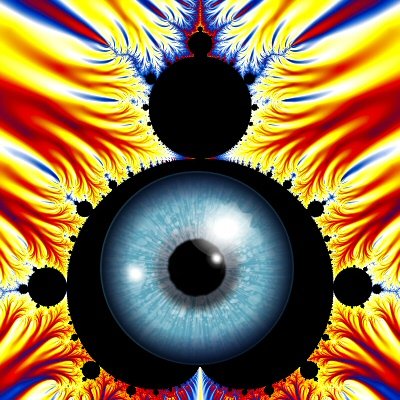
"Pure mathematics is, in its way, the poetry of logical ideas." ~ Albert Einstein
Image: Andrea Belloni, @Waterflowing0, linktr.ee/anbello, Used with permission
English
willynet がリツイート

Textbooks lie in silence whereas the real maths of the Universe moves in waves.
Energy. Frequency. Vibration.
English
willynet がリツイート
"The beauty of mathematics shows itself to patient followers"
- Maryam Mirzakhani
English
willynet がリツイート

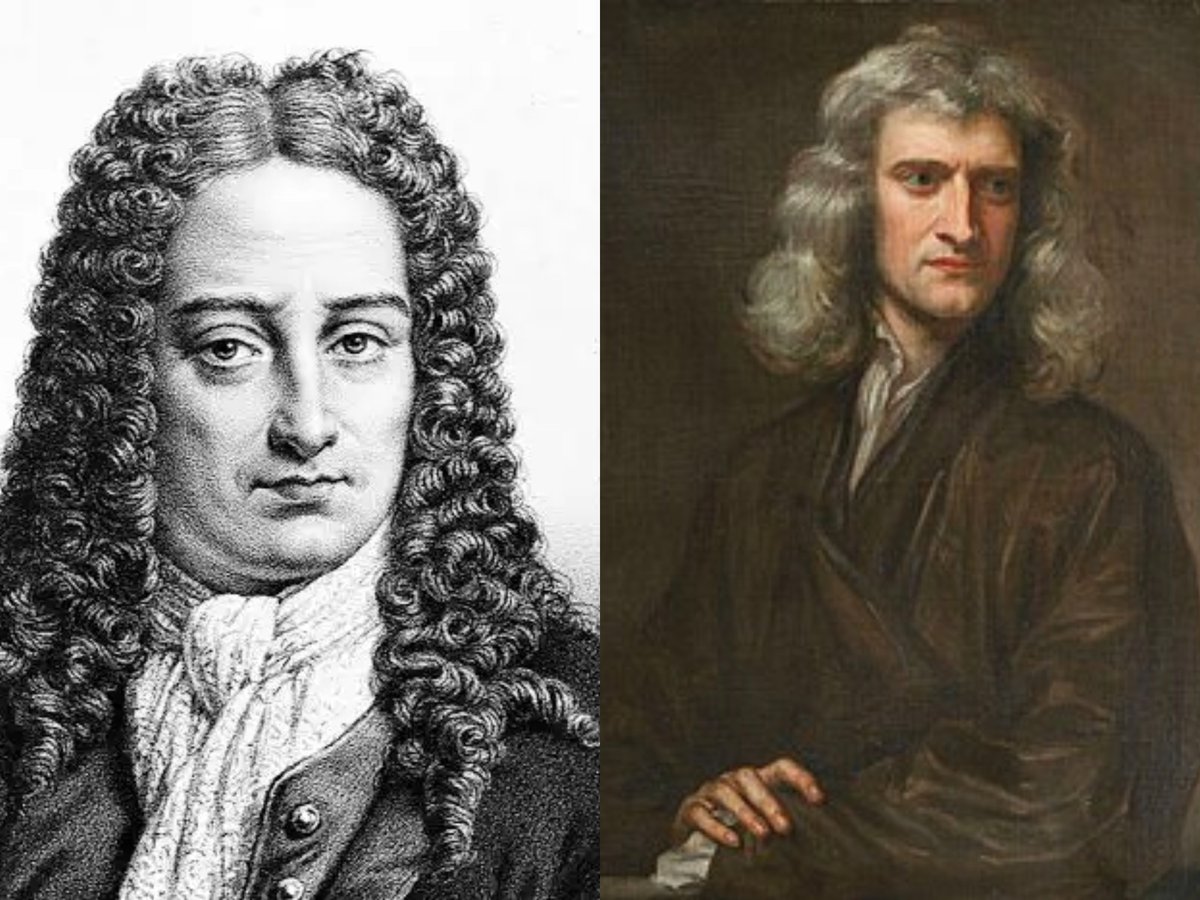
One created calculus in secret. The other published it first.
In the 1660s, Isaac Newton developed a powerful mathematical method to describe motion and change.
He called it fluxions. But he didn’t publish his work. Instead, he shared it only with a few members of the Royal Society.
Years later in Germany, Gottfried Wilhelm Leibniz was working on similar ideas. Unlike Newton, Leibniz chose to publish his work.
In 1684, he released the first paper on calculus. He also introduced the symbols we still use today, like ∫ for integrals and d for change.
Newton’s followers were furious. They believed Leibniz had copied Newton’s ideas. What followed was a bitter dispute that divided mathematicians across Europe.
For a long time, British mathematicians supported Newton and avoided Leibniz’s methods.
Meanwhile, the rest of Europe used Leibniz’s notation. Only in the early 19th century did Britain finally adopt it.
Today, most historians agree on one thing: both men discovered calculus independently.
Fun fact: Leibniz focused first on integration, while Newton focused on differentiation.
So, who really invented calculus?
The honest answer is—they both did.
English
willynet がリツイート
People often say mathematicians are not afraid of anything—except one thing: the Collatz Conjecture.
It is one of the most famous unsolved mysteries in mathematics.
Here’s how it works:
Pick any positive number.
If the number is odd, multiply it by 3 and add 1.
If the number is even, divide it by 2.
Now repeat this process again and again.
For example, start with 7:
7 is odd → 3×7 + 1 = 22
22 is even → 22 ÷ 2 = 11
11 is odd → 3×11 + 1 = 34
…and so on we get:
7 → 22 → 11 → 34 → 17 → 52 → 26 → 13 → 40 → 20 → 10 → 5 → 16 → 8 → 4 → 2 → 1
The surprising claim is this: no matter which number you start with, you will always eventually reach 1.
It sounds simple, but no one has been able to prove that it is true for all numbers. That’s why it remains a mystery.

English
willynet がリツイート
He spoke few words, but his equations spoke volumes.
He was one of the quietest minds behind the loudest revolutions in physics.
The man who predicted antimatter with pure math.
His name is Paul Dirac.

English
willynet がリツイート

willynet がリツイート
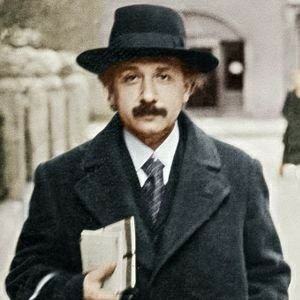
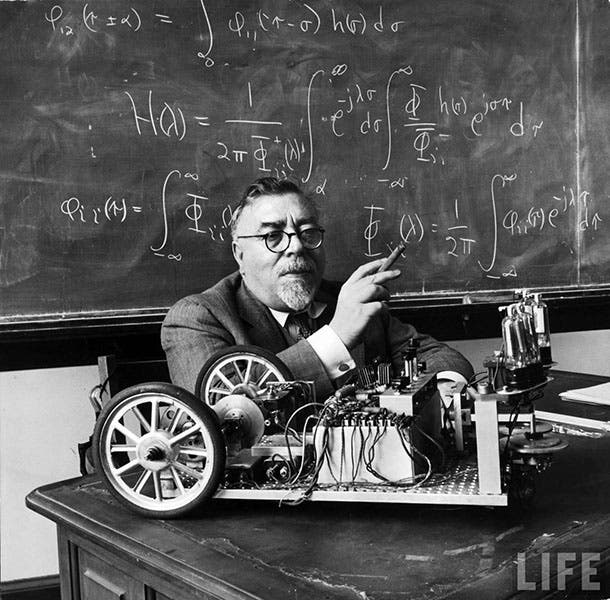
One day, mathematician Norbert Wiener was walking across the campus of Massachusetts Institute of Technology.
While he was walking, someone stopped him and asked a question about Fourier analysis.
Wiener didn’t hesitate. He took out a small piece of paper and carefully wrote down the answer, explaining it step by step.
The person was very thankful, said thanks, and started to leave.
But Wiener stopped him and asked, “Just one moment—which direction was I walking when you met me?”
The man pointed in the direction Wiener had been heading.
Wiener smiled and said, “Good. That means I’ve already had my lunch.”
Source: Mathematical Apocrypha by Steven Krantz
English
willynet がリツイート

Stupidity is knowing the truth, seeing the truth but still believing the lies.
And that is more infectious than any other disease.
—Professor Richard Feynman

English
willynet がリツイート

"Knowledge isn't free.
You have to pay attention."
—Richard Feynman

English
willynet がリツイート
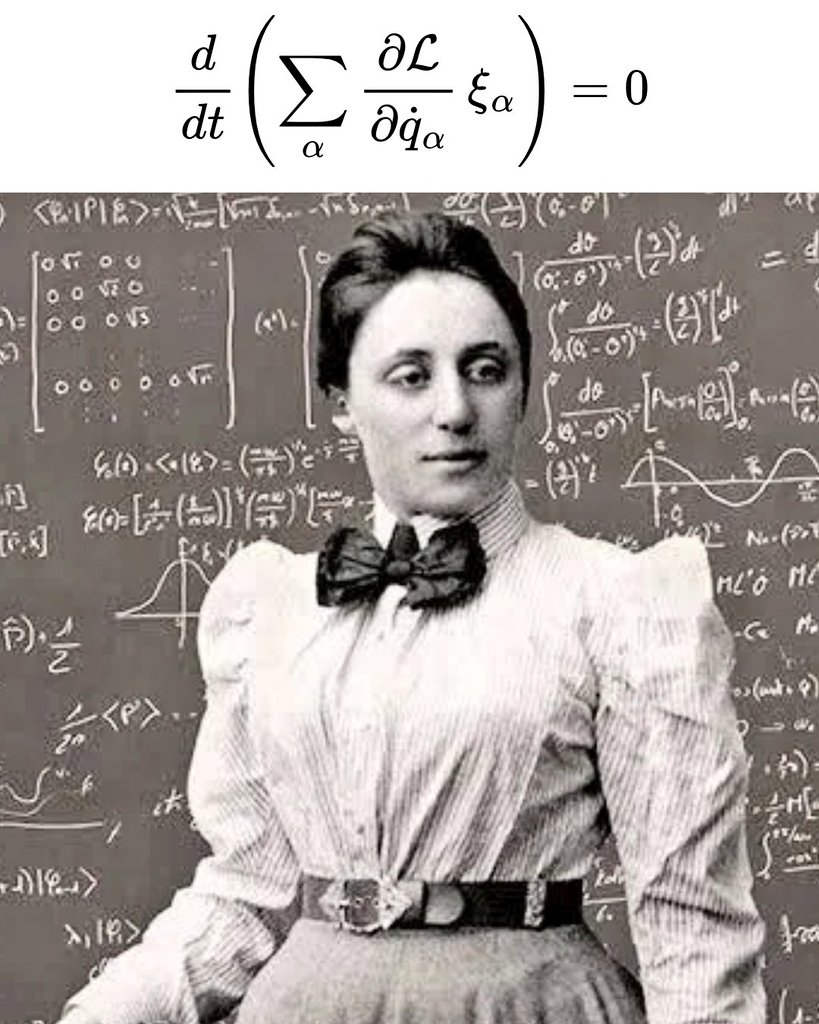
Every conservation law in physics comes from a deeper symmetry in nature. This idea is captured by Noether’s theorem.
If the laws of physics don’t change from one place to another (space translation symmetry), momentum is conserved.
If the laws don’t change over time (time translation symmetry), energy is conserved.
If physics looks the same in every direction (rotational symmetry), angular momentum is conserved.
If the laws remain consistent under changes in motion and orientation in spacetime (Lorentz symmetry), total 4-momentum (energy and momentum together) is conserved.
If a system’s wavefunction can shift its phase without changing physics (gauge symmetry), electric charge is conserved.
If charge, spatial coordinates, and time are all reversed together (CPT symmetry), the combined CPT property remains conserved.
English
willynet がリツイート
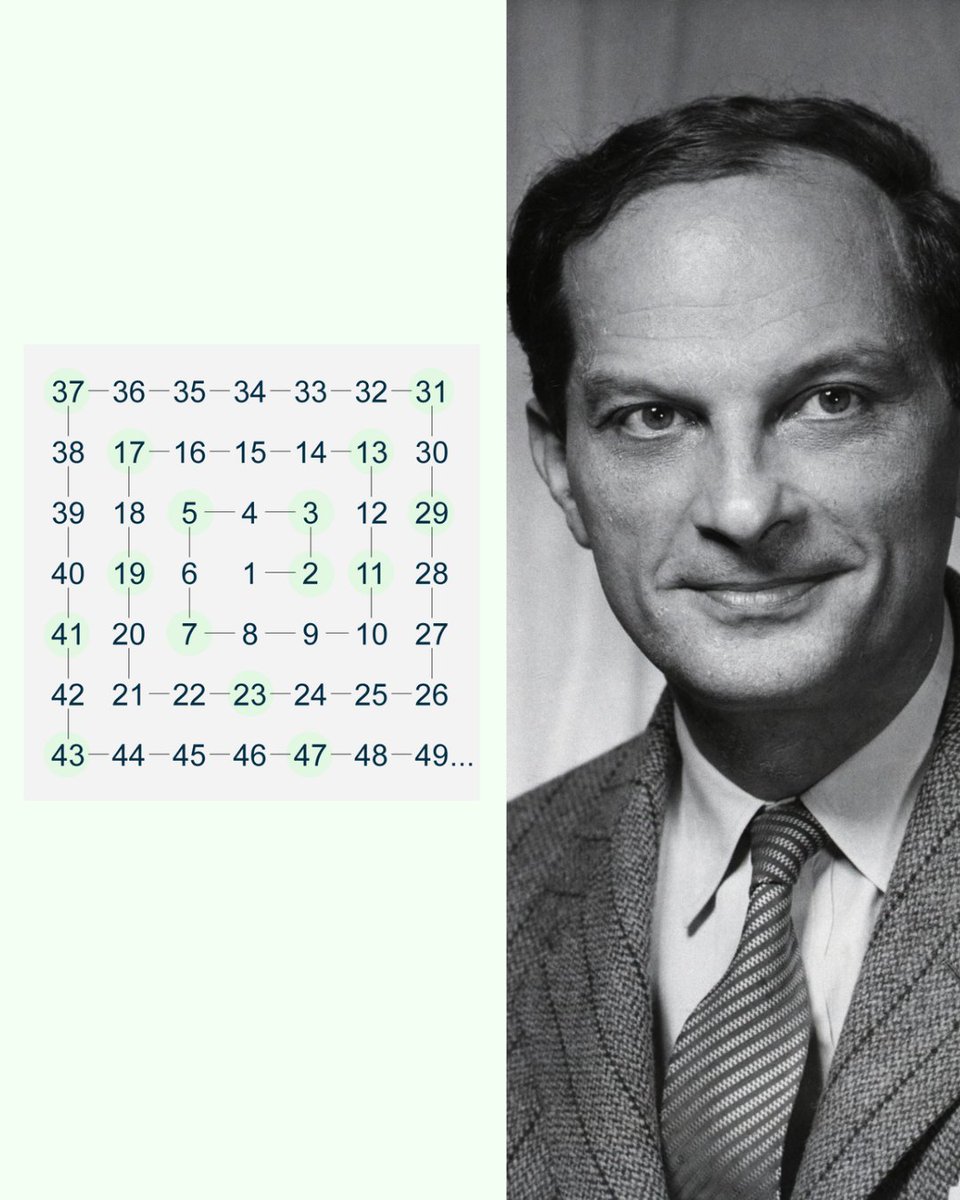
Did you know that one of the most important discoveries in mathematical history happened because a scientist was bored during a meeting in 1963?
Stanisław Ulam was sitting through a dull lecture when he began doodling on graph paper.
He wrote the number 1 in the center, then spiraled outward—2, 3, 4, 5, and so on—simply to pass the time.
But then he did something remarkable: he circled all the prime numbers—2, 3, 5, 7, 11, 13...
What he saw next was astonishing.
The primes were not scattered randomly as everyone had assumed.
Instead, they formed striking diagonal lines across the spiral—like hidden highways running through the numbers. This seemed impossible.
Prime numbers are supposed to be irregular and unpredictable, yet here they were, aligning in beautiful patterns no one had noticed before.
When Ulam showed his discovery to other mathematicians, they were amazed.
What began as a simple doodle revealed deep and mysterious structures within numbers—patterns that, even today, we do not fully understand.
English
willynet がリツイート
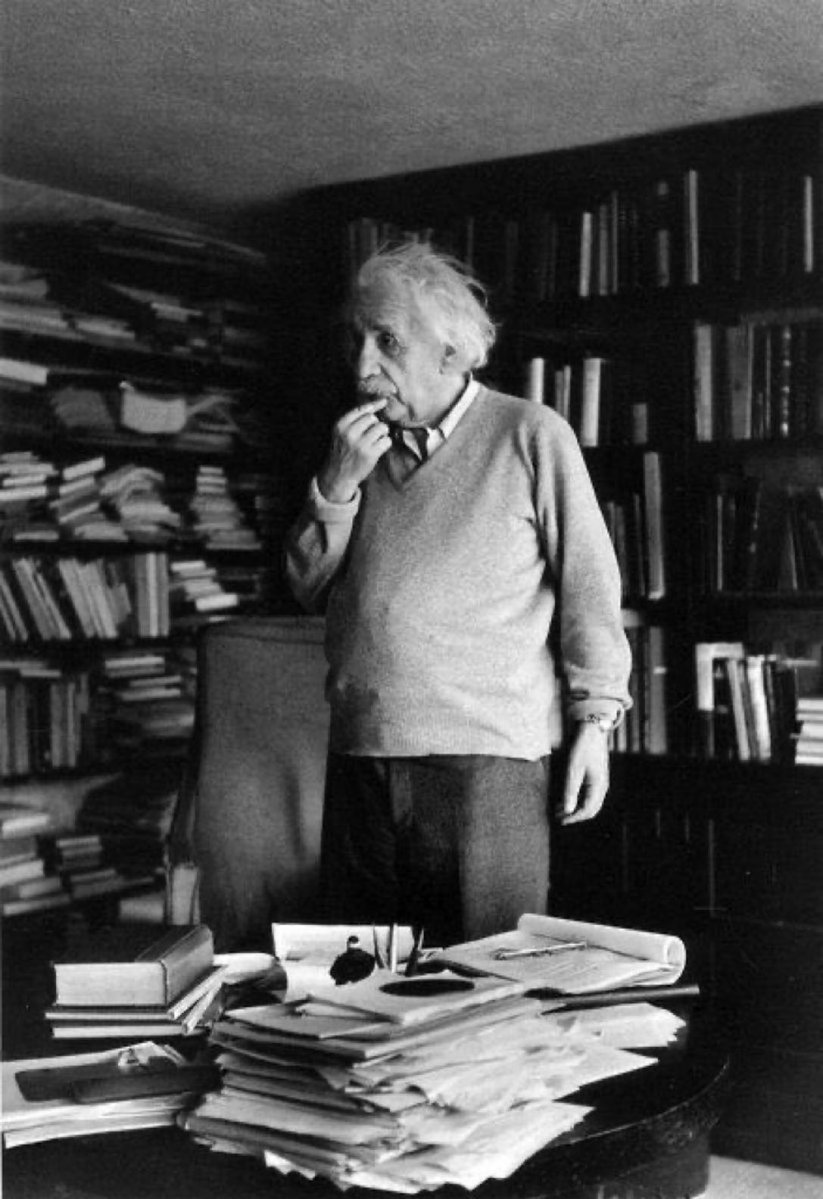
I lived in solitude in the country and noticed how the monotony of a quiet life stimulates the creative mind.
—Albert Einstein
English
willynet がリツイート
About 300 years ago, there was a man, when the world couldn’t explain how stars move, he didn’t wait for answers—he created an entirely new kind of mathematics: calculus.
Today, we use supercomputers and rockets to explore space. Yet every single one of them still follows the rules he wrote down. No technology, no screens—just ink and pure genius.
And the most astonishing part? We’re still trying to fully understand it.

English
willynet がリツイート
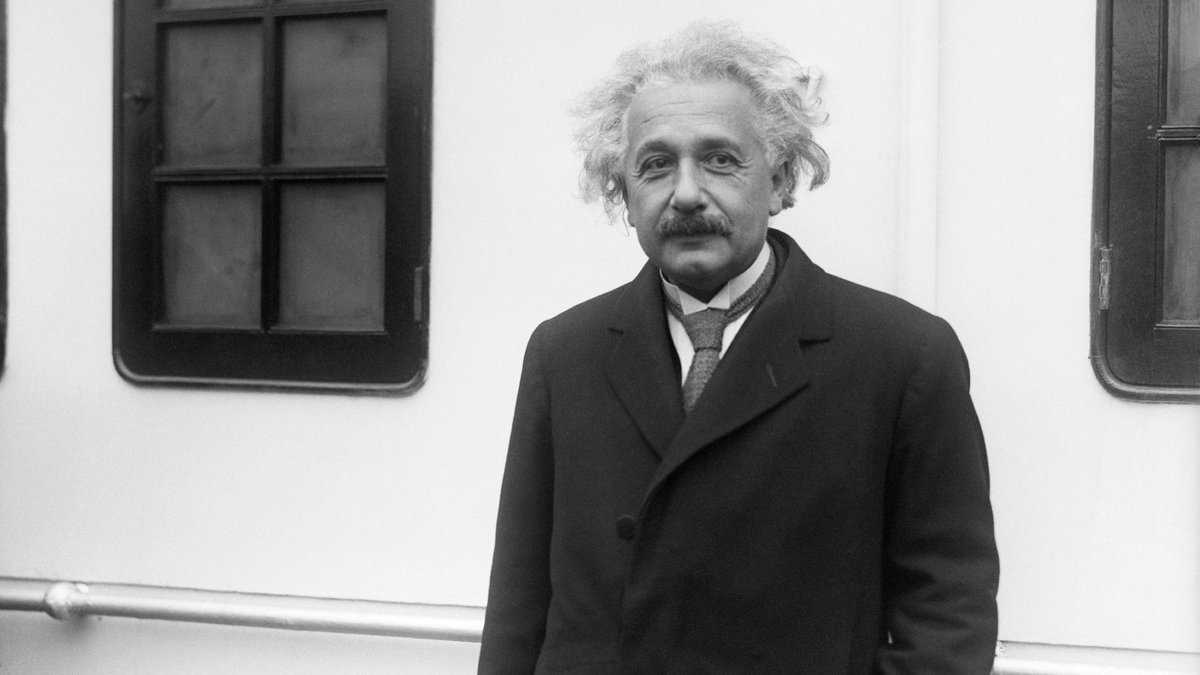
The relativity principle in connection with the basic Maxwellian equations demands that the mass should be a direct measure of the energy contained in a body; light transfers mass. With radium there should be a noticeable diminution of mass. The idea is amusing and enticing; but whether the Almighty is laughing at it and is leading me up the garden path -- that I cannot know.
- Albert Einstein in a 1905 letter to his friend Conrad Habicht.
English
willynet がリツイート
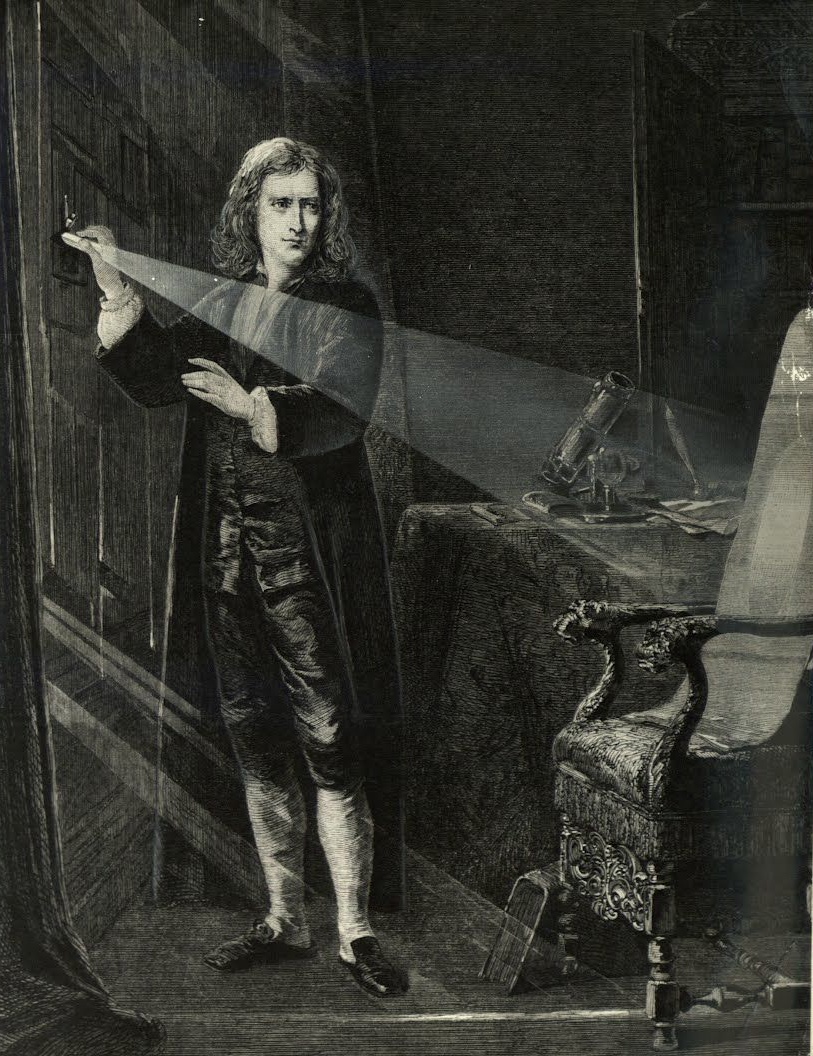
Newton spent more time writing about alchemy and theology than about physics or mathematics.
English
willynet がリツイート

willynet がリツイート

willynet がリツイート