Adrian Vale
24 posts

Adrian Vale
@AdrianValeDaily
Crypto markets. Human behavior. Studying why traders lose. Sharing lessons from mistakes people repeat.
New York 가입일 Ocak 2020
43 팔로잉13 팔로워

@t0mbfx The hard part isn't knowing the rules.
It's keeping them when the screen tells you to act.
You don't break rules because you forgot them.
You break them because the loss made the rules feel like a cage.
English

@TradersConf 12 hours and $34k – that’s an incredible week.
The real measure isn’t the payout.
It’s what you do when next week pays nothing.
English

@psy_sync You set the invalidation zone.
It got tagged.
You stepped out.
That’s the hard part done right.
The next trade is where most undo the work.
English

The stop was hit.
He waited for one more candle.
Then one more.
He called it patience.
It was just a slower way of refusing to be wrong.
#TradingPsychology #StopLoss
English

@LEGACE_FX This is the part most people refuse to accept.
Memecoin trading isn't skill-based for 95% of us — it's an info asymmetry game.
Once you clock that, stepping back becomes the real alpha.
Your portfolio thanks you later when you're not donating to the next rug.
English

After years of charts, sleepless nights, blown accounts, hope, discipline, and disappointment...
I'm finally walking away from forex.
I gave it everything I had.I sacrificed time, money, peace of mind, and parts of myself I'll never get back.
I kept believing the next month would be different. I gave it everything I had, but not every story has the ending we hope for.
Failure is hard. But what's even harder is admitting that sometimes effort alone isn't enough.
To everyone still chasing the dream, I sincerely wish you success.
As for me, it's time to close the charts, stop chasing candles, and start chasing a different life.
Thank you to everyone who was part of this journey.
Goodbye, forex. 💔


English

The crowd regards “never quitting” as some kind of moral victory.
In trading, however, it’s often the opposite: knowing when to quit is what truly makes a difference.
Most people who became millionaires through memecoins didn’t work harder than others;
they simply had better information or better timing.
For the rest of us, pretending otherwise is nothing more than ego.
English

He saw everyone posting profits.
Suddenly the setup looked obvious.
It wasn’t analysis.
The urgency came first.
The reasons came after.
#TradingPsychology #FOMO
English

@thechartist26 Exactly. First attempt gets stopped, second one prints.
The market loves to fake people out once before running.
English

I spent ₹88.98 Lakhs just to participate in the market.
No, this isn't income tax.
This is simply the cost of executing trades over the last 39 months.
My numbers:
• Gross Realised P&L: ₹5.61 Cr
• Trading Charges: ₹88.98 Lakhs
• Net Realised P&L: ₹4.72 Cr
That's nearly ₹1 out of every ₹5 of gross profit spent just on brokerage, STT, transaction charges, GST, stamp duty and other execution-related charges.
And that's only the beginning.
These numbers don't include the actual cost of running a trading business—software subscriptions, market data, laptops, internet, static IPs, VPNs, electricity, audit fees, compliance, or income tax.
Trading is like a competitive exam with negative marking.
It's not about how many trades you get right. Your edge has to be large enough to overcome all these frictional costs, year after year.
If you've been consistently profitable in F&O for years while generating returns above a 20% CAGR, pat yourself on the back.
Very few people understand how difficult that really is.
P.S. For those who ask about my recent performance, here's my independently verifiable trading record since 2024:
mypnl.in/verified-pnl/s…
#Srinivega #OptionsTrading

English

This sounds great in theory.
In practice, when price is moving against you fast, the line between "fear" and "smart risk management" gets blurry real quick.
The key is having a plan that accounts for THAT feeling too.
Steve Burns@SJosephBurns
Let your trading plan quantify your stop loss not your fear.
English

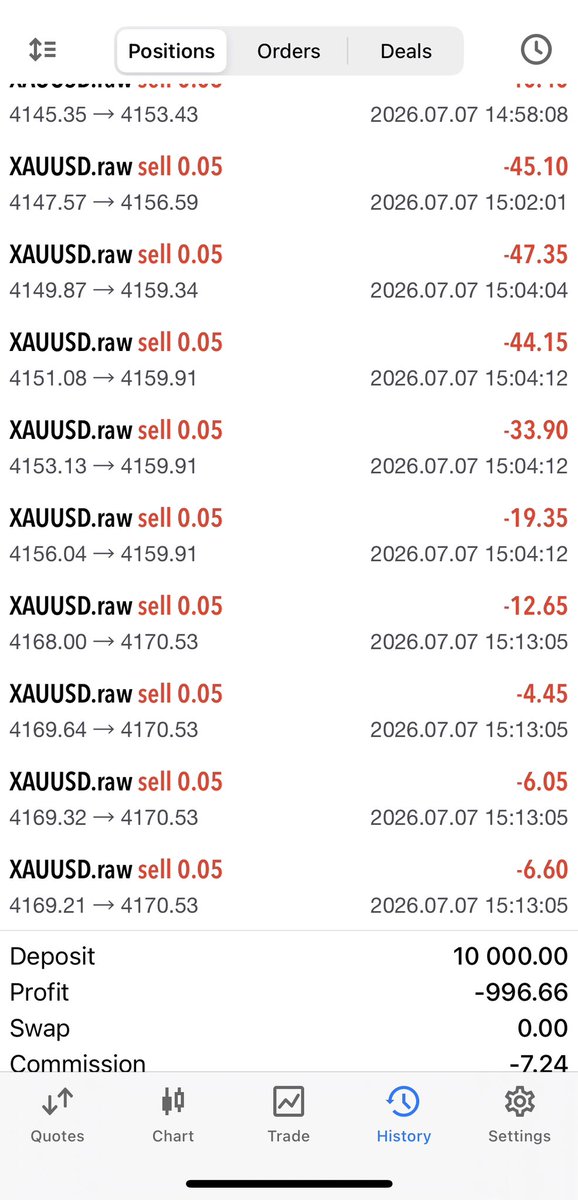
He took the loss.
Then he reopened the same trade with more size.
Called it a new setup.
It wasn’t.
That second trade wasn’t a fresh decision.
It was the first loss refusing to end.
#TradingPsychology #RevengeTrading
English


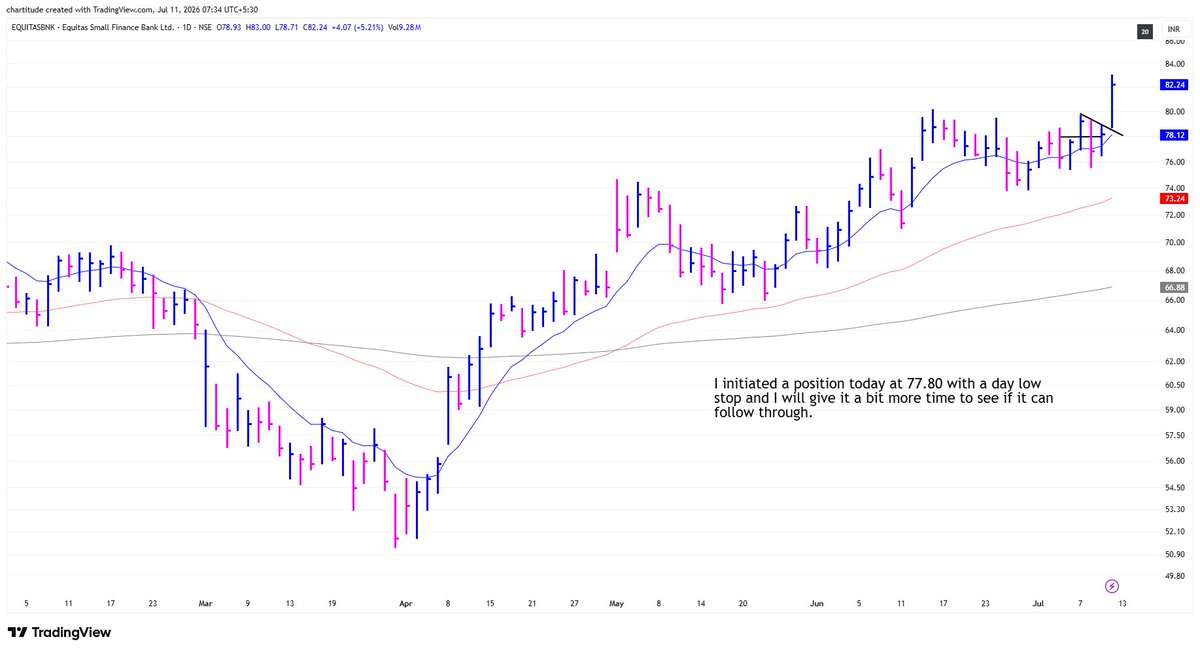
@SRxTrades The hardest part is knowing which trade is the 20%.
That’s where most people get stuck-they think every trade could be the one.
English

At 1:42 AM, a trader stared at his futures position.
Down $2,800.
He had a stop loss.
He had a plan.
He even wrote it down before entering the trade.
But when price got close to his stop, he moved it lower.
Then he added more size.
Then he told himself the same sentence every trader knows:
“I just need one bounce.”
By sunrise, the account was gone.
Not because he didn’t understand charts.
Not because he didn’t know risk management.
He knew.
He just couldn’t follow the rules when fear, ego, and real money were all in the same room.
That’s what this account is about.
The human side of crypto trading.
Not signals.
Not 100x coins.
Not fake confidence.
Not screenshots designed to make you feel late.
Just the moments most traders don’t like talking about:
— Moving a stop loss
— Revenge trading after one bad entry
— Adding size because you feel embarrassed
— Holding a loser because closing it feels like admitting defeat
— Chasing green candles because your timeline made you feel poor
Charts matter.
But the chart usually isn’t what destroys people.
It’s the one emotional decision they make after the chart already proved them wrong.
If you trade crypto, you’ve probably had a moment like this.
A trade you knew you should close.
A loss you refused to accept.
A mistake you promised yourself you’d never repeat.
That’s what I write about here.
Crypto markets.
Trader behavior.
Painful lessons.
The mistakes people keep making every cycle.
What’s one trading mistake you’ll never make again?
English

I’ve seen the same story happen over and over.
A trader spends months learning charts, strategies, and risk management.
Then one bad trade happens.
He ignores his stop loss.
Adds more to “get back to break even.”
Tells himself he just needs one more bounce.
A few hours later, months of work are gone.
Not because he didn’t know the rules.
Because following them was harder than learning them.
This account is about those moments.
The mistakes traders repeat.
The emotions nobody wants to admit.
What’s the trade you still remember?
English

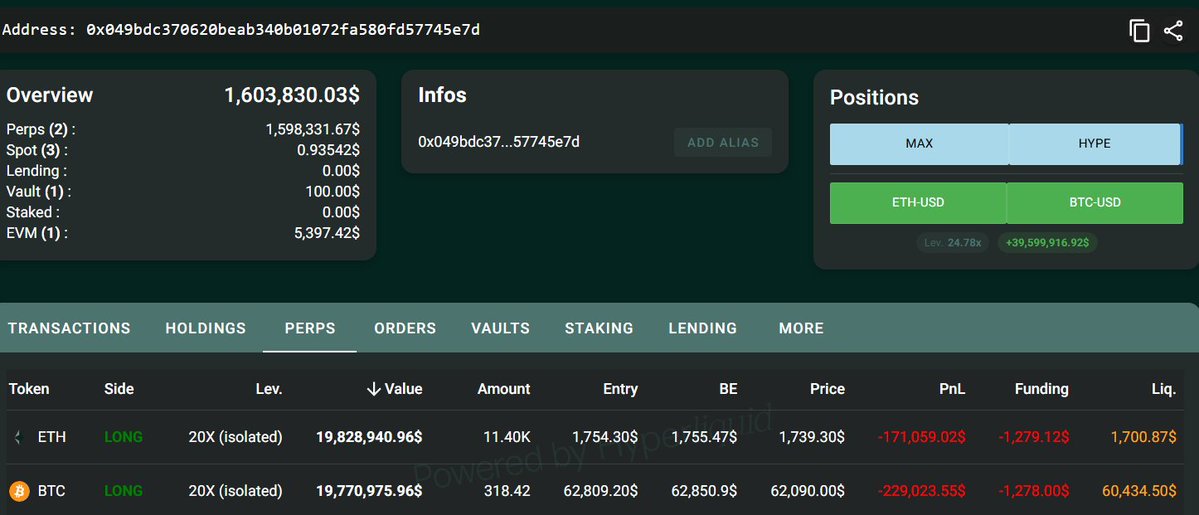
@TedPillows 20x with liq levels that close to entry means one decent move and it's gone.
English

@lookonchain @Cobratate Flipping from long to short after a liquidation is pure revenge trading. No risk management, no stop loss, just ego. That account was doomed from the first liquidation.
English

Andrew Tate (@Cobratate) has been liquidated 8 times in the past 16 hours.
He got liquidated on a $BTC long, then flipped to a $BTC short and got liquidated again.
His account now has only $14,219 left.
#txs" target="_blank" rel="nofollow noopener">hypurrscan.io/address/0xB78D…


English