Andrew
41 posts
$BTBD so far so good!
Others I am holding for runs:
$DOMH
$BBGI
$UONE
$SVRE
$RDIB
Just an FYI! Not investment advice! 💪
Zalmy@greatstockpicks
$BTBD here comes $2
English



I'm predicting a massive #redwave in November!
> Iran war over.
> Gas cheap.
> Inflation falling.
> World safe.
> Stocks up.
> Jobs soaring.
Who's with me?

English


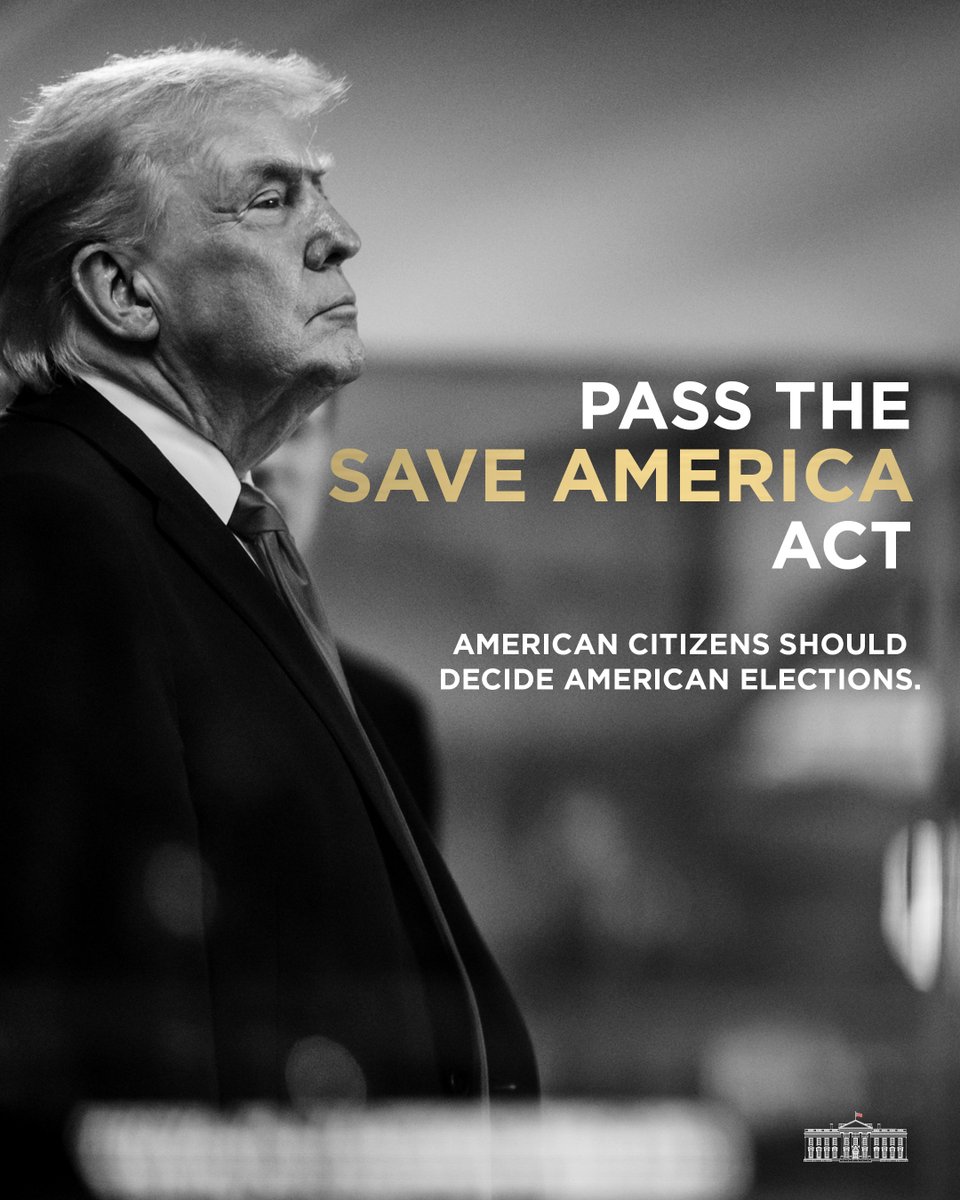
American citizens should decide American elections.
English

POV: The market seasonality is almost over.
Just need the ‘Mission Accomplished’ tweet from the Big Man.
Are you ready?

English
@clintoptions Oil is up. Dollars buy oil so dollar is up. When dollar rises gld retreats.
English

So I’m trying to understand this. While the stock market futures are down more than -1.5% and oil is sitting up over 18%, this price of gold and silver is also red, when you would expect people to run to precious metals as a safe haven? Very interesting. $SLV $GLD $CL


English
@MarketMaestro1 Oil is traded in dollars. Oil goes up in value. Dollar goes up in value. Gold reacts to the rise in USD.
English

#Gold
Is the road over for gold? 😱 Why is gold being sold while there’s a war? 👇
Global markets are experiencing a severe geopolitical shock as the U.S.-Iran conflict carries the risk of turning into a regional war. U.S. and Israeli operations against Iran, Iran’s retaliation, and the closure of the Strait of Hormuz created fear of a major supply shock event that could shake the global economy through energy supply.
In this environment, gold first surged in the classic safe-haven reflex, rising to $5,400 per ounce. But right after that, gold fell 5.37% and silver dropped more than 10%, and at first glance this looked like a paradox.
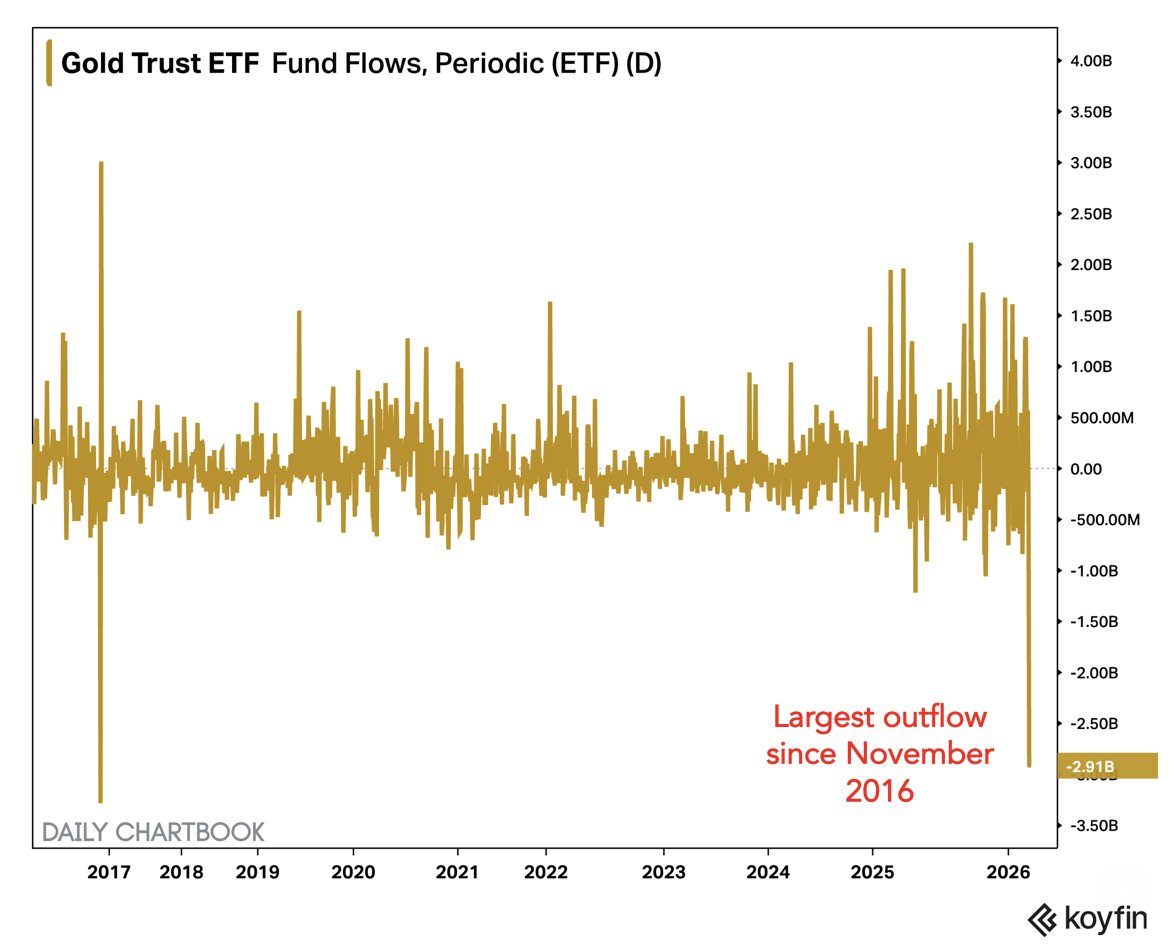
The most concrete signal of this break was the historic -$2.91B one-period outflow from gold ETFs, and it was emphasized that this was the largest outflow since November 2016.
The core reason for the selling is that the war-triggered sharp losses in risk assets like equities and crypto started a margin call chain for institutional investors. The war created large unrealized losses in portfolios. Because of that, funds were forced to sell the most liquid assets that were still up at the time, meaning gold, in order to cover losses and pay down debt.
This mechanism was described as a dash for cash, and the selling of gold was explained not as a loss of belief in its value, but as a forced need to raise cash. At the same time, the strengthening U.S. dollar also became a cash haven, adding extra pressure on gold.
In the growth of ETF outflows, another critical role was played by authorized participants: when the market price drops below NAV, they can buy ETF shares, convert them into physical gold, and then sell that gold in the spot market.
This structure resembles the gold ETF outflows seen after November 2016 when bond yields spiked.
Another major reason is that the sharp rise in oil and gas prices disrupted expectations for Fed rate cuts and strengthened stagflation fears. The market started pricing that because of the energy shock, the Fed could delay rate cuts and, if necessary, even tighten again. That pushed bond yields up and raised the opportunity cost of holding gold, which led institutional money to rotate from gold into short-term Treasuries and cash.
Also, smart money started hedging the war not through gold, but by moving directly into oil contracts and energy stocks that can benefit from the crisis. The sharp rallies seen in companies like Battalion Oil and Venture Global were presented as the equity side reflection of this strategic rotation.
At the same time, gold had already seen very strong inflows since the start of the year, so it was overheated, and the war headline created a “buy the rumor, sell the news” effect.
In addition, it’s being argued that some countries may sell reserve gold to finance defense spending, and that physical demand could weaken in markets like India because of FX shock, which also pressured prices.
Bottom line: gold’s safe haven feature is not finished. The drop happened because in a leveraged financial system, in geopolitical shock moments, the first reflex is often forced cash creation.
If you like it and repost it, I’d appreciate it 🤝
English


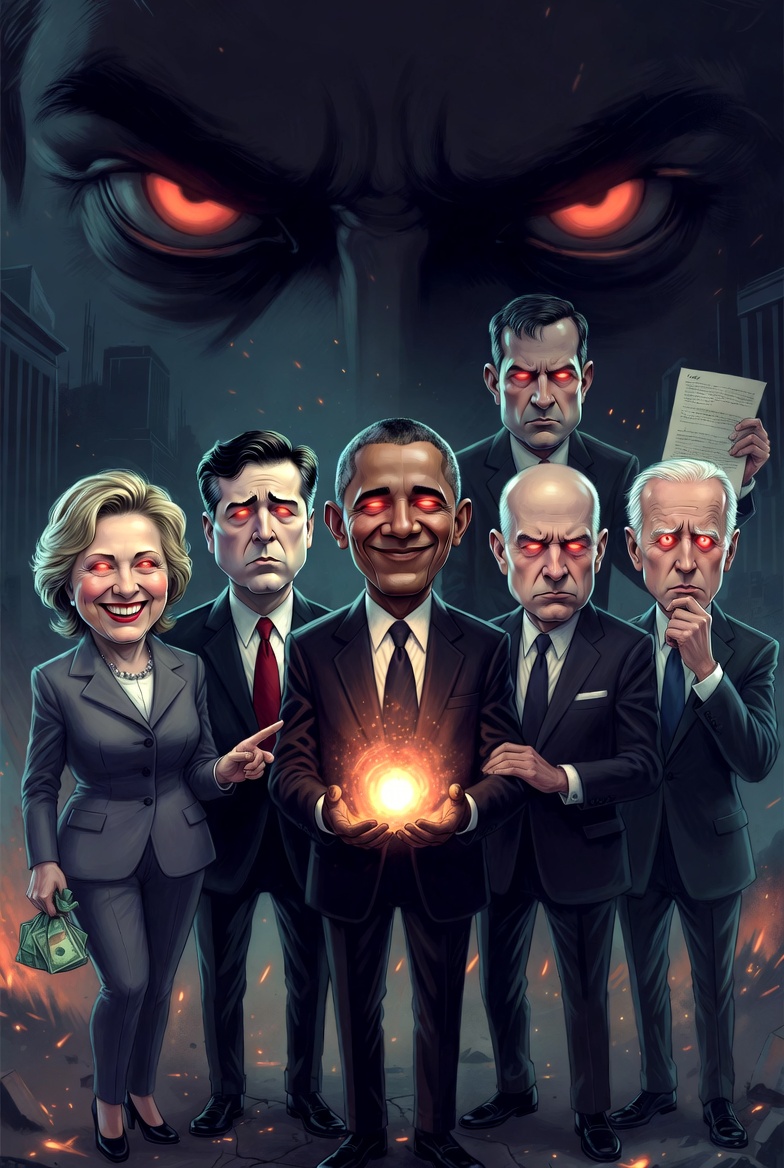
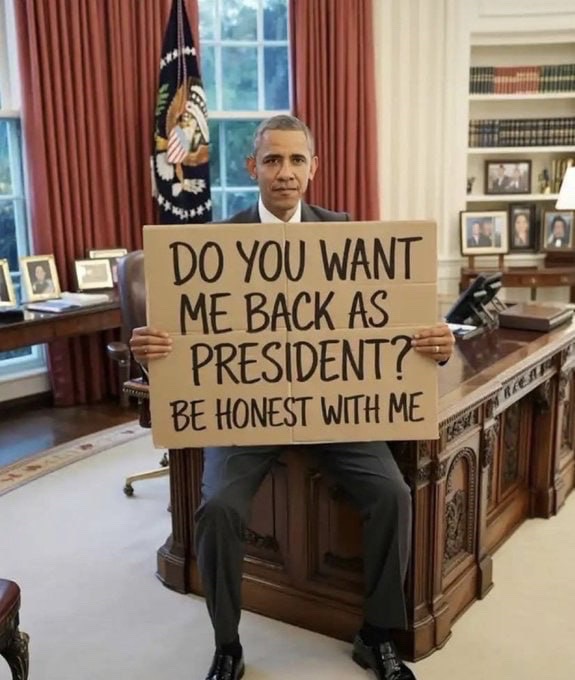
Do you want Obama back again ?
Anyone ? Be Honest ?
a. Yes
b. No
English


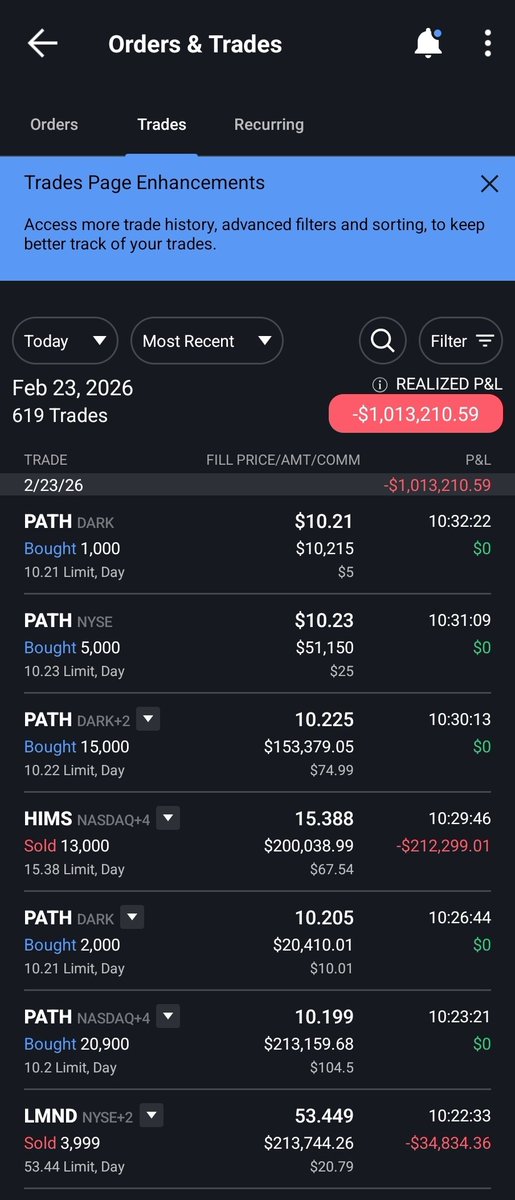
Yes this is right. This is a screenshot of my portfolio (not my parents).
I did not post about recent moves because it was too painful. Unrealized losses are one thing. They aren't real if you're fundamentally right about the business long term. But i created over $1M in realized losses on Feb 23rd... that hit my limit of being too painful to share.
I moved back to all in $PATH to protect my last million+ 👇
English
No pre-announcement when this size of a miss was coming completely destroyed my faith in $ODD management.
Problems happen in business. That's normal. But cowering and NOT letting your investors know what's going on, that's a red flag.
I do not trust they gave us the full story during earnings.
I'm also starting to have questions about Israeli company practices around earnings. $FVRR, $LMND and $ODD, all with managements based in Tel Aviv, all moved the day before earnings like people knew exactly what earnings were gonna be. These three stocks were the only companies I followed this earnings season whose prior day moves perfectly predicted earnings. This must be fixed!
Thankfully, I didn't own $ODD but I did have it as the third biggest position in my parents retirement account. (Yay , for trying to keep them more diversified! 😭)
I'm not selling at this price. Everything got fully priced in with the 50% drop today, but I now expect this to be completely dead money until trust is re-earned which could take more than a year.
On the bright side, the stock now trades less than 8x trailing earnings. If you understand the story and have more trust than me, this would be a buy opportunity. I don't think the company is an entire scam or I wouldn't keep holding it for my parents.
Hoping they were just being overly pessimistic for Q1, but really it's impossible to know at this point.
Shay Boloor@StockSavvyShay
$ODD down over 40% after guiding Q1 revenue to decline ~30% versus the market expecting ~21% growth. Management blamed algorithm changes that spiked CAC but when a distribution shift can drive this kind of miss… then that’s a structural issue that warrants a pre-announcement.
English
TRUMP WILL BOMB IRAN MONDAY?! 👇
Rumored to be striking Monday or Tuesday
Honestly if this is true it’s crazy that we get our news from podcast and Randoms…
English

Trump’s advisers are begging him to stop dicking around with tariffs, overzealous immigration enforcement, and unnecessary geopolitical entanglements. They are telling him to let the economy run and secure his legacy. I was confident he would listen. But maybe he won’t. Pride.
English

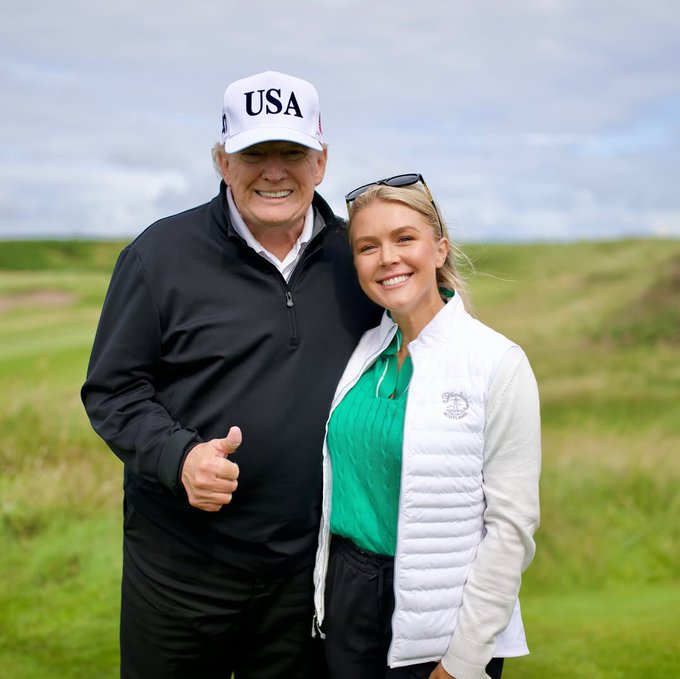
What's the most dangerous enemy of the USA🇺🇸? 😱
1. Russia
2. China
3. Dems/Wokes/Lefties
4. Islamic Regime of Iran
5. Big Drug Cartels
6. Islam
English