Julius M.

17.4K posts

Julius M. banner
Julius M.

Julius M.

@AstroJulius89

Eratosthenes

Kenya 가입일 Kasım 2012
3.3K 팔로잉373 팔로워
Julius M.
Julius M.@AstroJulius89·
One day we'll wake up and boom! Chinese Taikonauts walking on the lunar surface. I admire the secrecy behind Chinese sensitive space programs on the backdrop of the emerging geopolitics influence in space exploration!
Chinese Space Station@CNSpaceStation

👍After five months in orbit, the Shenzhou XXI crew is doing great. 🧑‍🚀They have completed two spacewalks, installed key upgrades, and ensured that daily station operations are running smoothly. Catch up with them in this video! [📹/CMS]

English
0
0
1
5
Julius M.
Julius M.@AstroJulius89·
@Gitz__ What makes a celestial body to be termed as a planet? Why is the Moon not a planet?
English
0
0
0
10
Gitz 
Gitz @Gitz__·
Pluto used to be the 9th planet of our solar system, until 2006 when a committee removed it from the list & called it a dwarf. But Pluto continued to orbit the Sun as before. Pluto doesn’t care what others think about it. Be like Pluto.
English
3
21
98
1.7K
Julius M.
Julius M.@AstroJulius89·
KDF in Congo
Justin KABUMBA@kabumba_justin

#RDC|🇨🇩La MONUSCO a été refusée d'entrer à Mambasa après une attaque des ADF. Les éléments de la mission ont négocié et collaboré avec la population locale pour assurer leur protection dans la région.

Português
0
0
0
1
Julius M. 리트윗함
Luis Batalha
Luis Batalha@luismbat·
That photo is still exactly where Duke left it. But the image is gone. No atmosphere on the Moon means no wind to blow it away. But it also means no shield against solar UV and cosmic radiation - the organic dyes and polymers in the photo paper would break down and bleach out within years, not decades. The thermal cycling makes it worse: +120°C in direct sunlight, -130°C during the lunar night. That 250-degree swing happens every month. The repeated expansion and contraction would crack and embrittle the paper and emulsion layers over time. So by now, 50+ years later, it's almost certainly a blank, cracked, brittle rectangle still sitting exactly where Duke placed it.
All day Astronomy@forallcurious

Astronaut Charles Duke left a photo of his family on the Moon during the Apollo 16 mission in 1972.

English
89
442
12.1K
1.9M
Julius M. 리트윗함
Massimo
Massimo@Rainmaker1973·
Artemis II Trajectory vs. Apollo 11 and Apollo 13 [🎞️ dflores.07]
English
147
2.3K
19.7K
1.2M
Julius M. 리트윗함
#LandIsNotProperty Mwalimu Wandia
I wish African leaders would stop doing this. The arts are not the enemy. That idea was planted in their heads by the west that sabotaged the development of science. When foreign companies are mining in Africa, they're blocking development of those skills. When they insist on economic policies of export of raw materials, that's how they block manufacturing. That's not the fault of literature. In fact, it's people in literature who point that out.
Sy Marcus Herve Traore@marcus_herve

🛑 Senegal 🇸🇳- “Our country needs more scientists and technicians... we cannot build development on literature alone.” - PM Ousmane Sonko

English
5
45
83
2.3K
Julius M. 리트윗함
Leah Cheshier
Leah Cheshier@LeahCheshier·
It’s been the honor of a lifetime to help share this mission. I hope you carry this wonder with you.
English
266
747
14.8K
155.8K
Julius M.
Julius M.@AstroJulius89·
@SirAlexas Atmospheric braking. The spacecraft will not be accelerating towards earth surface, but performing a careful descent maneuver by plunging into the atmosphere at 40,230 km/h but it will be decelerated as it plunges through the denser parts of the atmosphere and land at 32 km/h.
English
2
1
9
2.2K
Aleckie Ronald
Aleckie Ronald@SirAlexas·
Re entry is tomorrow around 2.53am and by 3.07 they would have splashed at Pacific? Damn how fast is that rocket??...
English
22
54
585
28.6K
Julius M.
Julius M.@AstroJulius89·
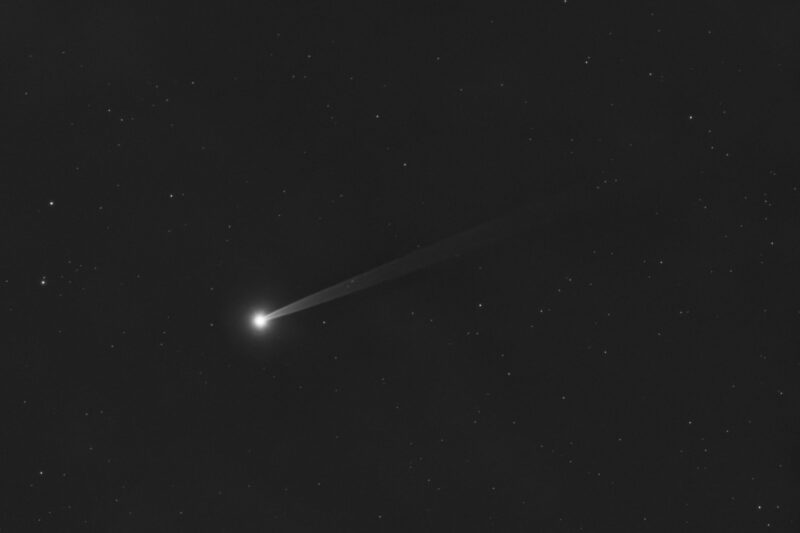
Planet Mercury has a comet-like tail mainly composed of sodium atoms which extends up to 24 million kilometers into space away from the direction of the Sun. Image Credit
Julius M. tweet media
English
0
0
1
20
Julius M.
Julius M.@AstroJulius89·
A dense interstellar cloud with a significant high hydrogen would shrink our heliosphere to less than 1AU. Can cause depletion of the ozone layer and oxygen. Past extinction events on earth maybe related to a passage of our solar system through a dense interstellar cloud.
Julius M.@AstroJulius89

However, the G cloud is about 30 times dense than the local interstellar cloud. Consequently, our heliosphere will be squashed, exposing the planets in the solar system to higher than normal exposure to cosmic rays.

English
0
0
0
32