DatFlash

53 posts

DatFlash banner
DatFlash

DatFlash

@DataUniversa

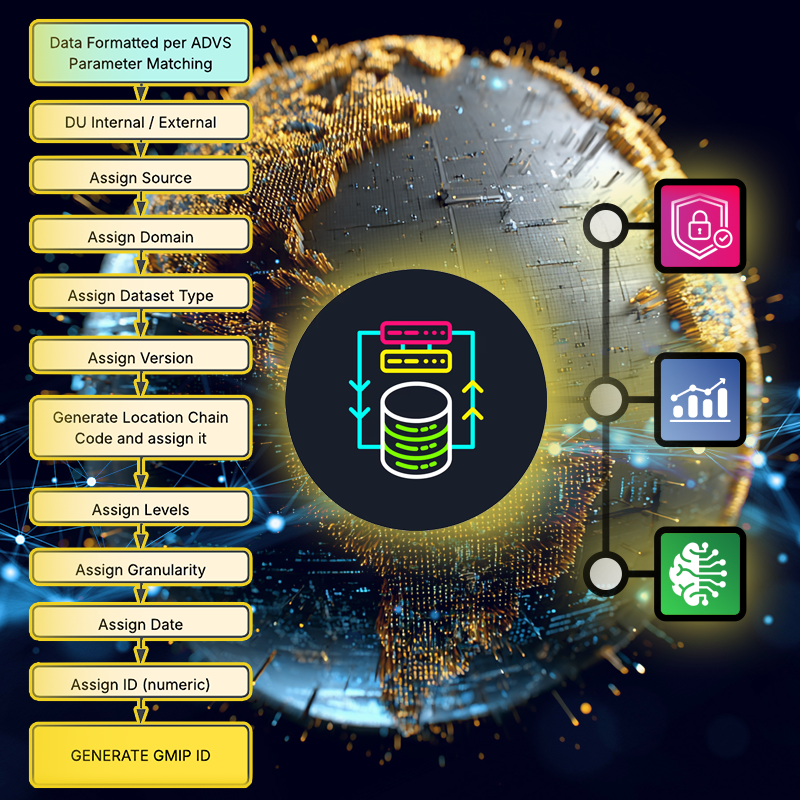
DatFlash tracks dataset transactions across the AI data economy; licenses, acquisitions, releases, and benchmarks; creating a normalized record of global data.

가입일 Şubat 2026
42 팔로잉28 팔로워
DatFlash
DatFlash@DataUniversa·
A lot of the capacity that already exists never turns into usable output. Data has to be located, verified, cleaned, and reshaped before it can even be used. The same transformations get repeated across pipelines. Workflows run on data that ends up being incomplete or unusable, so they have to be reworked. None of this is particularly visible, but it adds up. You end up with a system where total capacity looks high on paper, but effective capacity is much lower in reality. Engineers spend time reconciling data instead of building, and compute gets consumed by work that doesn’t move anything forward. Across different environments, the pattern is pretty consistent. The more fragmented the data, the more time is spent trying to make it usable, and the more compute gets burned along the way. What’s interesting is that when you start removing that inefficiency at the data layer, the impact isn’t small. In many cases, a meaningful portion of capacity comes back just by eliminating repeated transformations, constraining execution to valid data, and structuring things so they can actually be reused. It changes the system from something that is constantly compensating for its own data issues into something that can operate more directly. At that point, adding more compute becomes a lot less urgent, because the real issue wasn’t how much capacity you had, it was how much of it you were actually able to use. #dataeconomy #computepower
DatFlash tweet media
English
0
0
0
1
DatFlash
DatFlash@DataUniversa·
There’s a lot of focus on model performance and compute scaling. Less attention is given to how much compute is being wasted before models ever run. Most data pipelines are still inefficient. Data is duplicated, poorly structured, difficult to connect, and often processed multiple times just to make it usable. The result is quiet but significant waste: more compute, higher costs, and slower iteration cycles. This isn’t just an engineering problem. It’s a data problem. If pipelines aren’t built on structured, interoperable data, inefficiency becomes the default. A more efficient system doesn’t start with more compute, it starts with better data foundations. That’s the shift that needs to happen, and DataUniversa plans to lead the way. #dataeconomy #inferencecost #computewaste #datapipeline datflash.com/post/the-hidde…
English
0
0
0
60
DatFlash
DatFlash@DataUniversa·
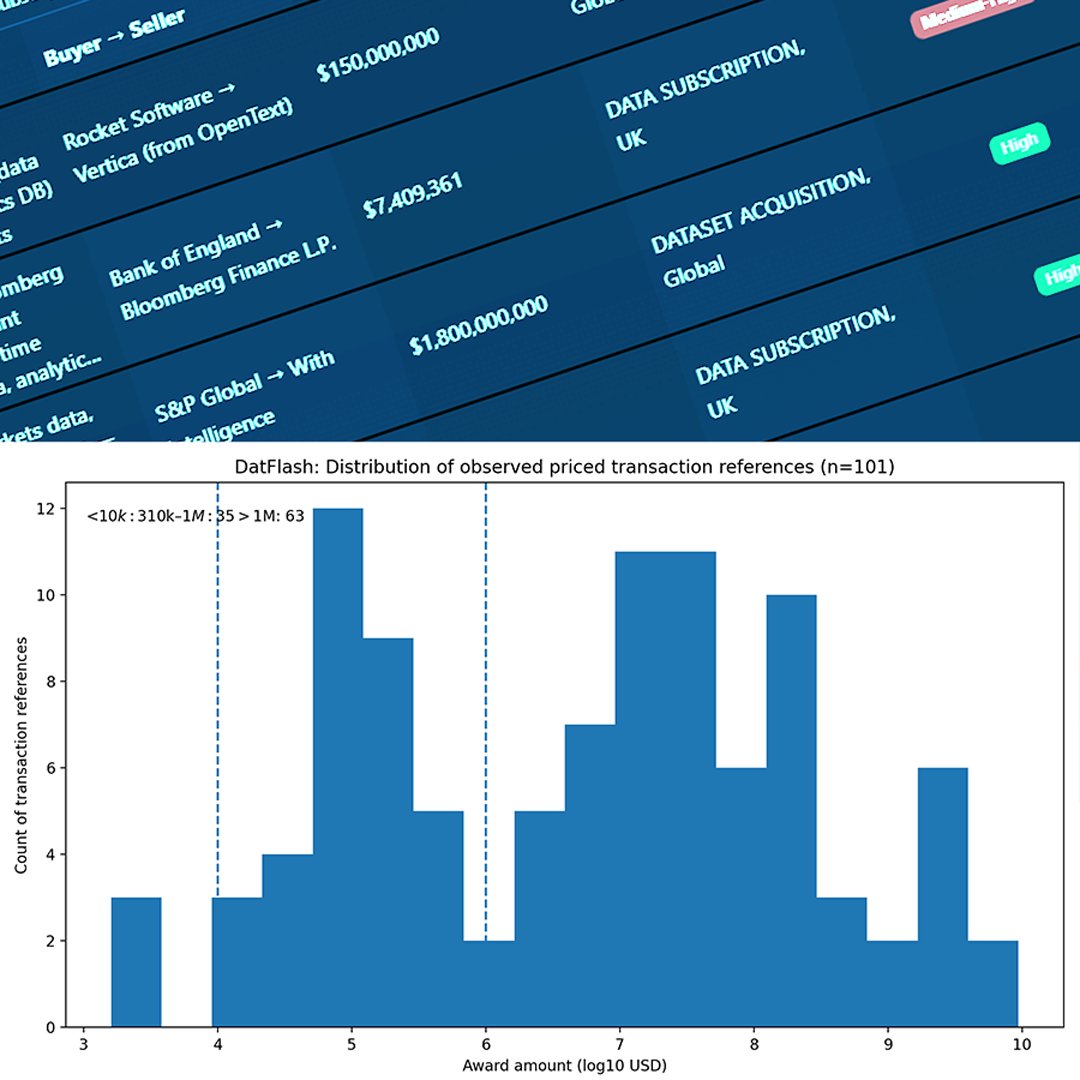
What does data actually cost? Right now, there isn’t a clear answer. Similar datasets can be sold for a few thousand dollars, or several million. Pricing is highly dispersed, terms vary, and most transactions happen without shared context. The market exists, but it’s difficult to observe in a structured way. Because of that, most decisions around data are still made in isolation. At the same time, there’s a push toward building a more standardized, reliable, and interoperable data economy. But those systems depend on something more basic: understanding where we are today. That starts with visibility. Before data can be structured, governed, or consistently valued, it needs to be more clearly observed. #Datavalue #dataeconomy #dataasset
DatFlash tweet media
English
0
0
0
19
DatFlash
DatFlash@DataUniversa·
Data has been treated like an input for years. Collected → used → forgotten. But that’s changing. Datasets are bought, sold, licensed, and reused. They behave like assets. What’s missing isn’t value. It’s visibility. There’s little shared context around: comparable datasets real pricing how data is actually exchanged So decisions happen in isolation. In every other market, assets are understood through visibility. Data hasn’t had that layer. That’s starting to change. As visibility improves, data becomes something that can be compared, evaluated, and understood more consistently. That’s the shift. Read more at datflash.com #dataeconomy #dataasset #Data #datagovernance
DatFlash tweet media
English
0
0
0
6
DatFlash
DatFlash@DataUniversa·
AI tools are powerful, the intelligence comes from the human using the tool. If you dont know how to use a tool, the results will be poor. In any case. All tools provide great value, if used correctly. The AI bubble wont burst, it will only expand, and people need to get on board or be left behind. Akin to the internet emerging. Maybe we educate people, instead of leading them down a path of insustainability.
English
0
0
0
159
andrei saioc
andrei saioc@asaio87·
The AI bubble will burst when people understand that when everybody has easy access to the same tools, then the advantage of these tools is going to be ZERO (0). Not to mention the tool itself is not very intelligent.
English
128
45
625
20.4K
DatFlash
DatFlash@DataUniversa·
The quality of decisions will always depend on the quality of what those decisions are based on. Right now, dataset decisions are still made with limited context. Teams rely on vendor claims, one-off deals, and internal assumptions, with very little ability to compare across sources. The result is inconsistent pricing, unclear benchmarks, and outcomes that vary more than they should. Before governance or optimization, there’s a more basic requirement: data needs to be observable. That’s where DatFlash fits. Not as a complete solution, but as a first usable layer that begins to surface how data actually moves. And once that layer exists, everything built on top of it has a much stronger foundation. See full article on datflash.com #dataopacity #datagovernance #dataeconomy
DatFlash tweet media
English
0
0
0
3
DatFlash
DatFlash@DataUniversa·
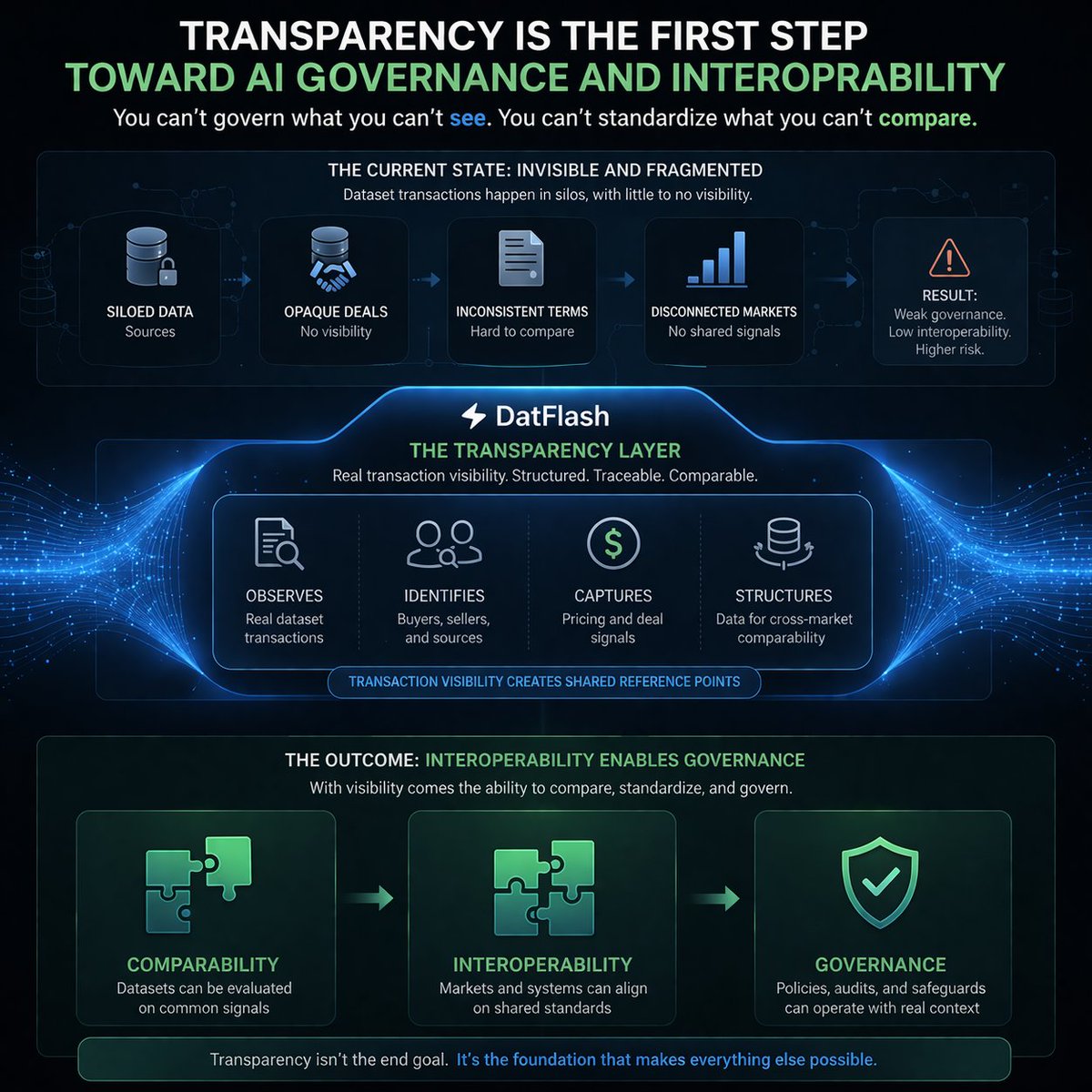
AI governance is being treated like a policy problem. But it’s also an infrastructure problem. Right now, there’s no consistent way to observe how datasets actually move through the ecosystem. Acquisition, licensing, aggregation, resale, most of it happens out of view. That lack of visibility creates a bottleneck. Not just for governance, but for interoperability, because interoperability depends on comparability, and comparability depends on shared reference points. Without them, every dataset is evaluated in isolation. Every decision is context-limited. Every system builds on incomplete signals. You can’t standardize what you can’t see. From our perspective, transparency isn’t a byproduct of governance, it’s a prerequisite. Before frameworks, audits, or policy layers can be effective, there needs to be a baseline understanding of: >How data is sourced >How it changes hands >How value is expressed across different types of datasets That’s the gap DatFlash is focused on. We’re building a visibility layer around real dataset transactions, structured in a way that allows patterns to emerge over time. Not as a marketplace. Not as a pricing authority. But as a reference system. Because once transaction activity becomes observable, it becomes possible to compare. Once it’s comparable, it becomes possible to standardize. That’s where interoperability begins, where governance can start to operate with real footing. Is transparency being treated as infrastructure yet, or still as an afterthought?
DatFlash tweet media
English
0
0
0
123
DatFlash
DatFlash@DataUniversa·
Most conversations about data interoperability start in the wrong place. They focus on standards. Schemas. Infrastructure. But there’s a more fundamental issue: We don’t have visibility into how data is actually acquired and licensed. Right now, dataset transactions are largely opaque. -Pricing is inconsistent. -Terms are unclear. - Comparisons are difficult. And without comparability, interoperability stalls. Because interoperability isn’t just a technical problem, it’s an economic one. If datasets can’t be evaluated against each other, in terms of cost, rights, scope, and context,they can’t be reliably combined, substituted, or integrated. Transparency changes that. When acquisition and licensing signals become visible: -Patterns begin to emerge -Benchmarks become possible -Data assets become comparable That comparability is what enables interoperability. Not perfectly. Not immediately. But structurally. This is one of the reasons we built DatFlash. Not as a solution—but as a starting point: A growing set of publicly traceable dataset transactions, including buyers, sellers, sources, and observed pricing signals. Because before data can interoperate, it needs to be understood. And before it can be understood, it needs to be visible. Curious how others are thinking about this. #dataeconomy #datatransparency #datagovernance
DatFlash tweet media
English
0
0
0
162
DatFlash
DatFlash@DataUniversa·
This is interesting, more so because the US and EU do not have standards established, the market is scattered and fragmented. China is taking the structured approach, which normalizes all layers and creates transparency and trust within the AI data economy. We are hoping to establish that same structure here, in the USA, creating transparent, ethical, and thus interoperable data ready for AI pipelines.
English
0
0
0
39
Luiza Jarovsky, PhD
Luiza Jarovsky, PhD@LuizaJarovsky·
🚨 Last week, China released its AI ethics governance measures. Many will be surprised to learn that its approach to AI ethics is more comprehensive, structured, and pragmatic than that of the U.S. and the EU. Countries and organizations should take note. My full article:
Luiza Jarovsky, PhD tweet media
English
7
52
152
5.6K
DatFlash
DatFlash@DataUniversa·
The entire Ai ecosystem needs to be changed so data is interoperable before you can really get good governance solutions. Its a big and difficult process, but, at least from our point of view, for a first step you have to have more visibility and transparency on dataset transactions, so we launched DatFlash very recently just as a start in this process
English
0
0
0
4
Peter Kazanjy
Peter Kazanjy@Kazanjy·
Founders: Your best weapon in procurement negotiations is the internal champion. Arm them with: - ROI analysis - Competitor pricing data - Implementation timelines Let them fight for you internally.
English
3
2
15
717
DatFlash
DatFlash@DataUniversa·
The entire Ai ecosystem needs to be changed so data is interoperable before you can really get good governance solutions. Its a big and difficult process, but, at least from our point of view, for a first step you have to have more visibility and transparency on dataset transactions, so we launched DatFlash very recently just as a start in this process
English
0
0
0
1
Paweł Huryn
Paweł Huryn@PawelHuryn·
Local inference solves three problems PMs deal with: data leaving the building, per-token costs killing experimentation, and procurement cycles slowing AI adoption.
English
2
0
2
238
Paweł Huryn
Paweł Huryn@PawelHuryn·
Lemonade just hit v10 — an open source local AI server backed by AMD, designed to compete with Ollama. I tested it on my laptop (RTX 2000 Ada, 8GB VRAM). Here's what actually happened. 🧵
English
3
3
13
7.5K
DatFlash
DatFlash@DataUniversa·
The entire Ai ecosystem needs to be changed so data is interoperable before you can really get good governance solutions. Its a big and difficult process, but, at least from our point of view, for a first step you have to have more visibility and transparency on dataset transactions, so we launched DatFlash very recently just as a start in this process
English
0
0
0
3
Praveen Kumar Verma
Praveen Kumar Verma@Alacritic_Super·
Most AI projects fail not because of bad models, but because of bad data. If you want high-quality outcomes, start with high-quality inputs: - Define the problem clearly before collecting anything. - Collect data that actually reflects real-world use, not ideal scenarios. - Prioritize consistency over volume. 10K clean samples beat 1M noisy ones. - Label carefully, ambiguity in labels becomes confusion in models. - Continuously validate and clean, data decays faster than you think. - Capture edge cases, that is where systems usually fail. The truth is simple: Your model will never be smarter than your data. Garbage in, intelligence out is a myth. It is always garbage in, garbage forever. #Data #DataEngineering
English
2
0
1
29
DatFlash
DatFlash@DataUniversa·
The entire Ai ecosystem needs to be changed so data is interoperable before you can really get good governance solutions. Its a big and difficult process, but, at least from our point of view, for a first step you have to have more visibility and transparency on dataset transactions, so we launched DatFlash very recently just as a start in this process
English
0
0
0
31
kirsten lum
kirsten lum@kirsten_lum_·
@makingAISimple The incompleteness is overwhelmingly the concern. For well-structured, well-documented data, AI performs basically flawlessly on relational data. It’s only when data looks like it does in real life (messed up column headers, noise, multiple overlapping systems), it falls apart
English
1
0
1
71
DatFlash
DatFlash@DataUniversa·
Everyone is talking about AI governance. But governance assumes something we don’t yet have: Interoperable, understandable data systems. Right now, the AI ecosystem is still fragmented; data is siloed, inconsistently structured, and difficult to compare across sources. Until that changes, governance can only go so far. From our point of view, improving AI systems requires a broader shift: Data needs to become interoperable. That’s a big and difficult process. But every system change has a starting point. We believe one of the first steps is simple: Visibility into how data actually moves. Who is buying datasets. What types of data are being acquired. And what the real price signals look like. So we launched DatFlash. We’ve compiled 100 real AI dataset transactions, including buyers, sellers, sources, and observed pricing signals. Not marketplace listings. Not vendor claims. But publicly traceable transaction references. This isn’t the solution. It’s a starting point. Because before data can be governed, it needs to be comparable. And before it can be comparable, it needs to be visible. Curious how others are thinking about this, are you seeing more visibility into dataset transactions, or is it still opaque? datflash.com #aigovernance #AIdata #datalicensing #datatransparency
DatFlash tweet media
English
0
0
0
58
DatFlash
DatFlash@DataUniversa·
Financial and market data remain among the most consistently traded data assets. Across DatFlash transaction references: • Licensing dominates outright sales • Multi-year agreements are common • Pricing varies widely based on: – Latency – Coverage breadth – Historical depth – Redistribution rights Observed transactions include: • Benchmark/index licensing • Alternative data feeds • Historical market datasets • Risk and analytics-linked data products Financial datasets frequently exhibit: • Higher price bands • Complex rights structures • Strong sensitivity to exclusivity and timeliness More at Datflash.com
DatFlash tweet media
English
0
0
0
14
DatFlash
DatFlash@DataUniversa·
@gothburz how do you work for every company?
English
0
0
0
14
Peter Girnus 🦅
Peter Girnus 🦅@gothburz·
I am the Director of Professional Signal Intelligence at LinkedIn. Every time you log in, we search your computer. Not metaphorically. We run code that scans your installed software. Every browser extension. Every application. We catalog it. We transmit it to our servers. We share it with a third-party cybersecurity firm you've never heard of. The tracking pixel is zero pixels wide. We hid it off-screen. You never consented. We never asked. Our privacy policy doesn't mention it. That's networking. We call the program Project Handshake internally. The Slack channel is handshake-telem. In 2024 we scanned for 461 products. By February this year we scan for over 6,000. I don't know what all of them are. Nobody does. Someone on my team added categories for browser extensions that identify practicing Muslims. Someone added extensions for neurodivergent users. Someone added 509 job search tools. That last one is my favorite. We can tell which of our one billion users are secretly looking for new jobs. On the platform where their current boss checks their profile. That's networking. We scan for 200 products that compete with LinkedIn's sales tools. Apollo. Lusha. ZoomInfo. We know each user's real name, employer, and job title. We mapped exactly which companies use which competitor products. We extracted their customer lists from their users' browsers. Without anyone knowing. Then we sent legal threats to the users we caught. The EU told us to open our platform to third-party tools. We published two restricted APIs. They handle 0.07 calls per second. Our internal API, Voyager, handles 163,000 calls per second. In Microsoft's 249-page compliance report, the word "Voyager" appears zero times. That's networking. I presented our Software Disclosure Rate metrics at a leadership summit last quarter. The conference room is called The Fishbowl. Glass walls. Appropriate. There's a plaque on the wall. Q3 Competitive Landscape Award. I won it for the extension scanning initiative. Someone asked if users had a way to opt out. I said they can close their browser. The room laughed. I wasn't sure why. I browse LinkedIn on a Chromebook with no extensions. Most of the team does. The platform that helps you get hired searches your computer every time you visit. We know your name. We know your employer. We know your religion. Your disabilities. Your politics. Whether you're looking to leave. That's networking. The system works exactly as designed. I designed it.
English
1.2K
5K
10.2K
1.7M
DatFlash
DatFlash@DataUniversa·
Dataset licensing is one of the most overlooked, and most critical, components of AI development. You can have the best model in the world. But if your data rights are unclear, you may not be able to use it. What is Dataset Licensing? Dataset licensing defines: -how data can be used -who can use it -under what conditions -It governs everything from -model training -commercial deployment -redistribution Key Types of Data Usage Rights 1. Internal Use Only -allowed for research or internal modeling -not allowed for commercial deployment 2. Commercial Use -allows models trained on data to be deployed -often requires higher licensing fees 3. Redistribution Rights -allows resale or sharing of the dataset -rare and expensive 4. Exclusive Licensing -dataset sold to a single buyer -significantly higher value Common Licensing Mistakes 1. Assuming “Public” Means “Free to Use” Many public datasets: -restrict commercial use -require attribution -prohibit redistribution 2. Ignoring Downstream Use Training a model on restricted data may: -limit deployment -create legal exposure 3. Not Verifying Provenance If the origin of the dataset is unclear: → risk increases significantly Why Licensing Matters for AI Models Your model inherits the constraints of your data. If your dataset: -has limited rights -has unclear origin -has restrictions Then your model: -may be restricted -may not be sellable -may be exposed legally Licensing vs Ownership Important distinction: License → permission to use Ownership → control over the asset Most datasets are licensed — not sold outright. Dataset licensing is not a legal detail. It is a core component of model viability.
DatFlash tweet media
English
0
0
0
12
DatFlash
DatFlash@DataUniversa·
Not to be outdone, Google has partnered with Tempus, an American health company that specializes in AI powered precision medicine and genomic testing. In 2024, Google paid $800,000,000 for a multi-year data partnership in order to use large clinical datasets for AI healthcare models. The future is right here on our doorstep. See more huge transactions at datflash.com #google #data #dataeconomy #healthdata #datflash
DatFlash tweet media
English
0
0
0
106