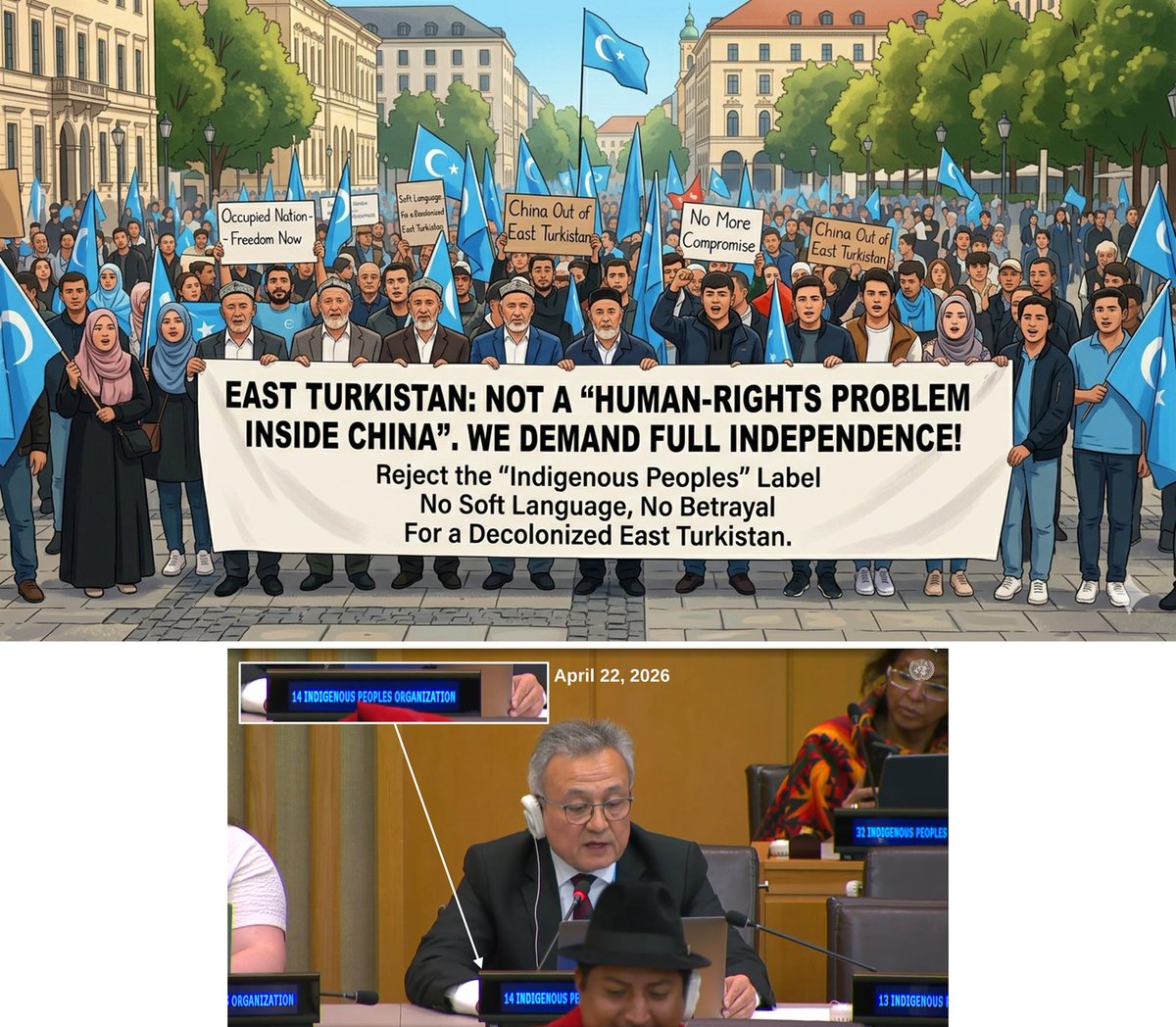
A Critique of the World Uyghur Congress (WUC) and Dolkun Isa: The Perspective of True East Turkistan Independence Advocates From the perspective of true East Turkistan independence advocates—the vast majority of the diaspora who reject any compromise with Chinese colonialism—here is a clear, unapologetic critique of the World Uyghur Congress (WUC) @UyghurCongress and @Dolkun_Isa Dolkun Isa’s actions. @HKokbore @RushanAbbas @MehmetTohti @AHakimIdris 1⃣. Betrayal and damaging act by attending “The Indigenous Peoples” event The most shameful part is WUC’s repeated participation in the UN Permanent Forum on Indigenous Issues (UNPFII). Dolkun Isa has spoken there multiple times (2017, 2018, and later sessions), often appearing under the electronic banner “Indigenous Peoples’ Organizations.” This creates ambiguity. Audiences (especially those sympathetic to China or simply skimming reports) can and do interpret it as that Uyghurs are presenting themselves as an indigenous people. China and China friendly nations, including majority of Muslim nations, can weaponize this to say “even their own leaders accept they are just a minority/indigenous group inside China.” This is especially true for those who are not deeply familiar with the nuances of Uyghur politics or UN accreditation rules. Furthermore, we do not recognize Dolkun Isa as our leader, nor do we view the WUC as representing the collective interests of East Turkistan. From the real patriotic perspective, this is political treason: 🔹Rejection of the Label: The East Turkistani people overwhelmingly rejected the “indigenous peoples” label in a 2021 diaspora poll (over 90% opposition). 🔹Framework Failure: The entire UNDRIP framework is about internal rights within an existing state—cultural preservation, limited autonomy, minority protections—not decolonization or restoring national independence. 🔹Legitimizing China: By allowing themselves to be listed and to speak under that banner, WUC actively helps China frame East Turkistan as merely an “internal ethnic/minority issue” inside China instead of a colonized and occupied sovereign nation. Palestinian advocates do not water down their language in UN forums. They call it occupied Palestine and settler-colonialism without fear. WUC’s refusal to do the same for East Turkistan proves they have chosen a Beijing-friendly path: human-rights talk that leaves Chinese sovereignty unchallenged. 2⃣. The UN has NO rule banning “East Turkistan” The United Nations has no official prohibition, no rule in its Rules of Procedure, and no standing policy that forbids the use of the historical and correct name East Turkistan in any meeting, including formal plenaries of the UNPFII or the Human Rights Council. Speakers are allowed to use their preferred terminology as long as it stays within basic rules of decorum. China may scream “separatist” and raise points of order, but that is political bullying, not UN law. WUC and Dolkun Isa know this perfectly well. 3⃣. WUC’s deliberate, calculated self-censorship WUC occasionally and symbolically uses the English term “East Turkistan,” in low-impact venues: their own website, social media, press releases, and interviews. But in high-impact formal UN speeches—the exact places where the international diplomatic record is created—they almost never use the term. Instead, they speak of “Uyghurs in China,” “China’s Uyghur region,” or “human rights in Xinjiang.” This is a deliberate strategy. Even when China interrupts and calls Uyghurs terrorists anyway, WUC chooses the softer language. They know full well that China will harass them regardless; yet, they continue to self-censor where it matters most. 4⃣. The Moral Disgrace of Leadership Furthermore, it is a profound disgrace for the Uyghur/East Turkistan cause to be represented by individuals facing credible, long-standing allegations of sexual harassment. Elevating someone associated with such misconduct to speak on human rights or represent the dignity of the East Turkistani people undermines our moral authority. The movement for national liberation requires leaders whose integrity is beyond reproach; keeping such figures still in positions of influence is an insult to the victims of Uyghur genocide in China occupied East Turkistan. 5⃣. The final take Even their cautious, “safe” human-rights advocacy did nothing to stop the genocide. The concentration camps, forced sterilizations, cultural erasure, and demographic replacement have continued and evolved despite years of WUC’s moderate approach. China was never going to be shamed into stopping by polite language. By softening the core demand—full independence and decolonization—WUC has helped keep the East Turkistan issue trapped in the “China’s internal affair” box that Beijing loves. They have traded the national liberation struggle for photo-ops, grants, and temporary Western applause, while the homeland continues to be destroyed. Conclusion From the genuine East Turkistan patriotic perspective, WUC and Dolkun Isa are not simply “pragmatic.” Their consistent, calculated choice to self-censor “East Turkistan,” to embrace the Indigenous Peoples’ framework, to avoid direct challenges to Chinese sovereignty, and to maintain leaders implicated in sexual harassment constitutes a betrayal of the East Turkistani people. It is not neutral. It is not harmless. It actively damages the national cause by legitimizing the very colonial framework the occupier demands. True patriots will never accept this dilution of our struggle. East Turkistan is not a human-rights problem inside China; it is an occupied nation demanding freedom. Anything less is surrender dressed up as advocacy.