고정된 트윗

How email became 52% of their revenue
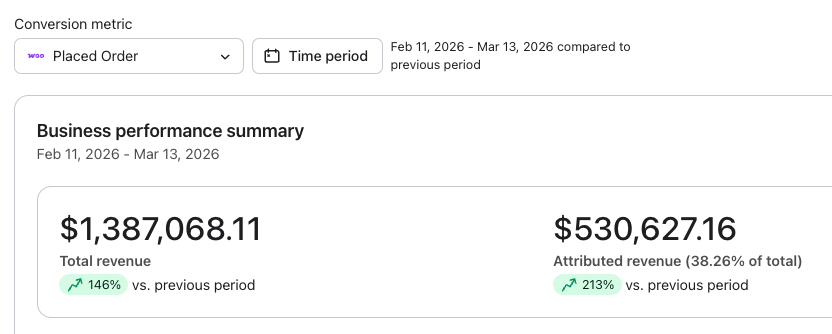
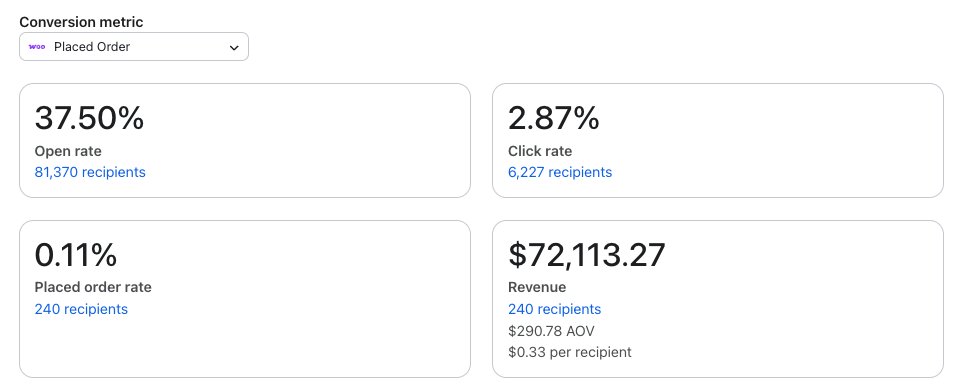
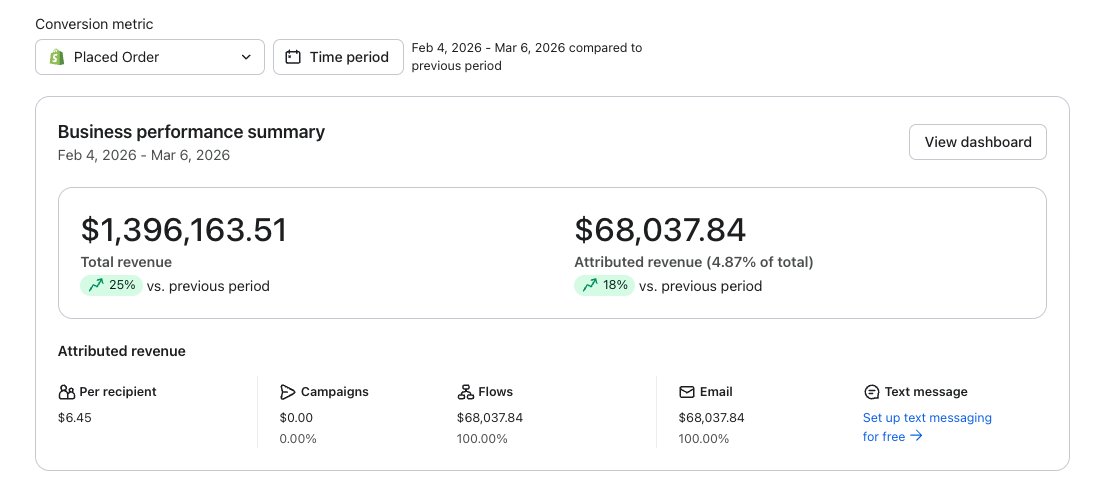
$370,465 in email revenue over the last 30 days.
That's 52.83% of their total sales.
Up 825% compared to last year.
I'm sharing this not to brag.
But because the path to getting here wasn't what most people would expect.
We didn't run some complex segmentation strategy.
We didn't AB test 47 subject lines.
We didn't implement AI personalization or whatever the latest trend is.
We did four things.
And all of them were based on principles, not tactics.
Let me walk you through them so you can follow along if the spirit moves you.
Problem #1: They weren't sending enough emails
When we partnered in March, they were sending about 4 campaigns per month.
One per week on average.
Not because that was their strategy.
But because their head of marketing didn't have the bandwidth to do more.
They wanted to send more.
They knew they should be sending more.
But between managing the website, handling creative briefs, coordinating with other departments, and putting out daily fires, there just wasn't time.
So email got whatever was left over.
Which was usually one campaign per week if they were lucky.
And here's what happens when you only send 4 emails per month:
Your competition sends 4 emails per week.
And guess who subscribers have top of mind when it's time to purchase?
Because when the moment to buy arrives, people buy from who they remember.
And they remember who they hear from.
Many sales were being lost to inferior competitors simply because those competitors were more present.
Not better.
Just more present.
When we took over, we increased frequency immediately.
Problem #2: Missing a Trust-building layer
Before we came in, every email was designed.
And these emails worked.
They looked good and got sales.
They did what designed emails are supposed to do.
But here's what they couldn't do:
Build deep Trust.
Because designed emails look like marketing, they signal: "this is a company selling you something". And that's fine when someone's already decided they want to buy.
But before someone's ready to buy, they need Trust.
And you can't build that kind of Trust with pretty graphics and buttons.
You build it through connection.
Through feeling like you're talking to a person, not a brand.
That's what text based emails can do.
So we implemented what I call the Inbox Host strategy.
We created a second voice for the brand.
Someone subscribers could connect with as a person. Not as a logo or a company. A person.
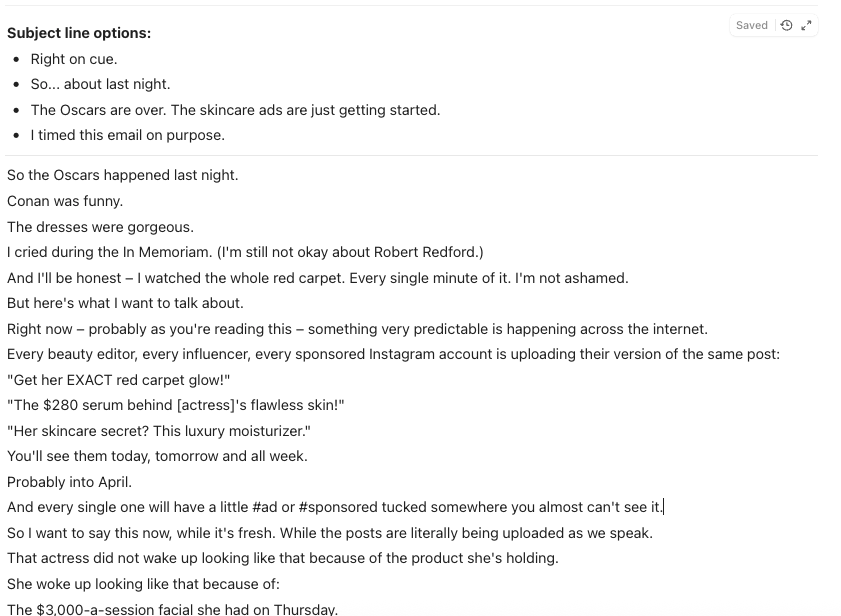
And we used this voice exclusively in text-based emails.
No images.
No buttons until the very end.
Just someone talking to you.
These emails win Trust through mechanisms that designed emails can't psychologically access.
Text emails hit the emotional brain more easily than a designed email can.
They can be engineered for Trust.
And every year I'm more and more convinced about this. More bullish on emails filled with personality.
On emails that don't blend in.
Because people are craving it.
They're drowning in bland, corporate, safe marketing.
Every brand sounds the same.
Every email reads like it went through a committee.
And subscribers are starving for something that feels real – something that has a voice.
We didn't replace designed emails.
We added a Trust-building layer that the designed emails couldn't provide.
Problem #3: They had "Fiverr Flows"
The kind you get from paying someone a couple hundred dollars (or sometimes a couple thousand) to "set up Klaviyo for you".
So it's all templatized.
Following the typical structure everyone uses.
"Welcome to the family!"
"Here's 10% off your first order!"
"Don't forget about your cart!"
Zero thought behind any of it.
Just copy-pasted templates with the brand name and logo swapped in – and some basic ChatGPT copy.
And if we think of flows as ads, they were running emails at a 0.3x ROAS.
Meaning: email conversion rates were bad.
Because the emails weren't designed to convert.
They were designed to exist.
To check a box that says "we have a welcome series".
So we gutted everything and rebuilt from scratch.
This paired perfectly with the Inbox Host strategy and increased campaign volume.
We now had this stadium-wide safety net to recover lost sales, where they previously had a tennis racket one – so to speak.
Problem #4: Everything was trying to logic people into buying.
The old emails read like spec sheets.
"Our product has X feature and Y benefit and Z technology."
All logical.
All rational.
All completely missing the point.
Because people don't buy with logic.
They buy with emotion and justify with logic afterward.
The logic is the story they tell themselves after they've already decided emotionally.
But the decision itself? That's pure emotion.
(Something I WISH I learned and embodied earlier in my marketing career.)
So we implemented Conviction-building across everything.
Every email now focuses on two things: Trust and Desire.
Trust: "I believe this will work for me".
Desire: "I want this badly".
When both are high, buying feels inevitable.
When either is low, no amount of logical arm-wrestling will move someone to buy ("But it's cheaper than your daily Starbucks!")
This meant changing how we wrote about products.
We stopped trying to convince people with facts and started making them feel something.
And when people feel something, they act.
The result:
$370,465 in email revenue over 30 days.
52.83% of total sales.
Up 825% year-over-year.
Not because we used some secret tactic.
But because we focused on principles.
These aren't new ideas.
They're not innovative.
And certainly won't make it to any "8-FiGuReS mAsTeRmInd!"
They're just fundamentals that some brands ignore because they're too busy chasing the next "hack" or ChatGPT prompt.
But fundamentals are what scale.
Fundamentals are what last.
And fundamentals are what took email from 15% of revenue to 52%.
The tactics will change.
The principles won't.
- Matt
P.S. If you're in charge of a 7, 8, or 9-figure brand and want us to manage your email marketing like this, let's chat below:
calendly.com/matiasp/discov…

English