Shetlanddigitalassets

841 posts

Shetlanddigitalassets

Shetlanddigitalassets

@JDFCrypto

.: Predicted the top of BTC last bull run. .: Always providing gems .: RNDR at 0.30c .: Bought kas at 0.004 .: ADA at 0.10c, sold at $2.70 Follow for alpha

Shetland Islands 가입일 Kasım 2010
1.1K 팔로잉76 팔로워
Shetlanddigitalassets
Shetlanddigitalassets@JDFCrypto·
@PolitlcsUK Couldnt even keep it on for longer then 3 seconds. The sight of you and the voice on you is enough to make you sick. Do us all a favour and resign. I dont know if there has ever been such a hated prime minister in the UK, YOU SUCK.
English
0
0
0
1
Politics UK
Politics UK@PolitlcsUK·
🚨 WATCH: Keir Starmer's New Year message to Britain "Things have been tough in Britain for a while. For many, life is still harder than it should be. You long for a bit more money in your pockets, a meal out, a holiday. The chance to make a special family moment extra special. "In 2026, the choices we've made will mean more people will begin to feel positive change in your bills, your communities and your health service. But even more people will feel once again a sense of hope, a belief that things can and will get better, feel that the promise of renewal can become a reality. And my Government will make it that reality. "More police on the streets by March. Energy bills down and the number of new health hubs up in April. More funding for local communities. And with that change, decline will be reversed. That opportunity for you and pride in your community can be restored. "I share the frustration about the pace of change. The challenges we face were decades in the making, and renewal is not an overnight job, but putting our country back on a stable footing will become our strength. "Strength that means we can support you with the cost of living. Rail fares, prescription charges, fuel duty - all frozen. £150 cut from your energy bills. A boost once again to the National Minimum Wage. A major cut to the cost of childcare. "We are getting Britain back on track. By staying the course, we will defeat the decline and division offered by others. "For all the times that have been tough, I hope the festive period has brought good moments. Precious time with your family. A chance to celebrate what's most important to you. "I wish you more of those moments next year when things start to feel easier. When politics shows it can help again. When Britain turns the corner with our future now in our control, the real Britain will shine through more strongly. Happy New Year!"
English
1.2K
167
924
232.9K
Shetlanddigitalassets
Shetlanddigitalassets@JDFCrypto·
@Keir_Starmer Cant even bare to watch this video, the sight and voice of you is enough to skin a cat. Do us all a favour, Fuck off and resign
English
0
0
0
2
Keir Starmer
Keir Starmer@Keir_Starmer·
In 2026, the choices we’ve made will mean more people will begin to feel positive change. The promise of renewal will become a reality, and Britain will turn the corner. From my family to yours: Happy New Year.
English
15.9K
995
6.3K
1.9M
Edward Johnson
Edward Johnson@EdwardAlerts·
I'm officially starting the $500 to $1 Million account challenge for 2026 📈 I'm going to retire dozens in 2026 and will change lives 🙌 Like & comment "11 Flips" to join! ❤️
Edward Johnson tweet media
English
769
4
116
6.9K
Amit
Amit@HeyAmit_·
I don't understand why so many people want US, UK, Canadian, or German citizenship. Here are 12 websites to find remote jobs that pay in USD worldwide:
English
119
1.2K
5.7K
1.1M
Tomas
Tomas@TomasOnMarkets·
💵 "Not QE, QE" will commence within the next 14 days The US Government will soon begin a drawdown of the Treasury General Account (TGA). This could mean a liquidity injection totaling up to $830bn. Functionally, this is similar to Quantitative Easing. Here's what will happen... 🤔 So what's going on? The US Government hit its self-imposed "debt ceiling" of $36 trillion in late January. This means the Treasury can no longer take on additional debt until a new debt ceiling agreement is reached (this has historically involved raising or suspending the ceiling). The Treasury has since been deploying "emergency measures" - a total of roughly $338bn in what are essentially accounting gimmicks and financial maneuvers. On Friday February 7, the Government had used up more than 60% of these measures, with only $133bn left. That means, probably this coming week or the week after, the Treasury will be forced into drawing down the TGA to fund spending, until a new debt ceiling agreement is reached. 🤔 So what does a TGA drawdown mean? The TGA can be thought of as the Government's bank account at the Federal Reserve. It currently has a sizable balance of $830bn. This money is currently sat idle at the Fed - so it is "removed from markets". If the Government begins to draw down the TGA, this is an injection of "new" liquidity into markets. A TGA drawdown and Quantitative Easing (QE) are functionally similar in that both inject liquidity into the financial system by increasing bank reserves. While not strictly "QE" - it looks like QE, sounds like QE and smells like QE, which is why it has been dubbed "not QE, QE". And the impact of debt ceiling-induced TGA drawdowns on financial markets can be similar to QE, on a temporary basis. In the past, significant TGA drawdowns have generally coincided with asset price appreciation. The TGA drawdown in 2022/2023 started halfway through a bear market, and was arguably one the main factors in halting that bear market. 🤔 So what's the TGA path? Analyzing all the components of the TGA, Treasury spending, borrowing and expected tax intakes, my rough estimated path for any potential coming TGA drawdown is below: Any potential prolonged TGA drawdown will straddle two tax intake periods (April and June), so it will be punctuated by two short-term TGA balance increases (liquidity drains). The first "portion" will take place between roughly mid-February and early April and I estimate it will total about $600bn in liquidity additions. The estimated path in the chart above won't be perfect, but it is a guide to what is likely to happen. It could vary as time passes. How far along this path we will get depends entirely on how quickly lawmakers come to a new debt ceiling agreement. What is known as the "X-date", the day that the US Government officially runs out of money, is currently looking like it will probably be some point in August. This TGA drawdown is practically set in stone, and is essentially non-negotiable if the US Government wants to keep functioning. If lawmakers follow a similar "debt ceiling discussion path" to previously, they will leave things late and finally come to a new agreement at some point in July/early August. This will allow for a significant TGA drawdown. 🤔 Other considerations However, there are a number of nuances and considerations to take into account, and I set these out in a more detailed post quoted below. If you are interested in this debt ceiling/TGA drawdown dynamic, I would urge you to also read that post. To determine the total "net" liquidity injection from the Federal Reserve over any potential Treasury General Account drawdown period, all aspects of the Fed's balance sheet should be taken into account (both liquidity adding and liquidity draining). This total "net" injection will be reflected in the below Net Federal Reserve Liquidity chart. This chart has already increased by roughly $240bn since January 1 2025. I will continue posting updates of this chart here on X.
Tomas tweet mediaTomas tweet mediaTomas tweet mediaTomas tweet media
Tomas@TomasOnMarkets

🌊 Is a huge wave of liquidity coming? The US will officially hit the debt ceiling on Tuesday. And the Treasury may be forced to drain the Treasury General Account. This could mean a big liquidity injection into markets - but it's not that simple. Here's everything I'm thinking about (WARNING - long post)... 🍽️ Let's set the table The US Government will hit its self-imposed "debt ceiling" of $36 trillion on Tuesday January 21. This means the Treasury can no longer take on additional debt until a new debt ceiling agreement is reached (this has historically involved raising or suspending the ceiling). But this doesn't mean imminent default. The Treasury has "extraordinary measures" that it can use, until lawmakers eventually agree to a new debt ceiling deal. One of those measures is to dip into the Treasury General Account (TGA) - the Government's bank account at the Federal Reserve. The TGA balance is currently a sizeable $650bn. When the Government uses cash from the TGA to fund spending, this is effectively an injection of liquidity into markets. This is because, when money is sat idle in the TGA at the Fed, it is "removed" from markets. But when it is spent down, it is released back into markets - an injection of "new" liquidity. In the past, significant TGA drawdowns have generally coincided with asset price appreciation. The TGA drawdown in 2022/2023 started halfway through a bear market, and was arguably one the main factors in halting that bear market. Some people even argue that debt ceiling episodes and TGA drawdowns have an even greater impact on asset prices than Quantitative Easing, because there is also no new net debt issuance for the duration of the debt ceiling talks. In recent years, debt ceiling episodes have always led to extensive and protracted discussions among lawmakers about what to do next - meaning the TGA has been drained close to zero, before a new deal is finally reached at the last minute. So, the short and dirty explanation of what might happen in the current situation is: 1. Debt ceiling debates are always protracted 2. Which means Treasury will be forced to draw down the TGA imminently 3. Which means an imminent and significant liquidity injection But it's not as simple as that. There are a number of nuances and considerations to be aware of: 1⃣ Will debt ceiling talks be protracted? The debt ceiling debate has previously been used as a political tool, with lawmakers making a stand on raising or suspending the ceiling, either for ideological reasons, or as a bargaining tactic to get something else that they want. This typically means disruptive lawmakers will hold out until the last minute, before ultimately agreeing to a new deal. In recent years, it has been used as a weapon by a Republican Congress against Democratic presidents. But this time, following the red sweep in November, any potential dispute is likely to be Republican vs Republican. This could potentially make protracted debt ceiling wrangling less likely than previously. However, there is a cohort of Republicans that have very strong feelings about the ballooning US debt situation, and it is a topical issue currently - they might want to puff their chests out and grandstand on the topic (before inevitably ultimately agreeing to a new deal). A super "tin-foil hat theory" is that Republicans may want to purposely drag out debt ceiling negotiations to achieve a full TGA drain in an attempt to start the new administration with a strong stock market. But I don't really buy that theory. 2⃣ So what in the world does "extraordinary measures" mean? "Extraordinary measures" are a set of tools, essentially financial maneuvers, available to the Treasury when the debt ceiling has been hit. One of those tools is draining the TGA, but it is one of many. It is currently looking likely that the Treasury will attempt to use some other measures, such as suspending investments in certain government accounts, before eventually turning to drawing down the TGA. In the latest letter penned by outgoing Treasury Secretary Janet Yellen, she writes that the Treasury’s extraordinary measures should begin by redeeming a portion of, and suspending full investments in, the Civil Service Retirement and Disability Fund. It is also planned to suspend additional investments of amounts credited to the Postal Service Retiree Health Benefits Fund. If the Treasury uses all other extraordinary measures available to it before drawing down the TGA, this might mean any potential TGA drawdown is delayed by between one and two months. 3⃣ Overall liquidity effects may not be so simple If a TGA drawdown occurs, there will simultaneously be a "negative net issuance" of Treasury bills. This may incentivize Money Market Funds, starved of new T-bills, to park cash in the Fed's Reverse Repo facility, which is effectively a liquidity drain. So it might be the case that there could be a sort of "push and pull" dynamic between a TGA drawdown (liquidity injection) and Reverse Repo usage increasing (liquidity drain). I don't know to what extent increased Reverse Repo usage may blunt the effects of any potential TGA drawdown from a liquidity perspective. However, if you are following along with the Net Fed Liquidity chart that I often post on X, this push and pull dynamic will be reflected in that chart, showing the total "net" liquidity injection (or drain). 4⃣ If drawn down, the TGA will eventually have to be refilled The final point is that, should the TGA be drawn down in any meaningful way, it will then need to be refilled once a new agreement is reached. This has the opposite effect, sucking liquidity out of markets (liquidity drain). TGA drawdowns are a big liquidity injection - but only temporary. 🔮 Let's look into the crystal ball Here's a very, very sketchy prediction of what might happen (likely to be wrong): Let's assume that debt ceiling wrangling among is lawmakers is protracted, despite the Republican vs Republican dynamic. 1⃣ The TGA balance will increase to a high of around $750bn to $800bn by the end of January due to seasonal factors (liquidity drain). 2⃣ A TGA drawdown of up to $800bn will then begin between roughly the middle of February and the middle of March (liquidity injection), after other "extraordinary measures" are exhausted. 3⃣ This TGA drawdown will then be "halted" temporarily by a big tax payment season in April, filling the TGA back up (liquidity drain). 4⃣ Then the drawdown will continue again (liquidity injection) and the TGA balance will continue to dwindle towards zero until some point in the summer, when a new deal will eventually be reached (at the last minute, as usual). 5⃣ During this roughly six month period, Reverse Repo usage might increase (liquidity drain), but not enough to fully mitigate the TGA drain (liquidity injection).


English
118
476
2.3K
768.6K
Tommy Robinson 🇬🇧
Tommy Robinson 🇬🇧@TRobinsonNewEra·
ADMIN POST. Sunday at the Guillotière metro station, in Lyon. A man accidentally bumps into another. He runs up behind him and stabs him in the neck. Suspect being sought.
English
868
4.9K
18.8K
1.3M
Christian Ludwig
Christian Ludwig@christi61026749·
After spending 3 years researching @KaspaCurrency I am 100% convinced that Kaspa's founder, Yonatan Sompolinsky, is Bitcoin's anonymous founder Satoshi Nakamoto A 🧵👇 $BTC $KAS
Christian Ludwig tweet media
English
267
613
2.1K
376.4K
Mr. Anderson
Mr. Anderson@Truecrypto·
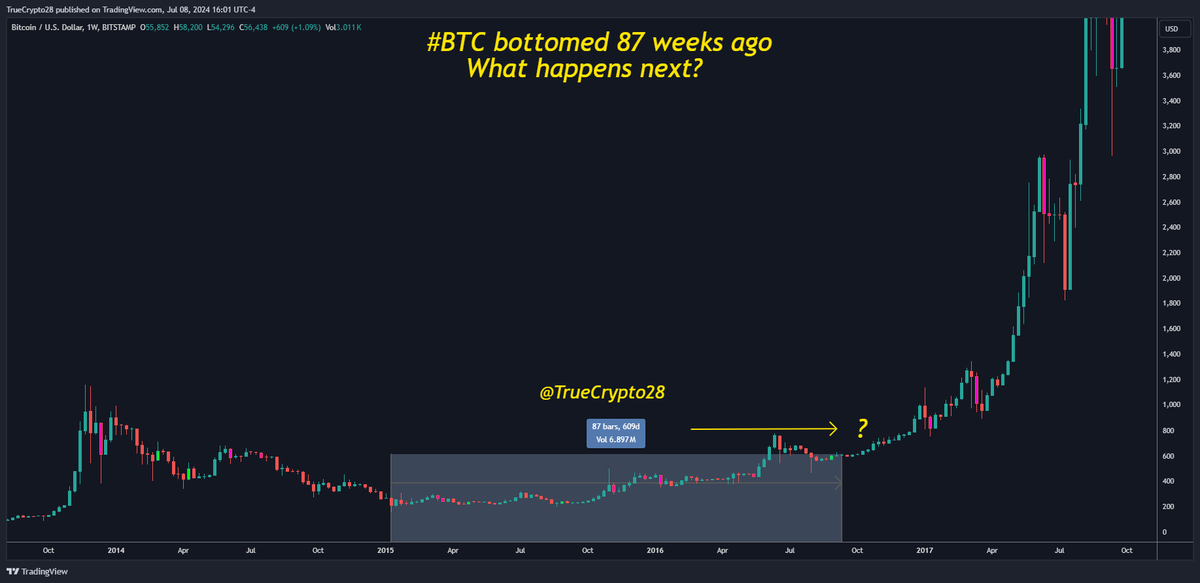
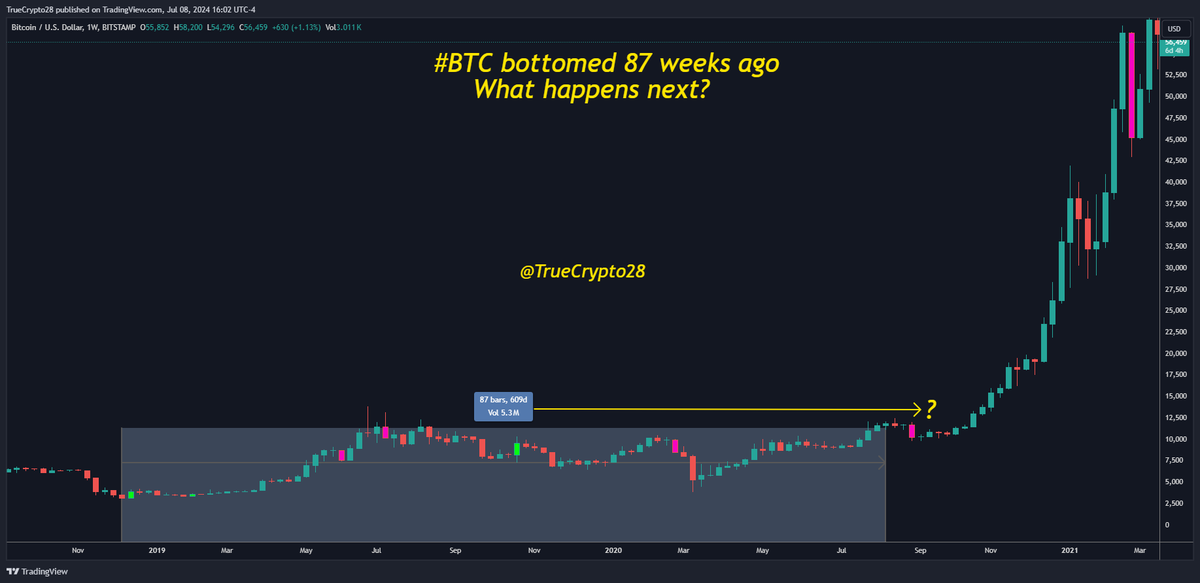
#BTC bottomed 87 weeks ago, and the majority thinks the market has topped. What does #Bitcoin typically look like 87 weeks after bottoming? What usually follows?
Mr. Anderson tweet mediaMr. Anderson tweet mediaMr. Anderson tweet media
English
99
135
874
164.5K
Justin Mihaly
Justin Mihaly@JustinMihaly·
You've been lied to about Nicotine. All you've been told is how addictive & terrible it is for your health... But when used correctly? It's the ultimate health hack. Here are the secrets 99% of people don't know about nicotine (& how beneficial it can be):
Justin Mihaly tweet media
English
716
4K
17.6K
3.6M
Ben
Ben@benvhodl·
The Netherlands want to introduce an exit tax. Italy raises tax on Bitcoin to 42%. More severe changes will follow for sure. Is it time for Bitcoiners to leave Europe? And then where to? I have my ideas, but love to hear yours.
English
267
67
1.1K
158.3K
Tommy Robinson 🇬🇧
Tommy Robinson 🇬🇧@TRobinsonNewEra·
Illegal immigrant Italy making sure you can't get to work on time to pay your taxes that house them. Make it makes sense?
English
1.6K
2.7K
12.4K
2.3M
Daniel Priestley
Daniel Priestley@DanielPriestley·
The UK is like a person who looks rich but doesn’t own anything. The house is rented, the car is leased, the fancy watch is a gift from grandma. Most British companies aren’t British. If you don’t own the assets, you don’t get the profit and you don‘t have the wealth. The UK Government wants you to believe that the top 10% of British earners and investors aren’t paying enough in taxes (despite covering 50%+ of the bills). The truth is, the UK doesn’t own anything anymore. When “British companies” make a profit it goes back to their foreign shareholders. The economy isn’t in trouble because of wealth inequality the economy is in trouble because of asset deficiency. The last chance the UK has to fix this is the small group of dynamic entrepreneurs and investors who are UK based. If you lose them, you’ve lost the existing businesses and the ability to create new ones. If the government taxes rise more - the only thing left in the UK will be cheap labour for foreign companies to exploit. Here’s a list of 30 “British Brands” that aren’t: 1. Rolls-Royce Motor Cars – Owned by BMW (Germany) since 1998. 2. Mini – Also owned by BMW (Germany) since 1994. 3. Bentley – Owned by Volkswagen Group (Germany) since 1998. 4. Jaguar – Owned by Tata Motors (India) since 2008. 5. Land Rover – Owned by Tata Motors (India) since 2008. 6. Cadbury – Owned by Mondelez International (USA) since 2010. 7. P&O Ferries – Owned by DP World (United Arab Emirates) since 2006. 8. Boots – Owned by Walgreens Boots Alliance (USA) since 2014. 9. Scottish Power – Owned by Iberdrola (Spain) since 2007. 10. British Steel – Owned by Jingye Group (China) since 2020. 11. Weetabix – Owned by Post Holdings (USA) since 2017. 12. Harrods – Owned by the Qatar Investment Authority (Qatar) since 2010. 13. Selfridges – Owned by the Weston family (Canada) since 2003. 14. Lotus Cars – Owned by Geely (China) since 2017. 15. O2 – Owned by Telefónica (Spain) since 2006. 16. Thames Water – Part-owned by a consortium including China Investment Corporation (China). 17. House of Fraser – Owned by Sanpower Group (China) since 2014. 18. Fortnum & Mason – Owned by the Weston family (Canada) since 1951. 19. Vauxhall – Owned by Stellantis (a multinational conglomerate headquartered in the Netherlands) since 2021, after being previously owned by General Motors (USA). 20. Costa Coffee – Owned by The Coca-Cola Company (USA) since 2019. 21. Caffè Nero – Majority-owned by The Cyrpus-based holding company controlled by its founder, Gerry Ford, with significant involvement from foreign investment firms. 22. Innocent Drinks – Majority-owned by The Coca-Cola Company (USA) since 2013. 23. Manchester United – Owned by the Glazer family (USA) since 2005. 24. ARM Holdings – Owned by SoftBank (Japan) since 2016 (with plans for a partial public offering in the USA). 25. Hamleys – Owned by Reliance Industries (India) since 2019. 26. Virgin Atlantic – 49% owned by Delta Air Lines (USA). 27. Odeon Cinemas – Owned by AMC Theatres (USA), which is controlled by Wanda Group (China). 28. Thomson Holidays – Now part of the TUI Group (Germany). 29. New Look – Controlled by Brait SE (South Africa). 30. Harvey Nichols – Owned by Dickson Concepts (Hong Kong) since 1991.
English
522
2.6K
11.2K
1.1M
symbiote
symbiote@cryptosymbiiote·
This is Len Sassaman - the man who holds $64B in $BTC He might be a Satoshi Nakamoto, the man who created Bitcoin I spent ~10 hours researching data: the info I found shocked me Here is the story of the biggest crypto billionaire ever🧵👇
symbiote tweet media
English
545
843
7K
2.1M
Cole Walmsley
Cole Walmsley@Cole_Walmsley·
Let’s do some math. I just played poker for two hours. I profited $1,909. I am choosing to save all of my winnings in Bitcoin. Let’s be conservative and say that in 10 years, Bitcoin will have surpassed gold’s market cap, which would be a 15x on Bitcoin’s current price. That would make my $1,909 turn into $28,635. But that’s not the important thing to note. Money, bitcoin, dollars… none of these are our most precious asset. Our most precious asset is time. My hourly win rate for this session of poker was $954.50. Two hours at $954.50 an hour equals $1,909. In 10 years, due to Bitcoin’s value appreciation, my poker winnings are worth $28,635. At the same hourly rate of $954.50, that would be like I spent 30 hours sitting at the poker table. But I didn’t. I played for two hours. By saving my winnings in Bitcoin, I’ve granted myself an extra 28 hours that I *don’t have to work* to make my hourly rate of money. Do you understand how significant that is? By saving my money in Bitcoin, I have given myself more time. Time that I don’t have to spend slaving away to make money, time that I can choose to spend with my family, my friends, pursuing my true curiosities, and more. Think about it. By choosing to save in Bitcoin, I am making more money (increasing my purchasing power) without having to work or spend time making money. Instead of worrying about having to spend my time to make money, I can freely choose to spend my time where I’d like, while I’m still increasing my purchasing power. This is Bitcoin. And that is just one poker session. What about all of the other days where I make money and save it in Bitcoin? The implications of this on an individual level are massive, but they are simply unimaginable on a global level. What if everyone on Earth was granted more time? What if we didn’t have to work more and more and more to keep up with an increasing cost of living? What if we could work less and less and less to comfortably pay off a more affordable cost of living? Compare this to the U.S. Dollar (and all other inflationary political currencies). The U.S. Dollar has *lost* ~7% of its value every year since 1971. If I choose to store my $1,909 of poker winnings in dollars, I would lose half of my purchasing power in 10 years. (Rule of 72, which states that to see how long it would take to lose half of your value, take the percentage of annual loss (7%) and divide 72 by that number. 72 divided by 7 is roughly 10.) By choosing to store my winnings in dollars, my value has gone from $1,909 to $954.50... as if I only spent one hour at the poker table. But I spent two hours at the table at a $954.50 an hour rate, so I should have at least $1,909. That’s the thing. Because I chose to save in dollars, my value has been stolen, but more importantly, my TIME has been stolen. Now I have to work an extra hour at that same $954.50 rate just to make back my money. Do you understand how insane that is? Imagine working an entire year and saving all of your earnings in dollars. 40 hours a week for 50 weeks. 2,000 hours at $20 an hour for a total of $40,000. You keep it in dollars for 10 years, it inflates away, half of the money's value disappears and 1,000 hours of time are stolen from you. That is 42 days taken from you. Imagine doing this for 10 years. That would 420 days of work stolen from you - over an entire year. That's as if you worked every single day for a year and didn't get paid a dime. And you wonder why the world is so broken. Consider the person that bought Bitcoin 10 years ago. Their purchasing power has gone up tremendously (a 483x, to be exact). Now, they don’t have to worry as much about working to make money. Bitcoin has done the work for them. That is what money is supposed to do. While the world’s productivity increases (we make better things more efficiently) over time, our money should increase in value as a result of that global productivity increase. Bitcoin is the reflection of that. Bitcoin is the index for global productivity. It makes no logical sense that we should have to be working *more* just to live our lives while productivity increases. But this is what inflation does. This is what political fiat currencies do. They steal your value. They steal your time. Humanity suffers as a result. Bitcoin cannot be inflated past 21 million bitcoins. That’s the whole point. That’s the core reason it is the greatest savings technology in the world. Don’t take it from me, take it from the market. Has there been any better place to store your money for the last 10 years than Bitcoin? There’s you in 2034 wishing you had saved your money in Bitcoin in 2024. Yet you’re here in 2024 with the opportunity right in front of you. The moment you start saving in Bitcoin is the moment you start freeing your time. The quicker you understand that (and act on it), the quicker your time will be freed. That’s the coolest thing that often gets overlooked with Bitcoin. The increase in purchasing power is great, but there is nothing greater than having our time free to spend as we truly please. Just remember that. Bitcoin is time.
English
66
135
686
74.3K
Shetlanddigitalassets
Shetlanddigitalassets@JDFCrypto·
@CryptoGirlNova What's the rules on this? Do you need to live in the new country for a certain amount of time? Or gain citizenship or what?
English
2
0
0
96
Nova
Nova@CryptoGirlNova·
Many people don't know this but I'm actually going to relocate to another country next year. If you ever make a good amount of profits in crypto? Stack it up, try to not use any of it and cash it out after you relocate (especially if you pay heavy taxes in your home country). Only way to do it 👌
Nova@CryptoGirlNova

Many people agree that there are currently many places you just don't want to live anymore. Not just for now but also for the future of your children. Make use of the upcoming opportunity that crypto is giving and walk away. Relocate and change your life for the better. The only way to do it 🤝

English
67
7
292
83.4K
Nova
Nova@CryptoGirlNova·
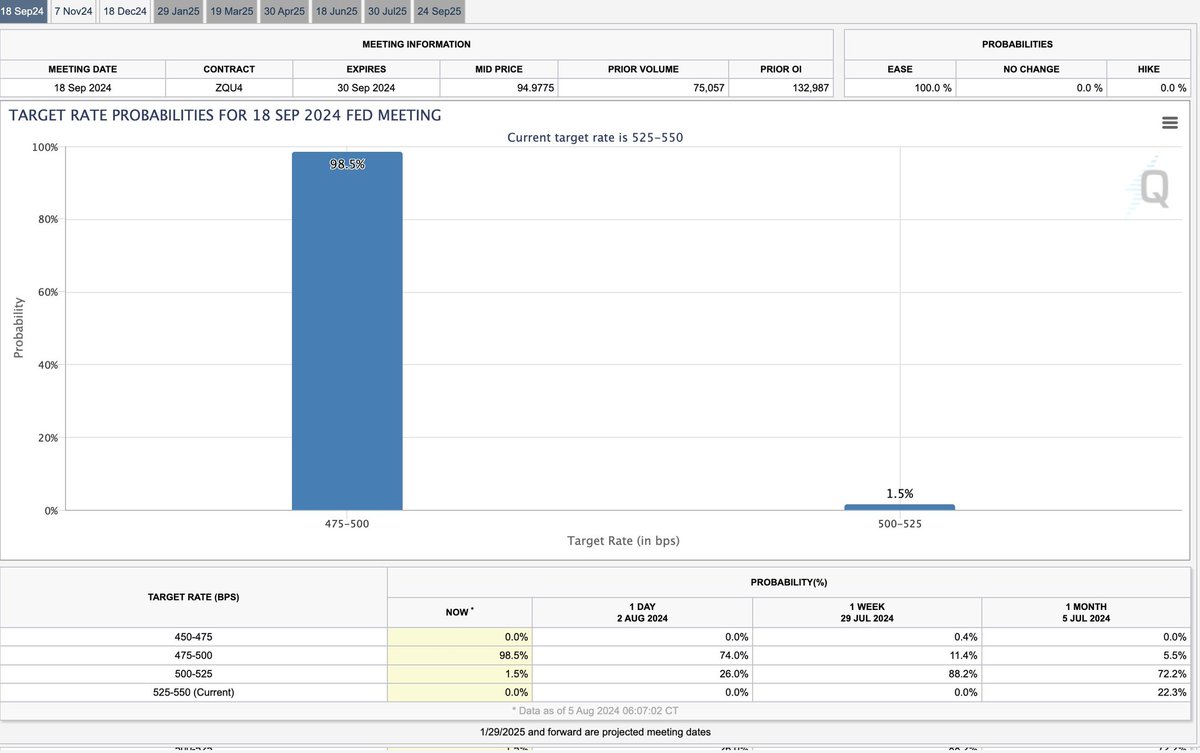
𝙏𝙝𝙚 𝙡𝙚𝙨𝙨𝙚𝙧 𝙤𝙛 𝟐 𝙚𝙫𝙞𝙡? It's pretty much GUARANTEED now that the FED will cut interest rates in September to December (every month). There is even a chance that they will hold an emergency meeting to cut it sooner. Bad for normies, good for crypto. The reason why they didn't do it sooner is because cutting interest rates isn't good when inflation is out of control. Not good for the economy either. But now that there is fear of a recession (US economy shrinking) inflation isn't their only problem anymore. Cutting interest rates and potentially also putting the money printer on again is a short term saving solution (like a bandage on an open wound) for the economy. But after that? It literally drains ever normie without assets because they only hold cash. People with savings are getting robbed because inflation is rising again and your money becomes worthless. Same scenario in 2020. But the financial markets? They thrive from a dropping currency (fiat like the dollar becoming more wortheless). Loans getting cheaper, rates dropping, money injected into the economy again. It means assets go up. Houses, stocks and even crypto yes. So why the lesser of 2 evil? It's a scenario that will benefit crypto holders. It's not a scenario that will benefit the normal hard working person and their savings. Aka 2020 all over again. So I don't wish it upon any of my friends to make their financial situation more tough again. But I do want the market to go up again. So for us (and me) it's the lesser of 2 evil and yes the FED HAS TO DO IT. They much is confirmed. Cut the rates and turn on the printer boys!
Nova tweet media
English
27
45
305
31.9K
Nova
Nova@CryptoGirlNova·
𝙔𝙤𝙪 𝙩𝙝𝙞𝙣𝙠 𝙨𝙚𝙡𝙡𝙞𝙣𝙜 𝙖𝙩 𝙖 𝙡𝙤𝙨𝙨 𝙞𝙨 𝙪𝙣𝙥𝙧𝙤𝙛𝙞𝙩𝙖𝙗𝙡𝙚? Think again! Here's a little trick that I apply every time the market enters a new frenzy to fully recover and more! When you are down 80-90% on a position, the first thing you can think off is: "No point selling here anymore right? You're not at a loss untill you sell right?" Essentially this is true. But that is only the case when you sell for fiat. Listen, not all projects will bounce back. Despite not selling at a loss, you don't want to be the eternal backholder either. It's all about identifying which project has the biggest opportunity right now. Right before the market hits a new frenzy or is still in the early stages of one (like today) often the ENTIRE market has corrected a lot. Don't want to sell your -80% altcoin at loss? Chances are big, that the other altcoin you have your eyes on is ALSO 80% down. You are NOT selling at loss, you at merely switching the opportunity with the highest amount of upside. (unless you sell and cash out that amount) Every year I have a lot of plays that works out tremendously well, but also ones that underperform heavily. It's how it is. Sometimes I still have faith, other times I don't anymore. Then narratives change, hype shifts and opportunities renew. Often I rather want to be in another project right now. It's all about how QUICKLY am I making my money back. Let's say you invested 100$. It's down to just 20$ after a 80% decline. You just don't know what to do anymore. Can't sell right? Going to be bringing up very specific examples here that are true to my situation. I saw $PROPS at a killer entry earlier this week and I like the projects a lot! I saw the same with $DCK today. All corrected heavily just like my other bags. What is going to give me the most chance to getting an x5 back or more? That's all it comes down to it. At some point you can just kinda tell when things aren't looking good anymore for certain bags you hold. Identifying that is no shame. It's the best thing you can do and your only chance to win! See what you did? You never sold at a loss at all. You switched the opportunity and I do it ALL THE TIME. I know people holding 60-70+ tokens from all over the past few years. No point selling any of them at a loss right? Hows that working out for you? Some people yell and brag they make tons of money all the time. Even when the market is down. (99% of those saying that are lying about it Btw) I don't make tons of money anymore and I accept that. What I am good at? Playing very aggressively when the market goes in another bullish phase again. Switching opportunities and taking profits aggressively. No bagholding, no hoping, and no fear of selling something for another. Wave up = aggressively Wave down = defensively That's how I at least do it and what has always worked best for me after years of trying and experimenting. Take it as you will. Nova out 🤝
English
45
30
341
62.4K