Daniel Priestley

40.2K posts

Daniel Priestley banner
Daniel Priestley

Daniel Priestley

@DanielPriestley

Founder of @DentGlobal & @itsScoreApp | Entrepreneur of the Year | 7x business books | Multiple 7 & 8 figure ventures/exits | Mission to develop entrepreneurs.

London, England Katılım Ağustos 2008
18.1K Takip Edilen87.8K Takipçiler
Sabitlenmiş Tweet
Daniel Priestley
Daniel Priestley@DanielPriestley·
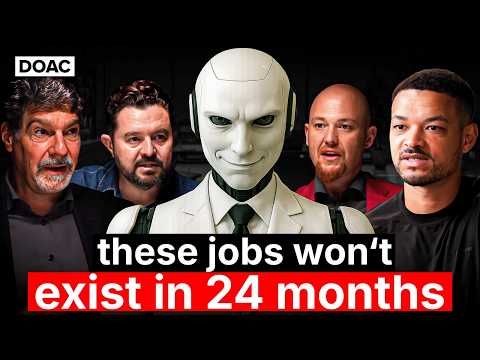
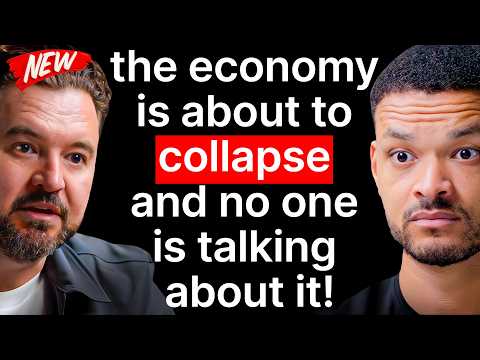
I’ve been on Diary of a CEO with @StevenBartlett eight times. Every episode and what we got into 🧵 1.Feb 2024 – Entrepreneur mindset, AI, pitching, creating products… youtu.be/u0o3IlsEQbI 2.Jan 2025 – Building relationships at scale, the 7-11-4 principle, personal branding, positioning and productisation… youtu.be/sFkR34AMPw8 3.Jan 2025 – The US election and the policy shifts rippling out across the world… youtu.be/qpBnYB0I6_0 4.March 2025 – Debating @GarysEconomics on wealth, tax and who really pays the bills… youtu.be/4yohVh4qcas 5.May 2025 – AI’s impact on society, work and the economy…youtu.be/JMYQmGfTltY 6.Aug 2025 – The “Avengers of entrepreneurship” roundtable with @AlexHormozi and @Codie_Sanchez: offers, pricing, hiring A-players and scaling fast… youtu.be/hVlAOIUA71Y 7.March 2026 – Why plumbers will out-earn lawyers, the 2029 AI warning, and building a business that survives automation… youtu.be/fpETS6q1Hww?is… 8.June 2026 – “Death of the Middle Class”: debating @NickHanauer on the wealth divide, wages, ownership and whether capitalism can fix itself… youtu.be/uLBsHXNEwAU
YouTube video
YouTube
YouTube video
YouTube
YouTube video
YouTube
YouTube video
YouTube
YouTube video
YouTube
YouTube video
YouTube
YouTube video
YouTube
YouTube video
YouTube
Daniel Priestley tweet media
English
12
10
85
30.8K
Daniel Priestley
Daniel Priestley@DanielPriestley·
@ShaulaetLesath @CharlotteCGill There is another path
Daniel Priestley@DanielPriestley

About 250 years ago a quirky moral philosopher named Adam Smith discovered a chain of logic whereby the selfish desires of man would result in widespread prosperity. It’s one of the greatest discoveries of all time. Here’s how it goes… 1.Selfish desire seeks wealth, status, security. No virtue required. This is the raw material, as unpromising as it sounds. 2. In a market with property rights, you can’t take, you must trade. Theft and fraud are policed, so the only legal route to someone else’s money is offering them something they want more. Self-interest is channelled through voluntary exchange. This is the crucial valve: the baker serves your bread not from benevolence, but because it’s how he gets paid. 3.Every voluntary trade creates value for both sides. Nobody trades unless they prefer what they’re getting to what they’re giving. So each transaction is positive-sum by construction. Wealth isn’t moved; it’s made. 4.Competition forces the selfish to serve better. You’re not the only one chasing that customer’s money. To win, you must offer more value, lower prices, or something new. Greed disciplined by rivalry becomes, functionally, service. The customer becomes the boss of every capitalist. 5.Prices emerge as signals of what people actually want. Millions of trades compress dispersed knowledge - scarcity, preference, urgency - into a single number. No planner needed. High prices shout “make more of this” and falling prices say “stop making this.” The cure for high prices IS high prices. 6.Profit directs capital toward unmet needs. Profit is the reward for spotting something people want but can’t get, and losses are the punishment for guessing wrong. Capital flows automatically toward solving problems and away from waste - a self-correcting search algorithm running on selfishness. The profit motive pulls the greedy person towards genuine service and efficiency. 7.The pursuit of advantage drives innovation. The only durable way to out-earn competitors is to do something new - create a better product, a cheaper process. Each entrepreneur trying to get rich makes the previous solution obsolete and the average person’s life better. 8.Specialisation and scale compound productivity. Competition pushes everyone toward what they do best; trade lets them exchange it. Output per person rises. 9.Rising productivity spreads as falling prices and rising wages. Competition doesn’t let producers keep the gains forever - they’re competed away to consumers. The luxuries of one generation (cars, flights, antibiotics, computing) become the staples of the next. The rich get richer, but the poor get richer too. 10. Prosperity becomes self-reinforcing and civilising. Wealth funds education, health, science, and even the welfare state that redistributes it. Commerce rewards trust, reliability, and cooperation with strangers (doux commerce). A system built on self-interest ends up producing the most extensive cooperation network in human history: millions of strangers coordinating to put breakfast on your table. The hockey stick after 1800: from ~$3/day for all of human history to a 30-fold rise in living standards wherever this system took hold is pure magic.


English
0
0
0
3
Daniel Priestley
Daniel Priestley@DanielPriestley·
11 logical steps that take you from fair-minded socialism to totalitarianism and economic collapse … 1.The desire to reduce inequality requires redistribution. You can’t equalise outcomes without taking from some and giving to others. This is definitional, not sinister. 2.Redistribution requires measurement and control of production. To redistribute wealth, the state must know who has what, who earns what, and increasingly, who produces what. Surveillance of economic life becomes a prerequisite. 3.People respond to redistribution by changing behaviour. Capital flees, high earners reduce effort or emigrate, assets get hidden. The policy underperforms its projections. 4.Underperformance is blamed on sabotage, not incentives. Politically, admitting the model failed is impossible. So the shortfall must be someone’s fault - speculators, hoarders, the rich - an enemy class is named and blamed. 5.Closing the loopholes requires expanding coercion. Exit taxes, capital controls, mandatory disclosures, criminalising avoidance. Each patch requires more state power than the last, because each patch creates new evasion. 6.Economic control becomes control of livelihoods. Once the state directs capital, sets prices, or dominates employment, your income depends on political compliance. Dissent now has a career cost. 7.Central planning cannot adequately process information without real price data. Prices are compressed knowledge; abolish or distort them and the government planners are blind to reality. 8. Shortages appear. Shortages require rationing. Rationing requires deciding who gets what - pure discretionary power. 9.Discretionary power selects for ruthless administrators. The worst authoritarians get on top: a system requiring people to override individual choices for the collective good attracts and promotes those most comfortable doing so. The scrupulous exit; the zealous ascend. 10.The project can’t survive open opposition, so speech narrows. If the plan is morally mandatory, opposing it is immoral. Criticism becomes sabotage; media, education, and civil society get conscripted to defend the project. The single goal crowds out pluralism, because pluralism is disagreement about goals. 11.Reversal is now impossible through normal politics. The state controls jobs, capital, information, and enforcement. Institutions that could check it depend on it. What began as compassion has become a machine that no one can switch off - and everyone must pretend is working … until it collapses and adherence to reality is restored.
The Telegraph@Telegraph

Andy Burnham is set to launch a £38bn tax raid on the wealthy to fund a spending spree in office, analysis by Reform UK has found. 🔗 telegraph.co.uk/politics/2026/…

English
25
120
489
29.2K
Daniel Priestley
Daniel Priestley@DanielPriestley·
“Quality over quantity” sounds nice – but it’s the wrong mindset for leads. Great clients are needles in a haystack. First, you need the haystack. In this video I explain how Glastonbury does it – and how you can use a ScoreApp Quiz to build a big pool of interest, then cherry-pick the best buyers. --- Your competitors are already using AI to build their marketing faster, cheaper, and better than you. Free 90-minute Masterclass on how to close the gap: bit.ly/43Mk7b7
English
0
1
15
3.3K
Daniel Priestley
Daniel Priestley@DanielPriestley·
If your business is still defined by its location, its products, and its name, you're running an Industrial Revolution company in a digital economy. And the clock is ticking. Location locks you into a small pond where anyone with a digital model can come and fish, but you can't fish in theirs. Products are commoditised - a cheaper version of whatever you sell is one phone search away. And business brands are invisible on social media, because the algorithms were built for faces, not logos. A personal brand gets 20 times more engagement than a business brand. Twenty times. Here's what replaces it. Instead of a location, define your business by an ideal customer persona - a specific type of person, anywhere in the world. Instead of products, build intellectual capital - your stories, your methodologies, your data, your way of doing things. Instead of a business brand, build a personal brand. You, the founder, telling the story. Make this one shift and you are already ahead of the curve in the age of AI. Everything from the algorithms to the large language models will help you and support you, but only if you make that first fundamental move. Join my free 90-minute Masterclass on AI Powered Marketing for Small Businesses - how I use AI to build marketing that actually converts: bit.ly/4fT5KZY
English
1
0
4
1.3K
Daniel Priestley retweetledi
Con Frantzeskos
Con Frantzeskos@ConFrantzeskos·
I’ve read, studied and written about Adam Smith. I’ve got a degree and post-grad in economics and finance. And yet - I’m not sure I’ve read a better, simpler explanation of An Enquiry into the Nature and Causes of the Wealth of Nations by Adam Smith before. Read this ⤵️
Daniel Priestley@DanielPriestley

About 250 years ago a quirky moral philosopher named Adam Smith discovered a chain of logic whereby the selfish desires of man would result in widespread prosperity. It’s one of the greatest discoveries of all time. Here’s how it goes… 1.Selfish desire seeks wealth, status, security. No virtue required. This is the raw material, as unpromising as it sounds. 2. In a market with property rights, you can’t take, you must trade. Theft and fraud are policed, so the only legal route to someone else’s money is offering them something they want more. Self-interest is channelled through voluntary exchange. This is the crucial valve: the baker serves your bread not from benevolence, but because it’s how he gets paid. 3.Every voluntary trade creates value for both sides. Nobody trades unless they prefer what they’re getting to what they’re giving. So each transaction is positive-sum by construction. Wealth isn’t moved; it’s made. 4.Competition forces the selfish to serve better. You’re not the only one chasing that customer’s money. To win, you must offer more value, lower prices, or something new. Greed disciplined by rivalry becomes, functionally, service. The customer becomes the boss of every capitalist. 5.Prices emerge as signals of what people actually want. Millions of trades compress dispersed knowledge - scarcity, preference, urgency - into a single number. No planner needed. High prices shout “make more of this” and falling prices say “stop making this.” The cure for high prices IS high prices. 6.Profit directs capital toward unmet needs. Profit is the reward for spotting something people want but can’t get, and losses are the punishment for guessing wrong. Capital flows automatically toward solving problems and away from waste - a self-correcting search algorithm running on selfishness. The profit motive pulls the greedy person towards genuine service and efficiency. 7.The pursuit of advantage drives innovation. The only durable way to out-earn competitors is to do something new - create a better product, a cheaper process. Each entrepreneur trying to get rich makes the previous solution obsolete and the average person’s life better. 8.Specialisation and scale compound productivity. Competition pushes everyone toward what they do best; trade lets them exchange it. Output per person rises. 9.Rising productivity spreads as falling prices and rising wages. Competition doesn’t let producers keep the gains forever - they’re competed away to consumers. The luxuries of one generation (cars, flights, antibiotics, computing) become the staples of the next. The rich get richer, but the poor get richer too. 10. Prosperity becomes self-reinforcing and civilising. Wealth funds education, health, science, and even the welfare state that redistributes it. Commerce rewards trust, reliability, and cooperation with strangers (doux commerce). A system built on self-interest ends up producing the most extensive cooperation network in human history: millions of strangers coordinating to put breakfast on your table. The hockey stick after 1800: from ~$3/day for all of human history to a 30-fold rise in living standards wherever this system took hold is pure magic.

English
2
3
20
1.7K
Daniel Priestley
Daniel Priestley@DanielPriestley·
Your income, your ambition, and the size of your next decision are all being set by the people you're currently surrounded by, whether you realise it or not. If your peer group thinks £50k a year is a good result, that's your ceiling. If they think £500k is just getting started, that becomes your floor. You don't choose the number consciously - the room chooses it for you. I've watched this play out across 5,500 businesses. The founders who break through almost never do it by working harder in the same room - they do it by walking into a different one. A room where the standards are higher, where the conversations are sharper, and where the people around them are doing bigger, more uncomfortable things, and treating it as normal. The discomfort of being the smallest person in a new room is temporary. The cost of staying the biggest person in the old one is permanent. You don't need a new strategy - you need a new room. Join me live for a free workshop on the five-step process to becoming the most well-known, respected, and sought-after person in your industry. Sign up here: bit.ly/44ZcMWm
Daniel Priestley tweet media
English
0
2
15
1.6K
Daniel Priestley retweetledi
Milly Tamati
Milly Tamati@MillyTamati·
imagine the marketing that made us believe that a 'lifestyle business' isn't the BEST THING EVER >>>>>>
English
5
1
15
2K
Tony Ward
Tony Ward@TonyWard867811·
Britain just paid a record £11.7 billion in debt interest in May alone. Hard-working Brits funded every penny of it. You paid for it through your taxes. You paid for it through the slow destruction of your savings and wages. While you were doing that, they still found money for foreign aid and the unproductive. And the whole time they were silently robbing you. They print more pounds out of thin air every year. They weaken the money you actually earned. This is not one theft. This is two. They take your money openly through tax. Then they take what’s left quietly by debasing the pound. This is how they grind down the people who still work and produce. You can still opt out if you know how...
English
18
26
122
5.5K
tag 🇬🇧
tag 🇬🇧@tag4UK·
I am married with a young daughter, both myself and my husband work. -We are not entitled to housing benefit, or any other benefit for that matter. -We do not get free eye tests, free dental care or free prescriptions. -Our daughter is not entitled to free school meals, or free breakfast clubs, or free wrap around care, no help with her uniform. -We don’t get council tax discount, or any other discount. -We don’t get help with our energy bills, or low cost broadband. -We don’t get help with the cost of going to the cinema, or days out at theme parks. -My daughter is unable to play outside unsupervised, because you have failed to secure our borders and the streets aren’t safe. -If I work more hours, I fall into the higher tax band. Why should someone like me, vote for someone like you? @UKLabour @andyburnham What are you offering my family?
English
1.5K
6.2K
32.9K
613.6K
LBC
LBC@LBC·
‘It would obviously be crazy to tax people on money they’ve not earned?!’ @TomSwarbrick1 confronts Labour’s Lucy Rigby over the government's latest tax proposal.
English
110
52
330
75.9K
Daniel Priestley
Daniel Priestley@DanielPriestley·
@PatMillsUK @garyseconomics Specifically, how much extra tax will this person pay given the proposal is on £10M+? It would be very inspiring to see her and Gary lead by example and show they are willing to pay 2% of their wealth year on year voluntarily to show us their commitment to the moral cause.
English
6
1
80
2.1K
Patriotic Millionaires UK
"We've got to stop normalising this idea that it's normal to try and avoid contributing to public services and infrastructure if you can massively afford to do that." Did you catch our member Julia on @garyseconomics documentary?
English
31
53
140
5.9K
Daniel Priestley
Daniel Priestley@DanielPriestley·
Ideally… 1. The state operates a sovereign wealth fund that manages natural resources and provides the state revenue. 2. Education, healthcare, legislation, policing etc are seen as investments into common benefit not welfare. This requires them to operate at a level and in a manner where that passes scrutiny. 3. Safety nets are designed for the bottom 10% and funded by the top 10%. A safty net is not a hammock - it is not designed to restore someone to the equivalent of the middle. 4. Emergency services are fully funded. Healthcare is provided at a basic level by the state and beyond that requires self funding. Australia and Singapore have great systems for this. 5. Babies receive a small investment into national businesses (eg: £1000 into the FTSE250) at birth and receive it at age 21 to get started or to clear Uni loans.
English
2
0
0
66
Thunk
Thunk@Thunk20a·
@DanielPriestley @Th_Angelopoulos Under your ideal model of capitalism, how do we support those who cannot work, due to age, illness, injury etc? Would you have a fully private system of health care, education, social care?
English
1
0
0
72
Daniel Priestley
Daniel Priestley@DanielPriestley·
The number one way to kill a high-end sale is something almost every business owner does without realising - they start talking about what they do. The moment you explain your service, your package, your process, you've turned the conversation into a pitch. And the person on the other side immediately starts weighing up whether they want to be pitched to right now. Most of the time, the answer is no. The most powerful thing you can do instead is sell the assessment. Stay ambivalent about your solution until the prospect has been through a diagnosis first. Think about it like a doctor. You walk in and say, do I need my arm in a cast? They don't say yes or no. They say, let's get an X-ray first. First the diagnosis. Then the treatment. Your sales process should work exactly the same way. When someone fills in an assessment, they self-diagnose. They see the gap between where they are and where they want to be. By the time you speak to them, you're not pitching. You're discussing what the data already told both of you. The less you talk about what you do, the more you sell. Most small businesses use AI to save time. I use it to generate better leads and build campaigns that convert in minutes. Free 90-minute Masterclass: bit.ly/4fT5KZY
English
0
1
15
2.4K
Daniel Priestley
Daniel Priestley@DanielPriestley·
@Collectors_Way No because the cause is systemic. Like a restaurant that is no longer serving good food, its top customers leave and are not replaced.
English
1
0
1
44
Joël Grimal
Joël Grimal@Collectors_Way·
@DanielPriestley If lots of the wealthiest people left the UK? Of course, initially there would be huge losses in the taxes they pay But long term, wouldn’t people fill the spaces they occupied, make their own wealth & be willing to pay the extra taxes that have been implemented?
English
2
0
0
22
Daniel Priestley
Daniel Priestley@DanielPriestley·
About 250 years ago a quirky moral philosopher named Adam Smith discovered a chain of logic whereby the selfish desires of man would result in widespread prosperity. It’s one of the greatest discoveries of all time. Here’s how it goes… 1.Selfish desire seeks wealth, status, security. No virtue required. This is the raw material, as unpromising as it sounds. 2. In a market with property rights, you can’t take, you must trade. Theft and fraud are policed, so the only legal route to someone else’s money is offering them something they want more. Self-interest is channelled through voluntary exchange. This is the crucial valve: the baker serves your bread not from benevolence, but because it’s how he gets paid. 3.Every voluntary trade creates value for both sides. Nobody trades unless they prefer what they’re getting to what they’re giving. So each transaction is positive-sum by construction. Wealth isn’t moved; it’s made. 4.Competition forces the selfish to serve better. You’re not the only one chasing that customer’s money. To win, you must offer more value, lower prices, or something new. Greed disciplined by rivalry becomes, functionally, service. The customer becomes the boss of every capitalist. 5.Prices emerge as signals of what people actually want. Millions of trades compress dispersed knowledge - scarcity, preference, urgency - into a single number. No planner needed. High prices shout “make more of this” and falling prices say “stop making this.” The cure for high prices IS high prices. 6.Profit directs capital toward unmet needs. Profit is the reward for spotting something people want but can’t get, and losses are the punishment for guessing wrong. Capital flows automatically toward solving problems and away from waste - a self-correcting search algorithm running on selfishness. The profit motive pulls the greedy person towards genuine service and efficiency. 7.The pursuit of advantage drives innovation. The only durable way to out-earn competitors is to do something new - create a better product, a cheaper process. Each entrepreneur trying to get rich makes the previous solution obsolete and the average person’s life better. 8.Specialisation and scale compound productivity. Competition pushes everyone toward what they do best; trade lets them exchange it. Output per person rises. 9.Rising productivity spreads as falling prices and rising wages. Competition doesn’t let producers keep the gains forever - they’re competed away to consumers. The luxuries of one generation (cars, flights, antibiotics, computing) become the staples of the next. The rich get richer, but the poor get richer too. 10. Prosperity becomes self-reinforcing and civilising. Wealth funds education, health, science, and even the welfare state that redistributes it. Commerce rewards trust, reliability, and cooperation with strangers (doux commerce). A system built on self-interest ends up producing the most extensive cooperation network in human history: millions of strangers coordinating to put breakfast on your table. The hockey stick after 1800: from ~$3/day for all of human history to a 30-fold rise in living standards wherever this system took hold is pure magic.
English
65
303
1.3K
44K
Josh Hunt
Josh Hunt@iAmJoshHunt·
When it comes to tax in the UK, a lot of people are deluding themselves, thinking the government will just go after the wealthy to pay for the ballooning commitments they’ve made. The truth is, the real target is the middle class. And the reason is simple. The middle class is the only viable option for the kind of revenue the government wants. Start with who’s off the table. A third of British adults pay no income tax at all. The bottom half of earners take home about a quarter of the income in this country and pay roughly a tenth of the tax. There’s no pot of gold buried down there, and every party has spent years promising to protect “working people.” Squeezing them is politically radioactive and would raise next to nothing anyway. The rich are off the table too, whatever the Channel 4 documentaries say. The top 1% already pay 28% of all income tax. Their money is capital, dividends and gains, so they’re mobile, and they’ve already started leaving. One widely quoted forecast has Britain losing half a million millionaires by 2028. Push the rate on these people much higher and you collect less, not more. Threatening them polls brilliantly, but relying on them for a tax bonanza is pure fantasy. Which leaves the middle class, and the middle class can’t run. Most are on PAYE, taxed at source before the money touches their account. They can’t turn a salary into a capital gain. They can’t declare residency in Monaco, because the job, the kids’ school and the mortgage are all here. Their wealth is a house they can’t hide under the mattress and a pension they can’t reach. Numerous, visible and immobile. The perfect target, and in some ways the only one. And here’s how it’s already being done. They won’t raise your headline rate of income tax, because they promised not to. But the threshold freeze, the one that sounds like a non-event on Budget day, is quietly hammering you, and it’s now been extended to 2031. Took out a student loan since 2012? You’ve been paying the graduate tax in all but name. Hold investments outside an ISA? You’ve watched CGT climb to 24%, and it’s likely to be equalised with income tax next. Sent your kids to private school? That’s the VAT charge. Saving into a cash ISA? That shelter just shrank from £20,000 to £12,000. And from 2027, your pension gets pulled into inheritance tax, so the pot you spent a career building can be taxed again on the way out. There’s more coming. Mansion taxes, higher CGT, property levies, dividends. Most of the taxes we’re told will hit the ultra wealthy will actually land on the middle class. And in most cases they’re not sat on fortunes, they’re sat on assets they spent a working life building. What’s worse, the burden grows with every Budget, because of the compounding commitments this government keeps making, and that nearly every other party has pledged too. So who pays for the past, present and future spending of the UK government? The middle class. And there’s not a thing they can do about it. Debt-trapped, stuck in place, with nowhere to turn, and the government knows it. If any of this resonated, you’re likely in the taxation crosshairs. I wish you luck.
English
139
579
2.3K
151.8K