Jonathan Moss

61.2K posts

Jonathan Moss banner
Jonathan Moss

Jonathan Moss

@JonathanMoss

Solving the toughest problems in business and healthcare with AI | Executive, Advisor, Board Member, Husband and Dad | Writer, Speaker & Podcast 🎙️ Host |


Tennessee, USA 가입일 Kasım 2011
1.2K 팔로잉1K 팔로워
Jonathan Moss 리트윗함
Marc Randolph
Marc Randolph@marcrandolph·
You cannot install a culture of experimentation. You can only model it. Culture isn’t what’s written in the employee handbook or posted on the lobby wall. Culture is what people observe — who gets celebrated, who gets promoted, who gets fired, and why. Everything else is decoration.
English
27
25
162
8.5K
Jonathan Moss 리트윗함
Aaron Levie
Aaron Levie@levie·
Great read. AI lets you get tremendous leverage that wasn’t available before in almost any domain. That means we’re at a unique moment in history where anyone with a high level of ambition and core skills in any area can overcome a lot of historical experience requirements for their role. This can apply to anyone who’s junior or senior, but it’s pretty sweet that you can do far more than you could have accomplished as a newer employee than even a couple years ago. The people that take advantage of this will get ahead massively. And the companies that find this talent within or outside should put them in key positions to get as much out of them as possible. These people will seem strange and from the future, but they will help you figure out where things are going. Everyone company should be doing whatever they can to find them.
Jaya Gupta@JayaGup10

x.com/i/article/2047…

English
68
95
913
243.4K
Jonathan Moss 리트윗함
Marc Andreessen 🇺🇸
Three things the leading AI models are quite good at: long term planning, idea generation, and taste. Sorry, but it's true.
English
464
196
3.5K
321.6K
Jonathan Moss 리트윗함
Harry Stebbings
Harry Stebbings@HarryStebbings·
Seeing two types of founders emerge in this moment: The tourists and the terminators. The terminators are salivating at the opportunity ahead. Hungrier than ever. More ambitious than ever. They want it more than ever. The tourists. They want to sell. They are scared. They do not want to commit 10 years to such uncertainty. Pack is separating.
English
61
20
313
29K
Jonathan Moss
Jonathan Moss@JonathanMoss·
Wake up - new release Drink a coffee - new release Go to the bathroom - new release Talk a walk - new release Get out of a meeting - new release Eat dinner - new release Go to sleep - cycle starts over again
Charly Wargnier@DataChaz

Google’s level of disrespect is OFF THE CHARTS right now. Anthropic really thought they had us locked down with Claude Design’s ridiculous rate limits… …and now Google has literally countered it straight away by open-sourcing DESIGN.md 🤯

English
0
0
0
50
Jonathan Moss 리트윗함
Karan Singhal
Karan Singhal@thekaransinghal·
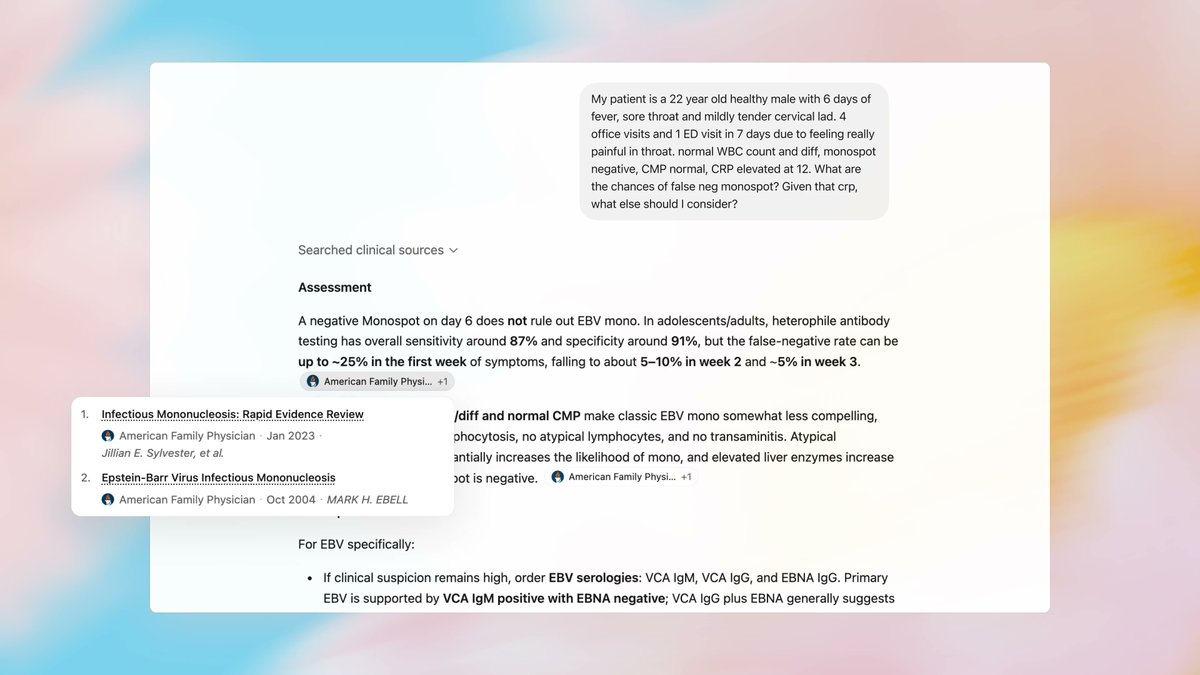
Today we’re introducing two big steps for health at OpenAI: - ChatGPT for Clinicians, a free version of ChatGPT designed for clinical work - HealthBench Professional, a new benchmark to evaluate real clinician chat tasks We’re excited about what this can unlock for care. ❤️
Karan Singhal tweet media
English
267
564
4.9K
1.6M
This Week in AI
This Week in AI@ThisWeeknAI·
We have a group chat on X for founders building in AI. Drop "I'm in" below if you want an invite.
English
713
4
312
48.1K
Jonathan Moss 리트윗함
Google Cloud
Google Cloud@googlecloud·
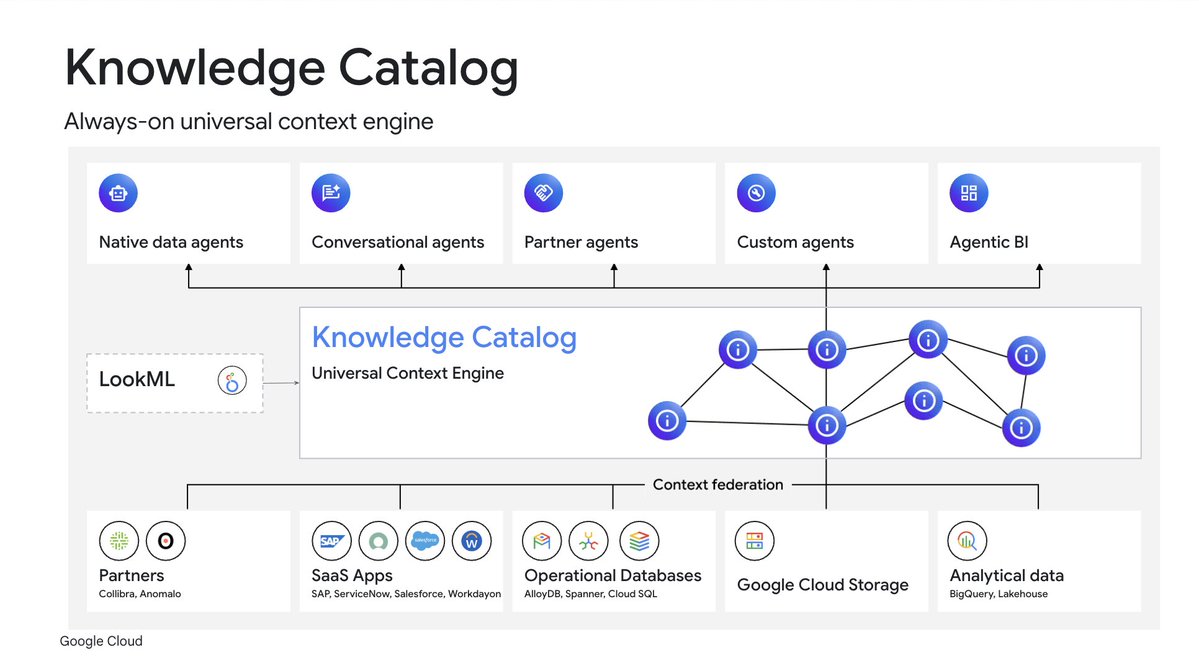
Announcing Knowledge Catalog: the universal context engine for your enterprise, helping agents execute complex tasks with accuracy. Learn more → goo.gle/3QoL8hK #GoogleCloudNext
Google Cloud tweet media
English
9
90
662
62.5K
@jason
@jason@Jason·
We started an AI founder twitter group... reply with "I'm in" if you're a founder and want to be added
English
11K
136
4.6K
898.3K
Jonathan Moss
Jonathan Moss@JonathanMoss·
He is delusional… while it might be smart it is still dumb and can’t do a lot of things and what it builds breaks.. trust me.. I have an entire system of agents and automations built with Claude opus 4.7 and there is no way it can do 10-15% of what I do end to end even if it is capable of doing 100% of what I do.
English
0
0
0
56
David Ch
David Ch@chhddavid·
BREAKING: @AnthropicAI CEO Dario Amodei “I think we might be 6-12 months away from when Claude doing most or maybe all of what we do end to end”. Right now Claude Opus 4.7 already doesn't need us anymore: > designs, codes, deploys + launches > fixes bugs alone > translates + does email marketing > self-maintains apps !??? this is just f*king scary...
Shipper@shipper_now

BREAKING: Today, we pulled the plug on vibe coding. I just witnessed my Mac erase a $31B company in 184 seconds. This is beyond absurd.
English
11
9
233
137.5K
Jonathan Moss
Jonathan Moss@JonathanMoss·
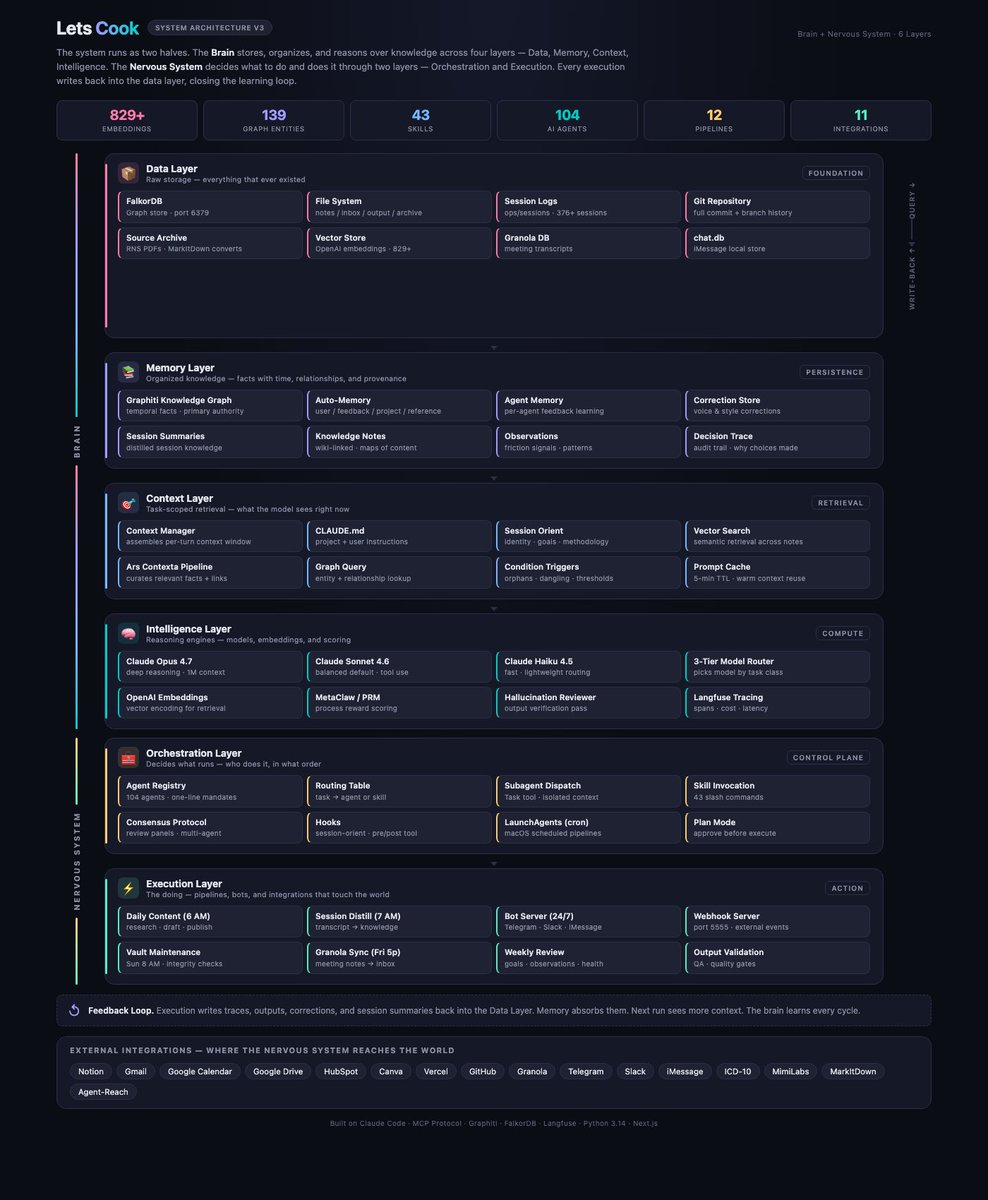
@HarryStebbings 💯 what I am doing right now internally at a large company and built this system below that I operate today.
Jonathan Moss tweet media
English
1
0
2
487
Harry Stebbings
Harry Stebbings@HarryStebbings·
What Role Does Not Exist Today But Will Be So Common in Five Years Time: "500K-1M jobs will be created for agent operators. This person will be somewhat technical. They will be deep in the AI world. They're gonna have to understand MCPs and CLIs and they are going to have to know how to write skills. It's going be this group of people that will know how to go into your marketing team or your legal team, or your operations team, or your life sciences research team and this is the person that is basically going to enable that function to get leverage from agents." @levie Where is this right? Where is this wrong? @jasonlk @gregisenberg @amasad @AnjneyMidha
Harry Stebbings@HarryStebbings

The amount of hype and BS going around about enterprise AI adoption is insane. Aaron @levie is the most AI forward-thinking CEO in public markets today. But even Aaron at $1BN+ in ARR is valued at $3.3BN and getting smashed by Wall St. I sat down with Aaron to understand WTF is happening, what is real and what is fake in enterprise, WTF to do with token budgets and wrote up my notes below. (Link to full episode in comments) 1. Why Dwarkash Was Wrong and Jensen Was Right on Upgrading Systems Upgrading software is a multi-year effort, not a "magical moment" where everything can be secured overnight. The reality of enterprise security is an ongoing, endless cycle of "leapfrogging" between defensive and offensive capabilities. Founders must realize that even with access to frontier models, the implementation cycle in the real world remains the primary bottleneck. 2. Why We Will Have More Lawyers in Five Years Not Less The industry is myopic about job elimination; AI makes it easy to generate content, but it hasn’t made it easier to get that content approved by a court or a patent office. As clients inundate lawyers with AI-generated contracts and memos, the "ultimate constraint" becomes the number of qualified humans available to review and approve the output. 3. What Role Does Not Exist Today That Will Be Incredibly Common in Five Years? We are about to see the creation of 500,000 to 1 million "Agent Operators". These technical-yet-business-savvy individuals will be responsible for "care and feeding" of agents—writing skills, understanding MD files, and redesigning workflows for agents rather than people. 4. Will Massive Software Providers Simply Be Turned Into a Database That Agents Crawl Over? While the user interface may shift to chat, the value is moving to the API layer and the "business logic" embedded above the database. Systems like ERPs are more than databases; they contain decades of complex logic for supply chains and accounting that agents must interact with, not replace. 5. What Everyone Thinks About Enterprise AI Adoption That They Get Wrong The assumption that the massive gains seen in AI coding will immediately translate to all other knowledge work is a "misread". Coding has specific idiosyncrasies that don't always exist in broader knowledge work, where human collaboration and regulatory loops are more complex. 6. Where Would You Be Investing if You Were a VC Today? Despite high valuations, Levie would still be "loading up" on frontier rounds. These companies have the potential to grow much larger because the ultimate market for AI is often larger than the industry currently realizes. 7. The Budget of Tokens Will Have to Move Out of IT Spend and Into Opex Enterprise AI shouldn't be treated as a tradeoff between software licenses. Instead, token budgets will move into regular operational expenditure (OPEX), where businesses trade off a marketing campaign for a more productive, automated marketing engine. This allows AI companies to tap into a massive pool of capital beyond the traditional, capped IT budget.


English
52
39
378
352.7K
Jonathan Moss
Jonathan Moss@JonathanMoss·
@DarrinB3706 @mcuban In urgent care the net revenue nationally is $125 per visit. That doesn’t include the cost for denials, bad write offs, opex. Etc. you should just do it for $99 cash pay without insurance and be just fine.
English
0
0
0
21
darren
darren@DarrinB3706·
@JonathanMoss @mcuban Sounds great but how do you cover off dr, office expenses or even small investigations?
English
1
0
0
21
Mark Cuban
Mark Cuban@mcuban·
What if there was a bank account available, that required you to deposit monthly, what you would have paid an insurance company in premiums, for an ACA silver plan. So for a family of 5 about $2100. The amount would then be used for Stop Loss Insurance set at $30k dollars. About $300. Another $200 would be used for local Direct Primary Care for your family The balance would be in YOUR bank account. Like an HSA, It could only be used for approved medical expenses. If you never have any medical expenses, you will get to keep the money plus checking act level interest, when you turn 65 If you have a medical event that is more than what you have saved, your bank will loan you the money you need to pay for it, up to the $30k stop loss trigger You would repay that amount using the monthly $1600 net deposit. Once the loan is paid off, the deposits start to accrue to you again. This is not insurance. It’s a specially designed bank account that gives you control, support, a doctor to work with and catastrophic financial protection. Lots of work and issues to be addressed. But I was curious what people think Let me know !
Mark Cuban@mcuban

The one debt you can’t ever pay off ? Your insurance premiums. You literally will pay an insurance premium monthly, till you die. But we don’t look at it like it’s a debt paid to an insurance company that will do all it possibly can never spend it on your care. We are working on a non -insurance solution. The day HSAs no longer require an insurance policy, it all will change. finance.yahoo.com/sectors/health…

English
2.3K
494
9.3K
2.3M
Alex Lieberman
Alex Lieberman@businessbarista·
Someone is going to build a worldclass “Brain” for enterprises & make a stupid amount of money. Why? As @da_fant said, “coding w ai is solved bc all context is in the git repo. knowledge work is difficult bc context is spread out. an ai system that creates a git repo w all context for a knowledge worker will be able to 100% automate the work.” When companies talk about being data ready for AI, this is what they’re implicitly saying. Engineering has been prepared for this moment for a long time because of the deterministic nature of code, the centralization/versioning of data (read: GitHub), and AI tools that are largely build by engineers for engineers. But for the rest of white collar work, there’s a TON of catching up to do to properly harness the power of the technology. The big challenge here, and why no one has truly cracked the code for "an ai system that creates a git repo w all context for a knowledge worker" is because unlike code, most knowledge is 1) distributed, 2) unstructured, and 3) unverifiable. It's distributed: transcripts live in Granola. Documents in Notion. Customer Data in Hubspot. ERP. Emails. Slack messages. Random spreadsheets. SOP docs. Etc. Etc. Building an ingestion engine that connects to all of your disparate data sources and auto-updates based on the shelf-life of the data is the first, and frankly, easiest step of the process. Next, it's unstructured: let's say I want to create a proposal for a potential client. To nail the proposal, I want it to pull important information from a variety of sources. The specific asks & background from our initial sales call. Previous proposals to anchor ourselves to a proven format. And completed sprint boards from Linear, so the pricing & timeline in the document is grounded in truth. Whether it's a thoughtful filesystem (a la Obsidian) or an OpenClaw-esque memory structure, the brain needs to be great at self-organizing in a thoughtful schema. This is very hard, especially if you want to build a generalizable brain that can be shaped to an array of different enterprises. And finally, most knowledge is unverifiable: writing a function, running a unit test, and seeing if the code works is easy. It works or it doesn't. Using AI to accelerate your content creation process is highly subjective. What is a good/bad idea? Is the content in your voice or not? Does it feel like slop or novel? Answering these questions are both difficult and non-verifiable. That same system described above doesn't just have to be great at organizing & forming coherent relationships, but it also has to be great at self-improving based on feedback from the user. Memory systems (like those introduced by OpenClaw) are great to a point, but as you scale the corpus of data within your company's brain, things like compaction and cleaning become wildly important to avoid the needle in the haystack problem. Someone is going to figure out how to solve this problem, and when they do, not only will they make a shit ton of money, but they'll be robinhood for knowledge workers, enabling non-engineers to enjoy the sort of leverage that only technical folks have felt for the last few years.
English
157
74
916
203.1K
Tyler
Tyler@rezoundous·
I remembered when n8n was all the rage. Now I barely hear about them anymore. What changed?
English
266
26
1.1K
292.7K
Jonathan Moss
Jonathan Moss@JonathanMoss·
@HarryStebbings @WisprFlow Total game changer.. I been using Willow for probably close to a year now… it is similar to WisprFlow.. and I am not probably 80% audio..
English
0
0
0
280
Harry Stebbings
Harry Stebbings@HarryStebbings·
The best thing about using @WisprFlow. I write way way more detailed prompts. Cos writing is so easy, my prompts are like so specific. Total game changer.
English
23
1
103
14.5K
Jonathan Moss
Jonathan Moss@JonathanMoss·
Does everyone have some product management and/or software engineering responsibilities in the future?
English
1
0
0
37
Harry Stebbings
Harry Stebbings@HarryStebbings·
I just walked with a $10BN public company CEO. He told me his CoS replaced a piece of software they had been paying $1.2M per year for. It took him 3 weeks to build. F*** me software is more toast than I thought.
English
95
31
597
290K
Jonathan Moss 리트윗함
Aaron Levie
Aaron Levie@levie·
The more I meet enterprise CIOs and AI leaders outside of tech, the more it’s obvious that if you’re building software that doesn’t have a great headless mode, you’re going to be at risk in the coming years. Asked a group of 20 IT leaders across banking, media, finance, and healthcare if they will have any vendors left in 3-5 years that don’t have a good API option for their service and it was a unanimous “no”. This is clearly going to change the nature of software going forward. You have to be completely comfortable serving up your value proposition as much through agent on or off your platform, as you are your own interface. I suspect most platforms will make it to the other side because of how forceful the trend will be, but of course some won’t if their heads in the sand. But on the other end, the upside is that in a world of 100X+ more agents doing work with with software than people ever did, there are far more use-cases to drive and be a part of. In many ways it’s a renaissance if you’re tied to critical data or workflows because of what customers can now use you for. It will certainly force an evolution of business models over time - whether you embed all of this agentic usage in a seat license or make it all consumption based - but dollars will always flow to where value is created. Going to be fun!
English
45
43
469
78.7K