@HanyIbrahim17 Praise be to God always. Please take your time and focus on your recovery. We are all very happy to hear that you are getting better. May God complete your healing and bring you back stronger soon. 🙏🏽
English
Samuel
1.1K posts
صباح الخير 🌹🌹 الحمد لله دائمًا وأبدًا حابب اطمنكم اني داخل عملية خلال ساعات وان شاء الله أسبوع وهرجع أحسن. حبيت بس اطمنكم لو لاحظتوا غيابي كام يوم. دعواتكم 🤲🤲🤲

أستاذ جمال بشير: مصر تعمل على قطع العلاقات التاريخية بين إثيوبيا والعالم العربي، مستخدمة جامعة الدول العربية كأداة سياسية لتشويه صورة أديس أبابا، داعيًا إلى تفعيل الدبلوماسية الإثيوبية الناطقة بالعربية لمواجهة هذا النهج. #إثيوبيا #العالم_العربي #جامعة_الدول_العربية #الدبلوماسية

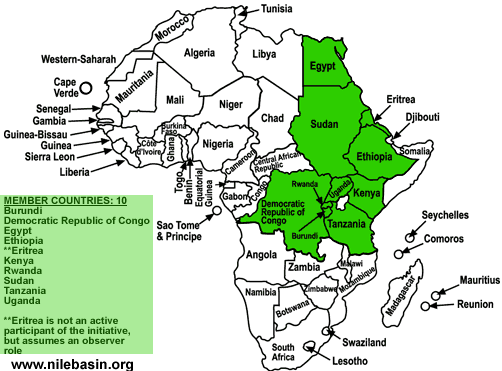
Introduction to the Nile An accurate understanding of the Nile is no longer optional; it is essential to counter decades of systematic misinformation surrounding the river’s origins, hydrology, and ownership. Sound science, not political mythology, must define the global conversation about the Nile. Ethiopia is the primary source of the Nile’s waters. Approximately 85% of the total Nile flow originates from Ethiopian highlands through three major tributary systems: The Blue Nile (Abbay) - 53% The White Nile (Baro–Akobo–Sobat) - 24% The Black Nile (Tekeze–Atbara) - 8% These rivers are not marginal contributors; they are the hydrological backbone of the entire Nile Basin. Every year, rainfall over Ethiopia’s highlands is converted into the water that sustains more than 300 million people downstream. Without Ethiopia, there is no Nile in any meaningful physical sense. Nile doesn’t pass through Ethiopia, it originates here. Understanding this reality is the foundation of any honest discussion about Nile governance, water rights, or regional cooperation. The river does not belong to historical narratives or colonial-era treaties; it belongs to the geography and the hydrology that create.
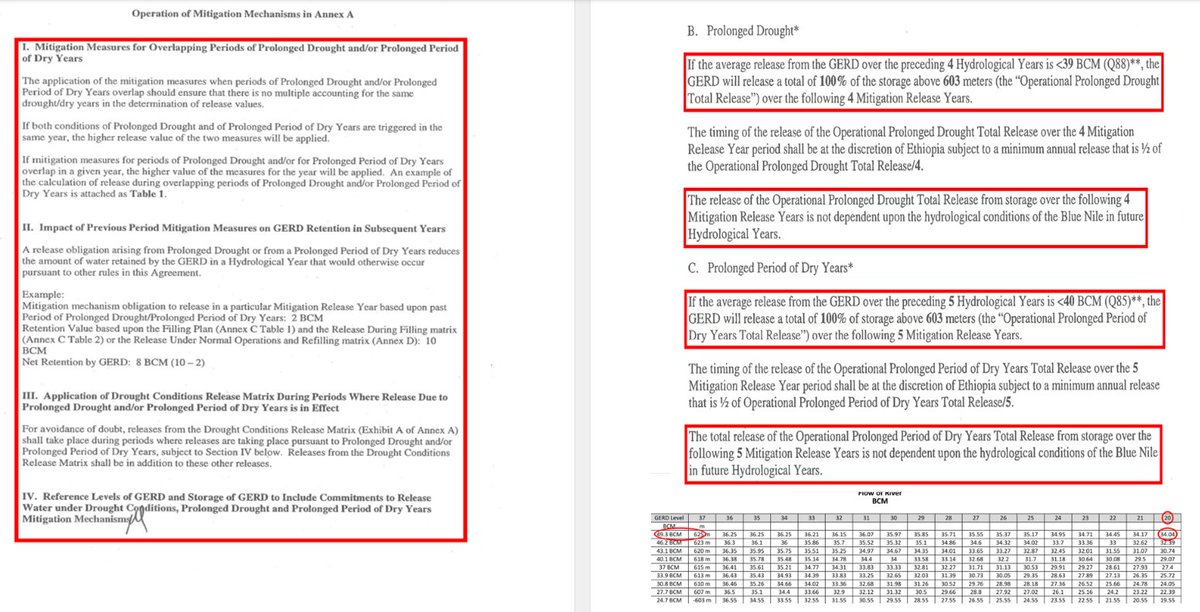
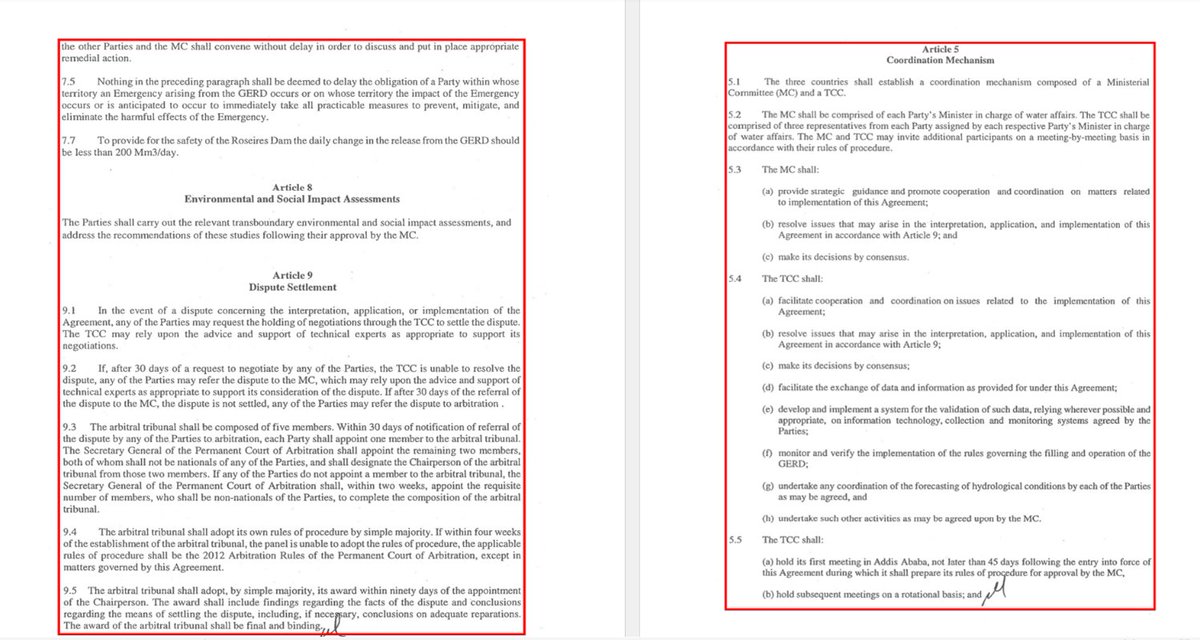
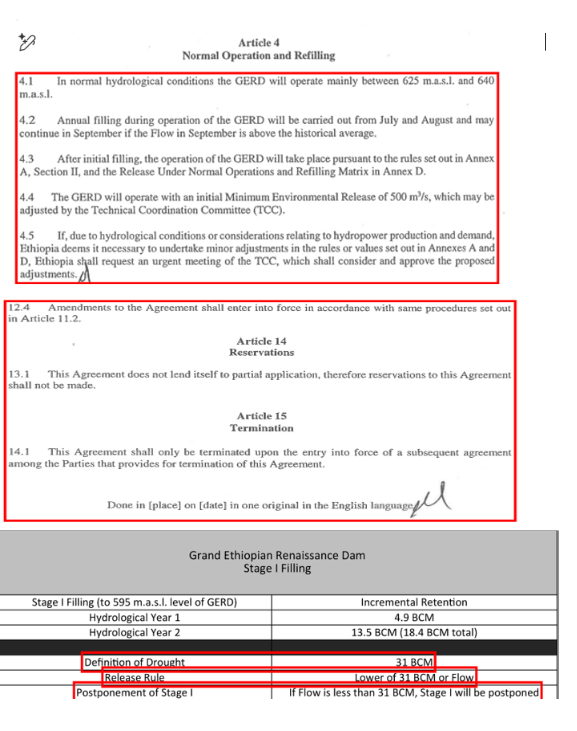

@RenaissanceDam You rightly stated: “drought.” In draft text “drought” and “prolonged dry years” get turned into technical triggers that force additional releases. That is how quotas sneak in through the back door, without ever using the words “historic rights". We said no for this injustice.

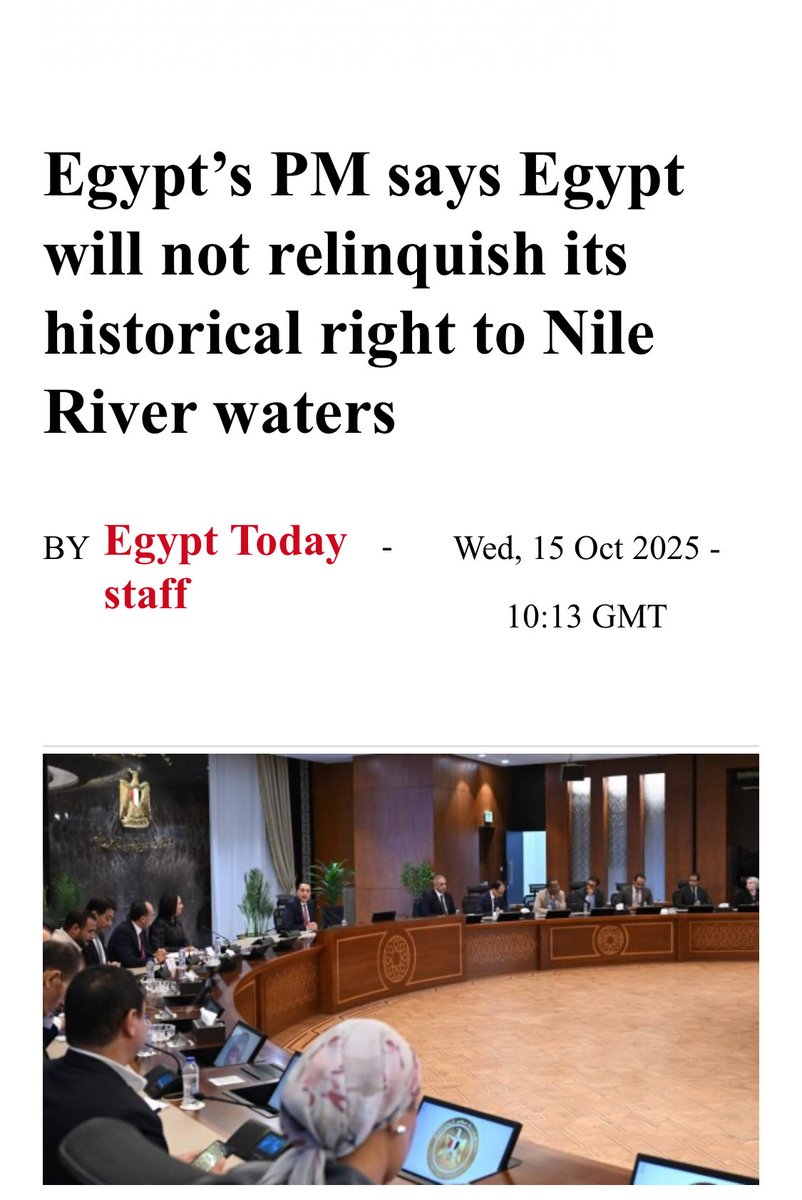
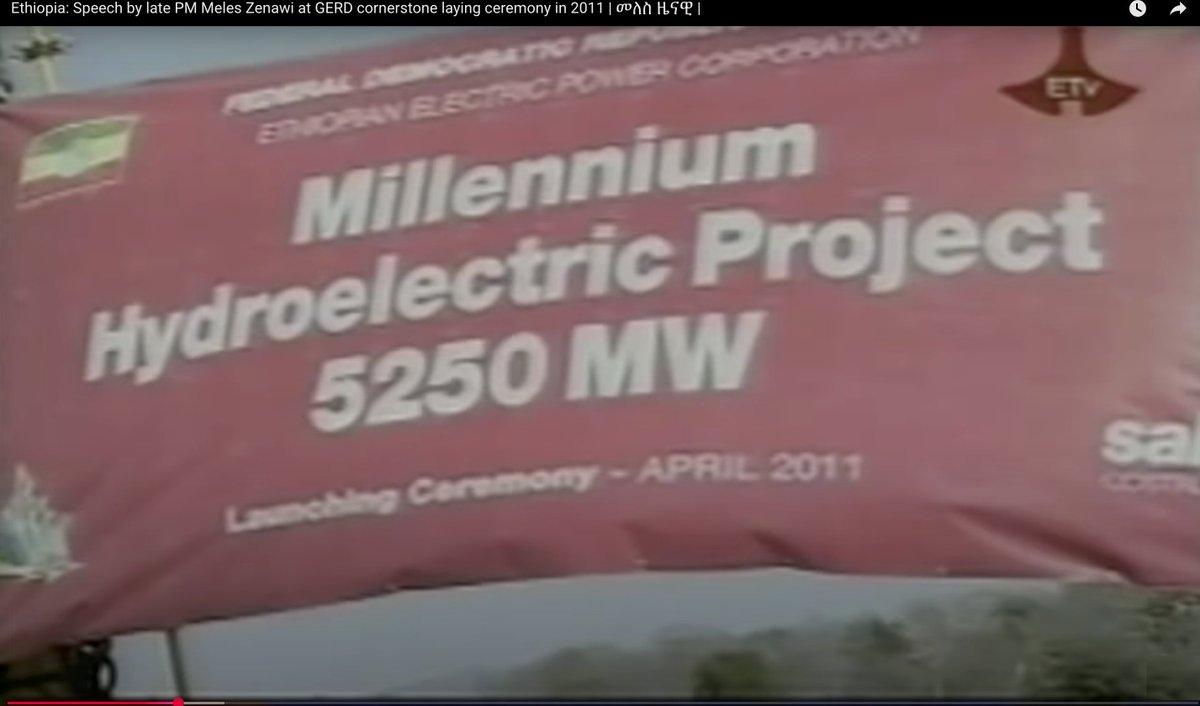
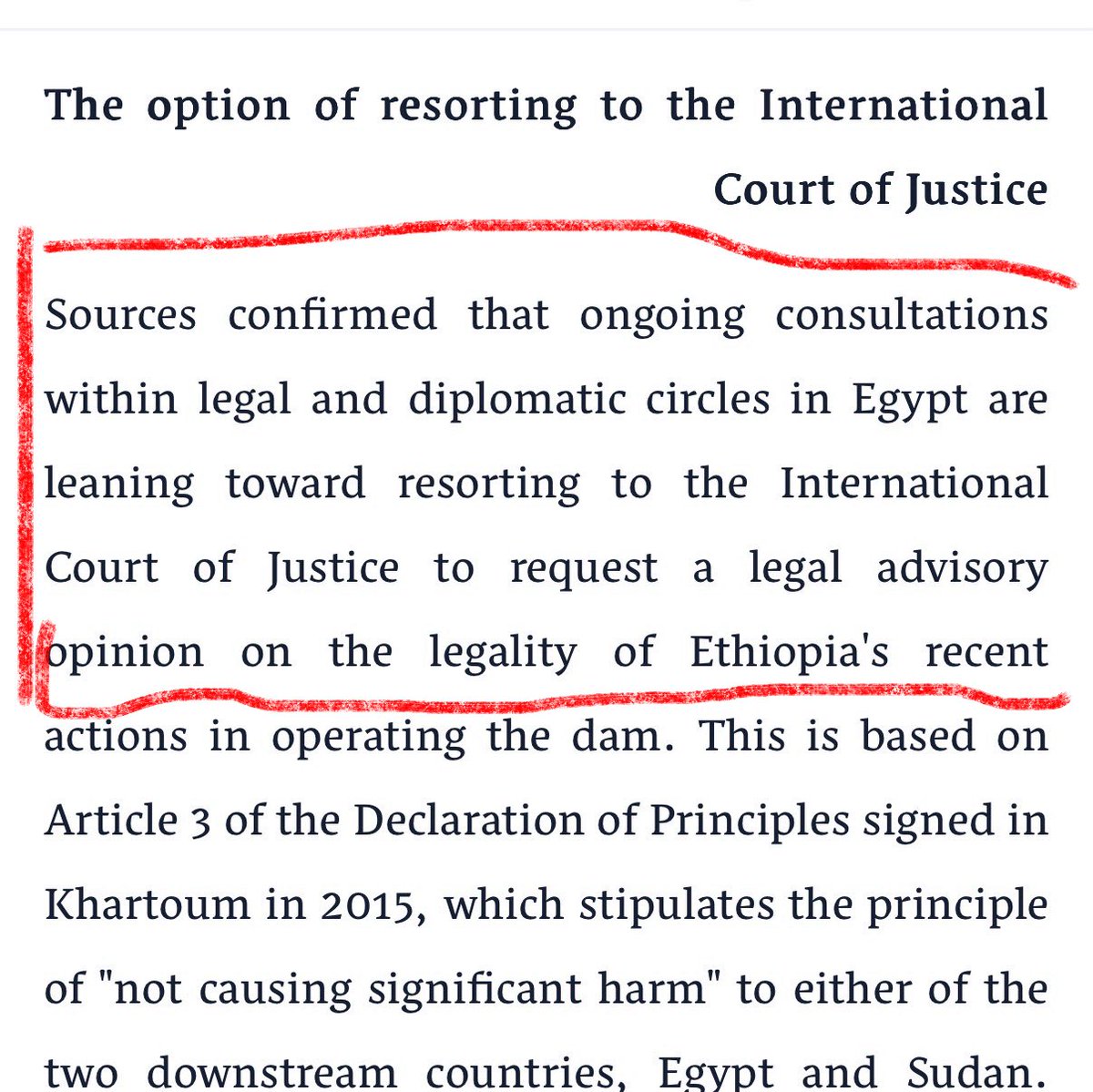
Title: My Counterarguments to Egypt's Official GERD Claims (Sept–Oct 2025) Introduction Egypt's government has saturated the debate with claims that misstate the law, the hydrology, and even the operating facts at GERD. I am answering personally, claim by claim, using only primary sources: Egypt's 9 Sep 2025 letter to the UN Security Council and Ethiopia's reply, the 2015 Declaration of Principles (DoP), Sudan's official flood bulletins, and GERD's own control room and design material. No slogans. Just the treaty text, the gauges, and the physics of a run of river hydropower project. Claim 1: "DoP requires a binding agreement before filling and operation; Ethiopia's inauguration was unlawful." Egypt (verbatim): Egypt tells the UN Security Council that the DoP “obliges Ethiopia to conclude a legally binding agreement… before the commencement of such filling and operation.” What the DoP actually says (text on record): Principle V says the three States will agree “on guidelines and rules for the first filling and annual operation… in parallel with the construction of the Dam.” There is no word “binding” in Principle V and no requirement to finish an agreement before operation. Ethiopia’s filed reading of the DoP: “Construction and filling are simultaneous processes, as clearly provided under the [Declaration of Principles]. Any argument to the contrary is an attempt to defy the Agreement.” Bottom line: The word “binding” and the phrase “before the commencement” are Egypt’s additions in its UNSC letter, not the DoP’s text. The DoP’s operative rule is parallelism, not prior consent. Claim 2: "GERD is unilateral and illegal; an existential threat to 150 million downstream." Egypt (verbatim): GERD poses an "existential threat to the rights and interests of the 150 million citizens of… Egypt and the Sudan." Counter: Modern basin law exists. Ethiopia points Egypt to the Cooperative Framework Agreement (CFA), which entered into force on 13 Oct 2024, codifying equitable and reasonable use. Equity, not a colonial quota or veto, is the baseline. Ethiopia also calls out Egypt's "absurd claim" that aridity blocks upstream use and notes Egypt's alternatives: substantial groundwater, desalination, and curbing waste. Scarcity at home is not a license to monopolize a transboundary river. Bottom line: "Existential threat" is politics. Equity plus Egypt's alternatives deflate the narrative. Claim 3: "Uncoordinated operation creates highly variable flows and foreseeable harm." Egypt (verbatim): the ICJ duty to prevent harm "applies fully where the risk of future significant harm exists," and GERD's "uncoordinated" operation creates "highly variable and uncertain" downstream flows. Counter: Foreseeability cuts both ways. Ethiopia replied that the same principle "would entail liability for Egypt" for decades of unilateral, monopolistic use. You cannot make foreseeability one way. Coordination with Sudan exists on paper and in practice: the Ethiopia–Sudan operating note sets a daily floor of ≥ 300 m³/s and a day to day ramp limit of ± 250 to ± 350 million m³/day, with daily data exchange. That is written regulation, not "uncoordinated dumping." Sudan's own bulletins show late Sept to early Oct flows were multi source: the Blue Nile fell while the White Nile stayed high, and Sudan's dams routed large volumes. Example: 8 Oct 2025 : Blue 135 vs White 240 million m³/day; Merowe 635 million m³/day. 30 Sep: Blue 633; Sennar 706; Merowe 750 million m³/day.. Helpful decoder: 1 Mm³/day = 11.574 m³/s; a ±250 to ±350 Mm³/day ramp equals an allowed day-to-day change of about 2,894 to 4,051 m³/s. Bottom line: The only day by day dataset on the table is Sudan's, and it fits the floor/ramp logic while the White Nile drove the late flood tail. Claim 4: "Ethiopia dumped water after inauguration; the big daily swings prove it." Narrative: ministry graphics and social posts cite large late September daily volumes as proof of haphazard "dumping" but provide no raw table with dates, reservoir level, total release, turbine MW, and gate status. Counter: Plant receipts beat captions. GERD's control room tiles show multi GW generation and per unit flows entirely consistent with water passing turbines, not just gates. Upper units run near 400 MW at about 335–343 m³/s with a net head of around 129–134 m; lower units run near 300 MW at about 275 m³/s with a head of around 118–126 m. That is textbook hydropower operation. At the same time, Sudan's bulletins recorded high White Nile inflow and large Sudanese dam discharges. That is system routing of a seasonal crest, not a one cause "dump." Challenge: If the Egyptian ministry has a full day by day table, post it. Until then, a curve without data is uncorroborated. Bottom line: HMI power plus per unit P–Q plus Sudan's numbers beat a Facebook figure without a dataset. Clarification: the ministry posted a statement and a plotted figure with headline numbers; they did not publish a machine-readable day-by-day dataset. Claim 5: "GERD steals water and consumes Egypt's share." Counter: GERD is a hydropower plant. Ethiopia's UN filing spells it out: the dam "releases water to Sudan and Egypt after hitting turbines to generate electricity." Hydropower shifts timing; it does not consume the river. Bottom line: Power in, water out—no theft in a through flow scheme. Claim 6: "The project is unsafe and opaque." Counter: The saddle dam is a concrete faced rockfill structure with state of the art design; the International Panel of Experts affirmed that studies meet recognized standards. Ethiopia shared 153 technical documents and filling data; Egypt itself blocked primary data collection for the joint transboundary study while insisting on "existing use" as baseline. These points are on the UN record. Bottom line: Safety was vetted, documents were shared, and Egypt helped stall the very fieldwork it now invokes. Claim 7: "Cutting from 16 to 13 turbines proves failure; annual energy will collapse." Counter: Ethiopia formally restructured to 13 turbines totaling about 5,150 MW. GERD's annual energy is water limited, not turbine limited; planning figures and independent summaries place long run generation in the mid teens TWh even after the redesign. Per unit operating snapshots match spec: around 400 MW at ~335–343 m³/s (upper units) and about 300 MW at ~275 m³/s (lower units). Ethiopia also reported roughly $210 million in capex avoided by scrapping three turbines. Bottom line: Same river, same water budget , annual GWh are water-limited, so fewer turbines raise utilization without reducing long-run energy. Principle V contains no word “binding” and no requirement to finish an agreement before operation : it says rules are agreed “in parallel with the construction of the Dam.” Claim 8: "The UNSC must stop Ethiopia; this is a peace and security case." Counter: The DoP and Ethiopia's submissions place the process in the AU track, with mediation or referral to Heads of State provided there. Forum shopping does not convert consultation into a downstream veto. Bottom line: Keep it where the treaty language put it: the African track, not the Security Council. #GERD #Abbay #BlueNile #Ethiopia #Egypt #Sudan #Hydropower #DoP2015 #CFA #AU #UNSC #DataOverPropaganda @MoeteEg


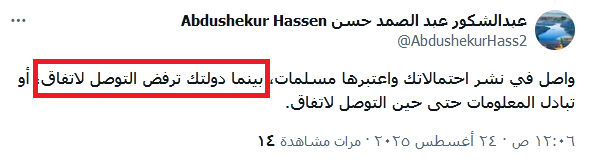
@HanyIbrahim17 وأنت ما الذي يجعلك تشترط وتلزمني بما لا دخل لي به؟ وتدعي بأن لك حقوق تاريخية أو مكتسبة. بأي حق أو قانون تدعي الوصاية على النيل ودوله؟ الماء حق مشاع لدول الحوض، فما الذي يميز مصر علي الآخرين؟ غيرو من طريقة تفكيركم وأسلوب تعاملكم مع الآخرين، وتعالو إلى منبر مشترك يتساوى فيه الجميع.