Yilma Seleshi (Professor)

109 posts

Yilma Seleshi (Professor)

Yilma Seleshi (Professor)

@yilmash

Water Resources Engineer

Addis Ababa Katılım Ekim 2013
838 Takip Edilen842 Takipçiler
Hany Ibrahim
Hany Ibrahim@HanyIbrahim17·
@yilmash @RenaissanceDam The allegations that drought rules are disguised quotas contradict the Second Principle of the DOP signed by #Ethiopia. The dam #GERD is designated for hydroelectric power generation, which is a non-consumptive use. This legally necessitates the passage of the natural flow.
English
3
1
2
439
The Asrat Blog
The Asrat Blog@RenaissanceDam·
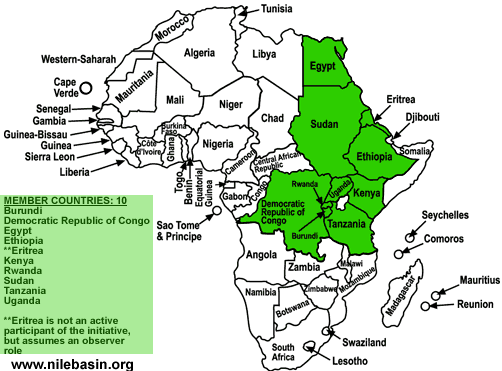
All Nile Basin Countries, Russia, and China Must Be Invited to Trump’s GERD Negotiations The Math Doesn’t Add Up: Ethiopia Faces 5-to-1 Pressure I read the Jan 16, 2026, White House letter to President El-Sisi. I’m using the words on the page. The letter opens with Gaza praise, then pivots straight into the Nile and calls it “The Nile Water Sharing,” “once and for all.” Then it drops three phrases that carry real weight in negotiations: 1.“A strong United States role in monitoring and coordinating between parties.” 2. “Predictable water releases during droughts and prolonged dry years for Egypt and the Sudan.” 3. “No state… should unilaterally control the precious resources of the Nile, and disadvantage its neighbors…” That language is not neutral. It’s a frame. Now look at the CC list, because the CC list is the room. Saudi Arabia is copied. The UAE is copied. Ethiopia and Sudan are copied. Count the leverage around that table: US + Egypt + Sudan + Saudi + UAE versus Ethiopia That is 5-to-1 pressure before anyone even sits down. If you say “Nile Basin Nations,” and " Water Sharing," then invite the Nile Basin Nations Saudi Arabia and the UAE are not Nile Basin riparians. They contribute no basin flow. Yet they are placed inside the process, while most actual Nile Basin countries are not even mentioned. If this is truly “a lasting agreement for all Nile Basin Nations,” then where are the rest? A real basin table includes the full basin family: Ethiopia, Sudan, Egypt, Uganda, Kenya, Tanzania, Rwanda, Burundi, South Sudan, DR Congo, and Eritrea as an observer if needed. You cannot call it basin-wide while inviting non-basin brokers and excluding basin states. That is not mediation. That is choreography. The hydrology doesn’t lie People can argue politics forever. They cannot argue physics. The Ethiopian tributaries, Abay (Blue Nile), Sobat, and Atbara contribute the overwhelming share of the flow measured downstream at Aswan, commonly summarized as about 85 percent, while the White Nile contributes roughly 15 percent. So when non-basin countries get seats while basin countries are locked out, it is not water sharing. It is influence sharing, and Ethiopia is expected to carry the cost. Even this letter admits Ethiopia has water needs too, not just Egypt and Sudan. Fine. Then act like it. A basin file must be treated like a basin file. UAE: business ties are not official support Yes, Ethiopia and the UAE have economic and political ties. Usually, Abu Dhabi speaks the language of mediation. But on the GERD file, Arab and Gulf bloc statements repeatedly center Egypt and Sudan’s “water security” framing. The evidence speaks for itself. In March 2020, Ethiopia’s Ministry of Foreign Affairs rejected an Arab League resolution on GERD as “blind support” for one member state. The UAE did not publicly distance itself from that bloc position. In June 2021, GCC foreign ministers, including the UAE, issued a statement prioritizing Egypt and Sudan’s water security and welcoming the Arab League line against “unilateral measures” that undermine Egypt and Sudan’s rights in the Nile. That tells you what the UAE is on this file: a transactional broker. Brokers follow interests, not justice. Gaza first, Nile next: transactional diplomacy is back The letter starts with Gaza, then pivots to the Nile. That’s how transactional politics works: files get linked, favors get traded, pressure gets packaged as peace. Egypt has leverage in Gaza. Ethiopia does not. Ethiopia must never allow the Nile to become a payment method for Middle East politics. Ethiopia is not a bargaining chip. The Nile is not a prize to be traded. GERD is not a favor. Ethiopia does not need permission to operate it. The trap words are “monitoring,” “coordination,” and “drought” “Monitoring and coordinating” sounds harmless until it isn’t. In diplomacy, monitoring can quietly become permission, and coordination can quietly become control, especially when Ethiopia is outnumbered. Now add the word “drought.” In these negotiations, drought is not just weather. In draft texts Ethiopia has seen before, “drought” and “prolonged dry years” get turned into technical triggers that force additional releases. That is how quotas sneak in through the back door, without ever using the words “historic rights.” Here is the deeper trap. If drought is defined against a historical downstream baseline, then any Ethiopian development gets framed as “drought.” If Ethiopia expands irrigation for food security, or builds additional power dams and regulates flows differently, Egypt can point to the reduced flow and say “drought.” Then the trigger clauses activate, and Ethiopia is forced into predictable releases and emergency mitigation, not because nature failed, but because Ethiopia developed. That is the purpose of the drought vocabulary: freeze Ethiopian development without writing a quota. Ethiopia’s response should be calm and non-negotiable. Two demands should be made immediately. Demand 1: Invite all Nile Basin countries. If the letter says “all Nile Basin Nations,” prove it. Bring them all. Demand 2: If outsiders are included, balance the outsiders. If Saudi Arabia and the UAE are included despite being non-basin states, then Ethiopia has every right to insist that China and Russia are included as well, at least at the observer or guarantor level. This is not ideology. It is balance. A widened table cannot be widened only with U.S. partners and Gulf pressure tools. Cooperation without surrender Ethiopia can coordinate on drought without signing away sovereignty. A fair framework means transparent basin-wide data, trigger-based drought coordination based on real inflows and reservoir levels, no permanent quotas, and no foreign supervision. Power trade is normal economics. If Egypt and Sudan want electricity, buy it. Sign PPAs. Pay market rates. Integrate grids. Build regional growth. But nobody supervises Ethiopia’s river like Ethiopia is renting the Abay. #Egypt #Sudan #SouthSudan #Ethiopia #Eritrea #Uganda #Kenya #Tanzania #Rwanda #Burundi #DRC #China #Russia #UAE #Saudiarabia @AbiyAhmedAli @AlsisiOfficial #SaudiArabia
The Asrat Blog tweet media
English
29
66
206
15.9K
Yilma Seleshi (Professor)
@TirusewAsefa @TheNationalNews @addisstandard Jointly managing river basin infrastructures in the Nile basin, where water quantity is limited to supply current and future demand, comes after the Nile basin countries agreed on their equitable and reasonable water share through the NRBC.
English
1
1
4
113
Tirusew Asefa, Ph.D., P.E., BC.WRE., F.ASCE
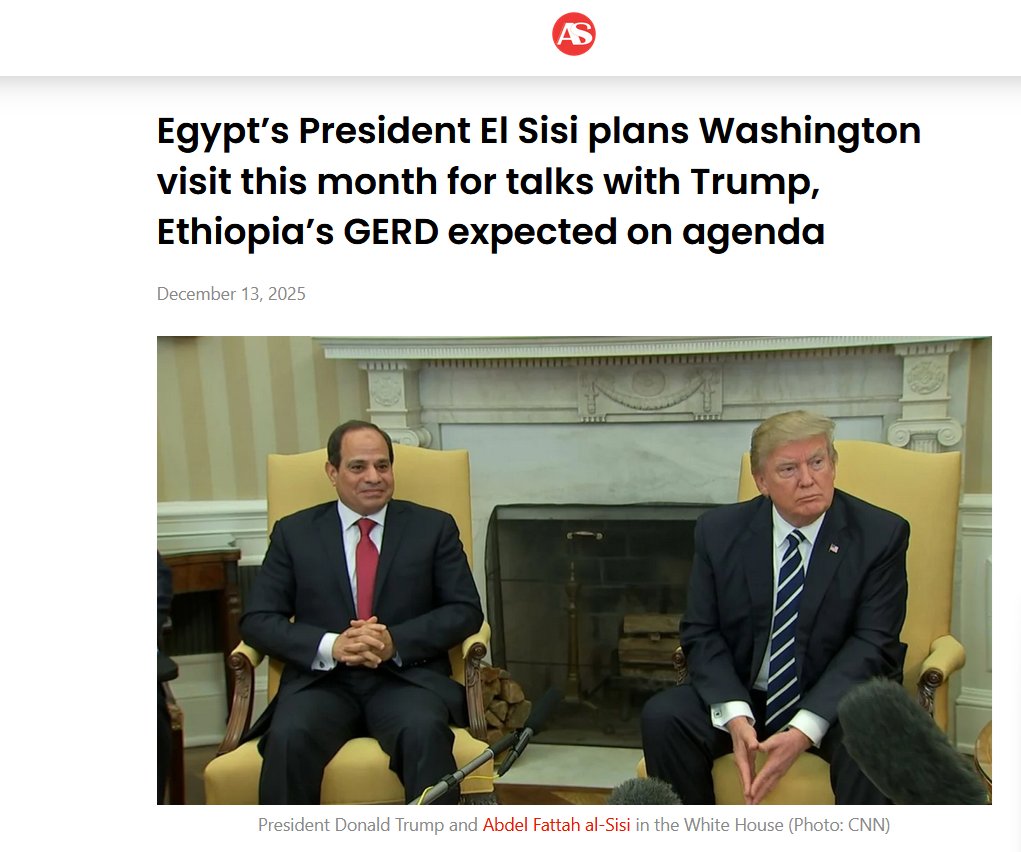
So I had a media interview response today on the reported friction between #Egypt and #Ethiopia and upcoming visit of Al Sisi to the US as related to #GERD (via @TheNationalNews and @addisstandard ). I will share as it comes available. But in a nutshell... Boils down to #Egyptian proposal to have #Nile basin countries and @_AfricanUnion control #GERD operations. Unheard of in international transboundary #water management, if you ask me. My short answer is: Really? That is outrageous and dead on arrival but here are what they could do instead: 1⃣ I support the idea of Nile River Basin Commission (#NRBC) managing all structures and future projects and making sure no significant impact is impose on other countries downstream or upper (the concept of downstream countries impact upstream counties is not so obvious to many. For those interested I advise you to read a paper by Dr. Salman Samlam, internationalwaterlaw.org/blog/2010/09/1…). No brainier there. #Water should be managed collectively by all basin countries AND be shared accordingly. Their need and dependence matter. We know #Egypt depends on it. While #Ethiopia's 70% of its surface water resources is locked in that basin and needs to utilize the water to feed its people. This is not JUST good neighborly things to do but a climatic/hydrologic necessity and reality. 100% of the Nile water come outside of #Egypt's boundary and those country who contribute need to use some of that water that originate in their territory. I don't think there is an argument on that. But that is exactly what #Egypt is trying to impose. 2⃣ Efficient water utilization should be based on shared vision through the basin not sustaining #Egypt status-quo of monopoly of inefficient water use and the everlasting desert expansions. So much so that more water is lost in a year in #Egypt than what could be pretty much cover the entire irrigation demand in upstream countries like #Ethiopia. You could cover the vast majority of irrigable land in #Ethiopia on that water. 3⃣ Taking a proverb from a veteran US Diplomat in #Africa, "the more #Ethiopian's are pushed in this issue (have been for the last >20 years), the less likely they will cooperate..." That is just the fact. Unfortunately, this issue has come to be political one than a scientific question how to get the best out of the limited resource the basin has. I hope both #Egyptian and others in the basin look at the scientific facts and find a better solution, sustainable way to share a common resource. As it stands, we are far way from that......
Tirusew Asefa, Ph.D., P.E., BC.WRE., F.ASCE tweet mediaTirusew Asefa, Ph.D., P.E., BC.WRE., F.ASCE tweet media
English
11
15
24
3K
Yilma Seleshi (Professor)
የኢትዮዽያ ታላቁ የህዳሴ ግድብ  ተጠናቆ ጳጉሜ 4 በ 2017 ለምርቃትና ብርሐኑና ጉልበቱን ሊሠጠን በመብቃቱ ከፍተኛ ደስታ ተሰምቶኛል:: በእግዚአብሔር ፈቃድ የትውልዶች  ለአንድ አላማ መጽናት ጠንክሮ መስራት ውጤት ነው:: እንኳን ደሥ አላችሁ::
AM
0
1
8
249
Hany Ibrahim
Hany Ibrahim@HanyIbrahim17·
@RenaissanceDam and no significant harm and numerous agreements, not by the notion that "the source owns everything." Desalination, Water Treatmen and water reuse are supportive measures to address water shortages, not a substitute for adherence to international law.
English
3
1
11
613
The Asrat Blog
The Asrat Blog@RenaissanceDam·
HOOK: Egypt’s “historic rights” are a myth. Here’s what Sisi said — and the facts that destroy his claims. 👇 Counter-Argument to Egyptian President al-Sisi Forget the usual noise from Egyptian President Sisi — the so-called “red lines,” the arrogance, and the provocative rhetoric. Let’s put that aside and focus on what he actually said this time. Let’s uncover the truth: what exactly did he say, and what is the real answer? Core Facts (The Reality Egypt Ignores) 1.Who supplies the Nile? ~84–86% of the natural flow at Aswan comes from Ethiopia (Blue Nile 59%, Atbara 13%, Sobat 14%) plus ~96% of the sediment that sustains Egypt’s farmland. 2. Colonial quotas are dead: 1959 deal gave 55.5 BCM to Egypt + 18.5 BCM to Sudan, assuming 10 BCM/year losses – Ethiopia wasn’t a party. Vienna Convention Article 34 (pacta tertiis): no treaty binds a non-signatory. 3. Binding law today: The 2015 Declaration of Principles (DoP) – equitable & reasonable use + no significant harm + cooperation. The 1997 UN Watercourses Convention says the same. 4. UNSC 2021: Urged AU-led talks under equitable use/no significant harm – not fixed quotas or veto rights. 5. Hydropower ≠ consumption: GERD changes timing, not volume. It can preserve flows, smooth floods, reduce sediment, and improve Sudan’s summer irrigation. 6. Evaporation savings: GERD evaporation ≈ 1.7 BCM/year vs Lake Nasser’s 10–15 BCM/year. Upstream storage saves basin-wide water. 7.The “1,600 BCM” myth: That figure is basin rainfall, not recoverable river water. The Sudd wetland alone recycles ~50% of White Nile inflow – an ecosystem service, not “loss.” 8. Egypt’s own levers: 97–98% of its renewable freshwater comes from the Nile, but Egypt already reuses ~13.5 BCM/year and is expanding desalination. It also has significant unused groundwater reserves and access to two seas — the Mediterranean and the Red Sea — for large-scale desalination potential. Claim-by-Claim Verdicts & Counters 1) “We won’t turn a blind eye to our water rights.” Verdict: Political slogan, not a legal claim. Counter: The 1929/1959 quotas don’t bind Ethiopia. If Egypt needs 55 BCM of water, it should ask Sudan, not Ethiopia. The only agreement between the three countries is the Declaration of Principles, signed by Egypt, Sudan, and Ethiopia (Facts #2–3). 2) “We reject unilateral measures in the Eastern Nile.” Verdict: Preference dressed up as law. Counter: The DoP requires cooperation, not a veto. Ethiopia’s staged filling after deadlock matches DoP & UNSC guidance. Egypt walked away from negotiations, and the world knows Egypt is the one that refuses genuine dialogue. 3) “We only oppose projects that reduce Egypt’s volume.” Verdict: Misleading by omission. Counter: GERD is a non-consumptive hydropower project. Even if any future dams reduce flow, this is permissible under international law so long as it causes no significant harm. Cooperation can maintain downstream reliability while reducing basin-wide evaporation losses (Facts #5–6). 4) “White + Blue Nile basins get ~1,600 BCM; most is lost.” Verdict: Misleading framing. Counter: As noted in Fact #7, that 1,600 BCM figure refers to total basin rainfall, not recoverable river water. Only a small fraction becomes actual runoff — about 84 BCM/year at Aswan. Much of the so-called “loss” is natural evapotranspiration that sustains vital ecosystems like the Sudd wetland, which alone returns roughly 50% of its inflow to the atmosphere. Calling this a loss ignores ecological balance and the fact that “capturing” it would require massive, costly, and environmentally destructive projects such as draining wetlands — actions that would create severe environmental, political, and humanitarian consequences across the region. 5) “If Egypt gives up its share, it gives up its life.” Verdict: Rhetoric. Counter: Egypt uses about 85% of its Nile water for open desert irrigation projects and only around 15% for drinking and other needs. Its real water security depends on reuse, desalination, and efficiency (Fact #8) — not on freezing upstream development. The Moral Truth Egypt Ignores They say: “The Nile is a matter of life and death.” For Ethiopia, the Nile is also life – It carries 70% of our surface water, it is God-given, and it defines the line between: • Development and underdevelopment • Dignity and dependency • Sovereignty and submission • Decolonization and recolonization This is not “just a river.” It is our lifeblood, our inheritance, and our path to self-reliance. And yes – we will rise with it. Egypt says: “We don’t oppose Ethiopia’s development.” Then in the same breath: “But we demand our full historic rights to the Nile.” Wait – how does that make sense? You say Ethiopia can develop – but only if it doesn’t touch the water that originates in Ethiopia? You demand 100% of the Nile… but claim you’re not blocking us? You can’t take all the water, deny Ethiopia electricity and irrigation, and then claim to support our development. That’s not logic. That’s a contradiction – and hypocrisy. #Ethiopia #Egypt #Sudan #SouthSudan #Uganda #Kenya #Rwanda #Burundi #DRC #Tanzania @AlsisiOfficial @KagutaMuseveni
The Asrat Blog tweet media
English
14
30
99
8.3K
Yilma Seleshi (Professor)
In the DoP, Ethiopia's right to adjust the GERD annual operations (AO) from time to time is established. The AO discussion will lead to annual water releases from GERD & shall account for the current and future water projects (drinking, irrigation, HP, env) in the Abay Basin.
English
2
9
31
4.2K
Yilma Seleshi (Professor)
@HanyIbrahim17 @SalvoChester1 @RenaissanceDam @HItefa @BMLenjiso @mfaethiopia @TayeAtske @PMEthiopia @RedwanHussien @DrTedros @MwriEgypt @HaniSewilam @khaledmahmoued1 @arableague_gs @ahmedmubarak87 @essamheggy @Grand_GERD @YacobArsano @ZerihunZAY @TirusewAsefa @Mekdi_Messay @hawelti Meaning that the Blue Nile /Abay river water is used for both consumptive including irrigation and non- consumptive uses in both upstream and downstream countries.
English
1
2
3
593
Hany Ibrahim
Hany Ibrahim@HanyIbrahim17·
@yilmash @SalvoChester1 @RenaissanceDam @HItefa @BMLenjiso @mfaethiopia @TayeAtske @PMEthiopia @RedwanHussien @DrTedros @MwriEgypt @HaniSewilam @khaledmahmoued1 @arableague_gs @ahmedmubarak87 @essamheggy @Grand_GERD @YacobArsano @ZerihunZAY @TirusewAsefa @Mekdi_Messay @hawelti meaning that the water is not used for consumptive purposes. At the same time, the declaration refers to the rights of current water uses, which guarantees the rights of the downstream countries to maintain the natural flow of the river.
English
1
1
4
452
The Asrat Blog
The Asrat Blog@RenaissanceDam·
Egypt’s Pleas for Support Desperation is evident in Egypt’s recent moves. Abdel Aati called the European Union’s High Representative, Kaya Kallas, asking for support on GERD and pushing the same tired rhetoric about water security being “existential” for Egypt. However, Egypt conveniently ignores that Ethiopia, the primary contributor to the Nile’s flow, also relies on the river for its survival and development.
English
5
11
37
3.5K
Hany Ibrahim
Hany Ibrahim@HanyIbrahim17·
@SalvoChester1 @RenaissanceDam @HItefa @BMLenjiso @mfaethiopia @TayeAtske @PMEthiopia @RedwanHussien @DrTedros @MwriEgypt @HaniSewilam @khaledmahmoued1 @arableague_gs @ahmedmubarak87 @essamheggy @Grand_GERD @yilmash @YacobArsano @ZerihunZAY @TirusewAsefa @Mekdi_Messay @hawelti Considering the clause regarding the dam's purpose, Egypt's position becomes stronger than that of Ethiopia.For further legal details on this matter, one can refer to an Ethiopian legal study😌 that confirms this, showing that the Egyptian position is legally stronger.
English
1
1
2
485
Yilma Seleshi (Professor)
@RenaissanceDam In a very wet year, GERD can generate up to 26,000 GWhr/year, in drought year it reduce to 9000 GWhr/year, what you find in literature 15700 GWhr/year is average energy generation over many years based on historical Abay / Blue Niie flow data.
English
2
5
15
5.8K
The Asrat Blog
The Asrat Blog@RenaissanceDam·
Mark my words! Based on my research, the Renaissance Dam will generate upto 26,000 MWh, which will be proven after January 2025. This estimation is not found in current academic research, which typically cites 15,000 to 16,000 MWh. As usual, I stand by my near or exact estimations. #GERD #Ethiopia #Renaissancedam
English
5
7
35
6.1K
Hany Ibrahim
Hany Ibrahim@HanyIbrahim17·
تنفيذ البند محدد المدة ولم يتم إجراء الدراسات+ كلمة الإتفاق وردت في نفس البند مرتين وتم اختتام البند بتحديد مهلة زمنية. a specific period to reach an agreement,+ studies were not completed. The word agreement was mentioned in the same clause twice, so Ethiopia violated DOP #GERD
Hany Ibrahim tweet media
The Asrat Blog@RenaissanceDam

Again, The claim that the filling is unilateral is false. The Fifth Principle of the Declaration of Principles clearly states that negotiations to reach a final agreement will occur in parallel with the construction of the dam. The physical filling of GERD is an integral part of its construction. Filling is not a unilateral action but is conducted in accordance with the Declaration of Principles. Thus, the filling of GERD is not unilateral; it follows the agreed-upon DoP framework.
3
3
6
3.3K
The Asrat Blog
The Asrat Blog@RenaissanceDam·
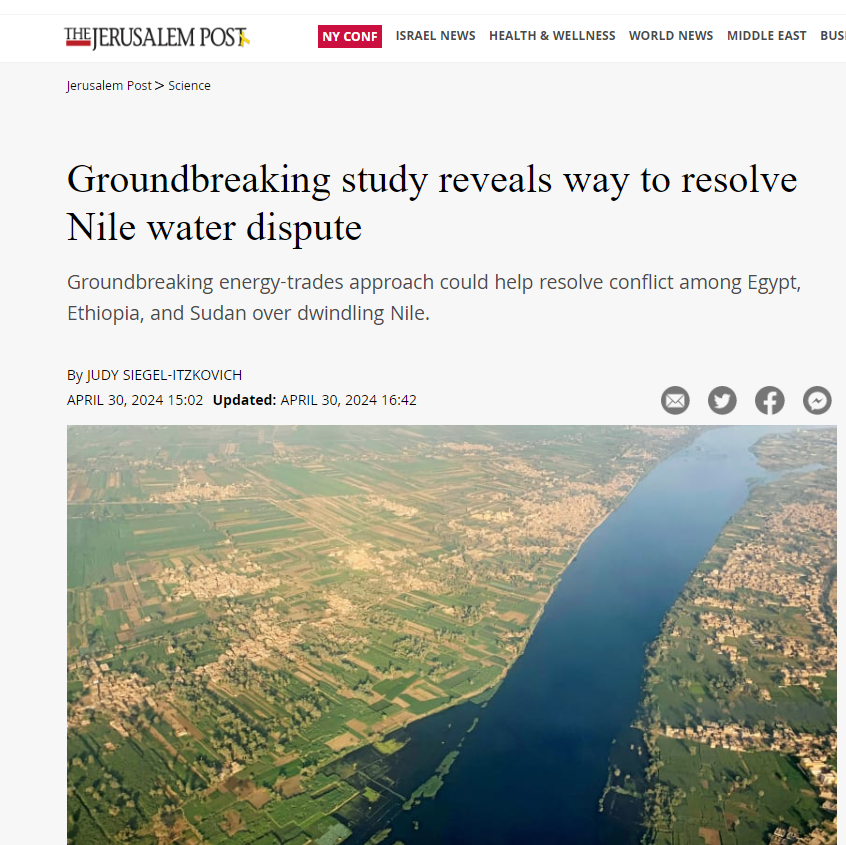
Title: "Examining the Shadows in the Current: A Critical Perspective on 'Energy Trade Tempers Nile Water Conflict'" By Asrat Introduction: The research paper' Energy Trade Tempers Nile Water Conflict' proposes a harmonious resolution to the Nile dispute through energy trade, centering on the Grand Ethiopian Renaissance Dam (GERD). However, it is crucial to fully comprehend the historical and geopolitical complexities of the conflict, such as the long-standing tensions between Egypt and Ethiopia over the Nile's waters and the broader regional dynamics that influence the dispute. This understanding is key to avoiding inadvertent biases and oversights in the narrative, which could marginalize Ethiopia's imperative need for equitable water access and sustainable development. Main Body: Overemphasis on Energy Trade: The paper simplifies the Nile water conflict to an energy trade matter, overshadowing the critical water rights and access issues. It fails to consider the significant seasonal and annual water flow variabilities essential for agriculture in Ethiopia and downstream countries. The reliance on electricity trade as a diplomatic tool must address Ethiopia's fundamental need for equitable water access, which means a fair distribution of water resources considering the needs and contributions of all riparian states. This is vital for Ethiopia's agricultural sector and the livelihood of its people. Pro-Egyptian Bias: The research appears to lean towards solutions that primarily benefit Egypt's water needs, perpetuating a historical pattern of prioritizing Egyptian concerns over those of upstream countries like Ethiopia, which contributes over 85% of the Nile's waters. This bias underscores the need for a more balanced perspective in the research, considering the inefficiencies in Egypt's water usage, such as the reliance on outdated flood irrigation techniques that result in significant water wastage. A more objective analysis is necessary to ensure a fair and balanced understanding of the Nile conflict and to promote a more inclusive approach to resolving it. Data and Numbers Supporting Criticisms: • Egyptian Water Waste: Egypt's agricultural practices are criticized for inefficiency, especially in desert reclamation projects. These projects consume vast amounts of Nile water, with flood irrigation leading to evaporation rates of up to 35-40%. • Alternative Water Sources Underutilized: Egypt treats approximately 3.6 billion cubic meters of sewage water annually, but only a fraction is reused for agriculture. • Ethiopia's Water Needs for Agriculture: Despite contributing about 85% of the Nile's flow, Ethiopia's use of the river for irrigation is minimal. There is a strong case for more equitable usage to support Ethiopia's agricultural expansion, which is crucial for its food security and economic development. Quotes from the Research Paper: 1. "The results show that increasing energy trade can reduce Egyptian water deficits… increase Ethiopia’s financial returns from electricity." This quote suggests that energy trade could alleviate Egypt's water scarcity issues while providing financial benefits to Ethiopia from electricity exports. However, this focus on economic returns may overshadow the need for equitable water distribution between the countries. 2. "This study underscores how spatial quantification of river–energy system interdependencies can help decision-makers find actionable multisector benefit-sharing solutions." This highlights the use of technical methods to address the conflict but may not fully consider the complex political and historical issues surrounding water rights, potentially missing the nuances of the socio-political realities that influence policy decisions. Critique Based on Egyptian Actions: Egypt's agricultural expansion into desert areas has increased water use inefficiencies. The heavy reliance on Nile water for such projects needs to be more sustainable and contradicts the principles of equitable water use. Despite facing significant water scarcity, Egypt's investment in alternative water technologies like desalination and wastewater treatment needs to be increased compared to its dependence on the Nile. Concluding Critique: The research, while detailed, aligns too closely with perspectives that prioritize economic benefits, such as electricity trade, over fundamental issues of water equity and sustainable management. This approach could lead to a situation where downstream countries like Egypt continue to benefit from the Nile's waters while upstream countries like Ethiopia struggle to meet their water needs. It indirectly supports Egyptian perspectives that emphasize downstream countries' rights based on historical usage rather than considering the current needs and contributions of upstream countries like Ethiopia. Conclusion: The paper "Energy Trade Tempers Nile Water Conflict" fails to provide a balanced solution to the complex issue. It overlooks the critical need for equitable water sharing and direct water access for Ethiopian agriculture, offering a solution that favors downstream benefits and technological solutions over equitable approaches. A genuinely equitable solution must consider the rights and needs of all Nile basin countries, ensuring the sustenance of the region's diverse and vibrant life. Final Thoughts: 'Energy Trade Tempers Nile Water Conflict' introduces a new perspective to an age-old dispute, but its focus is narrow. It risks overselling energy trade as a universal remedy and underrepresenting significant agricultural and ecological concerns. An equitable solution to the Nile dilemma must prioritize all riparian states' diverse needs and rights, ensuring that developmental aspirations do not overshadow fundamental environmental and human rights. This broader perspective encourages inclusivity and understanding among all stakeholders involved in the Nile conflict, emphasizing the importance of considering all perspectives for a comprehensive solution that benefits all. researchgate.net/publication/38… jpost.com/science/articl… #NileWaterConflict #EnergyTradeSolution #GERDnegotiations #TransboundaryWater #Hydropolitics #SustainableDevelopment #WaterRights #RiverBasinManagement #AfricanEnergyTrade #NileBasinInitiative #Egypt #Ethiopia #Sudan
The Asrat Blog tweet media
English
1
9
21
3.3K
Yilma Seleshi (Professor) retweetledi
Silabat Manaye
Silabat Manaye@dessalegnmanaye·
#GERD has created a spirit of accomplishment in people's minds as many people shout the slogan "Yes, we can." This theme is now working in many other sectors that are not yet exploited but have the potential to reshape #Ethiopia's development. @mike_foshoe @yilmash @TayeAtske
Silabat Manaye tweet mediaSilabat Manaye tweet mediaSilabat Manaye tweet mediaSilabat Manaye tweet media
English
3
29
37
2.4K
Yilma Seleshi (Professor)
@HanyIbrahim17 GERD main purpose is hydropower; Blue Nile river is obviously used for domestic & industrial water supply, irrigation, hydro powers, and other uses in the three countries.
English
2
0
0
93
Hany Ibrahim
Hany Ibrahim@HanyIbrahim17·
@yilmash When #Egypt and #Sudan negotiated with #Ethiopia, the #GERD The purpose of #GERD is to generate power, in DOP. There was no talk about any future uses. So why Ethiopia talk about water sharing agreement with Sudan and Egypt?
English
3
2
6
1.1K
Hany Ibrahim
Hany Ibrahim@HanyIbrahim17·
سفيرهم السابق في امريكا وحاليا في كندا The 1959 agreement between Egypt and Sudan did not prevent the entry of other countries from the basin, and there is a clause that allows this. DOP is a stage for reaching a final agreement on #GERD, but it has not been reached yet.
Fitsum Arega@fitsumaregaa

@HanyIbrahim17 That too is a legacy of the 1929 &1959 colonial agreements. However, #Ethiopia, Egypt & Sudan have chosen cooperation over blaming. Signing the DoP in 2015 was a step towards correcting colonial wrongs. The recent pause in negotiations could continue under the spirit of fairness.

Català
1
6
11
9.1K
Yilma Seleshi (Professor)
@HanyIbrahim17 Annual operation rules are annual releases from GERD - future releases. The future releases from GERD is dependent on inflow to GERD, and mainly dependent on future development upstream of GERD; so how can we fix agreement on annual operation, without water sharing agreement?
English
1
0
0
89
Hany Ibrahim
Hany Ibrahim@HanyIbrahim17·
@yilmash Yes; for example,including the principle of the dam's storage reservoir first filling, and dam operation policies: An agreement on the guidelines for different scenarios of the first filling of #GERD reservoir. An agreement on the guidelines and annual operation policies of GERD.
English
1
1
2
746
Hany Ibrahim
Hany Ibrahim@HanyIbrahim17·
Therefore, the Ethiopian measures regarding the dam are unilateral, as there is no final agreement regulating its work between the three countries.
English
1
0
2
696
Yilma Seleshi (Professor)
@HanyIbrahim17 So deceptive, twisting matter to prove your wish. Ethiopia, any one in the world, is not constructing a dam to fail. This is engineering at best. Please check the safety of your dam (served already for more than 50 years) and storing twice the size of GERD storage.
English
2
0
4
4.6K
Hany Ibrahim
Hany Ibrahim@HanyIbrahim17·
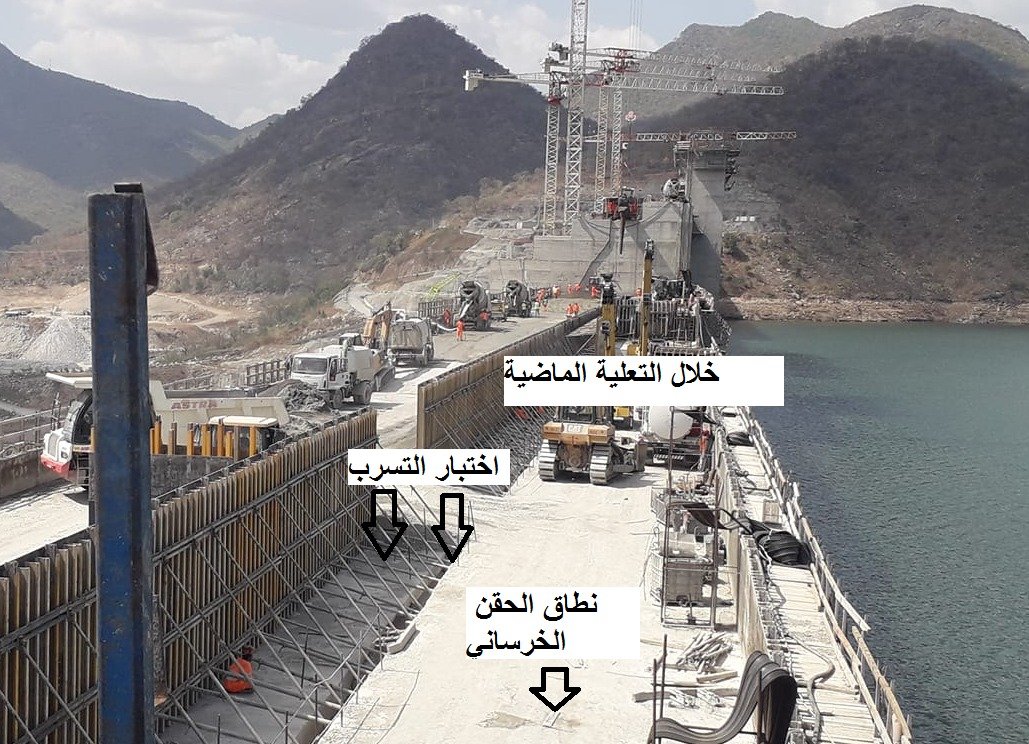
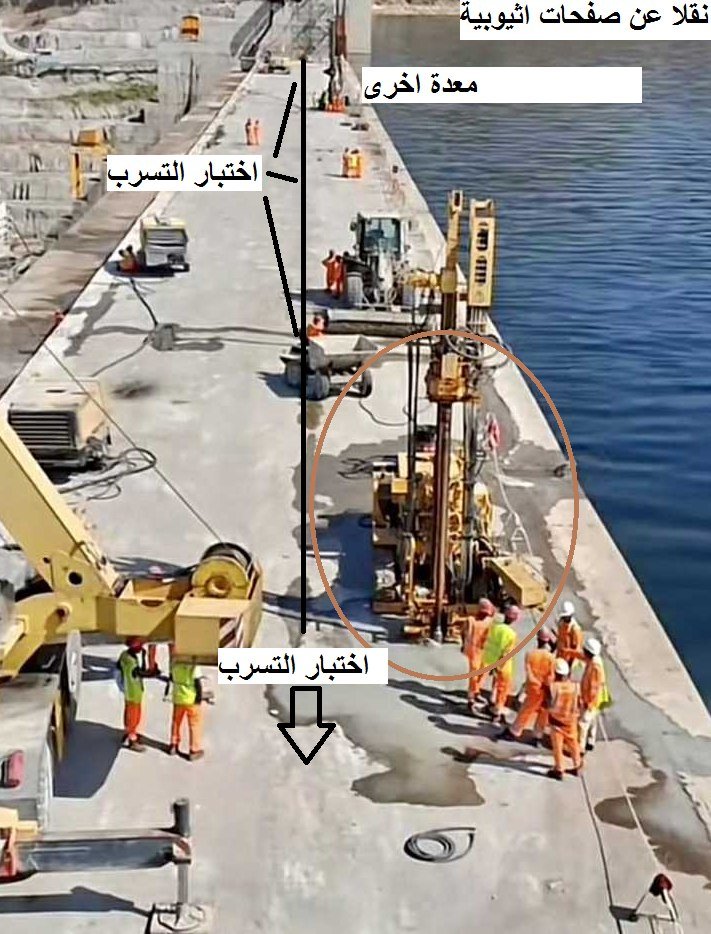
@yilmash Do you mean what is shown in the picture? But I wonder why the work is being done a few meters above the leak test, with the two lower ports being operated only a few weeks after the fourth fill is completed.
Hany Ibrahim tweet media
English
1
0
5
1.1K
Hany Ibrahim
Hany Ibrahim@HanyIbrahim17·
نشرت بعض الصفحات الاثيوبية صور لمعدات اعلى الممر الاوسط بالسد الكارثي #GERD خلال عملية المعالجة التي تسبق التعلية وهي صورة مهمة جدا جدا لان الماكينة الواضحة في الصورة غرضها عمل حقن من خلال معالجة التشققات في جزء من خرسانة الممر وليس وضع حواجز او تشير الى العمل المتقن حسب بعض
Hany Ibrahim tweet mediaHany Ibrahim tweet media
العربية
11
45
219
18.8K
Yilma Seleshi (Professor)
@galema12 @RenaissanceDam The operation rule forced GERD to release near avg Q. GERD WL will not be < 610 masl to protect turbine cavitation. Simulations using various operation rules adapting to flows will produce > 15TW/year by 13 turbines. GERD is mainly for HP, but Abay river Q is for all uses.
English
1
0
0
60
Alem Gebriel
Alem Gebriel@galema12·
@RenaissanceDam Below is one of several scenarios I analyzed with input flow in green from 1965 to 2010. Start the reservoir full and release flow for power generation (Red) - you get the reservoir level in blue. A commitment for down stream releases makes it optimal operation difficult.
Alem Gebriel tweet media
English
2
0
0
158
The Asrat Blog
The Asrat Blog@RenaissanceDam·
በህዳሴው ግድብ የውሃ አሞላል እና አለቃቅ ፕሮፖዛል Title: Enhancing My Renaissance Dam Proposal Through Expert Collaboration Last Week, I had the opportunity to engage in a significant discussion through a Zoom meeting. It was a session where I shared my work titled "Guidelines and Operational Framework for Initial Filling and Yearly Management of the Renaissance Dam" with a panel of experts. This initial version of my proposal was crafted with a keen emphasis on Ethiopia's sovereignty over its water resources, outlining specific goals for the dam's filling process and its hydropower generation capabilities. The feedback I received was precious. The experts appreciated the strategic depth and assertiveness of my proposal. However, they also pointed out areas of potential concern, such as the implications of a shared drought burden approach and the involvement of downstream countries in specific processes and more. Inspired by their insights, I took to refining my proposal. In this updated version, I focused on optimizing hydropower efficiency while integrating a more substantial commitment towards transparent data sharing and collaborative drought management strategies. A pivotal addition to the proposal was the introduction of a Conflict Resolution Mechanism – a strategic move to fortify Ethiopia's position while fostering a spirit of cooperation. The key highlights of the updated proposal are: 1. A definitive objective is to prioritize Ethiopia's sovereign rights, aiming to maximize the benefits of hydropower production. 2. A strategic methodology for the dam's filling schedules, paired with a robust approach to data sharing that ensures autonomy in decision-making. 3. Advanced drought management strategies complemented by thorough safety protocols. 4. Introducing a Conflict Resolution Mechanism designed to address potential disputes effectively and strengthen collaborative efforts. Proposal: Guidelines and Operational Framework for Initial Filling and Yearly Management of the Renaissance Dam Authored by Asrat, December 11, 2023 Objective: Establish a focused and efficient framework for the Renaissance Dam to enhance Ethiopia's hydropower output and economic gains, consistent with the Declaration of Principles. This refined framework will highlight Ethiopia's sovereign control over its water resources, aiming for sustainable development and fostering a balanced, transparent approach with neighboring downstream countries. 1. First Filling of the Renaissance Dam: Filling Schedule for Maximizing Hydropower Output: • Initial Target:Strategically target rapid attainment of water levels between 635 and 640 meters by 2024, surpassing the preliminary milestone of 625 meters. This elevation range is identified as critical for optimal hydropower generation, with evidence suggesting that each 5-meter increase can potentially enhance energy output by approximately 10%. • Extended Goal:Beyond reaching the initial milestone of 625 meters, the plan is to elevate the water level to 640 meters incrementally. This process will be dynamically adjusted based on real-time inflow data and comprehensive operational evaluations to optimize reservoir management. Framework Centered on National Sovereignty and Assertive Utilization: • Historical Filling Progress: Embrace and continue the established filling trajectory that has seen the dam successfully reach significant milestones (4.9 BCM in 2020, 18.5 BCM in 2021, 22 BCM by 2022, 41 BCM in 2023). This approach aims to attain the planned target levels quickly, underpinning Ethiopia’s sovereign rights to harness its water resources for national development and energy needs. • Rationale:Strongly emphasize Ethiopia’s rightful claim to utilize its water resources for national growth, with potential avenues including energy export. • Data Sharing and Transparency: Firmly commit to sharing pertinent operational data related to the dam with downstream countries while unequivocally maintaining Ethiopia’s autonomy in decision-making processes. • Consultation and Coordination: Actively engage in constructive dialogues with downstream countries, firmly advocating Ethiopia’s sovereign rights and critical interests in managing the dam. 2. Drought Management Strategies: Drought Classification Based on SPI (Standardized et al.): • Mild Drought: Defined by an SPI range between -0.99 and -1.49. • Moderate Drought: Characterized by an SPI range between -1.5 and -1.99. • Severe Drought: Identified by an SPI lower than -2.0. Water Release Strategy: • During Mild Droughts: Strategize to release 15% of the inflow, approximately 4.05 BCM, while maintaining reservoir levels above 630 meters, accompanied by a moderate reduction in power generation by about 5%. • In Moderate Droughts: Plan to release 10% of the inflow, around 2.7 BCM, ensuring reservoir levels stay above 630 meters, with a potential reduction in power generation of up to 10%. • For Severe Droughts: Limit the release to only 5% of inflow, approximately 1.35 BCM, keeping reservoir levels above 620 meters while potentially reducing power generation by up to 15%. Shared Drought Responsibility: • Coordinated Approach: Propose a balanced and collaborative drought management strategy involving Ethiopia, Sudan, and Egypt, aimed at equitably distributing the impacts of drought conditions. • Climate Change Adaptation: Integrate responsive strategies to address Ethiopia’s heightened susceptibility to drought, exacerbated by climate change, with a focus on securing domestic water needs and agricultural sustainability. • Operational Adjustments During Drought Conditions: Develop a flexible approach for annual operational adjustments, tailoring water release strategies and reservoir level management in response to varying drought conditions. 3. Dam Safety and Emergency Management: Risk Evaluation and Mitigation Strategies: • Safety Protocols: Implement rigorous safety protocols for dam operation, aligning with international standards. These protocols should be subject to regular reviews and updates to incorporate evolving best practices and technological advancements. • Advanced Monitoring Systems: Deploy state-of-the-art monitoring technologies, drawing inspiration from successful models such as the U.S. Bureau of Reclamation’s DMAS, to ensure continuous real-time data availability. Early Warning and Response Systems: • Comprehensive Warning Systems: Develop and implement a robust early warning system capable of rapidly detecting any anomalies or potential threats. This system should leverage the latest in real-time data processing and communication technologies. • Community Engagement and Preparedness: Actively involve local communities in the early warning processes, ensuring widespread awareness and preparedness for any emergency situations. Emergency Response Protocols: • Scenario-Based Emergency Plans: Formulate detailed emergency response strategies tailored for various potential scenarios. These plans should outline specific roles, responsibilities, and actions for effectively managing emergencies. • Routine Training and Drills: Establish a regular schedule for conducting training sessions and emergency drills for dam staff and emergency response teams, ensuring a state of constant preparedness and efficient response capabilities. 4. Seasonal Water Release Formulas: • Wet Season (July-October): Strategize to release approximately 30% of the inflow, equating to a minimum of 8.1 billion cubic meters (BCM). This approach is designed to effectively manage reservoir capacity and mitigate potential flooding risks downstream, ensuring a balance between hydropower generation and environmental considerations. • Dry Season (November-June): Plan to release around 10% of the inflow, corresponding to a minimum of 2.7 BCM. This strategy aims to maintain a consistent environmental flow downstream, ensuring the ecological health of the river and meeting the water needs of downstream communities. Underlying Logic and Methods: • Historical Flow Data Utilization: Leverage data from the past three decades to inform and guide the development of robust seasonal release strategies. This historical perspective provides valuable insights into typical water inflow patterns, assisting in the prediction and planning of reservoir management. • Incorporation of Climate Models: Integrate predictive models of climate change to anticipate and adapt to potential future shifts in precipitation and evaporation patterns. This forward-thinking approach ensures that water release strategies remain flexible and responsive to evolving climatic conditions. • Optimization Techniques: Employ advanced optimization techniques to strike a delicate balance between maximizing hydropower generation and maintaining efficient water storage. This dual focus supports both the energy needs of Ethiopia and the water requirements of downstream regions. 5. Routine Operations (Normal Conditions): • Operational Directives: Adhere to the guidelines set forth by the Ethiopian Electric Power Corporation (EEPCO), tailoring operations to accommodate seasonal variations in inflow and align with fluctuating power demands. This approach ensures a dynamic and responsive management of the dam's resources. • Reservoir Level Management: Diligently maintain reservoir levels within the strategic range of 635 to 640 meters, adjusting as necessary based on real-time data and predictive models. This range is determined to be optimal for both energy production and water conservation. • Power Generation Focus: Consistently aim to achieve the dam’s maximum power generation capacity while exploring opportunities to export surplus power. This approach addresses Ethiopia’s energy needs and presents potential economic benefits through regional energy trade. 6. Environmental and Social Impact Assessment: • Comprehensive Local Impact Evaluation: Conduct thorough assessments of the dam’s environmental and social impacts within Ethiopian territory. Focus on critical areas such as water quality, ecosystem health, agriculture, and community livelihoods to ensure a holistic understanding of the dam's influence. • Climate Impact Assessment: Evaluate the potential effects of climate change on the dam's operation and its downstream impacts. This assessment will help craft adaptive strategies to mitigate adverse effects and leverage any beneficial opportunities presented by climatic changes. • Adaptation of Global Assessment Practices: Utilize internationally recognized methodologies for environmental and social impact assessments, adapting these frameworks to suit Ethiopia's unique geographical and socio-cultural context. 7. Coordination Mechanism: Reciprocal Data Sharing: • Framework Development: Collaboratively develop a structured data-sharing agreement with Egypt and Sudan, outlining specifics of data types, frequency, and modalities of exchange. • Real-Time Data Exchange Implementation: Establish a system for real-time exchange of critical data, ensuring all parties have up-to-date information on water levels, flow rates, and other relevant metrics. • Transparency and Accessibility: Create an openly accessible online portal featuring real-time and historical data related to the dam's operations, fostering transparency and cooperation among Nile Basin countries. Conflict Resolution Mechanism: • Joint Committee Establishment: Form a dedicated committee with representatives from Ethiopia, Egypt, and Sudan to facilitate effective resolution of disputes related to the dam's operations. • Dispute Resolution Protocol: Develop a clear and structured protocol for addressing and resolving disputes, prioritizing negotiation and mediation methods. • Sustaining Regular Dialogue: Maintain open and consistent lines of communication among the involved parties, fostering a proactive and collaborative approach to issue resolution. 8. Implementation and Monitoring: Implementation Plan: • Phased Approach: Strategically implement the operational framework and coordination mechanism in clearly defined stages. This approach allows for systematic integration of new practices, adjustments based on feedback, and smoother transitions. • Capacity Building: Organize comprehensive training programs for Ethiopian technical staff, enhancing their expertise in dam operation, safety protocols, and advanced technological applications. This initiative aims to empower local professionals with the skills necessary for efficient dam management. • Technical Assistance: Actively seek collaboration and support from international organizations and experts in dam management. This assistance may include technical guidance, advisory services, and knowledge exchange, contributing to the overall efficacy of the dam’s operation. Monitoring and Evaluation: • Regular Monitoring: Implement continuous monitoring of the dam’s operations utilizing state-of-the-art technologies. This includes real-time data collection, analysis, and response systems to ensure the dam operates within safe and efficient parameters. • Evaluation Reports: Systematically compile and disseminate annual performance reports detailing the dam’s operational metrics, environmental impacts, and socio-economic benefits. These reports provide insights into the effectiveness of the dam and areas for improvement. • Independent Audits: Schedule regular independent audits to evaluate operational compliance, safety standards, and environmental regulations. These audits contribute to maintaining high levels of transparency and accountability. 9. Technological Innovations: Smart Dam Technologies: • Advanced Sensor Networks: Install a network of sophisticated sensors throughout the dam for predictive maintenance, structural health monitoring, and real-time feedback on various operational parameters. • Integrated Camera Systems: Incorporate AI-based image recognition technologies in surveillance systems to enhance security measures, identify potential risks, and monitor critical areas of the dam. • Enhanced Drone Capabilities: Deploy drones equipped with thermal imaging for comprehensive structural assessments, particularly in inaccessible areas, to augment regular inspections and surveillance. • Satellite Data Utilization: Leverage satellite data for in-depth environmental impact studies, hydrological assessments, and ecological monitoring, providing a broader perspective on the dam’s influence on the surrounding environment. • AI-Driven Predictive Analytics: Utilize advanced artificial intelligence algorithms for predictive analytics in water resource management, optimizing reservoir levels, and forecasting power generation needs. • Blockchain for Data Security: Implement blockchain technology to ensure the integrity and security of data management systems, automate transactions related to energy sales, and manage water usage agreements efficiently. Downstream Coordination with Data Sovereignty: • Selective Technology Training Programs: Offer specialized training programs on general dam operations to downstream countries, focusing on sharing knowledge in non-sensitive areas while maintaining the confidentiality of critical operational details. • Innovation Labs for Joint Research: Establish joint research labs for collaborative projects in areas such as ecological monitoring and renewable energy technology. These labs foster innovation and cooperation while protecting Ethiopia’s proprietary technologies and interests. • Robust Data Governance Framework: Develop a comprehensive data governance framework that clearly outlines the terms, conditions, and limitations of data sharing. This framework ensures a secure and controlled exchange of information, aligning with Ethiopia’s strategic objectives and data sovereignty principles. 10. Conflict Resolution Mechanism Aligned with National Interests: Rationale and Benefits of Conflict Resolution: This method is essential in reinforcing the nation's position in the Nile Basin, fostering trust and cooperation. It promotes peaceful coexistence and sustainable development, benefiting long-term water management and regional leadership. • Consideration of Costs and Risks: Address the technical, financial, and institutional requirements for implementing a conflict resolution mechanism, acknowledging potential trade-offs and strategizing to mitigate risks. • Examples and Empirical Evidence: Incorporate case studies from similar transboundary water projects, using empirical data to demonstrate the effectiveness of these conflict resolution methods. • Utilizing International Resources and Standards: Align with international guidelines, particularly from the United Nations and IWLP, ensuring that these guidelines support the equitable and reasonable utilization of transboundary waters. • Customization for the Nile Basin Context: Tailor the conflict resolution approach to the unique socio-political and environmental situation of the Nile Basin, considering historical precedents and existing agreements. • Stakeholder Engagement and Transparency: Develop a stakeholder engagement plan ensuring effective communication and negotiation of terms favorable to national interests, maintaining a focus on transparency and cooperative efforts. #SustainableDevelopment #Declarationofprinciple #Negotation #RenaissanceDam #Hydropower #سدالنهضة #الطاقةالمائية #السودان #مصر #المواردالمائية #التنميةالمستدامة #إعلانالمبادئ #التفاوض #Ethiopia #Sudan #Egypt #WaterResources #SustainableDevelopment #Declarationofprinciple #Negotation
The Asrat Blog tweet media
English
2
7
24
7.9K