Cheatcode

2K posts

Cheatcode banner
Cheatcode

Cheatcode

@Oxcheatcode

I'm obsessed with data and tech security. Founder @TowerExchange || Co-founder @CentronBot

║▌║█║▌│║▌║▌█ 가입일 Ekim 2022
162 팔로잉384 팔로워
고정된 트윗
Cheatcode
Cheatcode@Oxcheatcode·
From “What is a Smart Contract?” to Breaking Them (Ethically) About a year ago, I made a decision that sounded crazy, not just to some people around me, but even to me. I was going to dive deep into blockchain, learn cryptography, understand solidity, and eventually become a smart contract security researcher and blockchain analyst. (Yeah, I am really that ambitious) Fast forward to today… I just earned my certificate from @Alchemy & @AlchemyLearn No, I’m not “there” yet. No, I’m not auditing million-dollar protocols (yet). But this right here? This is proof of progress and persistence. Because behind this certificate are hours of: • debugging contracts that refused to compile • trying to understand why a single line of code could break everything • wrapping my head around basic solidity syntax What started as curiosity is slowly turning into clarity by analyzing one smart contract bug per day. The goal hasn’t changed: Build secure systems and contribute meaningfully to the Web3 ecosystem. This is just one checkpoint on a much bigger journey. On to the next block. ⛓️ 𝑺𝒆𝒄𝒖𝒓𝒊𝒕𝒚 𝒊𝒔 𝒔𝒕𝒊𝒍𝒍 𝒕𝒉𝒆 𝒘𝒆𝒂𝒌𝒆𝒔𝒕 𝒍𝒊𝒏𝒌!

Cheatcode tweet media
English
9
1
15
138
Wake
Wake@WakeFramework·
@Oxcheatcode @Alchemy @AlchemyLearn One bug per day is an underrated curriculum. Once fundamentals click, real-time feedback accelerates everything. Wake's VS Code extension flags vulnerability patterns as you code, feel free to try it.
English
1
0
1
5
Cheatcode
Cheatcode@Oxcheatcode·
From “What is a Smart Contract?” to Breaking Them (Ethically) About a year ago, I made a decision that sounded crazy, not just to some people around me, but even to me. I was going to dive deep into blockchain, learn cryptography, understand solidity, and eventually become a smart contract security researcher and blockchain analyst. (Yeah, I am really that ambitious) Fast forward to today… I just earned my certificate from @Alchemy & @AlchemyLearn No, I’m not “there” yet. No, I’m not auditing million-dollar protocols (yet). But this right here? This is proof of progress and persistence. Because behind this certificate are hours of: • debugging contracts that refused to compile • trying to understand why a single line of code could break everything • wrapping my head around basic solidity syntax What started as curiosity is slowly turning into clarity by analyzing one smart contract bug per day. The goal hasn’t changed: Build secure systems and contribute meaningfully to the Web3 ecosystem. This is just one checkpoint on a much bigger journey. On to the next block. ⛓️ 𝑺𝒆𝒄𝒖𝒓𝒊𝒕𝒚 𝒊𝒔 𝒔𝒕𝒊𝒍𝒍 𝒕𝒉𝒆 𝒘𝒆𝒂𝒌𝒆𝒔𝒕 𝒍𝒊𝒏𝒌!
Cheatcode tweet media
English
9
1
15
138
Cheatcode 리트윗함
Centron
Centron@CentronBot·
Consistency beats emotion every time While you’re reacting Centron is executing
Centron tweet media
English
0
3
7
42
Cheatcode
Cheatcode@Oxcheatcode·
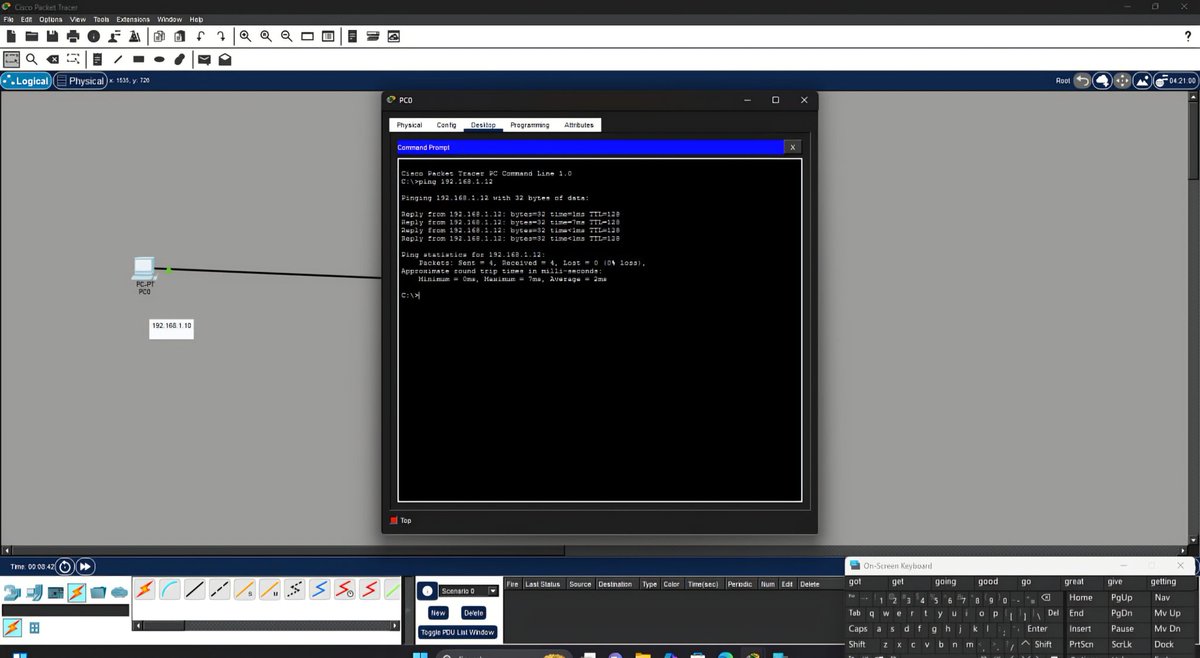
𝐁𝐮𝐠 𝐑𝐞𝐩𝐨𝐫𝐭 𝐃𝐚𝐲 𝟑𝟎! Switches are gatekeepers. Imagine passing a note to your friend in class… and instead of shouting it to everyone like a hub, there is a smart prefect who quietly walks over and hands it only to the right person. No noise, No leaks. Just precision. That is exactly how a NETWORK SWITCH works. A switch is a device that connects computers, printers, servers, and other devices inside a Local Area Network (LAN). But unlike hubs, switches are not messy or loud. They act like a digital traffic controller, making sure data goes straight to the person it is meant for. Here is what makes switches smart: 1. MAC Address Learning When a device sends data, the switch checks the sender’s unique MAC address and remembers which port that device is connected to. It builds a table of who is where. 2. Targeted Forwarding When data needs to be delivered, the switch looks at its table and sends the data only to the correct device, not everyone. No unnecessary broadcasting. 3. Collision Prevention Because each communication has its own path, devices are not “talking over each other.” This means smoother communication and even the ability to send and receive data at the same time. So if Computer A sends something to Computer B, the switch does not involve the whole network. It simply delivers the message directly like a professional courier as seen in the network simulation below using @Cisco packet tracer. That is why switches are considered "intelligent devices" and are used in modern networks instead of hubs. In simple terms: Hubs shout. Switches whisper with purpose. Day #30 / #30DaysOfTech with @TechSphereAcad. 𝑺𝒆𝒄𝒖𝒓𝒊𝒕𝒚 𝒊𝒔 𝒔𝒕𝒊𝒍𝒍 𝒕𝒉𝒆 𝒘𝒆𝒂𝒌𝒆𝒔𝒕 𝒍𝒊𝒏𝒌!
English
0
0
13
129
Cheatcode
Cheatcode@Oxcheatcode·
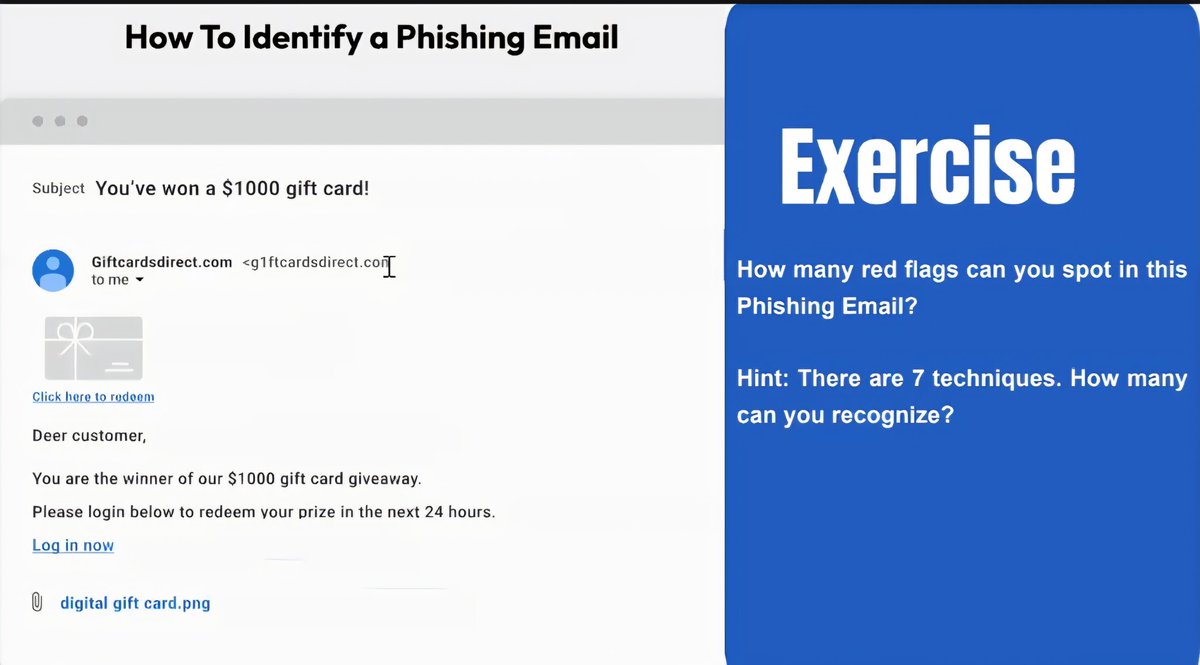
𝐒𝐩𝐨𝐭 𝐓𝐡𝐞 𝐑𝐞𝐝 𝐅𝐥𝐚𝐠! Phishing emails typically impersonate trusted entities to steal sensitive data by creating a false sense of urgency, using, suspicious links or attachments, and often featuring poor spelling or grammar. How many of these red flags can you spot?
Cheatcode tweet media
English
2
0
4
57
Cheatcode 리트윗함
Barnabas
Barnabas@GbiayeB·
.@circle announced that there's a possibility that @arc will have its own native token $ARC (ticker unconfirmed). Source: circle.com/pressroom/circ… Start by getting familiar with the various ecosystem DApps. You could start with @TowerExchange
Barnabas tweet media
English
4
3
17
472
Cheatcode
Cheatcode@Oxcheatcode·
𝐁𝐮𝐠 𝐑𝐞𝐩𝐨𝐫𝐭 𝐃𝐚𝐲 𝟐𝟗! Hubs are snitches. Imagine you tell a secret to one friend in a room… and that friend immediately shouts it to everyone in the room. That's basically how a network hub works. In computer networking, a 𝘩𝘶𝘣 is a simple device used to connect multiple computers or devices like printers and servers inside a Local Area Network (LAN). Think of it as the central meeting point where all the devices plug in, usually forming what is called a 𝘴𝘵𝘢𝘳 𝘵𝘰𝘱𝘰𝘭𝘰𝘨𝘺. But here is the funny part. Hubs are not very smart. They do not check who the message is for, they do not manage traffic, and they definitely do not keep secrets. Below is a simulation of what happens when data is sent through a hub using the @Cisco packet tracer: 1. A device sends data into the hub through one of its ports. 2. The hub receives the data. 3. The hub broadcasts it to every single device connected to it. 4. All devices receive the data, but only the device whose MAC address matches the destination actually processes it. Everyone else just ignores it. So if Computer A sends a message to Computer B, the hub still tells Computer C and D and literally everyone else on the network. They cannot read it if it is not for them… but they still heard the announcement. That is why hubs are mostly considered “dumb” networking devices. So yeah… in networking terms, hubs are the neighborhood gossip. Day #29 / ##30DaysOfTech with @TechSphereAcad 𝑺𝒆𝒄𝒖𝒓𝒊𝒕𝒚 𝒊𝒔 𝒔𝒕𝒊𝒍𝒍 𝒕𝒉𝒆 𝒘𝒆𝒂𝒌𝒆𝒔𝒕 𝒍𝒊𝒏𝒌!
Cheatcode tweet media
English
0
0
5
63
Cheatcode
Cheatcode@Oxcheatcode·
I hope you enjoyed the analysis as much as I enjoyed digging into the rabbit hole to find these numbers. More details on : cybermap.kaspersky.com Day #28 / #30DaysOfTech with @TechSphereAcad. 𝑺𝒆𝒄𝒖𝒓𝒊𝒕𝒚 𝒊𝒔 𝒔𝒕𝒊𝒍𝒍 𝒕𝒉𝒆 𝒘𝒆𝒂𝒌𝒆𝒔𝒕 𝒍𝒊𝒏𝒌!
English
0
0
0
25
Cheatcode
Cheatcode@Oxcheatcode·
Although these are rookie numbers, it was an anomaly for Brazil given the recent analysis. This implies that there's a subtle increase in the cyberattack on Brazil given the metrics.
English
1
0
0
30
Cheatcode
Cheatcode@Oxcheatcode·
𝐁𝐮𝐠 𝐑𝐞𝐩𝐨𝐫𝐭 𝐃𝐚𝐲 𝟐𝟖 : 𝐒𝐞𝐜𝐮𝐫𝐢𝐭𝐲 𝐑𝐞𝐩𝐨𝐫𝐭 𝐖𝐞𝐞𝐤 𝐈𝐈𝐈 It's another weekend and instead of me to go out and touch grass, I'm stuck analyzing charts about cyberattacks and vulnerabilities on @kaspersky.
Cheatcode tweet media
English
1
1
6
123