

Patrick Scanlon
11.8K posts

Patrick Scanlon
@PaddyV32
Catapultam habeo. Nisi pecuniam omnem mihi dabis, ad caput tuum saxum immane mittam.
가입일 Eylül 2021
266 팔로잉592 팔로워

@1414Maple A Canadian. A patriot. A family man. A man who just wants what's best for his country and his fellow Canadians.
But you believe this 👇
"Canada's future doesn't include you."
YOU ARE GARBAGE!
And as a matter of fact, I did.
English

For my Canadian friends, big election majority day.
I have this to say to my MapleMagats friends ….

English
@ScanticAntiques @grok @jkenney Is there a Democrat-leaning ski run on every mountain too? You’re ridiculous.
English

English
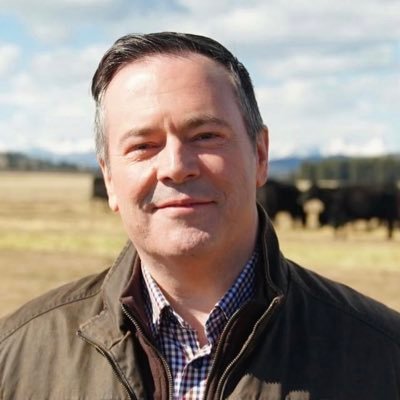
Wait... didn't he tell us Canadians to boycott the US, and not travel there???
Culture@notgwendalupe
Katy Perry and Justin Trudeau at Coachella (2026)
English
English
@ScanticAntiques @jkenney Montana is hardly a blue state and Trudeau likes to go skiing there. Our PM voted to move his company to the US and has the bulk of his investments there. His kids went to school there. But is proles had better stay home and elbow up.
English
@David89642813 @cselley It was in the news. Chris Selley is a journalist with a specialty in politics. Your conflicting emotions completely unfounded.
English

@cselley I don't know whether to be impressed or creeped out that you know this.
English

This is a guy who once went on a skiing holiday *in Montana*.
Jason Kenney 🇨🇦🇺🇦🇮🇱@jkenney
Wait... didn't he tell us Canadians to boycott the US, and not travel there???
English
@ScanticAntiques @jkenney Are the blue states not part of the US?
English
@jkenney Yeah, in California lol. They are visiting Blue states… not shit hole Florida
English
@Beowulf_Raider @CTVNews Skin tag. North Korea doesn’t have the technology to remove them.
English


North Korea tests cruise and anti-ship missiles from naval destroyer ctvnews.ca/world/article/…
English
@junonewscom That won’t fackin’ go over well in the fackin’ patch, eh bud!
English

Juno News has learned that Chelsae Petrovic, a United Conservative Party MLA, is introducing legislation to ban single-use vaping products in Alberta.
junonews.com/p/exclusive-al…
English
@TheTorontoSun @MandTSpratt Isn’t widely accepted as racism to report these facts?
English

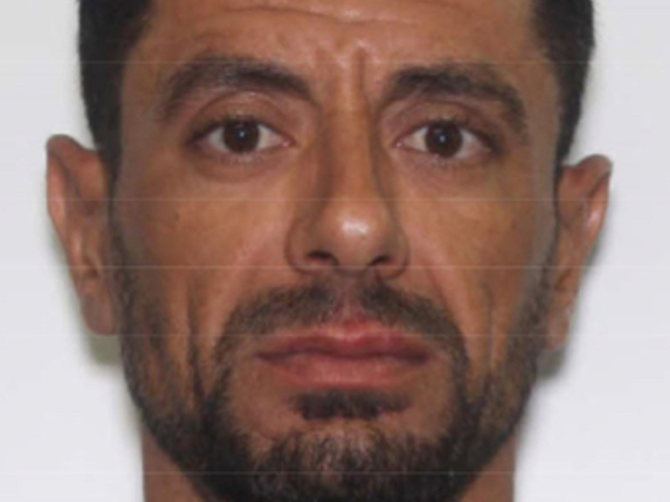
Two accused killers in Stoney Creek slaying of teen are refugee claimants: Source torontosun.com/news/local-new…
English
@NoctuaAuratus @TristinHopper Have some respect; I have an extensive CD collection.
English

@PaddyV32 @TristinHopper Lol. Absolutely cucked by propaganda and not seeing the bigger picture? ✅
English

@AndrewLawton @AirCanada To be fair, there were 4 intelligent bodies on that flight. And I’ll bet none of them brought 5 huge carry on bags that they spent 15 minutes trying to cram in other people’s overhead bin. 😁
English
@Acadiegirl1755 @AndrewLawton @AirCanada Carry-on bags should be limited to something large enough to hold your wallet, phone, medications and travel documents. One item per person.
English



@3YearLetterman Basketball was invented by a Canadian, therefore Non-Canadian ppl need to sell their balls and baggy shorts.
English

Non-American golfers should not be permitted to play in, let alone win, American tournaments
We literally invented this game
English


How do you sing "Happy Birthday to You" to her?
Massimo@Rainmaker1973
The remarkable story of Chinese scientist Tu Youyou, who won the 2015 Nobel Prize in Physiology or Medicine for her discovery of artemisinin — a breakthrough drug that has saved millions of lives from malaria worldwide. In the late 1960s and early 1970s, amid China's "Project 523" (a secret effort to combat malaria during the Vietnam War era), Tu Youyou and her team reviewed thousands of ancient Chinese medical texts for herbal remedies against "intermittent fevers" (a classic description of malaria symptoms). Most preparations involved boiling herbs into decoctions, but one key reference from the Eastern Jin Dynasty (around 340 AD) stood out — Ge Hong's A Handbook of Prescriptions for Emergencies (肘后备急方). It described using qinghao (sweet wormwood, Artemisia annua) by taking "a handful of qinghao, immerse in two liters of water, wring out the juice, and drink it all." Notably, this method used cold water steeping and wringing (squeezing) rather than heat. This detail was pivotal: Traditional boiling methods had yielded inconsistent or ineffective results in modern tests because high temperatures degraded the active compound. Tu hypothesized that heat was destroying the antimalarial potency, so her team shifted to low-temperature extraction techniques. In September 1971, they experimented with solvents like ethyl ether (which has a low boiling point of about 35°C) to extract the leaves and stems at reduced temperatures. On October 4, 1971, they obtained a highly effective sample (#191) that achieved 100% inhibition of malaria parasites in rodent and monkey models. This led to the isolation of artemisinin (also called qinghaosu) in 1972. Tu even tested the safety of early extracts on herself first. Artemisinin-based combination therapies (ACTs) are now the WHO-recommended first-line treatment for malaria, dramatically reducing deaths, especially in Africa and Asia.
English
@TristinHopper “Death to America” implies death to the regime controlling Americans, not every American citizen. They’ve stated this multiple times and people keep ignoring it because it doesn’t fit the narrative in the same way.
English
@Hereforago0605 @AMCKunneke @mkp2107 In Canada doctors are required to advise patients of the program, if they meet the expanding criteria. If the doctor objects to this on moral grounds then they’re required to refer them to a MAiD-friendly doctor. It’s law.
English

@AMCKunneke @PaddyV32 @mkp2107 Well it doesn’t happen but like I said all you would have to say is no but keep pushing that bs narrative that doesn’t exist
English

Because I am old, I am really scared to go to a doctor or hospital in Canada, (they may offer me MAiD), so I am eating right and working out like crazy!🥗🏋♀️ I can do stuff now that I couldn't do in my 30s.😂
English

@stephen_taylor If we joined the US I’d move to Texas as soon as I got my citizenship.
English
@mkp2107 @AMCKunneke You’re OK with going to the doctor and being offered death?
English
@AMCKunneke ‘Offer’ is the key word here. But this is also unlikely unless you have a terminal condition. Someone may also offer you drugs on the street. You don’t have to say yes. Ffs.
English