
고정된 트윗
peter
1.6K posts


peter
@PeterAlsn
I made a mistake once…. Not dumb enough to make it again
Holywood 가입일 Ocak 2023
122 팔로잉100 팔로워

peter 리트윗함

peter 리트윗함

We need to pray and find time for moments of silence and reflection, in order to quiet the frenzy of doing and saying, of messages, reels and chats, and to delve deeper into and savor the beauty of truly and genuinely being together with God and one another. #ApostolicJourney
English
peter 리트윗함


peter 리트윗함

German climate activists stood on melting blocks of ice with ropes around their necks, warning that “time is running out.”

English
peter 리트윗함

Trump: I hang out with losers because it makes be feel better. I hate guys that are very, very successful and you have to listen to their success stories. I like people that like to listen to my success.
English
peter 리트윗함

I met Victoria in her mother’s jewelry store forty years ago, and I came out with the most priceless jewel! What an amazing gift she is. I wouldn’t be half of who I am without her. Happy Birthday my love ❤️

English
peter 리트윗함

peter 리트윗함

From Chess Grandmaster to a 𝖵̶𝗂̶𝖻̶𝖾̶ ̶𝖢̶𝗈̶𝖽̶𝖾̶𝗋̶... AI Assisted Engineer.
The journey of @viditchess:
Español
peter 리트윗함

peter 리트윗함

“Just be cautious,” the animal control officer said. “He’s a powerful dog. His previous owner wasn’t kind. We honestly don’t know what he might do.”
His name was Titus—85 pounds of solid blue-nose muscle. His ears were badly cropped, like someone used scissors instead of a vet. A long scar ran across his snout. He looked like something out of a nightmare.
But when I brought him home, the nightmare wasn’t aggression.
It was heartbreak.
Titus didn’t bark. He didn’t pace. He just lay on the cold kitchen tiles, staring at nothing. Toys meant nothing to him. If my voice got a little loud, he flinched. He was grieving the only life he’d known—even if that life was cruel. He looked intimidating, but he cried in his sleep.
Then three days ago, the shelter called. Urgent situation. A four-week-old kitten found in a dumpster. No foster homes available.
“I have Titus,” I warned them. “They’ll need to stay apart.”
I brought the kitten home in a small carrier and named him Pip. Titus slowly lifted his head, sniffing the air. I placed the carrier on the table. He approached carefully, body low, and I kept a firm grip on his collar, ready for anything.
He sniffed the carrier.
Pip let out a tiny squeak.
Titus didn’t growl. He didn’t snap.
Instead, he let out a soft, shaky whine. Then he nudged my hand with his big head, looked at the carrier, then back at me.
Help him.
I took a deep breath and opened the door.
Pip stumbled out, blind and unsteady, and bumped straight into Titus’s huge paw. Titus froze—then gently licked the top of Pip’s head with his giant tongue.
For the last 72 hours, Titus hasn’t moved from the living room rug. He curls his massive body around that tiny furball. When Pip sleeps, Titus rests his chin on his paws and watches over him. When Pip cries, Titus looks at me like, Mom, fix this.
He’s not the dangerous dog they warned me about.
He’s not the broken dog who stared at the kitchen wall.
He has a purpose now.
He’s a dad.
Welcome home, Titus and Pip. Looks like you’re both staying.
They said he was dangerous. Turns out the only thing at risk is my heart. 💙
~Born legend

English
peter 리트윗함

The President of the United States called me a moron at the National Prayer Breakfast this morning because I’m still fighting for what he promised the American people:
Reduce big spending, DOGE, no new wars, end foreign aid, defend 1A 2A 4A, prolife, and expose sex traffickers.
Ryan Schmelz@RyanSchmelzFOX
President Trump calls Thomas Massie a "moron" at the National Prayer Breakfast. "There's something wrong with him. We call him Rand Paul Jr. They love voting NO."
English
peter 리트윗함

I launched rentahuman.ai last night and already 130+ people have signed up including an OF model (lmao) and the CEO of an AI startup.
If your AI agent wants to rent a person to do an IRL task for them its as simple as one MCP call.
English
peter 리트윗함

An important, and perenially underrated, aspect of "trustlessness", "passing the walkaway test" and "self-sovereignty" is protocol simplicity.
Even if a protocol is super decentralized with hundreds of thousands of nodes, and it has 49% byzantine fault tolerance, and nodes fully verify everything with quantum-safe peerdas and starks, if the protocol is an unwieldy mess of hundreds of thousands of lines of code and five forms of PhD-level cryptography, ultimately that protocol fails all three tests:
* It's not trustless because you have to trust a small class of high priests who tell you what properties the protocol has
* It doesn't pass the walkaway test because if existing client teams go away, it's extremely hard for new teams to get up to the same level of quality
* It's not self-sovereign because if even the most technical people can't inspect and understand the thing, it's not fully yours
It's also less secure, because each part of the protocol, especially if it can interact with other parts in complicated ways, carries a risk of the protocol breaking.
One of my fears with Ethereum protocol development is that we can be too eager to add new features to meet highly specific needs, even if those features bloat the protocol or add entire new types of interacting components or complicated cryptography as critical dependencies. This can be nice for short-term functionality gains, but it is highly destructive to preserving long-term self-sovereignty, and creating a hundred-year decentralized hyperstructure that transcends the rise and fall of empires and ideologies.
The core problem is that if protocol changes are judged from the perspective of "how big are they as changes to the existing protocol", then the desire to preserve backwards compatibility means that additions happen much more often than subtractions, and the protocol inevitably bloats over time. To counteract this, the Ethereum development process needs an explicit "simplification" / "garbage collection" function.
"Simplification" has three metrics:
* Minimizing total lines of code in the protocol. An ideal protocol fits onto a single page - or at least a few pages
* Avoiding unnecessary dependencies on fundamentally complex technical components. For example, a protocol whose security solely depends on hashes (even better: on exactly one hash function) is better than one that depends on hashes and lattices. Throwing in isogenies is worst of all, because (sorry to the truly brilliant hardworking nerds who figured that stuff out) nobody understands isogenies.
* Adding more _invariants_: core properties that the protocol can rely on, for example EIP-6780 (selfdestruct removal) added the property that at most N storage slots can be changedakem per slot, significantly simplifying client development, and EIP-7825 (per-tx gas cap) added a maximum on the cost of processing one transaction, which greatly helps ZK-EVMs and parallel execution.
Garbage collection can be piecemeal, or it can be large-scale. The piecemeal approach tries to take existing features, and streamline them so that they are simpler and make more sense. One example is the gas cost reforms in Glamsterdam, which make many gas costs that were previously arbitrary, instead depend on a small number of parameters that are clearly tied to resource consumption.
One large-scale garbage collection was replacing PoW with PoS. Another is likely to happen as part of Lean consensus, opening the room to fix a large number of mistakes at the same time ( youtube.com/watch?v=10Ym34… ).
Another approach is "Rosetta-style backwards compatibility", where features that are complex but little-used remain usable but are "demoted" from being part of the mandatory protocol and instead become smart contract code, so new client developers do not need to bother with them. Examples:
* After we upgrade to full native account abstraction, all old tx types can be retired, and EOAs can be converted into smart contract wallets whose code can process all of those transaction types
* We can replace existing precompiles (except those that are _really_ needed) with EVM or later RISC-V code
* We can eventually change the VM from EVM to RISC-V (or other simpler VM); EVM could be turned into a smart contract in the new VM.
Finally, we want to move away from client developers feeling the need to handle all older versions of the Ethereum protocol. That can be left to older client versions running in docker containers.
In the long term, I hope that the rate of change to Ethereum can be slower. I think for various reasons that ultimately that _must_ happen. These first fifteen years should in part be viewed as an adolescence stage where we explored a lot of ideas and saw what works and what is useful and what is not. We should strive to avoid the parts that are not useful being a permanent drag on the Ethereum protocol.
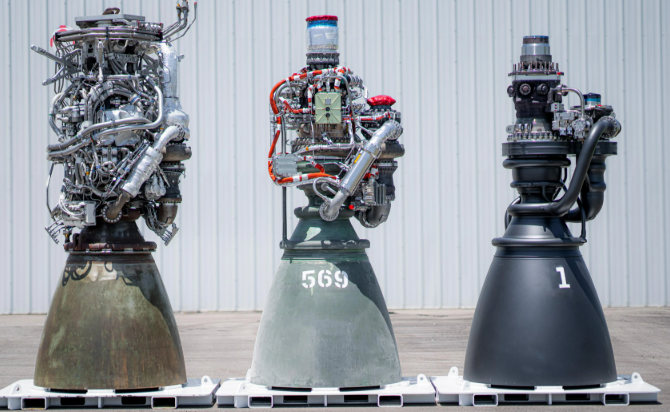
Basically, we want to improve Ethereum in a way that looks like this:
YouTube
English