Lusty

5.7K posts

Lusty

Lusty

@PoW_Blockspace

Ideas on ⚡️markets | #GridShare Co-Founder; DMLP market research & electricity distribution design. #dKWh

Pacific Republic 가입일 Haziran 2023
101 팔로잉285 팔로워
고정된 트윗
Lusty
Lusty@PoW_Blockspace·
Lusty@PoW_Blockspace

@SSRN 3) The missing-market layer is the real issue. With no financial hedge for deliverability, all risk gets socialised through grid capex, insurance, & retail riders. Prices look “stable,” but the risk is just hidden, borne by "policy" ratepayers instead of priced by markets.

ZXX
2
0
1
648
Lusty
Lusty@PoW_Blockspace·
@mbosisioCPE Spilling capital isn't efficiency, need to risk trade around delivery scarcity.
English
0
0
0
17
Marco Bosisio
Marco Bosisio@mbosisioCPE·
Vale anche da noi. I prezzi dell'energia bassi nelle ore di sole, o peggio ancora quelli a zero e negativi non sono un regalo di qualcuno. Lo paghiamo ancora noi con i contratti per differenza (quelli che vi spacciano come "stabilizzano i prezzi").
Operador Nuclear@OperadorNuclear

¿Por qué los precios mayoristas de la electricidad en valores cero o negativos son muy peligrosos para la sostenibilidad del sistema? No, la consecuencia no es que te van a pagar por consumir electricidad. Lo explica muy bien @fdezordonez

Robbiate, Lombardia 🇮🇹 Italiano
1
1
6
282
Lusty
Lusty@PoW_Blockspace·
@matsburaas @JigarShahDC There's little evidence to support a claim that high VRE pen lowers system & delivery costs, Australia & California are expensive and poor examples, Texas however has cheap thermal & #Bitcoin
English
0
0
0
3
Mats-André Buraas
Mats-André Buraas@matsburaas·
@JigarShahDC He missed the fact that electricity is increadibly flexible, and that a smart grid can do things faster and cheaper while using less energy in thd process. As Australia’s and Texas and California shows it’s not a traditional energy system and it doesn’t need to behave like it
English
1
0
1
21
Lusty
Lusty@PoW_Blockspace·
@CommunityOrgnzr @RichardMeyerDC Intermittent & opportunistic DER monoplises capacity & creates missing money; the real constraint isn’t energy, it’s delivery at scarcity, which cannot be ensured by the same energy vector🤷‍♂️
English
0
0
0
16
Lusty
Lusty@PoW_Blockspace·
@CommunityOrgnzr @RichardMeyerDC The correct system question is: What is the cost of delivering a MWh at the exact time and location it’s needed? The economic loss is price spread, not energy loss, if spreads collapse (which batteries themselves cause), efficiency becomes irrelevant. Curtailment=spilled capital
English
1
0
1
54
Richard Meyer
Richard Meyer@RichardMeyerDC·
The core analytical error in the "primary energy fallacy" argument, that renewables plus electrification will dramatically cut total energy needs, is that it treats energy as interchangeable. A TWh of gas isn't just energy. It's dispatchable, energy-dense, and seasonally storable. A TWh of solar is none of those things without substantial infrastructure to make it so. The leap from "EV motors are more efficient than combustion engines" to "the transition is easier than you think" skips over the hardest parts of the problem. Electrification can eliminate some conversion losses while introducing new ones, like curtailment, storage round-trip losses, overbuild, and grid expansion. If we look at how much infrastructure is needed to support an electric heat pump with renewables in the dead of winter, we'll see that gas delivers far more value than a Sankey diagram shows.
Rico Grimm@gri_mm

Die Energiewende wird leichter, als viele denken. Das liegt an einem weitverbreiteten Missverständnis, das Skeptiker ausnutzen, um Angst zu schüren. Denn: Nein, wir müssen das fossile System nicht 1:1 ersetzen. Wir brauchen nicht alle Primärenergie von heute. „Primärenergie“ ist die Energie, die den natürlichen Quellen entnommen wird. Ein Liter Heizöl enthält 10 Kilowattstunden (kWh), ein Kilogramm Steinkohle 8 kWh usw. Zurzeit verbraucht die Menschheit global 180.000 TWh Primärenergie. Erneuerbare stellen davon deutlich weniger als zehn Prozent. Um die fünf Prozent. Das ist ein Fakt, aber komplett irreführend. Denn Primärenergie ist ein bedeutungsloses Konzept in einer elektrifizierten Welt. Es sagt uns, wie viel Energie in Energiequellen steckt, bevor wir sie umwandeln. Aber nicht diese Energie ist für uns wichtig, sondern die erzeugte Energie. Wir müssen alle Energiequellen umwandeln, damit sie nützlich werden. Schließlich kippt niemand ein Fass Öl (159 Liter) in seinem Wohnzimmer aus und erwartet, dass es wärmer wird. Und bei der Umwandlung sind elektrische Systeme deutlich effizienter als fossile. Jede kWh Energie, die wir in ein elektrisches System stecken, kommt mit höherer Wahrscheinlichkeit dort an, wo wir es verbrauchen wollen: am Rad, im Ofen, in der Wärmepumpe. Der Motor eines E-Autos ist 2-4 mal effizienter als ein Verbrenner, weil er weniger Abwärme erzeugt. Eine Wärmepumpe kann aus 1 kWh Strom bis zu 4 kWh Wärme erzeugen, da sie mit der Umgebungstemperatur arbeitet. Ein Gasboiler wiederum verheizt das Gas und das war’s. Verbrenner-Autos sind eigentlich Heizungen auf Rädern. (AKWs sind gigantische Wasserkocher.) Wer also mit Grafiken vom Primärenergiebedarf herumwedelt und die Energiewende damit kritisieren will, sitzt einem Trugschluss auf. Es ist, als hätten sich die Leute in den 1920ern vor die ersten Autos gestellt und gefragt: „Und? Wie viel Hafer frisst das Ding jeden Tag?“ In Deutschland schmeißen wir wegen der Umwandlungsverluste jedes Jahr mehr als 30 Prozent unserer Primärenergie weg. Weltweit waren es vor der großen Elektrifizierung mehr als 50 Prozent. Mal eine Frage: Gehst du in den Supermarkt, öffnest die Packung mit zehn Eiern, siehst darin drei kaputte Eier und zahlst zufrieden? Du bist ja nicht blöd. Wir als Gesellschaft sind es schon. Wir haben 30 Prozent Verschwendung in unserem System eingebaut und hielten das so lange für normal, wie es keine Alternative gab. Aber jetzt gibt es eine. Wer mit Primärenergie-Charts herumwedelt oder Technologieoffenheit in Deutschland fordert, sagt eigentlich: „Lasst uns weiter verschwenden!“


English
30
41
216
23.6K
Lusty 리트윗함
KEN YAGELSKI
KEN YAGELSKI@yagelski·
@RichardMeyerDC There is a meaningful difference between "energy" and "dispatchable capacity." The renewable fans don't seem to understand that. It doesn't matter how much energy solar / wind has produced if you can't schedule it.
English
5
1
17
544
Lusty
Lusty@PoW_Blockspace·
@JigarShahDC Lol the Australian NEM is rekt, it's a subsidised zonal market, with cronyism proping up stranded transmission assets, sure it might have 40% rooftop solar, it also has a falling demand & delivery cost going parabolic 🤷‍♂️
English
0
0
1
46
Jigar Shah
Jigar Shah@JigarShahDC·
Why is it so damn hard to do big things in America?⁣ ⁣ Australia has 40% rooftop solar. We have 6%.⁣ ⁣ We can build beautiful homes in a factory for $300k delivered. Local regs block it.⁣ ⁣ The technology isn't the problem. We are.
English
60
59
323
16.7K
Lusty
Lusty@PoW_Blockspace·
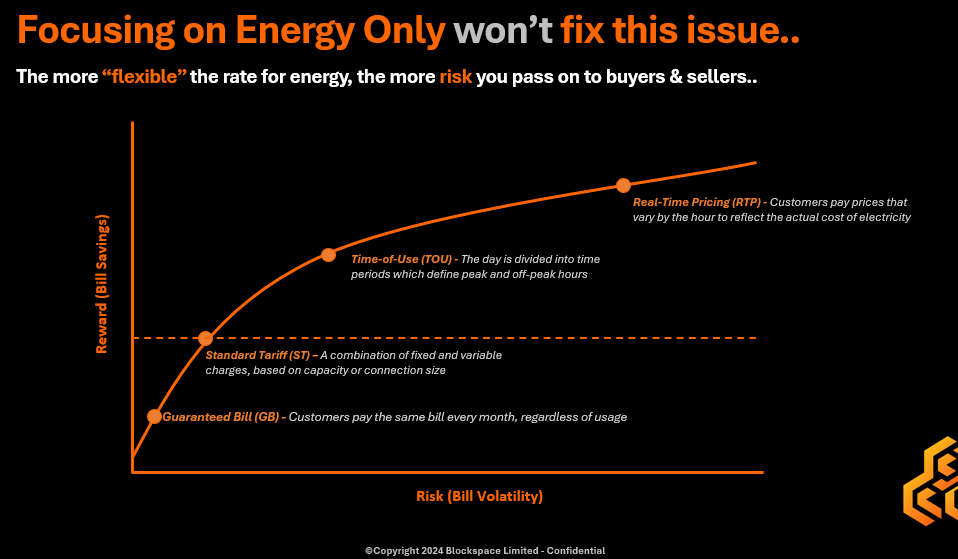
@EnviWood Few people understand this. The business of delivery is a regulated margin, there's no "savings" to shared.
Lusty tweet media
English
0
0
0
29
Paul Lumberjack
Paul Lumberjack@EnviWood·
@PoW_Blockspace Behind-the-meter growth without rate reform shifts fixed costs to non-participants. The wires still need paying.
English
1
0
1
37
Lusty
Lusty@PoW_Blockspace·
@Dumbas61007425 @LewisHoldenNZ So, it's not going to be a cheap system without a non-weather dependent fuel, that has a different reliability vector to water in a dam🤷‍♂️
English
0
0
0
3
Lusty
Lusty@PoW_Blockspace·
@Dumbas61007425 @LewisHoldenNZ All that intermittent resources still needs a hedge, and storage can't insure storage, winter firm cost sets future price which is what appears in your bills..
English
1
0
0
4
Lewis Holden 🇺🇦
Lewis Holden 🇺🇦@LewisHoldenNZ·
I know, let's fast track renewable energy projects in hydro, solar and geothermal... ✔️
Three Boys in Avoca@threeboysbrew

#NZ #EnergyMarkets 1. Not much oil 2. Long way from oil 3. Lots of wind 4. Lots of sun 5. Lots of water 6. Lost of geothermal Anybody got any ideas... our governments are stumped !

English
3
0
6
500
Lusty
Lusty@PoW_Blockspace·
@Dave_Q @the_roose1 There's nothing stopping people installing PV, it's worthless to the grid to have distributed.
English
0
0
1
26
Dave Q 🇳🇿
Dave Q 🇳🇿@Dave_Q·
@the_roose1 As of early 2026, nearly 4% of New Zealand homes have rooftop solar installations (approximately 73,000–75,000 systems), compared to over 30% to 35% of homes in Australia.
English
7
1
12
231
Honest Alder (not dishonest crank Alder)
Another right wing 🤡 saying we should hold the country back by not investing in and modernising our grid/stay on fossil fuels for ever. The UK is where it is because these idiots won’t invest. He hates the public making their own electricity & wants you dependent on oil & gas.
Honest Alder (not dishonest crank Alder) tweet media
English
43
5
54
2.9K
Lusty
Lusty@PoW_Blockspace·
@Tw_timerAlder @KathrynPorter26 @MatthewHitchmo3 Intermittent resources increase system costs; yes they are fuel savers, fine in specific locations, but the integration & fixed cost are >50% of overall capex cost now so cells & wafers could be free but they won't make energy or delivery cheaper.
English
0
0
0
10
Lusty
Lusty@PoW_Blockspace·
@SamuelWarmerdam Competition isn't going to lower system costs; but cheaper fuel will.
English
0
0
0
4
Sam Warms
Sam Warms@SamuelWarmerdam·
@PoW_Blockspace Sure, electricity at charging stations will be influenced by their needed rate of return and what they think they can get away with, which is significantly impacted by competition. ChargeNet still allows you to pay your home electricity rates at their stations so only 30c/kwh
English
1
0
0
9
Lusty
Lusty@PoW_Blockspace·
@real_RAoP @Tasmanviews But junior retail in NZ ain't bankable, and with such a high gas cap PV & wind ain't selling themselves short.
English
1
0
1
10
Lusty
Lusty@PoW_Blockspace·
@real_RAoP @Tasmanviews A large pumped hydro requires volatility to justify investment, but once built, it reduces volatility to a level that destroys its own returns. Maybe junior retail will give it the sell cap it needs; but it needs a large contract for low cost fill volumes with sufficient spread
English
1
0
1
12
Paul Willis
Paul Willis@Tasmanviews·
Once built, Lake Onslow would remove the need to continue to import LNG, which the Government is currently proposing to facilitate as a nearer-term solution to the dry-year problem, it said. At last some sense. Rubbished by Nats and NZFirst! thepost.co.nz/business/36097…
English
21
23
70
2.4K
Lusty 리트윗함
Xiao Wang
Xiao Wang@xiaowang1984·
Two million homes with solar is just two million homes that underpay their distribution fees that get a disproportionate compensation for the energy they inject. Not a bad outcome
Josh Emden@joshemden

Some bad numbers here New-build solar & heat pumps ~three times cheaper than retrofitting them Cost is more like £5k-£7k, saving £800-£1,000 per year. Disaster! If Cameron hadn't scrapped the standard in 2015, we'd have 2 million more homes insulated from gas prices by now

English
3
1
15
1.4K
Lusty
Lusty@PoW_Blockspace·
@real_RAoP @Tasmanviews The Onslow battery would still need a reliable hedge, and need to turn to thermal, a battery doesn't lower the price of energy.
English
1
0
0
31
RAoP
RAoP@real_RAoP·
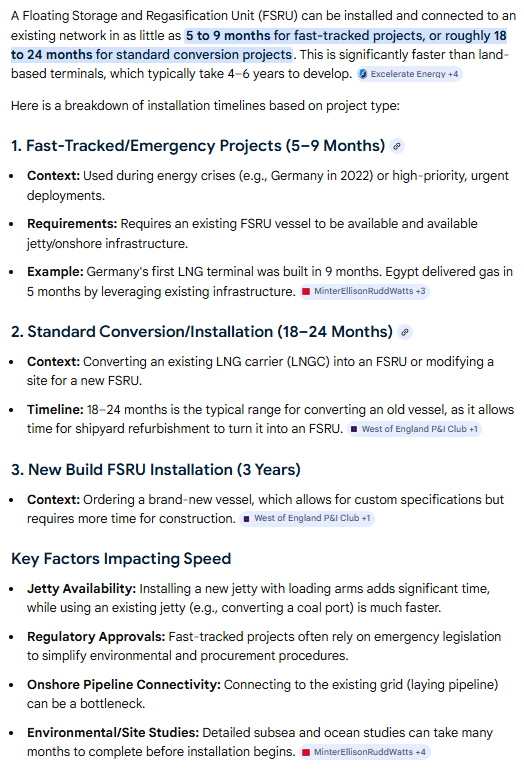
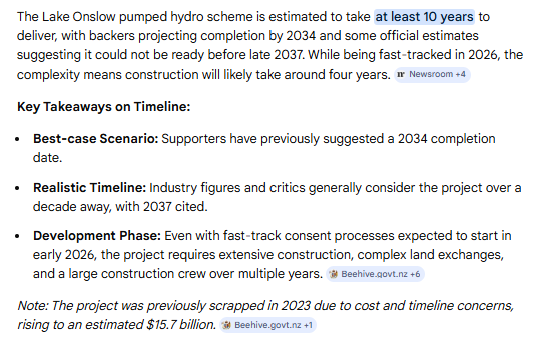
@Tasmanviews An LNG terminal can be delivered quickly - Govt is talking of being ready for winter next year. Lake Onslow is at least 10 years away. If the Onslow developers can find funding, get it built and show that LNG is no longer needed, LNG will stop - some big Ifs to deal with first
RAoP tweet mediaRAoP tweet media
English
1
0
7
134
Lusty 리트윗함
Chris Martz
Chris Martz@ChrisMartzWX·
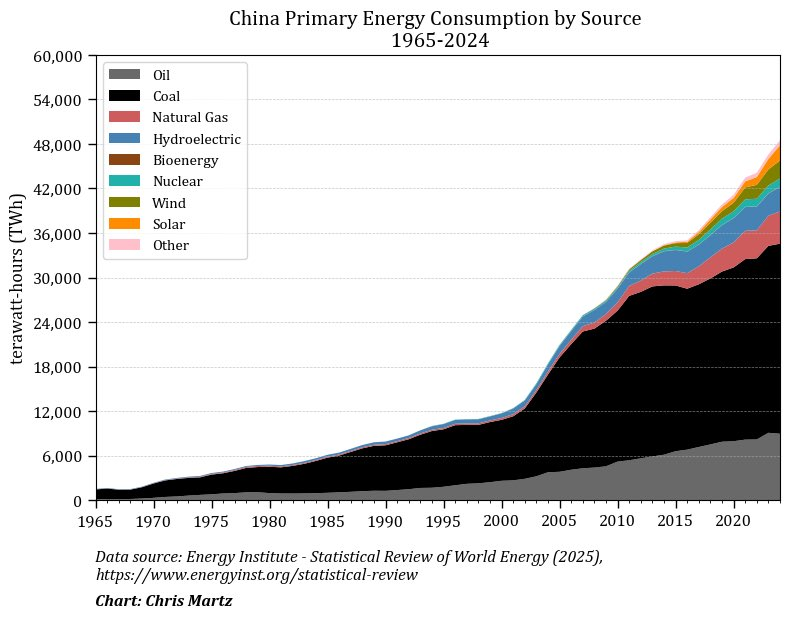
China isn't turning into a “green superpower.” Any renewable energy systems they're installing only add to existing energy sources; they are not replacing fossil fuels at all. China is increasing their use of ALL energy.
Chris Martz tweet media
Matthew Stadlen@MatthewStadlen

@PeterMcCormack Have you not noticed that China is turning itself into a green superpower and that the future is green? Do you want us to be left behind as a fossil fuel dinosaur?

English
274
1.2K
4.9K
234.4K