ProgressIreland

145 posts

ProgressIreland banner
ProgressIreland

ProgressIreland

@ProgressIreland

Ideas to unlock Ireland's potential.

Ireland 가입일 Ocak 2024
4 팔로잉2.1K 팔로워
ProgressIreland 리트윗함
Seán Keyes 🖐️
Seán Keyes 🖐️@Keyes·
Housing plans are like warehouses: they work better when they’re big. Some categories of projects just want to be big. Car manufacturers, airports, exams, cable networks, food processors and armies. Warehouses are big because big ones are cheaper to build, per square metre, than small ones. They have economies of scale. Airports, armies and car companies also have big economies of scale. A ten-man army wouldn’t be much use. I would like to submit that housing plans are a bit like warehouses. They have economies of scale. By my count, big housing plans have 10 advantages over small ones. What do I mean by a big housing plan? I mean a single plan with more than, say, 1,000 homes. 10 reasons to make big plans Big plans are better-looking. It’s a fine thing to live in a nice-looking neighbourhood. The walk to the shops, through leafy streets of handsome stone buildings, lifts one’s spirits. Good-looking houses are pleasant, not only for their owners, but also for their neighbours. People get a warm glow from living near to other good-looking homes. This is what economists call a positive externality. But there’s a problem: neighbours don’t pay anything for the warm feeling they get as they walk through their handsome neighbourhood. This results in fewer handsome neighbourhoods than we’d ideally like. Beautiful neighbourhoods are under provided by the market. This is not just a matter of taste. Ugliness is partly to blame for high housing costs. In a recent study, the legal scholar Christopher Elmensdorf and coauthors found that one of the main reasons people oppose new housing is because they think it’ll be ugly. Ugliness is bad in itself and bad because it results in scarcer, more expensive housing. What do big housing plans have to do with beauty and the lack of it? Big housing plans incentivise developers to create great neighbourhoods, rather than one off units. Consider the finest neighbourhoods in Ireland: Merrion Square, South William Street, the town of Westport. These fine places were all built by single landowners. These landowners did not seek to maximise the value of each individual site they developed. They sought to maximise the value of the entire neighbourhood. Big plans encourage developers to think at the scale of neighbourhoods rather than units. Its as true today as it was 300 years ago. The best and most coherent new neighbourhoods in recent Irish history were conceived at scale and led by a single large developer: The Guinness Quarter in the Liberties by Ballymore and Cherrywood by Hines. Big plans have a nicer public realm. Where is Ireland’s best new public realm? It might be Grand Canal Square in Dublin. That’s a focal point of the South Docklands SDZ. Grand Canal Square was expensive and time consuming to plan and build. But the scale of the docklands development justified the investment. Big schemes justify the time and money that it takes to build nice public realms. Big plans can have better layouts. There’s an art to laying out rights of way. For efficiency’s sake, it’s better that roads don’t terminate in dead ends. Residential streets should be narrow. Arterial streets should be wide. Pedestrians should move through the space freely. It’s easier to optimise all these rights of way when planners start with a big blank canvas. Big plans yield more homes per hectare. There are only so many hectares of development land near Ireland’s job centres. If we fill them in piecemeal, one hectare at a time, they’ll be filled at suburban intensity of 50 homes per hectare. Bigger plans can be built out more densely. From developers’ perspective, big plans are usually integrated with transport, which in turn enables greater density. From the perspective of planners, big masterplans have their own centre of gravity. Planners are more willing to sanction a tall building at the centre of a big coherent scheme than on a random site. Big plans can win buy in. Winning hearts and minds is critical to the success of any housing plan. Unpopular housing plans are doomed to fail in the long run. A key to winning hearts and minds is early and specific consultation with the public. European countries build detailed three dimensional models, which live at the town hall and online. The investment in early consultation pays dividends when the output is a clear and specific plan that has public buy-in. Consulting the public is a patient process. It takes time and effort. Big schemes justify this investment. Big plans attract more funding. Irish housing is funded in large part by big foreign investors. These investors manage lots of money and need to deploy it in big chunks. Funding small projects isn’t worth their time. Big plans are more walkable. There are very few walkable neighbourhoods in Ireland. A big chunk of people want to live in them, as evidenced by the premium people are willing to pay for them. They are under-supplied by the market. Why is this? Walkable neighbourhoods are under-supplied because they require more coordination than normal car-based neighbourhoods. To build a car-based neighbourhood you just need to find a site beside a road, build some houses, and you’re done. To build a walkable neighbourhood you need to be near a high-capacity public transport link. Even the biggest developers can’t build a new train line. Big housing plans can integrate housing and transport at scale. The upshot of this is that big new neighbourhoods of 15,000 homes or so can be built comfortably within 800 metres of a train station. Big plans are more sustainable. This is closely related to the previous point about walkability. Walkable neighbourhoods are much more carbon-efficient than car based ones. This is because a) residents use their cars less and b) their dwellings are better insulated. Research from the UK’s Centre for Cities shows new homes emit 67 per cent more CO2 than new apartments. Big plans have better services. The dream of many a planner is the 15 minute city: a mixed-use neighbourhood in which citizens’ basic needs are all catered to within a short walk. The 15 minute city is a function of walkability and mixed land use regulations. Another key ingredient is density. Density provides the demand for local services. More warm bodies in a given hectare result in more local services. Big plans result in density which result in 15 minute cities. Big plans are an easier sell. 90 per cent of people are not looking for a house right now. But they see the housing system isn’t working well and they want it fixed. Provided they’re specific and credible enough, big plans demonstrate we’re on the right track and chill us all out. Objection corner The worst plans ever were big. It is true that some of the worst places ever were the fruits of big ambitious plans. You don’t get disastrous neighbourhoods like St Louis, Missouri’s Pruitt Igoe (built in 1954, demolished in 1972) without a lot of ambition and hubris. It’s true that the 20th century threw out quite a few grand, ambitious and utopian urban renewal plans. It’s true many of them failed. Others, like Le Corbusier’s plan to demolish central Paris (and later, Moscow) and replace it with motorways and rectangular concrete blocks never got off the ground. But that’s not an argument for giving up on ambition. It’s an argument for not making bad plans. Lots of grand and ambitious urban renewals / extensions have been successful. We are already too reliant on big builders. It’s true that the Irish system is hostile to small developers. Ireland would have a better system if an army of small developers were building seven units here and there. In healthier housing systems, like in Germany and Japan, small builders play a bigger role. Having said all that, big housing plans needn’t be hostile to small developers. Big master planned developments can provide a quick, certain judgment on which types of project are allowed to go ahead. Ireland’s UDZs will operate on this basis. This is important to small developers because they struggle to manage planning risk. One adverse planning decision could be enough to wipe a small developer out. Specific masterplans help with this. Let’s have the courage of our convictions and build plans equal to the 500,000 home deficit we’re facing over the next two decades.
Seán Keyes 🖐️ tweet media
English
4
7
31
3.7K
ProgressIreland 리트윗함
Seán Keyes 🖐️
Seán Keyes 🖐️@Keyes·
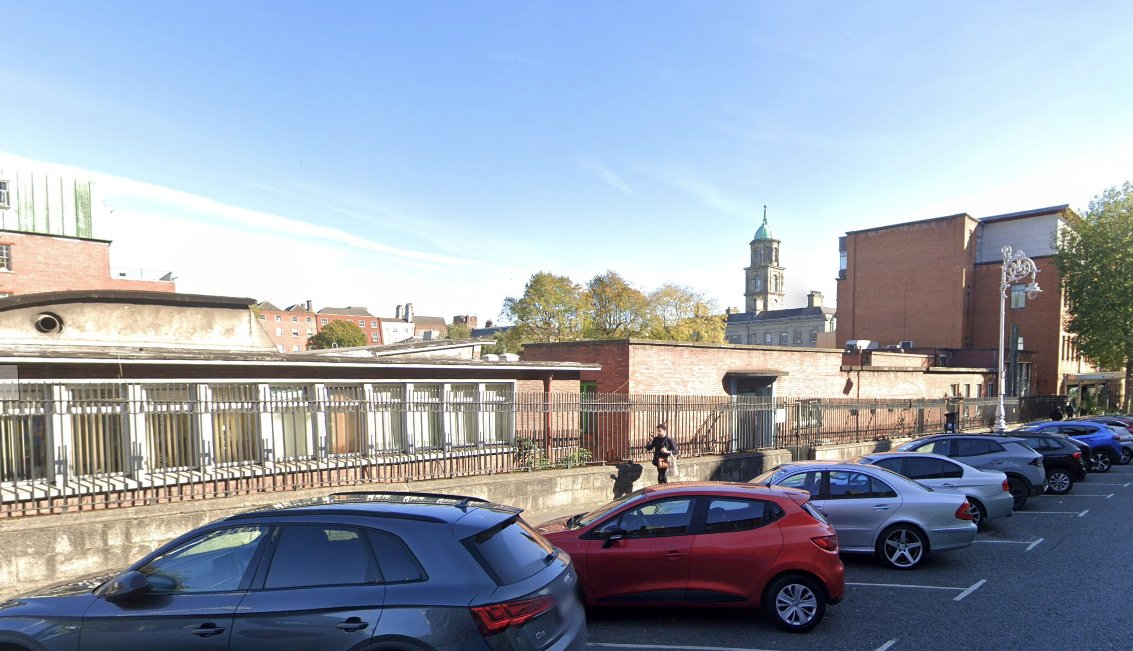
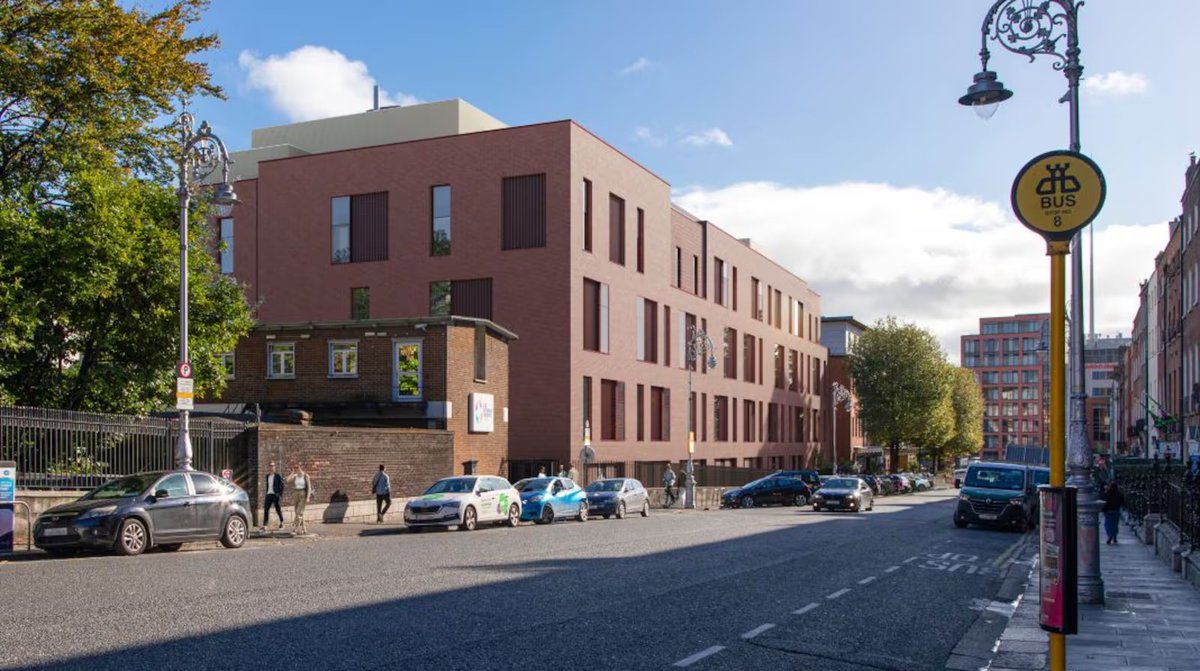
On this site a neonatal intensive care unit, labour ward and hospital beds has been blocked by ACP because we need to preserve the character of Parnell Sq irishtimes.com/business/2026/…
Seán Keyes 🖐️ tweet mediaSeán Keyes 🖐️ tweet media
English
18
5
65
9.5K
ProgressIreland 리트윗함
NYC Planning
NYC Planning@NYCPlanning·
In a city that moves a mile a minute, it shouldn’t take two years to get an affordable home through environmental review! Watch @NYCMayor stand with @GovKathyHochul to support streamlining state SEQR rules so we can deliver homes to New Yorkers faster & drive housing costs down.
English
96
238
3K
773.4K
ProgressIreland 리트윗함
Seán Keyes 🖐️
Seán Keyes 🖐️@Keyes·
Meeting RIGHT NOW at the marble bar, upstairs in Doheny & Nesbitts
Seán Keyes 🖐️ tweet media
English
1
4
14
1.9K
ProgressIreland 리트윗함
Seán O'Neill McPartlin
Seán O'Neill McPartlin@o_mcpartlin·
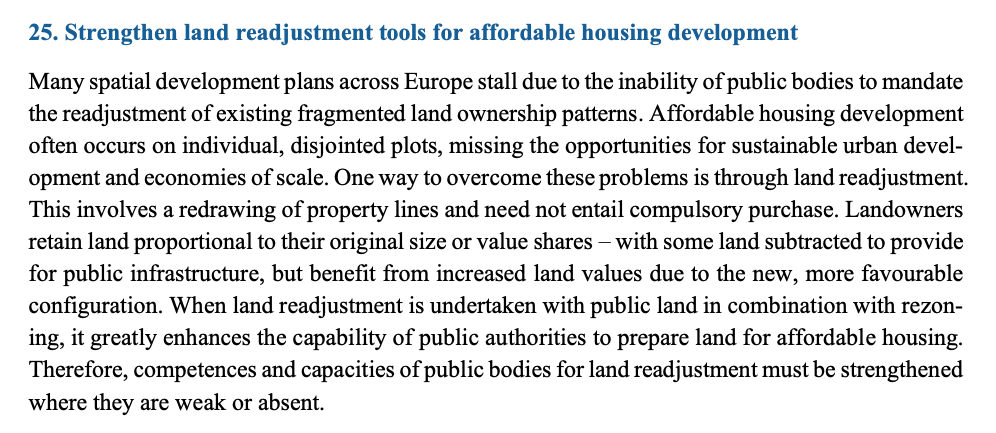
The EU's Housing Advisory Board has recommended land readjustment! Land readjustment allows land owners to pool land, allows the public to capture more value (think: more infrastructure, more parks), and ultimately enables more homes and nicer urban areas
Seán O'Neill McPartlin tweet media
English
0
5
11
1.5K
ProgressIreland 리트윗함
Seán Keyes 🖐️
Seán Keyes 🖐️@Keyes·
Progress Ireland's NEW and IMPROVED monthly meetup will take place this Wednesday the 28th, 5.30-7.30, at its new home in a reserved room upstairs in Doheny & Nesbitt's. To start the conversation I'll be giving a short talk on the good version of Ireland's future.
Seán Keyes 🖐️ tweet media
English
4
10
97
14K
ProgressIreland 리트윗함
Seán O'Neill McPartlin
Seán O'Neill McPartlin@o_mcpartlin·
It is a good sign that national governments are getting more interested in local incentives for housing-- telling local authorities that they have to bear the cost of boosting supply without any local benefits doesn't work
Fergus@F_McCullough

Why federal governments are getting involved in housing policy Housing policy has always been a local matter in Ireland, the UK, the US and Europe. Setting housing policy at the local level seems to make sense. It puts power into the hands of those closest to the affected place. Those lawmakers should be well placed to make good decisions based on the information at hand. Now we’re facing housing shortages all over the rich world, and policymakers are reconsidering the way we regulate and control land. Local government control over land use regulation might be part of the problem. Research has shown that the incentives faced by local lawmakers have an impact on how much housing they are willing to permit. Local governments are motivated by local issues (the costs and benefits of new housing in a particular area). National governments are more likely to think about the big picture (is the overall system short of housing; will industries have a place for their workers; is the economy benefiting from agglomeration). Local governments face a lot of the costs of new housing (unhappy residents and overstretched public services) but won’t capture all of the benefits, which range from larger labour markets and agglomeration effects to increased affordability of homes and reduced homelessness. Housing shortages in our most important cities are a problem for entire countries, because it’s these cities that are increasingly driving our economies and overall growth rates. They’re where the highest paying, most productive jobs are, and where innovation tends to happen. And they provide economic opportunity to lower-skilled workers, who can move to cities where there will be lots of demand for their labour. Housing is moving up the political agenda. From Dublin to Brussels to Sydney, national politicians and policymakers are getting more interested in helping. But their hands appear to be tied: how can they incentivise good housing policies at the local level, where much of housing policy is controlled? A new piece of legislation in the United States might point the way to the answer. Carrots and sticks The ROAD to Housing Act is a rare case of bipartisan reform. Republican Tim Scott and Democrat Elizabeth Warren, who both sit on the Senate Committee on Banking, Housing, and Urban Affairs, co-sponsored the bill. It passed that Committee with a resounding 24-0 vote and was later passed by the Senate 77-20. The bill has forty sections, embracing a multi-pronged approach to America’s housing problem and helping it receive support from both parties. I’m going to examine just a few of those sections below. The mechanisms used are novel, and provide carrots and a stick to local governments. First, the Build More Housing Near Transit Act (BMHNTA). For context, the Department of Transportation, a national body, funds (some) transportation projects in local areas. Local governments apply for this funding on a competitive basis. Naturally, a transit project deserves funding if it’s going to be used a lot, compared with a project that will see less use. But recall what we discussed above – local governments aren’t approving houses where they’re most needed. They might get a new transit project, but they aren’t necessarily going to follow that up with more housing so it can get greater use. The BMHNTA tackles this incentive problem directly by giving a scoring boost to applicants whose jurisdictions have increased housing supply. That means removing State or local government barriers to housing construction or preservation (including affordable housing), like reducing parking and lot size requirements and increasing height limits. Suddenly, local governments have more reasons to approve new housing – they’re going to get national funding for new transportation projects. Second, the Innovation Fund. It’s a $200 million annual pot of funding designed to scale reforms that increase housing supply. It builds on an earlier scheme, the Department of Housing and Urban Development’s PRO-Housing program – a competitive grant to help jurisdictions identify and remove barriers to affordable housing, including land use and permitting policies, housing-enabling infrastructure, and financing measures. In other words, it’s a YIMBY grant. If you build housing, you get a grant from the national government. As the Niskanen Center puts it, the Innovation Fund “creates a powerful incentive for local officials to move from talking about reform to actually implementing it. It shifts the federal role from a passive funder of process to an active partner in rewarding success”. These funds can be deployed in a variety of ways, whether to improve roads, sewers, or clean water programs, or go further with pro-supply reforms. They can address the concerns of locals, who, as we discussed earlier, might otherwise be unhappy at new housing in their area. Along with the BMHNTA, it offers a carrot to local governments when it comes to housing supply. Lastly, the Build Now Act offers a similar policy mechanism – but with a twist. It utilises a large federal pot of funding, the Community Development Block Grant (CDBG). The CDBG currently distributes some $3.5 billion each year to encourage economic development in poorer areas, but has been criticised for an outdated and ineffective allocation formula. CDBG funds are “a scarce resource that should be allocated to optimize [their] effect”, as a 2023 report put it. The Build Now Act does just that. It creates a new, additional formula which makes CDBG funding in high cost cities based on housing outcomes. It works as follows: high cost jurisdictions are placed into a special category. If a jurisdiction has below average housing growth (demonstrating failure to increase housing supply), then they lose 10 per cent of their CDBG funds. What’s more, those funds then flow to jurisdictions who have increased housing supply, proportional to their housing growth rate. Any high cost jurisdiction with 4 per cent or higher housing growth is automatically counted as a winner. Places where housing costs fall exit this plan and get their normal CDBG grant, as before. The Build Now Act combines carrot and stick. It identifies places which are failing when it comes to housing, penalises them, then rewards successful areas at the same time. This is reminiscent of Chris Elmensdorf’s proposed mechanism for leveraging the Low Income Housing Tax Credit (LIHTC), a federal subsidy for affordable housing in the states. Cities above a certain size and housing cost threshold, would only get LIHTC if they adopted pro-housing supply policies. Should the national government adopt this measure in a future bill, they’d have another stick to go along with their carrots. A path forward Even though this bill hasn’t become law yet, it has plenty to teach anyone interested in how to solve the political economy problem of building more homes. National governments should develop a full range of carrots and sticks for local governments. The exact mechanism here will vary from one country to another, but a broad scope will provide multiple opportunities to incentivise local governments. And this doesn’t have to cost the earth – the Build Now Act simply redirects funds that were already flowing to local jurisdictions each year and which were under pressure to update their allocation formula. They can also create just as many winners as losers – one jurisdiction might be upset at losing out, but another will be pleased to have been rewarded. Alternatively, if national governments have funding available, rewards to jurisdictions that remove barriers to housing can also be useful. They can be used to cover some of the costs associated with more housing, like pressure on infrastructure or public services. The ROAD to Housing Act’s proponents do not assume that any individual reform is going to solve the housing crisis on its own. There is no silver bullet for housing. Instead, stacking solutions one on top of each other could add up to a significant dent in the problem. Reforms which increase the construction of private homes are part of the solution – not least because new market rate housing helps the less well off by freeing up units at the lower end of the market. A one-for-one transfer of the ROAD to Housing Act to another developed country isn’t a good idea; the European or Antipodean context is not exactly the same as the United States. Nevertheless, incentives are the most important tool for policymakers in Brussels and national capitals to keep in mind. progressireland.substack.com/p/how-national…

English
0
1
2
613
ProgressIreland 리트윗함
Seán Keyes 🖐️
Seán Keyes 🖐️@Keyes·
23 theses on seomraí 1. The government should allow seomrai to be rented privately to non-family members. This point is currently under consideration. Banning seomrai for renters cuts their benefits off from the group most acutely in need of housing. 2.People base their general election vote not on headlines but on whether their lives feel like they are going well. Governing parties only got a polling bump when the 2022 winter fuel credit hit peoples bank accounts, four weeks after it was announced. 3.Banning renters from seomrai misses an opportunity to cultivate new voters. Every seomra rented out creates a grateful renter and a grateful homeowner. For these voters, seomrai are highly salient. 4.Seomrai will not appear all at once. Based on US, Swedish and Canadian experience, it is reasonable to expect 3,500 to 7,000 seomrai to be built per year. 5.That equals a 0.15 to 0.34 percent annual increase in housing stock, or roughly one new unit per 400 existing houses per year. 6.Every seomra creates about three big beneficiaries: two homeowners and one tenant. 7.That means 10,500 to 21,000 beneficiaries per year, or 42,000 to 104,000 by the next election in 2029. 8.Just 63,000 votes separated the three largest parties in the 2024 election. 9.Seomrai beneficiaries cut across age, geography and income. 10.A majority of the public support renting seomrai to anyone. In August polling, 51 percent supported open renting versus 34 percent favouring family-only use. 11.Voters of the Greens, Aontu, Fine Gael, Sinn Fein, Independent Ireland, Fianna Fail and the Social Democrats all preferred open renting. 12.Among Sinn Fein voters, 52 percent supported renting seomrai outside the family, versus 28 percent opposed. 13.Independents, Labour and PBP voters were the most evenly split. 14.The objections to seomrai are paper thin. One is drainage, but what solution to the housing shortage does not involve concrete being poured over grass. If strong uptake required remedial water works after some years in some places, that would be a good problem to have. Are we trying to solve the housing shortage or minimise capital spending on infrastructure? 15.Even in an extreme case where all 7,000 annual seomrai were built in Dublin, this would be about a 1 percent annual increase in housing stock. 16.Even assuming seomrai use as much water as houses, systems at 90 percent capacity would still have about a decade to plan upgrades. 17.Another objection is regulation. But what housing solution does not involve more people renting homes? 18.If the RTB needs more resources as a result, should it not get them? 19.Parking objections conflict with support for compact growth. One cannot favour compact growth while opposing modest suburban densification. 20.Seomrai sidestep high construction costs. A small A2-rated apartment costs about 500,000 euro to build, versus roughly 100,000 euro for an A2-rated seomra of similar size. 21.Seomrai also bypass much of the planning bureaucracy, delivering faster and less uncertain projects. 22.Seomrai place people as close as possible to existing jobs and public transport, piggybacking on existing infrastructure rather than requiring new networks. 23.There are few ideas that deliver the most needed unit sizes, in the most needed places, at scale, near transport, compatible with carbon goals, while benefiting homeowners.
Seán Keyes 🖐️ tweet media
English
1
7
20
2.6K
ProgressIreland 리트윗함
Seán O'Neill McPartlin
Seán O'Neill McPartlin@o_mcpartlin·
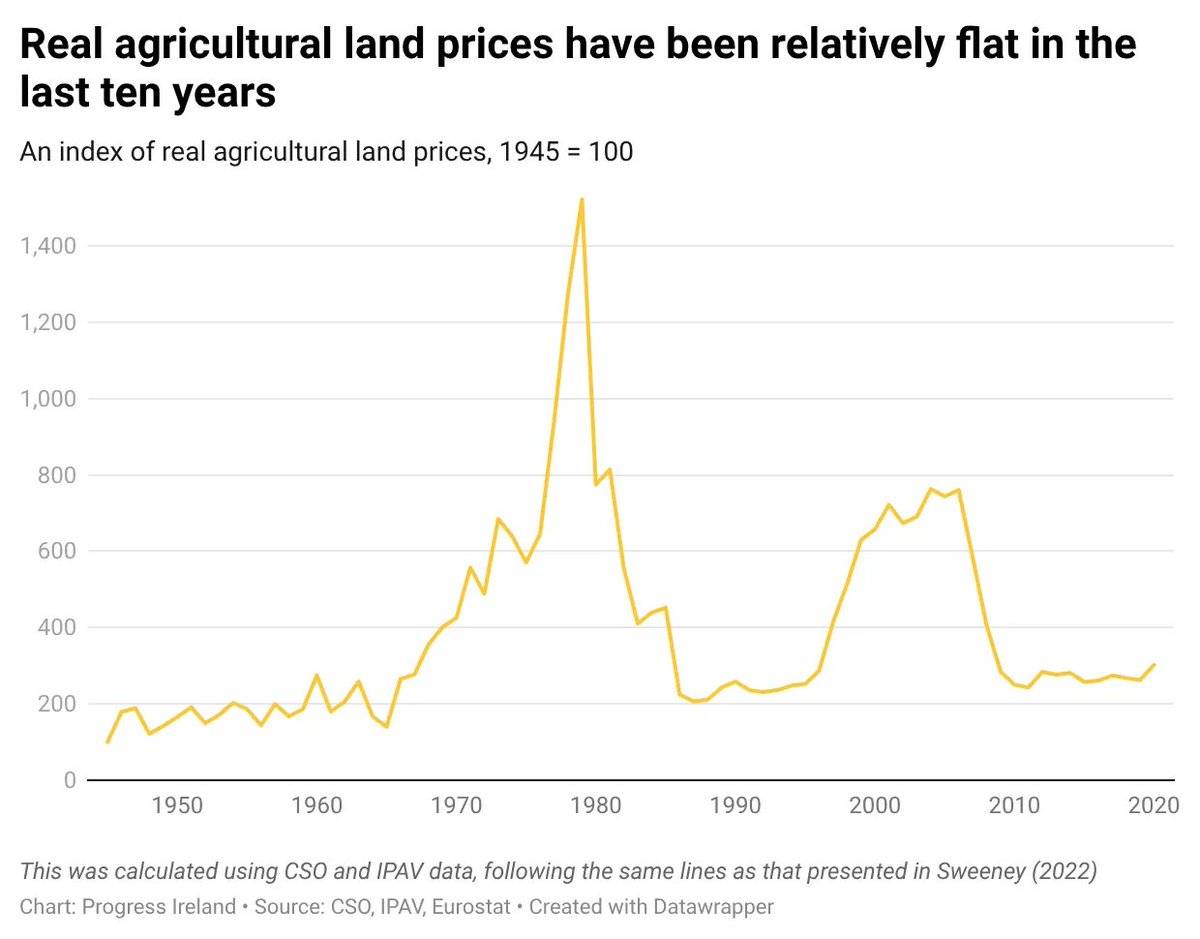
New substack post from @ProgressIreland, you can read it here! Read enough about housing and you will hear about the speculator. Conversations about housing usually pass the usual stops. Prices are too high. There are not enough of them. If you ask “why?” enough times, lots of serious people will place the blame on the speculator. There are two problems you will encounter at this point in the conversation. First is that it is rarely clear what “speculation” means, if anything. Sometimes it refers to land hoarding. Other times to excessive trading. Some people use it to mean the practice of making a financial return, per se. Still other times it is an empty scapegoating term, meant to capture a cluster of things your conversational partner doesn’t like about housing. Second, when you pin down a precise meaning to the term, it turns out to be hard to believe that “speculation” is one of, if not the most important, driver of Ireland’s housing problems. It is easy to find the blame for Ireland’s housing shortage being placed on the speculator. You can find it from the EU. Walk down the TUD, and you will find it from housing professors. You can find it from architects, like here, here, and here. The Irish government briefly toyed with the idea of blaming speculators. You can even find it from Jesuits (perhaps unsurprising because Pope Francis criticized speculation). It’s a common, powerful, and enduring strain of thought. But who are the speculators? As you might expect, it depends who you ask. At a high level, speculation usually means the holding or trading of an asset in the hopes of making a return. When you invest in your pension, you’re speculating in that sense. Most homeowners are, to some extent, speculators in this sense too. But used in this way, as it is by some, its target is the use of the market in general, and doesn’t refer to any particular activity within the market. But that is too broad a use to capture what most people mean by the phrase. For others, land speculation refers to fairly specific activities. One kind of activity it refers to is “hoarding” land. This means holding onto valuable sites and deliberately leaving them vacant. The idea is that the speculator is awaiting more favourable terms (a change in interest rates, a spike in demand, a change in government policy). Once those favourable terms are met, they will get building. Henry George, whose book sales were only beaten by the Bible during the 1890s, said speculation is about withholding “valuable land,...from use.” Paradoxically, speculation can also refer to the opposite behaviour: excessive trading. When people blame speculators, they sometimes have in mind something like a game of pass the parcel. They imagine a group of rentseekers, indefinitely trading assets. With each transaction, land prices are driven up more and more. Ultimately resulting in higher rents and prices for the end users. The slipperiness of the term makes it hard to evaluate. But there are parts of the idea that can be discussed simply. The first part of it relates to vacancy. George seemed to think the principal symptoms of speculation are high levels of vacancy (land being “withheld”) and high land prices. This is the speculative “hoarding” that is sometimes discussed. So, high levels of hoarding should be visible in the data in the form of high levels of vacancy. The second part relates to land prices. If high and rising land prices are the main driving force of increased costs and prices, then their proportion in overall development costs should go up over time. In short, more and more of the price households pay should be due to land. This could be the result of hoarding or of frenzied transactions. But the telltale sign should be that land costs make up more and more of development costs. Similarly, if land is being hoarded in the hopes of speculative windfall, then we should expect agricultural land prices to be very high. The third part relates to planning permissions. If speculative “holding” is a driving force of cost pressures, we should see high numbers of unactivated permissions as landowners “wait” for more favourable conditions. It makes sense to focus on land. After all, land is unlike other assets. Land holding acts like a monopoly: If I hold a piece of land, no one else can have it. The economists say that the supply of land is fixed or as real estate people say: they ain’t making any more of it. It isn’t fungible, like some other assets. It can (usually) not be created. The value of well located sites goes up over time. But let’s try to get more specific about the kinds of speculation I have in mind. Different kinds of speculation One thing that gets called “speculation” is when a firm buys a plot of undeveloped land, seeks and receives a planning permission, and then sells the land for a premium. With planning risk removed, the price of land goes up. But this isn’t in itself a sign of dysfunction. As always, when prices go up, we shouldn’t shoot the messenger. The increased price tells you as much about planning risk as it does anything else. The premium for land with a permission is about 10 to 20 per cent (though there is little data to back this precise figure up). This premium reflects the difficulty involved in getting planning permission for sites. If it were easier to get planning – or in other words, if the planning system were more specific – that premium would dwindle. The increase in value might be exacerbated by trading, but the practice does provide some value. One report notes, however, that this sometimes useful practice is not that common in Ireland. But there are less productive kinds of speculation too. One example is related to zoning. Agricultural land gets traded in the hopes of a rezoning decision. Rezoning increases the value of a plot by about 8,400 per cent. People trade land in the hopes of striking gold, when the colour of the rezoning map changes. Still another kind is related to hoarding. Land is “hoarded” in order to wait for more favourable conditions, which may or may not overlap with the other kinds of speculation. For example, government housing and planning policy has changed in the last few governments. Even though few are happy with the state of housing policy, some argue that policy shouldn’t change because change invites speculation. For others, speculation is baked into the use of the private sector and the practice of seeking returns itself. To make things concrete, I’ll try to focus on specific forms of speculation. George seemed to think the principal symptoms of speculation are high levels of vacancy (land being “withheld”) and high land prices. If land prices were high, you would expect more and more of overall development costs being due to land. You would also expect large numbers of transactions, as the speculators pass the parcel around. From my reading of the evidence, I can’t see any of these signs of rampant speculation. I’ll go through each in turn. Valuable land, withheld from use Let’s look at vacancy first. The first thing to say about vacancy is that there is little data on the kind of vacancy that relates to “land hoarding” or speculation. What we do have is data from the government’s RZLT dataset but that doesn’t show a lot, for example, it doesn’t show ownership. Nevertheless, we do have a lot of data on the vacancy rates of dwellings. Data about vacancy rates (or “long term” vacancy, ie four consecutive quarters) comes from the CSO. If a dwelling is using less than 180 kilowatt-hours per quarter, then it is considered vacant. If the modern Georgist idea is right, that hoarding valuable sites is a widespread and consequential problem, then we would expect to see high levels of vacancy. More than that, we would expect to see high levels of vacancy in the highest demand areas. Withholding an unpromising piece of land would make for dubious speculation. The second thing to say about vacancy is some level of vacancy is not just expected, but is desirable. Policymakers sometimes refer to a “healthy” vacancy rate of about 5 per cent. The reason why a functional system should have some vacancy is that people move around. If all homes are filled, then mobility falls. That means, people can’t move to better jobs, to be nearer family, or to downsize. A functional system will have some mobility as people move jobs or relocate for other reasons. The third thing to expect is that areas with high demand will have lower levels of vacancy than areas with lower demand. A healthy system will match people to empty homes faster in areas with higher demand. You should expect prosperous cities to have lower vacancy rates than sleepy villages. As George said, unusually high levels of vacancy is a symptom of “hoarding” or speculation. So, how is Ireland faring? Across Ireland, vacancy levels have been falling. Dublin in particular has unusually low levels of vacancy. In South Dublin, the vacancy rate hovers around just 1 per cent. In Dún Laoghaire, vacancy levels are at just 0.9 per cent. As you would expect, vacancy levels outside of Dublin and Cork city are typically higher. This makes me think that if “hoarding” is putting upward pressure on vacancy rates, the effects are very small. The pattern of vacancy across the country looks roughly as you would expect, absent hoarding. In the highest demand areas, there are very low levels of vacancy. This is to be expected in a tightly undersupplied market. The levels of vacancy in Dublin are unusually low by international standards. New York, Paris, and London all have higher vacancy rates than Dublin. Land prices Next is land prices. If speculation was the biggest, or one of the biggest, drivers of rents and house prices, we should expect land prices to be on the rise. The first thing to say about land prices is that they are somewhat opaque. This is due, not least, to the fact that Ireland has no single source of wisdom on the availability of zoned and serviced land. There has been a steady flow of recommendations suggesting that Ireland needs a centralised dataset on land availability and its status. Notwithstanding the difficulties entailed by a land value register, this would help government figure out which local authorities are complying with Section 28 Housing Growth Requirements (a task which has been left to the Office of the Planning Regulator). The second thing to say about land prices is that it is difficult to decompose the contribution made by land prices into prices and rents precisely. In the scenario in which hoarding and speculation is driving up prices and rents, you would expect that land would contribute more and more to the cost of delivering a home (and indeed, the price that that home sells for). As a proportion you would see labour, materials, planning, design and so on would fall as contributors to costs and prices. Is this what we see? There is some anecdotal evidence that, during the Celtic Tiger, land prices made up about half of the price of a new house. It is widely believed that speculation (of the unproductive sort discussed above) played a major role during the period. But since then, the contribution of land to costs have fallen. If inflated land prices made up half of prices back then, they only make up about 13 per cent for houses and between 9 and 11 per cent for apartments. When looked at in a different way, the answer is roughly the same: land costs make up in the region of 10-15 per cent of prices. A paper by Kieran McQuinn used a different methodology than the SCSI report above. Put simply, it looked at the difference between house prices and construction costs to find the “residual” or the left over bits. Of that residual, McQuinn found that by 2023, land costs made up roughly 25 per cent. Compared with other contributors to housing costs (construction costs make up about half), land seems to hold a significant but not huge place. Compared with the figures cited during the boom, there is little evidence to think that speculative or hoarding behaviour of land is a unique driver of the cost of delivering homes. There are also agricultural land values. You would expect these to go up a lot as speculation increases. A good speculator would buy up land at low agricultural prices and hold out for a rezoning decision. As I said above, rezoning can increase the value of a plot by 8,400 per cent. This is said to have happened a lot during the boom. We should expect a surge in agricultural land prices during the boom and a fall afterwards. And this is indeed what the data shows. Large scale speculation would see agricultural land prices rise in tow. But in real terms, agricultural land prices have been fairly flat in the past decade or so. Notable periods of inflation are easy to identify from the graph. On the one hand, we have the period of speculation that resulted in The Committee on the Price of Building Land Report, also known as the Kenny Report in 1973. On the other hand, you can see the Celtic Tiger period. But there is little evidence in agricultural prices to suggest this kind of speculation is happening en masse, as noted by this TASC report on the issue. But what about residentially zoned land? As mentioned, there is not much data. There is a CSO page on it but year by year comparisons (as with agricultural land prices) are difficult to make. This is because the CSO is tracking transactions, not individual pieces of land. Unactivated permissions The last place people point to is unactivated permissions. This is where those that claim widespread hoarding for speculative gains are on a stronger footing. The claim here is that developers (read: speculators) are getting planning permission and then holding onto land, awaiting changes in planning policy or other external conditions that may make their holdings more valuable. There are a lot of sites with “unactivated” permissions for apartments, especially in Dublin. The figure in Dublin has been hovering around 40 to 50,000 “unactivated” units for the last five or so years. It is true that unactivated permissions are a major problem. But why are so many unactivated? The first diagnosis, as mentioned, is that developers are holding out. There are lots of reasons why a developer may not build-out a permission immediately. And to be sure, holding out for higher returns is one of them. But is this the driving force behind the high numbers of unactivated permissions? One reason for doubt comes from the fact that planning permissions are time-bound, so it doesn’t make a lot of sense to hold out for a long period of time. Under the new Planning and Development Act, permissions can last up to ten years (at the upper limit). But typically local authorities only permit five years. Permissions can be extended (as they were recently under a bespoke bill). The second diagnosis is that apartments are not viable. This is the diagnosis of the government (despite one 2022 report which floated the idea, without any data, that speculation may be driving it). Viability refers to whether building can go ahead profitably. The hurdle margin – the margin required to make investment in a project worth it –is in the region of 15 per cent. The problem is that due to high construction costs and high effective tax rates, many projects do not meet that hurdle rate of about 15 per cent. If the market for new apartments is small due to high costs, then we should expect many projects to be stalled. That is what the data shows: a very small market for new apartments (without subsidies) and tens of thousands of apartments with permission that are not being built out. Speculation is a red herring I set out in this to find if there was any evidence to support the claim that hoarding and speculation is one of central, if not the main driver, of the housing shortage. I am yet to see any compelling evidence. To be sure, that does not mean the practices that fall under the phrase “speculation” don’t exist. But it does mean that, as things stand, there isn’t much evidence to support the idea. As Matt Ygelias once said: “Nobody blames “speculators” even though it’s true that there are middlemen who make a living buying and selling used cars. And most of all, nobody blames the rapacious greed of the world’s car companies even though auto executives do enjoy the current high margins.”
Seán O'Neill McPartlin tweet mediaSeán O'Neill McPartlin tweet mediaSeán O'Neill McPartlin tweet mediaSeán O'Neill McPartlin tweet media
English
0
6
14
1.6K
ProgressIreland 리트윗함
Feargal O'Rourke
Feargal O'Rourke@FeargalORourke·
This ! Really good read
Seán Keyes 🖐️@Keyes

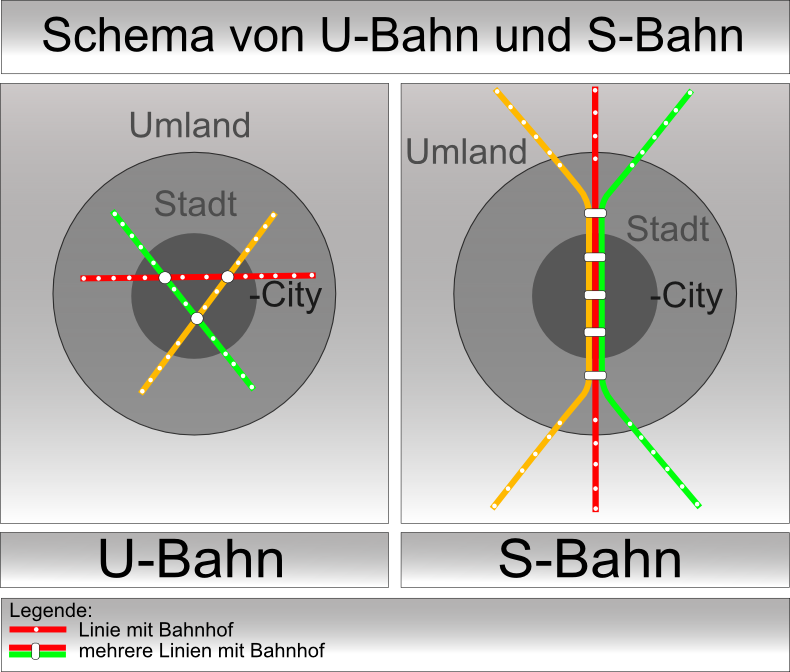
A place to put the houses You are likely familiar with our national housing targets. The latest is 50,500 homes per year. It’s hard to put this number in context. What do 50,500 homes look like? Is it too many? Too few? One answer is that 50,500 homes look like Cork City. We need to build one Cork City this year, and next year, and the following year, for a couple of decades. Another answer is that it looks like building a new Dublin City every four years. The construction of 50,500 homes per year isn’t something that can be achieved by building here and there, on odd plots of land. Building that many homes demands massive ambition, planning and forward investment. Take City Edge, for example. City Edge is (by Irish standards) an ambitious plan to turn 300 hectares of industrial land in West Dublin into high density masterplanned housing. The City Edge plan is expected to take 45 years. By 2070, it’ll have contributed 40,000 homes in total. That’s about 900 homes per year, or 1.7 per cent of our annual target. Or take Cherrywood. Cherrywood is the biggest Strategic Development Zone in the history of the state. It’s ten years in the making. When completed in the late 2020s, it’ll have yielded… 10,500 homes. All of which is to say, we need a bigger plan for where we’re going to put all these houses. The two paths When it comes to building new neighbourhoods, there are two options. We can build around roads or build around rail. Building around roads is a somewhat underrated idea in Ireland (in that it’s so unpopular). But building around roads is a perfectly reasonable strategy. It can work. Cities of ten million people are built around roads and they work pretty well. But we’d have to really commit to the idea. We’d need to bulldoze neighbourhoods to build giant 12 lane tolled motorways. We’d need ring roads upon ring roads. Suburban retail parks. Drive through banks. The whole nine yards. I don’t think this is the path Ireland wants to follow. Irish people don’t love their cars as much as Texans. We have our climate targets. Successive governments wouldn’t make the investments. The other option is to build around rail. Rail has some nice features: it has a huge carrying capacity (about 50x the equivalent width of roadway), so it doesn’t take up much space. It naturally lends itself to pleasant, walkable, sustainable, mixed use urbanism. Builders like it because it enables very dense developments. Rail companies like lots of buildings near their lines because they provide passengers for the trains. The problem with rail is that it’s hard to build. It takes a lot of coordination, ambition, foresight, and technical skill. I don’t need to labour this point. Metrolink’s 12 kilometres of tunnel is nearly 20 years in the making. There is a way, though, to get much of the benefits of a metro system with much less effort, investment and risk. It could unlock a giant city-spanning train network with the capacity of a metro, some 78 kilometres in length. The network would enable much greater density within the city and open up 15 kilometres of green fields, on which some 135,000 houses could be built right away. The main thing we’d need to build is one short tunnel, 3.5 kilometres in length. An S-bahn This is an idea borrowed from 1930s Germany. Berlin at the time was congested. It sat at the centre of a spider's web of rail lines. But the rail lines weren’t designed to connect the city of Berlin; they were designed to connect the hinterland to the city of Berlin. The rail lines terminated at the edge of the city at northern, southern, eastern and western termini. Berlin’s idea was to connect the northern and southern rail termini with a tunnel. This had three main benefits. First, it allowed travellers from the north to go to destinations in the south and vice versa. Second, it created new stations in the centre of the city, along the tunnel’s route. Third, it allowed trains to run at a much greater frequency, because they didn't need to be turned around at the city terminus. These things came to be known as Stadtschnellbahns, or S-bahns for short. This idea worked. It was copied by: Bremen, Dresden, Hamburg, Hanover, Magdeburg, Leipzig-Halle, Munich, Nuremberg, Frankfurt, Mannheim, the Rhein-Ruhr Metropolitan Region, Rostock, Stuttgart, Vienna, Zurich, Milan, Stockholm, Prague, Copenhagen, Rotterdam, Paris, Stockholm, London and Melbourne. Among other cities. The attached graphic (in German, but decipherable) does a good job of depicting S-bahns’ strengths and weaknesses. They are good at connecting the city to the hinterland, but not as good at connecting locations within the city as a normal metro system. They also require much less tunnelling and thus, are cheaper to build. Also attached is a map is of Munich’s commuter rail system. Note the thick trunk at the centre of the network. This is the tunnel. Almost all lines converge on it. It connects the big stations at the west and east of the city, and runs through the city centre. S-bahns make sense in Europe because European cities have a legacy of heavy rail. Where once the cities needed trains to deliver raw materials and goods, now they need trains to move people around the metropolitan area. Modern S-bahns repurpose industrial rail as electrified, high capacity people movers. Dublin is a fine candidate for the S-bahn treatment. A plan We should build a 3.5 kilometre tunnel linking Connolly and Heuston. The tunnel would let people travel from the west to the east, the east to the west, the west to the centre, and the east to the centre. By segregating this system from intercity services, giving it dedicated lines, we could massively increase its capacity. (This is the problem with the existing Phoenix Park tunnel – it is shared with intercity services, which greatly limits its capacity.) Capacity matters because, circling back to the beginning, we need places to build houses. When you’re seeking to build say 200,000 homes in Dublin over ten years, the bottleneck is transport capacity. The greater the capacity of the commuter rail system, the more homes can be built. Irish transit heads will recognise this idea. It’s a first cousin of the DART+ project, which was considered at length before being shelved in 2021. Besides all the standard arguments for building an S-bahn in a congested city, in Dublin, there’s one further sweetener: there are 15 kilometres of empty green fields directly west of Dublin, between Adamstown and Sallins. That stretch of land is Dublin’s single best opportunity to alleviate its housing shortage. How many homes could be built there? The idea is to build homes within a five minute walk of the station, so that rail transport is genuinely convenient. That’s about an 800 metre radius, which comes to 201 hectares. I interviewed an expert on Transit Oriented Development, Professor John Renne, about this in a piece in The Currency. Prof Renne said “To justify having a train station, you need a minimum of 4,000 households [within 800 metres of the station]. On the medium side, it’s around 12,000-15,000. And on the maximum side, you’re talking about maybe a central downtown location or a really intense area, you would be looking at upwards of 25 to 30,000 units within 800 metres.” For west Dublin, let’s assume 15,000 homes within 800 metres of the station. Along the 15 kilometre line, there’s room for nine stations. That means there’s room for about 135,000 homes within walking distance of a station. The goal would be for this to be a new business and cultural quarter of the city, as opposed to simply a dormitory suburb. It should be a place to live, work, shop and relax. Both because nice places are nice in themselves, and because it’s more efficient for the trains to be full in each direction throughout the day. We don't want everyone going east in the morning and west in the evening. Professor Renne said: “Generally, you need a really strong employment base. So it’s not just the 12 or 15,000, or 20,000 households near the station, but it gets into the number of jobs nearby also. You’d probably want to see at least half that number — or more — of jobs.” 135,000 homes in a new quarter of Dublin would be a good start. But building the tunnel, and the network, would enable so much more housing than that. The capacity and usefulness of the entire 78 kilometre DART network would be massively upgraded, along with the potential for new housing along those lines. A bigger more capacious network would allow the whole city to densify naturally. To be sure, a Dublin S-bahn would not be a simple project. The final five kilometres of rail leading to Heuston Station are currently single tracked; they would need to be widened. The whole line would need to be electrified. To keep the network segregated from intercity lines (and thus, unlock more capacity) the trains to Wicklow and Wexford might get the chop. Either that or the track would need to be widened the whole way through south Dublin. Building out roads, water, schools and so on for this new city quarter would not be trivial. But these problems are solvable. We have started to build the tools we’d need for this job. Urban development zones, which are part of the new planning act, are a perfect tool for masterplanning new neighbourhoods. If we paired UDZs with land readjustment, we could get the landowners on board. Land value uplift along the Adamstown–Sallins corridor could pay for much of the tunnelling and other capex. Assuming €12 million per hectare uplift on net-developable land, 80 per cent of gross catchments redevelopable, and a 33 per cent capture rate, the discounted value the could be captured by the state is around €4 billion. (How to capture the value? Again, land readjustment). However one looks at it — number of homes unlocked, cost efficiency, carbon efficiency, pleasantness of new places, cost to exchequer, commute minimisation — this would seem to be the best investment we could make in the future of the city. And when we’re done we can do something similar in Drogheda, Limerick Junction, Cork, Limerick, Galway and Waterford.

English
5
5
28
5.3K
ProgressIreland 리트윗함
Seán Keyes 🖐️
Seán Keyes 🖐️@Keyes·
A place to put the houses You are likely familiar with our national housing targets. The latest is 50,500 homes per year. It’s hard to put this number in context. What do 50,500 homes look like? Is it too many? Too few? One answer is that 50,500 homes look like Cork City. We need to build one Cork City this year, and next year, and the following year, for a couple of decades. Another answer is that it looks like building a new Dublin City every four years. The construction of 50,500 homes per year isn’t something that can be achieved by building here and there, on odd plots of land. Building that many homes demands massive ambition, planning and forward investment. Take City Edge, for example. City Edge is (by Irish standards) an ambitious plan to turn 300 hectares of industrial land in West Dublin into high density masterplanned housing. The City Edge plan is expected to take 45 years. By 2070, it’ll have contributed 40,000 homes in total. That’s about 900 homes per year, or 1.7 per cent of our annual target. Or take Cherrywood. Cherrywood is the biggest Strategic Development Zone in the history of the state. It’s ten years in the making. When completed in the late 2020s, it’ll have yielded… 10,500 homes. All of which is to say, we need a bigger plan for where we’re going to put all these houses. The two paths When it comes to building new neighbourhoods, there are two options. We can build around roads or build around rail. Building around roads is a somewhat underrated idea in Ireland (in that it’s so unpopular). But building around roads is a perfectly reasonable strategy. It can work. Cities of ten million people are built around roads and they work pretty well. But we’d have to really commit to the idea. We’d need to bulldoze neighbourhoods to build giant 12 lane tolled motorways. We’d need ring roads upon ring roads. Suburban retail parks. Drive through banks. The whole nine yards. I don’t think this is the path Ireland wants to follow. Irish people don’t love their cars as much as Texans. We have our climate targets. Successive governments wouldn’t make the investments. The other option is to build around rail. Rail has some nice features: it has a huge carrying capacity (about 50x the equivalent width of roadway), so it doesn’t take up much space. It naturally lends itself to pleasant, walkable, sustainable, mixed use urbanism. Builders like it because it enables very dense developments. Rail companies like lots of buildings near their lines because they provide passengers for the trains. The problem with rail is that it’s hard to build. It takes a lot of coordination, ambition, foresight, and technical skill. I don’t need to labour this point. Metrolink’s 12 kilometres of tunnel is nearly 20 years in the making. There is a way, though, to get much of the benefits of a metro system with much less effort, investment and risk. It could unlock a giant city-spanning train network with the capacity of a metro, some 78 kilometres in length. The network would enable much greater density within the city and open up 15 kilometres of green fields, on which some 135,000 houses could be built right away. The main thing we’d need to build is one short tunnel, 3.5 kilometres in length. An S-bahn This is an idea borrowed from 1930s Germany. Berlin at the time was congested. It sat at the centre of a spider's web of rail lines. But the rail lines weren’t designed to connect the city of Berlin; they were designed to connect the hinterland to the city of Berlin. The rail lines terminated at the edge of the city at northern, southern, eastern and western termini. Berlin’s idea was to connect the northern and southern rail termini with a tunnel. This had three main benefits. First, it allowed travellers from the north to go to destinations in the south and vice versa. Second, it created new stations in the centre of the city, along the tunnel’s route. Third, it allowed trains to run at a much greater frequency, because they didn't need to be turned around at the city terminus. These things came to be known as Stadtschnellbahns, or S-bahns for short. This idea worked. It was copied by: Bremen, Dresden, Hamburg, Hanover, Magdeburg, Leipzig-Halle, Munich, Nuremberg, Frankfurt, Mannheim, the Rhein-Ruhr Metropolitan Region, Rostock, Stuttgart, Vienna, Zurich, Milan, Stockholm, Prague, Copenhagen, Rotterdam, Paris, Stockholm, London and Melbourne. Among other cities. The attached graphic (in German, but decipherable) does a good job of depicting S-bahns’ strengths and weaknesses. They are good at connecting the city to the hinterland, but not as good at connecting locations within the city as a normal metro system. They also require much less tunnelling and thus, are cheaper to build. Also attached is a map is of Munich’s commuter rail system. Note the thick trunk at the centre of the network. This is the tunnel. Almost all lines converge on it. It connects the big stations at the west and east of the city, and runs through the city centre. S-bahns make sense in Europe because European cities have a legacy of heavy rail. Where once the cities needed trains to deliver raw materials and goods, now they need trains to move people around the metropolitan area. Modern S-bahns repurpose industrial rail as electrified, high capacity people movers. Dublin is a fine candidate for the S-bahn treatment. A plan We should build a 3.5 kilometre tunnel linking Connolly and Heuston. The tunnel would let people travel from the west to the east, the east to the west, the west to the centre, and the east to the centre. By segregating this system from intercity services, giving it dedicated lines, we could massively increase its capacity. (This is the problem with the existing Phoenix Park tunnel – it is shared with intercity services, which greatly limits its capacity.) Capacity matters because, circling back to the beginning, we need places to build houses. When you’re seeking to build say 200,000 homes in Dublin over ten years, the bottleneck is transport capacity. The greater the capacity of the commuter rail system, the more homes can be built. Irish transit heads will recognise this idea. It’s a first cousin of the DART+ project, which was considered at length before being shelved in 2021. Besides all the standard arguments for building an S-bahn in a congested city, in Dublin, there’s one further sweetener: there are 15 kilometres of empty green fields directly west of Dublin, between Adamstown and Sallins. That stretch of land is Dublin’s single best opportunity to alleviate its housing shortage. How many homes could be built there? The idea is to build homes within a five minute walk of the station, so that rail transport is genuinely convenient. That’s about an 800 metre radius, which comes to 201 hectares. I interviewed an expert on Transit Oriented Development, Professor John Renne, about this in a piece in The Currency. Prof Renne said “To justify having a train station, you need a minimum of 4,000 households [within 800 metres of the station]. On the medium side, it’s around 12,000-15,000. And on the maximum side, you’re talking about maybe a central downtown location or a really intense area, you would be looking at upwards of 25 to 30,000 units within 800 metres.” For west Dublin, let’s assume 15,000 homes within 800 metres of the station. Along the 15 kilometre line, there’s room for nine stations. That means there’s room for about 135,000 homes within walking distance of a station. The goal would be for this to be a new business and cultural quarter of the city, as opposed to simply a dormitory suburb. It should be a place to live, work, shop and relax. Both because nice places are nice in themselves, and because it’s more efficient for the trains to be full in each direction throughout the day. We don't want everyone going east in the morning and west in the evening. Professor Renne said: “Generally, you need a really strong employment base. So it’s not just the 12 or 15,000, or 20,000 households near the station, but it gets into the number of jobs nearby also. You’d probably want to see at least half that number — or more — of jobs.” 135,000 homes in a new quarter of Dublin would be a good start. But building the tunnel, and the network, would enable so much more housing than that. The capacity and usefulness of the entire 78 kilometre DART network would be massively upgraded, along with the potential for new housing along those lines. A bigger more capacious network would allow the whole city to densify naturally. To be sure, a Dublin S-bahn would not be a simple project. The final five kilometres of rail leading to Heuston Station are currently single tracked; they would need to be widened. The whole line would need to be electrified. To keep the network segregated from intercity lines (and thus, unlock more capacity) the trains to Wicklow and Wexford might get the chop. Either that or the track would need to be widened the whole way through south Dublin. Building out roads, water, schools and so on for this new city quarter would not be trivial. But these problems are solvable. We have started to build the tools we’d need for this job. Urban development zones, which are part of the new planning act, are a perfect tool for masterplanning new neighbourhoods. If we paired UDZs with land readjustment, we could get the landowners on board. Land value uplift along the Adamstown–Sallins corridor could pay for much of the tunnelling and other capex. Assuming €12 million per hectare uplift on net-developable land, 80 per cent of gross catchments redevelopable, and a 33 per cent capture rate, the discounted value the could be captured by the state is around €4 billion. (How to capture the value? Again, land readjustment). However one looks at it — number of homes unlocked, cost efficiency, carbon efficiency, pleasantness of new places, cost to exchequer, commute minimisation — this would seem to be the best investment we could make in the future of the city. And when we’re done we can do something similar in Drogheda, Limerick Junction, Cork, Limerick, Galway and Waterford.
Seán Keyes 🖐️ tweet mediaSeán Keyes 🖐️ tweet mediaSeán Keyes 🖐️ tweet mediaSeán Keyes 🖐️ tweet media
English
34
21
132
23.8K
ProgressIreland 리트윗함
Sam Bowman
Sam Bowman@s8mb·
Incredibly good list of policies here - on everything from transit-oriented development (with specifics about where to do it) to the professor’s privilege so university academics have incentives to create more startups.
Seán Keyes 🖐️@Keyes

Here is my biggest ever tweet: 26 policies for 2026. Ireland has some cards to play. One advantage of Ireland is that it’s small. The benefit of being small is that it can be nimble. If the right idea makes it to the right people at the right time, it can happen quickly. Another advantage of ours is that we’re late to the party: other rich countries got rich about a century before us. They have walked this path already. Ireland can observe how they solved problems and copy them. It doesn’t have to learn by trial and error. Whatever problem Ireland faces, some other country, somewhere else, has already solved it. There’s no shortage of solutions. With a nod to @DKThomp , a quick list of 26 policies for the New Year. New institutions for quicker infrastructure Organisations in general – whether private or public – have limited ability to change. They are set up to do a specific job. They can keep doing the job so long as the job doesn’t change. But when the job changes they will more than likely not be able to do the new job. In the private sector this problem is resolved by the formation of brand-new companies. In the public sector this happens much less. It should happen more often. If we want the government to take on a new challenge – like laying 146,000km of fibre through rural areas or digging 14km of metro tunnel under a city – it should spin up a new institution to do the job. Examples: Madrid’s MINTRA which built its metro system, operation Warp Speed which created a new chain of command for COVID vaccine research, DARPA which fostered breakthrough innovations, NBI which laid Ireland’s broadband network (disclosure: my wife works for NBI). Empowerment and delegation for quicker infrastructure In the case of new public sector institutions, a lot of the benefits come from freeing projects from the civil service’s many other imperatives. Metrolink’s new setup will allow decisions to be made much faster. DARPA led to the creation of the Internet, among many other things, by giving innovators a long leash to pursue their passion projects. Two-thirds majorities to balance individual and collective rights Ireland struggles to balance the rights of individuals with the collective good. It’s why nationally-significant projects get stuck in limbo, why strategically important plots of land go undeveloped, and high demand areas like our city suburbs don’t add extra housing. Why don’t we sidestep the legal and political morass by creating mechanisms for balancing the rights of individuals with the greater good? Take the problem of underdeveloped land with lots of owners. Right now, it’s hard to develop these sites because there needs to be unanimity among owners on a single plan. Land Readjustment (used to develop 30 per cent of the urban area of Japan) uses the mechanism of a double supermajority vote to resolve this problem fairly. Under land readjustment, two-thirds1 of the landowners and two-thirds of the land in question must agree to the plan. If these thresholds are met, the plan goes ahead and all land is swept up in the scheme, without requirement for CPO. Another example is Street Plan Development Zones, based on a similar law in the UK, which give suburbanites the freedom to control planning law on their own streets, subject to a supermajority vote. The idea is broadly applicable and resolves the toughest problem in development: that of achieving consent. Grandfathering to fix Ireland’s knottiest problems (by 2035) Lots of big problems are trivially easy to solve on paper. We’re stuck with them because their solution would be politically unpopular. A smart undergraduate economics student could draw up an efficient regime for pricing road use. It would raise money, relieve traffic, benefit the environment and grow the economy. This is a particularly urgent problem since fuel tax is in long-term decline because of electric vehicles. Nonetheless, road pricing remains rare in practice. Pricing road use takes away something to which people feel entitled. This feels unfair. An alternative to this is to only price road use for the drivers of new vehicles. By way of compensation they could be exempted from other old-fashioned road taxes. This would raise revenue in the efficient way described above. But more importantly, it would be acceptable to voters. It would not be perceived as taking away an existing benefit. Over time, the social benefits would accrue. And by 2035 the problem would be fully solved. This idea – of grandfathering benefits to the would-be losers of a policy change – is broadly applicable. Indeed, the Irish government used it earlier this year to carve out new housing supply from existing beneficiaries of rent pressure zones. Specific planning rules to launch a flotilla of small builders In Ireland, developers are big. Examples would be Glenveagh, Cairn or Ballymore. Developers are also big in the UK. In the UK, about six per cent of homes per year are built by individuals. In Ireland, the number is about 16 per cent. In Germany, it’s 44 per cent and in France it’s 23 per cent. Why is there more small-scale development in Europe? I reckon small developers are viable in places like Germany because in Germany, planning risk is much smaller. A small German builder can buy a site and know, with a high degree of certainty, what they will be allowed to build on it. That’s not the case in Ireland or the UK. Pattern books for popular and abundant housing Pattern books are standard drawings and specs that many builders can copy. They lower costs by removing the need to hire designers, simplifying construction, and generating economies of scale. They also cut time and risk. When a pattern book sits inside a masterplan or is treated as pre‑approved, planning review narrows to site-specific issues, giving developers more certainty and faster starts. Finally, they make housing nicer. By coordinating what gets built across a street, the pattern book acts as a proxy for “unified ownership,” and makes coherent, attractive places. Better aesthetics can raise public buy‑in, reducing opposition and allowing more homes to be approved and built. Much of Georgian, Victorian, and Edwardian Dublin and London was built using pattern books. Red teams to prune bad ideas The people who come up with ideas are often not the best people to test them. This is why writers have editors. The same applies to teams and companies. To guard against blind spots and group think, some organisations establish “red teams” whose job it is to interrogate, test and attack their colleagues’ work. The ECB uses them to test for weaknesses in market infrastructure, the UK civil service uses them to critique regulations, and the US intelligence services use them to test internal analysis. Might a team be empowered to test and remove defective government processes and regulations? Mayors to knock heads together The state has many more agencies than before. A problem with agencies is that they’re single-minded: they care about nothing but the job they were created to do. This is a problem when differing agencies’ or departments’ goals clash. Say TII wants to build a new road, but the National Parks and Wildlife wants pristine nature. Other EU countries have stronger local governments, with meaningful power, and elected representatives to resolve these clashes. In Ireland, the only office with cross-cutting responsibility that can prioritise among competing goals is The Department of an Taoiseach. Hand-and-fingers for quality, sustainable housing at scale Ireland needs an absurd number of new houses. The Housing Commission estimated the need is for 1.5 million new homes by 2050. That’s a new Dublin every seven years, or a new Cork every year. It’s almost seven new houses for every ten houses that exist in Ireland today. Where will they all go? If we were to run down the list of suitable locations for Ireland’s 1.5 million homes, the top four slots would be as follows: along the DART line to Skerries; along the DART+ West Line to Maynooth; along the train line to Naas; along the rail line to Wicklow. Slot five might be the line from Cork to Mitchelstown. Galway and Limerick rail lines also have big potential. In 1947 in Copenhagen, they labelled this approach the hand-and-finger plan. Why along the rail lines? Rail’s superpower is its capacity. A train track can move as many people in each direction as 22 lanes of motorway. Along each of the lines mentioned above, there’s enough capacity (and green space) to put between 100,000 and 200,000 homes.2 That’d make a dent in the 1.5 million. Land readjustment to align incentives and get big neighbourhoods built We want to accommodate all these homes in big masterplanned neighbourhoods. To make this happen, many things need to come together. Planners need to masterplan at scale and remove planning risk as much as possible. Fragmented groups of landowners need to sign up. Infrastructure providers need to lay the pipes and electrify the trains. To bring all these elements together, we need to create the right incentives. Planners need to be incentivised to masterplan at scale, with appropriate densities. Developers need to be incentivised to put their capital at risk. Landowners need to be incentivised to sign up for the plan. Urban Development Zones, the new tool in planners’ kits, are helpful but they don’t resolve all these problems. Land readjustment is a proven mechanism that aligns everyone’s incentives so that we end up with the type of high volume, walkable, efficient neighbourhoods we need. An Irish Rail / LDA JV to unlock 1000x increases in land value I said Land Readjustment aligned everyone’s incentives. That’s not quite right. To build big new neighbourhoods that accommodate hundreds of thousands of people and follow the rail lines like a snake, there’s one more group that needs to be brought around: Irish Rail. Irish Rail is a key player in all this. Its investments in commuter rail can multiply the value of raw land by 100, 1000, 10,000x. This is why train companies make natural property developers. The problem is that, at its heart, Irish Rail is a train operator and it doesn’t think in those terms. Meanwhile across the river, another arm of the Irish state is a property developer that could do a lot of good with zoned land, serviced by high capacity electrified trains. Maybe there’s value in a joint venture between the LDA and Irish Rail? The LDA gets lots of land. Irish Rail gets customers for its trains that justify ambitious capital expenditures, and cash from sales of some existing land. The JV structure aligns their incentives so that nobody is being asked to pull on the green jersey. Variety to maximise the usefulness of our housing stock All can agree Ireland needs more housing. But more than that, Ireland needs more variety in housing. Ireland has lots of three bed suburban family homes, but very few small homes, homes in the urban centres, student accommodation, hotels, apartments, garden homes or retirement villages. Variety is good in itself because it lets people match with the type of home they want. A person might grow up in a three bed, move to student accommodation, stay in a hotel for a week in August, move to a rented seomra, move to a rented city centre apartment, buy a three bed, downsize to an apartment, and move to a retirement village. Policies such as broader minimum standards for apartments or street votes are about introducing variety as much as they are about introducing volume. Higher incomes through agglomeration It’s good to have a good transport system so people can move around more efficiently and not have their head wrecked by commuting. But there’s another big benefit of density and efficient transport: having more people near to you, within the commutable range of where you are, increases incomes through the magic of agglomeration. A reasonable estimate is that doubling the number of people within commutable distance in a city like Dublin might increase productivity by about €15,000. Another good reason to electrify train lines and use land better. More transport capacity for agglomeration The standard objection to building a new road or bridge is that building it won’t, in fact, reduce congestion, because of induced demand. Induced demand refers to how additional traffic shows up over time and fills up all available road space. To this I say: yes, it’s true that building a new bridge or road might not speed up the flow of traffic. But the thing that matters for agglomeration is not the speed of traffic but its volume. More people riding trains and buses and driving on roads is a good thing in itself. Electrified rail to boost transport capacity One easy way to boost transport capacity is to electrify more rail. Ireland has the lowest proportion of its rail electrified in the EU. Electrified rail is good for capacity, and capacity is the thing we care about if we want agglomeration and abundant housing. Electrified trains accelerate and decelerate faster, so more of them can be packed onto a line. They can also go both forwards and backwards, so they don’t need to be turned around / don’t need engines on both ends. They’re also quieter and more energy efficient. Simplification to better grow, build and defend the EU The EU is on a simplification kick. It’s looking at EU rules and processes it can simplify to make it easier to build, grow and defend the EU. The simplification drive overlaps with Ireland’s Presidency of the Council. It’s an opportunity for Europe and Ireland. SMRs for clean firm power in the 2030s Nuclear power has always been a difficult fit for Ireland. The reactors are huge and costly. They make more sense for bigger countries. Things are changing though. Globally there’s greater openness to nuclear power, after three decades in which it was very unpopular. There’s a greater appreciation for nuclear’s green credentials. There’s a greater appreciation for the need for firm power, in a system increasingly dominated by renewables. And small modular reactor technology offers the promise of nuclear power at an appropriate scale and price point for Ireland within fifteen years or so. The hope is that factory-built modular reactors can, over time, lower the cost of nuclear power. When the reactors are ready, Ireland should be too. Model local area development plans for more harmonious planning In the US as in Ireland, planning rules are set locally. In the US, the Federal Government is getting in on the act to a greater degree than previously. The US Congress has just passed the ROAD to Housing Act, which is intended to accelerate homebuilding. One idea in the act is for the Federal Government to provide template planning codes that localities are free to adapt, if they wish to encourage gently sustainable building in their area. Nationally sanctioned zoning for simpler planning and more building Ireland’s local authorities zone land to determine what can and cannot be built. There are 31 local authorities. According to Myplan.ie, between the 31 local authorities there are a total of 51 zoning types. For a country of Ireland’s size, this is a big number of zoning types. Japan is a country of 124 million people. It has 13 standardised zoning types. They are set by the central government in Tokyo. Local governments are free to implement these zoning types as they see fit. But they must stick to the zones. This impedes local governments from weaponising their zoning systems to stop building – something that has been known to happen in other places.3 Hierarchical zoning for mixed-use urbanism and more housing Japanese zoning system has another quirk. Its 13 zones are ranked in order of nuisance, from light residential, to dense residential, to light commerical, all the way to heavy industry. Developments that are higher in nuisance value — like say light industrial — are not allowed in places zoned for lower nuisance value, like commercial or residential. But the opposite doesn’t hold: it’s permitted to build housing in an area zoned for industry.4 The thinking is that nobody is put out if they choose to buy a home in an area with shops, offices or light industry nearby.5 This rule has the effect of creating pleasing mixed-use neighbourhoods, and allowing housing wherever people wish to live. Upward extensions to relieve housing pressure In South Tottenham, London, there is a large orthodox Jewish community. Their family sizes are bigger than average. They value proximity to each other. And the housing stock in South Tottenham, like much of London, is made up of poked terraced homes. To relieve the pressure on their family homes, the Jewish community in South Tottenham lobbied the council for a change to local planning rules that would allow them to add a one-story vertical extensions in keeping with the style of the area. How many families in Ireland would avail of the chance to add a floor to their home? Might one-story vertical extensions, in keeping with the existing style of the property, be made exempt from planning permission, like kitchen extensions? Street Pension Zones Progress Ireland frames Street Plan Development Zones as a way to gently densify suburbs and get more housing built. There is another angle. A homeowner on an SPDZ street could use the new plan to fund their retirement. They could, for example, replace their three-bed semi-d with a duplex. They could move into the duplex’s ground floor unit and sell the first and second floor unit to fund their retirement. Pre-commitment to stop novel projects going haywire Government organisations are like people. They have impulses. They want things. Often, their impulses are contrary to the needs of the state. The solution is pre-commitment: “Before a government decides, for example, what kind of concrete to use, it should decide on the right processes for making these decisions. It should pre-commit to good decision-making frameworks.” More zoned land for faster, cheaper building One of the many problems with our housing system is that construction companies productivity is poor and it isn’t growing. Economists Glaeser et al put the blame on planning laws that keep building firms small: “Regulation keeps projects small, and small projects mean small firms, and small firms invest less in technology then productivity growth will decline". Maybe a bonus effect of more zoned land would be bigger, more productive builders? The professor’s privilege to incentivise spin-outs Ireland is highly exposed to US multinationals. That’s not a safe place to be. We want domestic firms to step up to the plate. How to cultivate indigenous high tech export jobs? Professor’s privilege changes the ownership of academic ideas to incentivise more startups. Right now, IP from academic inventions is assigned to the university. Giving it to professors incentivises them to spin out valuable ideas. It also reduces delay by avoiding negotiation with a technology-transfer office and university committees. Empirically, we see places that grant IP to academics have faster commercialisation, more startups, and larger knowledge spillovers. Metascience to maximise ideas per euro In the same vein: Ireland has a relatively puny budget for funding science. It needs to allocate this funding wisely. One wise thing do to is to create a small, full-time “metascience unit” inside Research Ireland. Metascience is about using scientific rigour to understand how to fund and manage the practice of scientific research. 1 Or three quarters, or four fifths. Whatever it is. 2 Some tunnelling required. 3 To be sure, there is more to Japanese zoning than the 12 zones depicted. But this simple system provides the basis for limited elaboration. 4 As the graphic shows, there are some exceptions. You can’t built a bungalow beside a lead smelting factory. 5 The Irish zoning system is flexible too, in that it allows residential in some other zones. The difference is that a) the Japanese system has much less discretion, so building is allowed by-right and b) the Japanese system allows building in light industrial zones, where Ireland does not.

English
1
2
29
7.5K
ProgressIreland 리트윗함
Seán Keyes 🖐️
Seán Keyes 🖐️@Keyes·
Here is my biggest ever tweet: 26 policies for 2026. Ireland has some cards to play. One advantage of Ireland is that it’s small. The benefit of being small is that it can be nimble. If the right idea makes it to the right people at the right time, it can happen quickly. Another advantage of ours is that we’re late to the party: other rich countries got rich about a century before us. They have walked this path already. Ireland can observe how they solved problems and copy them. It doesn’t have to learn by trial and error. Whatever problem Ireland faces, some other country, somewhere else, has already solved it. There’s no shortage of solutions. With a nod to @DKThomp , a quick list of 26 policies for the New Year. New institutions for quicker infrastructure Organisations in general – whether private or public – have limited ability to change. They are set up to do a specific job. They can keep doing the job so long as the job doesn’t change. But when the job changes they will more than likely not be able to do the new job. In the private sector this problem is resolved by the formation of brand-new companies. In the public sector this happens much less. It should happen more often. If we want the government to take on a new challenge – like laying 146,000km of fibre through rural areas or digging 14km of metro tunnel under a city – it should spin up a new institution to do the job. Examples: Madrid’s MINTRA which built its metro system, operation Warp Speed which created a new chain of command for COVID vaccine research, DARPA which fostered breakthrough innovations, NBI which laid Ireland’s broadband network (disclosure: my wife works for NBI). Empowerment and delegation for quicker infrastructure In the case of new public sector institutions, a lot of the benefits come from freeing projects from the civil service’s many other imperatives. Metrolink’s new setup will allow decisions to be made much faster. DARPA led to the creation of the Internet, among many other things, by giving innovators a long leash to pursue their passion projects. Two-thirds majorities to balance individual and collective rights Ireland struggles to balance the rights of individuals with the collective good. It’s why nationally-significant projects get stuck in limbo, why strategically important plots of land go undeveloped, and high demand areas like our city suburbs don’t add extra housing. Why don’t we sidestep the legal and political morass by creating mechanisms for balancing the rights of individuals with the greater good? Take the problem of underdeveloped land with lots of owners. Right now, it’s hard to develop these sites because there needs to be unanimity among owners on a single plan. Land Readjustment (used to develop 30 per cent of the urban area of Japan) uses the mechanism of a double supermajority vote to resolve this problem fairly. Under land readjustment, two-thirds1 of the landowners and two-thirds of the land in question must agree to the plan. If these thresholds are met, the plan goes ahead and all land is swept up in the scheme, without requirement for CPO. Another example is Street Plan Development Zones, based on a similar law in the UK, which give suburbanites the freedom to control planning law on their own streets, subject to a supermajority vote. The idea is broadly applicable and resolves the toughest problem in development: that of achieving consent. Grandfathering to fix Ireland’s knottiest problems (by 2035) Lots of big problems are trivially easy to solve on paper. We’re stuck with them because their solution would be politically unpopular. A smart undergraduate economics student could draw up an efficient regime for pricing road use. It would raise money, relieve traffic, benefit the environment and grow the economy. This is a particularly urgent problem since fuel tax is in long-term decline because of electric vehicles. Nonetheless, road pricing remains rare in practice. Pricing road use takes away something to which people feel entitled. This feels unfair. An alternative to this is to only price road use for the drivers of new vehicles. By way of compensation they could be exempted from other old-fashioned road taxes. This would raise revenue in the efficient way described above. But more importantly, it would be acceptable to voters. It would not be perceived as taking away an existing benefit. Over time, the social benefits would accrue. And by 2035 the problem would be fully solved. This idea – of grandfathering benefits to the would-be losers of a policy change – is broadly applicable. Indeed, the Irish government used it earlier this year to carve out new housing supply from existing beneficiaries of rent pressure zones. Specific planning rules to launch a flotilla of small builders In Ireland, developers are big. Examples would be Glenveagh, Cairn or Ballymore. Developers are also big in the UK. In the UK, about six per cent of homes per year are built by individuals. In Ireland, the number is about 16 per cent. In Germany, it’s 44 per cent and in France it’s 23 per cent. Why is there more small-scale development in Europe? I reckon small developers are viable in places like Germany because in Germany, planning risk is much smaller. A small German builder can buy a site and know, with a high degree of certainty, what they will be allowed to build on it. That’s not the case in Ireland or the UK. Pattern books for popular and abundant housing Pattern books are standard drawings and specs that many builders can copy. They lower costs by removing the need to hire designers, simplifying construction, and generating economies of scale. They also cut time and risk. When a pattern book sits inside a masterplan or is treated as pre‑approved, planning review narrows to site-specific issues, giving developers more certainty and faster starts. Finally, they make housing nicer. By coordinating what gets built across a street, the pattern book acts as a proxy for “unified ownership,” and makes coherent, attractive places. Better aesthetics can raise public buy‑in, reducing opposition and allowing more homes to be approved and built. Much of Georgian, Victorian, and Edwardian Dublin and London was built using pattern books. Red teams to prune bad ideas The people who come up with ideas are often not the best people to test them. This is why writers have editors. The same applies to teams and companies. To guard against blind spots and group think, some organisations establish “red teams” whose job it is to interrogate, test and attack their colleagues’ work. The ECB uses them to test for weaknesses in market infrastructure, the UK civil service uses them to critique regulations, and the US intelligence services use them to test internal analysis. Might a team be empowered to test and remove defective government processes and regulations? Mayors to knock heads together The state has many more agencies than before. A problem with agencies is that they’re single-minded: they care about nothing but the job they were created to do. This is a problem when differing agencies’ or departments’ goals clash. Say TII wants to build a new road, but the National Parks and Wildlife wants pristine nature. Other EU countries have stronger local governments, with meaningful power, and elected representatives to resolve these clashes. In Ireland, the only office with cross-cutting responsibility that can prioritise among competing goals is The Department of an Taoiseach. Hand-and-fingers for quality, sustainable housing at scale Ireland needs an absurd number of new houses. The Housing Commission estimated the need is for 1.5 million new homes by 2050. That’s a new Dublin every seven years, or a new Cork every year. It’s almost seven new houses for every ten houses that exist in Ireland today. Where will they all go? If we were to run down the list of suitable locations for Ireland’s 1.5 million homes, the top four slots would be as follows: along the DART line to Skerries; along the DART+ West Line to Maynooth; along the train line to Naas; along the rail line to Wicklow. Slot five might be the line from Cork to Mitchelstown. Galway and Limerick rail lines also have big potential. In 1947 in Copenhagen, they labelled this approach the hand-and-finger plan. Why along the rail lines? Rail’s superpower is its capacity. A train track can move as many people in each direction as 22 lanes of motorway. Along each of the lines mentioned above, there’s enough capacity (and green space) to put between 100,000 and 200,000 homes.2 That’d make a dent in the 1.5 million. Land readjustment to align incentives and get big neighbourhoods built We want to accommodate all these homes in big masterplanned neighbourhoods. To make this happen, many things need to come together. Planners need to masterplan at scale and remove planning risk as much as possible. Fragmented groups of landowners need to sign up. Infrastructure providers need to lay the pipes and electrify the trains. To bring all these elements together, we need to create the right incentives. Planners need to be incentivised to masterplan at scale, with appropriate densities. Developers need to be incentivised to put their capital at risk. Landowners need to be incentivised to sign up for the plan. Urban Development Zones, the new tool in planners’ kits, are helpful but they don’t resolve all these problems. Land readjustment is a proven mechanism that aligns everyone’s incentives so that we end up with the type of high volume, walkable, efficient neighbourhoods we need. An Irish Rail / LDA JV to unlock 1000x increases in land value I said Land Readjustment aligned everyone’s incentives. That’s not quite right. To build big new neighbourhoods that accommodate hundreds of thousands of people and follow the rail lines like a snake, there’s one more group that needs to be brought around: Irish Rail. Irish Rail is a key player in all this. Its investments in commuter rail can multiply the value of raw land by 100, 1000, 10,000x. This is why train companies make natural property developers. The problem is that, at its heart, Irish Rail is a train operator and it doesn’t think in those terms. Meanwhile across the river, another arm of the Irish state is a property developer that could do a lot of good with zoned land, serviced by high capacity electrified trains. Maybe there’s value in a joint venture between the LDA and Irish Rail? The LDA gets lots of land. Irish Rail gets customers for its trains that justify ambitious capital expenditures, and cash from sales of some existing land. The JV structure aligns their incentives so that nobody is being asked to pull on the green jersey. Variety to maximise the usefulness of our housing stock All can agree Ireland needs more housing. But more than that, Ireland needs more variety in housing. Ireland has lots of three bed suburban family homes, but very few small homes, homes in the urban centres, student accommodation, hotels, apartments, garden homes or retirement villages. Variety is good in itself because it lets people match with the type of home they want. A person might grow up in a three bed, move to student accommodation, stay in a hotel for a week in August, move to a rented seomra, move to a rented city centre apartment, buy a three bed, downsize to an apartment, and move to a retirement village. Policies such as broader minimum standards for apartments or street votes are about introducing variety as much as they are about introducing volume. Higher incomes through agglomeration It’s good to have a good transport system so people can move around more efficiently and not have their head wrecked by commuting. But there’s another big benefit of density and efficient transport: having more people near to you, within the commutable range of where you are, increases incomes through the magic of agglomeration. A reasonable estimate is that doubling the number of people within commutable distance in a city like Dublin might increase productivity by about €15,000. Another good reason to electrify train lines and use land better. More transport capacity for agglomeration The standard objection to building a new road or bridge is that building it won’t, in fact, reduce congestion, because of induced demand. Induced demand refers to how additional traffic shows up over time and fills up all available road space. To this I say: yes, it’s true that building a new bridge or road might not speed up the flow of traffic. But the thing that matters for agglomeration is not the speed of traffic but its volume. More people riding trains and buses and driving on roads is a good thing in itself. Electrified rail to boost transport capacity One easy way to boost transport capacity is to electrify more rail. Ireland has the lowest proportion of its rail electrified in the EU. Electrified rail is good for capacity, and capacity is the thing we care about if we want agglomeration and abundant housing. Electrified trains accelerate and decelerate faster, so more of them can be packed onto a line. They can also go both forwards and backwards, so they don’t need to be turned around / don’t need engines on both ends. They’re also quieter and more energy efficient. Simplification to better grow, build and defend the EU The EU is on a simplification kick. It’s looking at EU rules and processes it can simplify to make it easier to build, grow and defend the EU. The simplification drive overlaps with Ireland’s Presidency of the Council. It’s an opportunity for Europe and Ireland. SMRs for clean firm power in the 2030s Nuclear power has always been a difficult fit for Ireland. The reactors are huge and costly. They make more sense for bigger countries. Things are changing though. Globally there’s greater openness to nuclear power, after three decades in which it was very unpopular. There’s a greater appreciation for nuclear’s green credentials. There’s a greater appreciation for the need for firm power, in a system increasingly dominated by renewables. And small modular reactor technology offers the promise of nuclear power at an appropriate scale and price point for Ireland within fifteen years or so. The hope is that factory-built modular reactors can, over time, lower the cost of nuclear power. When the reactors are ready, Ireland should be too. Model local area development plans for more harmonious planning In the US as in Ireland, planning rules are set locally. In the US, the Federal Government is getting in on the act to a greater degree than previously. The US Congress has just passed the ROAD to Housing Act, which is intended to accelerate homebuilding. One idea in the act is for the Federal Government to provide template planning codes that localities are free to adapt, if they wish to encourage gently sustainable building in their area. Nationally sanctioned zoning for simpler planning and more building Ireland’s local authorities zone land to determine what can and cannot be built. There are 31 local authorities. According to Myplan.ie, between the 31 local authorities there are a total of 51 zoning types. For a country of Ireland’s size, this is a big number of zoning types. Japan is a country of 124 million people. It has 13 standardised zoning types. They are set by the central government in Tokyo. Local governments are free to implement these zoning types as they see fit. But they must stick to the zones. This impedes local governments from weaponising their zoning systems to stop building – something that has been known to happen in other places.3 Hierarchical zoning for mixed-use urbanism and more housing Japanese zoning system has another quirk. Its 13 zones are ranked in order of nuisance, from light residential, to dense residential, to light commerical, all the way to heavy industry. Developments that are higher in nuisance value — like say light industrial — are not allowed in places zoned for lower nuisance value, like commercial or residential. But the opposite doesn’t hold: it’s permitted to build housing in an area zoned for industry.4 The thinking is that nobody is put out if they choose to buy a home in an area with shops, offices or light industry nearby.5 This rule has the effect of creating pleasing mixed-use neighbourhoods, and allowing housing wherever people wish to live. Upward extensions to relieve housing pressure In South Tottenham, London, there is a large orthodox Jewish community. Their family sizes are bigger than average. They value proximity to each other. And the housing stock in South Tottenham, like much of London, is made up of poked terraced homes. To relieve the pressure on their family homes, the Jewish community in South Tottenham lobbied the council for a change to local planning rules that would allow them to add a one-story vertical extensions in keeping with the style of the area. How many families in Ireland would avail of the chance to add a floor to their home? Might one-story vertical extensions, in keeping with the existing style of the property, be made exempt from planning permission, like kitchen extensions? Street Pension Zones Progress Ireland frames Street Plan Development Zones as a way to gently densify suburbs and get more housing built. There is another angle. A homeowner on an SPDZ street could use the new plan to fund their retirement. They could, for example, replace their three-bed semi-d with a duplex. They could move into the duplex’s ground floor unit and sell the first and second floor unit to fund their retirement. Pre-commitment to stop novel projects going haywire Government organisations are like people. They have impulses. They want things. Often, their impulses are contrary to the needs of the state. The solution is pre-commitment: “Before a government decides, for example, what kind of concrete to use, it should decide on the right processes for making these decisions. It should pre-commit to good decision-making frameworks.” More zoned land for faster, cheaper building One of the many problems with our housing system is that construction companies productivity is poor and it isn’t growing. Economists Glaeser et al put the blame on planning laws that keep building firms small: “Regulation keeps projects small, and small projects mean small firms, and small firms invest less in technology then productivity growth will decline". Maybe a bonus effect of more zoned land would be bigger, more productive builders? The professor’s privilege to incentivise spin-outs Ireland is highly exposed to US multinationals. That’s not a safe place to be. We want domestic firms to step up to the plate. How to cultivate indigenous high tech export jobs? Professor’s privilege changes the ownership of academic ideas to incentivise more startups. Right now, IP from academic inventions is assigned to the university. Giving it to professors incentivises them to spin out valuable ideas. It also reduces delay by avoiding negotiation with a technology-transfer office and university committees. Empirically, we see places that grant IP to academics have faster commercialisation, more startups, and larger knowledge spillovers. Metascience to maximise ideas per euro In the same vein: Ireland has a relatively puny budget for funding science. It needs to allocate this funding wisely. One wise thing do to is to create a small, full-time “metascience unit” inside Research Ireland. Metascience is about using scientific rigour to understand how to fund and manage the practice of scientific research. 1 Or three quarters, or four fifths. Whatever it is. 2 Some tunnelling required. 3 To be sure, there is more to Japanese zoning than the 12 zones depicted. But this simple system provides the basis for limited elaboration. 4 As the graphic shows, there are some exceptions. You can’t built a bungalow beside a lead smelting factory. 5 The Irish zoning system is flexible too, in that it allows residential in some other zones. The difference is that a) the Japanese system has much less discretion, so building is allowed by-right and b) the Japanese system allows building in light industrial zones, where Ireland does not.
Seán Keyes 🖐️ tweet media
English
20
33
184
34.4K
ProgressIreland 리트윗함
Seán Keyes 🖐️
Seán Keyes 🖐️@Keyes·
I'm pleased to announce John Fingleton CBE (@JohnFingleton1 ) has joined Progress Ireland as a Senior Fellow. John is founder and chairman of Fingleton, a regulatory consultancy. Prior to Fingleton, John ran Ireland’s Competition Authority and was Chief Executive of the UK’s Office of Fair Trading. He has also chaired the International Competition Network and sat on the Competition Committee of the OECD. John served on the Board of UK Research and Innovation and was Senior Independent Member of the Council of Innovate UK until 2024. He is a Trustee of the UK’s Centre for Economic Policy Research. He recently chaired the UK’s Nuclear Regulatory Taskforce. In 2022, John received a CBE for his services to the UK economy and innovation. John will be an asset to Progress Ireland in its mission to connect Ireland to policy solutions from around the world.
Seán Keyes 🖐️ tweet media
English
6
6
69
5.4K
ProgressIreland 리트윗함
Seán O'Neill McPartlin
Seán O'Neill McPartlin@o_mcpartlin·
Last week, residents of Dartmouth Square in Ranelagh popped up to offer Ireland a lesson about concentrated costs and diffuse benefits. Building infrastructure benefits the country but locals often lose out. What should policy do about that? 🧵
Seán O'Neill McPartlin tweet media
English
5
4
41
14.7K
ProgressIreland 리트윗함
Ben Southwood
Ben Southwood@bswud·
Great thread, great post. Progress Ireland, a small think tank in a country of of under six million people, is doing my favourite theoretical work on NIMBYism in the world.
Seán O'Neill McPartlin@o_mcpartlin

Last week, residents of Dartmouth Square in Ranelagh popped up to offer Ireland a lesson about concentrated costs and diffuse benefits. Building infrastructure benefits the country but locals often lose out. What should policy do about that? 🧵

English
0
2
19
3.9K
ProgressIreland 리트윗함
Seán Keyes 🖐️
Seán Keyes 🖐️@Keyes·
The Accelerating Instructure Taskforce is trying to get over a dozen departments, agencies and regulators to align on one agenda. Not easy. @ProgressIreland has put together a tracker to monitor whether government departments are delivering on their agreed timelines.
English
3
14
63
8.8K
ProgressIreland 리트윗함
Seán Keyes 🖐️
Seán Keyes 🖐️@Keyes·
Don't forget: there's room for 250,000 homes on the rail line between Heuston and Naas
Seán Keyes 🖐️ tweet media
English
29
19
292
17.8K
ProgressIreland 리트윗함
Seán O'Neill McPartlin
Seán O'Neill McPartlin@o_mcpartlin·
This piece by Matthew Maltman should be required reading for policymakers in Ireland The lesson: supply side reforms work! Upzoning gets more homes built, increasing construction productivity, and reduces price and rents! 🧵
Seán O'Neill McPartlin tweet media
English
4
3
34
2.6K