Greg

3.6K posts

Greg

Greg

@Psitech

Laughter and Music are Healing! Infosec, Audio Engineer, Tesla/SpaceX enthusiast, Troy Trojans Football, Disney parks, All things Tech/Science. Bit of a Nerd!

가입일 Temmuz 2008
182 팔로잉334 팔로워
Greg
Greg@Psitech·
@HandyGingerGal @EdwardBrode What part of the moon do you think is illuminated during different phases, especially a New Moon? Or is this something you've never thought about?
English
0
0
0
2
Ginger
Ginger@HandyGingerGal·
@EdwardBrode I always thought there was a dark side of the moon.
English
4
0
1
89
Greg
Greg@Psitech·
First of all, "light pollution" is a horrible term. Do we call daytime "light pollution"? I'm sorry to inform you that even in the vacuum of space, photons can enter your eyes, either directly from a source (such as the Sun), or can be reflected into your eyes by any other object (like the Earth, the Moon, or even Orion itself). Hope this helps
English
0
0
0
6
Collin Rugg
Collin Rugg@CollinRugg·
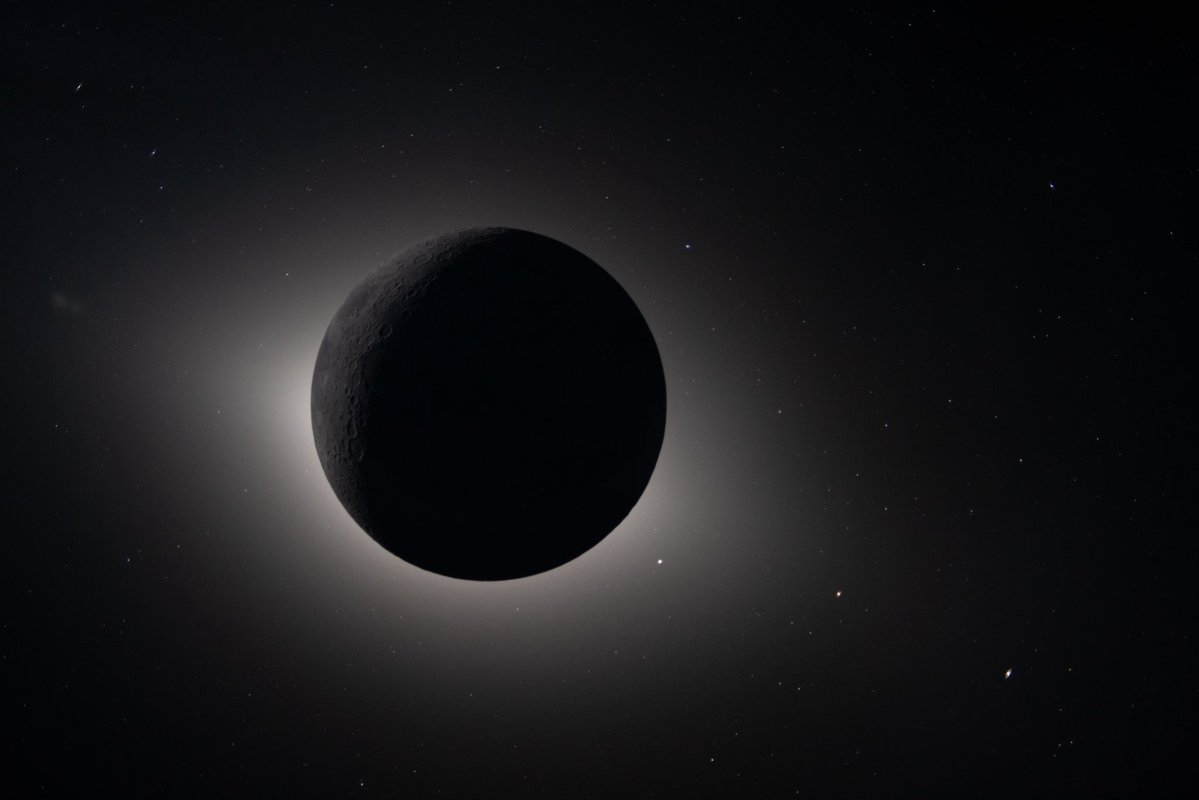
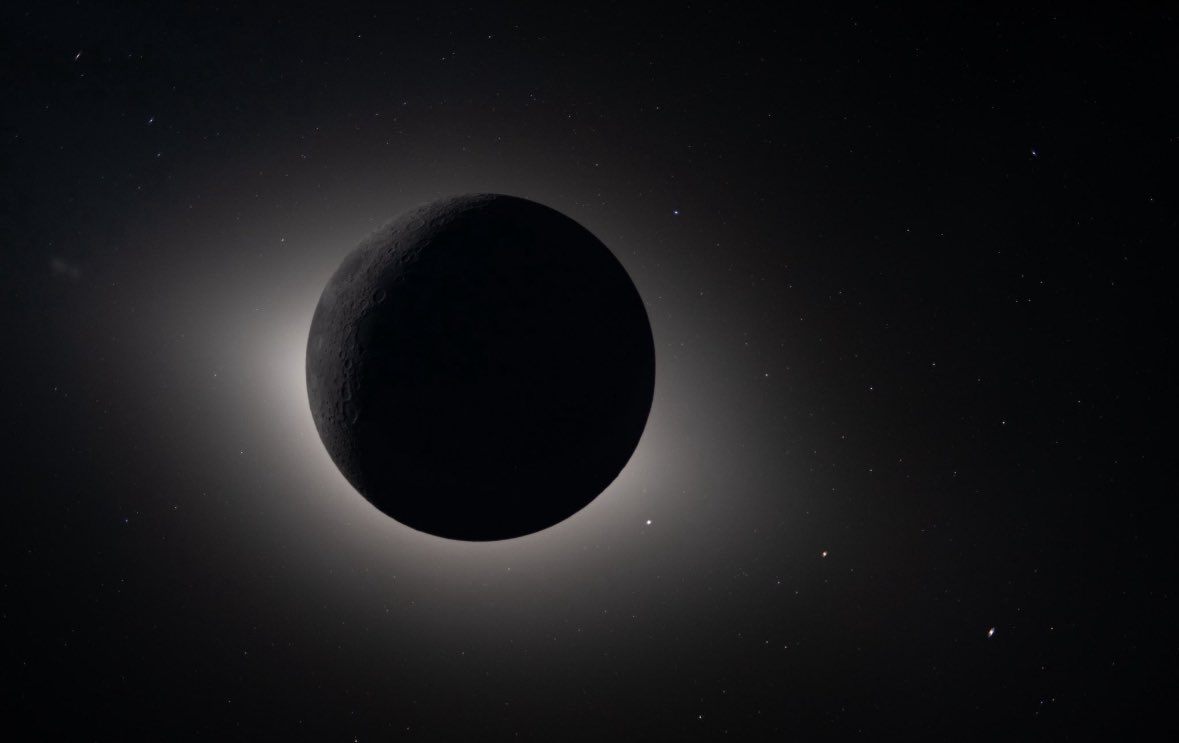
The Artemis II crew explains to a young viewer why it can be hard to see stars in outer space. Question: "I wonder, do you still see stars in outer space?" Jeremy Hansen: "Yeah, I was actually just talking to my crewmates about that today. I've definitely seen stars in outer space, and I was saying I haven't as many as I thought I would. Reid?" Reid Wiseman: "We have so much illumination from the sun on the moon and the earth right now, it is hard at times to see stars, just like when you walk out in the daytime, you see a blue sky but no stars."
English
275
1.5K
20K
1.5M
Greg
Greg@Psitech·
I assure you, those 4 are far smarter than I'll ever be, and they understand how the pupils in your eyes work and how an aperture on a camera works. This mission has just opened my eyes (so to speak) at how uneducated people are about such basic things. A lot of people are calling everything fake because..."where are the stars". Sorry, but ignorance annoys me.
English
0
0
1
28
Madness
Madness@sanitycheck2000·
@Psitech @CollinRugg Settle down, astronaut Greg. Even the astronauts said they were surprised by how few stars they see. But you've been to space way more times than them, so you know better.
English
2
1
3
51
Greg
Greg@Psitech·
@KenSmit59 @mchooyah You don't understand line of sight communication. This mission has shown the shocking number of low IQ people there are among us. It's both sad and scary.
English
0
0
0
36
Amagaican Dad
Amagaican Dad@KenSmit59·
@mchooyah We do but it's classified, also communication wasn't lost they just switched to a classified low frequency. Never ever trust and believe the government.
English
6
0
1
1.5K
Robert J. O'Neill
Robert J. O'Neill@mchooyah·
I don’t give a rip what the friggin’ crew of the rocket is eating and if the toilet works. Why don’t we have a video of the dark side of the moon?
English
232
63
2K
88.7K
TemplarDan
TemplarDan@DanTheTemplar·
@Bertmussen @NASA @grok We’re living in biblical times that’s been repeating like a cycle. This is very likely an A.I/CGI image unfortunately. 🤣
English
7
0
3
2.3K
NASA
NASA@NASA·
Sky full of stars. Following a successful lunar flyby, the Artemis II astronauts captured this breathtaking photo of our galaxy, the Milky Way, on April 7, 2026.
NASA tweet media
English
2.6K
44.2K
244.6K
21.3M
Greg
Greg@Psitech·
@thatguyyy43 @Billzilla5 @CuriosityonX It could be an issue with the lens in your telescope. Stars should never have different shapes. They can have different sizes, for sure, but not different shapes. However, lens distortion can cause all sorts of visual abnormalities.
English
0
0
1
16
Curiosity
Curiosity@CuriosityonX·
The Artemis II crew explains why stars remain hidden in their mission views:
English
20
105
1K
70.6K
Greg
Greg@Psitech·
@TeeGee_88 @TMZ Stay ignorant. You're doing a great job of it already. 😉
English
1
0
0
11
TMZ
TMZ@TMZ·
President Donald Trump’s call with the Artemis II crew Monday night had a seriously awkward moment … when the crew seemingly decided they were done talking to him -- and the prez blamed it on a glitch! 😅 Credit: NASA
English
368
890
18.4K
3M
Greg
Greg@Psitech·
Do you not understand conservation of momentum? In the vacuum of space, an object in Motion will stay in motion and will maintain its momentum forever until it encounters a force that disrupts that momentum. Orion didn't have to use its engines all the way to the moon, it essentially coasted the entire way.
English
0
0
0
8
Mr. Jett
Mr. Jett@Slugger_1J·
@NickBJenkins @libsoftiktok @elonmusk So a ship, that can travel VASTLY greater distances than a tiny capsule, needs to refuel to get to the moon, but not the tiny space capsule……. Thats like saying my v8 triton wont need refueling before my dad’s diesel, driving side by side.
English
2
0
0
16
Libs of TikTok
Libs of TikTok@libsoftiktok·
TRULY HISTORIC 🇺🇸🇺🇸🇺🇸
Libs of TikTok tweet media
English
136
275
5.1K
73.2K
Greg
Greg@Psitech·
@Slugger_1J @libsoftiktok Are you trolling or just have a low IQ? During a launch, the acceleration builds gradually. They'll experience 3 to 4 g's tops. The deceleration upon reentry is more of a problem. They can experience up to 9 g's during splash down.
English
0
0
0
19
Mr. Jett
Mr. Jett@Slugger_1J·
Absolutely fake. Its astonishing that grown adults believe astronauts are doing 10s of thousands of MPH, when combat pilots max out at 9 Gs and thats only for a few seconds at substantially lower speeds. Astronauts would be pancakes or disintegrate. You cannot leave earthz read the first page of the bible. The sun and moon are local.
English
5
0
4
159
Jordan Crowder
Jordan Crowder@digijordan·
Not one star. 60 years of technological progress with cameras… And not one star. I’ve heard all the explanations for this… None make any sense.

Jordan Crowder tweet media
English
2K
217
2.3K
724.8K
Madness
Madness@sanitycheck2000·
@Psitech @CollinRugg It's reasonable for anyone who has not been to space to ask this question. It is counterintuitive.
English
1
0
3
152
Greg
Greg@Psitech·
@Punkle89 @CuriosityonX There's no such thing as zero gravity. They, along with Orion, and everything within is basically in a constant state of free fall. Everything is moving at the same rate, so therefore everything's relative motion is the same. Hope that helps.
English
1
0
1
80
Punkle
Punkle@Punkle89·
@CuriosityonX If they are in a shuttle with zero gravity,traveling through the vacuum of space , how are they staying perfectly still while the craft is moving? Wouldn’t they continue being nudged, or bumped, by the craft while they are moving? 🤔
English
1
0
1
784
he
he@thatguyyy43·
@CuriosityonX Why do stars seen from earth have unique “twinkles”? The colors and shapes are vastly different.
English
1
0
1
485
Greg
Greg@Psitech·
@allanpichardo @CollinRugg I totally get that. I'm just shocked that so many adults don't understand basic science. That's all I'm saying. Yes, it's good for anyone to seek out information that they don't already possess.
English
0
0
0
114
Greg
Greg@Psitech·
I'm going to say this simply because I'm surprised at how many people don't understand how an aperture works. When you're in the dark, the pupils in your eyes (your eye's aperture) opens up to let more light in so that you can see things that are reflecting very little light back to your retinas. During the day, or when there is a lot of light present, your pupils will contract, so that your retinas aren't flooded with light, or the entire scene would be "blown out" and you'd just see nothing but white light. This is precisely why you can't see stars during the day, but you can at night. Starlight is very dim, so your eye's aperture has to be more open to see them. The darker the environment you're in, the more stars you'll see. This is exactly how an aperture on a camera works.
English
1
0
1
21
Greg
Greg@Psitech·
Can you see stars during the daytime? You know what happens with the pupils in your eyes, right? When too much light is present, your eye's pupils (like the aperture of a camera) constrict to let less light in, otherwise the scene would be "blown out" and all you would see is blinding white. At night, your pupils open up in order to let more light in. Star light reaching earth is very dim, and this is why you're able to see stars at night. This same principle is how cameras work. Hope that helps.
English
1
0
0
24
Greg
Greg@Psitech·
@gatigatigu @CollinRugg Looks more like smudges and reflections in the window to me. But if the camera fstop is low enough, they could be stars I guess.
English
0
0
9
366
gatigatigu
gatigatigu@gatigatigu·
@Psitech @CollinRugg Is it reasonable to ask if those are stars showing in a photo aimed directly at earth.
gatigatigu tweet mediagatigatigu tweet media
English
2
0
2
439
Greg
Greg@Psitech·
Also, cameras have aperture adjustments that expand and contract to let more or less light in, just like the pupils in your eyes. This is why it takes time for your eyes to adjust when you go from dark to light, or light to dark. This is why you can't see stars during the day, because your pupils are constricted to only let a little bit of light in, or everything you see would be "blown out" and you'd basically just see white. But I assure you, the stars are still there, and you see them once it's dark and your pupil can expand to let more light in. Hope that helps.
English
0
0
0
17