Ted Perry

793 posts

Ted Perry

Ted Perry

@Tedwardperry

가입일 Ocak 2013
442 팔로잉82 팔로워
Ted Perry
Ted Perry@Tedwardperry·
@TaxAlphaInsider @egr_investor @IronRedSandHive In addition to the timing and control aspects, it is notable that dividends can't be offset by capital losses (at least not in excess of the $3,000 capital loss limitation) whereas capital gains can be offset by capital losses to an unlimited extent.
English
0
0
2
46
Brent Sullivan
Brent Sullivan@TaxAlphaInsider·
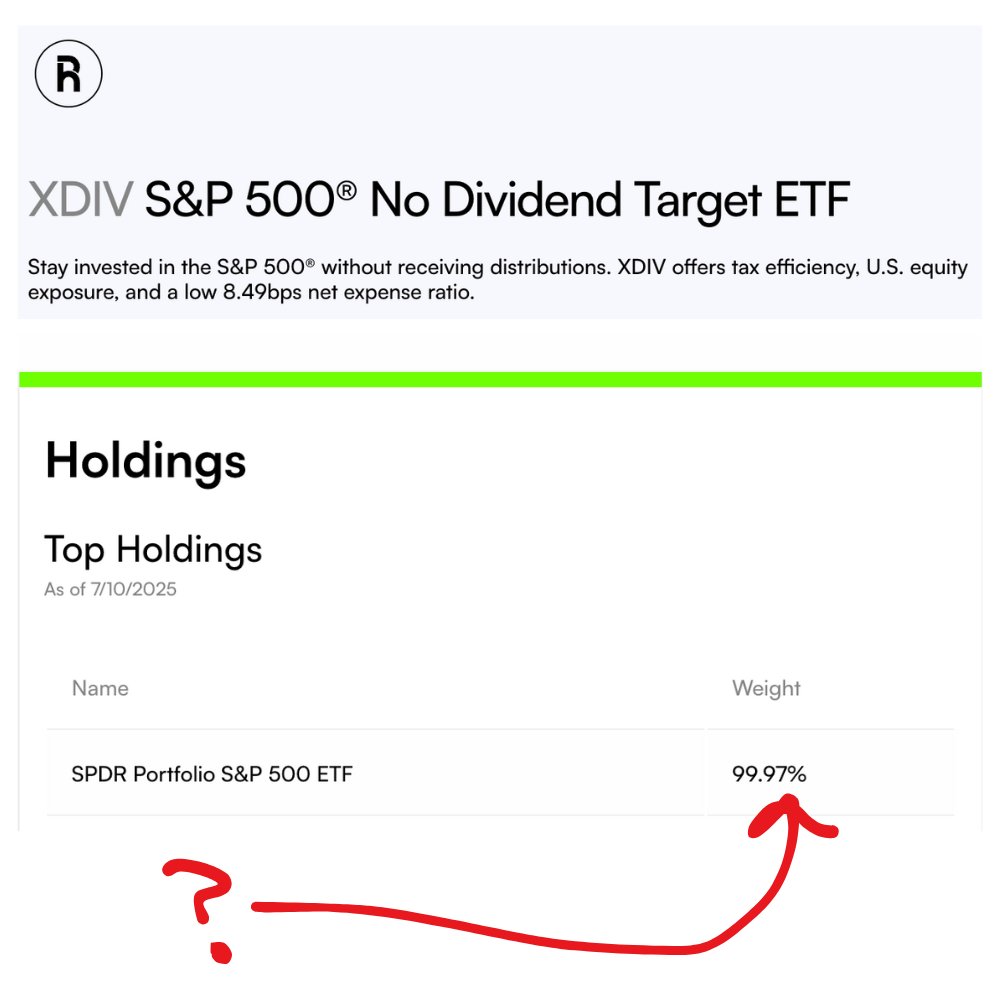
This ETF holds one other ETF. Why? Yesterday, Roundhill launched XDIV, which will mimic the S&P500 without the dividend distributions. XDIV will redeem its one ETF holding in-kind before the ex-date and buy another with the proceeds. f/m investments will do something similar with a host of fixed income ETF fund of funds. Alpha Architect and their forthcoming AAUS will execute the same strategy at the individual share level, hoping to capture alpha from dividend chasers. The operational justification for this implementation is to keep investors invested by avoiding any timing delay between when distributions are received and reinvested, although this is pretty short nowadays in the US depending on the product and DRIP program. These products take tax-efficiency to the next level.
Brent Sullivan tweet media
English
6
3
33
30.5K
Ted Perry
Ted Perry@Tedwardperry·
@AdviserCounsel @honest_math @Abude_al_asaad Their ADV references a private "Leap Investment Fund" managed by Basic Capital. Would it be reasonable for the regulatory language one might expect to be in BC's ADV to instead be listed in the offering memo and subscription agreement for the investment fund?
English
1
0
1
75
HonestMath.com
HonestMath.com@honest_math·
Hi @Abude_al_asaad. We’re interested in learning more about the Basic Capital product. The description on the website is quite generic. Is formal documentation describing the strategy available at this time? How do we get our hands on the docs?
Abdul Al-Asaad@Abude_al_asaad

We invest in diversified private credit that yields 8.5%. It’s not risk free. But it exists. Most people just don’t get access to it because the same has been locked up and is now opening up. It’s tempting to quickly want to dismiss this, I understand. But it’s also worth exploring the nuance

English
7
0
26
8.8K
Ted Perry
Ted Perry@Tedwardperry·
@AutomationAce_ Couldn't a code step be used to accomplish a delay of 30 seconds (or whatever the current script runtime limit is) or fewer?
English
1
0
0
19
Ted Perry
Ted Perry@Tedwardperry·
@AdviserCounsel Buffers can get exposure to their reference asset in multiple ways. Some (IVVB), hold the reference asset directly and will pay dividends when the reference does. Other funds (BSEP) use options to create synthetic exposure to the reference asset. These don't pay dividends.
English
1
0
1
82
Max Schatzow
Max Schatzow@AdviserCounsel·
Just read ~10 ADV brochures that state: "...because buffer funds own options, they do not receive dividends from their equity holdings. " I reviewed prospectuses for 2 ETFs and both pay dividends. (iShares Large Cap Deep Buffer & PGIM Laddered Fund of Buffer 12). What gives?
English
4
0
2
971
Ted Perry
Ted Perry@Tedwardperry·
@dougboneparth 37% of Americans can't afford an unexpected 23 minute daylight diversion and you want them to be daylight investing?!?
English
0
0
3
40
Douglas A. Boneparth
Douglas A. Boneparth@dougboneparth·
Daylight savings is not enough. You need to be daylight investing.
English
150
1.3K
13K
544.8K
Ted Perry 리트윗함
Nick Maggiulli
Nick Maggiulli@dollarsanddata·
"If what you do isn’t sustainable, then it doesn’t matter if it works." My latest on why the actions we can stick with are all that matters in the long run: ofdollarsanddata.com/the-sustainabl…
English
6
20
140
24.3K
Ted Perry
Ted Perry@Tedwardperry·
@TR401 @401Financial What goes into incorporating health planning into financial planning for your clients?
English
1
0
1
48
Jordan Taylor
Jordan Taylor@ArchAdvicer·
Just modeled an IUL based on Casey The Dollar’s recent video. 3.5% guaranteed interest + 100% participation on a 0-15 floor-cap. COI & admin fees can only increase every 10 years by the flat $ amount they increased in the 1st 10 years. 35 years of S&P500 monthly returns used to create a rolling 12 month return for the crediting. A-Shares with a 5.75% load & 0.25% expense ratio did better. A 1% AUM fee did better. A $600 annual investment review also did better. All by at least $200-600k. IULs lose to the S&P500 + investment fees even when they grow at least 3.5%/yr & up to 18.5%/yr + have unbelievably low costs.
English
15
5
64
24K
Ted Perry
Ted Perry@Tedwardperry·
@ArchAdvicer @honest_math I wonder if they are achieving fixed + indexed performance by splitting the crediting strategy. There's a video where Casey talks about allocating ~30% to the fixed crediting strategy to provide a floor above 0%. That would mean that the cap would only have 70% allocation.
English
1
0
2
58
Jordan Taylor
Jordan Taylor@ArchAdvicer·
@honest_math @Tedwardperry My best guess is she has no such policy with this combination of pricing & features. It's just TikTok + she can say whatever to generate engagement/inbound sales.
English
3
0
2
201
Aaron
Aaron@aaronbrickley·
@AutomationAce_ Thanks @AutomationAce_ we used that directory to find some people who were familiar with financial services and our systems. This was over a year ago, and we only spoke with a handful, but we weren’t confident enough in our convos to move forward with anyone.
English
1
0
0
17
Bill Winterberg, CFP®️
Bill Winterberg, CFP®️@BillWinterberg·
Ok, who is building "When a new client signs an agreement, send them an email, update their status in CRM to client, add them to financial planning software, and copy the agreement to the document vault."?
Tem@temnco

Woah @zapier AI is sick

English
13
0
29
17.9K
Ted Perry
Ted Perry@Tedwardperry·
@wbridgefa @mbontrager5 Where in this video did someone conflate a deduction with tax savings? The car in question starts at $375k. If we assume that accelerating depreciation is appropriate here and that the full deduction can be used to offset income, it's quite possible that it would save $160k.
English
0
0
0
50
AppFlyer
AppFlyer@wbridgefa·
@mbontrager5 Ok but $100,000 deduction is not $100,000 in savings So tired of these scammers
Huntsville, AL 🇺🇸 English
2
1
9
403
Ted Perry
Ted Perry@Tedwardperry·
@MoneyWiseLawyer @StudentLoanTrav The new IDR regs created language that excludes consolidation loans that repaid a Con. that repaid PLUS loans from choosing IDR except ICR. The regs, except where explicitly implemented early, are effective 07/01/24. The PLUS loans piece applies to loans dispersed after 07/2025
English
1
0
0
52
Travis Hornsby, CFA, CFP®
Travis Hornsby, CFA, CFP®@StudentLoanTrav·
FSA is blocking ppl who complete the double consolidation for Parent PLUS loans from signing up for anything except ICR. This is not correct as it's not supposed to occur before July 2025. Ppl who call are getting this corrected, but they shouldnt have to
English
1
3
15
4.3K
Travis Hornsby, CFA, CFP®
Travis Hornsby, CFA, CFP®@StudentLoanTrav·
Yea they’re going to need advocate for themselves: youtu.be/t_R-rj3SGd0?si… They’ll need to call the loan servicer and ask for a manager and ask to be switched to the income-driven plan. If that doesn't work, they should call again and get a different person. Have them ask for a manager and insisting that they’re eligible. If that doesn’t work they’ll need to send an FSA complaint: studentaid.gov/feedback-center if no resolution with Mohela.
YouTube video
YouTube
English
1
0
1
94
Ted Perry
Ted Perry@Tedwardperry·
@StudentLoanTrav Are you seeing any changes to the double consolidation process? A client completed consolidations of parent+ loans with Advantage and NelNet via paper app. When they attempt to consolidate the consolidation loans, it's showing that they are ineligible for SAVE
English
1
0
1
221
Ted Perry
Ted Perry@Tedwardperry·
@MikeSyl36625988 While parent plus loans aren't themselves eligible for SAVE/IDR plans other than ICR, the double consolidation loophole allows for parent loans to become eligible for SAVE. Many parent borrowers would benefit from this. However, the loophole is set to be phased out by 07/25.
English
0
0
1
215
Mike Sylvester, CPA
Mike Sylvester, CPA@FortWayneCPA·
Poll at the very end. Student Loan Payments Restart in October. If you have student loans you should read this carefully and take action in the next few days if warranted. Per the Congressional Budget Office (CBO) 2/3 of those with student loans should apply for the new income-driven repayment plans. Due to the Covid pandemic, student loan payments have been paused since March of 2020 and no interest has accrued. Interest starts accruing again September 1st, 2023, and payments will begin again in October of 2023. There will not be another delay in monthly payments. Here is what you should do: · Update your contact info on studentaid.gov and your loan servicer’s website. · Look into the new income-driven repayment plans (SAVE plans). You could get a much lower payment by applying for the new income-driven repayment plans. You can find more information here: Loan Simulator | Federal Student Aid. You can choose between the fastest payoff, lowest monthly payment, and lowest total paid. Note this is discussed a lot; further in this article. · Consider enrolling in autopay. Enrolling in autopay will save you 0.25% on your interest rate. You can sign up on your loan servicer’s website. · Check your loan servicer’s website for your payment amount. Some have payment information available now. · Check here for any forgiveness programs you may be eligible for Student Loan Forgiveness | Federal Student Aid. The new SAVE plans (Income-driven repayment plans) are extremely generous as compared to the old plans! Parent loans do not qualify for the SAVE plans, and this is another reason to not take out parent loans. Private loans do not qualify for the new SAVE plans. SAVE plans for undergraduate loans span 20 years unless the July 2024 changes apply to your smaller loan. SAVE plans for graduate loans span 25 years. Remember, a normal student loan repayment plan spans only 10 years, this must be considered… Benefits that start for SAVE plans now include: · The amount of income protected from payments increased from 150% of the poverty line to 225% of the poverty line. The following amounts in 2023 are excluded from income based on family size under the new rules: Individuals $32,805 Family of 2 $44,370 Family of 3 $55,935 Family of 4 $67,500 Note the Department of Education expects well over a million student loan borrowers will see their payments under the SAVE plan go to zero. · If the minimum monthly payment is paid, and if it does not pay all of the interest accrued that month, the interest will not accrue and will not be added to the loan balance. The Department of Education feels this will benefit 70% of the borrowers in the current income-driven repayment plans. · Married borrowers who file their taxes separately (MFS) will no longer be required to include their spouse’s income in their payment calculation for the new SAVE program. These borrowers will have their spouse excluded from the family size calculation. Note this will cause more taxpayers to file married filing separately rather than married filing jointly. Starting July of 2024 more changes will be implemented: · Payments on undergraduate loans will be cut from 10% of remaining income to 5% of remaining income. This is a huge deal. · Borrowers whose original principal balances were $12,000 or less will receive forgiveness after 10 years of repayment, with an additional year of repayment required for each additional $1,000 borrowed. So those borrowers with $23,000 or less in undergraduate student loans will have a repayment period of less than 20 years and this is a big deal as well. Borrowers are in a temporary “on-ramp transition period” until September of 2024. This means that payments are still due, and interest will continue to accrue, but you will not be reported as delinquent to credit agencies. Further; all student loan borrowers have been given a completely fresh restart and can apply for the new SAVE plan regardless of delinquency status. Under current law, unpaid student loan balances that are forgiven by the Federal government are taxable income starting on 1/1/2026. Each State handles this differently. Note the new SAVE income-driven repayment plans are so generous that the Congressional Budget Office (Nonpartisan budget arm of Congress) projects: The number of Americans in income-driven repayment plans will increase to 66% of all borrowers from 50%. The CBO expects the program to cost about 26 billion dollars a year for the next ten years and for the cost to increase after that. This is because the CBO expects those borrowers who use the new SAVE program to only repay 61% of the amount borrowed; under previous plans, the CBO projected 110% of the amount borrowed would be repaid due to interest. Think about this! This will cost the Federal Government hundreds of billions of dollars and it will save borrowers the same amount! Further, the CBO expects colleges to increase costs more than they are now since students will not have to repay the full amount. The CBO also expects students to borrow more in the future since 2/3 of borrowers will only have to repay 61% of what they borrow under the new SAVE plans. The CBO projects 2/3 of borrowers to sign up and benefit from the SAVE plans. Who should sign up for the new SAVE plans? It is extremely complicated and the following variables are some of the variables that must be considered: What will your income be over the length of the SAVE plan? What will your family size be over the life of the SAVE plan? Can you write off student loan interest on your income tax returns? What is the interest rate on the student loans? If you are married, will you be filing jointly or separately and you also have to consider what those different filing statuses will mean to each tax return filed and the cost to file those tax returns. If married, does your spouse have student loans? How much will the Federal poverty limit change. Will how AGI is calculated change? Anything that affects your AGI over the life of the SAVE plan must be considered including, side jobs, business income, rental income, accelerated depreciation, capital gains, capital losses, interest, dividends, taking taxable retirement distributions and on and on. In very general terms, I think the following situations likely mean you should strongly consider signing up for the SAVE plan: · Anyone already on another income-driven repayment plan. · Anyone currently in default or forbearance since if you are financially struggling you might have zero or very low monthly payments. · Anyone who just cannot pay the normal 10-year repayment plan amount. Note in some situations this may cause you to pay more if you sign up for a SAVE plan! · The undergraduate SAVE plans are much better than the graduate SAVE plans. This means more with undergraduate loans will benefit from choosing a SAVE plan. This is extremely complicated and best shown with examples: Susan graduates from college with an undergraduate degree in July of 2024. Her student loan repayments begin in January of 2025. Susan has a student loan balance of $30,000 in January of 2025. At current student loan interest rates, if Susan does not apply for an income-driven repayment plan; her student loan payments are $326 a month for 10 years. Let’s assume Susan is paid $59,000 in wages in 2025. Susan applies for a SAVE plan. Susan is an individual and she has no children. She is a family of one. 225% of the Federal poverty level for an individual will be about $35,000 in 2025. Under the Save plan Susan’s monthly payment is Susan’s Adjusted Gross Income (AGI) of $59,000 minus poverty limit of $35,000 = $24,000. $24,000 divided by 12 means Susan has $2,000 per month of discretionary income. $2,000 x 5% = $100. Susan will pay $100 a month 2025. Note Susan saves money on monthly payments in 2025 by signing up for a SAVE plan in this example. Susan’s financial situation will change every year. Her income as reported on her 1040 will change. Her family size might change. Inflation will change the Federal poverty limits. This means Susan’s student loan payments will change annually under the SAVE plan. The more borrowers earn, the higher amounts the SAVE plan will make them pay every month. The SAVE plan will benefit low- and middle-income borrowers a lot. The SAVE plan will benefit high-income borrowers significantly less and often not at all. Remember, the SAVE calculation is made annually and will change every year. Susan summary: Susan can pay $326 a month for ten years and she might be able to write off the student loan interest on her personal income tax returns. OR Susan can sign up for a SAVE plan, pay $100 per month for 2025, recalculate the payment annually for the next 20 years, and then have debt forgiveness income on the balance remaining when forgiven that may or may not be taxable to the Federal Government and the state, she lives in. Next example. Tonya graduates from college with an undergraduate degree in July of 2024. Her student loan repayments begin in January of 2025. Tonya has a student loan balance of $30,000 in January of 2025. At current student loan interest rates, if Tonya does not apply for an income-driven repayment plan; her student loan payments are $326 a month for 10 years. Let’s assume Tonya is paid $107,000 in wages in 2025. She is a computer science major. Tonya applies for a SAVE plan. Tonya is an individual and she has no children. She is a family of one. 225% of the Federal poverty level for an individual will be about $35,000 in 2025. Under the Save plan Tonya’s monthly payment is Tonya’s Adjusted Gross Income (AGI) of $107,000 minus poverty limit of $35,000 = $72,000. $72,000 divided by 12 means Tonya has $6,000 per month of discretionary income. $6,000 x 5% = $300. Tonya will pay $300 a month 2025. Note Susan saves $26 a month on monthly payments in 2025 by signing up for a SAVE plan in this example. Tonya’s choice is much simpler that Susan’s choice. Paying $326 a month for ten years is generally going to be a better choice and Tonya very likely should not sign up for a SAVE plan. The final section is a broad overview of the politics and ramifications of the SAVE plans. Most people (Not all) think this plan will survive challenge at The Supreme Court. Winners: President Biden and Democrats. They wanted to lower the student loan burden for low- and middle-income individuals with undergraduate student loans and this program will accomplish that. Colleges, they will be able to charge even more for the same services per the non-partisan CBO. Student loan borrowers that are lower and middle income. Those who sign up for the SAVE plans will repay 61% of what they borrowed rather than 110% under current rules per various studies. The economy in the short run. As many as 30 million borrowers will see lower monthly student loan repayments, largely this means they will spend the money on other things and which helps the economy in the short run. Private colleges. They already charge a lot more than public colleges and students who graduate with a lot of undergraduate debt and are lower or middle income will have a lot more of their student loan debt forgiven. Losers: Taxpayers, this adds 261 billion to the deficit over the next ten years and the CBO projects that to increase in following years. Student loan borrowers who paid off their debt in full under the old rules. The military; because this makes the GI Bill a little less valuable. Current and future student loan borrowers who are high income since they will have to repay the normal 110% of the amount borrowed. The economy in the long run. The Federal Government already is on an unsustainable path per the CBO and this makes that path a little worse. Further increasing the future cost of college helps no one other than colleges. Our clients can hire us to do a consulting engagement to determine if someone should sign up for SAVE plans or not. If you want to hire us to do this; please send your CPA an email and let us know all of the following in one email: Who the calculation is for. How much they have in undergraduate student loans rounded to the nearest thousand dollars. How much they have in graduate student loans rounded to the nearest thousand dollars. Please verify the loans are NOT parent loans or private loans. These five items will get us started! Mike Sylvester, CPA. Poll question; was this post useful to you as far as learning more about the new student loan payment plans that were officially launched last Tuesday? #cpa #taxtwitter #ea #tax #fintwit #financialplanning #financialeducation #studentloans #studentloanforgiveness #save #finance #college #departmentofeducation
English
9
15
62
20.7K