Levantine Logic

186 posts

Levantine Logic banner
Levantine Logic

Levantine Logic

@TheAnalysisMan

﷽ θυμός |¦| Systems 🌐 • Politics ⚖️ Anti-disciplinary analysis → First Principles thinking ۞ Strategy is the architecture of destiny & Game Theory is its way ♞

United States 가입일 Ekim 2012
977 팔로잉131.6K 팔로워
고정된 트윗
Levantine Logic
Levantine Logic@TheAnalysisMan·
🧵What's happening in Iran isn’t a war, at least not in the traditional sense. It’s a reorganization of the global energy map. "He who controls the spice controls the universe." — Frank Herbert, Dune Replace spice with oil, natural gas, and LNG — the argument doesn’t change.
Levantine Logic tweet media
English
1
1
11
8.9K
Levantine Logic
Levantine Logic@TheAnalysisMan·
Levantine Logic@TheAnalysisMan

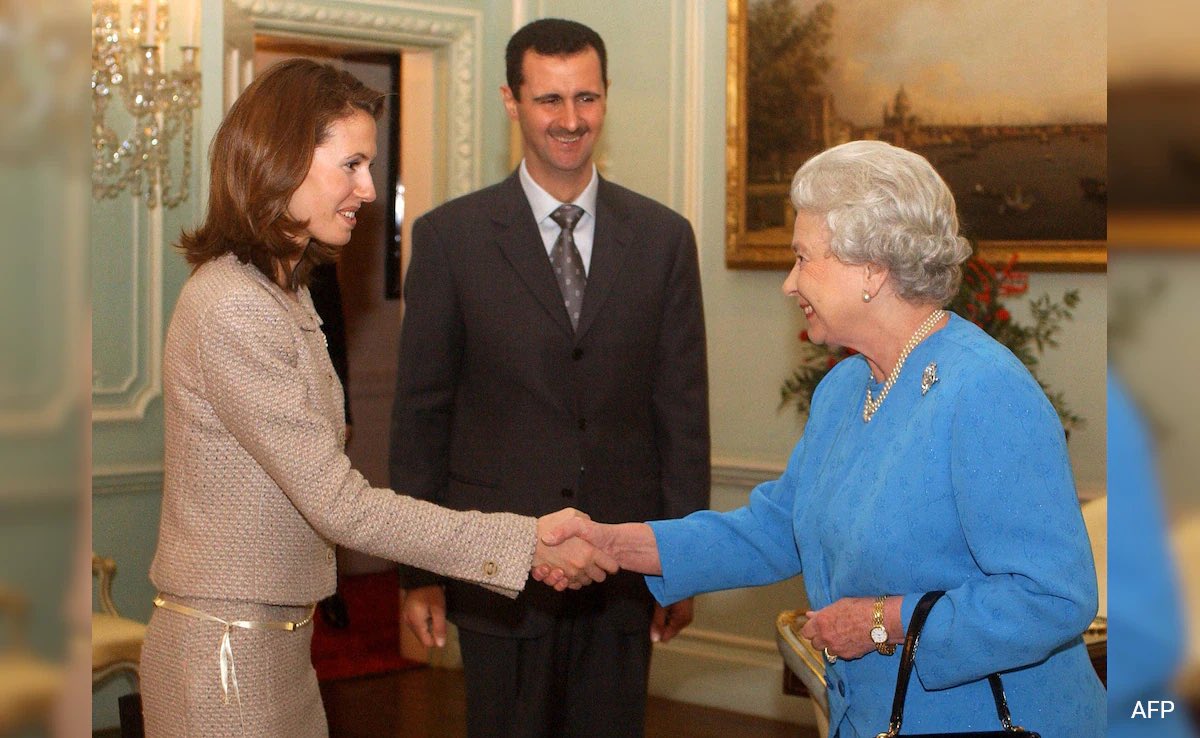
According to the Axis of Resistance: If a Syrian president visits Western capitals, meets heads of state, and shakes hands in palaces, then he automatically becomes part of the “Western camp”? Fine. Then let us apply that standard consistently. Did Bashar al-Assad not make similar visits? Did he not also travel, meet Western leaders, shake the same hands, stand in the same rooms, and take the same photos? So by this logic, was Bashar also part of the “Western camp”? Or does this accusation only appear when it is politically convenient? This is precisely why so much of the so-called “axis” discourse collapses under its own hypocrisy. They want to turn every diplomatic image into a theological revelation. If they like the ruler, it is called strategy. If they dislike the ruler, it is called betrayal. The standard changes, but the photo remains the same. As for Hizb al-Tahrir: Meeting foreign leaders does not mean two presidents are identical. It does not mean one man is simply another man with a different beard, suit, or slogan. And it certainly does not mean history is frozen, with one face merely replacing another while everything else stays unchanged. What it means is something much older, deeper, and more enduring: ﴿وَتِلْكَ الْأَيَّامُ نُدَاوِلُهَا بَيْنَ النَّاسِ﴾ “And these days We alternate among the people.” This is the point they do not want to confront. This Quranic verse is not just about victory and defeat in war. It is about the circulation of position, access, legitimacy, leverage, and historical momentum among people and nations. Doors that were once open close. Doors that were once shut open. Men who were once received are later discarded. Others who were once isolated are later received. That is not proof of moral purity, nor proof of treason. It is proof that history moves. So no, a diplomatic visit does not prove that Syria has become “Western.” And no, the existence of a handshake does not mean nothing has changed. It simply means the wheel has turned again. The real question is not who stood in the palace for the photograph. Because once you compare the photos honestly, you are forced to admit that the act of diplomacy itself was never the issue. The issue is that they resent who now gets to occupy the frame. وَتِلْكَ الْأَيَّامُ نُدَاوِلُهَا بَيْنَ النَّاسِ And that verse remains the most elegant answer to all of this: today does not belong to the same people as yesterday, and tomorrow will not belong to the same people as today. So do what is just and upright while you are temporarily here. After all, this life is transient and we are all from dust... 🍃 ⏳

QME
0
0
1
30
Hossein Sheykhian
Hossein Sheykhian@sheykhian_h·
Oh it became Halal after a year!
Hossein Sheykhian tweet media
English
85
764
3.1K
48.2K
Halabi
Halabi@neobaathism66·
@TheAnalysisMan Funny you mentioned all of what we dont have even though we did have them before your ape revolution 😅
English
1
0
1
36
Levantine Logic
Levantine Logic@TheAnalysisMan·
Syria 🇸🇾 can barely keep the lights on for 24 hours a day. We do not have a real air force. We do not have a ballistic missile program. We do not have chemical weapons. We do not have nuclear weapons. And we are not going to commit civilizational suicide so people abroad can feel morally heroic “in spirit.” Syria needs rebuilding, not burial. We need to bring back millions of displaced Syrians still living in tents. We need to rebuild shattered infrastructure worth hundreds of billions of dollars. We need to recover the lost education of an entire generation of children raised through war. We need to create a country that millions of refugees can actually return to. So spare us the theatrical calls for martyrdom. If you are sitting safely in America 🇺🇸 trying to shame Syrians into fighting your fantasy wars, then go yourself. Go to Gaza yourself. Pick up a weapon yourself. Risk your own life yourself. But you will not. Because, like every armchair war prophet before you, you are in love with sacrifice only when it is someone else’s blood, someone else’s son, someone else’s homeland, and someone else’s funeral. You are no different from the politicians who beat the drums of war from a studio, an office, or a podium, while making sure neither they nor their children ever have to pay the price. Syrians have buried enough. We are trying to build.
Propaganda & co@propandco

Yalla Syria Tawakal We are with you

English
127
144
1.2K
120.2K
Levantine Logic
Levantine Logic@TheAnalysisMan·
@TheMaronite Reminder: You speak Arabic. Never forget who molded and fashioned you. 😉 🤫
GIF
English
0
0
8
293
Levantine Logic
Levantine Logic@TheAnalysisMan·
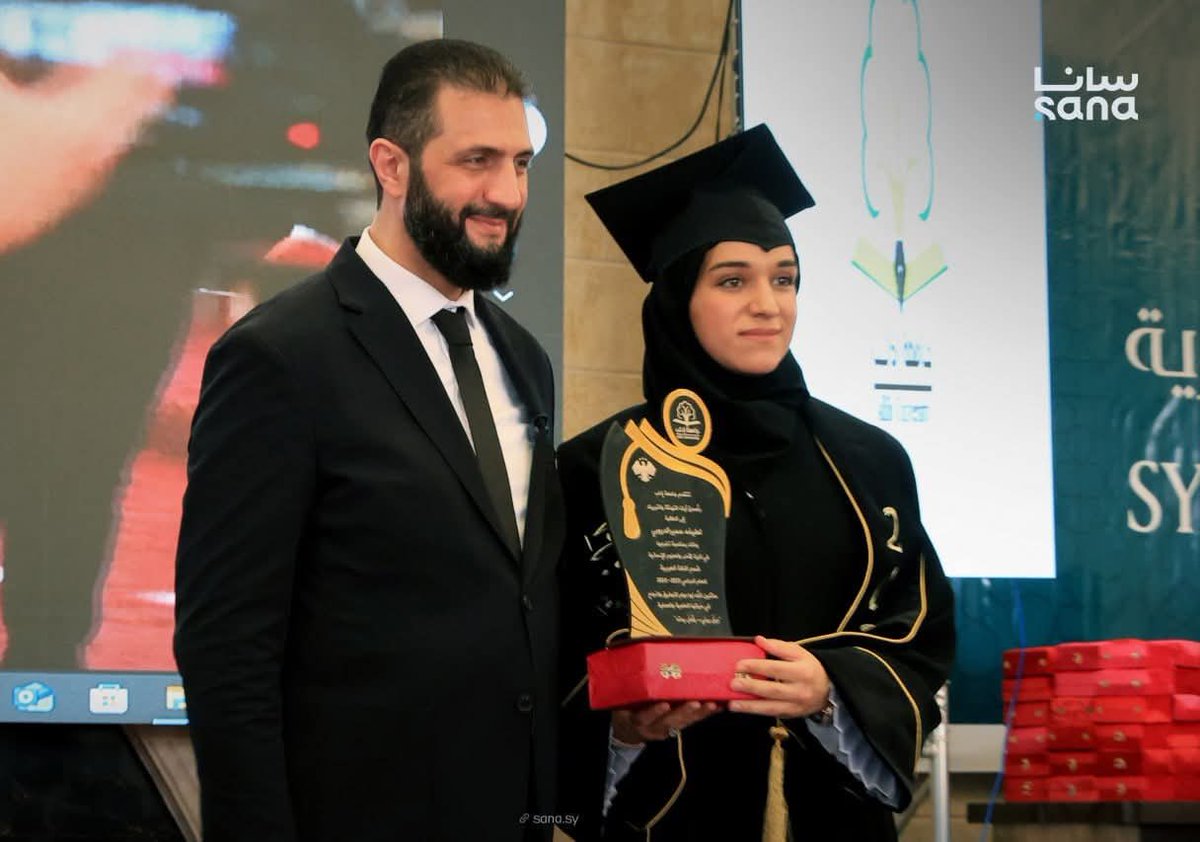
I can't stand when people blatantly lie 🤥 right through their teeth... 😡 Syria is not Afghanistan.... 🤦‍♂️ Here is President Ahmad Al-Shara's wife, Mrs. Latifa Al-Droubi, graduating 🎓 from the Faculty of Arts and Humanities at Idlib University. In the presence of President Ahmad Al-Shar’a, #Idlib #University – Faculty of Arts and Humanities celebrated the graduation of its entire female student cohort from the “Victory and Liberation” class. Again, the First Lady, Mrs. Latifa Al-Droubi, was among the graduates. Keep lying 🤡 👋
Levantine Logic tweet media
Samantha Smith@SamanthaTaghoy

>banned girls from going to school because “the Qur’an says men are superior” >too dumb to open a water bottle >needs a woman to open it for him

English
40
121
1.3K
225.4K
Levantine Logic
Levantine Logic@TheAnalysisMan·
Meanwhile... ‼️🇮🇱🇮🇷 Sewage water fills Streets in Israel after Iranian missile impacts. 💩
English
2
0
18
1.3K
Levantine Logic
Levantine Logic@TheAnalysisMan·
Levantine Logic@TheAnalysisMan

I can't stand when people blatantly lie 🤥 right through their teeth... 😡 Syria is not Afghanistan.... 🤦‍♂️ Here is President Ahmad Al-Shara's wife, Mrs. Latifa Al-Droubi, graduating 🎓 from the Faculty of Arts and Humanities at Idlib University. In the presence of President Ahmad Al-Shar’a, #Idlib #University – Faculty of Arts and Humanities celebrated the graduation of its entire female student cohort from the “Victory and Liberation” class. Again, the First Lady, Mrs. Latifa Al-Droubi, was among the graduates. Keep lying 🤡 👋

QME
1
4
380
16.2K
Levantine Logic
Levantine Logic@TheAnalysisMan·
@ME_Observer_ You do know that America 🇺🇸 armed the Mujahideen in Afghanistan 🇦🇫, and later those very same Mujahideen turned their arms against the American 🇺🇸 empire, right?
English
0
0
5
199
Middle East Observer
Middle East Observer@ME_Observer_·
@TheAnalysisMan The Arab coalition that is allied to America will never fight Israel, it's designed by CENTCOM to protect Israel That coalition is American, not Arab nor Syrian nor Islamic. It's just the US Empire.
English
3
15
106
1.6K
Levantine Logic
Levantine Logic@TheAnalysisMan·
Respectfully, this is not a serious comparison. Yemen 🇾🇪 , Iran 🇮🇷, and Afghanistan 🇦🇫 (which you conveniently didn't mention) are not just “more courageous.” They are countries with terrain that heavily favors long-term asymmetric warfare. Yemen is defined by western highlands and central mountains, and Afghanistan is famously dominated by high, broken mountain systems and narrow valleys. Even Che Guevara, one of the classic theorists of guerrilla war, explicitly wrote that fighting on favorable ground, “particularly in the mountains,” offers major advantages. Syria is different. Yes, Syria has mountain belts, but much of the country’s strategic geography is not Yemen or Afghanistan. Syria’s major settled and operational spaces include the cultivated steppe, desert steppe, and broad undulating plains, while its mountain belts are comparatively narrower. In plain English: Syria does not enjoy the same natural sanctuary for a prolonged national insurgent war against superior airpower that Yemen, Iran, and Afghanistan do. That matters because geography is not a side issue in war. It is one of the central variables. Mountain warfare consistently gives the defender disproportionate advantages, while broken terrain and cover help weaker forces survive, disperse, and impose costs over time. Open or exposed terrain makes it much easier for stronger states to isolate, target, encircle, and annihilate weaker forces. That is not cowardice. That is military reality. History is full of cases where resistance was crushed once the terrain stopped protecting it. Look at the Tamil Tigers in Sri Lanka. However one judges them politically, the endgame is instructive: once they were compressed into a tiny coastal strip, with little room left to maneuver or hide, they were routed and destroyed. Their final position was no mountain sanctuary; it was a trap. Look at the Hungarian Revolution in 1956. Courage was not the issue. The issue was that lightly armed resistance in an exposed urban battlespace was smashed by overwhelming Soviet armor and force concentration. Bravery alone did not overcome unfavorable military geography and the imbalance of firepower. So the argument is not “fear Allah” versus “fear dunya.” That is rhetoric replacing strategy. The real question is whether a state is positioned to survive the type of war being demanded of it. Yemen’s mountains matter. Afghanistan’s mountains matter. Syria’s more exposed geography matters too. Pretending these are interchangeable cases is not courageous piety. It is analytical laziness, it is intellectual fraudulence... A responsible Syrian position is not to volunteer the country for annihilation just to satisfy the moral theater of spectators abroad. States do not prove sincerity by choosing the worst possible battlefield. They prove seriousness by understanding their constraints, preserving their people, and rebuilding national power so that one day they can act from strength instead of emotion.
Levantine Logic tweet media
English
7
8
51
3.8K
Levantine Logic
Levantine Logic@TheAnalysisMan·
@Euunul The motto of Assadists was literally الأسد أو نحرق البلد "ASSAD OR WE BURN 🔥 THE COUNTRY"
GIF
Català
3
2
83
2.1K
Eu Unul
Eu Unul@Euunul·
@TheAnalysisMan "Syria 🇸🇾 can barely keep the lights on for 24 hours a day." And who's to blame for that?  "An evil man will burn his own nation to the ground to rule over the ashes"
Eu Unul tweet media
English
7
6
122
2.7K
Levantine Logic
Levantine Logic@TheAnalysisMan·
You’re equating a defensive war to liberate our own homeland with an offensive war waged beyond our borders in Palestine? You're equating Russia 🇷🇺 and Iran 🇮🇷 which were fighting an **optional** war far away from their lands to Israel 🇮🇱 which will be fighting an existential war for its survival?
GIF
English
1
0
13
220
Syrian Girl
Syrian Girl@Partisangirl·
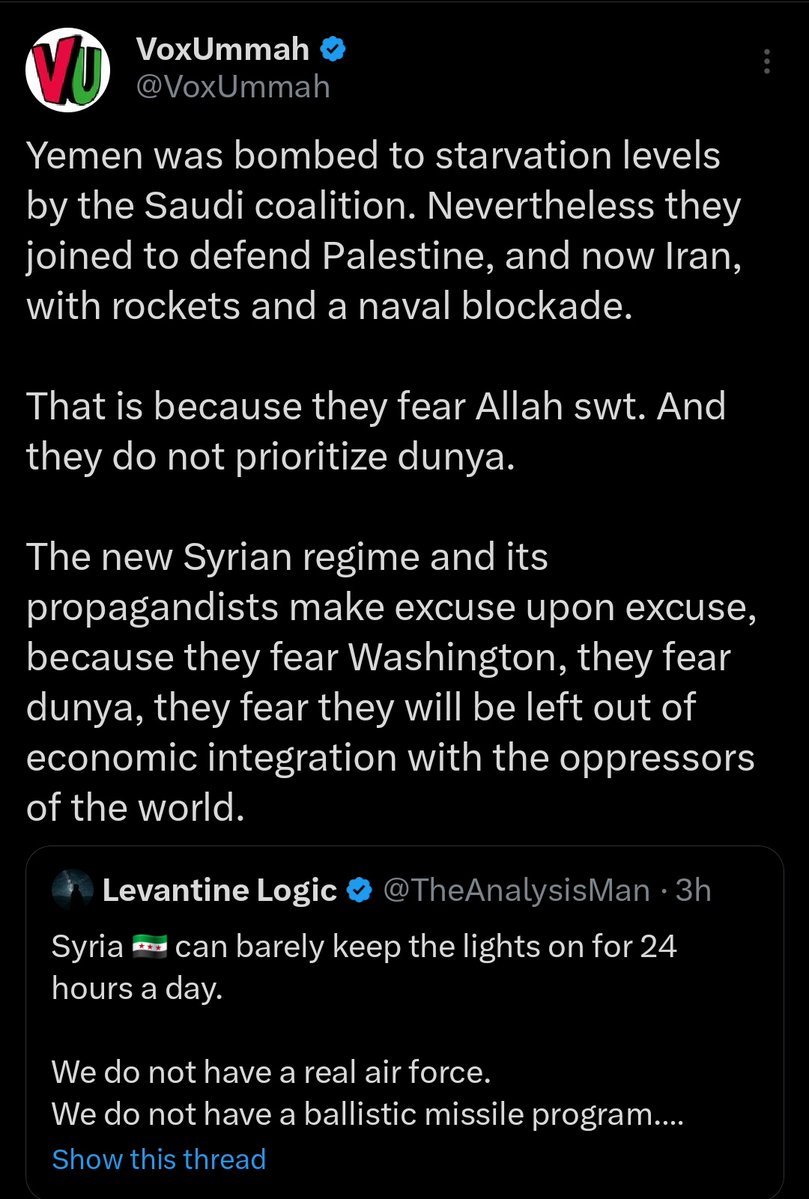
These Syrian traitors will Kang and claim they defeated Russia, Iran and Assad. But when it comes to fighting Israel they will say they are too weak because they spent a decade destroying Syria’s weapons.
Levantine Logic@TheAnalysisMan

Syria 🇸🇾 can barely keep the lights on for 24 hours a day. We do not have a real air force. We do not have a ballistic missile program. We do not have chemical weapons. We do not have nuclear weapons. And we are not going to commit civilizational suicide so people abroad can feel morally heroic “in spirit.” Syria needs rebuilding, not burial. We need to bring back millions of displaced Syrians still living in tents. We need to rebuild shattered infrastructure worth hundreds of billions of dollars. We need to recover the lost education of an entire generation of children raised through war. We need to create a country that millions of refugees can actually return to. So spare us the theatrical calls for martyrdom. If you are sitting safely in America 🇺🇸 trying to shame Syrians into fighting your fantasy wars, then go yourself. Go to Gaza yourself. Pick up a weapon yourself. Risk your own life yourself. But you will not. Because, like every armchair war prophet before you, you are in love with sacrifice only when it is someone else’s blood, someone else’s son, someone else’s homeland, and someone else’s funeral. You are no different from the politicians who beat the drums of war from a studio, an office, or a podium, while making sure neither they nor their children ever have to pay the price. Syrians have buried enough. We are trying to build.

English
23
55
295
12.9K
Levantine Logic
Levantine Logic@TheAnalysisMan·
Levantine Logic@TheAnalysisMan

According to the Axis of Resistance: If a Syrian president visits Western capitals, meets heads of state, and shakes hands in palaces, then he automatically becomes part of the “Western camp”? Fine. Then let us apply that standard consistently. Did Bashar al-Assad not make similar visits? Did he not also travel, meet Western leaders, shake the same hands, stand in the same rooms, and take the same photos? So by this logic, was Bashar also part of the “Western camp”? Or does this accusation only appear when it is politically convenient? This is precisely why so much of the so-called “axis” discourse collapses under its own hypocrisy. They want to turn every diplomatic image into a theological revelation. If they like the ruler, it is called strategy. If they dislike the ruler, it is called betrayal. The standard changes, but the photo remains the same. As for Hizb al-Tahrir: Meeting foreign leaders does not mean two presidents are identical. It does not mean one man is simply another man with a different beard, suit, or slogan. And it certainly does not mean history is frozen, with one face merely replacing another while everything else stays unchanged. What it means is something much older, deeper, and more enduring: ﴿وَتِلْكَ الْأَيَّامُ نُدَاوِلُهَا بَيْنَ النَّاسِ﴾ “And these days We alternate among the people.” This is the point they do not want to confront. This Quranic verse is not just about victory and defeat in war. It is about the circulation of position, access, legitimacy, leverage, and historical momentum among people and nations. Doors that were once open close. Doors that were once shut open. Men who were once received are later discarded. Others who were once isolated are later received. That is not proof of moral purity, nor proof of treason. It is proof that history moves. So no, a diplomatic visit does not prove that Syria has become “Western.” And no, the existence of a handshake does not mean nothing has changed. It simply means the wheel has turned again. The real question is not who stood in the palace for the photograph. Because once you compare the photos honestly, you are forced to admit that the act of diplomacy itself was never the issue. The issue is that they resent who now gets to occupy the frame. وَتِلْكَ الْأَيَّامُ نُدَاوِلُهَا بَيْنَ النَّاسِ And that verse remains the most elegant answer to all of this: today does not belong to the same people as yesterday, and tomorrow will not belong to the same people as today. So do what is just and upright while you are temporarily here. After all, this life is transient and we are all from dust... 🍃 ⏳

QME
0
0
6
666
Levantine Logic
Levantine Logic@TheAnalysisMan·
According to the Axis of Resistance: If a Syrian president visits Western capitals, meets heads of state, and shakes hands in palaces, then he automatically becomes part of the “Western camp”? Fine. Then let us apply that standard consistently. Did Bashar al-Assad not make similar visits? Did he not also travel, meet Western leaders, shake the same hands, stand in the same rooms, and take the same photos? So by this logic, was Bashar also part of the “Western camp”? Or does this accusation only appear when it is politically convenient? This is precisely why so much of the so-called “axis” discourse collapses under its own hypocrisy. They want to turn every diplomatic image into a theological revelation. If they like the ruler, it is called strategy. If they dislike the ruler, it is called betrayal. The standard changes, but the photo remains the same. As for Hizb al-Tahrir: Meeting foreign leaders does not mean two presidents are identical. It does not mean one man is simply another man with a different beard, suit, or slogan. And it certainly does not mean history is frozen, with one face merely replacing another while everything else stays unchanged. What it means is something much older, deeper, and more enduring: ﴿وَتِلْكَ الْأَيَّامُ نُدَاوِلُهَا بَيْنَ النَّاسِ﴾ “And these days We alternate among the people.” This is the point they do not want to confront. This Quranic verse is not just about victory and defeat in war. It is about the circulation of position, access, legitimacy, leverage, and historical momentum among people and nations. Doors that were once open close. Doors that were once shut open. Men who were once received are later discarded. Others who were once isolated are later received. That is not proof of moral purity, nor proof of treason. It is proof that history moves. So no, a diplomatic visit does not prove that Syria has become “Western.” And no, the existence of a handshake does not mean nothing has changed. It simply means the wheel has turned again. The real question is not who stood in the palace for the photograph. Because once you compare the photos honestly, you are forced to admit that the act of diplomacy itself was never the issue. The issue is that they resent who now gets to occupy the frame. وَتِلْكَ الْأَيَّامُ نُدَاوِلُهَا بَيْنَ النَّاسِ And that verse remains the most elegant answer to all of this: today does not belong to the same people as yesterday, and tomorrow will not belong to the same people as today. So do what is just and upright while you are temporarily here. After all, this life is transient and we are all from dust... 🍃 ⏳
Abdul Wahid@AbdulWahid_X

What do we learn by comparing photos?

English
3
7
87
8.3K
Levantine Logic
Levantine Logic@TheAnalysisMan·
Levantine Logic@TheAnalysisMan

1/2 🧵 Yes, they're considering Syria 🇸🇾😏👌 Syria now stands before what I call the “4+1 Equation.” It is built on one central reality: every great regional crisis contains within it a hidden strategic opportunity. And in this moment, I believe that opportunity belongs to Syria. The instability surrounding the Strait of Hormuz has exposed a deeper truth: the Arab world, and indeed the global economy, cannot remain permanently hostage to a single vulnerable maritime chokepoint. Every serious state in the region should now be thinking not only in terms of reaction, but in terms of alternatives. Not just Plan A, but Plan B and Plan C. That is where Syria comes in. Syria’s geography is not merely a map feature. It is a dormant strategic asset. If approached correctly, Syria can transform from a war-ravaged frontier into a central corridor of oil, gas, ports, rail, trade, agriculture, and regional integration. This is not a fantasy of slogans. It is a framework of concrete projects. That is why I call it the 4+1 Equation. Project One: Reviving the Tapline corridor. The historic Tapline, established in the mid-20th century and later shut down, once represented a direct overland route for Gulf oil toward the Mediterranean. In today’s environment, its logic is even stronger than before. A rehabilitated and expanded oil corridor running from Saudi Arabia across Jordan into Syria, ending at Baniyas or another Syrian Mediterranean terminal, would create a strategic alternative to maritime chokepoint dependence. And not merely as a symbolic line, but potentially as a modern multi-line corridor capable of carrying substantial daily volumes. Such a route would not only serve Saudi and Gulf energy security, but would place Syria at the center of a new architecture of stability. Project Two: Rehabilitating the Kirkuk–Baniyas line. The Iraq–Syria energy corridor is another dormant strategic artery. The Kirkuk–Baniyas route, if politically enabled and technically rehabilitated, could again become one of the most important overland oil links in the region. A modernized system, possibly expanded with parallel capacity over time, could link Iraqi production directly to the Mediterranean through Syria. This would not only diversify Iraq’s export options, but create revenue, transit value, and strategic leverage for Syria while strengthening the logic of Arab economic interdependence. Project Three: The Qatari gas corridor through Syria. The gas question is no less important than oil. If regional conditions allow for a Qatari gas line running northward through Jordan and Syria toward Turkey and Europe, Syria would become a central node in one of the most consequential energy corridors of the 21st century. The significance here is not merely commercial. It is geopolitical. Whoever sits at the junction of gas transit, especially between the Gulf and Europe, becomes part of the strategic equation of continents, not just neighboring states. Project Four: Gas processing and export through Baniyas. The Syrian opportunity does not end at transit. Syria can also become a site of processing, storage, and re-export. If gas infrastructure at Baniyas were rehabilitated and modernized, Syria would not only be a passageway, but a platform. Gas arriving from the Gulf could move onward by land to Turkey and Europe, but it could also be handled through Syrian Mediterranean infrastructure, giving Syria a direct role in energy logistics rather than a passive one. These four projects together create a new strategic melody for Syria: oil, gas, and ports. Not slogans. Not emotionalism. Not borrowed rhetoric. Real assets. Real transit. Real leverage. Real state-building. But there is also the “plus one.” 👇 ⤵️

QME
0
0
2
685
BRICS News
BRICS News@BRICSinfo·
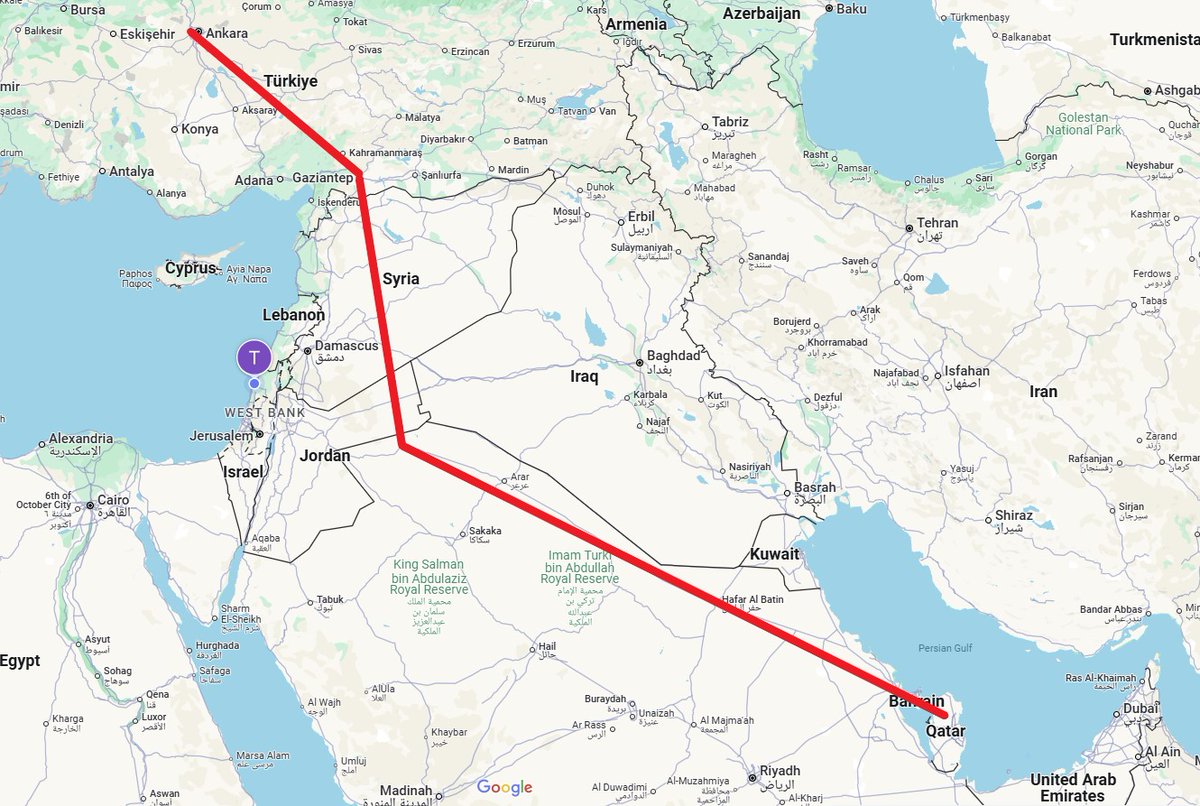
JUST IN: Gulf states consider new pipeline routes to bypass the Strait of Hormuz and keep energy exports flowing.
English
273
370
3.2K
171.2K
mogul
mogul@aryanmogul·
By Allah u have spoke the truth I ask Allah to bless the ppl of sham, guide them in all matters, forgive the, overlook them and grant them safety and peace. They have been in constant war for too long and warmongers have abused their ppl for too long. Ash Sham is the guide of the ummah
English
2
0
15
3.1K
Levantine Logic
Levantine Logic@TheAnalysisMan·
Levantine Logic@TheAnalysisMan

1/2 🧵 Yes, they're considering Syria 🇸🇾😏👌 Syria now stands before what I call the “4+1 Equation.” It is built on one central reality: every great regional crisis contains within it a hidden strategic opportunity. And in this moment, I believe that opportunity belongs to Syria. The instability surrounding the Strait of Hormuz has exposed a deeper truth: the Arab world, and indeed the global economy, cannot remain permanently hostage to a single vulnerable maritime chokepoint. Every serious state in the region should now be thinking not only in terms of reaction, but in terms of alternatives. Not just Plan A, but Plan B and Plan C. That is where Syria comes in. Syria’s geography is not merely a map feature. It is a dormant strategic asset. If approached correctly, Syria can transform from a war-ravaged frontier into a central corridor of oil, gas, ports, rail, trade, agriculture, and regional integration. This is not a fantasy of slogans. It is a framework of concrete projects. That is why I call it the 4+1 Equation. Project One: Reviving the Tapline corridor. The historic Tapline, established in the mid-20th century and later shut down, once represented a direct overland route for Gulf oil toward the Mediterranean. In today’s environment, its logic is even stronger than before. A rehabilitated and expanded oil corridor running from Saudi Arabia across Jordan into Syria, ending at Baniyas or another Syrian Mediterranean terminal, would create a strategic alternative to maritime chokepoint dependence. And not merely as a symbolic line, but potentially as a modern multi-line corridor capable of carrying substantial daily volumes. Such a route would not only serve Saudi and Gulf energy security, but would place Syria at the center of a new architecture of stability. Project Two: Rehabilitating the Kirkuk–Baniyas line. The Iraq–Syria energy corridor is another dormant strategic artery. The Kirkuk–Baniyas route, if politically enabled and technically rehabilitated, could again become one of the most important overland oil links in the region. A modernized system, possibly expanded with parallel capacity over time, could link Iraqi production directly to the Mediterranean through Syria. This would not only diversify Iraq’s export options, but create revenue, transit value, and strategic leverage for Syria while strengthening the logic of Arab economic interdependence. Project Three: The Qatari gas corridor through Syria. The gas question is no less important than oil. If regional conditions allow for a Qatari gas line running northward through Jordan and Syria toward Turkey and Europe, Syria would become a central node in one of the most consequential energy corridors of the 21st century. The significance here is not merely commercial. It is geopolitical. Whoever sits at the junction of gas transit, especially between the Gulf and Europe, becomes part of the strategic equation of continents, not just neighboring states. Project Four: Gas processing and export through Baniyas. The Syrian opportunity does not end at transit. Syria can also become a site of processing, storage, and re-export. If gas infrastructure at Baniyas were rehabilitated and modernized, Syria would not only be a passageway, but a platform. Gas arriving from the Gulf could move onward by land to Turkey and Europe, but it could also be handled through Syrian Mediterranean infrastructure, giving Syria a direct role in energy logistics rather than a passive one. These four projects together create a new strategic melody for Syria: oil, gas, and ports. Not slogans. Not emotionalism. Not borrowed rhetoric. Real assets. Real transit. Real leverage. Real state-building. But there is also the “plus one.” 👇 ⤵️

QME
0
0
3
795
The Spectator Index
The Spectator Index@spectatorindex·
BREAKING: Gulf states are considering new pipelines to avoid the Strait of Hormuz, according to Financial Times report.
English
267
673
5.1K
421.2K
Levantine Logic
Levantine Logic@TheAnalysisMan·
2/2 🧵 Project Five: The overland rail revolution. A high-speed rail and freight link between Syria and northern Saudi Arabia would represent far more than transportation. It would represent the physical reintegration of Syria into the Arab economic system. A modern rail line connecting Syria with the nearest major Saudi urban and industrial centers could move goods, agricultural output, industrial products, and people at entirely new speeds. Tourism would expand. Trade would deepen. Supply chains would shorten. Syria would become connected not only to Saudi Arabia, but to the wider India–Gulf–Europe commercial system now being envisioned across the region. In other words, Syria would no longer merely sit on the map. It would function within it. That is the essence of the 4+1 Equation: Tapline. Kirkuk–Baniyas. Qatari gas transit. Qatari gas through Baniyas. And strategic rail integration with Saudi Arabia and beyond. If realized, these projects would not benefit Syria alone. They would benefit the Gulf Cooperation Council states as well. They would diversify export routes, improve energy resilience, strengthen food security, create logistical redundancy, and reduce the strategic vulnerability of depending excessively on any single chokepoint. In a world of rising instability, strategic redundancy is no longer a luxury. It is a necessity. And for Syria, the implications are even greater. Transit revenues would support the national budget. Infrastructure reconstruction would accelerate. Employment would expand into the tens of thousands. Agricultural and industrial production would gain real export corridors. Refugee return would become more materially possible. And Syria would re-enter economic globalization not as a burden, but as a participant. This is how nations recover. Not by remaining trapped in the language of war. Not by waiting for charity. Not by romanticizing ruin. But by identifying the hard infrastructure of sovereignty and building it. What makes this vision particularly compelling is that it does not require utopian assumptions. These are not abstract dreams detached from reality. These are strategic infrastructure concepts that could, under the right political conditions, begin in practical phases and show real results over a three- to five-year horizon. Funding is also imaginable. Such a framework could attract participation from Gulf sovereign wealth funds and even European strategic investors. Saudi Arabia, Qatar, the UAE, and potentially long-horizon international infrastructure funds all have reason to care about stable alternative energy and trade routes. The cost of such projects, while substantial, is small compared to the scale of strategic value they would generate over time. This is why I say Syria’s role in the emerging Middle East can be profound. If Saudi Arabia’s Vision 2030 seeks to help turn the Middle East into a new center of global commerce, then Syria can and should become one of the region’s central connectors. Not through ideology, but through geography. Not through militias, but through infrastructure. Not through noise, but through value. The region needs serious integration, not theatrical slogans. It needs railways, not chants. Pipelines, not fantasies. Ports, not paralysis. Trade, not permanent collapse. This is the real path forward. The 4+1 Equation is not merely an economic proposal. It is a doctrine of national recovery: to make Syria a pillar of Arab integration, a corridor of global trade, a guarantor of energy flexibility, and a state that rises through utility rather than destruction. God willing, Syria can harvest the fruits of these projects before 2030. And if decision-makers in the region act with strategic seriousness, the foundations can be laid much sooner than many imagine. Peace be upon you.
GIF
English
0
2
4
746
Levantine Logic
Levantine Logic@TheAnalysisMan·
1/2 🧵 Yes, they're considering Syria 🇸🇾😏👌 Syria now stands before what I call the “4+1 Equation.” It is built on one central reality: every great regional crisis contains within it a hidden strategic opportunity. And in this moment, I believe that opportunity belongs to Syria. The instability surrounding the Strait of Hormuz has exposed a deeper truth: the Arab world, and indeed the global economy, cannot remain permanently hostage to a single vulnerable maritime chokepoint. Every serious state in the region should now be thinking not only in terms of reaction, but in terms of alternatives. Not just Plan A, but Plan B and Plan C. That is where Syria comes in. Syria’s geography is not merely a map feature. It is a dormant strategic asset. If approached correctly, Syria can transform from a war-ravaged frontier into a central corridor of oil, gas, ports, rail, trade, agriculture, and regional integration. This is not a fantasy of slogans. It is a framework of concrete projects. That is why I call it the 4+1 Equation. Project One: Reviving the Tapline corridor. The historic Tapline, established in the mid-20th century and later shut down, once represented a direct overland route for Gulf oil toward the Mediterranean. In today’s environment, its logic is even stronger than before. A rehabilitated and expanded oil corridor running from Saudi Arabia across Jordan into Syria, ending at Baniyas or another Syrian Mediterranean terminal, would create a strategic alternative to maritime chokepoint dependence. And not merely as a symbolic line, but potentially as a modern multi-line corridor capable of carrying substantial daily volumes. Such a route would not only serve Saudi and Gulf energy security, but would place Syria at the center of a new architecture of stability. Project Two: Rehabilitating the Kirkuk–Baniyas line. The Iraq–Syria energy corridor is another dormant strategic artery. The Kirkuk–Baniyas route, if politically enabled and technically rehabilitated, could again become one of the most important overland oil links in the region. A modernized system, possibly expanded with parallel capacity over time, could link Iraqi production directly to the Mediterranean through Syria. This would not only diversify Iraq’s export options, but create revenue, transit value, and strategic leverage for Syria while strengthening the logic of Arab economic interdependence. Project Three: The Qatari gas corridor through Syria. The gas question is no less important than oil. If regional conditions allow for a Qatari gas line running northward through Jordan and Syria toward Turkey and Europe, Syria would become a central node in one of the most consequential energy corridors of the 21st century. The significance here is not merely commercial. It is geopolitical. Whoever sits at the junction of gas transit, especially between the Gulf and Europe, becomes part of the strategic equation of continents, not just neighboring states. Project Four: Gas processing and export through Baniyas. The Syrian opportunity does not end at transit. Syria can also become a site of processing, storage, and re-export. If gas infrastructure at Baniyas were rehabilitated and modernized, Syria would not only be a passageway, but a platform. Gas arriving from the Gulf could move onward by land to Turkey and Europe, but it could also be handled through Syrian Mediterranean infrastructure, giving Syria a direct role in energy logistics rather than a passive one. These four projects together create a new strategic melody for Syria: oil, gas, and ports. Not slogans. Not emotionalism. Not borrowed rhetoric. Real assets. Real transit. Real leverage. Real state-building. But there is also the “plus one.” 👇 ⤵️
Levantine Logic tweet media
The Spectator Index@spectatorindex

BREAKING: Gulf states are considering new pipelines to avoid the Strait of Hormuz, according to Financial Times report.

English
3
3
26
4.9K