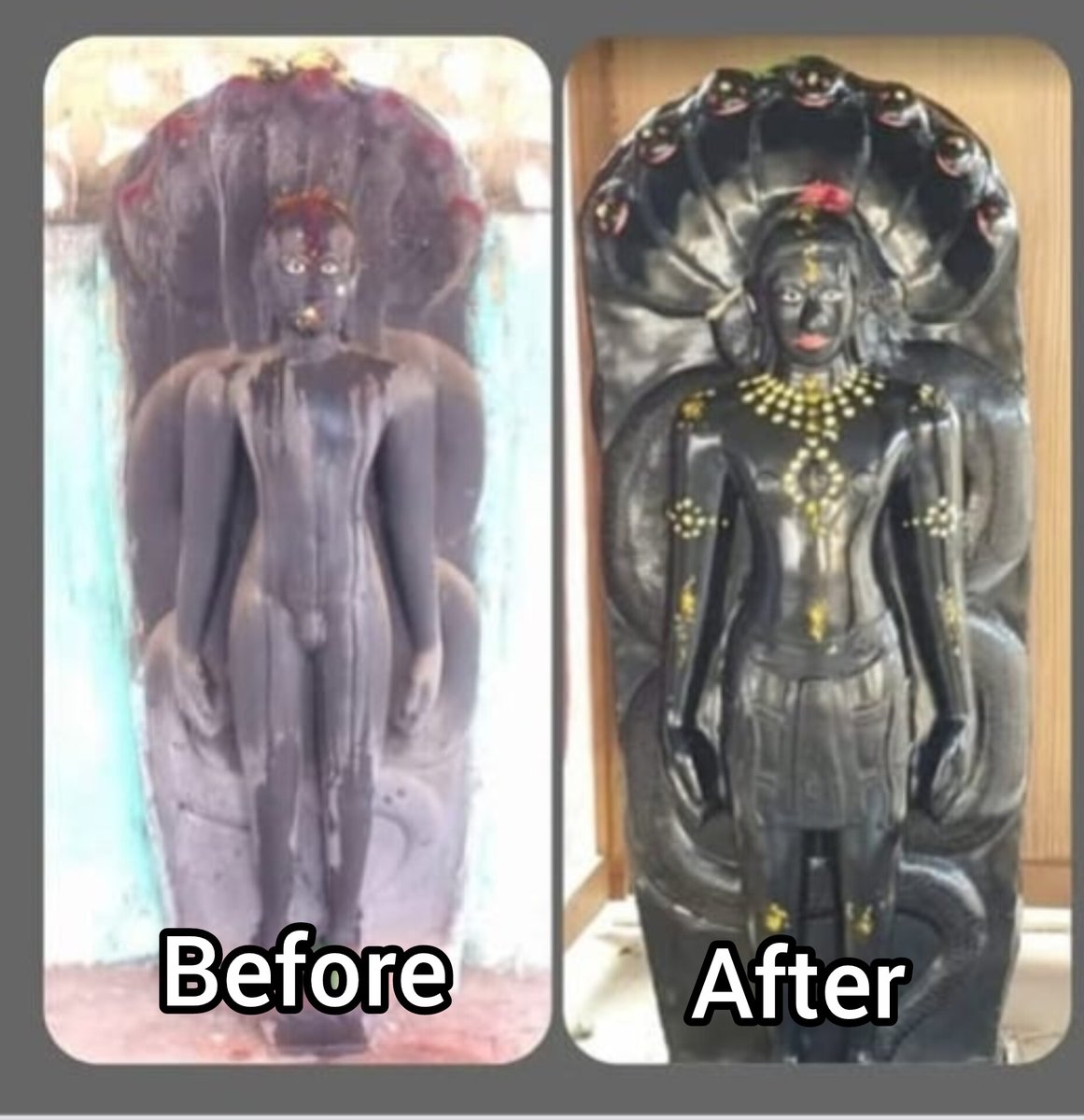
@JinDharmaChakra All 9 lines were never eternal. It gradually evolved.
English
Naman Jain | नमन जैन
2K posts
@ThisIsNJain
वंदे तद्गुण लब्धये (Vande Tadgun Labdhye)

Many asking me is this the complete namokara mantra. Simple answer is yes .This is what was taught to us every where and this what our parents and grand parents recited . “ಏಸೋ ಪಂಚ ನಮೊಕ್ಕಾರೋ ಸವ್ವ ಪಾವಪ್ಪಣಾಸಣೋ ಮಂಗಳಾಣಂಚ ಸವ್ವೇಸಿಂ ಪಡಮಂ ಹವೈ ಮಂಗಳಂ” — was added later and is not part of the most ancient core of the Navkar (Namokar) Mantra. I had never seen/heard this during my childhood in South India. The second part (Eso Pancha Namokaro...) first appears in a Śvetāmbara canonical text called the Mahānisiha-sutta, which is dated to around the 7th century CE. It was not present in the earliest known versions from the 1st–3rd centuries.and is not a mantra but just tells the benefit of chanting the mantra . In South India (Karnataka, Tamil Nadu, Andhra, etc.), the Jain community is predominantly Digambara. Many traditional Digambara families and temples recited only the five lines of namaskaras, without the later addition.


Yesterday, Nita Ambani visited the Kamakhya Temple Guwahati for darshan. She said that the animals and birds there, including goats and pigeons, will be taken to Vantara in Jamnagar. The goats will be taken there so they can live freely and safely.🙏



Thirukkural 4 directly describes a being who is free from desire/attachment (vēṇṭutal) and aversion/dislike (vēṇṭāmai). This is essentially the definition of Vītarāga (ವೀತರಾಗ) or Vitrag (வீதராகம்). This couplet is part of the opening invocation to God in Thirukkural. God is impartial, desireless, and beyond dualities. In Jainism, "Vitrag" or "Vitaraga" is a key term for a liberated soul (or a high-stage ascetic) who has completely overcome rāga (attachment/passion) and dveṣa (aversion).