Walid El-Sharoud

2.2K posts

Walid El-Sharoud

Walid El-Sharoud

@Walidws

Cell Biologist, University Professor, Editor of Science Progress

Aga, Dakahlia, EGYPT 가입일 Mart 2011
2K 팔로잉479 팔로워
Walid El-Sharoud 리트윗함
Rafeeque
Rafeeque@rafeequemavoor·
Hi Materials Researchers, Now you can create nice illustrations of materials in Blender easily. load CIF files into Blender in just one click. I built a Blender addon to fix something that has annoyed researchers for years when it comes to importing CIF fies in blender, That problem is gone. Added more ready to use presets for: Porous materials Lipid bilayer Nanoparticles Carbon nanotube Import 3D molecules from PubChem More coming soon.
English
8
42
247
18K
Walid El-Sharoud 리트윗함
Adib
Adib@adibvafa·
Proteins can now talk. Introducing BioReason-Pro, the first reasoning model for protein function. A thread🧵
English
50
257
1.6K
195.3K
Walid El-Sharoud 리트윗함
Patrick Hsu
Patrick Hsu@pdhsu·
Evo 2, our fully open-source biological foundation model trained on trillions of DNA tokens spanning the entire tree of life, is out in @Nature today We & the scientific community have done a lot with this @arcinstitute @nvidia model in the last year! 🧵👇
English
57
320
2K
243.8K
Walid El-Sharoud 리트윗함
Niko McCarty.
Niko McCarty.@NikoMcCarty·
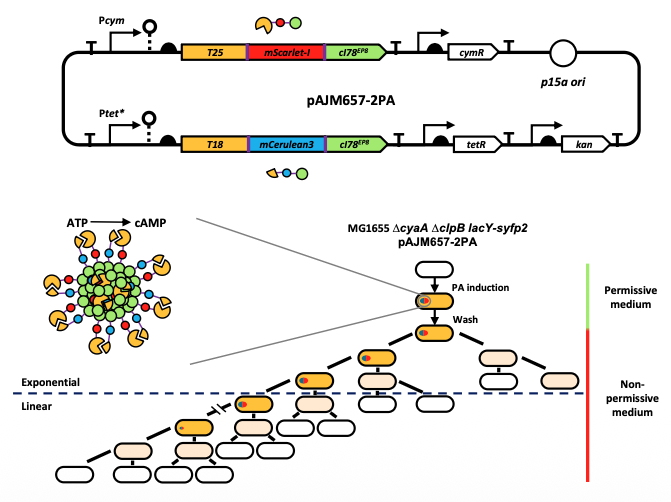
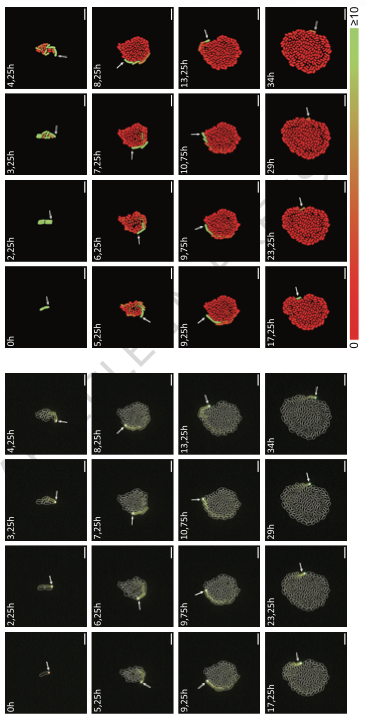
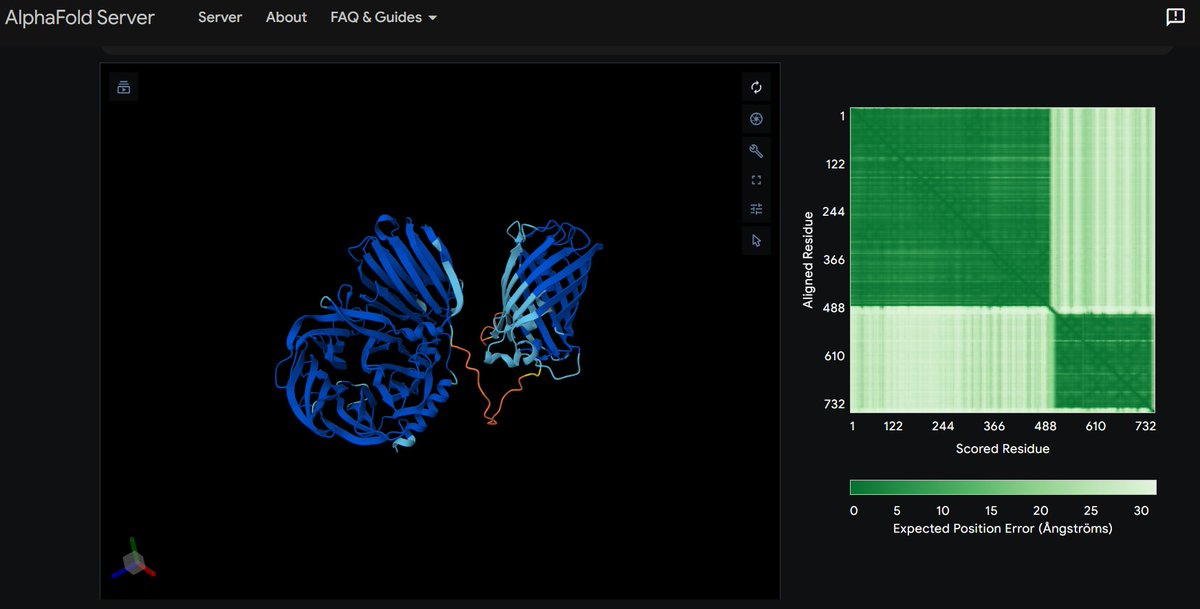
Cells grow exponentially. If a microbe divides every 20 minutes, and has ample nutrients, then it will yield a population of one billion cells in under 10 hours. Exponential growth works because cell divides into two, and this process repeats again and again for every organism in the population. As a population gets bigger, its growth rate becomes higher. But what if this didn’t have to be the case? What if, instead, we could engineer cells to grow *linearly*, such that the growth “curve” of an organism appeared as a straight line? Well, not only is this feasible, but there are basic elements of this idea in nature. One organism, called *Mycobacterium smegmatis*, grows in an asymmetrical fashion, where one daughter cell has a faster division speed than the other daughter cell, leading to a sort of “delayed” growth curve. Most microbes grow by elongating their entire cell body, but *M. smegmatis* only grows at one end. It makes proteins, called the elongation complex, which push and push on one tip of the cell, but not the other, leading the organism to grow asymmetrically. When the cell divides, the proteins which form the elongation complex are passed only one daughter cell. The other daughter gets nothing, and must build those proteins from scratch. The daughter which receives the elongation complex can begin growing and dividing immediately, while the other cell has a growth delay. In a theoretical scenario, if this second daughter was *not able* to biosynthesize its own elongation complex (even after a delay), then *M. smegmatis* would grow linearly, since each parent cell would give rise to only one child. For a new study, researchers in Belgium used a similar strategy to engineer cells that grow in a linear fashion. Their approach relies on a metabolite, called cAMP, which acts as a signaling molecule inside of cells. cAMP diffuses around, helping proteins to switch on various genes. Without cAMP, a cell becomes inert and slowly decays. Now, cAMP is made by an enzyme called adenylate cyclase. This enzyme grabs onto an ATP molecule, cleaves off two of its phosphate groups, and then cyclizes the molecule together to form the cAMP molecule. For this study, the researchers realized they could harness the “essential” nature of cAMP to make linearly dividing cells. First, they chopped up adenylate cyclase into two different pieces, called T18 and T25. When these two pieces collide, they form an active version of adenylate cyclase, capable of making cAMP. When the two pieces are separated, they remain inactive. Second, each half of the adenylate cyclase enzyme was encoded on a plasmid, along with a “sticky” peptide tag that forces the two bits of the protein to clump together. And finally, when these plasmids were inserted into *E. coli* cells, the microbes churned out T18 and T25. These protein pieces collided with each other and formed big clumps of adenylate cyclase. These enzymes — stuck in the “clump” — remained active and kept churning out cAMP. (The *E. coli* cells had a deleted copy of the natural adenylate cyclase gene, so the only way they can make cAMP is with the plasmid.) When these engineered cells divided, just one of the daughters could receive the clump! The other daughter cell would get nothing. And the result, of course, is that one daughter went on living while the other became static. The growth curve for these engineered microbes is a straight line, up and to the right. The “inert” daughter cells are still alive, and so technically the population (if you measure it with an OD reader) will look as if it’s growing in a linear fashion. But the population of “actively” dividing cells remains flat; a horizontal line. Now, you might naturally be wondering: Why would something like this be useful in the real world? In response, I’d admonish you and say: “Why does everything need to have utility? Why can’t you just appreciate the beauty of an elegant engineering solution?” But there *are* uses for this. For one, this might be useful for genetically-engineered microbes we deliver into the body as medicines. Perhaps there are situations where we don’t want to dose a human with living organisms that divide exponentially, and instead we’d like to tightly control the population so that the dose doesn’t go up or down. Another application is biocontainment. If we release a microbe into the wild (safely, of course), then we could harness asymmetrical cell division to act like a kill switch, or at least a bottleneck to microbial growth. If you have other ideas, I’d be keen to hear them! The paper is called "Engineering non-exponential proliferation in Escherichia coli using functionalized protein aggregates."
Niko McCarty. tweet mediaNiko McCarty. tweet media
English
4
30
164
12.4K
Walid El-Sharoud 리트윗함
Neville Sanjana
Neville Sanjana@nevillesanjana·
Delighted to share new work from our lab: CRISPR fusion proteins to boost PRECISE genome editing (TruEditors). We wondered what if we could “turn on” and test every gene in the human genome to accelerate protein design?
Neville Sanjana tweet media
English
10
44
249
37.1K
Walid El-Sharoud 리트윗함
Ming "Tommy" Tang
Ming "Tommy" Tang@tangming2005·
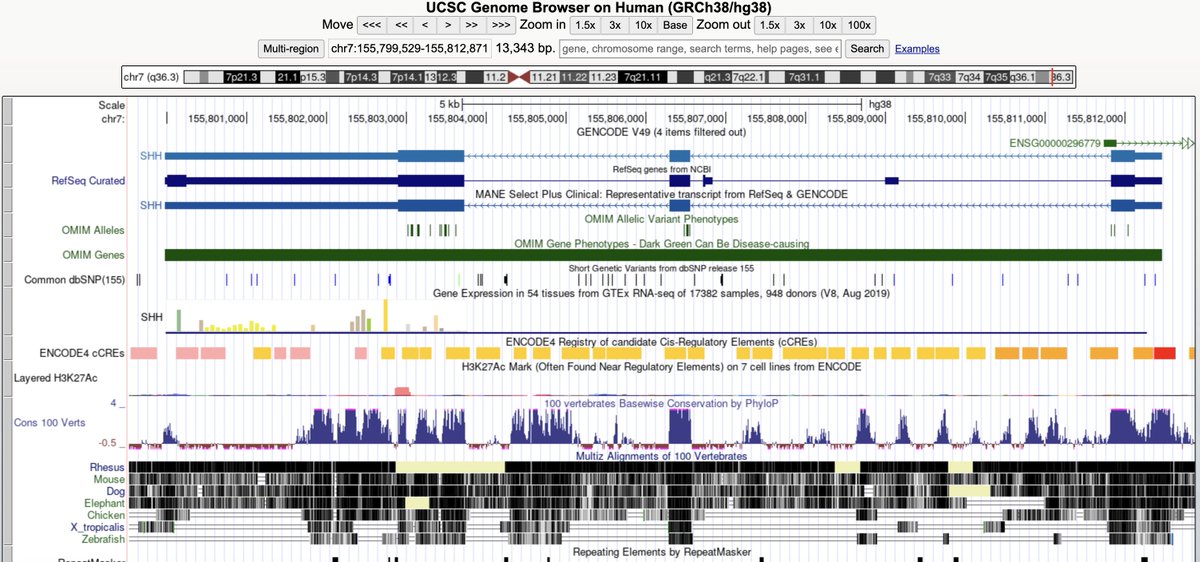
🧵 10 free bioinformatics tools you should know in 2026. These will save you time, money, and headaches.
Ming "Tommy" Tang tweet media
English
5
168
714
56K
Walid El-Sharoud
Walid El-Sharoud@Walidws·
@SynBio1 Hey!! I sent you a couple of DMs and an email on your previous post on the use of AI in biology but got no reply. Are you no longer interested in this stuff??
English
0
0
0
28
Jake Wintermute 🧬/acc
Jake Wintermute 🧬/acc@SynBio1·
Lately I’ve been getting into the podcast genre where two middle aged white women read a wikipedia article about a murder and I wonder if it would work except instead of murder it’s biotech and instead of two middle aged white women it’s me
English
5
0
19
1.1K
Walid El-Sharoud 리트윗함
Sebastian S. Cocioba🪄🌷
Sebastian S. Cocioba🪄🌷@ATinyGreenCell·
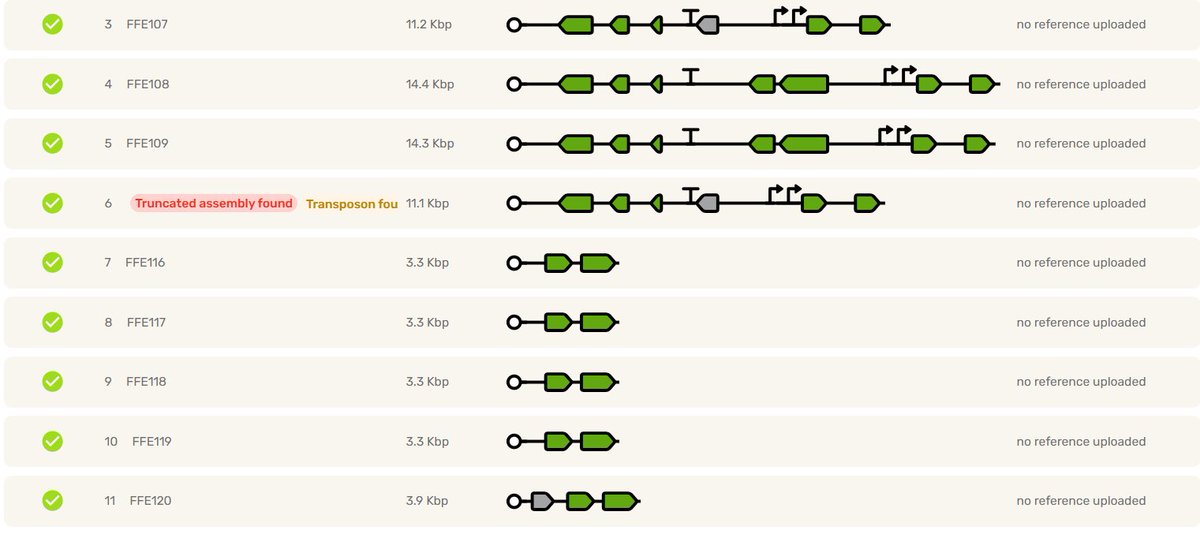
Loving the new @plasmidsaurus feature where a transposon is detected at the dashboard level of a results readout. So cool to see my suggestion turn into actual tooling. Community driven feedback is the best way forward! Thanks guys for the consideration and effort!
Sebastian S. Cocioba🪄🌷 tweet media
English
0
8
70
3.3K
Walid El-Sharoud 리트윗함
Tom Ellis
Tom Ellis@ProfTomEllis·
@owl_posting I guess at large industrial food cos. the answer is yes - especially for perfecting recipes and inventing new products, but probably still with a considerable amount of humans involved. But local bakers and restaurants won’t be automated for ages. like academic labs - artisans.
English
1
2
7
676
Walid El-Sharoud 리트윗함
Harshi Peiris, Ph.D.
Harshi Peiris, Ph.D.@Neuroscope_mp·
BREAKING: For the first time in 100+ years, Alzheimer's may not be permanent Scientists just reversed advanced Alzheimer's in mice by restoring brain energy balance, eliminating both plaques AND cognitive decline The drug worked in two different animal models, suggesting "this could translate to humans". sciencedaily.com/releases/2025/… cell.com/cell-reports-m… Game-changing 🧠
English
80
1.9K
7.1K
242.6K
Walid El-Sharoud 리트윗함
Alireza Ghanbarpour
Alireza Ghanbarpour@AGhanbarpour·
We had a great time collaborating with Tong Zhang and Mike Laub and on our recent study, now published in @Nature, visualizing a bacterial innate immune mechanism that protects populations from phage infection. nature.com/articles/s4158…
English
4
26
126
10.3K
Walid El-Sharoud 리트윗함
Sebastian S. Cocioba🪄🌷
Sebastian S. Cocioba🪄🌷@ATinyGreenCell·
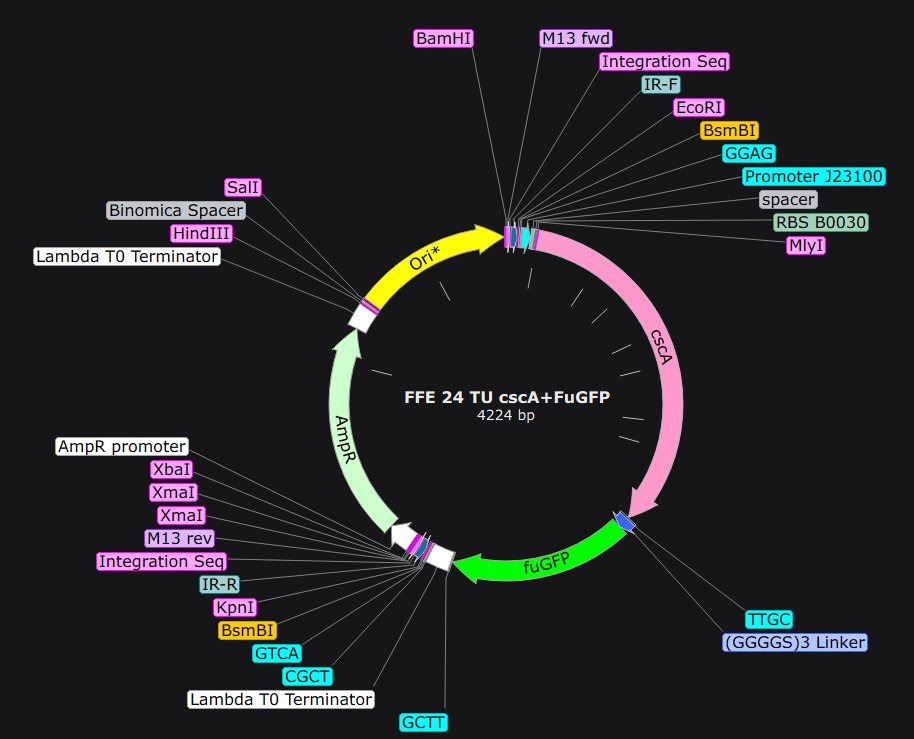
I've been tinkering away at my sucrose selection project afterhours and will be collaborating with @KuhnboBio's high school classes to validate N and C terminal fusions of cscA invertase activity. They'll make a figshare figure at the end and have a DOI attached to their work.
Sebastian S. Cocioba🪄🌷 tweet mediaSebastian S. Cocioba🪄🌷 tweet mediaSebastian S. Cocioba🪄🌷 tweet media
English
4
4
46
1.6K