고정된 트윗
Sanford Arbogast
9.6K posts

Sanford Arbogast
@arbogasts
Computer faculty @TMHS, #EdTech, #onlinelearning and #comics #Statistics thinking will one day be as necessary ... as the ability to read and write.

Tewksbury, MA 가입일 Mart 2007
1.7K 팔로잉550 팔로워

@RhodeUniversity 2026 College of Arts and Science Commencement Ceremony
youtube.com/live/W0kgERmyw… via @YouTube

YouTube
English


@CulpritFay @douglassmackey "And I still voted for him" is written under the brim
English

The Swalwell girl CONSENTED to sending her married boss nude pics and blowing him in a parking lot, which caused a stain on her conscience. She made up a thing about how she couldn’t consent because there was a “power imbalance” to assuage her troubled conscience, telling herself it was impossible for her to consent.
She didn’t repent because she continued getting wasted with Swalwell, a married man (and she had a boyfriend).
A lot of feminism is just about women lashing out to soothe their own guilty consciences and make up stories about how they couldn’t consent. Instead of taking responsibility for their actions.
(And yes, Swalwell was clearly harassing women and sending them dick pics and cheating on his wife, so he should rot. I’m not excusing Swalwell.)
English

@machtspass @EterniaOutlaw @ihtesham2005 Jokes on you, Amazon cancelled the season after only one episode
English

@EterniaOutlaw @ihtesham2005 {To be continued…} - Tune in next week, when @EterniaOutlaw reveals the next, exciting details…..
English

A Soviet psychologist walked into a café in 1927 and watched a waiter do something impossible.
He remembered every open order at every table. Perfectly. Without notes. Without effort.
Then a table paid their bill. She asked him to repeat the order.
He couldn't remember a single item.
She spent the next two years figuring out why. What she found is now the operating system underneath every platform fighting for your attention.
Her name was Bluma Zeigarnik, and she was a graduate student at the time, sitting with her professor Kurt Lewin, watching the waiters work the room. What caught her attention was something so ordinary that it had been happening in restaurants for centuries without anyone asking why.
The waiters could remember every open order with perfect accuracy. Table four wanted the schnitzel with no sauce. Table seven had changed their wine twice. Table twelve owed for three coffees and a dessert. Every detail, held without effort, without notes, without any visible system at all.
But the moment a table paid their bill, the information vanished. Completely. Lewin tested it on the spot. He called a waiter back minutes after a table had settled up and asked him to recite the order. The waiter could not do it. Not partially. Not approximately. The information was simply gone.
Zeigarnik went back to her lab and spent the next two years turning that observation into one of the most replicated findings in the history of psychology.
Here is what she proved, and why it changes how you think about attention, memory, and almost every piece of media you have ever consumed.
She gave participants a series of tasks. Some tasks they were allowed to finish. Others were interrupted before completion. Then she tested recall across both groups.
The unfinished tasks were remembered at nearly twice the rate of the completed ones.
Not slightly better. Nearly twice. The brain was holding the incomplete work in a state of active tension, returning to it, keeping it warm, refusing to file it away. The finished tasks were closed, archived, released. The unfinished ones were still running.
She called it the resumption goal. When the brain commits to a task and cannot complete it, it opens a file that stays open until resolution arrives. That open file consumes a portion of your cognitive bandwidth whether you are thinking about it consciously or not. It surfaces in idle moments. It pulls at the edge of your attention during other work. It is the thing you find yourself thinking about in the shower when you were not trying to think about anything at all.
This is not a flaw in human cognition. It is a feature. The brain evolved to finish things. An open loop is a signal that something important is unresolved. Keeping that signal active increases the probability that you will return to it and complete it. In an environment where most tasks had real survival stakes, this was an extraordinarily useful mechanism.
In the modern world, it is the most exploited vulnerability in human attention.
Netflix did not invent the cliffhanger. But it industrialized it in a way no medium before it ever had. When a show ends on an unresolved question, it does not just create curiosity. It opens a file in your brain that stays active until the next episode closes it. The autoplay countdown that begins at 15 seconds is not a convenience feature. It is a precise calculation about how long the average person can tolerate an open loop before the discomfort of not knowing overrides every other intention they had for the evening. One more episode is not a choice. It is your brain doing exactly what it was designed to do: return to what is unfinished.
The writers who built Lost, Breaking Bad, and Succession understood this intuitively without ever reading a psychology paper. Every episode ended on an open question. Every season finale answered three things and opened five more. The entire architecture of prestige television is a Zeigarnik machine running at industrial scale.
But television is not where this gets dangerous.
Every notification on your phone is an open loop. Every unread email is an open loop. Every task you wrote on a list and have not yet crossed off is an open loop. Each one is consuming a small but real portion of your available attention, pulling fractionally at your focus, degrading your capacity to be fully present in whatever you are actually doing right now. TikTok's algorithm does not just serve you content you like. It serves you content that ends one loop and immediately opens another, keeping the resumption system permanently activated so the cost of stopping always feels higher than the cost of continuing.
The research on this accumulation effect is striking. Psychologists studying cognitive load have found that unfinished tasks do not sit passively in memory. They actively interrupt. They surface at the wrong moments. They are the reason you are reading something and suddenly remember an email you forgot to send. The brain is not malfunctioning. It is running its resumption system exactly as designed. It is just running it across forty open loops simultaneously, in an environment that generates new ones faster than any human nervous system was built to process.
The most important practical implication Zeigarnik's research produced is one that most people use backwards.
David Allen built his entire Getting Things Done system on the insight that the only way to close a cognitive open loop is to either complete the task or make a trusted commitment to complete it later. Writing something down in a system you actually trust has the same effect on the brain as finishing it. The file closes. The bandwidth is released. This is why writing a task down feels like relief even before you have done anything about it. You have not solved the problem. You have simply told your brain that the loop is registered and will be returned to, which is enough for the resumption system to stand down.
The inverse is equally true and far more destructive. Every task that lives only in your head, unwritten and unscheduled, is an open loop burning cognitive resources around the clock. The mental cost is not proportional to the size of the task. A tiny nagging obligation consumes the same active tension as a major project. Your brain does not discriminate by importance. It discriminates by completion.
Zeigarnik published her findings in 1927. The paper sat in academic literature for decades before anyone outside psychology paid attention to it.
Then television got good. Then the smartphone arrived. Then the entire attention economy was engineered, largely by people who understood intuitively what she had proven scientifically: an open loop is the most powerful hook available to anyone who wants to hold human attention.
Netflix knew it. Instagram knew it. Every designer who ever made a notification badge red instead of grey knew it.
The café in Vienna is long gone.
The mechanism she discovered there is now the operating system underneath every platform fighting for your time.
Every "to be continued."
Every unread notification.
Every thread that ends with "part 2 tomorrow."
All of it is the same waiter, the same unpaid bill, the same brain refusing to let go of what it has not yet finished.
Zeigarnik noticed it over coffee in 1927.
A century later, it is the most valuable insight in the history of media.
And nobody taught it to you in school.

English

@mark_doty @islantstudio Well, is it a waste or not? Maybe you can post a link or something to show where it is a waste of money.
English

Good morning to everyone in Massachusetts who is questioning the priority of where our tax dollars are going.
Recently, Maura Healey was out speaking at a tourism conference promoting the upcoming World Cup, while also announcing $10 million in grants for watch parties and celebrations across 25 communities.
At the same time, a lot of residents are still dealing with high energy bills, ongoing concerns about state spending, and questions about how decisions are being made on Beacon Hill
It’s moments like this that get people asking what should come first. Big events and celebrations or addressing the everyday costs and issues people are dealing with right now.
There’s no shortage of challenges facing Massachusetts, and how resources are prioritized is something more and more people are paying attention to.

English

@PEKEANJE @islantstudio Not block the gas lines from Canada.
Stop giving money to broken wind turbines
Build/reopen nuclear power plants
English

@islantstudio How is she going to lower our energy bills? What would you do?
English

@REMASCULATE My mother going in to pay her weekly layaway payment on my Christmas gift
English

@BuzzPatterson My reaction is the same as when they say Michelle Obama is the classiest of all Fist Lady’s… 🤦🏻♀️🤦🏻♀️ nope, nope, and oh yea, nope!
English

@CWag3636 @ThrillaRilla369 Obviously, he smashed two and kept the one he lasted longer with
English

@ThrillaRilla369 Do we want to know how you picked the girlfriend?
English

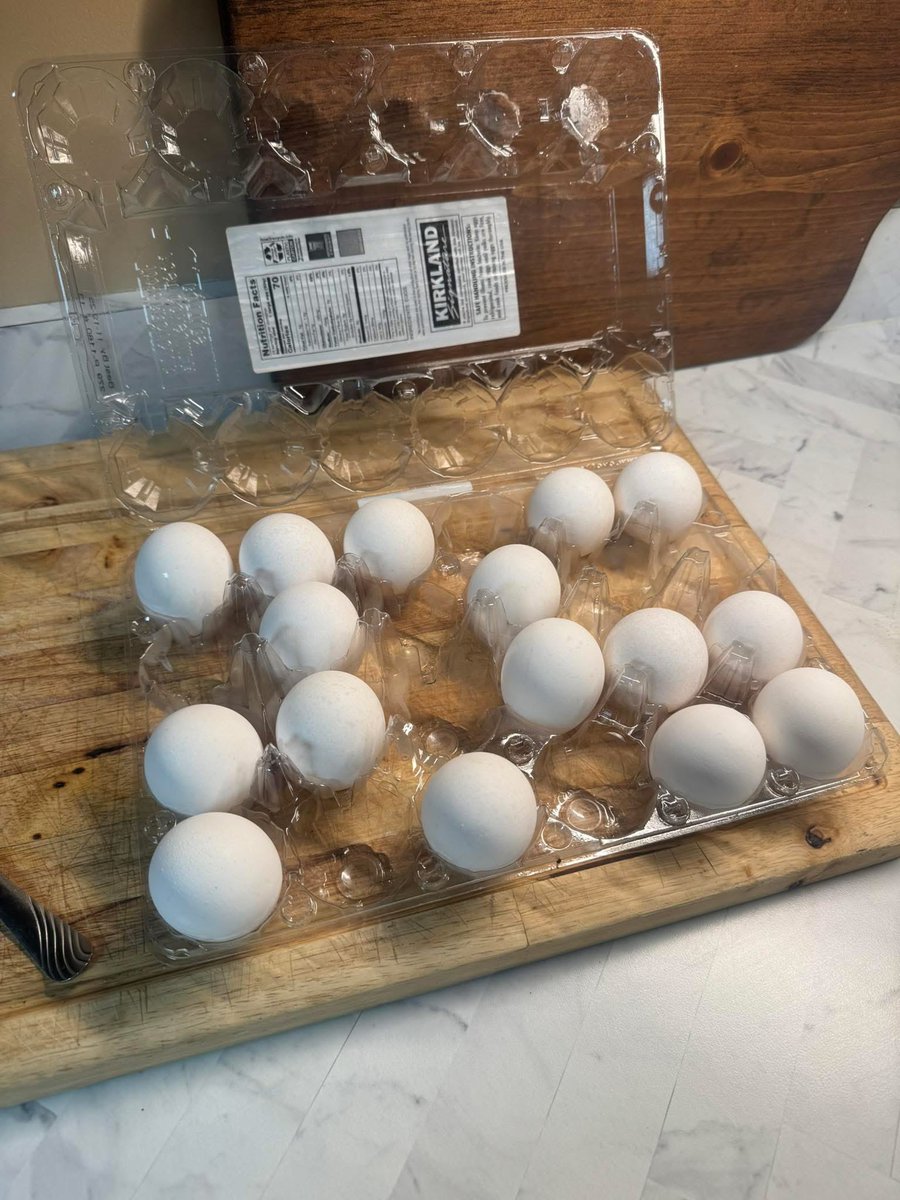
My girlfriend got on to me the other day because she doesn’t understand why I can’t just pick eggs out of the carton like a “normal” person. She’s standing there watching me and says, “Why can’t you just go row by row like everyone else?”
I said, “Because no egg should ever know when its time is coming.”
She stared at me for a second, shook her head, and said, “You’re a psycho,” then walked off.
Little does she know…I’ve got a whole tournament system going on. I take two eggs, tap them together, and whichever one doesn’t crack moves on to the next round.
Only the strongest survive. 🥚 💪 😂

English

@ThrillaRilla369 I used to do the same with M&Ms. Lay them down with the letters up. Sort them by color and make armies of equal size (Can't have greens fighting greens). Push the armies together and eat the dead.
What sucked for the M&Ms is that even the victors were eaten, too.
English

Oscars have become unwatchable
Jimmy Failla@jimmyfailla
If the GODFATHER were made today it would NOT be eligible for an Oscar unless he transitioned to the Godmother and made someone an offer they couldn’t HEAR. You could still leave the gun but you couldn’t take the cannoli unless the baker supports gay marriage. RIP Hollywood.
English

@GnosisWolf Move the house to Australia where everything is upside down
English

@MrPitbull07 How exciting! Here's a coupon you can take with you next time you need to prove you actually got an oil change: bit.ly/4itW0DQ :-)
English

My wife and I were talking about what we’d do if we ever got a house with a bigger backyard.
She asked, “If we had the space, what kind of dog would you want to get?”
I said, without missing a beat, “A three-legged wirehaired pointing griffon named Barnaby who is afraid of linoleum flooring.”
She put down her coffee mug and stared at me. “A three-legged pointing griffon? Named Barnaby?”
“I just think it’s a noble breed,” I said defensively.
She opened her laptop and went straight to the county animal shelter website.
Three clicks later, she turned the screen around. “Is this Barnaby?”
There he was. Missing a back left leg. Bio said: “Sweet boy, hates shiny floors.”
I started sweating.
“Did you go visit this dog?” she asked, crossing her arms.
Long pause.
“…Maybe once. Just to see if he liked string cheese.”
“When did you do that?”
“Last Saturday when I told you I was getting the oil changed.”
We are picking Barnaby up on Thursday, but I now have to provide a printed receipt every time I take the car to Jiffy Lube.
English

@AmericanMadeDog @ChrisMartzWX When the solar companies call I ask them if they come clear the snow of my roof for free
English

@ChrisMartzWX Or to put them where weather can randomly destroy them and create a giant hazardous waste dump. Or where it's cloudy. Or where it snows a fair amount.
Solar should not be industrial. It should be part of small, decentralized networks and not be base load power for anyone.
English

I am not entirely against solar power.
It can be useful, but it only makes sense to install it on roofs in sunnier climates or to shade parking lots.
There is absolutely zero reason to knock down tens of thousands of acres of trees to put up a solar farm that would produce only a fraction of the energy that an existing natural gas or new nuclear power plant could occupying only a few hundred acres.
English

@RiderWriterSW @Old_SchoolEddie My friend would tape each show off the radio and we would listen to that in his car all week long
English

@Old_SchoolEddie Sunday nights on WFBQ in Indianapolis. The doctor was IN.
English