Sawyer McG

123 posts

Sawyer McG

Sawyer McG

@bluesewingcrane

가입일 Temmuz 2022
392 팔로잉38 팔로워
Sawyer McG 리트윗함
Ariana Jasmine
Ariana Jasmine@arianajasmine__·
In all of my years covering Middle East war and news, I have never seen an escalation as catastrophic as what happened today. This is really bad. And I don’t think Americans are truly understanding how fast this is escalating into a regional WW3.
English
0
1.8K
13.2K
1.2M
Sawyer McG 리트윗함
Arnaud Bertrand
Arnaud Bertrand@RnaudBertrand·
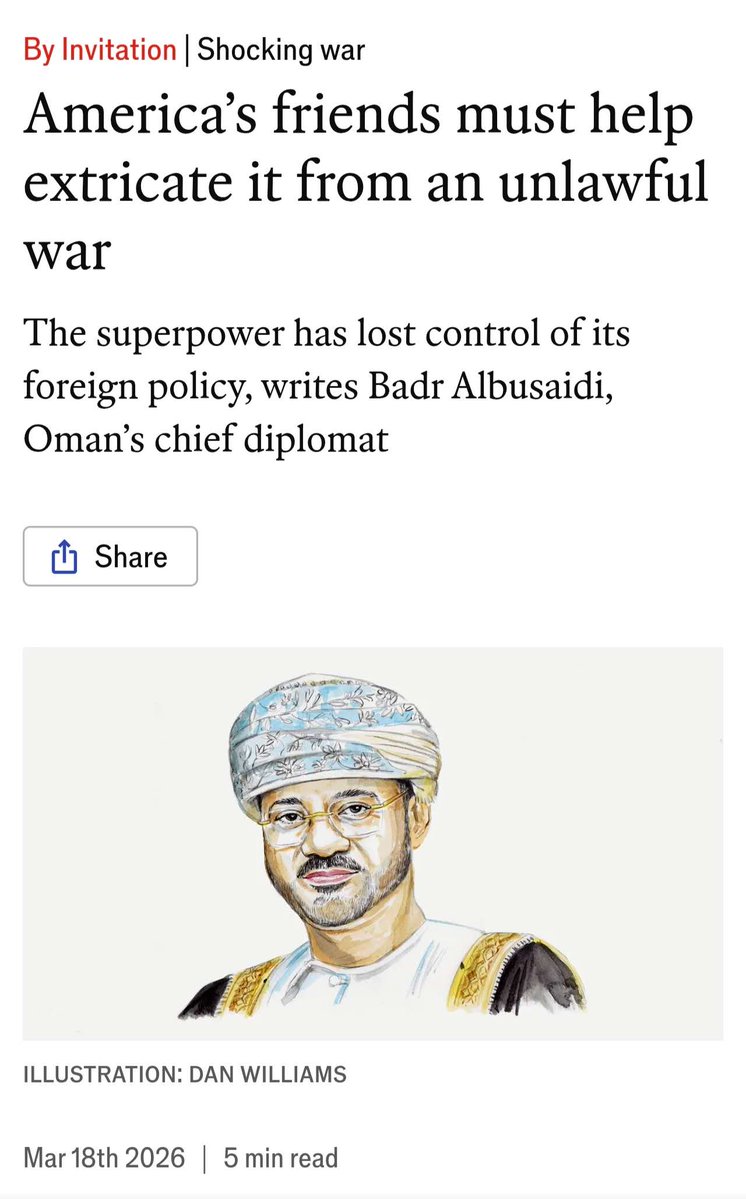
This is probably the most important article of the month: an op-ed by Oman's Foreign Minister, who mediated the talks between the U.S. and Iran, in which he writes that the U.S. "has lost control of its foreign policy" to Israel. He repeats that a deal was possible as an outcome of the talks (something confirmed by the UK's National Security Advisor, who also attended: x.com/i/status/20341…) and that the military strike by the U.S. and Israel was "a shock." Interestingly, given he is one of Iran's neighbors and given that Oman has been struck multiple times by Iran since the war began (en.wikipedia.org/wiki/2026_Iran…), he writes that "Iran’s retaliation against what it claims are American targets on the territory of its neighbours was an inevitable result" of the U.S.-Israeli attack. He describes it as "probably the only rational option available to the Iranian leadership." He says the war "endangers" the region's entire "economic model in which global sport, tourism, aviation and technology were to play an important role." He adds that "if this had not been anticipated by the architects of this war, that was surely a grave miscalculation." But, he adds, the "greatest miscalculation" of all for the U.S. "was allowing itself to be drawn into this war in the first place." In his view this was the doing of "Israel’s leadership" who "persuaded America that Iran had been so weakened by sanctions, internal divisions and the American-Israeli bombings of its nuclear sites last June, that an unconditional surrender would swiftly follow the initial assault and the assassination of the supreme leader." Obviously, this proved completely wrong, and the U.S. is now in a quagmire. He says that, given this, "America’s friends have a responsibility to tell the truth," which is that "there are two parties to this war who have nothing to gain from it," namely "Iran and America." He says that all of the U.S. interests in the region (end to nuclear proliferation, secure energy supply chains, investment opportunities) are "best achieved with Iran at peace." As he writes, "this is an uncomfortable truth to tell, because it involves indicating the extent to which America has lost control of its own foreign policy. But it must be told." He then proposes a couple of paths to get back to the negotiating table, although he recognizes how difficult it would be for Iran "to return to dialogue with an administration that twice switched abruptly from talks to bombing and assassination." That's perhaps the most profound damage Trump did during this entire episode: the complete discrediting of diplomacy. If Iran was taught anything, it is: don't negotiate with the U.S., it's a trap that will literally kill you. The great irony of the man who sold himself as a dealmaker is that he taught the world one thing: don't make deals with my country. Link to the article: economist.com/by-invitation/…
Arnaud Bertrand tweet media
English
295
8K
18.4K
1.1M
Sawyer McG 리트윗함
Malcolm Nance
Malcolm Nance@MalcolmNance·
Excellent Analysis. Every word is correct.
Ilan Goldenberg@ilangoldenberg

Three weeks into the war with Iran, a number of observations as someone who spent years war-gaming this scenario. 1. The U.S. and Israel may have produced regime transition in the worst possible way. Ali Khamenei was 86 and had survived multiple bouts of prostate cancer. His death in the coming years would likely have triggered a real internal reckoning in Iran, potentially opening the door to somewhat more pragmatic leadership, especially after the protests and crackdown last month. Instead, the regime made its most consequential decision under existential external threat giving the hardliners a clear upperhand. Now we appear to have a successor who is 30 years younger, deeply tied to the IRGC, and radicalized by the war itself – including the killing of family members. Disastrous. 2. About seven years ago at CNAS, I helped convene a group of security, energy, and economic experts to walk through scenarios for a U.S.--Iran war and the implications for global oil prices. What we’re seeing now was considered one of the least likely but worst outcomes. The modeling assumed the Strait of Hormuz could close for 4–10 weeks, with 1–3 years required to restore oil production once you factored in infrastructure damage. Prices could spike from around $65 to $175–$200 per barrel, before eventually settling in the $80–$100 range a year later in a new normal. 3. One surprising development: Iran is still moving oil through the Strait of Hormuz while disrupting everyone else. In most war games I participated in, we assumed Iran couldn’t close the Strait and still use it themselves. That would have made the move extremely self-defeating. But Iran appears capable of harassing global shipping while still pushing some of its own exports through. That changes the calculus. 4. The U.S. now finds itself in the naval and air equivalent of the dynamic we faced in Iraq and Afghanistan. It’s a recipe for a quagmire where we win every battle and lose the war. We have overwhelming military dominance and are exacting a tremendous cost. But Iran doesn’t need to win battles. They just need occasional successes. A small boat hitting a tanker. A drone slipping through defenses in the Gulf. A strike on a hotel or oil facility. Each incident creates insecurity and drives costs up while remind everyone that the regime is surviving and fighting. 5. The deeper problem is that U.S. objectives were set far too high. Once “regime change” becomes the implicit or explicit goal, the bar for American success becomes enormous. Iran’s bar is simple: survive and keep causing disruption. 6. The options for ending this war now are all bad. You can try to secure the entire Gulf and Middle East indefinitely – extremely expensive and maybe impossible. You can invade Iran and replace the regime, but nobody is seriously going to do that. Costs are astronomical. You can try to destabilize the regime by supporting separatist groups. It probably won’t work and if it does you’ll most likely spark a civil war producing years of bloody chaos the U.S. will get blamed for. None of these are good outcomes. 7. The other escalatory options being discussed are taking the nuclear material out of Esfahan or taking Kargh Island. Esfahan is not really workable. Huge risk. You’d have been on the ground for a LONG time to safely dig in and get the nuclear material out in the middle of the country giving Iran time to reinforce from all over and over run the American position. 8. Kharg Island can be appealing to Trump. He’d love to take Iran’s ability to export oil off the map and try to coerce them to end the war. It’s much easier because it’s not in the middle of IRan. But it’s still a potentially costly ground operation. And again. Again, the Iranian government only has to survive to win and they can probably do that even without Kargh. 9. The least bad option is the classic diplomatic off-ramp. The U.S. declares that Iran’s military capabilities have been significantly degraded, which is how the Pentagon always saw the purpose of the war. Iran declares victory for surviving and demonstrating it can still threaten regional actors. It would feel unsatisfying. But this is the inevitable outcome anyway. Better to stop now than after five or ten more years of escalating costs. Remember in Afghanistan we turned down a deal very early in the war with the Taliban that looked amazing 20 years later. Don’t need to repeat that kind of mistake. 10. The U.S. and Israel are not perfectly aligned here. Trump just needs a limited win and would see long-term instability as a negative whereas for Netanyahu a weak unstable Iran that bogs the U.S. down in the MIddle East is a fine outcome. If President Trump decided he wanted Israel to stop, he likely has the leverage to push it in that direction just as he pressured Netanyahu to take a deal last fall on Gaza. 11. When this is over, the Gulf states will have to rethink their entire security strategy. They are stuck in the absolute worst place. They didn’t start this war and didn’t want it and now they are taking with some of the worst consequences. Neither doubling down with the U.S. and Israel nor placating the Iranians seems overwhelmingly appealing. 12. One clear geopolitical winner so far: Russia. Oil prices are rising. Sanctions are coming off. Western attention and military resources are shifting away from Ukraine. From Moscow’s perspective, this war is a win win win. 13. At some point China may have a role to play here. It is the world’s largest oil importer, and much of that supply comes from the Middle East. Yes they are still getting oil from Iran. But they also buy from the rest of the Middle East, and a prolonged disruption in the Gulf hits Beijing hard. That gives China a real incentive to help push toward an end to the conflict.

English
31
293
1.4K
237.7K
Sawyer McG 리트윗함
Isaac Saul
Isaac Saul@Ike_Saul·
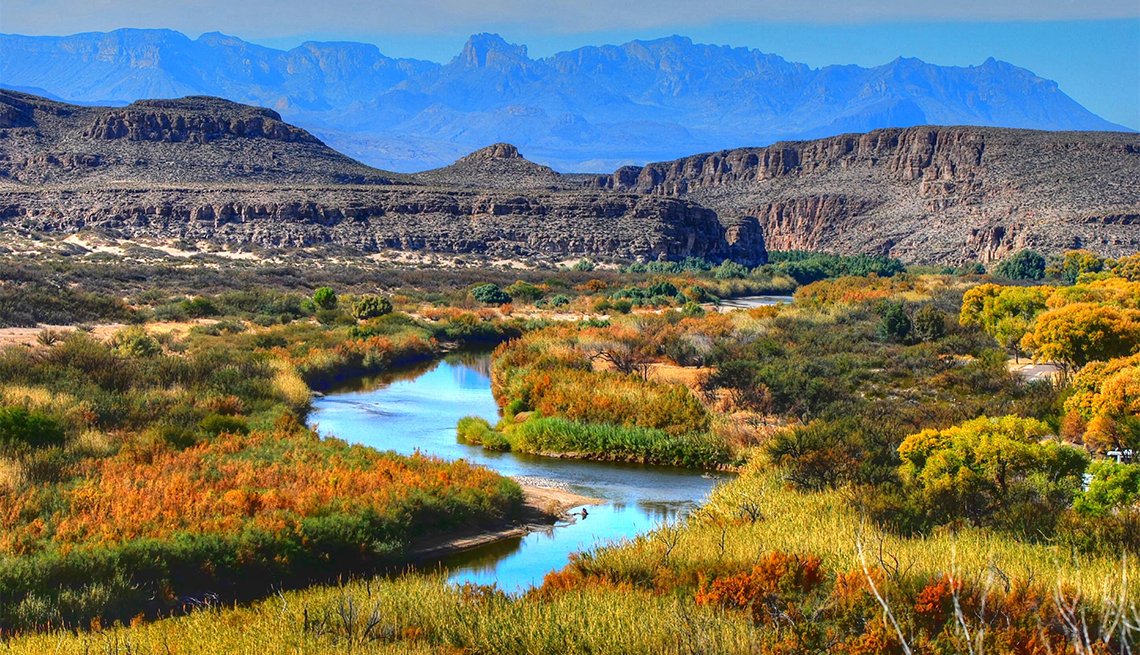
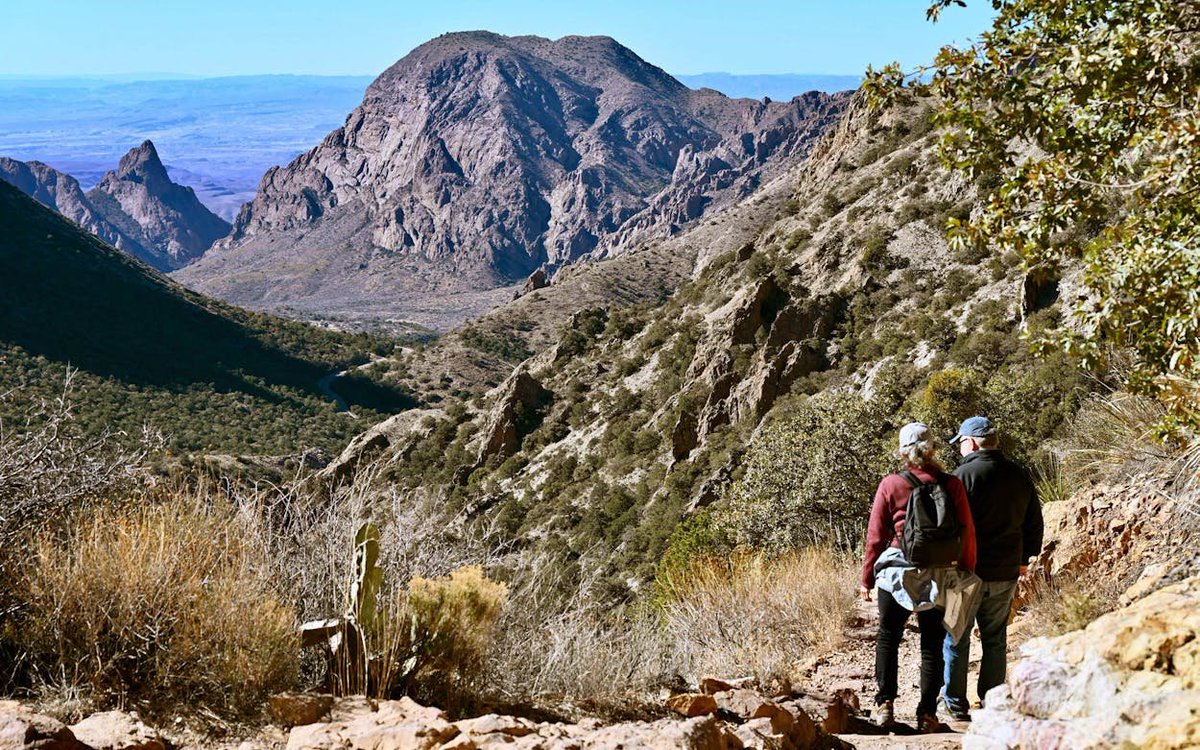
With all eyes focused on Iran, Trump and DHS are pushing forward on border wall construction through Big Bend National Park. They will hand the Rio Grande to Mexico, destroy thousands of jobs, and ruin the last remaining wild West, all for less than 1% of all border crossings:
Isaac Saul tweet mediaIsaac Saul tweet mediaIsaac Saul tweet media
English
115
2.3K
4.8K
254.4K
Sawyer McG 리트윗함
Timothy Snyder
Timothy Snyder@TimothyDSnyder·
If we made the green energy transition this war would be unthinkable and these authoritarians wouldn’t be in power — not in the US, not in Iran, not in Saudi Arabia, not in Russia. Hydrocarbons are killing our freedom and just plain killing us.
English
298
2.9K
9.4K
165.5K
Sawyer McG 리트윗함
Vali Nasr
Vali Nasr@vali_nasr·
I write in @FT that Iran is playing the long game. In war, geography matters as much as technology. Iran commands the entire northern shore of the Gulf, looming large over energy fields on its southern shore and all that passes through its waters. Its Houthi allies are perched at the entrance to the Red Sea and along the passage to the Suez Canal; Iran is thus perfectly positioned to squeeze the global economy from both sides of the Arabian Peninsula. Those in command of Iran today are veterans of asymmetric wars in Iraq and Syria. They are now applying the same strategy to fighting the US on the battlefield of the global economy. Drones, short-range missiles and mines setting tankers and ports on fire can have the same effect IEDs had in Iraq, only with greater impact — disrupting global supply chains and sending oil prices higher. Iran could sustain its counteroffensive more easily and for far longer. Furthermore, a ceasefire alone will not lift the shadow of risk that Iran has imposed over the Gulf, which is now experiencing its nightmare scenario. That is why Iranian leaders are saying they will not accept a ceasefire until Washington fully grasps the global economic cost of waging this war. Businesses, investors and tourists may not return to the Gulf states if they assume that war could resume again. Unless the US is prepared to invade Iran to remove the Islamic republic’s leaders and then stay there to ensure stability and security, confidence in the Gulf will only return if the US and Iran arrive at a durable ceasefire. Iran says it will only accept a ceasefire with international guarantees for its sovereignty, which would probably mean a direct role for Russia and China. It may also demand compensation for war damages and a verifiable ceasefire in Lebanon. The US would then have to agree to some form of the nuclear deal it left on the table in Geneva in February and commit to lifting sanctions. Iran’s leaders entered this war with the goal of ensuring it will be the last one. Either it breaks them or radically changes the country’s circumstances. They are betting on surviving long enough and squeezing the global economy hard enough to realise that goal. Read full article ft.com/content/93b7b6…
English
303
2.4K
6.2K
1M
Sawyer McG 리트윗함
B L A K E L E Y™℠©® LLC
B L A K E L E Y™℠©® LLC@_iamblakeley·
Palestinians with no money, no shelter, and no means of escape refusing to abandon their pets and these rich pieces of shit in Dubai who have all the resources in the world abandon theirs.
PourMeChai☕️@SignedZer0

Meanwhile People of Gaza will always be remembered for refusing to submit to the viciousness of circumstances for refusing to allow the world to rob them of their innate Goodness …

English
57
4.9K
15.2K
155.3K
Sawyer McG 리트윗함
Stephen Miller
Stephen Miller@StephenM·
If young men don’t want to be drafted to fight in Kamala’s and Cheney’s 3rd World War they better get out and vote for Trump.
English
5.3K
17.6K
39.5K
7.4M
Markwayne Mullin
Markwayne Mullin@SenMullin·
What’s the War Powers Resolution? ⬇️
Markwayne Mullin@SenMullin

🚨 UPDATE: War Powers Resolution vote is scheduled at 4pm ET today. Barack Obama dropped 26,000 bombs in at least 7 countries in 2016 without a word from Congress. I won’t hamstring President Trump. Unlike many before him, @POTUS is the ‘peace through strength’ President. He has earned our trust just 4.5 days into this mission. As Democrat Senator John Fetterman rightfully acknowledged, the President must notify Congress within 48 hours of military action. He did that. If Congress does not declare war, the President must terminate the use of armed forces within 60-90 days. 106 hours into this conflict, President Trump is well within his authority as Commander in Chief. I’ll vote NO on Democrat Tim Kaine’s resolution.

English
519
301
1.9K
117.6K
U.S. Senator John Fetterman
U.S. Senator John Fetterman@SenFettermanPA·
As a member of the Homeland Security Committee + Ranking Member of Subcommittee on Border Security: I’m not sure how many fellow Democrats will vote to support our colleague @SenMullin as the next DHS Secretary, but I am AYE.
English
8.2K
6.4K
62.3K
2.7M
Sawyer McG 리트윗함
Thomas Keith
Thomas Keith@iwasnevrhere_·
We’re watching a country that took out the Pentagon’s billion-dollar radar node, forced CENTCOM into emergency posture, burned through U.S. interceptor reserves, and still coordinated multi-front operations with Hezbollah, Iraqi groups, and Yemen, all while maintaining internal continuity, issuing synchronized statements, and running a fully functioning command structure under the heaviest military pressure Iran has ever faced. If Iran’s leadership were “dead,” if its military “couldn’t communicate,” if the Assembly of Experts were “missing or hiding,” you wouldn’t be seeing precision strikes on Gulf bases, Hezbollah launching timed attrition barrages in sync with Iranian fire, Iraqi resistance hitting Erbil and U.S. positions, Iranian air defenses downing Herons and MQ-9s, or daily life continuing in Tehran without collapse. Decapitation produces fragmentation. What we’re seeing is coordination, sequencing, message discipline, and consistent operational tempo. The only people collapsing under pressure are the ones watching their assumptions fall apart. Hegseth is coping. He’s watching a regional order he thought was permanent get rewritten in a week, and the only story he can cling to is the fantasy where Iran is already defeated.
English
86
826
3.2K
225.8K
Sawyer McG 리트윗함
Danielle Pena
Danielle Pena@daniellepena·
I would say it is even more drastic. The attack on Pearl Harbor took place before the modern legal framework governing war, diplomacy, and international conduct even existed. Japan was not simultaneously presenting itself as engaged in good faith negotiations with further talks scheduled in mere days to iron out technical details. Here, negotiations were ongoing and diplomacy was still being presented as the path forward. Acting militarily under those conditions destroys all diplomatic credibility. Who will ever trust the US again?
English
4
7
276
21.5K
Sawyer McG 리트윗함
David. The Trump Depression
David. The Trump Depression@David32375134·
However big it is, I guarantee it is 10% of what would be needed. You either go in with 2-3 million, and all the industry and logistics needed or you don't go. You should expect about 10K causualties a week. Chances are we still lose, but a small force will die quickly
Igor Bobic@igorbobic

Josh Hawley says after classified briefing the US military operation in Iran sounds “quite large” “It sounded very open ended to me” “What I took away is, it's rapidly evolving…the aims are very ambitious.”

English
0
1
1
175
Sawyer McG 리트윗함
vanishing mediator
vanishing mediator@Sain4847·
By 1943, did 🇩🇪 feel the need to fill the cracks in their dream of Teutonic rebirth? Or clarify a "martial" race's vulnerability to Europe's natural "untermenschen"? To cohere fitful endorsements of 🇬🇧 decolonization with Aryanic world slavery? They declared, they did not explain
English
0
5
133
4.8K
Sawyer McG 리트윗함
Russ Finney
Russ Finney@rfinney·
Savitha was one of our superstar students at the UT Austin McCombs school of business - she was set to graduate this May, and then she was on to start her career at a big professional services firm. She was a double major with honors. Involved in student organizations - a light in the classroom. Absolutely crushing to lose her. That location on 6th Street is pretty far west of Congress (toward Lamar), and considered safe by our students. Really no words to express the wave of sadness rolling over @UTexasMcCombs and @UTAustin. Other students are still in the hospital in very serious conditions - this is a very tough week for our community, the families, and #ATX in general. Thanks for releasing this information.
Russ Finney tweet media
English
182
1.1K
6.9K
666K
Sawyer McG
Sawyer McG@bluesewingcrane·
@SenFettermanPA One time I was about to go swimming but in the water I saw a massive snapping turtle. I threw a rock to get him to leave. Instead, he just nestled back into his forest of green…way worse. Their nuclear equipment is now dispersed and waiting. “Only action” for the incompetent.
English
0
0
0
7
U.S. Senator John Fetterman
U.S. Senator John Fetterman@SenFettermanPA·
Every member in the U.S. Senate agrees we cannot allow Iran to acquire a nuclear weapon. I’m baffled why so many are unwilling to support the only action to achieve that. Empty sloganeering vs. commitment to global security — which is it?
English
14K
22.8K
149.5K
3M
Sawyer McG 리트윗함
Matt Walsh
Matt Walsh@MattWalshBlog·
So far we’ve heard that although we killed the whole Iranian regime, this was not a regime change war. And although we obliterated their nuclear program, we had to do this because of their nuclear program. And although Iran was not planning any attacks on the US, they also might have been, depending on who you ask. And although we are not fighting this war to free the Iranian people, they are now free, or might be, depending on who seizes power, and we have no idea who that will be. The messaging on this thing is, to put it mildly, confused.
English
5.6K
9.7K
84.3K
7.5M
Sawyer McG 리트윗함
Phil Klay
Phil Klay@PhilKlay·
Hegseth has offered more clarity on his war on the Boy Scouts than on the current war with Iran.
English
11
70
626
23.9K