

💥 Marco Stipek
6.7K posts
💥 Marco Stipek
@codeprophet
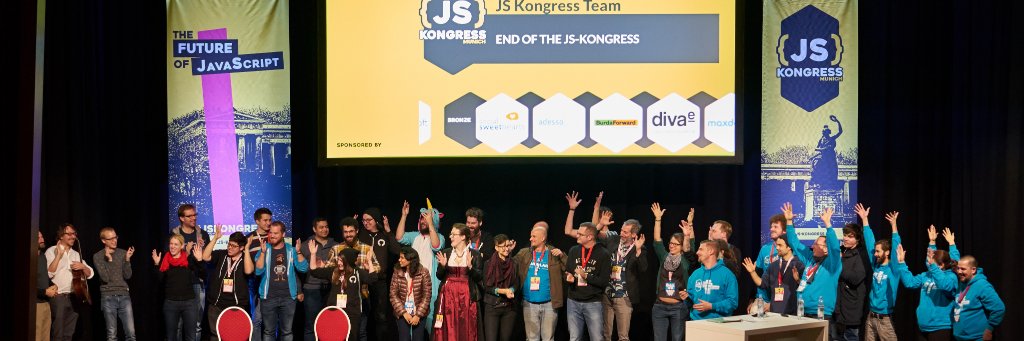
Full Stack #CEO, #Founder @JSKongress 🦏 , @geekspace9 🤓 #productengineering, #scaling , #ai in product development
München 가입일 Mayıs 2013
0 팔로잉1K 팔로워
💥 Marco Stipek 리트윗함

Unpopular opinion: 95% of the roadmaps are not worth the paper they are written on.
English
@chaos_monster I only want to confirm that 😂 it's a trade off and finding the right balance is the work of a team. First line of thinking for me: first try to write code which is self explaining by naming, structuring, splitting, ... Then document what's necessary for a fellow to understand
English
@chaos_monster I am talking about documentation bload, a 4 line function body, which doesn't have magic, doesn't need to be documented, only because you have configured your IDE in a way, that it automatically put a 10 line docstring above.
English
@chaos_monster If you write code, that needs many inline documentation, you're gatekeeping as well
English
💥 Marco Stipek 리트윗함

Post updated: "Real Time Voice Cloning mit #OpenSource Tools und #GenAI" jetzt auch mit Video vom #kiinsights barcamp ai-circle.gs-9.com/open-source-to…

Deutsch
@Maggysche Vielleicht bietest du ihm das nächste Mal einfach eine Ausbildung zum erfolgreichen Rekruiter an 🤔
Deutsch
@JustAnotherPM Product management != Project management != Requirements engineering
and
leadership != Management
English
Product managers, what did you have to learn the hard way?
English
@JustAnotherPM @TechPdM Make it quick and easy/dirty, but expecting the code to be scalable, extendable, and easy to change. All 3 things need work and thinking about e.g. abstractions, architecture, deployments and testing)... The classical MVP trap. #unvisible work to be done
English
Software engineers -- what do you think differentiates a GOOD vs BAD product requirement?
English
@JustAnotherPM Clarity about goals, the why behind. No over specificity. Edge cases were thought about upfront. Explicit is better than implicit. Side effects has been addressed (to other businesses processes e.g. like BI)
English
@nurijanian For the basics systems design is explained very well by @bytebytego . Topics for PMs: understand authentication, identity, authorization, caching, communication protocols, different kind of APIs, different databases, CI/CD ... My 2 cents
English
A hack I discovered recently as a PM: learning more about software architecture
In a way, good PMs have to possess a lot of similar skills as architects:
- influence without authority
- systems thinking
- seeing horizontally across the org
Here's a place to start👇🏽
English
💥 Marco Stipek 리트윗함
Im #AIProductCircle zeigt unser Kollege Christian, wie er die Stimme unseres Chefs geklont hat: Er teilt seine Erfahrungen und Tipps mit Real Time Voice Cloning mit #GenAI und #OpenSource Tools. ai-circle.gs-9.com/open-source-to…

Deutsch
💥 Marco Stipek 리트윗함
Hinweis fürs Treffen des #AIProductCircle heute Nachmittag: aufgrund von Krankheit müssen wir das Meetup leider verschieben. Am Donnerstag, 04. April werden wir euch nun zeigen, wie wir die ideale Customer Journey mit #GenAI bauen. RSVP! ai-circle.gs-9.com/meetup-26-marz…

Deutsch
💥 Marco Stipek 리트윗함
Machine Learning models do not predict the future.
They just find patterns in the past.
English
@TheJackForge Only a sunglasses 😎 away from being a hacker 🤷🏽♀️
English
@HolgerGelhausen @konold @IT_Digital_AC @JagersbergKnut Oh Dankeschön 🤗 das freut mich, das wir helfen konnten.
Deutsch
@HolgerGelhausen @konold @IT_Digital_AC @JagersbergKnut In den 90ern nannte man das visual programming, was du da machst 😉
Deutsch
@garrytan The world consists of two kind of people: the ones who want to create a future by accepting failures, and those who make fun of them, now on social Media with their smartphones filled with electricity 🤷🏽♀️
English

The car was invented in 1886 but horses weren’t replaced as a means for transportation until 1920’s for early adopter regions and 1950’s everywhere.
Transformative technology doesn’t appear everywhere immediately. The future is not evenly distributed and not easily distributed.
English
@_Chorge 😂 ok. Verstehe, im Alter ändert sich die Temperatur Wahrnehmung 🤷🏽♀️
Deutsch