
JustAnotherPM | Sid

69.5K posts

JustAnotherPM | Sid banner
JustAnotherPM | Sid

JustAnotherPM | Sid

@JustAnotherPM

I build AI products at scale. I share what it takes to be an AI PM. Only practical, real-world advice. No-fluff, no theory.

Start here ➡ Katılım Kasım 2014
3.8K Takip Edilen29.2K Takipçiler
Sabitlenmiş Tweet
JustAnotherPM | Sid
JustAnotherPM | Sid@JustAnotherPM·
I built a free course that teaches Claude Code. Inside Claude Code. You open a folder, type "let's start", and an AI tutor called June walks you through everything. You're building from minute one. Here's what you learn: 𝗠𝗼𝗱𝘂𝗹𝗲 𝟬 Set up Claude Code. Build a CLAUDE[dot]md that gives it permanent memory of who you are and how you work. 𝗠𝗼𝗱𝘂𝗹𝗲 𝟭 Build two AI agents that work together. One researches. One writes. They hand off automatically. 𝗠𝗼𝗱𝘂𝗹𝗲 𝟮 Build a slash command that encodes your own workflow. One word triggers the whole thing. 𝗠𝗼𝗱𝘂𝗹𝗲 𝟯 Connect Claude to Google Calendar via MCP. Claude reads and creates real events. 𝗠𝗼𝗱𝘂𝗹𝗲 𝟰 Build an orchestrator. One agent that routes work to specialist agents — the architecture inside every serious AI product. 𝗠𝗼𝗱𝘂𝗹𝗲 𝟱 Run experiments on your own agents. Understand the latency, cost, and quality tradeoffs before you build anything real. Total time: ~6 hours. (Most people finish it in 3) Free. No waitlist. No "comment below for access." There's also a Slack community where people share what they've built. Signup below
JustAnotherPM | Sid tweet media
English
6
3
7
1.4K
JustAnotherPM | Sid
JustAnotherPM | Sid@JustAnotherPM·
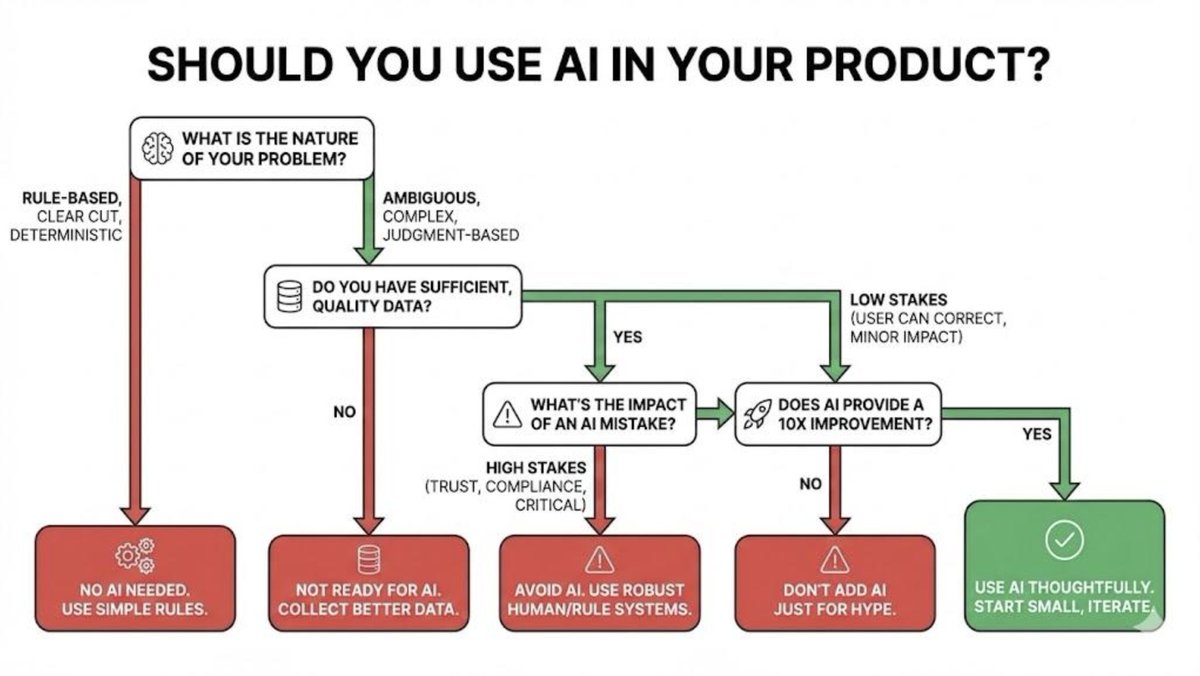
𝗔𝗜 𝗣𝗿𝗼𝗱𝘂𝗰𝘁 𝗠𝗮𝗻𝗮𝗴𝗲𝗺𝗲𝗻𝘁 𝗶𝘀 𝗼𝘃𝗲𝗿𝗵𝘆𝗽𝗲𝗱. That is what I told myself when I first started working on AI products. Turns out, I had no idea what an AI PM really did. After spending years watching world-class AI PMs, building AI products at scale, making 100s of bad decisions, I have a much better definition of the role. But, sadly, even today, most PMs trying to work on AI are in the same boat: confused and clueless about "what does an AI PM actually do." Here's the simplest mental model to think of an AI PM's role: An AI PM is responsible for finding answers to these 7 questions. 1. What problem should we solve to maximize impact? 2. Does this need AI? 3. Do we have the right data? 4. How do we turn data into something useful? 5. How will users experience it? 6. How do we know it works before launch? 7. How do we keep making it better? Let's understand in detail: 𝗪𝗵𝗮𝘁 𝗽𝗿𝗼𝗯𝗹𝗲𝗺 𝘀𝗵𝗼𝘂𝗹𝗱 𝘄𝗲 𝘀𝗼𝗹𝘃𝗲 The problem must be specific, validated with real users, and solution-agnostic. If you get this wrong, the model does not matter. 𝗗𝗼𝗲𝘀 𝘁𝗵𝗶𝘀 𝗿𝗲𝗮𝗹𝗹𝘆 𝗻𝗲𝗲𝗱 𝗔𝗜 This is the most important question an AI PM asks. And the answer is usually no. Saying no to AI when the situation does not call for it is not a failure. It is the job. 𝗗𝗼 𝘄𝗲 𝗵𝗮𝘃𝗲 𝘁𝗵𝗲 𝗿𝗶𝗴𝗵𝘁 𝗱𝗮𝘁𝗮 "We have data" is not a strategy. An explicit data plan that includes what data we need, what we have, and what is missing is the right strategy. AI is only as good as the data behind it. 𝗛𝗼𝘄 𝗱𝗼 𝘄𝗲 𝘁𝘂𝗿𝗻 𝘁𝗵𝗲 𝗱𝗮𝘁𝗮 𝗶𝗻𝘁𝗼 𝘀𝗼𝗺𝗲𝘁𝗵𝗶𝗻𝗴 𝘂𝘀𝗲𝗳𝘂𝗹 Simple prompt, ML model, RAG, or agents. Each has a different use case, cost profile, and failure modes. The PM who skips this hands those decisions to engineering. 𝗛𝗼𝘄 𝘄𝗶𝗹𝗹 𝘂𝘀𝗲𝗿𝘀 𝗲𝘅𝗽𝗲𝗿𝗶𝗲𝗻𝗰𝗲 𝗶𝘁 Users need trust, control, and recovery. Design for when the AI fails, not only for when it works. 𝗛𝗼𝘄 𝗱𝗼 𝘄𝗲 𝗸𝗻𝗼𝘄 𝗶𝘁 𝘄𝗼𝗿𝗸𝘀 𝗯𝗲𝗳𝗼𝗿𝗲 𝗹𝗮𝘂𝗻𝗰𝗵 There is no binary pass/fail. Build an eval framework. Define good, bad, and edge cases. Ship only when the product clears your threshold. 𝗛𝗼𝘄 𝗱𝗼 𝘄𝗲 𝗺𝗮𝗸𝗲 𝗶𝘁 𝗯𝗲𝘁𝘁𝗲𝗿 𝗮𝗳𝘁𝗲𝗿 𝗹𝗮𝘂𝗻𝗰𝗵 AI products degrade in production if you stop watching them. Sample live conversations. Add new failure modes to your test set. Never stop monitoring. -- Want to ship your first AI product? I just launched a free Claude Code course taught inside Claude Code. (Link below)
JustAnotherPM | Sid tweet media
English
11
16
101
3.6K
Isra
Isra@israfill·
@JustAnotherPM 143k stars means a lot of folks need to read this
English
1
0
2
43
JustAnotherPM | Sid
JustAnotherPM | Sid@JustAnotherPM·
Karpathy's claude [dot] md has 143k stars on GitHub. Most people building with Claude Code haven't still read it. Here are Karpathy's 4 rules that will change how you code → Think before you code State your assumptions. if unsure, ask. If multiple interpretations exist, present all of them. Don't pick one silently and run with it. → Simplicity over everything Write the minimum code that solves the problem. No abstractions nobody asked for. No "flexibility" that turns 50 lines into 200. If a senior engineer would call it overcomplicated, simplify. → Surgical changes only Don't touch code unrelated to the request. Don't "improve" adjacent comments. Don't refactor things that aren't broken. Every changed line traces back to what was asked. nothing else. → Goal-driven execution Turn vague instructions into verifiable success criteria before writing a single line. "Fix the bug" becomes "write a test that reproduces it, then make it pass." Don't tell the model what to do. Tell it what done looks like.
JustAnotherPM | Sid tweet media
English
3
4
38
2.3K
JustAnotherPM | Sid
JustAnotherPM | Sid@JustAnotherPM·
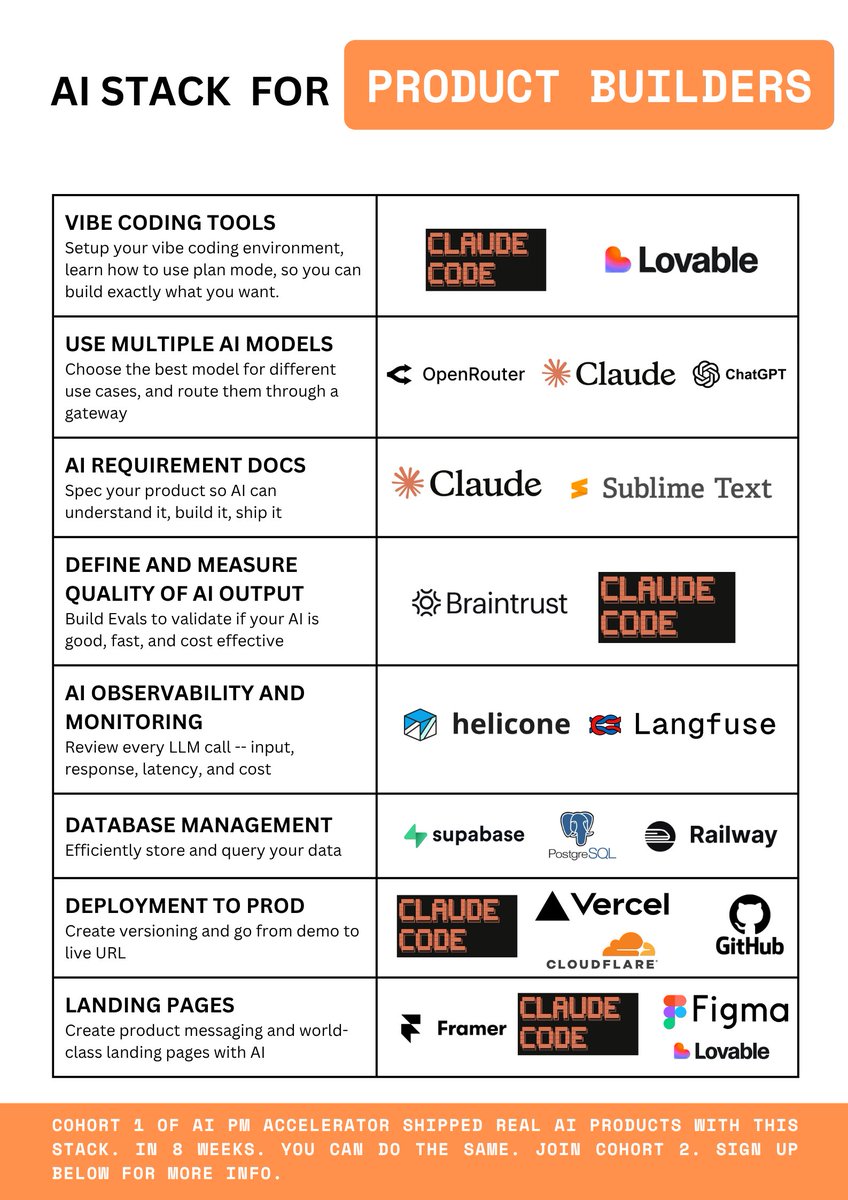
You won't lose your job to AI. You'll lose it to the PM who has shipped multiple AI product with consistently high quality, while you were still watching videos about prompt engineering. Most PMs are stuck in the world of "traditional" product management. They are comfortable as long as the product works in a fixed pattern: "If X, then Y." But here's the truth, AI PMs have moved on. They understand how AI works. They've built AI products. They know how to work with AI's unpredictability. The good news is .... that you can also become an AI PM, without an actual AI PM job. All you need is a structured approach and a good starting point. Here is how I would learn how to build AI Products all over again → Find the right problem → Ensure that AI is the right solution → Have a data strategy → Scope the thinnest MVP slice to validate user-AI fit → Define quality → Build, evaluate, ship, iterate I'm not making this up. I've built 5 AI products using this approach. I have helped 80 PMs in the AI PM Acclerator to build usable, fully functional AI products in just 8 weeks. If we can do it, you can too. Don't take my word. Try it yourself for FREE. Here is my new free course on Claude Code (taught inside Claude Code) that will teach you 1. How Claude Code works 2. How to set up your first agent 3. How to create your first Claude skill 4. How to build an orchestrator that delegates tasks. (Link in comments)
JustAnotherPM | Sid tweet media
English
7
7
35
1.7K
joka
joka@joka88xj·
@JustAnotherPM This is brilliant — learning Claude Code by using Claude Code itself. Meta and practical at the same time. Will definitely check it out.
English
1
0
1
36
JustAnotherPM | Sid
JustAnotherPM | Sid@JustAnotherPM·
This free course teaches you Claude Code inside Claude Code. Claude Code is an AI coding agent that builds products end to end. You describe what you want in plain English. It writes the code, tests it, and fixes its own mistakes. Apps. Automations. Internal tools. Workflows. Whatever you need. The course takes you from zero to a working product in 5 hours. No engineering knowledge required. No programming experience. If you've had an idea stuck in your head for months, after this course, you will know how to build it. Completely free. Taught inside Claude Code. Sign up below👇
GIF
English
5
5
21
1.9K
Vedant Choubey
Vedant Choubey@vedantrc24·
@JustAnotherPM An elegant breakdown of the entire picture. In my view traditional metrics show output: Did the numbers move. The AI layer adds outcome metrics that are lagging. Did the model deliver desired value? Answers don't surface immediately due to the entry of a probabilistic layer.
English
1
0
1
6
JustAnotherPM | Sid
JustAnotherPM | Sid@JustAnotherPM·
Every Product Manager thinks they can "figure out AI" when they need to. They're wrong. I've been too many product reviews where PMs confidently presented AI features they didn't understand. The results were painful to watch. Here's what traditional PM experience actually teaches you about AI PM (spoiler: not much): 𝗥𝗲𝗾𝘂𝗶𝗿𝗲𝗺𝗲𝗻𝘁𝘀 𝗪𝗿𝗶𝘁𝗶𝗻𝗴 ↳ Traditional: "Sort search results by price" ↳ AI PM: "Rank results based on user preferences and intent using behavioral signals" The shift? From precise instructions to desired outcomes. 𝗧𝗲𝘀𝘁𝗶𝗻𝗴 𝗦𝘁𝗿𝗮𝘁𝗲𝗴𝘆 ↳ Traditional: A/B test → observe → ship winner ↳ AI: Offline evaluation → shadow testing → human review → gradual rollout You're not just testing features—you're validating model behavior and output accuracy. 𝗦𝘂𝗰𝗰𝗲𝘀𝘀 𝗠𝗲𝗮𝘀𝘂𝗿𝗲𝗺𝗲𝗻𝘁 ↳ Traditional: Engagement, conversion, NPS ↳ AI: All of the above PLUS precision, recall, model accuracy You need to speak both languages: business metrics and model performance. 𝗣𝗼𝘀𝘁-𝗟𝗮𝘂𝗻𝗰𝗵 𝗥𝗲𝗮𝗹𝗶𝘁𝘆 ↳ Traditional: Monitor adoption, optimize features ↳ AI: Monitor model drift, manage retraining pipelines, collect feedback data An AI product literally evolves after launch. 𝗧𝗲𝗮𝗺 𝗖𝗼𝗹𝗹𝗮𝗯𝗼𝗿𝗮𝘁𝗶𝗼𝗻 ↳ Traditional: Engineers, designers, analysts ↳ AI: Add ML engineers, data scientists, data engineers, compliance teams The skill that matters most? Translation between business needs and technical constraints. The opportunity is massive. But you need to start learning the new language of data, models, and probabilities—paired with the product mindset you already have.
English
4
2
14
1.3K
JustAnotherPM | Sid
JustAnotherPM | Sid@JustAnotherPM·
I spent 3 hours using an LLM to convince myself of something. Then 10 minutes later it convinced me of the exact opposite. Both times I felt completely certain. Here's what happened: I was drafting a take on a strategy decision. Fed it to the model, asked it to sharpen the argument. It did. Beautifully. I was sold. Then, just to stress-test it, I asked the same model to argue the other side. It demolished everything it had just helped me build. New framing, new evidence, new logic. All just as clean. All just as convincing. The model wasn't wrong either time. It was just... compliant. Extremely, fluently, persuasively compliant. This is the part nobody warns you about. LLMs are not thinking partners. They're world-class debaters who will take whatever side you hand them and make it sound airtight. Useful tool. Dangerous mirror.
English
1
0
4
879
JustAnotherPM | Sid
JustAnotherPM | Sid@JustAnotherPM·
You have been thinking about this product for months. You can picture what it does. You know who it helps. You might have sketched it out or described it to a friend. You have not built it because you are not technical. You assumed you needed to hire a developer, learn to code, or find a technical cofounder. So it stays in your head. Claude Code changes that. You describe what you want in plain English. It writes the code, tests it, and fixes its own mistakes. Apps. Workflows. Automations. Internal tools. Whatever your business needs. I built a free course that teaches you Claude Code inside Claude Code. No engineering knowledge or programming experience needed. The thing in your head can be live on the internet in 5 hours Free. Join here 👇
JustAnotherPM | Sid tweet media
English
1
0
6
1.5K
JustAnotherPM | Sid
JustAnotherPM | Sid@JustAnotherPM·
𝗕𝘂𝗶𝗹𝗱𝗶𝗻𝗴 𝗔𝗜 𝗔𝗴𝗲𝗻𝘁𝘀 𝗶𝘀 𝗼𝘃𝗲𝗿𝗵𝘆𝗽𝗲𝗱. That is what I told myself when I first started building with AI. Turns out, I had no idea. After spending 1000+ hours building AI products, deploying agentic systems at scale, making 100s of bad decisions, I have a much better understanding. But sadly, even today, most builders trying to build AI products are in the same boat: confused and clueless about "what are AI agents and how to leverage them." Here's the simplest mental model to think about it: An AI agent has 4 layers. That's it. 1. 𝗧𝗵𝗲 𝗮𝗴𝗲𝗻𝘁'𝘀 𝗯𝗿𝗮𝗶𝗻. Three things live here: a clear goal (the specific outcome it must reach), a system prompt (its permanent role, rules, and output format), and an exit condition (how it knows when to stop). Together, these three define what the agent IS. 2. 𝗧𝗼𝗼𝗹𝘀 — what it can act on. Web search, code execution, API calls, file I/O, database queries, browser access. Without tools, an agent can only talk. Tools are what let it DO things in the real world. 3. 𝗠𝗲𝗺𝗼𝗿𝘆 — what it remembers. Short-term memory is the context window. Episodic memory is the session history. Long-term memory is a vector DB that persists across sessions. A knowledge base gives it access to docs and policies. Memory is the difference between an agent that starts from scratch every time and one that learns. 4. 𝗧𝗵𝗲 𝗟𝗼𝗼𝗽 — the engine that runs every step. Perceive (read inputs, memory, and tool results). Think (reason and plan). Act (call a tool or produce output). Observe (check the result). This loop repeats until the exit condition fires. That is one agent. Now the real question: how do you connect multiple agents together? There are 3 architecture patterns. #1 𝗔𝗴𝗲𝗻𝘁 𝘁𝗼 𝗮𝗴𝗲𝗻𝘁: Agent A finishes its job, triggers Agent B directly. Simple. Works for 2-3 agents. Breaks the moment you need coordination. #2 𝗢𝗿𝗰𝗵𝗲𝘀𝘁𝗿𝗮𝘁𝗼𝗿: One LLM sits on top, dispatches tasks to multiple agents, and collects their feedback. Decidees what to do next. Handles complex, multi-domain work. Downside: single point of failure and higher cost because every coordination step burns tokens. #3 𝗦𝘂𝗯-𝗮𝗴𝗲𝗻𝘁: The main agent calls other agents the same way it would call an API. But unlike a regular API, each sub-agent can reason and adapt. Use this when the sub-tasks themselves need judgment, not just execution. That is the complete mental model. 4 layers inside every agent. 3 architectures to connect them. 𝗡𝗲𝘅𝘁 𝘀𝘁𝗲𝗽𝘀: Share and bookmark this post Build your first agent. I just built a course Claude Code, taught inside Claude Code. Totally FREE. Sign up today and build your first agentic system (with an LLM orchestrator) 👇
JustAnotherPM | Sid tweet media
English
7
14
64
2K
JustAnotherPM | Sid
JustAnotherPM | Sid@JustAnotherPM·
🚨 Claude agents now improve between sessions. Anthropic shipped "Dreaming" at Code with Claude 2026. Here is what it does and why it changes how you build with agents: Dreaming is a scheduled process. Between your sessions, the agent reviews its past work, spots patterns, and writes plain-text notes that future sessions reference. It does not modify model weights. Everything it learns is a readable file you can audit. What this means for anyone building with AI: 1. 𝗬𝗼𝘂𝗿 𝗮𝗴𝗲𝗻𝘁𝘀 𝗰𝗼𝗺𝗽𝗼𝘂𝗻𝗱: Every session makes the next one faster. The agent learns which patterns you follow, which errors you fix manually, which approaches work. 2. 𝗦𝗲𝘁𝘂𝗽 𝗰𝗼𝘀𝘁 𝗱𝗿𝗼𝗽𝘀: The time you spend re-explaining context each morning? Dreaming handles that between sessions. 3. 𝗘𝗮𝗿𝗹𝘆 𝗿𝗲𝘀𝘂𝗹𝘁𝘀: Harvey saw 6x higher task completion rates. Wisedocs cut document review time by 50%. Research preview. Available now in Claude Managed Agents.
Claude@claudeai

Live from Code with Claude: we're launching dreaming in Claude Managed Agents as a research preview. Outcomes, multiagent orchestration, and webhooks are now in public beta.

English
1
6
3
2K
JustAnotherPM | Sid
JustAnotherPM | Sid@JustAnotherPM·
The man who created Claude Code has not written a single line of code manually in 2026. Boris Cherny ships dozens of PRs a day. He has said he once pushed around 150 in a single day. His take: for him, coding is solved. Here is what that means for anyone building with AI: 1. 𝗧𝗵𝗲 𝘀𝗸𝗶𝗹𝗹 𝘁𝗵𝗮𝘁 𝗺𝗮𝘁𝘁𝗲𝗿𝘀 𝗻𝗼𝘄 𝗶𝘀 𝘀𝗽𝗲𝗰𝗶𝗳𝘆𝗶𝗻𝗴. Not prompting. Specifying. What to build, what constraints to enforce, what the test suite looks like. 2. 𝗥𝗲𝘃𝗶𝗲𝘄𝗶𝗻𝗴 𝗔𝗜-𝘄𝗿𝗶𝘁𝘁𝗲𝗻 𝗰𝗼𝗱𝗲 𝗶𝘀 𝘁𝗵𝗲 𝗻𝗲𝘄 𝗯𝗼𝘁𝘁𝗹𝗲𝗻𝗲𝗰𝗸. At 150 PRs a day, you need automated eval pipelines. Manual review does not scale. 3. 𝗧𝗵𝗲 𝗴𝗮𝗽 𝗶𝘀 𝗻𝗼𝘁 𝗰𝗼𝗱𝗶𝗻𝗴. It is knowing what good looks like. If you cannot spot a bad architecture from a good one, the speed makes things worse. The people shipping AI products in 2026 are not learning to code. They are learning to specify, review, and eval. I built a free course on exactly this. Taught in Claude Code. Build your first agent today 👇
English
2
2
5
1.3K