gravityLab

53 posts

gravityLab banner
gravityLab

gravityLab

@gravityLabSpace

Accelerating Life Off-Planet — gravityLab provides programmable gravity for research and manufacturing in space.

Seattle, WA 가입일 Haziran 2022
84 팔로잉268 팔로워
gravityLab 리트윗함
Grant Bonin
Grant Bonin@grantbonin·
Yes we are. And we haven’t shoved it to the back of our roadmap (not a criticism of the awesome companies in this space, simply that we’ve committed for better or worse @gravityLabSpace to this being the core and immediate problem to tackle from mission 1. It’s wonderful to see others in this space, and I think we’ll see spin gravity at some scale happen in the next handful of years.
English
0
2
5
278
gravityLab 리트윗함
Grant Bonin
Grant Bonin@grantbonin·
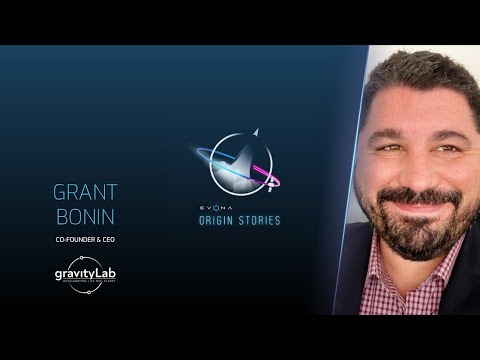
Fun podcast to do, thanks to Evona! TL;DR: read a lot. Surround yourself with amazing people. Fall in love with the things you spend time on. Don’t be afraid to fail. youtu.be/x6N2xTCAHks?si…
YouTube video
YouTube
English
0
2
5
620
gravityLab
gravityLab@gravityLabSpace·
@RockettLord Had to hard pivot from mech to EE. A natural transition. Also seals. Also, still taxes please.
English
0
0
0
52
cait
cait@RockettLord·
Tag yourself I’m the “went to school and got an AeroEng degree and ended up in a Mech Eng and EE world”
English
4
0
59
2.8K
cait
cait@RockettLord·
Some classes I wish were taught in college: “What the heck is a thread” “Bolts!” “You’re going to wish you knew more about circuits and here’s how to create schematics” “LabView 101” “You need to know what an ERP system is”
English
20
11
253
25.2K
gravityLab
gravityLab@gravityLabSpace·
gravityLab explores and exploits spin gravity for living and building off-planet. Our upcoming missions let customers dial gravity like a thermostat. Complementary to space station capabilities, we use smallsats to go from order-to-orbit as fast as possible. DM to chat @SmallSat
Grant Bonin@grantbonin

Alright fellow #SmallSat familiar and new faces, it’s that time of year. @IsaCFritz and I are doing it in style as usual: epic road trip with some camping added to the trip. DM to meet up!
English
0
3
6
788
gravityLab 리트윗함
The Mars Society
The Mars Society@TheMarsSociety·
Grant Bonin, Co-Founder & CEO of @gravityLabSpace, will give a plenary talk at the 2024 International Mars Society Convention in August. His Seattle-based company specializes in artificial gravity satellites for research and manufacturing in low Earth orbit. #mars2024 #science
The Mars Society tweet mediaThe Mars Society tweet media
English
0
3
13
1K
gravityLab 리트윗함
Grant Bonin
Grant Bonin@grantbonin·
DFL is a world-class test facility. I’ve had the privilege of doing environmental test campaigns of satellites spanning three orders of magnitude in size there. Good luck recreating this capability if it goes away… In an age where low-cost big satellites might finally become cost-effective, the death of DFL is a move in a fool-hearty direction @csa_asc change.org/p/save-the-dav…
English
0
4
6
410
gravityLab
gravityLab@gravityLabSpace·
gravityLab will be at #satellite2024 if you’d like to meet up! Send us a DM to talk about applications of programmable gravity in small spacecraft!
English
0
1
5
306
gravityLab
gravityLab@gravityLabSpace·
@gravityLabSpace is at NASA’s Human Research Program Investigator Workshop today and tomorrow! DM if you’d like to meet up #HRPIWS #NASA
English
0
1
8
218
Steve Jurvetson
Steve Jurvetson@FutureJurvetson·
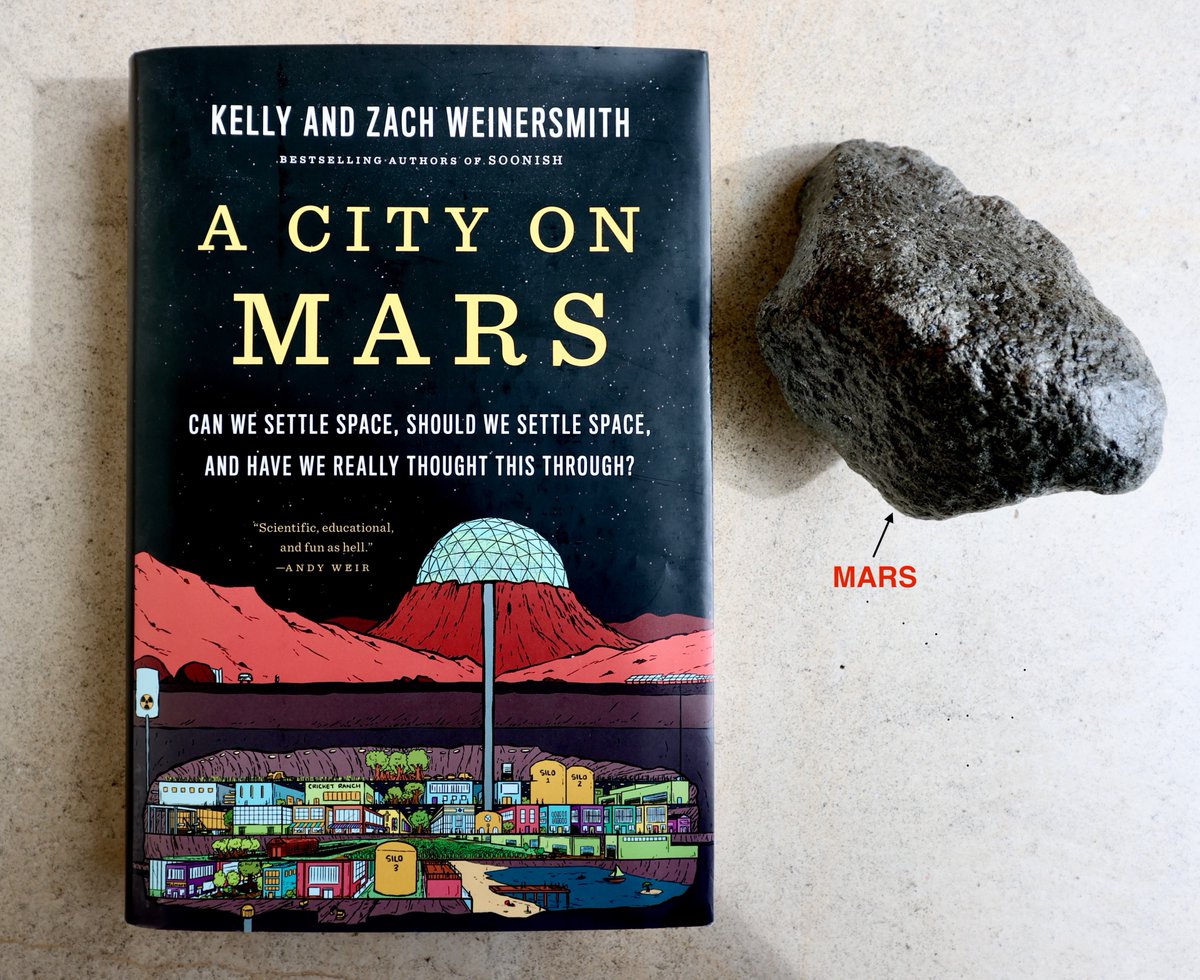
A City on Mars 🔴 The first half of the book is jocular jaunt of the various challenges that lie ahead for becoming a multiplanetary species, but the second half devolves into a fairly staid discussion of space law and geopolitical stratagems, a bit soporific. TLDR; 1) Mars sucks least. Of all places we might colonize in space, Mars is the clear winner. 2) Chris Hadfield sets expectations too high. Colonies can’t generalize from superheroes. 3) Mammalian reproduction in Martian gravity has never been tested. I have written about 3) for many years; it is mind-boggling that after 67 years of flying animals in orbit, we have never tested mammalian fetal development in lunar or Martian gravity, which just could be as simple as a spin-hab with pregnant guinea pigs and a webcam to look for live birth. What if reproduction fails in lower gravity environments? It would prioritize further research, and it could shift the focus to the spinning rings of 2001 or O’Neill cylinders that can reproduce Earth gravity, and which otherwise would make little sense, per 1) above. From the author’s extensive review of the literature, “we know of no studies on mammals in space where the process was observed from conception through birth” (p.79) and “here’s our overall take: everything about reproduction in space is cause for concern.” (87). The authors perseverate on Martian settlement challenges — like poisonous perchlorates, radiation, growing food, and the minimum efficient scale for human colonies — without an appreciation that comparable challenges have been solved by human ingenuity. For example, rapid advances in robotics might redress their autarky scale concerns. Most of their concerns feel like engineering challenges, not showstoppers… except mammalian reproduction; if that proved to be a barrier, it might take many decades to redress given the reticence and timeframe required for human germ line engineering. While NASA cancelled rodent reproduction research from fear of public backlash, “China is planning to send monkeys up for some intimate time in their space station.” (384) Back to: 1) “What makes Mars beguiling for space settlers is not its current state, but its potential. On Mars, you have, at the level of chemistry, most of the stuff you need to stay forever.” (138) and by comparison “everywhere else is far worse.” (146) 2) For a sense of their humor, here is the first Hadfield reference: “Settlement psychology will be much more about management than selection. You can, of course, screen applicants but if you want Elon Musk’s plan for a million Martians, well there are simply not a million Chris Hadfield’s to go around. Standards will have to fall.” (p.95) They conclude with a bit of preaching: “We don’t know how to do it yet, but we still believe that someday, with enough knowledge, we can have Mars. And one very far away day, other solar systems. But we have to earn it, both by gaining knowledge and by becoming a more responsible, more peaceful species. Going to the stars will not make us wise. We have to become wise if we want to go to the stars.” (388)
Steve Jurvetson tweet media
English
31
20
175
27.4K
Ken Kirtland IV
Ken Kirtland IV@KenKirtland17·
Alright SpaceX I got one. How about another docking adaptor change, but this time it’s an anchor for a tether. Launch a counterweight on F9 and let’s test out rotational gravity at varying G and diameters. Chicken?
Abhi Tripathi@SpaceAbhi

@SpaceX appears to now be accepting Human Spaceflight science proposals for onboard Dragon: spacex.com/humanspaceflig…

English
16
11
278
15.7K
gravityLab
gravityLab@gravityLabSpace·
Congrats to the teams at @ulalaunch, @blueorigin and @astrobotic! It was a beautiful launch, looking forward to many more. Godspeed on your journey to the moon, #Peregrine (and Centaur into heliocentric space)
NASA@NASA

The first U.S. commercial robotic launch to the Moon successfully lifted off Jan. 8 on the first flight of @ULALaunch’s #VulcanRocket. @Astrobotic’s Peregrine Mission 1 lander is expected to reach the lunar surface in February: go.nasa.gov/3NVw46S

English
0
0
1
181
gravityLab
gravityLab@gravityLabSpace·
We are excited to welcome the incredible Amanda Knez (@alias_amanda) to our team. Amanda joins as a later-stage co-founder and COO to accelerate our first mission (pun intended) and lead our company’s growth, and we couldn’t be more thrilled!
English
2
4
35
6.2K