Jon Doyle

2.2K posts

Jon Doyle banner
Jon Doyle

Jon Doyle

@juniper_jon

Director of Juniper a specialist Financial Planning. All views my own and none constitute advice. Above average at a lot of hobbies, not great at any.

Preston, England 가입일 Aralık 2011
1.1K 팔로잉1K 팔로워
Jon Doyle
Jon Doyle@juniper_jon·
Can someone use AI to design reliable a home printer?
English
0
0
0
59
Jon Doyle
Jon Doyle@juniper_jon·
@DanOakesBP @HatTipNick My point was these a four very different things. RLI cannot be eradicated - it’s an impossibility baked into the measure itself. Eradicating Billionaires improves RLI but improves nobodies lives It’s what makes Corbyn so pernicious Focusing on the last two is more important
English
0
0
0
6
Jon Doyle
Jon Doyle@juniper_jon·
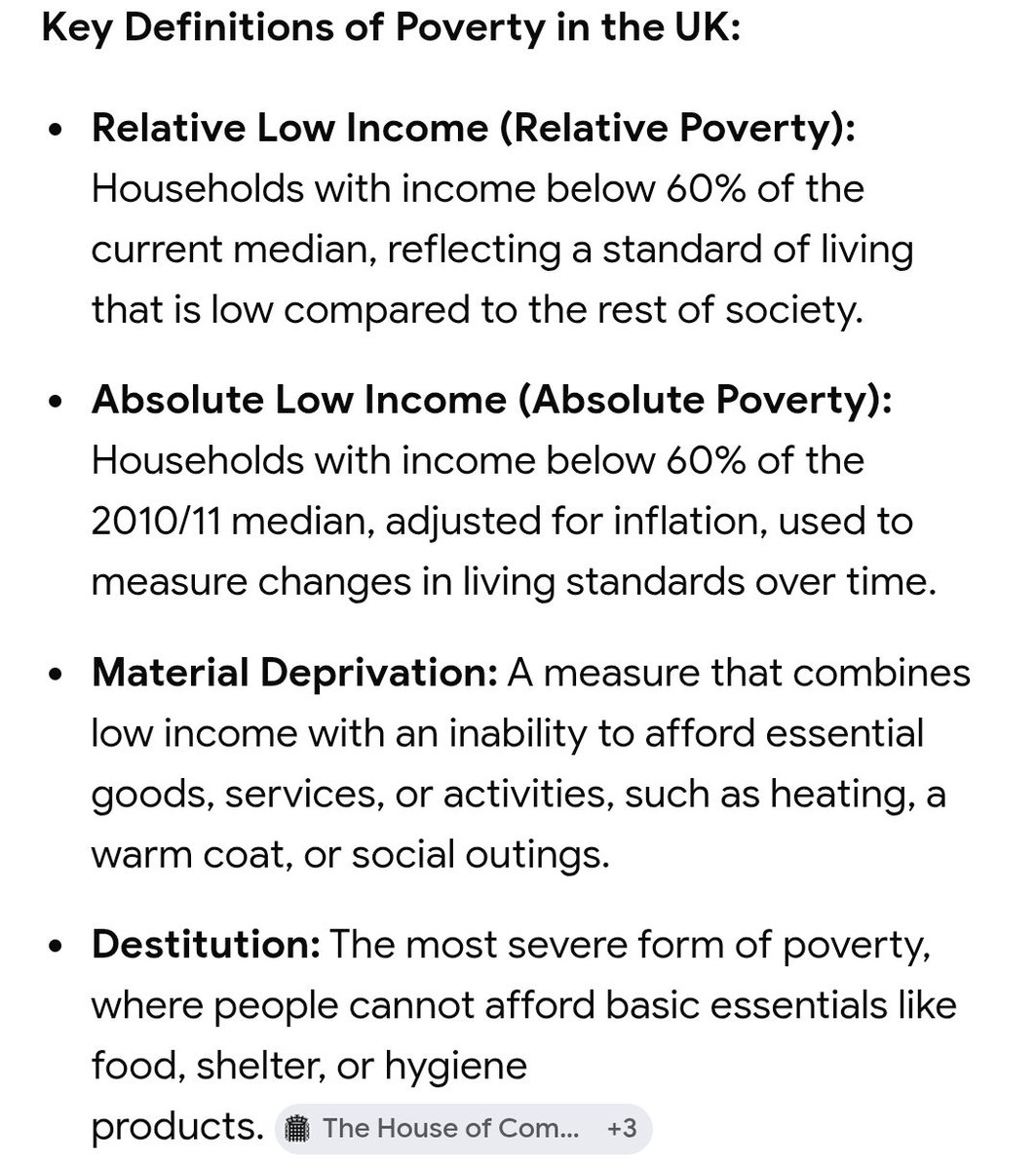
@DanOakesBP @HatTipNick It depends how one defines poverty I’m not being deliberately obtuse here But to state whether something is a problem you have to define it properly Financial insecurity, static living standards, the Sisyphusian nature of progressing in life - all problematic but ≠ poverty
English
1
0
0
21
Jon Doyle
Jon Doyle@juniper_jon·
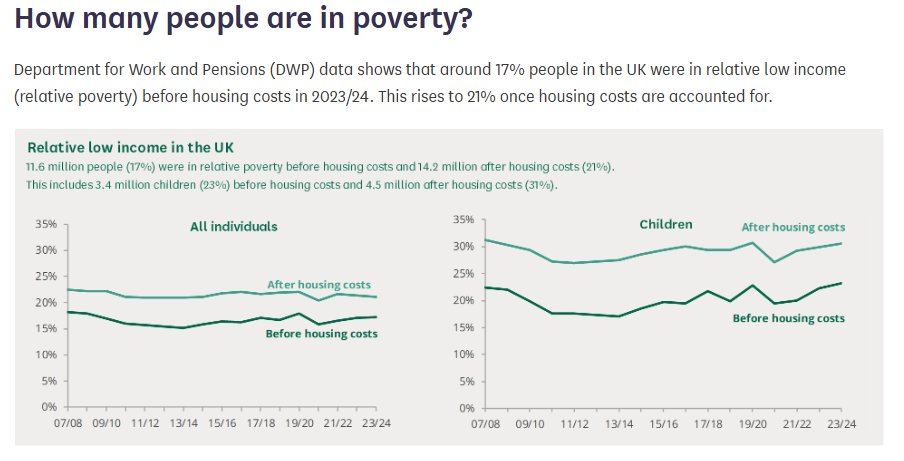
@DanOakesBP @HatTipNick Notice how during 2010-15 the poverty line decreased? We were in peak austerity but because the middle got poorer the distance from the bottom to the middle decreased too. My point is it’s not a very good measure of poverty & is often misunderstood - especially by Corbyn
English
1
0
0
14
Dan Oakes
Dan Oakes@DanOakesBP·
@juniper_jon @HatTipNick It's expensive to live in the UK? (another issue). It's why Labour changed the Child Benefit to stop this stat being embarrassing which is only going to cripple the economy further.
English
1
0
0
25
Jon Doyle
Jon Doyle@juniper_jon·
@DanOakesBP @HatTipNick Do you know what that poverty line equates to? For a single income family anyone earning under £55,000 per year is considered poor. (£31k per annum before housing costs) £5,000 more you are considered rich enough to have child benefit removed.
English
1
0
0
20
Dan Oakes
Dan Oakes@DanOakesBP·
@juniper_jon @HatTipNick Poverty being stable when it's terrible, means it's still terrible, though. Global poverty is another issue, looking after our own house, we just cannot continue like this. Over 30% of children after housing costs live below the poverty line. Juxtapose this to 1/2
Dan Oakes tweet media
English
2
0
0
25
Jon Doyle
Jon Doyle@juniper_jon·
@DanOakesBP @HatTipNick That’s largely a result of inflation Global inflation has totalled 30% over the past 5 years. This naturally leads to an increase in Billionaires Absolute poverty (UK and Global) has declined over the past 15 years Relative Poverty is stable Expectations has risen
English
1
0
0
11
Dan Oakes
Dan Oakes@DanOakesBP·
@juniper_jon @HatTipNick That's not what Jeremy has said though, he's comparing the fact that Billionaires are growing in number, but we're also increasing poverty A responsible society would balance the two by effectively taxing the wealthier for the benefit of those in need None of that happens, tho
English
2
0
0
10
Jon Doyle
Jon Doyle@juniper_jon·
@DanOakesBP @HatTipNick It’s not a view on poverty It’s a view on comparison Poverty is a problem buts its a problem not caused by the value of Amazon shares Rent extraction? Quite possibly Unproductive use of assets like land banking? Quite possibly Amazon shares going up in value - not at all
English
1
0
0
5
Dan Oakes
Dan Oakes@DanOakesBP·
@juniper_jon @HatTipNick That's a very simplistic view on poverty, though. The lack of social mobility, education and genuine opportunity to those in poverty when combined to a billionaire is grotesque. It's not the billionaires fault, but once you're in that league you can shield your wealth. 1/2
English
2
0
0
15
Jon Doyle
Jon Doyle@juniper_jon·
@DanOakesBP @HatTipNick Disparity is only bad in so far as it makes one aware their situation could be better. If we only compared ourselves to rural Zambia we’d be the “Billionaire” Bezos own c8% of Amazon - the company he founded - how is that hoarding? Neither of these things increase poverty
English
1
0
0
11
Dan Oakes
Dan Oakes@DanOakesBP·
@juniper_jon @HatTipNick I think the disparity of wealth and hording wealth is also bad, though. That's what Jeremy is saying, it's the extreme end of the scale.Any self made millionaire deserves their wealth and to reap the rewards of it.Being a millionaire isn't that big of deal in London for example
English
1
0
0
19
Jon Doyle
Jon Doyle@juniper_jon·
@DanOakesBP @HatTipNick I don’t think Nick is saying Poverty is good He is saying that thinking of Wealth and Poverty as two sides of a zero-sum game is false (in stronger words maybe 🤷‍♂️) The value of Amazon shares going up doesn’t remove dollar bills from the pockets of the poor
English
1
0
0
15
Jon Doyle
Jon Doyle@juniper_jon·
4/ What am I missing? Is the legislation really that stupidly drafted to incentivise deliberately getting an annual allowance charge?
English
2
0
1
99
Jon Doyle
Jon Doyle@juniper_jon·
1/ Pension and Tax nerds - I was asked by a client this week about deliberately exceeding their annual allowance, by some margin, to recover their Personal Allowance and retain Free Childcare Hours for children My initial instinct was it wouldn’t work but the more I look into it
English
3
0
2
349
Jon Doyle
Jon Doyle@juniper_jon·
@Alan_Couzens I’m 6’2, 105kg 17% BF VO2 Max of 46 Can now manage 90 minutes at 6:20/km pace in Zone 2 but it’s taken three years. I swim 8km/wk too but never managed to swim Zone 2 - that’s impossible!!!
English
0
0
1
1.1K
Alan Couzens
Alan Couzens@Alan_Couzens·
100% 👏 Real talk: Most folks simply aren't fit enough to get their low-intensity aerobic work done running. 🏃‍♂️ If your VO2max is <50 ml/kg/min, you'll have to find another way. That other way? #JFW ! 🚶
Howard Luks MD@hjluks

Yesterday, I said that if a new runner’s heart rate shoots above 150 within the first few seconds of starting, they probably shouldn’t be running. When someone who hasn’t trained consistently begins jogging, and their heart rate rapidly climbs into the 150s and stays there, that effort is not aerobic base work. It’s high-intensity work relative to their current conditioning. It may not feel “hard” in the way sprinting feels hard, but physiologically, it is well above the zone where foundational adaptations occur. True aerobic base development happens below the first lactate threshold. That’s where mitochondrial density improves, capillary networks expand, and fat oxidation becomes more efficient. That’s also where oxidative stress is manageable, and the recovery cost is low enough to repeat the effort frequently. If heart rate is immediately elevated, the body is operating in a more glycolytic state. Oxidative stress increases. Sympathetic tone rises. Recovery burden goes up. That may still improve fitness, but it’s not base building. It’s stress accumulation. There’s another layer that matters even more in midlife adults: the speed of tissue adaptation. This is my office hours every week. Many runners' injuries are training errors. The cardiovascular system adapts relatively quickly. Tendons, fascia, cartilage, and bone adapt slowly. When you combine high metabolic stress with repetitive impact load before tissues are prepared, the mismatch shows up as plantar fasciitis, Achilles pain, knee irritation, hip tendinopathy, or stress reactions. Most new runners don’t quit because they lack motivation. They quit because something starts to hurt. Brisk walking, incline walking, rucking, cycling, or structured walk-run intervals allow aerobic adaptations to occur with a lower oxidative and mechanical burden. As aerobic efficiency improves, heart rate at a given pace drops. As tissues strengthen, impact tolerance increases.... Then running becomes sustainable. Running is a phenomenal tool. But durability comes first. Base comes first. The ability to recover comes first. And yes... sprinting is fine. High HR is fine... don't come at me about this ;-). But... as @Alan_Couzens and @feelthebyrn1 and @inaki_delaparra and others will also tell you... Your base training is foundational. Take the time to build it and maintain it.

English
17
19
326
51.2K
Jon Doyle
Jon Doyle@juniper_jon·
The problem isn’t the Rolex It’s always being charged Rolex prices but getting anything from a Rolex to Casio
Daniel Priestley@DanielPriestley

Imagine if government started giving away Rolex watches. Or if they gave teenagers a loan to buy a Rolex if they wanted one. The symbolic value of a Rolex would drop through the floor. Fundamentally a Rolex is not intrinsically very valuable but it’s symbolically valuable because it signals status or success for the wearer. All of that would go away if the Government made them easy to obtain. This is what has happened to the university degree. Prior to the 1970s, a university degree was a symbol that you weren’t poor or slow. The only people who could get a university degree were people who had a higher than average IQ from a wealthier than average family. The degree itself wasn’t intrinsically very valuable, which is why any degree would do. If you had a French Poetry degree it was enough to signal to an employer that you weren’t poor or stupid and you could then enter the workforce at a higher point than most. Today that signal is lost. The government has made it so anyone can go to university - even if you are a bit thick. It’s also made it so that if you weren’t poor to begin with, you will be by the time you graduate. Employers are now skeptical about people with degrees. Today top employers are more interested in people who dropped out to start a business, or who took a year off to be a ski instructor, or who set up a YouTube channel. These are better indicators today of your social standing and your intelligence. Decades ago the government looked at the economic outcomes of graduates and observed that university grads made more money. So in all their wisdom they tried to make everyone a university grad. They failed to realise that it wasn’t the university education that was causing the uplift, it was the symbolic value of what it secretly said about you. Now that the symbolic value is lost, the value of a university degree is much lower. It’s as if the government has flooded the market with Rolex watches and forced every young person to buy one at retail prices on a loan.

English
0
0
0
116
Inside Football
Inside Football@InsideFootbal_·
@DanielPriestley Degrees didn’t lose value because standards dropped. They lost value because the signal was scaled. When access becomes universal, signalling power collapses, regardless of intent. That’s a structural outcome, not a moral one.
English
1
0
2
312
Daniel Priestley
Daniel Priestley@DanielPriestley·
Imagine if government started giving away Rolex watches. Or if they gave teenagers a loan to buy a Rolex if they wanted one. The symbolic value of a Rolex would drop through the floor. Fundamentally a Rolex is not intrinsically very valuable but it’s symbolically valuable because it signals status or success for the wearer. All of that would go away if the Government made them easy to obtain. This is what has happened to the university degree. Prior to the 1970s, a university degree was a symbol that you weren’t poor or slow. The only people who could get a university degree were people who had a higher than average IQ from a wealthier than average family. The degree itself wasn’t intrinsically very valuable, which is why any degree would do. If you had a French Poetry degree it was enough to signal to an employer that you weren’t poor or stupid and you could then enter the workforce at a higher point than most. Today that signal is lost. The government has made it so anyone can go to university - even if you are a bit thick. It’s also made it so that if you weren’t poor to begin with, you will be by the time you graduate. Employers are now skeptical about people with degrees. Today top employers are more interested in people who dropped out to start a business, or who took a year off to be a ski instructor, or who set up a YouTube channel. These are better indicators today of your social standing and your intelligence. Decades ago the government looked at the economic outcomes of graduates and observed that university grads made more money. So in all their wisdom they tried to make everyone a university grad. They failed to realise that it wasn’t the university education that was causing the uplift, it was the symbolic value of what it secretly said about you. Now that the symbolic value is lost, the value of a university degree is much lower. It’s as if the government has flooded the market with Rolex watches and forced every young person to buy one at retail prices on a loan.
English
57
47
369
23.1K
Jon Doyle
Jon Doyle@juniper_jon·
@DanielPriestley So my 18 year old is going to Uni but only to a course that comes with those signals - exclusivity & cognitive processing We looked at Apprenticeships but she isn’t ready to “adult” yet Her friend who has taken a gap year to work out their next move & travel has my full respect
English
0
0
0
27
Jon Doyle
Jon Doyle@juniper_jon·
@DanielPriestley As an Employer I value the institution more than the degree Philosophy from Durham ✅ Philosophy from Canterbury ❌ Because it still signals cognition I also value the course: History ✅ Business Administration ❌ Because it signals cognitive reasoning not info regurgitation
English
1
0
0
29