
Rae 리트윗함

Over my career, like many of you, I’ve heard countless versions of Gradual Release of Responsibility, I do, we do, you do, all varying in important ways. Sadly, it’s become very buzzwordy with many lethal mutations in practice. Many of which I’ve been prone to myself.
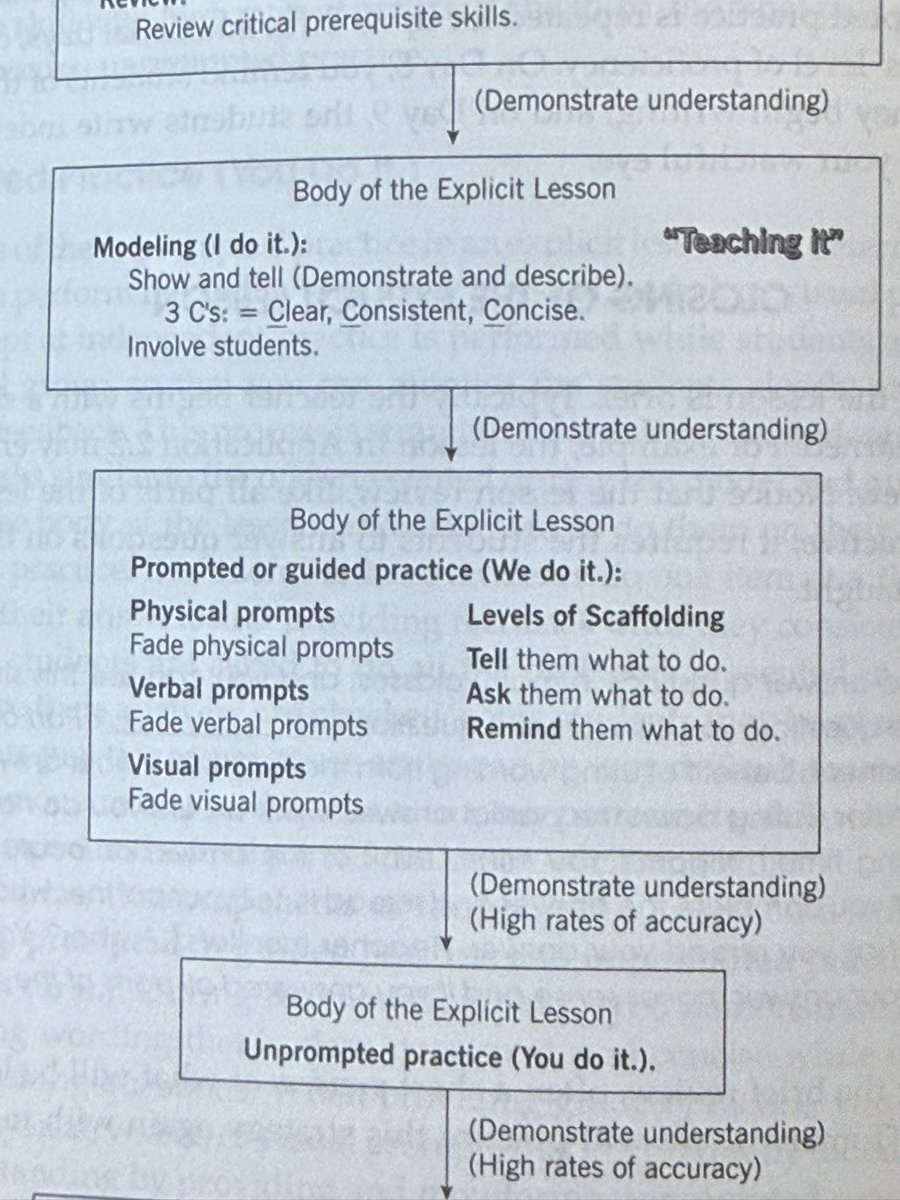
Anita Archer’s articulation of “I do, we do, you do” in Explicit Instruction is the most precise yet nuanced version I’ve ever encountered.
Many circulating versions I’ve been trained on before contain a key lethal mutation in the “we do” phase which can and will reduce the effectiveness of the other phases: guided practice is treated more as a brief checkpoint where students “help” the teacher rather than an extended instructional phase, with responsibility rotated to independent practice well before students demonstrate sufficient accuracy and fluency.
I really appreciate how Archer outlines the importance of “prompted practice” aka “guided practice/We do” with different levels of scaffolding and different types of prompts temporarily available to students.
Based on this dynamic, most importantly, “guided practice / we do” is not the teacher modeling an example while students help. That’s “modeling/I do”.
“Guided practice / we do” needs to be students actively executing each step with the teacher providing prompts, scaffolds, and immediate feedback until a high rate of success is achieved then unprompted practice can begin.
TL;DR: “We do/guided practice” is students do it with your help not you do it with student help.
English