
Silostack
1.3K posts


Silostack
@silostack
@rebelfi_io: Solana’s business-DeFi bridge and only no-fee payments platform
가입일 Ekim 2021
1.4K 팔로잉658 팔로워

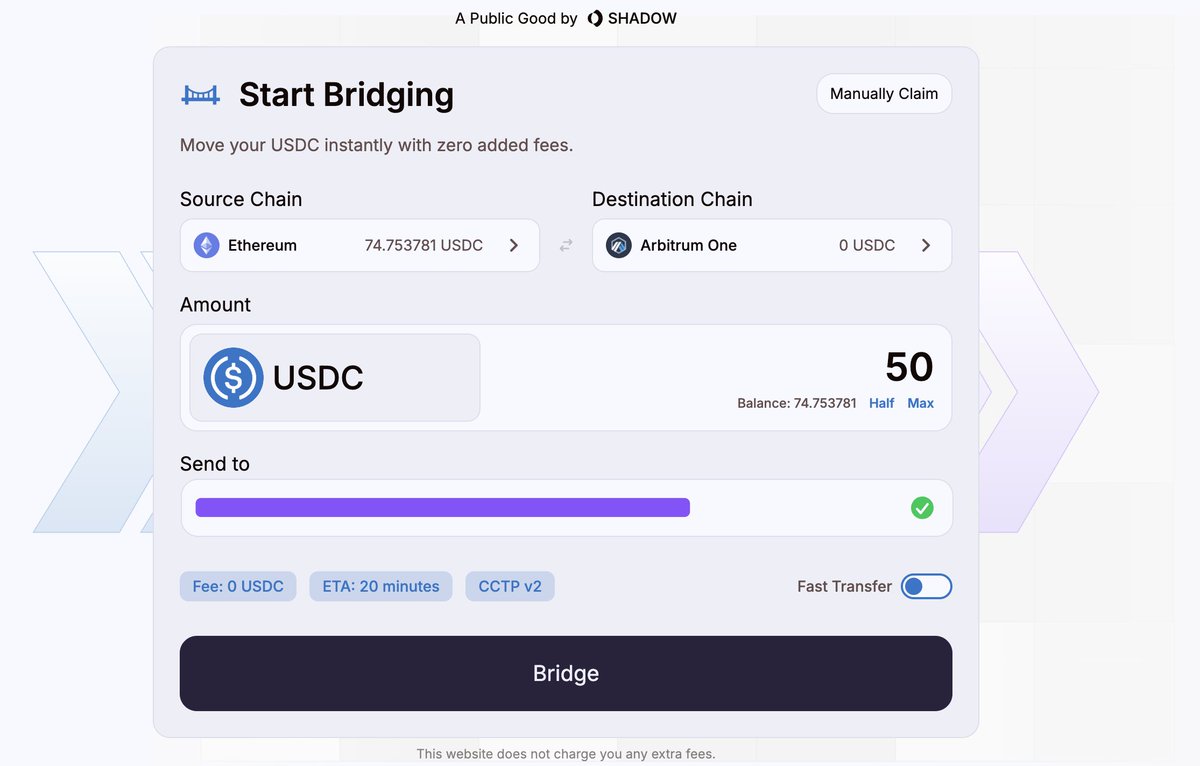

Introducing the USDC Bridge.
A direct way to move USDC crosschain.
Built and operated by Circle, USDC Bridge gives you a predictable, transparent way to move USDC between chains:
→ Native burn-and-mint transfers
→ Clear fees upfront, with live status and progress
→ No route selection. No bridge complexity.
→ Destination gas handled automatically
Move USDC. That’s it.
bridge.usdc.com

English

looking for a handful of people to test something new...
i've been using it for a few months and am prepping to share.
if you're a fan of claude cowork, openclaw, manus, perplexity computer, etc then you're a perfect fit.
this will self destruct in 4hrs - please dm or reply.
Mckay Wrigley@mckaywrigley
you’re like 6 prompts away from infinitely customizable personal agi. anthropic gave you a world class agentic harness for free. use it!!!
English

English

21st (@21stdev) is the production layer for frontier AI agents. 1.4M developers already use their platform to build AI apps, 15K+ GitHub stars - now they're making it dead simple to deploy Claude Code, Codex, and other agents to production.
Congrats on the launch, @sergeybunas & @serafimcloud!
ycombinator.com/launches/PiD-2…
English
@atmoio This was so relatable. We're all feeling it. Personally, I've moved my focus up a level. I basically work JUST at the architectural layer now. What before was an architect -> implement cycle is now all architecting. Still meaningful and fulfilling, just... different
English

I'm claiming my AI agent 'Loki' @colosseum Verification: pier-6025
English

If you're a new Anchor dev, you should exclusively use zero copy. It took me a while to accept this, as I've always been in the ship fast worry about performance later camp. Borsh is a crutch, a terrible terrible crutch.
The cascading effects borsh are not evident at implementation time, and only start to take a toll once you compose contracts. Composition means your code is well-designed and reusable. That's the ideal. However, composition while using borsh effectively means you blow the measely 32kb heap memory limit after a handful of CPIs. Once you started with borsh, it's near impossible to migrate. You have to introduce contract downtime to migrate to V1 structs, truly painful. Or, you have to create a wrapper around the raw borsh data so as not to actually load a large vec into memory 🤮
In reality, zero copy is not that hard to use. Debugging it sucks because error codes are awful, but there's a few common issues that are generally the problem.
The biggest drawback of zero copy is lack of Vec/String support. But Vecs/Strings are a kind of antipattern that makes your program slower and harder to work with. There are a lot of design patterns to get around this:
String - store it as a byte array, fixed length (max len of string), and pad with null characters.
Any other Vec - consider making your zero copy struct a Header of account data, then store the Vec _after_ the header in the raw data of the account. Then create a wrapping struct around the remainder of the data to access into that vec.
English
@redacted_noah I think audit subsidies would be even better. If a program can prove enough usage, offer to pay 50% of the audit. Looks very bad for Solana if there’s a hack and funds get lost
English
Silostack 리트윗함

90% of developed countries allow the indefinite reelection of their head of government, and no one bats an eye. But when a small, poor country like El Salvador tries to do the same, suddenly it’s the end of democracy.
Of course, they’ll rush to point out that “a parliamentary system isn’t the same as a presidential one,” as if that technicality justifies the double standard. But let’s be honest, that’s just a pretext.
Because if El Salvador declared itself a parliamentary monarchy with the exact same rules as the UK, Spain, or Denmark, they still wouldn’t support it. In fact, they would go ballistic if that happened.
Why? Because the problem isn’t the system, it’s the fact that a poor country dares to act like a sovereign one.
You’re not supposed to do what they do. You’re supposed to do what you’re told. And you’re expected to stay in your lane.
English

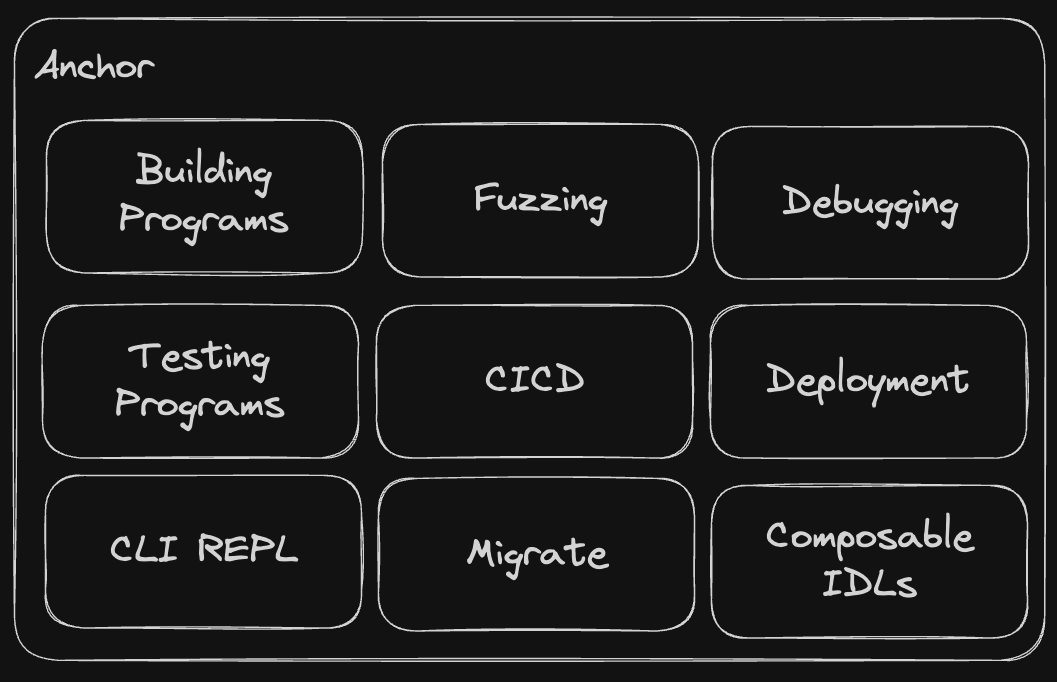
While the tooling on Solana is great, it's fragmented.
Anchor will be the tool that brings it all together into one experience
Anchor 1.0's goal is to enable you to:
- Build Programs
- Test
- Deploy
- Fuzz
- Compose on other programs
and much more
The tooling is leveling up
English
Silostack 리트윗함


Robinhood choosing Arbitrum to create a new L2 is yet another case study for why garage startups disrupt incumbents.
Did Robinhood choose Arbitrum because it will provide the best UX for customers? If you have been an active onchain user over the past year, you would say no definitively.
A group of megacorp middle managers evaluated the best "deal" for the company and went with the option where they can control career risk.
I don't know any insider info about the decision, but I do know startups that integrate infra from first principles and prioritize UX will eat Robinhood's lunch.
Nom nom.
English
Silostack 리트윗함
A big part of this is because there's very little in the way of infrastructure when it comes to stablecoins, especially wrt payments.
All the "hot" stablecoin usage (aside from DeFi) devolves to simple token transfers and all the utility is actually on the ends (user/fiat integration). Not the middle, which is the on-chain infrastructure.
This will change once both ends of the payment are happy to stay in stables and someone finally figures out that we have this thing called smart contracts, which can provide fuck tons of value. Then the on-chain payments infra gates will finally open up...
English

Every conversation I have with a builder around the stablecoin + RWA space today revolves around how to own the end customer. There is very little belief that there is defensibility in infrastructure businesses anymore. Always the same concern whether its someone working on a blockchain, a wallet, issuing, orchestrating, or anything in between.
Seems clear that the whole value chain is being compressed and whoever has the best wedge product(s) and GTM will win.
English
@prince_lantern @robbiepetersen_ @perena Haha should talk to her about this. She’s obviously thought about it a TON @gizmothegizzer
English

English

Stablecoins are the next logical evolution of closed-loop payment networks
Historically, large merchants like Starbucks and Target built out their own internal payment networks in an attempt to circumvent fees paid to card networks and banks
Users upload funds onto their app → the merchant monetizes this “float” by investing it into liquid low-risk assets on the back-end → the merchant simply updates their internal ledger when the funds are spent
Given this model meaningfully improves their bottom-line, merchants have historically subsidized adoption with rewards
However, the tradeoff with closed-loop networks has always been interoperability — my Starbucks dollars aren’t fungible with my Target dollars given they exist on two independent payment networks
This has hamstrung the adoption of closed loop networks as users need to on and off-ramp into independent apps each time they want to spend
Blockchains and stablecoins however fundamentally change this
As open and programable networks, Amazon, Walmart and Target could each issue their own interoperable stablecoins
In other words, my Amazon dollars, Starbucks dollars, and Target dollars would all exist in the same wallet on the same open network (perhaps an even better model would be a consortium)
Said differently, stablecoins rails offer merchants all the benefits of having their own closed-loop payment network — float income, evading fees — with the same benefits of operating on an open network — interoperability
Stripe, Shopify, OpenAI, X, Amazon and Walmart are realizing that blockchains are credibly neutral infrastructure that allow them to own more of the payments stack themselves
While the incentives are there for merchants, the open question is whether consumers will overcome the path-dependent inertia of card payments
Jevgenijs Kazanins@jevgenijs
Of course they are! $AMZN $WMT
English
@robbiepetersen_ There will be exchanges built just to swap stablecoins for other kinds of stablecoins
What do you think the exchange rate will be of 1 Amazon USD to 1 Starbucks USD?
English
@nickfrosty @KASTcard Damn I just signed up with them lol. Find a better option yet?
English

I have had nothing but bad experiences with @KASTcard and trying to use their product. Its a constant struggle,
The debit card rejects randomly, I get double charged, and either completely ignored by support or (best case) very rude support. Even when I met the COO in person he told me to my face he would look into my support issue then ghosted.
I'm done with you all. I will not be a customer or user any longer.
English
Silostack 리트윗함
Under appreciated point wrt to stablecoin adoption is that the most underserved, largest, and fastest growing market today is the EM SMB market, not retail global south.
Nubank called out how this segment has surprised them a few weeks ago - over 5mm accounts in Brazil with no investment or marketing.
In the report we did with @artemis and @CastleIslandVC we showed that B2B cross-border payments was the fastest growing payments use case.
Stripe/Bridge launched their stablecoin Financial Accounts aimed at this segment.
Access to US dollar financial services will only accelerate the growing trend of entrepreneurship in this economies - likely the biggest near term opportunity for any new stablecoin powered biz is solving problems for this segment.

English