Sam

60.5K posts

Sam banner
Sam

Sam

@smithsam

Believes in better data with informed privacy for all. Day job @medconfidential amongst other things. he/him https://t.co/WfQkg8XPoJ 🧘‍♂️ #FILDI

Cambridge 가입일 Eylül 2008
523 팔로잉2.5K 팔로워
Sam 리트윗함
Tom Fowler
Tom Fowler@tombfowler·
A #spycops report by Hn118 about Cambridge Action Network planing an 'attack' on Met Police website. It claims that a hijacking of the site was planned by the group using XSS to undermine the position of the commissioner in relation to the murder of Jean Charles De Menezes.
English
0
3
1
111
Sam 리트윗함
Patrick Heizer
Patrick Heizer@PatrickHeizer·
Sorry to be the downer because this is an impressive story in some senses. But it is ~trivially easy to make a single mRNA vaccine. It's not hard. I cure mice of various cancers with various therapeutics all the time. I've made mice lose more weight in a month than tirzepatide does in a year. What is hard and expensive is proving its BOTH safe AND effective **in a randomized and controlled study in humans** while ALSO manufacturing it at clinical scale and grade. I am happy for this man and his dog. It is impressive. But y'all are overhyping it.
Séb Krier@sebkrier

This is wild. theaustralian.com.au/business/techn…

English
943
420
5.6K
5M
Sam 리트윗함
vittorio
vittorio@IterIntellectus·
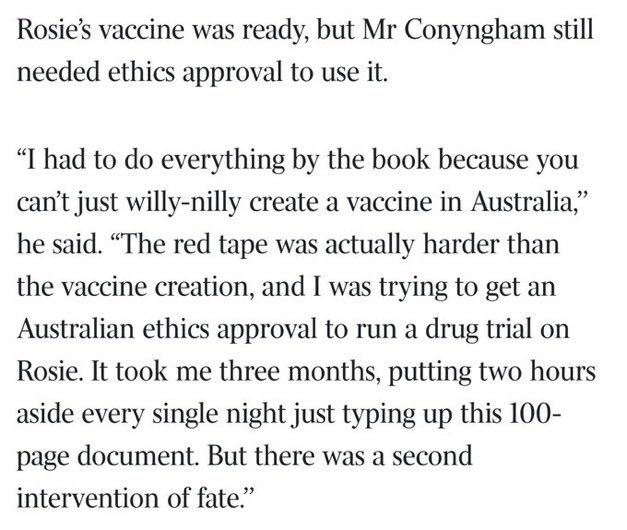
this is actually insane > be tech guy in australia > adopt cancer riddled rescue dog, months to live > not_going_to_give_you_up.mp4 > pay $3,000 to sequence her tumor DNA > feed it to ChatGPT and AlphaFold > zero background in biology > identify mutated proteins, match them to drug targets > design a custom mRNA cancer vaccine from scratch > genomics professor is “gobsmacked” that some puppy lover did this on his own > need ethics approval to administer it > red tape takes longer than designing the vaccine > 3 months, finally approved > drive 10 hours to get rosie her first injection > tumor halves > coat gets glossy again > dog is alive and happy > professor: “if we can do this for a dog, why aren’t we rolling this out to humans?” one man with a chatbot, and $3,000 just outperformed the entire pharmaceutical discovery pipeline. we are going to cure so many diseases. I dont think people realize how good things are going to get
vittorio tweet mediavittorio tweet mediavittorio tweet mediavittorio tweet media
Séb Krier@sebkrier

This is wild. theaustralian.com.au/business/techn…

English
2.5K
19.9K
117.9K
17.3M
Sam 리트윗함
sudox
sudox@kmcnam1·
sudox tweet media
ZXX
22
253
4.3K
44.8K
Sam 리트윗함
Bilawal Sidhu
Bilawal Sidhu@bilawalsidhu·
Probably the most current look at Palantir’s maven smart system software. Here’s the DoW’s Chief AI officer showing how it works:
English
381
1.2K
9.5K
2.4M
Sam 리트윗함
Sam
Sam@Discoplomacy·
Claude, please go through evidence submitted to Parliament's Committees by external experts and search for "utm_source=chatgpt.com" accidentally kept in the footnotes of their citations.
English
2
3
59
9.9K
Sam 리트윗함
Sam 리트윗함
@timnitGebru (@dair-community.social/bsky.social)
"A female agent wearing a gaiter-style mask rolled down the window, leaned out — and addressed Emily by name. “She yelled, ‘Emily, Emily, we're going to take you home!’ Then she looked at her phone and she recited my home address,” she says.”
English
4
69
423
17.8K
Sam
Sam@smithsam·
this is quite a fun Parliamentary speech #g489.0" target="_blank" rel="nofollow noopener">theyworkforyou.com/whall/?id=2026…
English
0
0
1
50
Sam
Sam@smithsam·
@LeRef5 @stianwestlake No. Good CAs use polling to ensure the assembly reflects the full population (inc full spectrum of views), and pay people for their time to participate. It can be done well (and the CA report should cover how it was done). On your climate example, opposition isn’t lacking…
English
0
0
3
27
Le Ref
Le Ref@LeRef5·
@smithsam @stianwestlake Are they not essentially self-selecting groups? People volunteer for things they feel strongly about which can lead to confirmation bias. Most NGOs get their funding from the government, so an assumption of neutrality is not necessarily valid
English
1
0
1
77
Stian Westlake
Stian Westlake@stianwestlake·
Why I'm a sceptic of Citizens’ Assemblies I was talking to the v clever @Sam__Enright recently, and made a passing remark about how I'm sceptical of claims that Citizens’ Assemblies are a great way of solving political problems. He asked me why. I thought I’d share my response. Citizens’ Assemblies are hugely popular among people interested in politics. They're particularly popular both with “sensible” anti-populists and with environmentalists (climate assemblies are especially popular among the latter group). Here are some reasons I don't like them. 1. Cognitive humility. I think a lot of love for citizens’ assemblies is predicated on the inability by the Citizens’ Assembly Advocate to countenance that voters may genuinely have different preferences to them. The mental model is something like “I believe X. Some foolish voters believe Y, because they are tricked by misinformation/Rupert Murdoch/Russian bots/their own lack of bandwidth. A citizens’ assembly would give them time to reflect on the true facts and conclude X, like me”. I struggle to think of any citizens’ assembly advocate who thinks citizens’ assemblies will reach conclusions they object to. 2. Gerrymandering. CAs seem ripe for gerrymandering. The usual CA model is that experts will provide some education on the subject before citizens deliberate and decide. The expert selection process seems like it'd be stitched up, perhaps not deliberately but by design. Example: consider a CA on how to prevent obesity and encourage healthy “food environments” (something I've heard suggested): it seems very likely to me that the experts would include lots of public health experts with strong ideological priors about the role of markets in providing food (such as the ‘commercial determinants of health’ worldview), who see food mainly as a health issue. But opponents of these positions might not be invited - for example because their funding comes from commercial sources. The choice architecture of the assembly itself is also ripe for coercive design. A transport policy friend told me about a UK CA on road building that found that citizens wanted fewer roads built (a surprising result); it turned out that they had been asked to choose between three options all of which involved less road building, and had picked one. (This problem is exacerbated by problem 1.) 3. Social desirability bias. More conceptually, I worry that CAs impose a bias to socially valorised solutions that overlook people’s selfish but legitimate motivations. Again, take the example of a CA on how to reduce obesity. Obesity is bad and socially costly (esp in systems with socialised medicine). But restrictions on unhealthy food impose a cost on individuals in terms of deliciousness and pleasure. I strongly suspect a civic discussion on obesity would focus on the societal costs and the “wise” view that we should constrain our choices in our long term interests, but underweight ideas like “chips taste yummy” which seem stupid and base - but which are legitimate desires that most people have. So CAs’ conclusions might reflect a kind of false “prosocial wisdom” that doesn't fully reflect people’s true preferences - resulting in policies that people don't actually want. I’m not saying it’s impossible to design CAs that don’t involve these biases, or that they are not known to CA experts. Arguably, the higher profile the assembly, the harder it is to get away with them (which perhaps means that things like the Irish CA on abortion that was organised as part of the referendum on the subject avoided these problems - I'm don't know enough to say). But they seem pretty fundamental issues that aren’t discussed enough in the casual commentary on CAs that I find myself reading regularly.
English
43
55
264
61.8K
Sam
Sam@smithsam·
@LeRef5 @stianwestlake Gov/NHSE does run them as you describe, which can be little more than push polls, and the public who volunteered a fair process call relevant NGOs because they felt the process was so biased. I’ve had many of those calls. It’s not a closed system (which Stian reasonably assumed)
English
1
0
2
41
Sam
Sam@smithsam·
@LeRef5 @stianwestlake Like every other policy - CA aren’t magic. But if you withhold critical info that people would change their view on, and then they find out, your delivery breaks. It’s not a court where the jury decides and can’t otherwise act
English
2
0
0
44
Sam 리트윗함
Katrina Manson
Katrina Manson@KatrinaManson·
SCOOP: The Pentagon has formally notified Anthropic that it’s deemed the artificial intelligence company and its products a risk to the US supply chain, according to a senior defense official. bloomberg.com/news/articles/…
English
33
156
683
740.8K
Sam 리트윗함
Gerry Hassan
Gerry Hassan@GerryHassan·
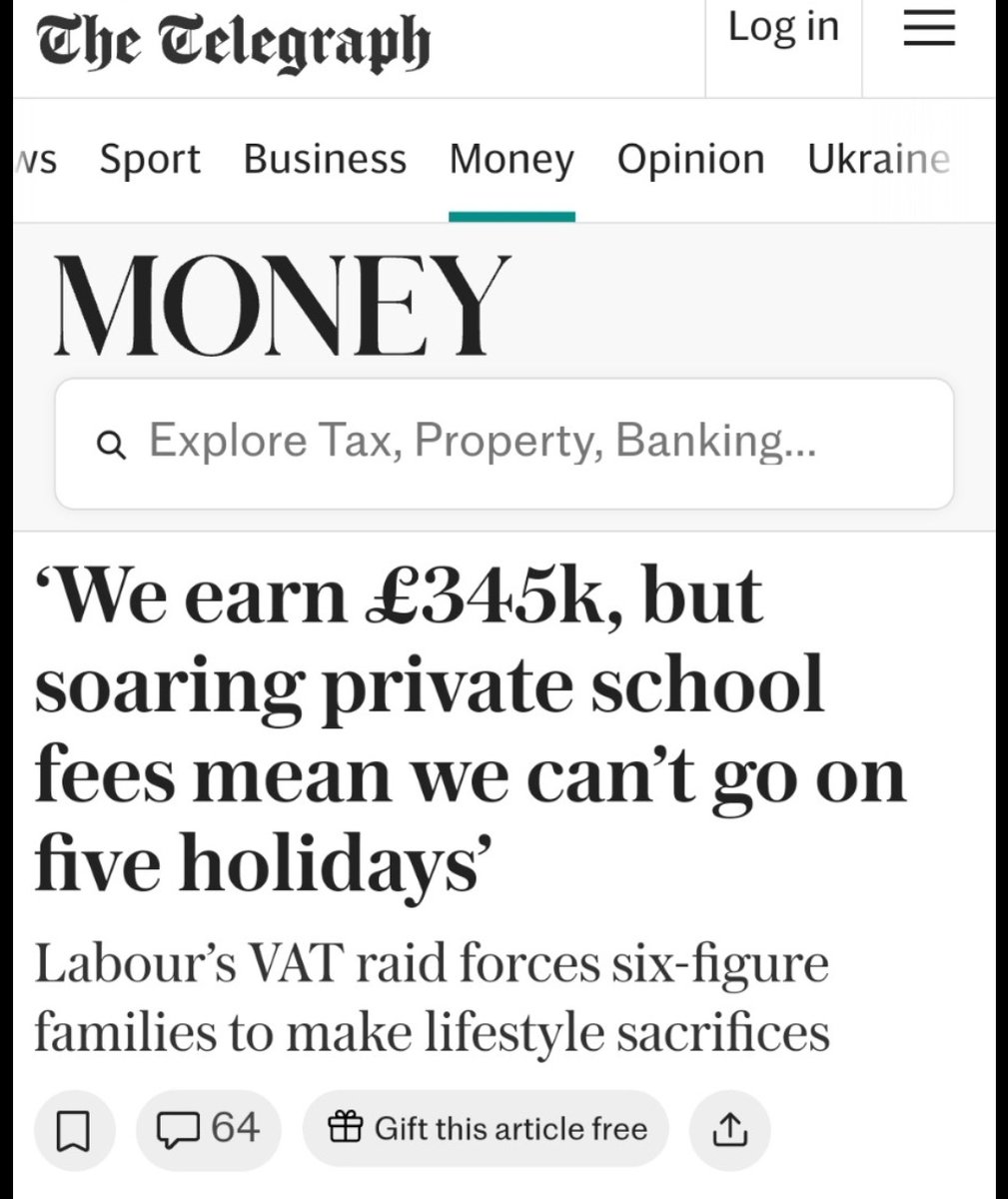
An incredible retraction by the Daily Telegraph today. They have apologised for publishing an article last year headlined: “We earn £345k, but soaring private school fees mean we can’t afford to go on five holidays.” The entire story was fabricated; the family did not exist.
Gerry Hassan tweet media
English
182
2.6K
8.8K
415.7K
Sam 리트윗함
Peter Henderson
Peter Henderson@PeterHndrsn·
Apropos of nothing, some great researchers recently showed that you can use LLMs with internet access to successfully de-anonymize data at scale.
Peter Henderson tweet media
English
14
143
608
68.3K